Offered by Dei Bardi Art
REQUEST INFORMATION

Sculptures and works of art from the Middle Ages and the Renaissance
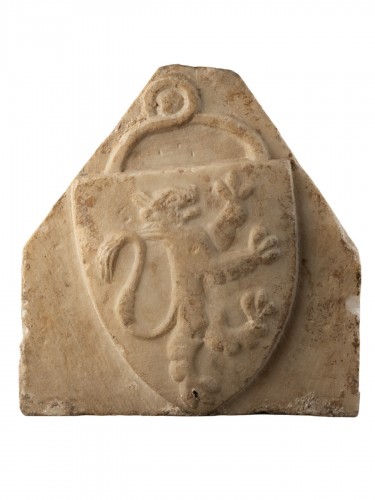
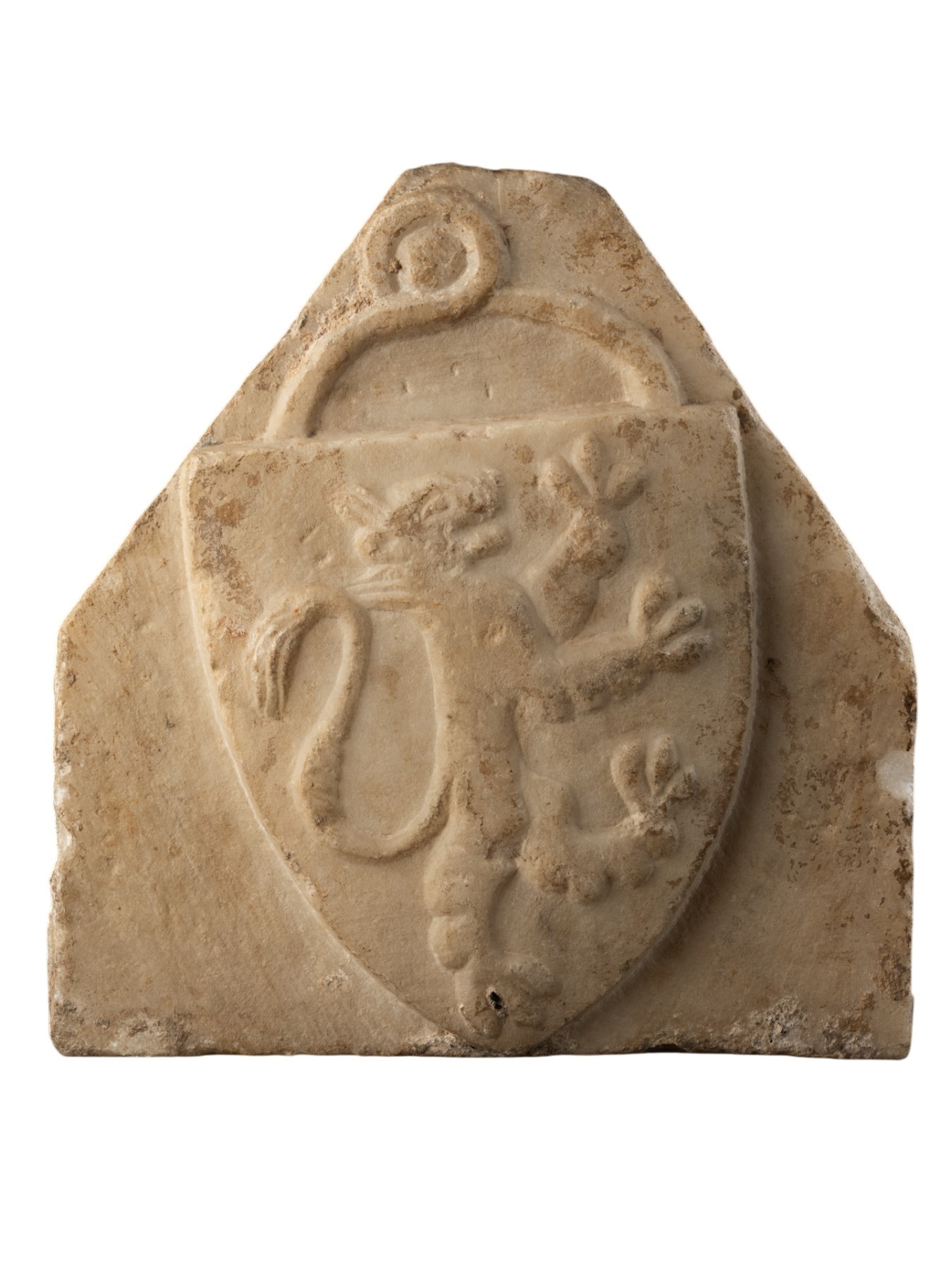
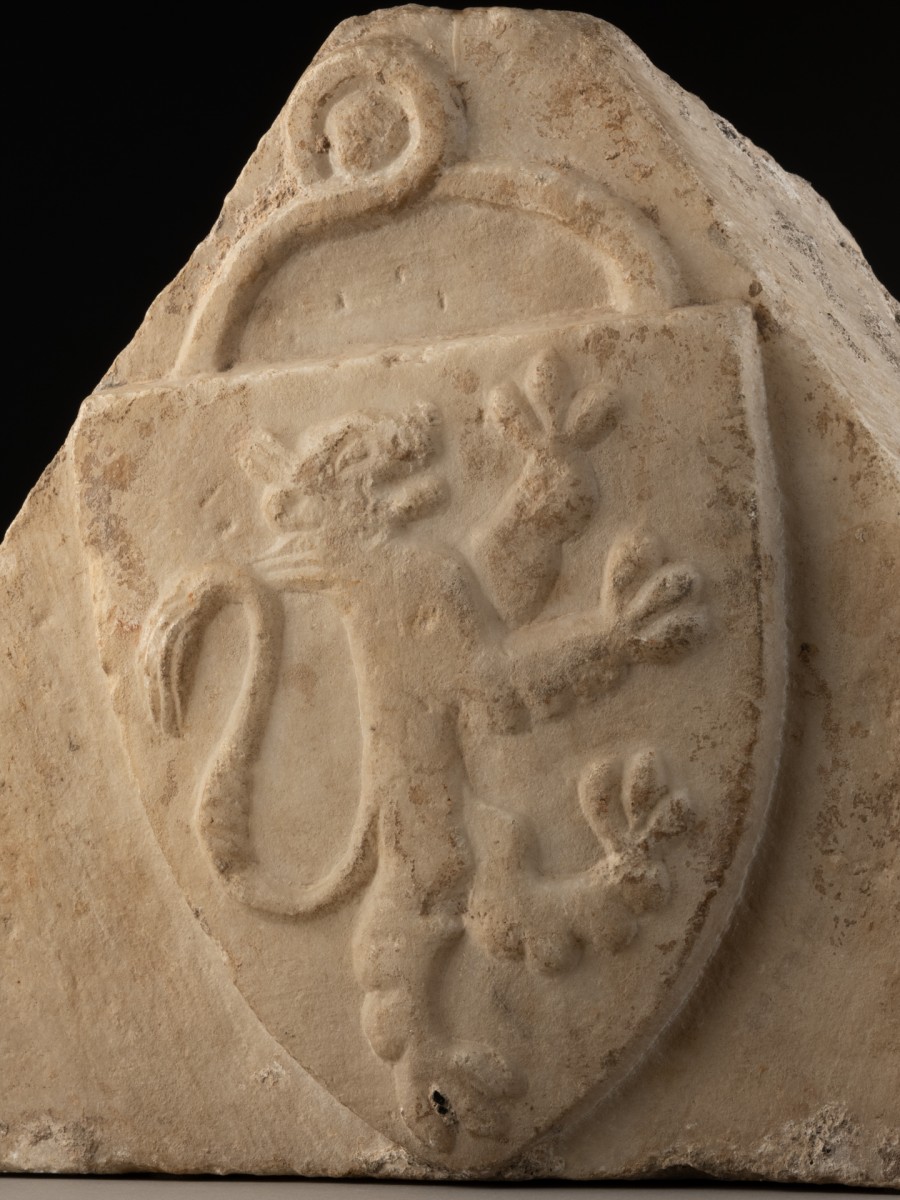
Gothic Armorial Shield with Rampant Lion
Marble
Tuscany, first half of the 14th century
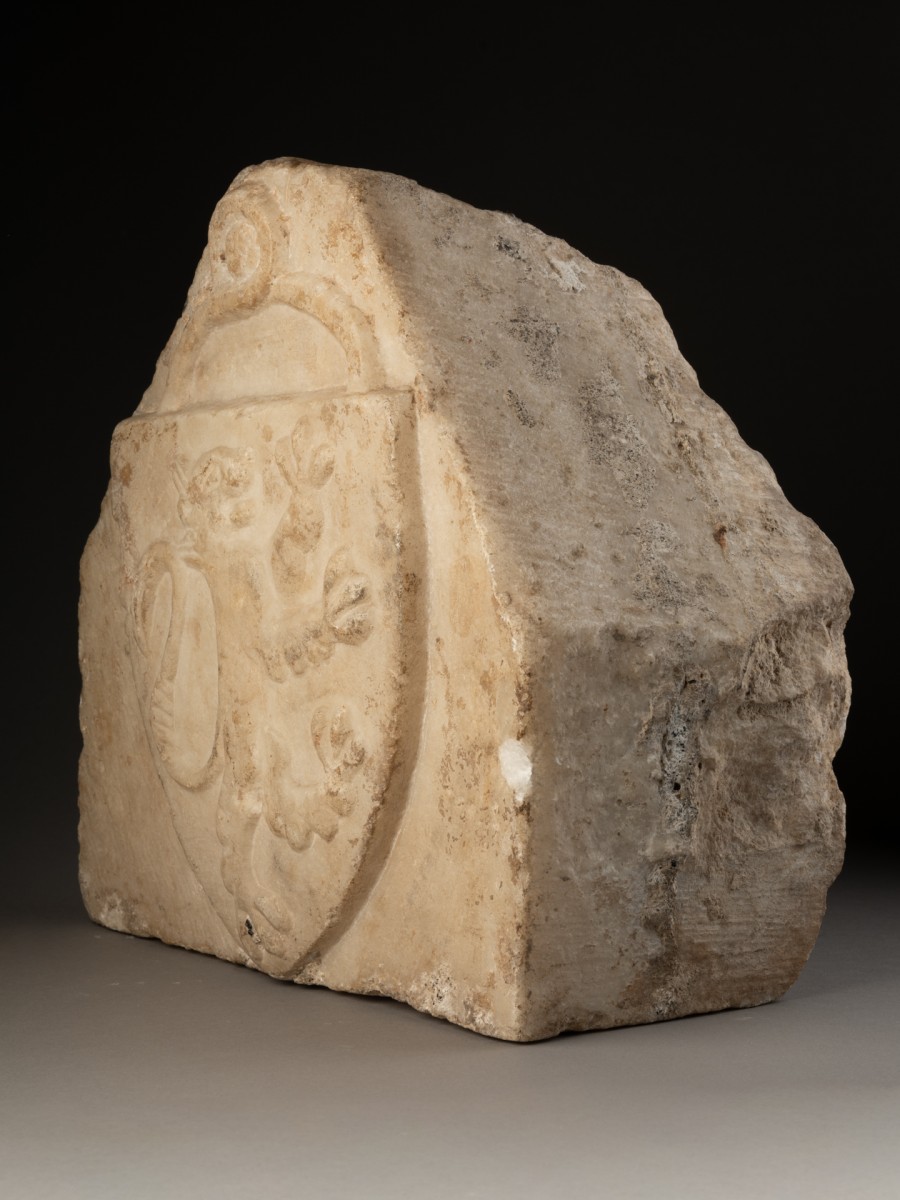
26 x 24 x 12 cm
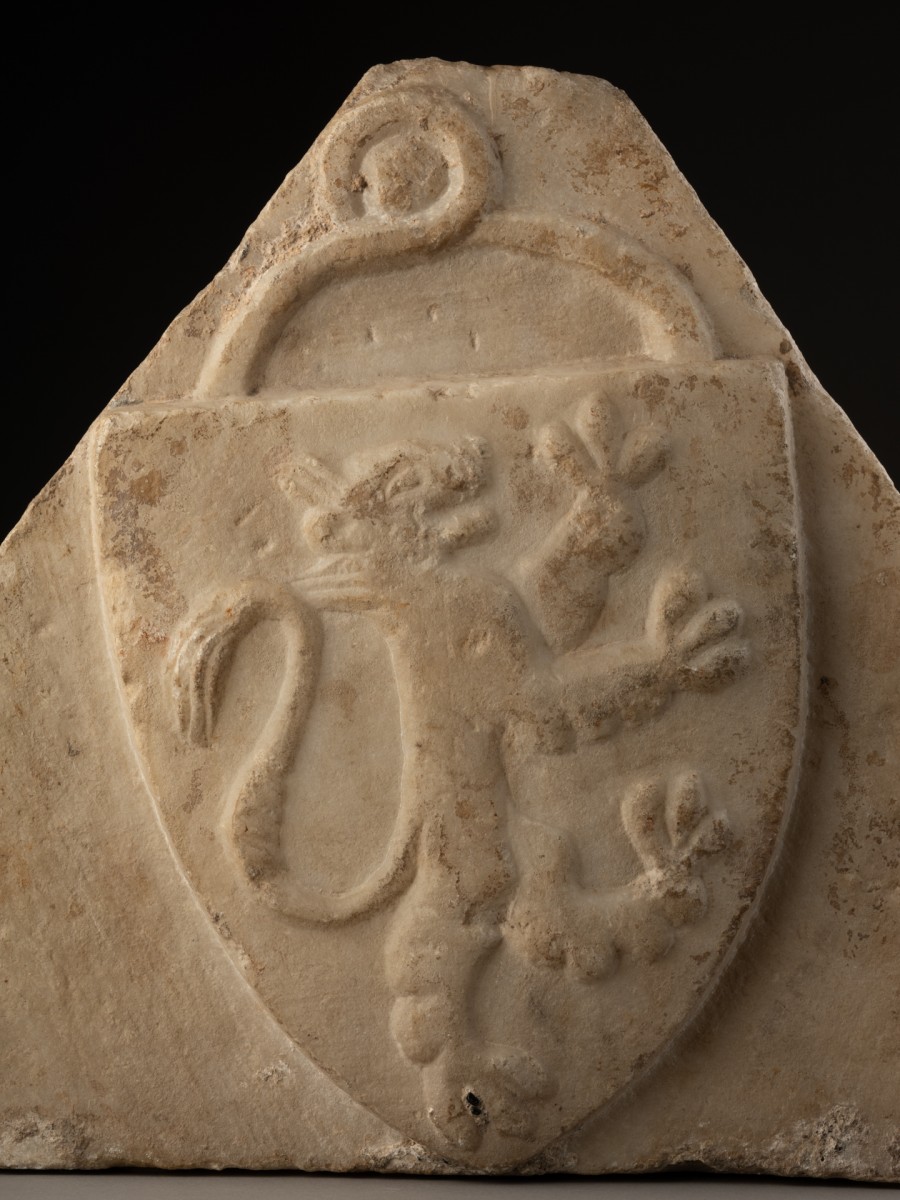
This panel of white marble is carved in high relief with an armorial shield of Gothic targe form, distinguished by its central pointed base and gently indented sides, set against a plain ground.
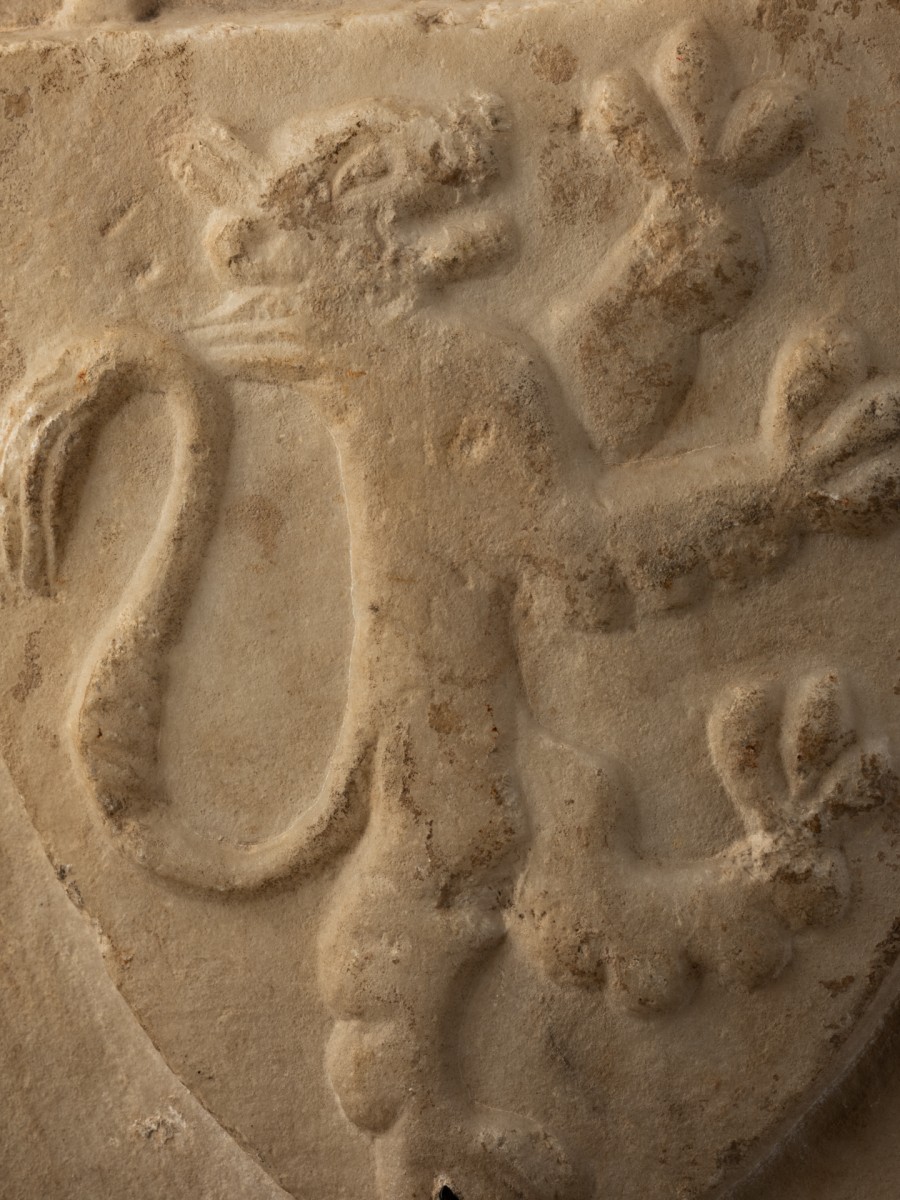
The carving is executed with notable refinement. The lion emerges in strongly modelled relief from the smooth field of the shield, while its anatomical features — mane, claws, musculature, and tail — are rendered with the precision characteristic of fourteenth-century lapidary sculpture.
The shape of the shield, broadening in the upper register and tapering to a central point below, belongs to a type widely employed in Western heraldry during the later thirteenth and fourteenth centuries. Commonly described as a Gothic targe or heater-shaped shield, it appears frequently in French and Italian sigillography, funerary monuments, and architectural decoration of the period, notably on knightly effigies in which the deceased is shown bearing his shield upon the chest.
The rampant lion — rearing upon its hind legs, with head in profile and forepaws raised — is among the most distinguished charges of the heraldic repertory. A medieval proverb, attested as early as the twelfth century, aptly observed that “he who has no arms bears a lion.” The remarkable prevalence of the lion in the armorial bearings of the European nobility reflects its symbolic status as king of beasts and as an emblem of courage, strength, and sovereignty.
Its tail, described in an elegant raised double curve, is a stylistic feature frequently encountered in Gothic sculpture of the fourteenth century. The overall treatment of the figure — the supple yet vigorous modelling, the fluid linearity of the tail, and the careful articulation of the claws — recalls the production of Pisan workshops in the first half of the fourteenth century.