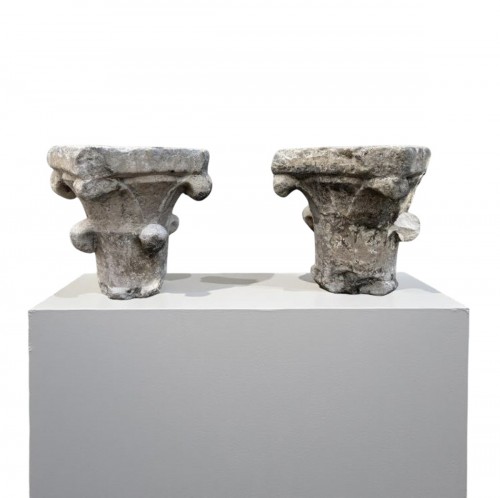
Offered by Galerie Alexandre Piatti
REQUEST INFORMATION

Works of art, sculptures and furniture Haute Epoque
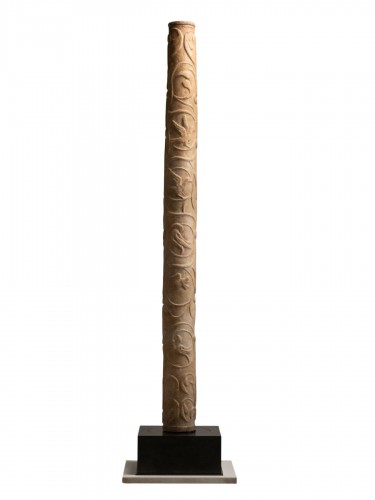
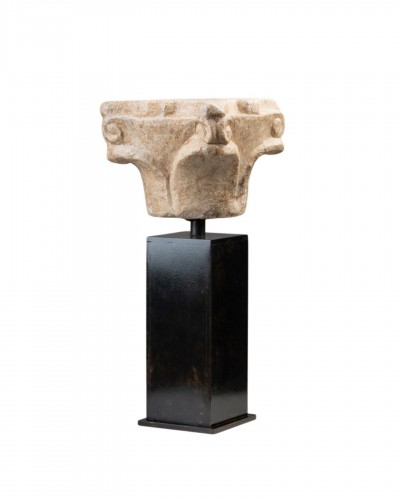
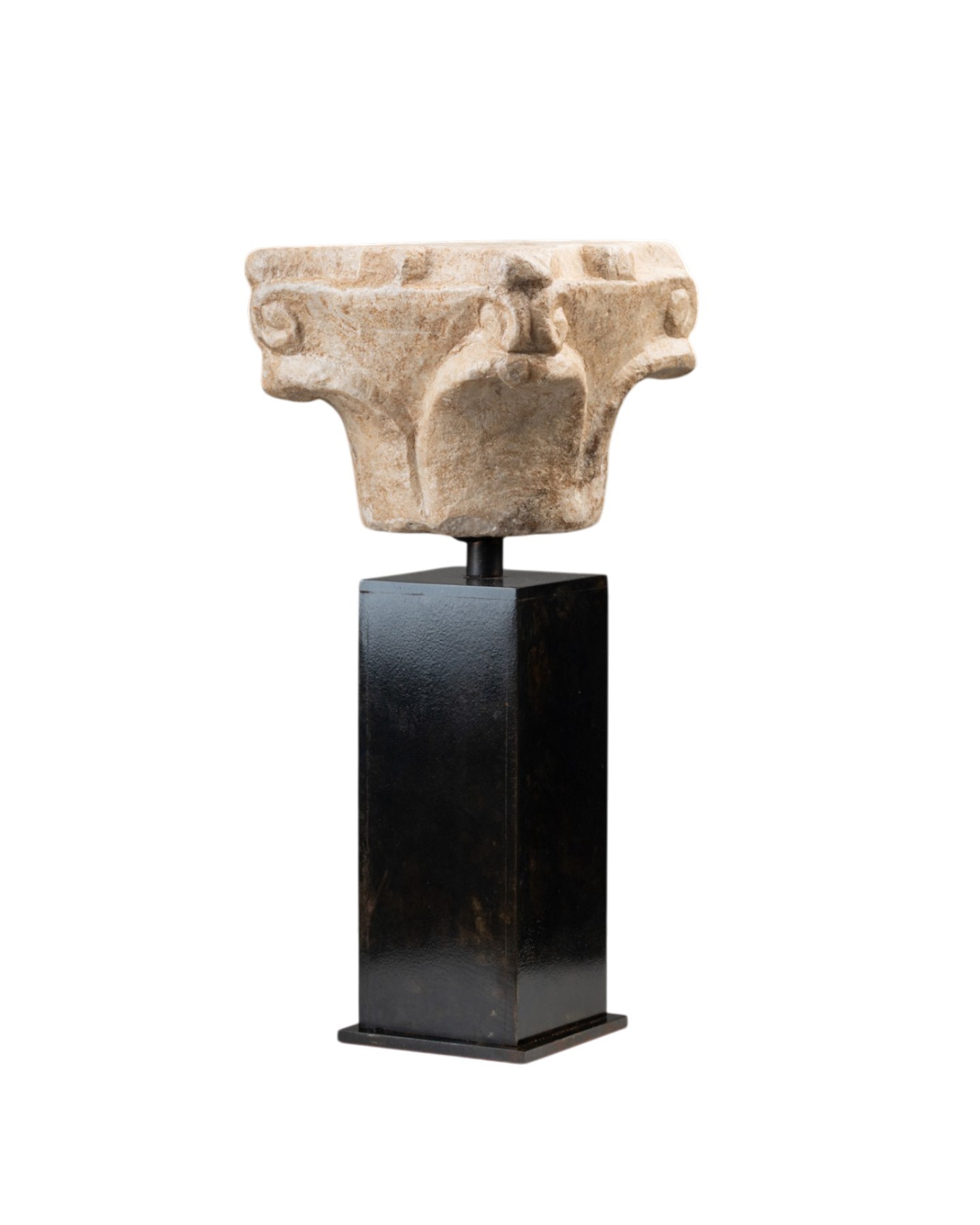
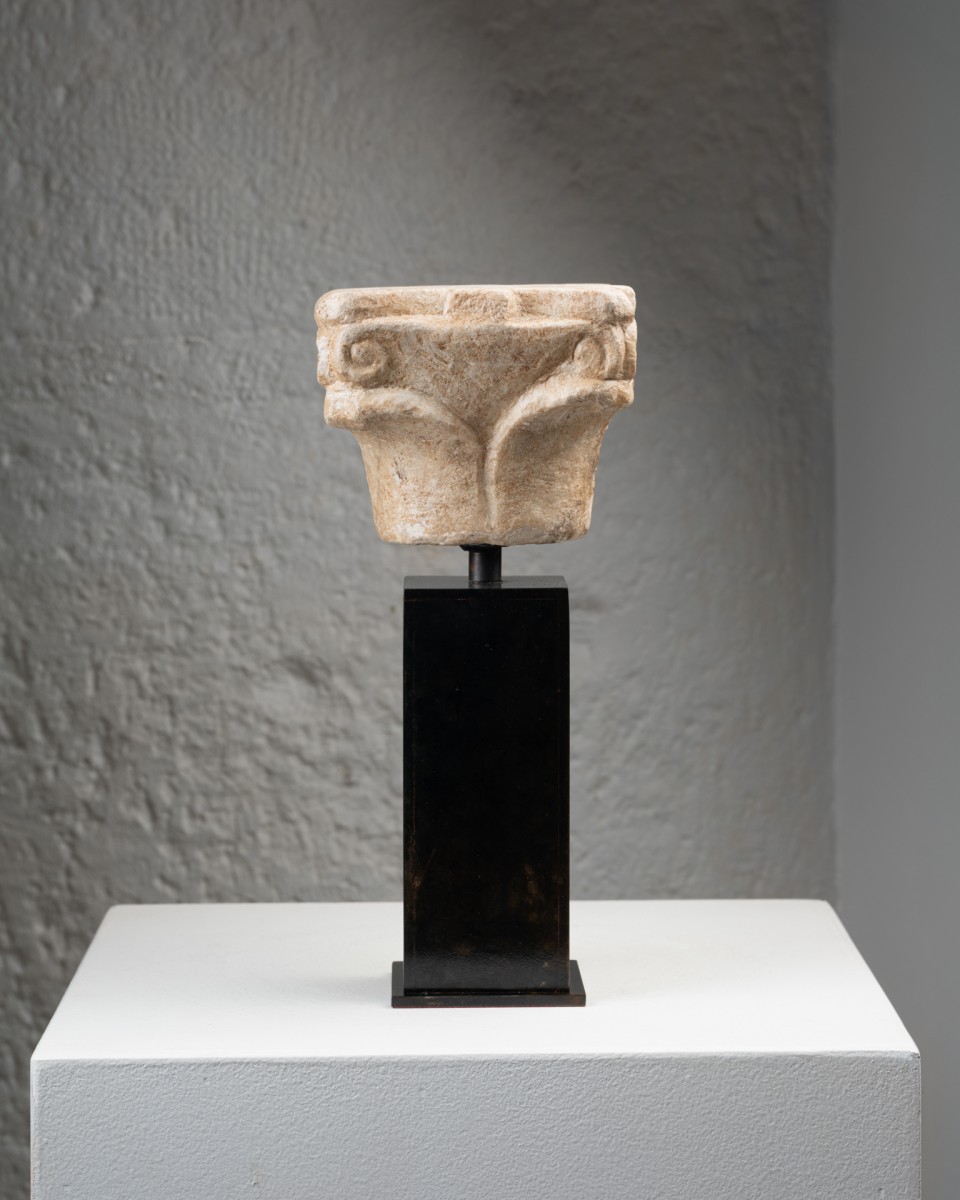
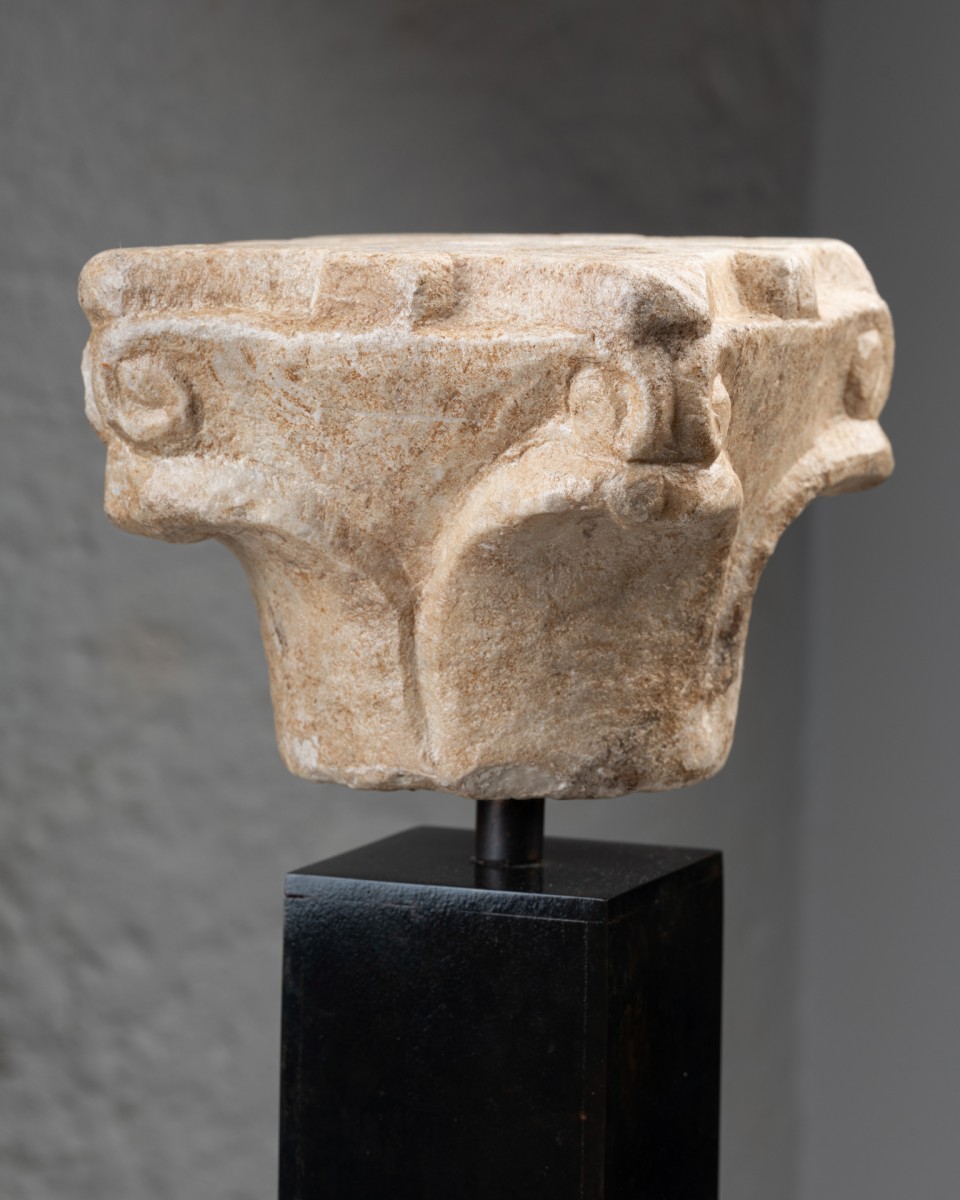
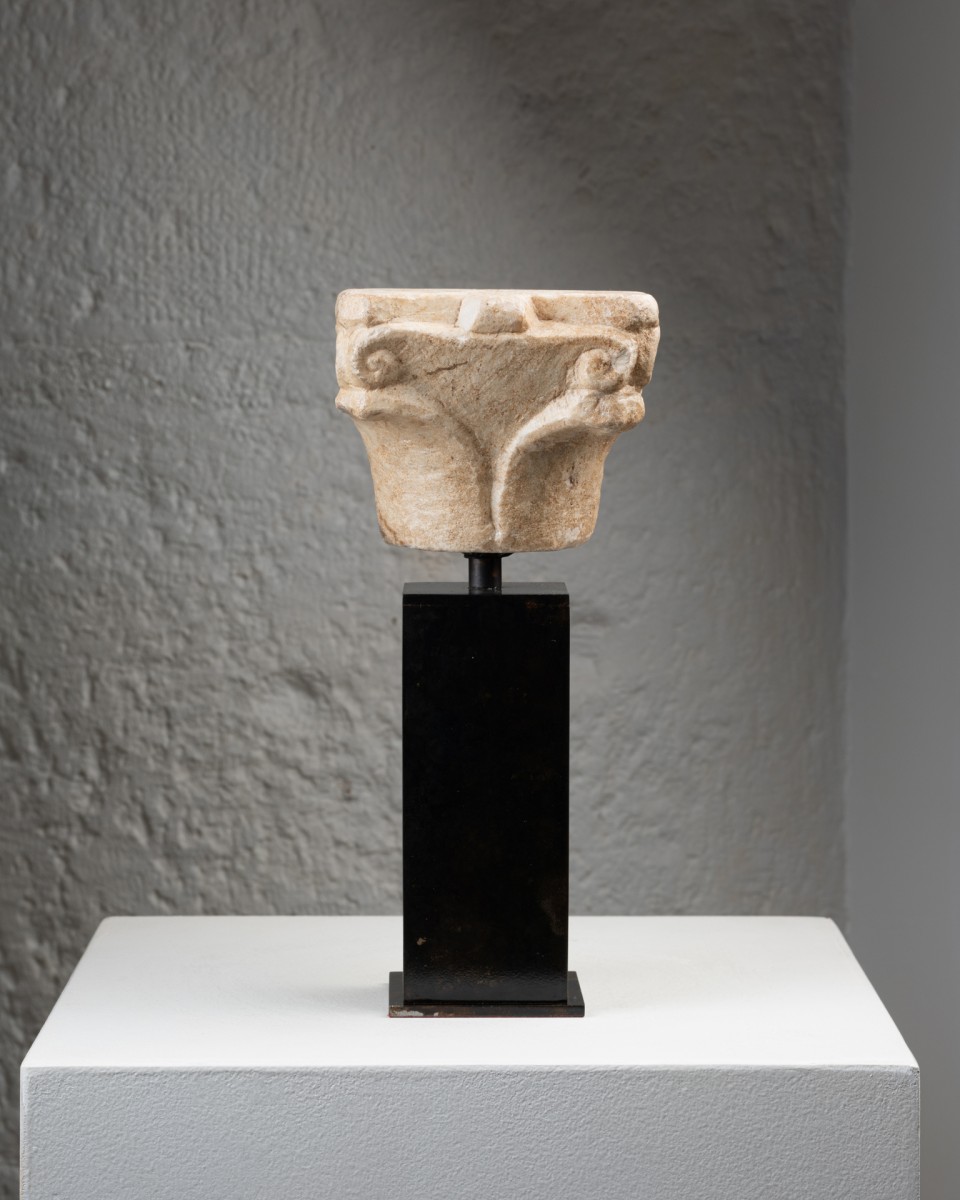
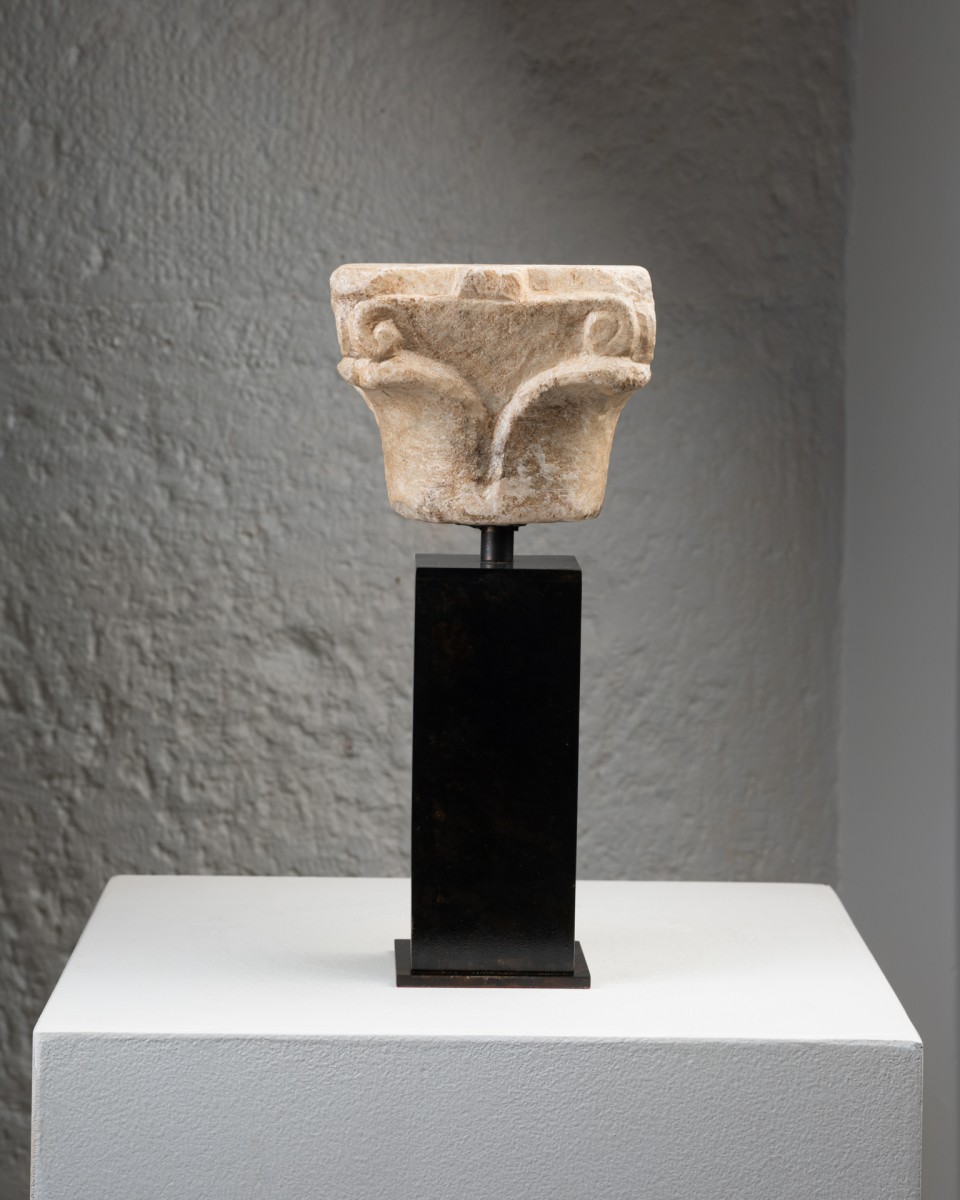
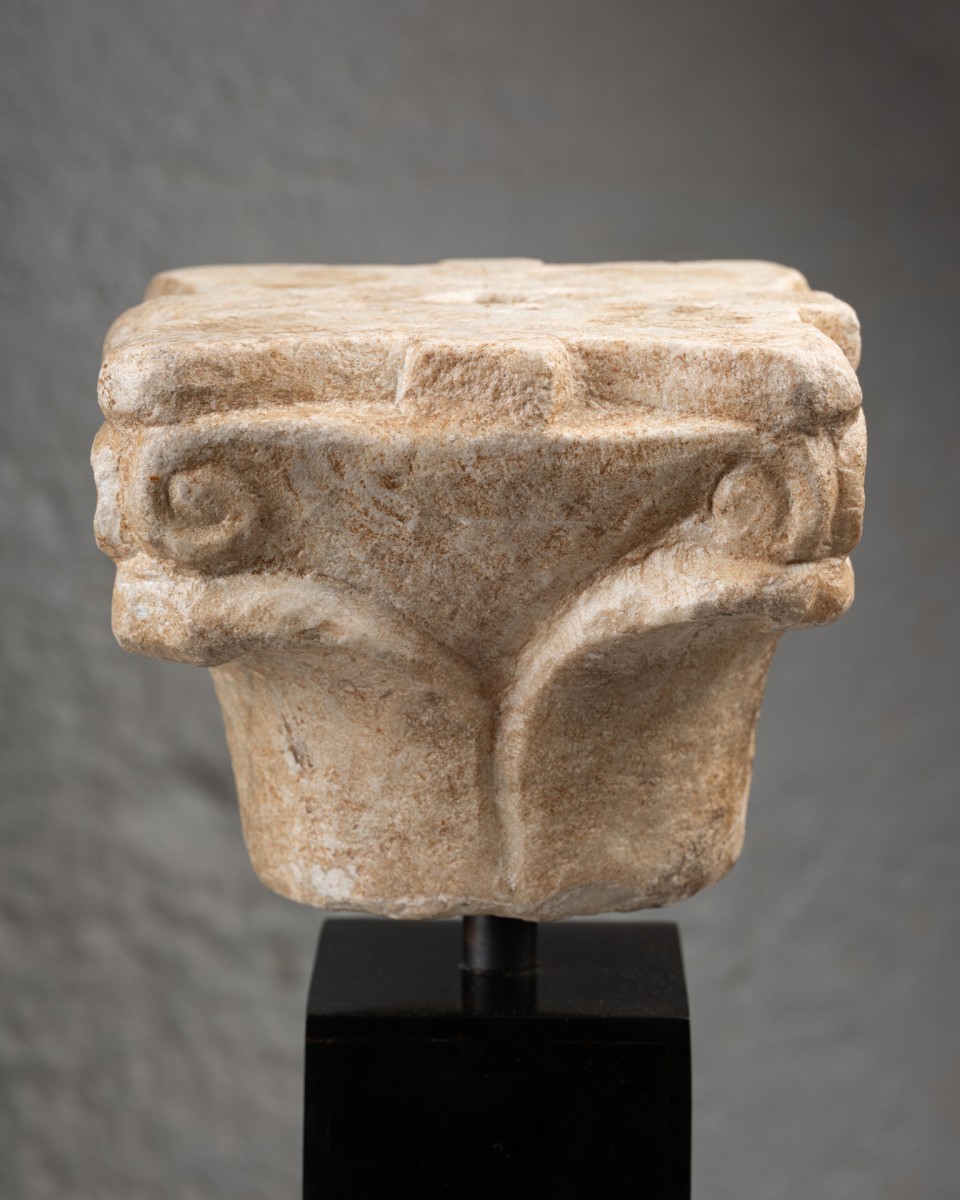
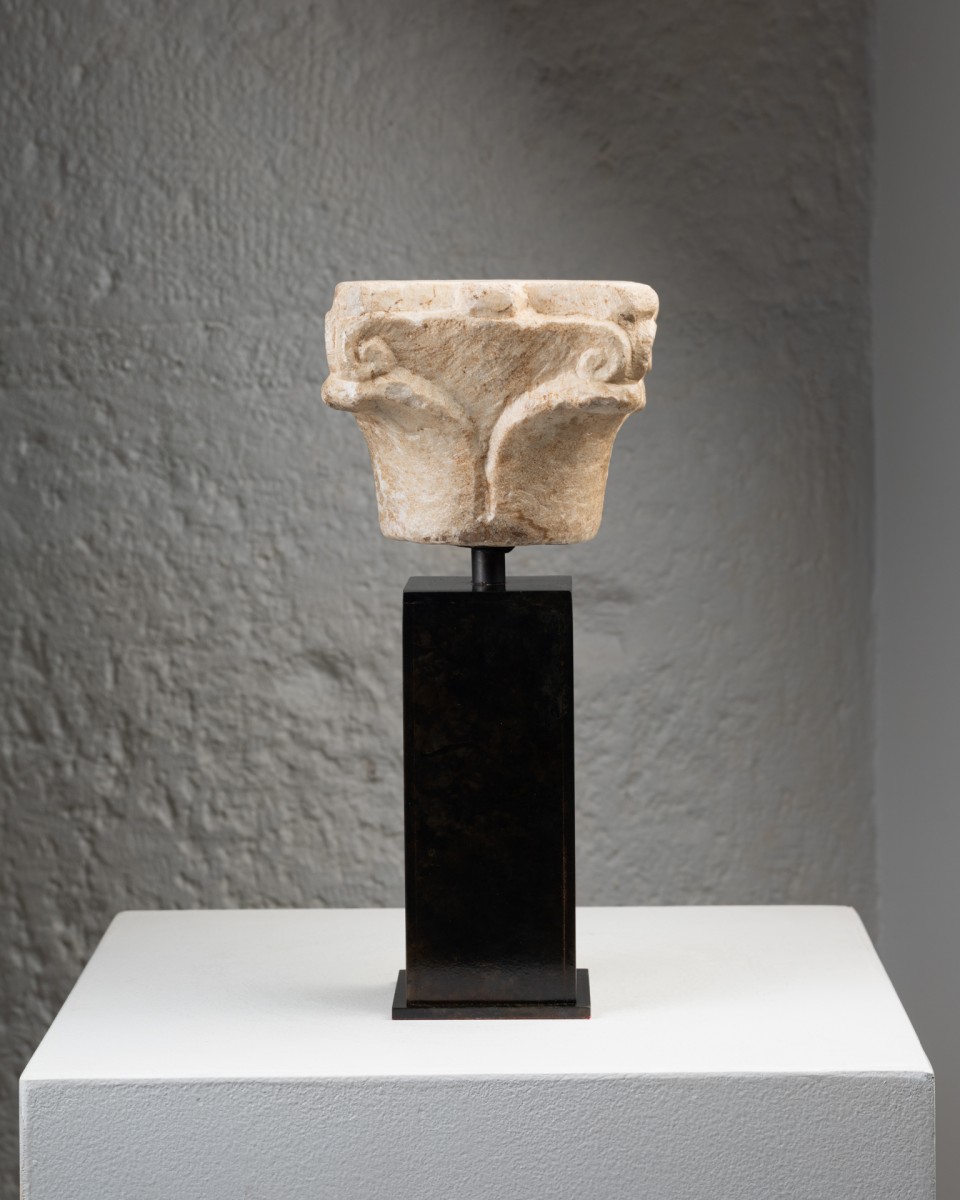
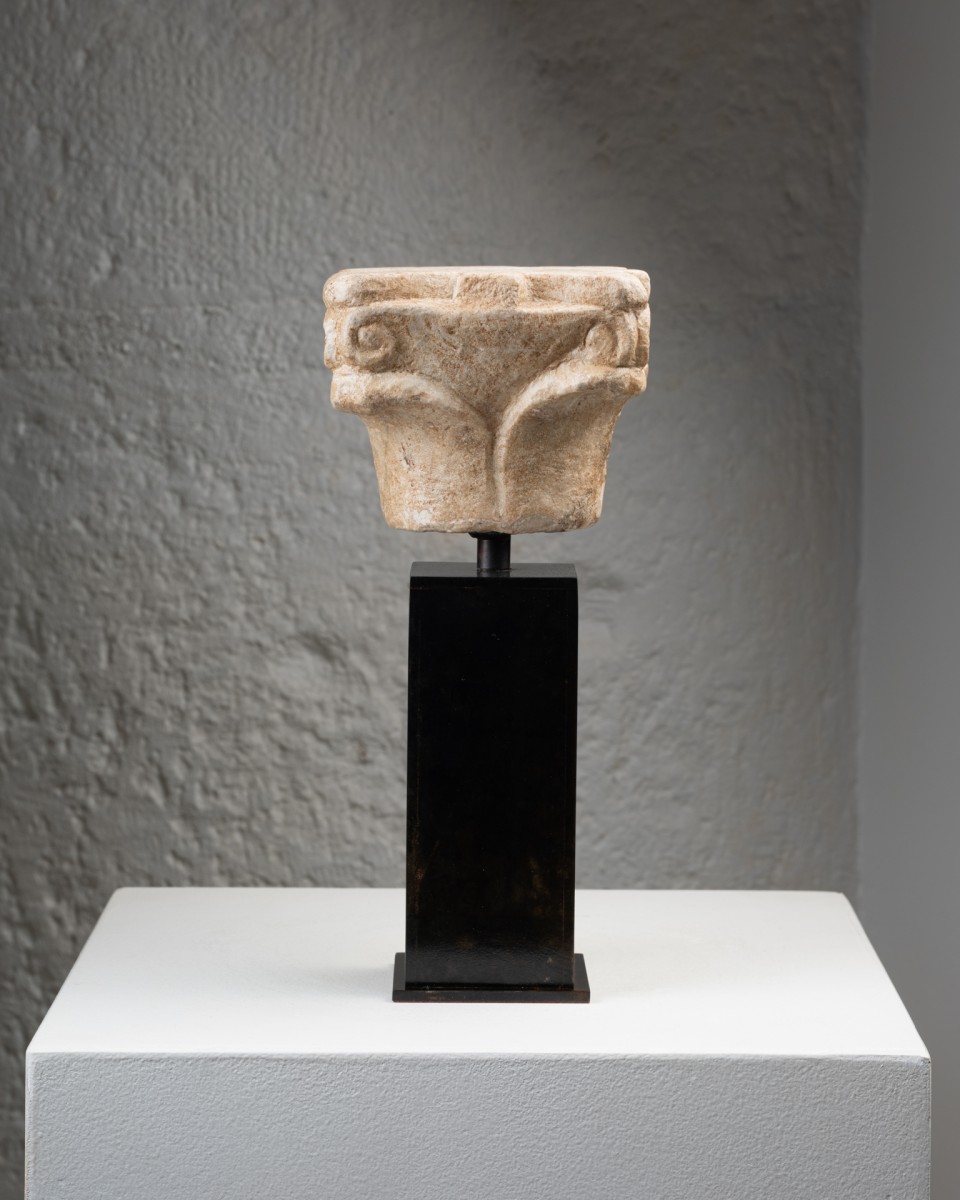
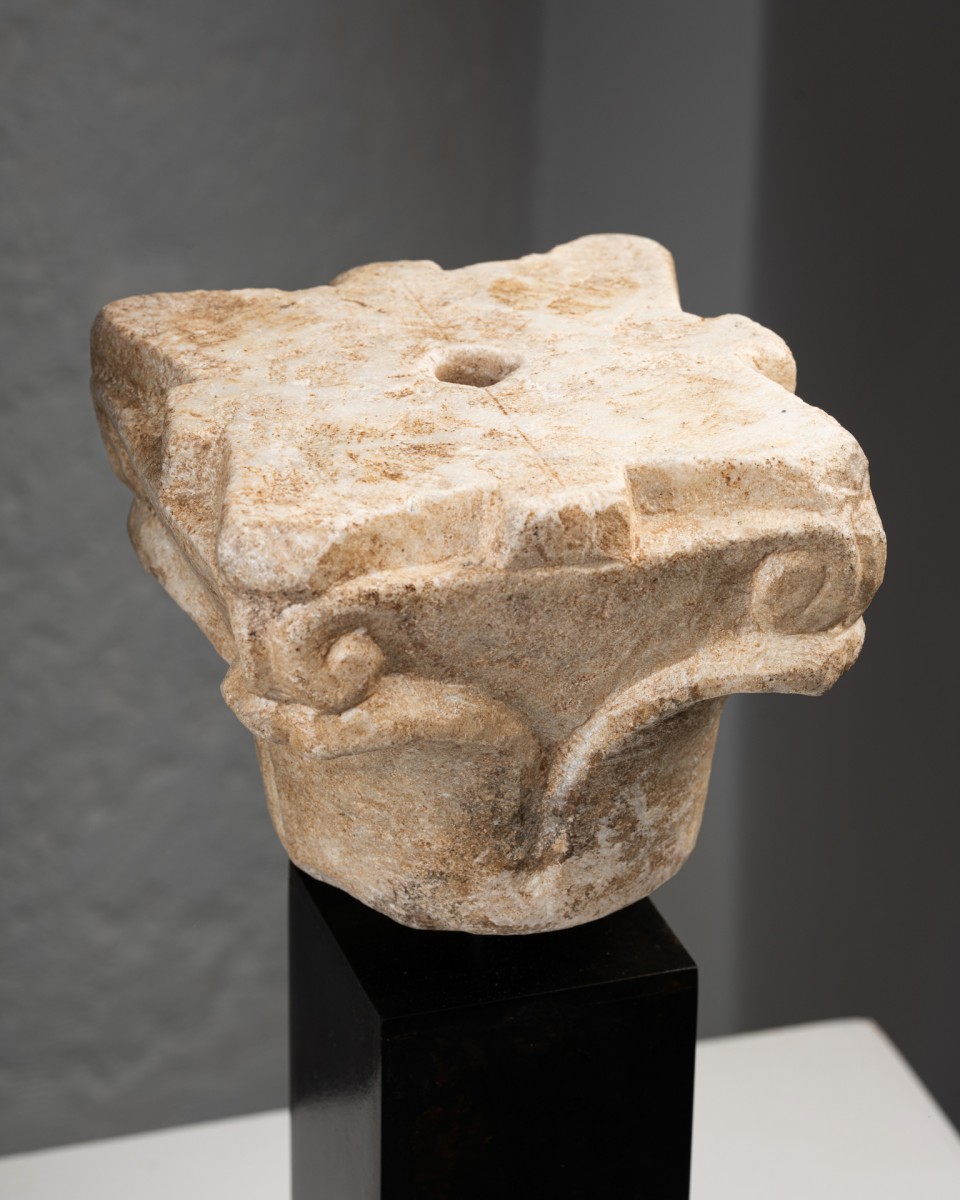
This small capital, carved from slightly veined white marble of Italian origin, dates from the transition period between the Romanesque and early Gothic eras. Carved on all sides, it features a volute decorated with stylized plant motifs, including water leaves with rounded tips, as well as hooks and forms resembling croziers at the corners.
These decorative elements, both understated and elegant, reflect an aesthetic characteristic of 12th-century Cistercian circles, marked by a pursuit of simplicity in contrast to the ornate richness of Cluniac and Benedictine traditions. This simplification of forms is part of an older tradition: Roman artists, who were particularly fond of the Corinthian capital, already tended to streamline the acanthus leaf by removing its details (teeth, veins, deep cuts) to retain only a general, smooth, and unified form. This technique, visible in several monuments in Rome such as the Baths of Agrippa, was also common in smaller-scale works (stelae, altars, sarcophagi), particularly in late antiquity. Easy to execute, this type of simplified decoration became widely popular and was adopted, with variations, in later artistic traditions.
The structure of the canopy also reveals several notable technical features: the presence of two holes—one at the top and the other at the base—suggests that it was intended to be attached to or incorporated into a larger architectural structure. The treatment of the smooth panels and the stylization of the plant motifs indicate a shift toward more refined forms, foreshadowing Gothic developments.
The structure of the canopy also reveals several notable technical features: the presence of two holes—one at the top and the other at the base—suggests that it was intended to be attached to or incorporated into a larger architectural structure. The treatment of the smooth panels and the stylization of the plant motifs indicate a shift toward more refined forms, foreshadowing Gothic developments.
Thus, this work is not limited to a purely architectural function: it plays a full part in a visual language designed to complement the spirituality of the site. Through its formal simplicity, its balanced proportions, and the stylized nature of its motifs, this capital perfectly illustrates an artistic transition period, during which the Romanesque heritage gradually evolved to give rise to the more slender and structured forms of the Gothic style.
Delevery information :
Please note that packing and shipping costs are not included in the price of the objects which are quoted ex shop.
Final amount including packing and shipment to be discussed with Galerie Alexandre Piatti.