Offered by Galerie Alexandre Piatti

Works of art, sculptures and furniture Haute Epoque
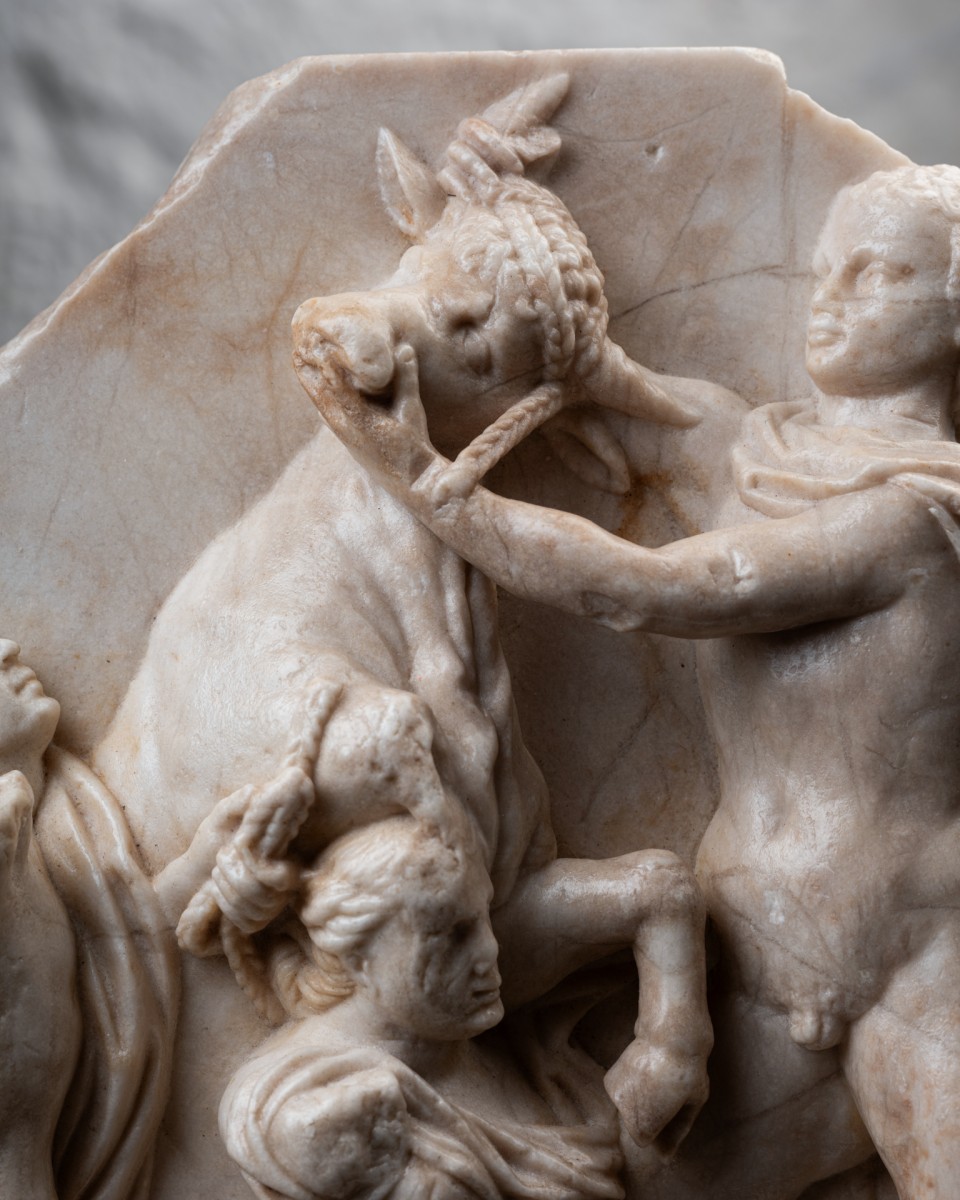
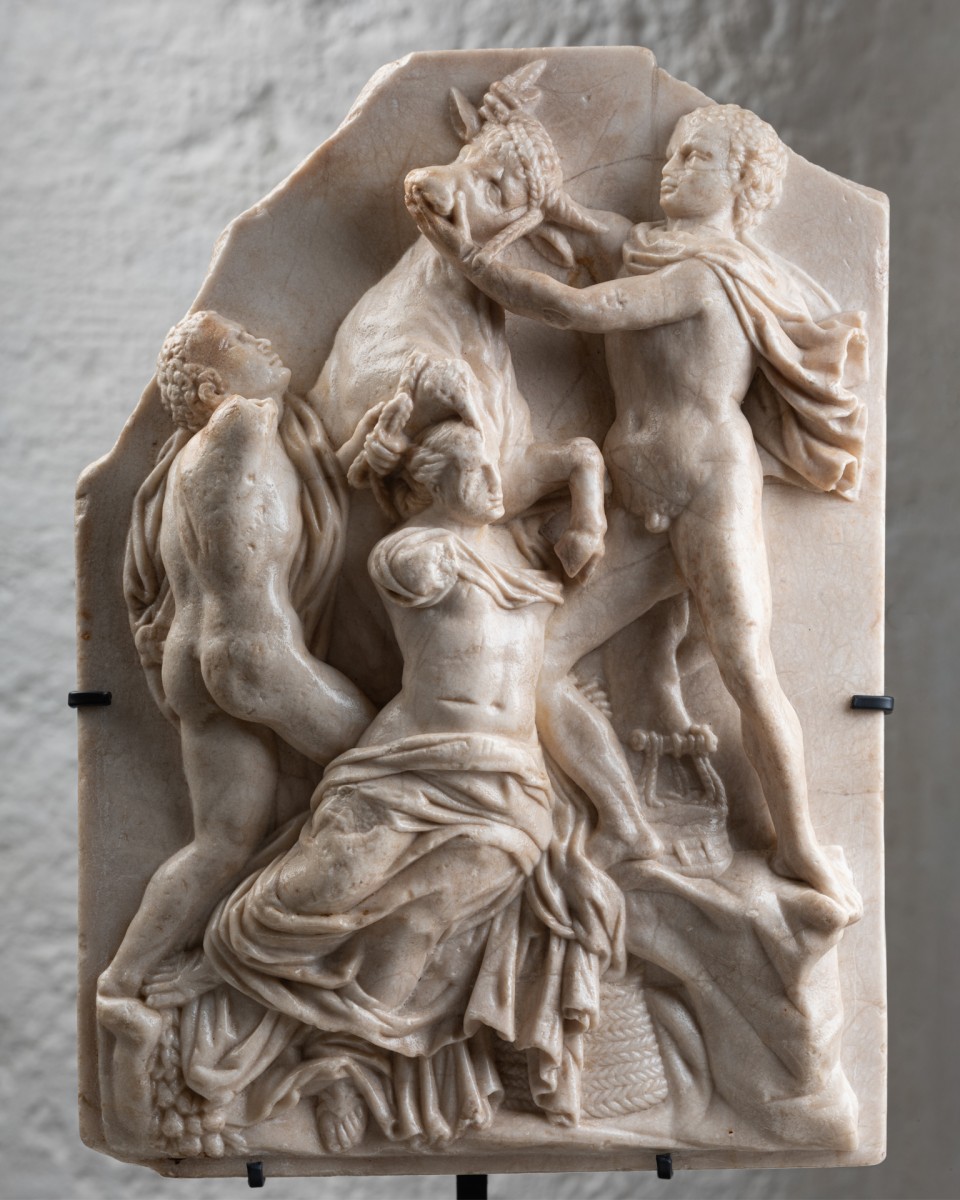
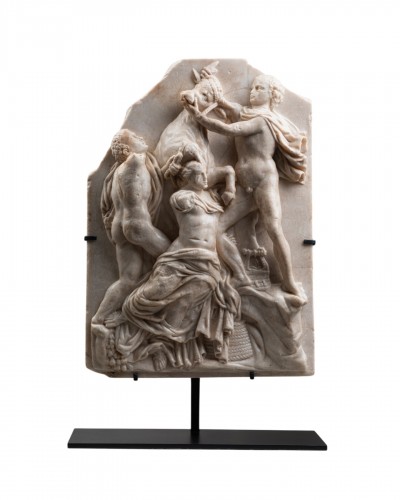
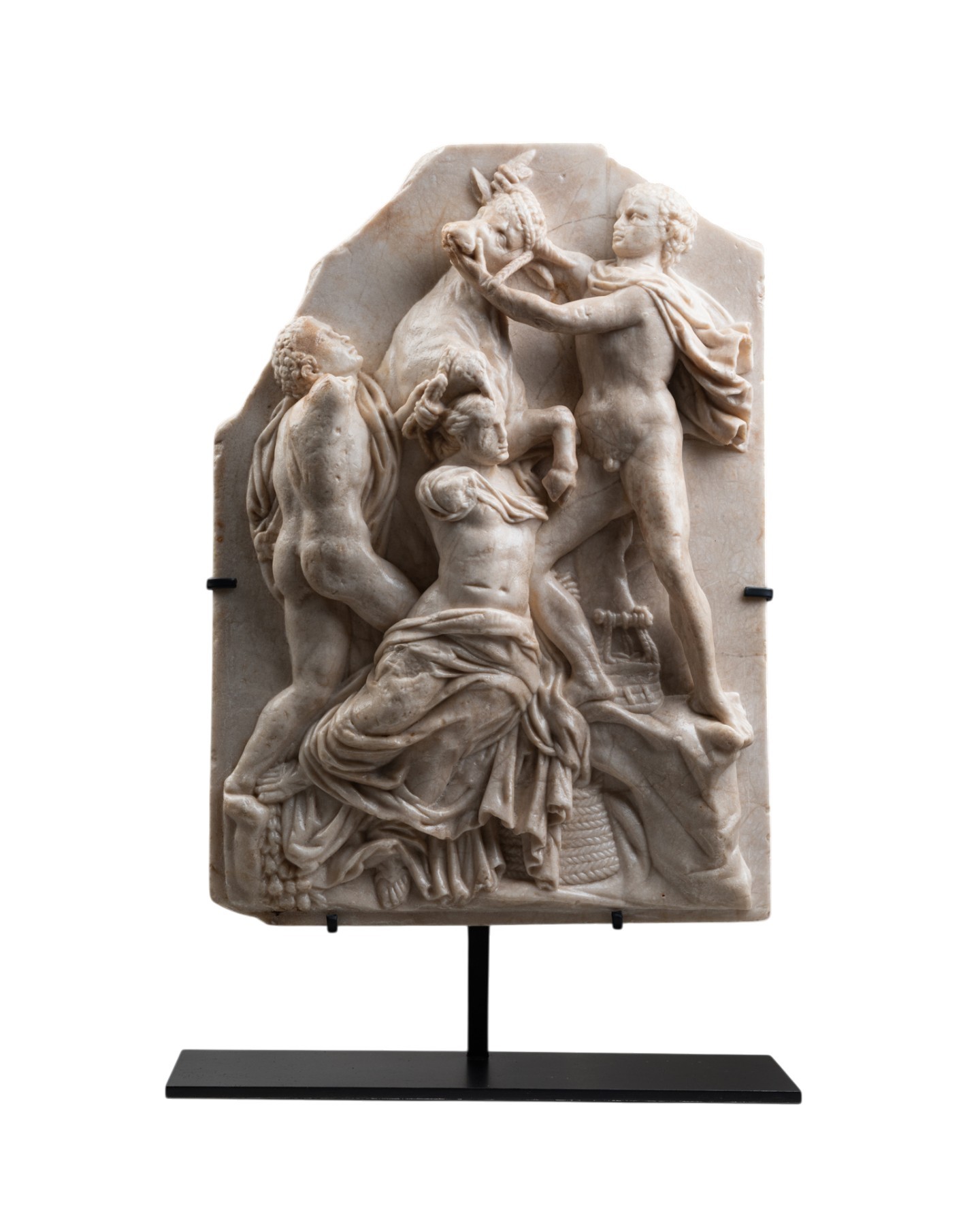
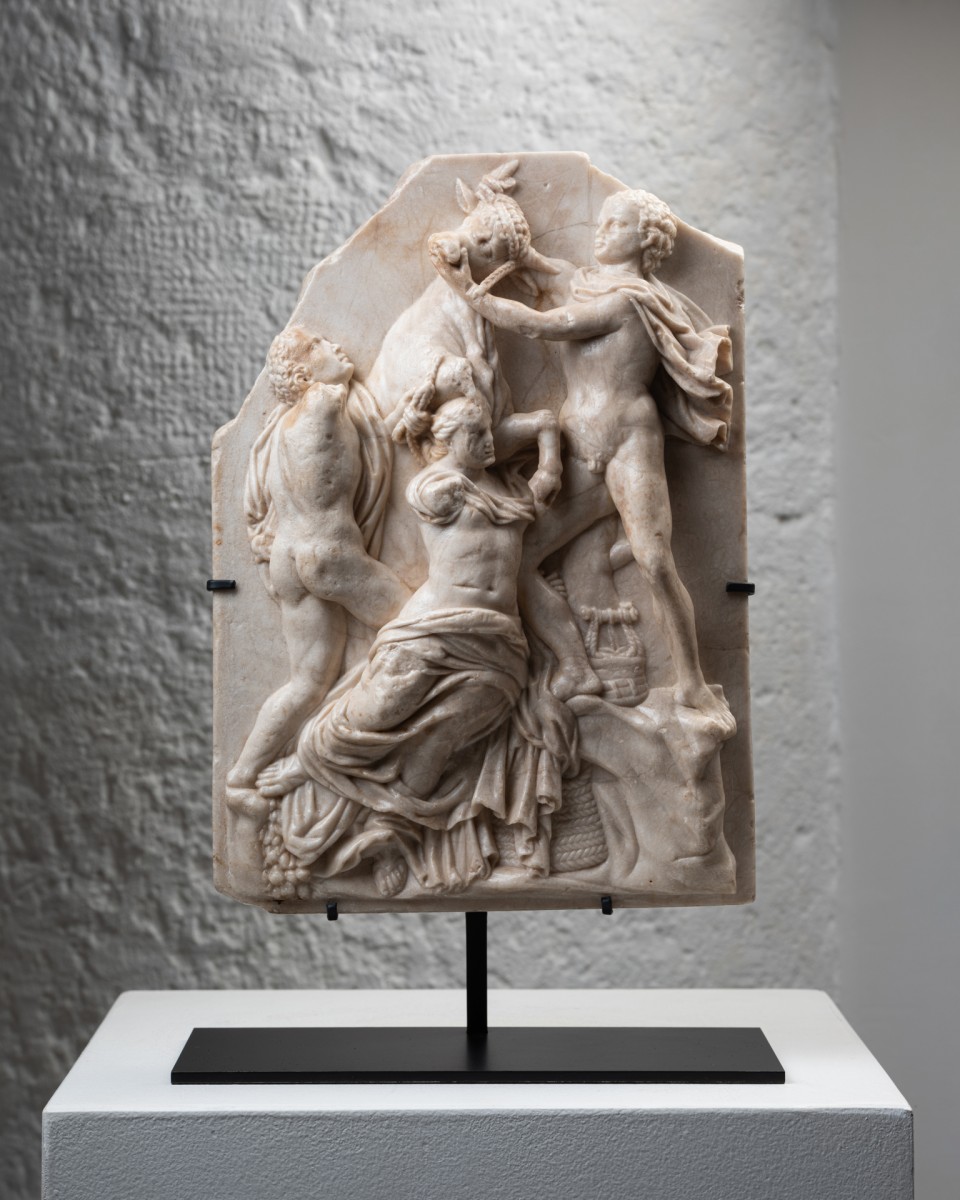
This marble bas-relief depicts a mythological scene inspired by the famous ancient sculpture group known as the Farnese Bull. Created in Italy in the 16th century, it reflects the deep interest Renaissance artists had in antiquity and in the rediscovery of great ancient sculptural compositions.
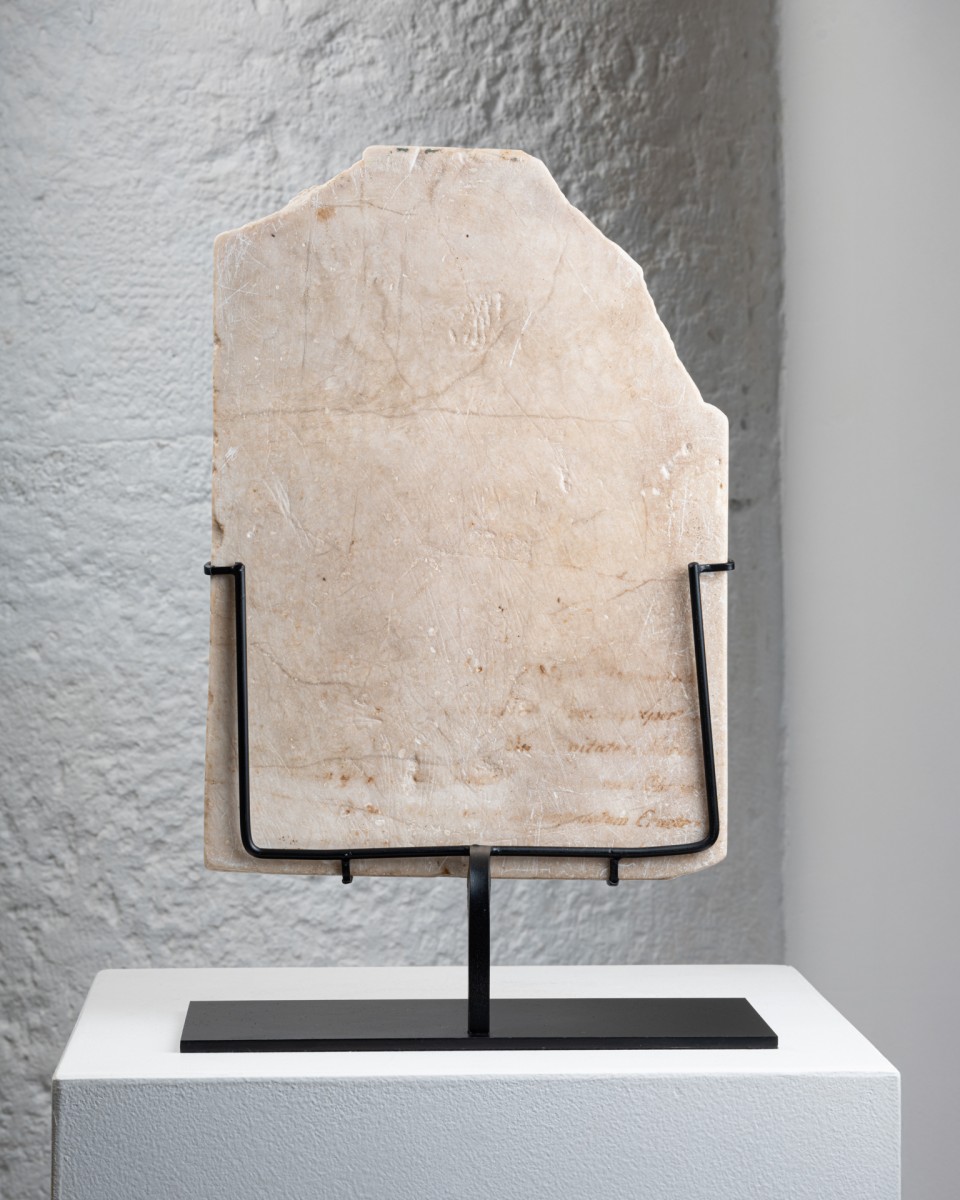
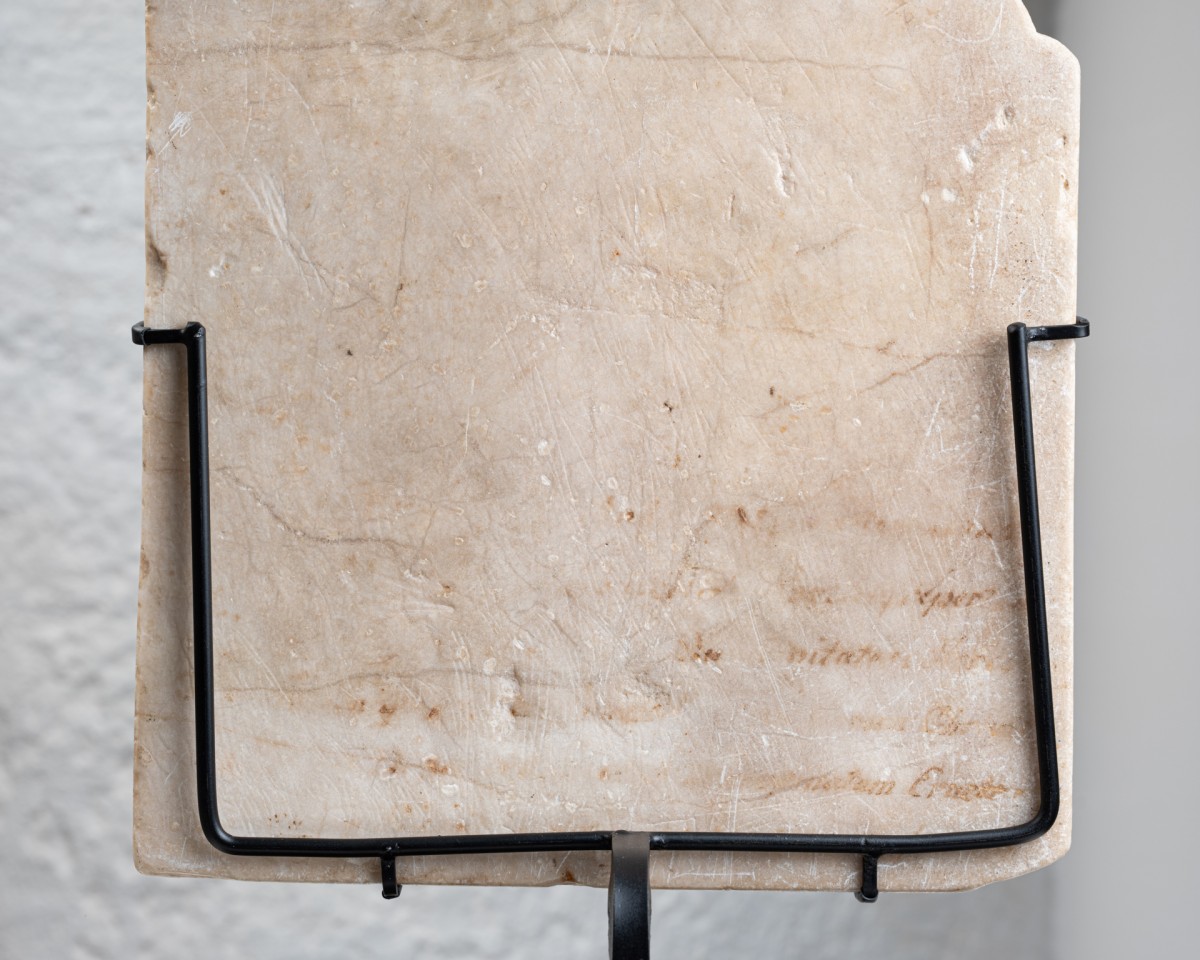
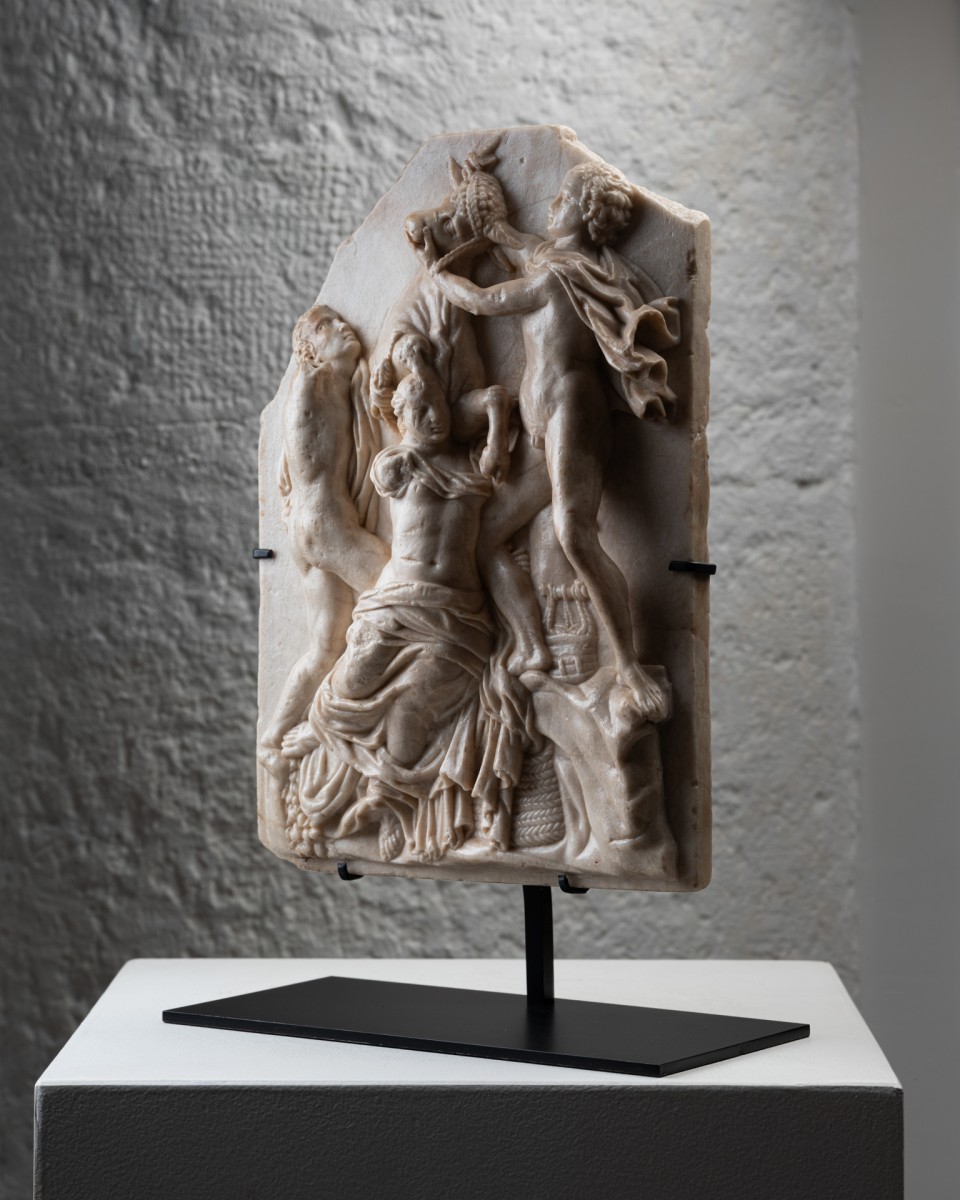
The plaque, carved in high relief, features a dynamic composition in which several figures intertwine around the animal, echoing the narrative complexity of the ancient sculpture group. On the reverse side of the work is an inscription in sepia ink; these unidentifiable lines likely indicate that the work was once part of a prestigious private collection or an antiquities cabinet.
The ancient Farnese Bull sculpture, considered one of the most spectacular sculptures of antiquity, was discovered in 1546 in the Baths of Caracalla in Rome. Its inclusion in the Farnese collection contributed to its immediate fame among artists and art lovers. From that point on, this composition became a model that was particularly studied and widely disseminated through drawings, engravings, and sculpted reductions. This relief thus appears to be inspired by an engraving by Diana Scultori, an Italian Renaissance artist and engraver who contributed to the dissemination of numerous ancient models.
During the Renaissance, the rediscovery of antiquity was accompanied by a renewed interest in Greco-Roman myths. These became favored subjects for artists from the 15th century through the late 19th century. In a deeply Christian society, mythological scenes were now stripped of their original religious dimension and were primarily viewed as cultural narratives inherited from antiquity. They offered artists great freedom of expression and allowed them to explore the aesthetic possibilities of the human figure, particularly through the depiction of the nude body and the study of movement.
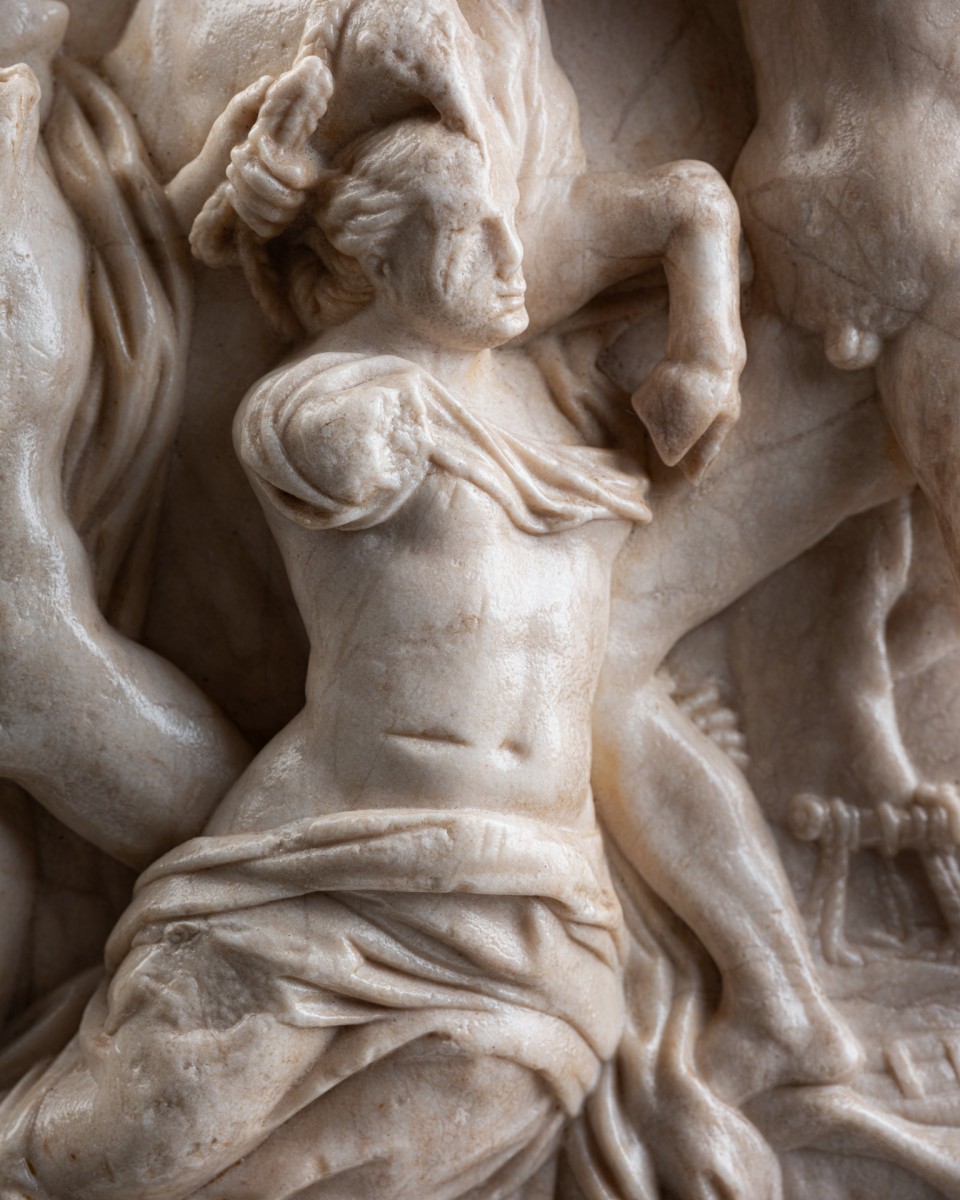
The relief depicts the mythological episode of Dirce’s torment. According to legend, Dirce was tied to a bull by the twins Amphion and Zethos to avenge their mother Antiope, whom she had persecuted. The violence of the scene and the complexity of the figures’ gestures make the Farnese Bull one of the most famous examples of dramatic composition in ancient sculpture. Renaissance artists were particularly fascinated by the intertwining of the bodies, the muscular tension of the figures, and the spectacular movement of the bull.
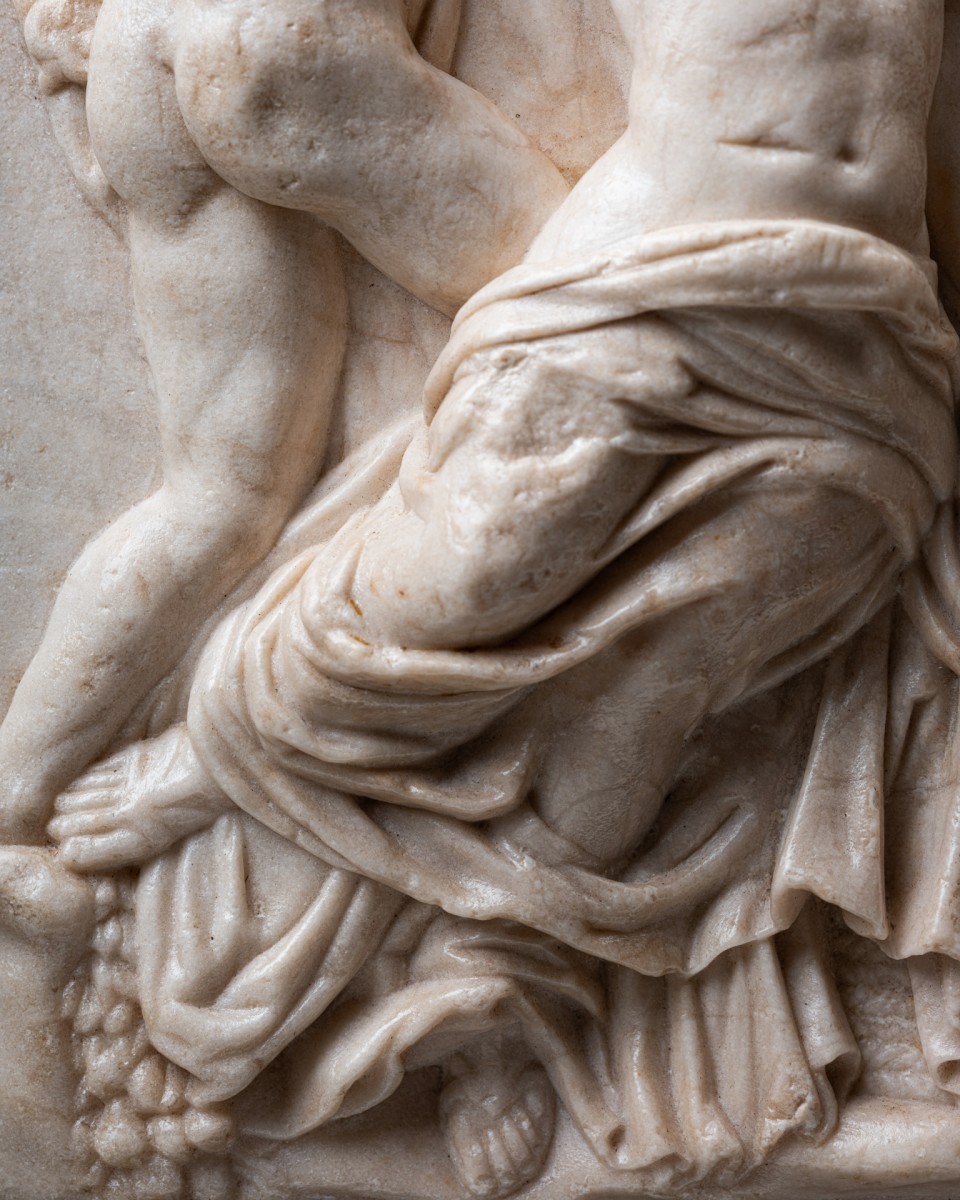
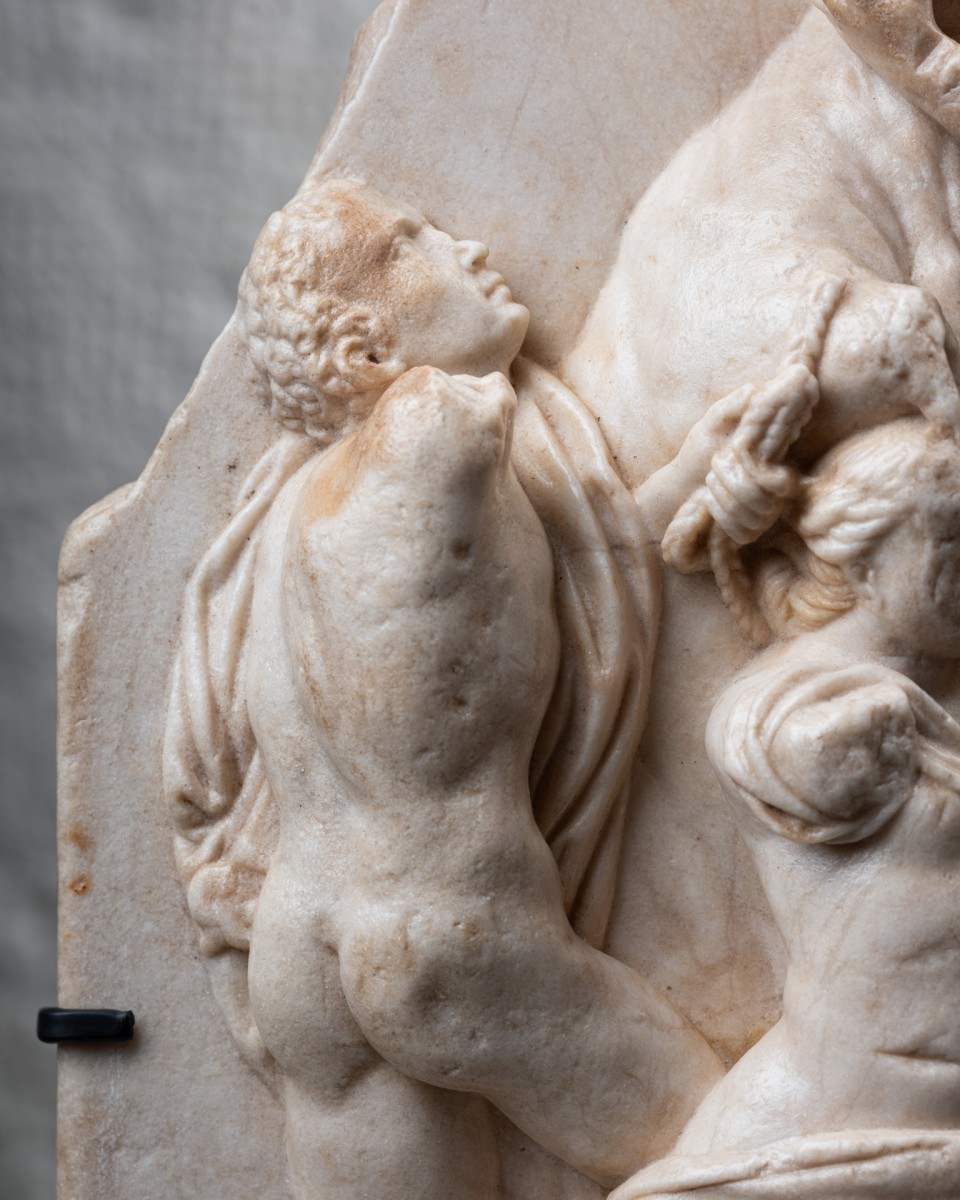
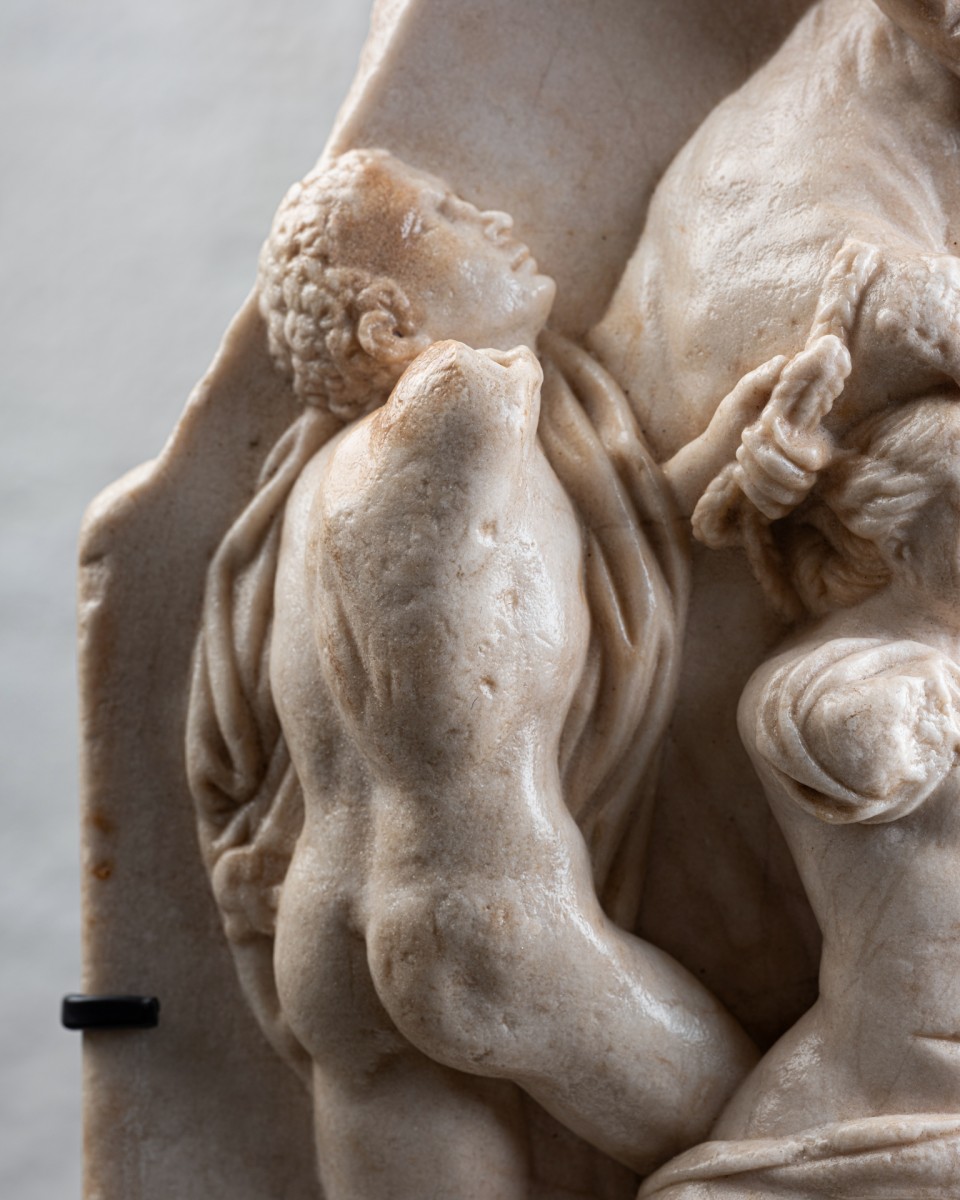
In this bas-relief, the figures are arranged in a dense, dynamic composition characterized by alternating areas of solid and void. The bodies intersect and overlap, creating a play of volumes that brings the marble surface to life. The sculptor seeks to capture the dramatic tension of the scene while adapting the monumental composition of the ancient group to a smaller scale. The deep drapery, the twisting of the bodies, and the delicacy of the nude figures attest to the direct influence of ancient sculpture on Renaissance artistic creation.
Certain stylistic elements also link this work to the output of sculptors active in Rome during the 16th century. Among them, the circle of Guglielmo della Porta stands out as a particularly relevant reference. He is known for the exceptional quality of his marble work, particularly in his treatment of drapery and the precision of his figure modeling.
His works indeed display great finesse of execution, as well as meticulous attention to the details of the fabrics and the interplay of folds that enliven the surface of the marble. This artistic sensibility is similar to that seen in our bas-relief, particularly in the delicate rendering of the drapery and the overall quality of the sculpture.
This type of relief is also part of the tradition of humanist collecting that emerged in the 16th century. Scholars, collectors, and art lovers gathered objects inspired by antiquity in their cabinets: sculptures, reliefs, bronzes, medals, and engravings. These works not only illustrated the mythological tales of ancient literature but also served as a testament to their owners’ taste and erudition.
Thus, this marble bas-relief is fully in keeping with the artistic tradition of the Italian Renaissance, characterized by a fascination with classical models and their adaptation across various media. By reinterpreting the famous composition of the Farnese Bull, the artist pays homage to one of the masterpieces of classical sculpture while adapting it to a format intended for art lovers and collectors.
Delevery information :
Please note that packing and shipping costs are not included in the price of the objects which are quoted ex shop.
Final amount including packing and shipment to be discussed with Galerie Alexandre Piatti.