Offered by Dei Bardi Art
REQUEST INFORMATION

Sculptures and works of art from the Middle Ages and the Renaissance
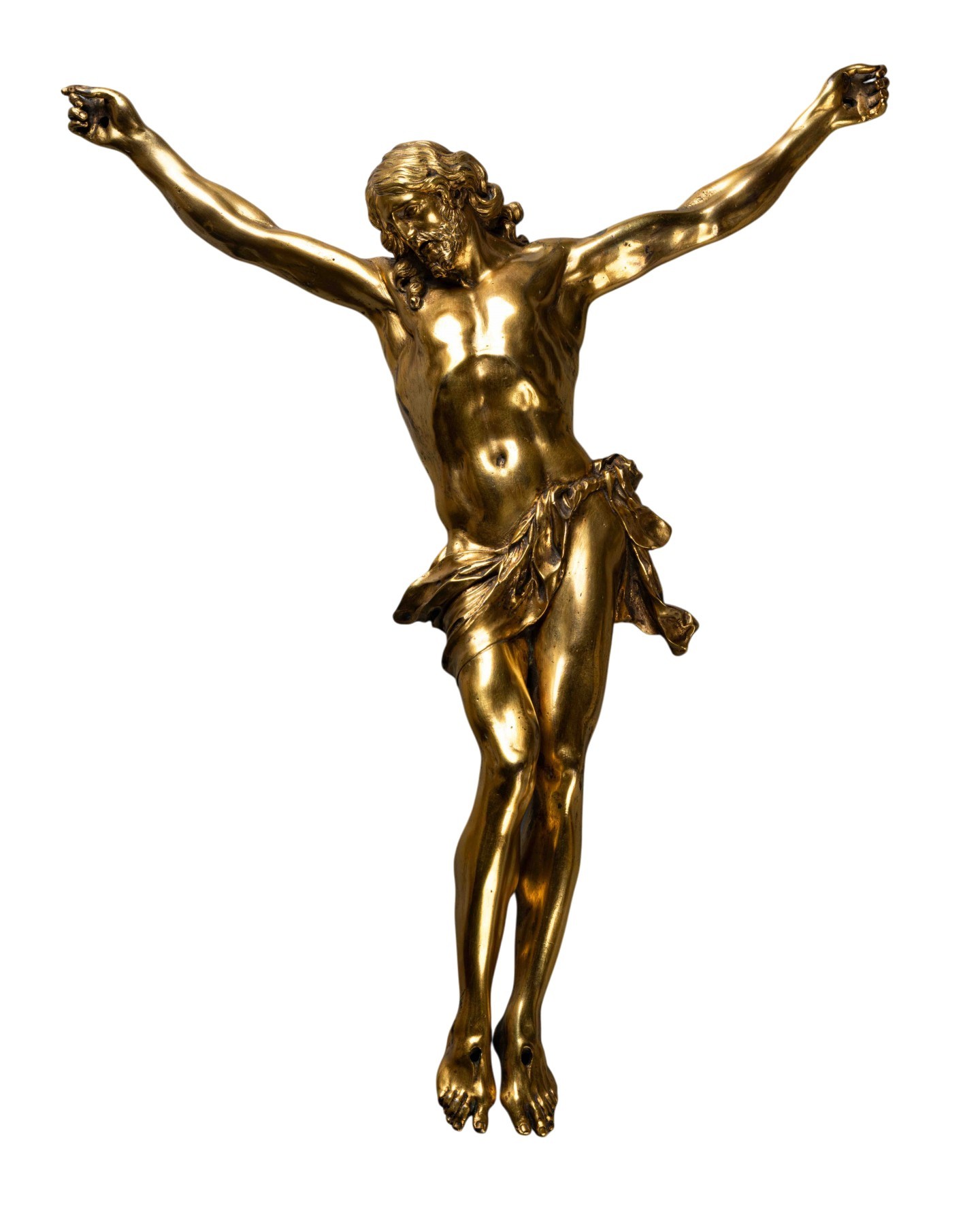
Cristo Vivo
Italian, probably Roman
Second half of the 17th century
Gilt bronze
42 × 31 cm
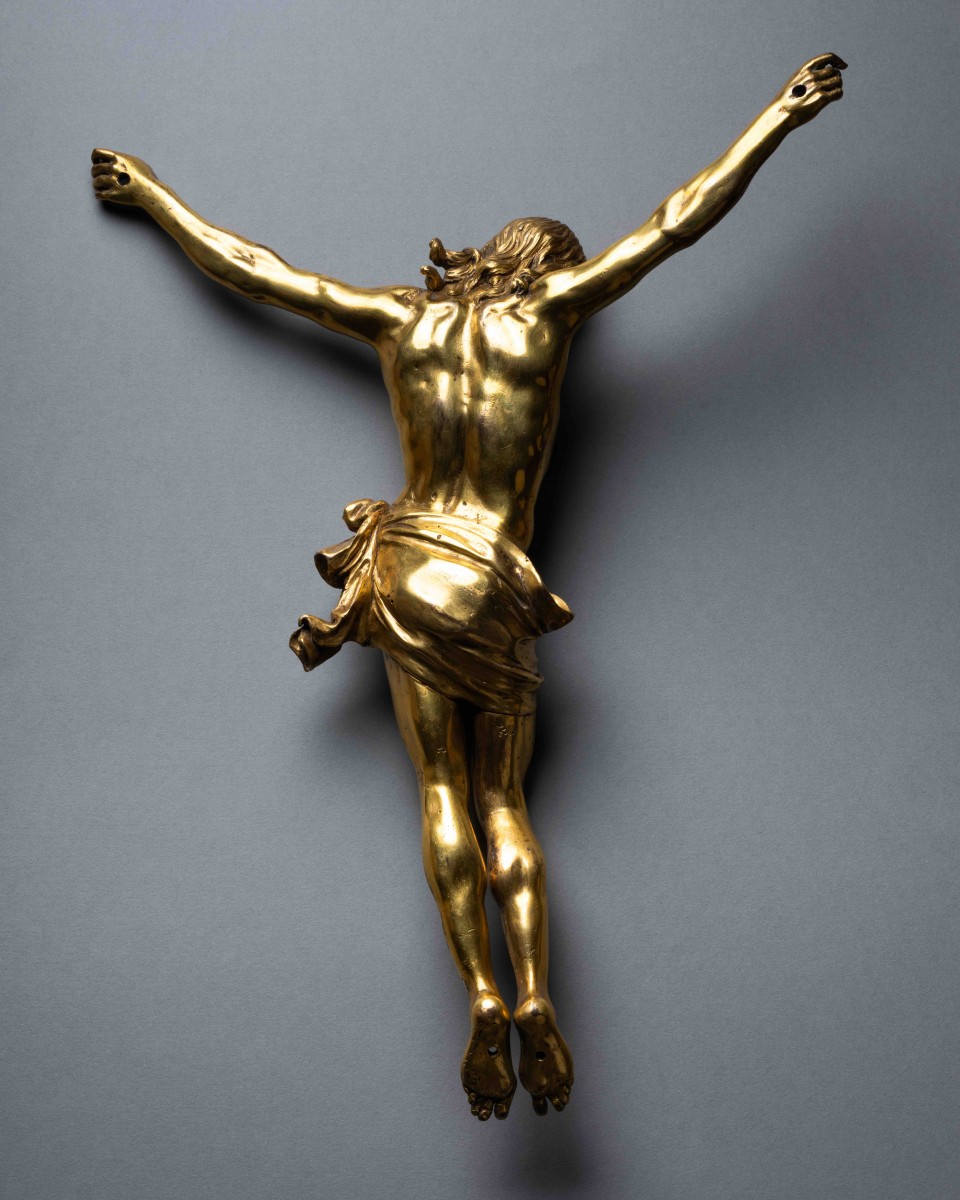
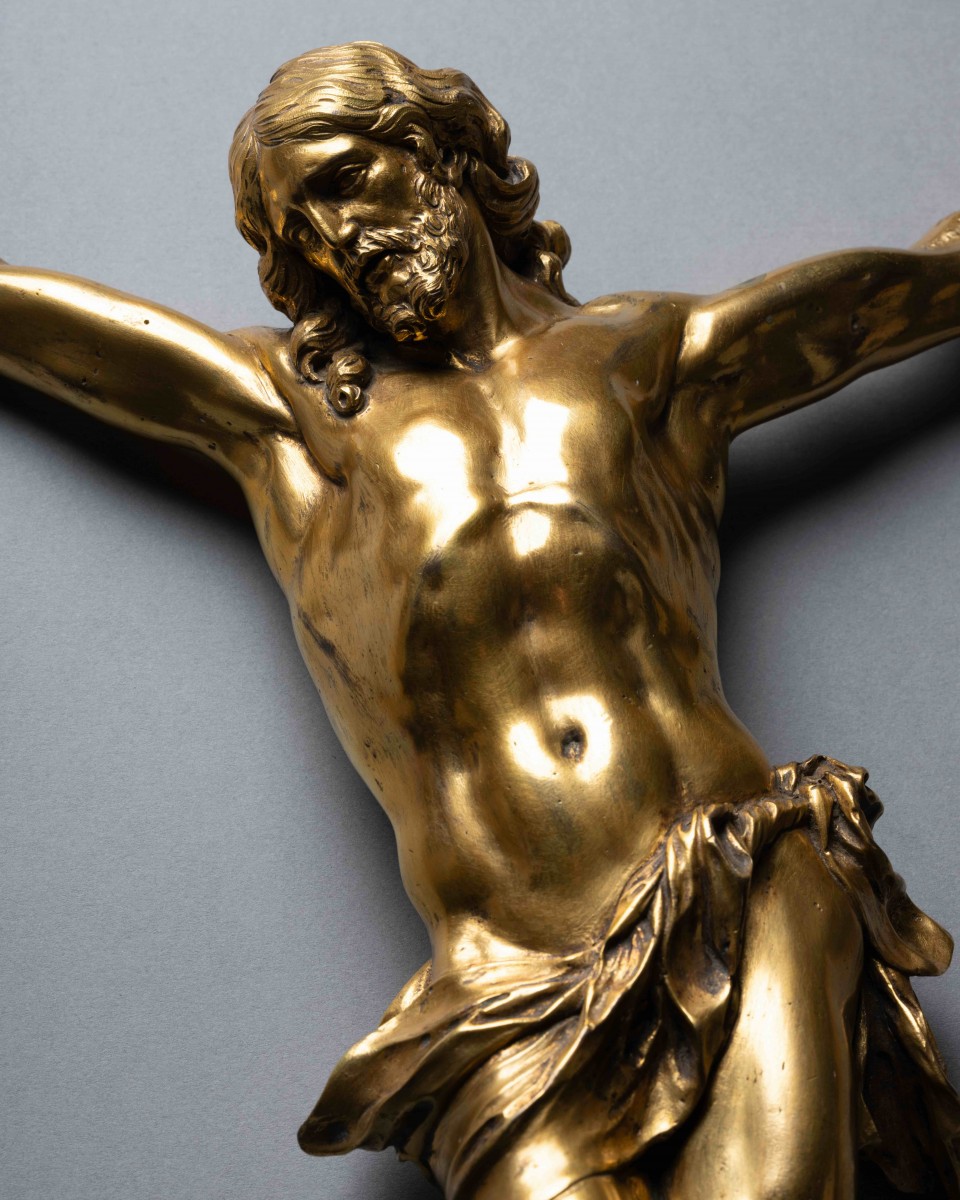
This imposing and finely executed gilt bronze depicts Christ alive upon the Cross (Christus vivens), conceived at a moment of solemn spiritual intensity rather than physical collapse. The figure is rendered with arms fully outstretched and slightly raised, the head gently inclined and turned, the eyes half-open in an expression of restrained pathos. The body is elongated and harmoniously proportioned, animated by a subtle torsion through the torso and hips, while the legs fall naturally together, reinforcing the vertical emphasis of the composition.
The anatomical modelling is of notably high quality. The musculature is articulated with refinement and restraint, eschewing exaggeration in favour of a controlled naturalism grounded in the classical tradition. The surface is carefully finished, with smooth transitions across the chest and abdomen, set against more crisply chased details in the hair, beard, and facial features. The perizonium, tied at the right hip, is treated with elegant, gently wind-swept folds that introduce a measured sense of movement without disturbing the figure’s overall composure.
The rich gilded surface further enhances the sculpture’s presence, unifying the form while heightening the clarity of its volumes. Both precious and devotional, the object underscores its intended function as a focus for private contemplation, while also placing it within the tradition of luxury bronzes produced for an elite clientele.
At a height of 41 cm, the present figure is remarkable for its scale within the corpus of devotional bronzes of this type. This sense of monumentality, combined with the quality of execution, strongly suggests production in a highly accomplished Roman workshop.
The work is closely related to the Cristo vivo type developed by Alessandro Algardi in the mid-17th century, one of the most influential sculptural inventions of the Roman Baroque. Conceived for prestigious ecclesiastical commissions, Algardi’s model established a renewed iconography of Christ alive on the Cross, privileging spiritual transcendence over corporeal suffering.
Like Algardi’s prototypes, the present figure is characterized by a composed, open-chested stance, a restrained upward inclination of the head, and a subtle equilibrium between anatomical truth and classical idealization. The emotional tenor is one of quiet acceptance, in contrast to the heightened drama associated with Gian Lorenzo Bernini. This affinity with Algardi’s aesthetic is particularly evident in the serene expression and the measured rhythm of the body.
At the same time, the present bronze distinguishes itself within this tradition through its exceptional scale and technical accomplishment. Bronzes of this size are comparatively rare and would have required both considerable material investment and advanced casting expertise. The assured modelling, together with the finely preserved gilding, indicates an object of significant prestige, almost certainly intended for a discerning and sophisticated patron.
Its large dimensions, refined execution, and luminous surface elevate it beyond the category of small devotional bronzes, placing it instead among the more ambitious and accomplished productions of late 17th-century Roman workshops. As such, it offers compelling testimony to the enduring vitality and adaptability of Algardi’s invention, as it was reinterpreted for a devout and cultivated audience.