Offered by Dei Bardi Art
REQUEST INFORMATION

Sculptures and works of art from the Middle Ages and the Renaissance
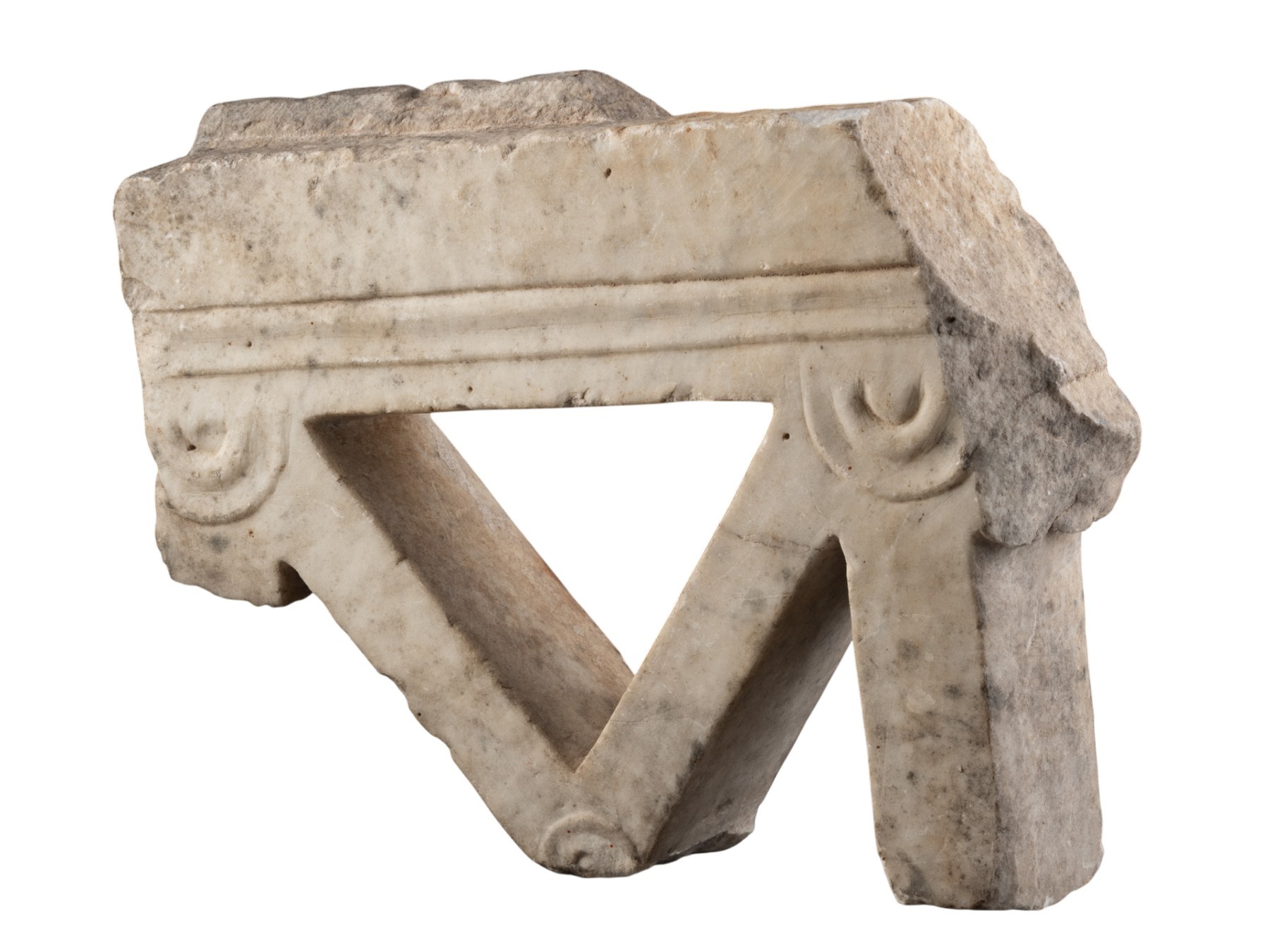
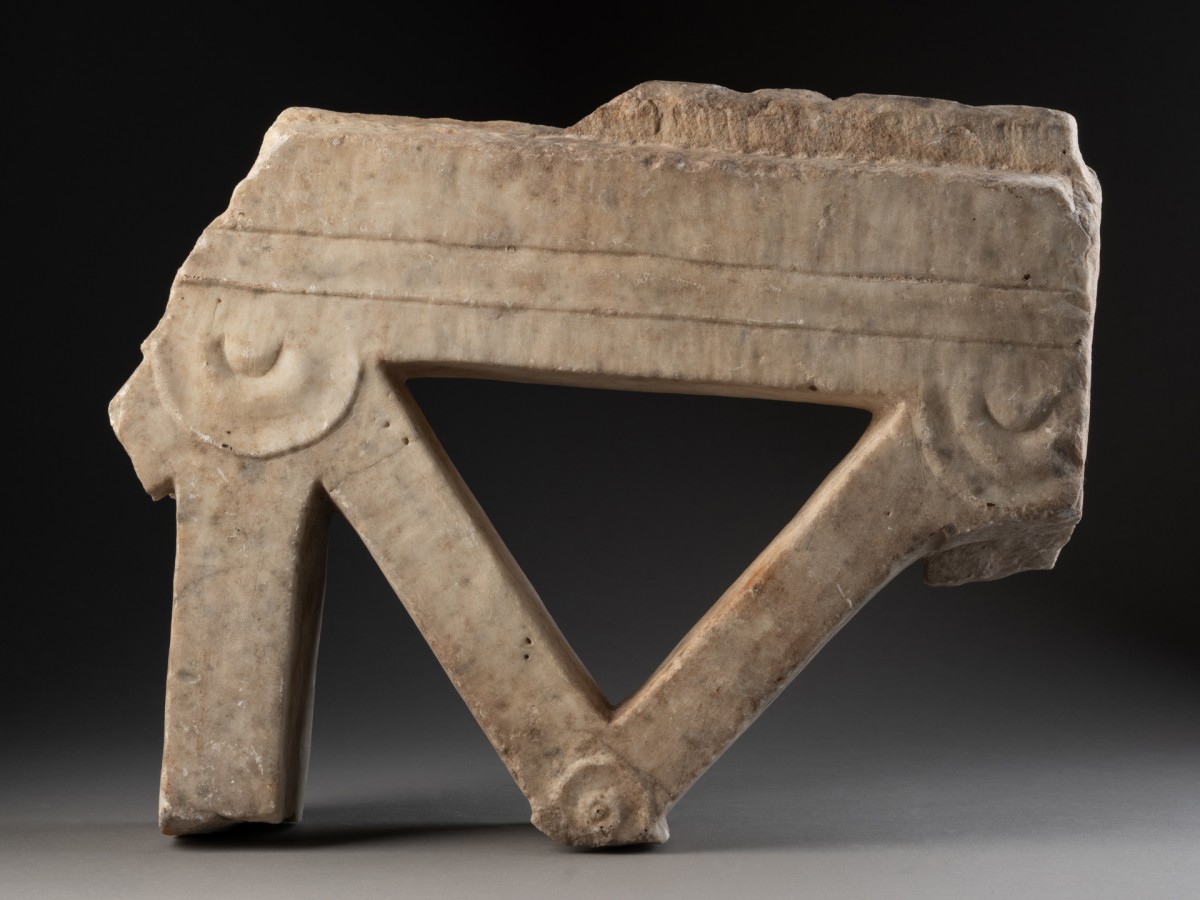
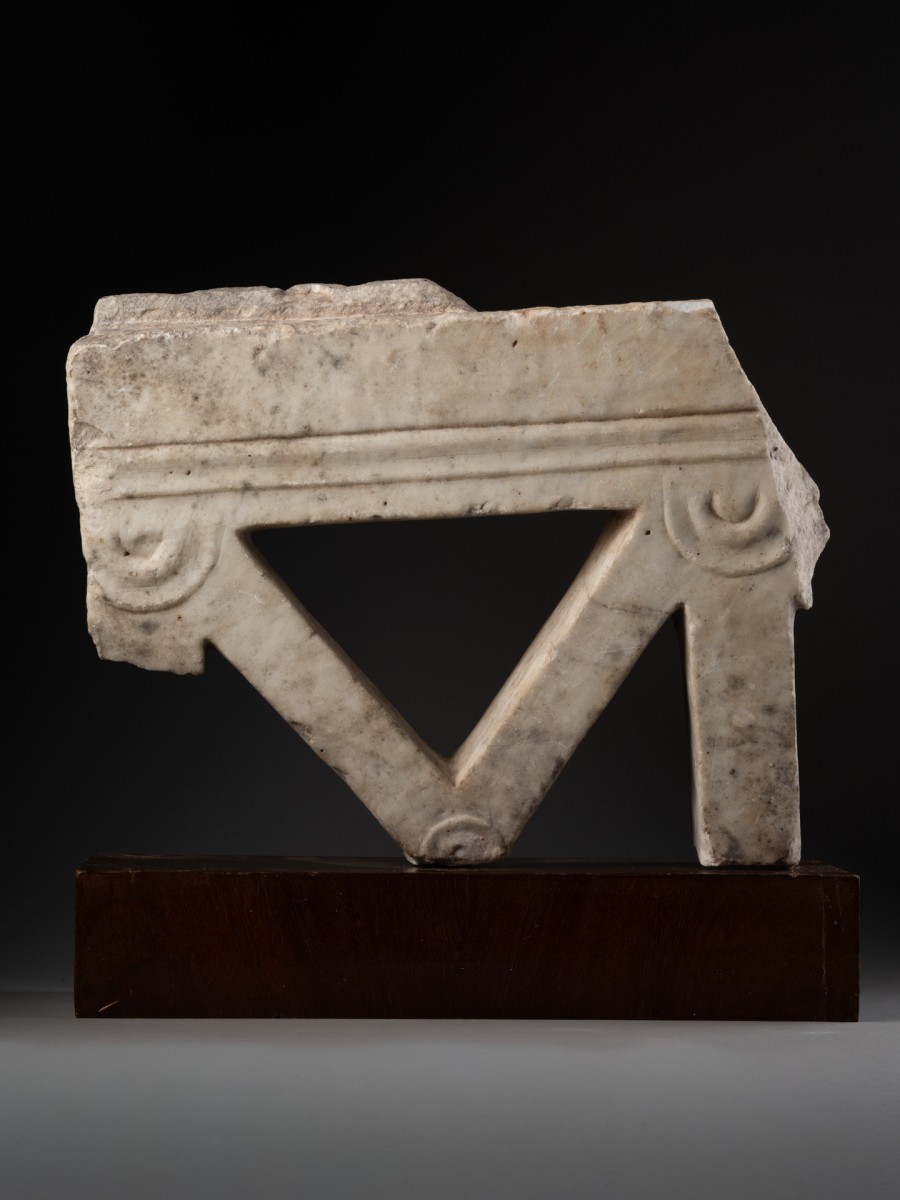
Roman marble fragment
Fine-grained white marble.?Roman Empire, 1st century AD.
24 x 31 x 8 cm
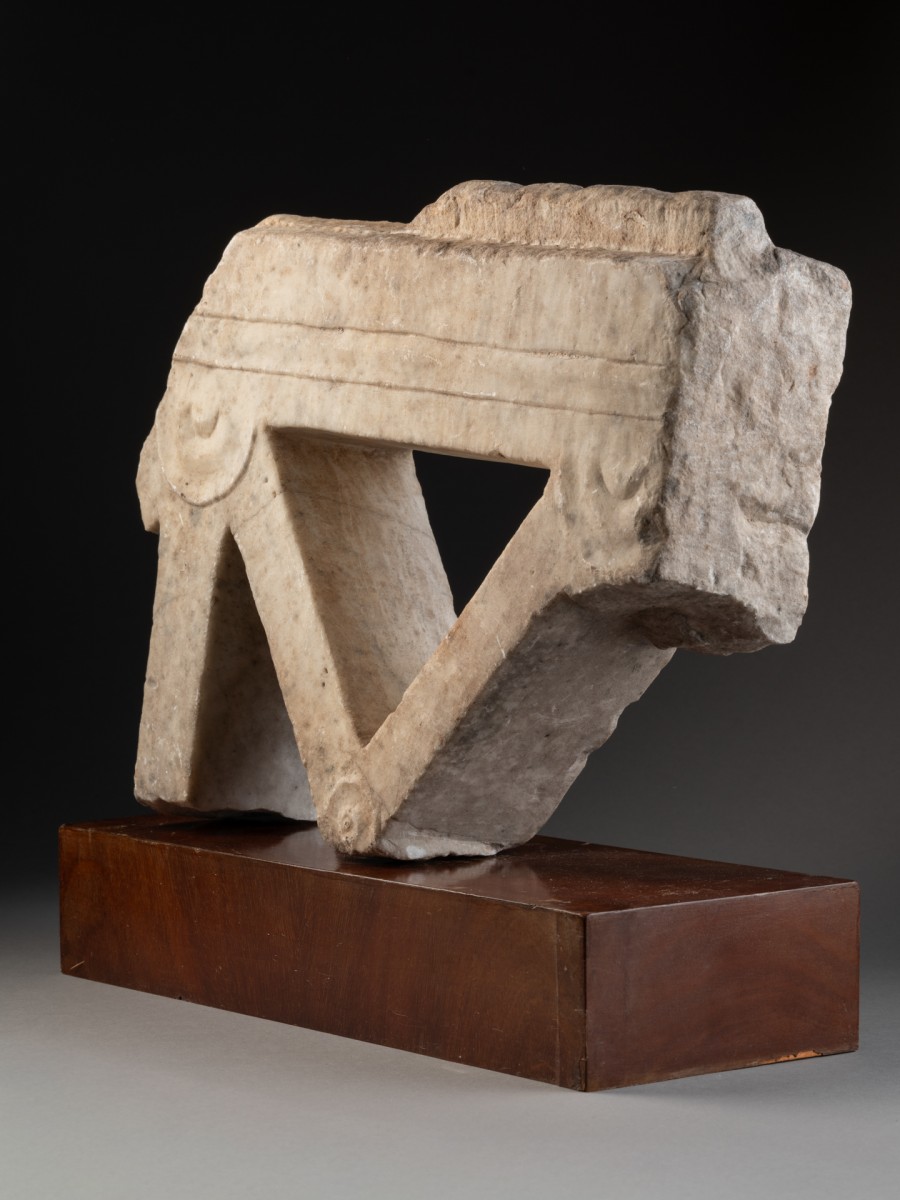
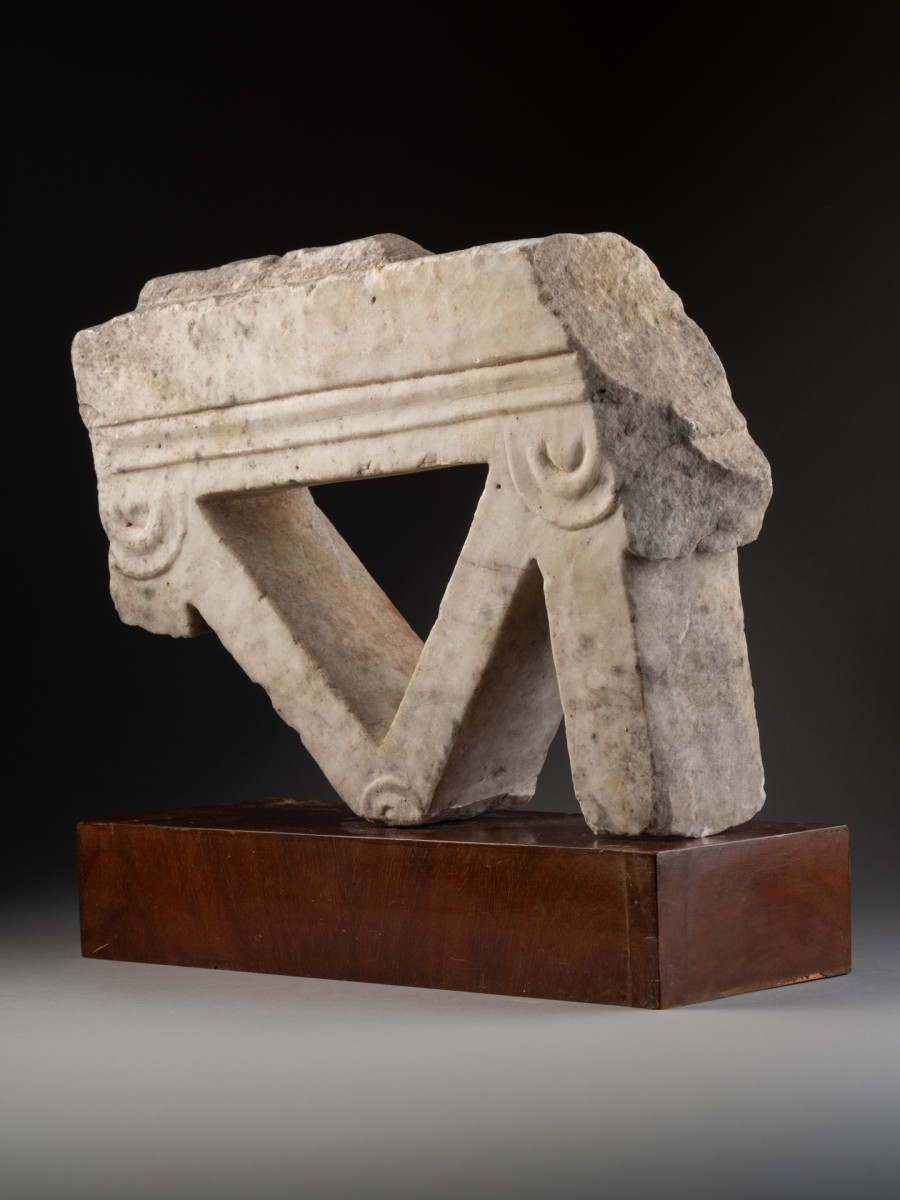
This remarkable architectural fragment in fine white marble carved fully in the round and identically finished on both faces, it was clearly intended to be viewed from multiple angles, suggesting its original placement on a projecting architectural feature—perhaps the corner of a pilaster, pier, aedicula, or projecting façade element.
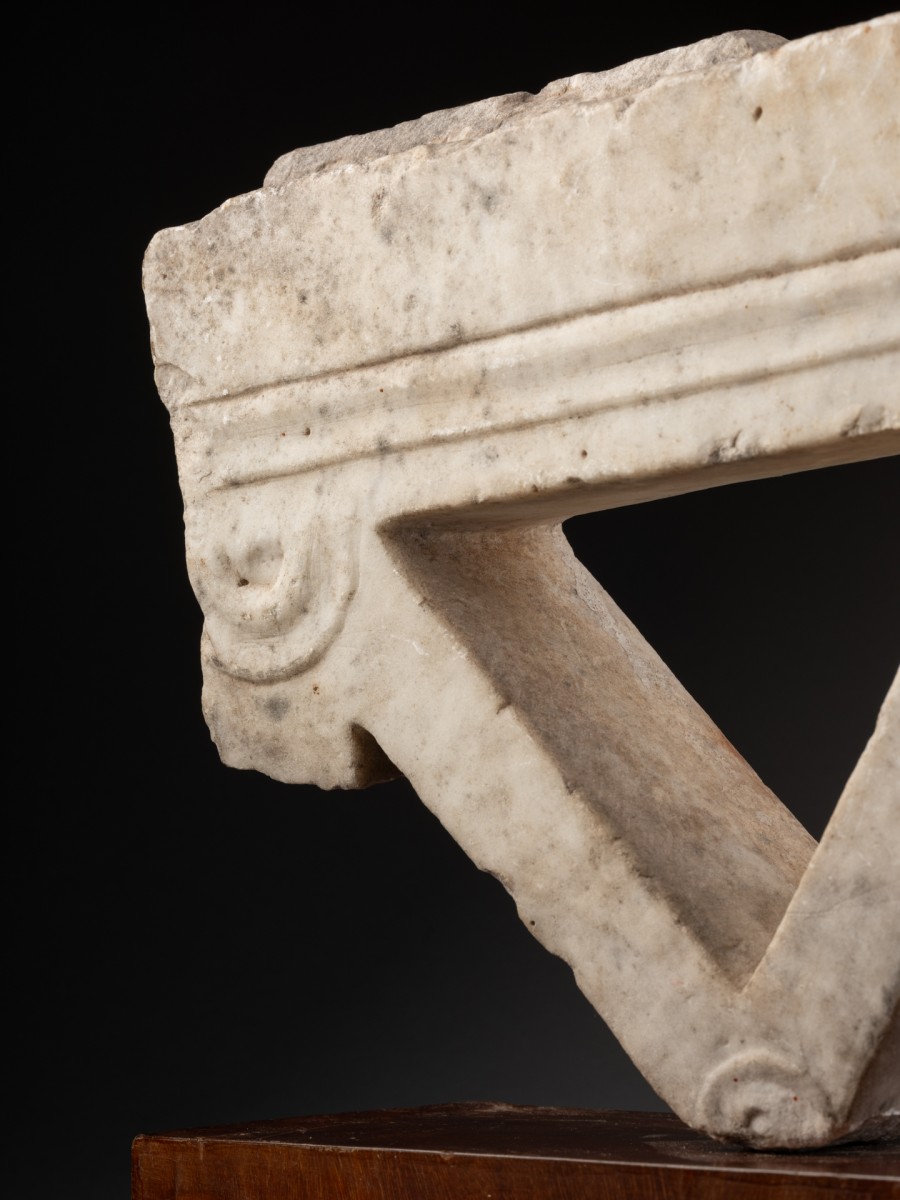
The composition is organized around a moulded cornice surmounted by an open triangular pediment, flanked on either side by symmetrical volutes characteristic of the Ionic vocabulary. Executed with exceptional formal clarity, the piece emphasizes the precision of its profiles and the purity of its volumes.
Classical syntax is observed with great rigor, yet rendered with a distinctly Roman economy of means, where structural efficiency and restrained elegance are brought into perfect balance.
Its most striking feature remains the pierced triangular pediment, whose sharply defined negative space organizes the entire composition. The tension between the horizontal line of the cornice, the spiralling movement of the volutes, and the perfect geometry of the void lends the fragment an unexpectedly sculptural presence. Viewed today in isolation from its original architectural context, the object engages in a surprisingly modern dialogue with twentieth-century geometric sculpture, seemingly dissolving the boundary between architectural component and autonomous work of art.
The identical treatment of both faces further reinforces this impression: the object possesses neither reverse nor privileged viewpoint. Conceived as a fully resolved volume, it stands as a compelling synthesis of architecture and sculpture, achieving a form of timeless abstraction.