Offered by Desmet Galerie
REQUEST INFORMATION
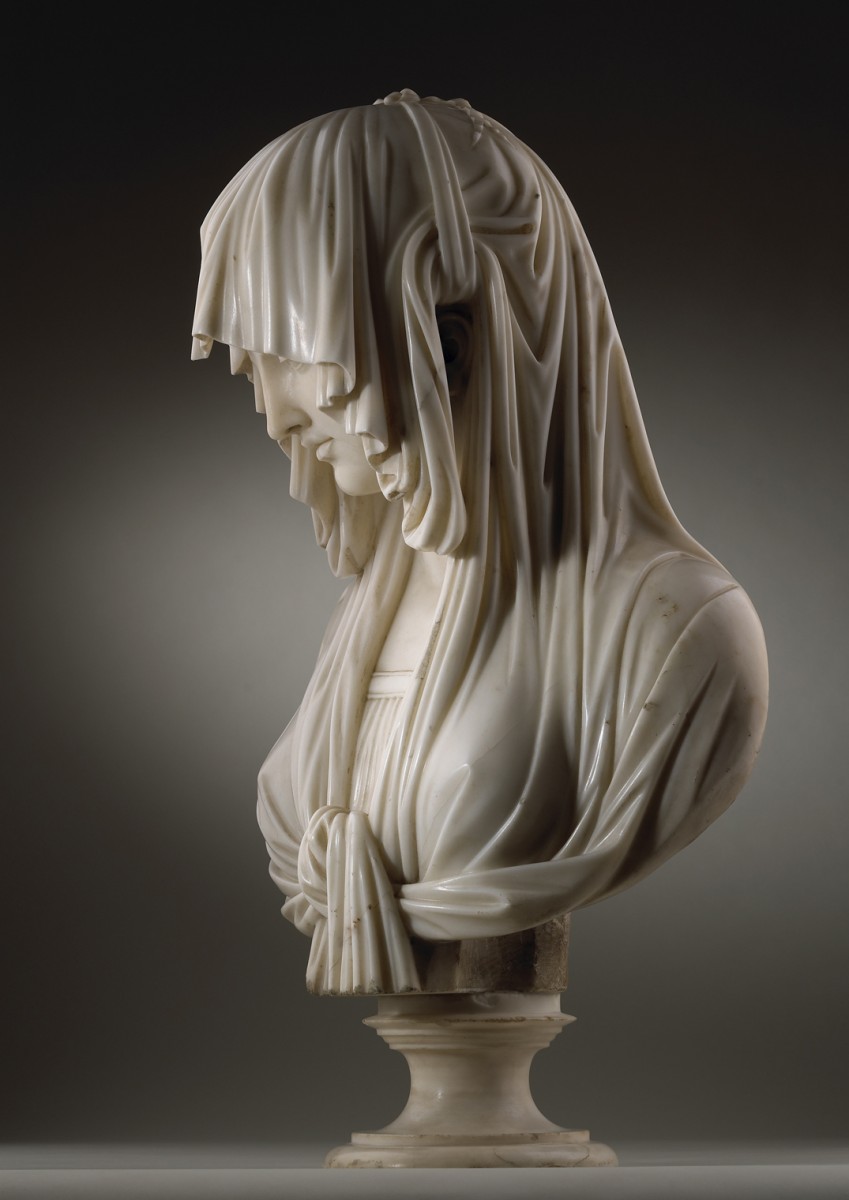
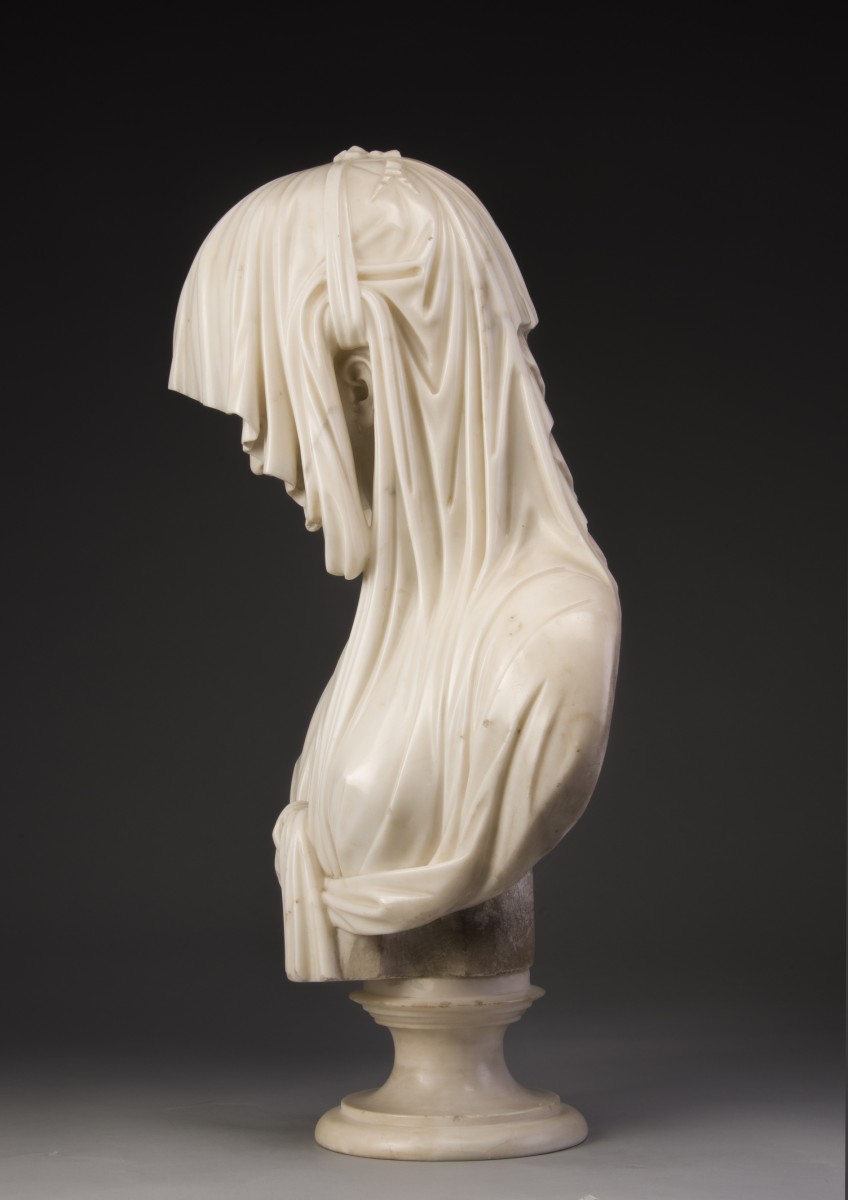

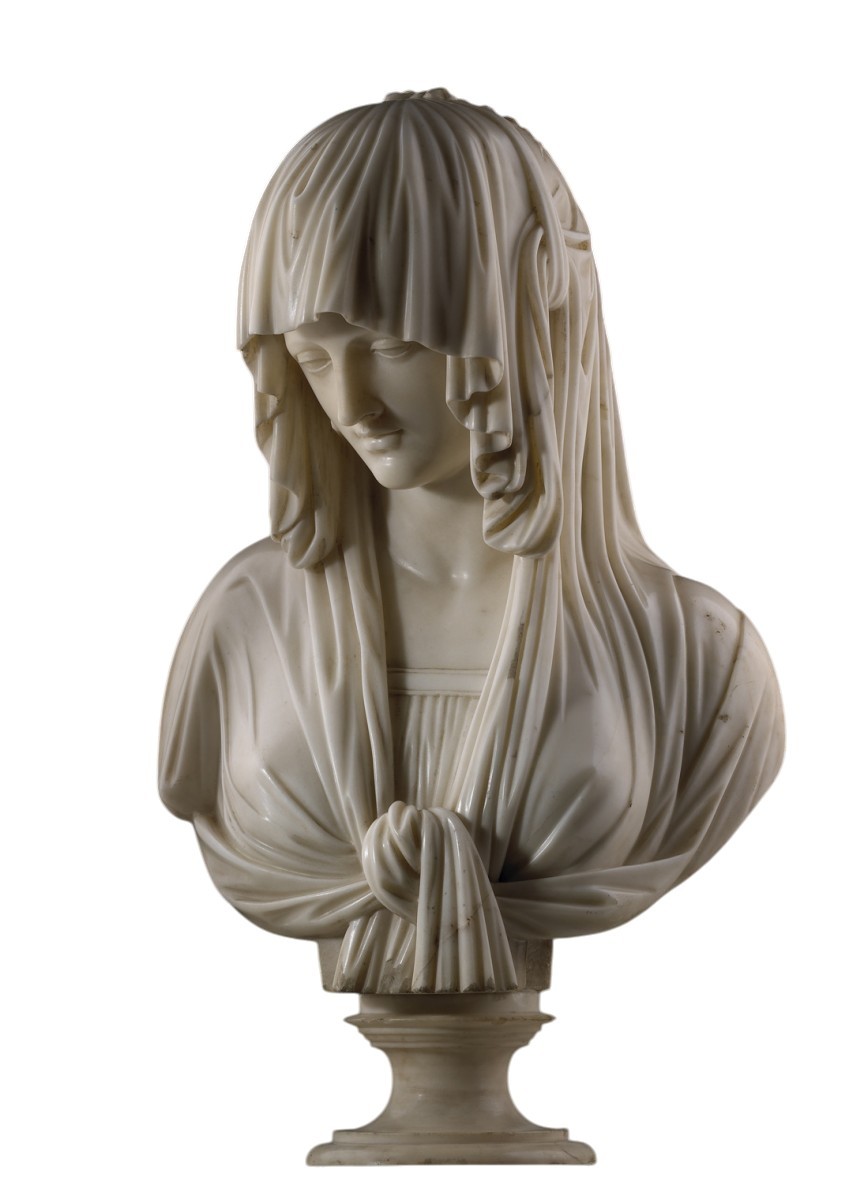
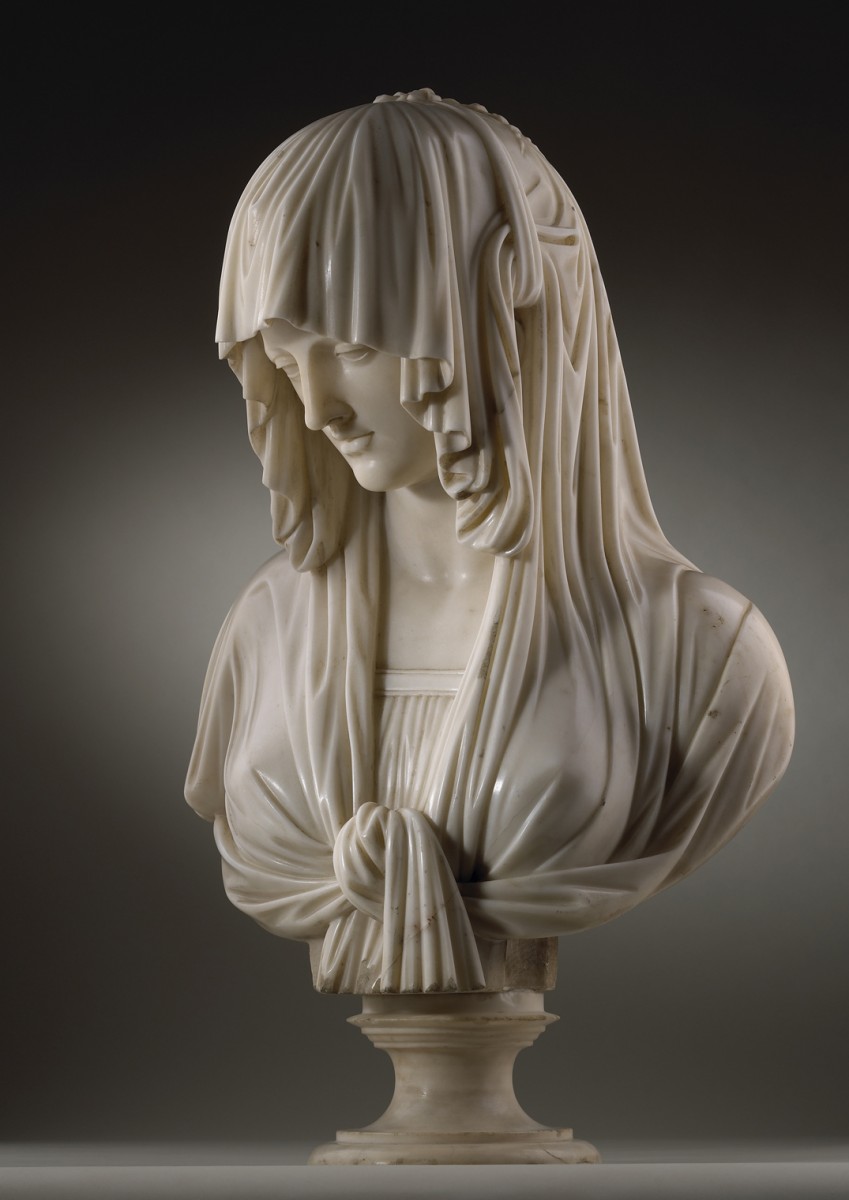
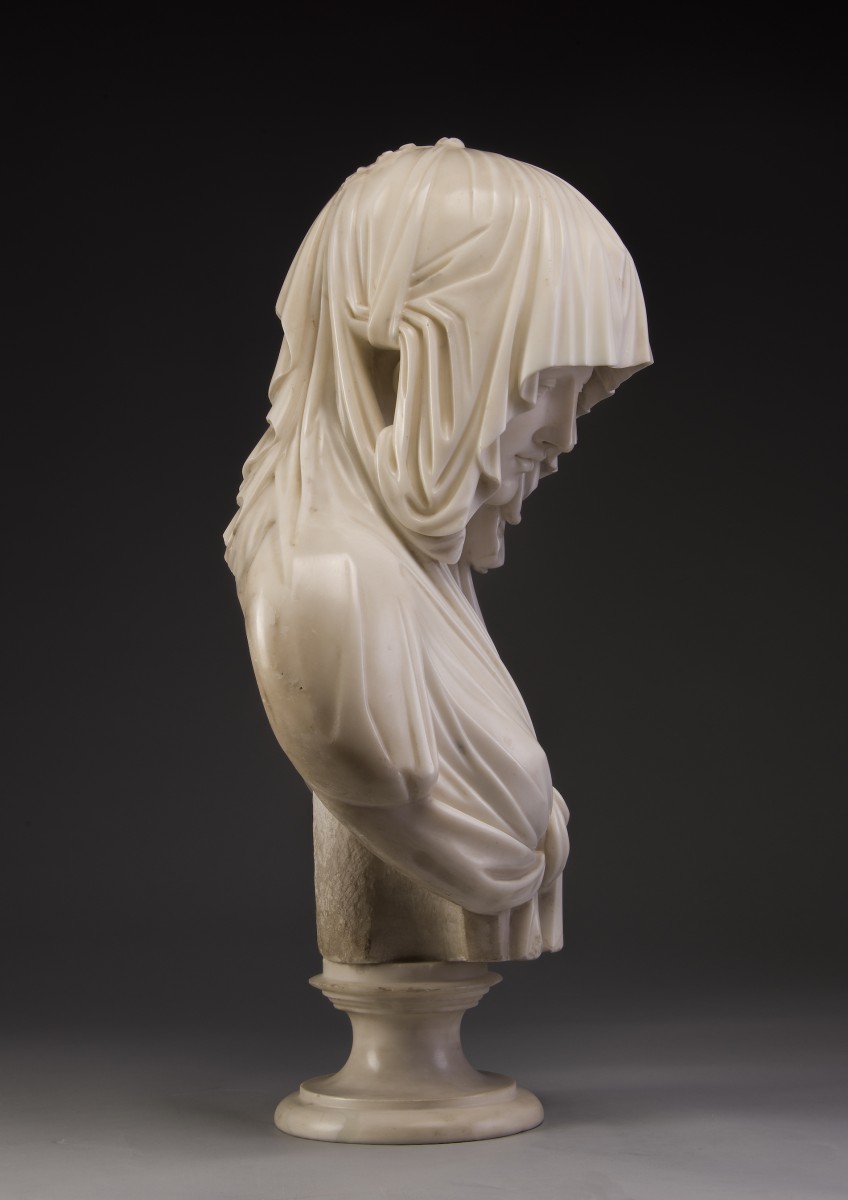
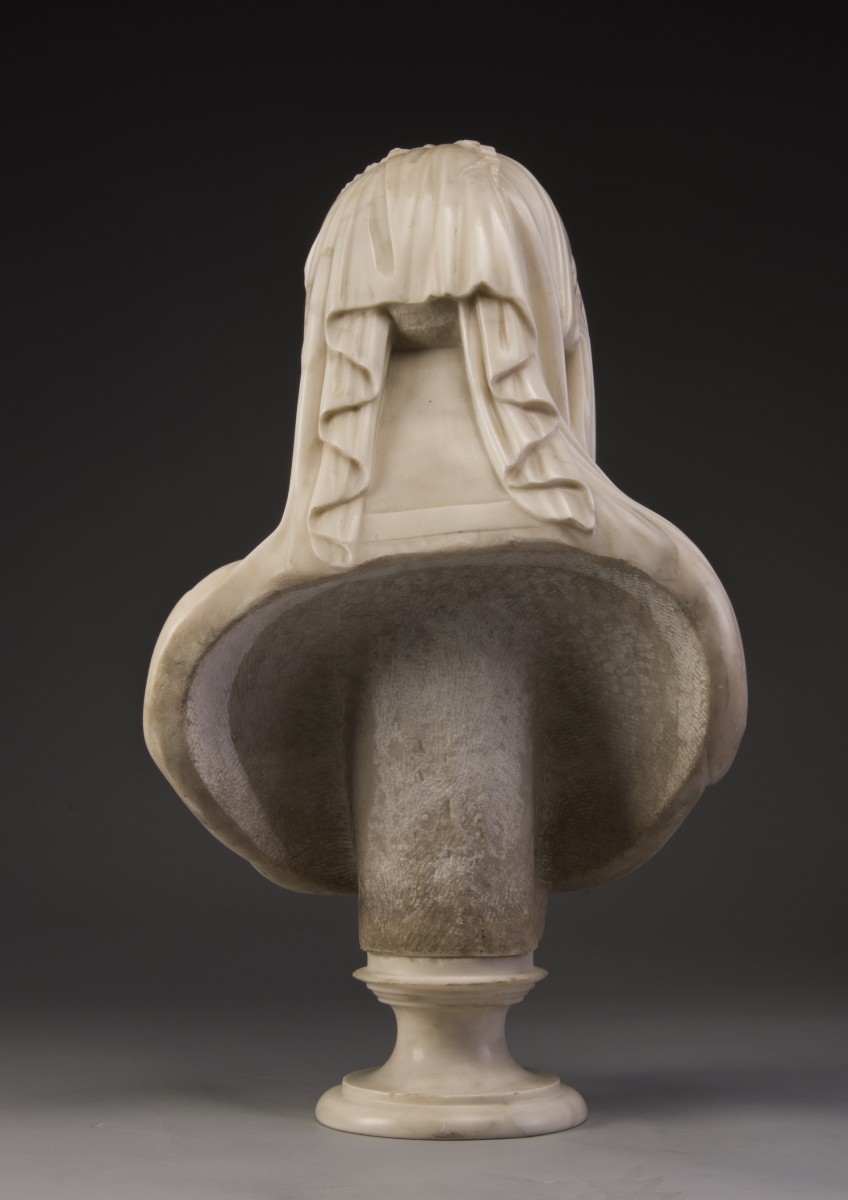
This magnificent marble bust represents most likely a pietá, i.e. the Virgin Mary in sorrow. Previously it has been named a ‘Vestal Virgin’ and indeed it has many similarities and can as such not be excluded.
The Pietà in art history typically depicts the Virgin Mary mourning over the body of Jesus Christ after the Crucifixion. While traditionally represented as a full-bodied scene—most famously by Michelangelo’s Renaissance Pietà in St. Peter's Basilica—the concept evolved in Neoclassicism, where artists frequently abstracted the themes of sorrow, sacrifice, and resignation, sometimes reducing the composition to a single figure, such as a bust. Neoclassical depictions often emphasize idealised beauty, restraint, and clarity of form, conveying deep emotion without overt drama. In these works, a veiled female figure is a common motif, signifying mourning, reverence, or the divine mystery. The delicate drapery, particularly in a translucent veil, highlights the artist’s skill in rendering complex textures in marble while imbuing the subject with a serene, almost ethereal quality. Such depictions often evoke classical ideals from ancient Greece and Rome, celebrating both the technical mastery of the sculptor and the nobility of restrained emotion characteristic of the Neoclassical style. The lowered gaze of the figure contributes to a sense of introspection and quiet mourning, embodying the stoic grace so highly valued in this period. The classical concept would correspond with the Vestal Virgin.
Vestal Virgin, a priestess to Vesta, one of Rome’s three major virgin goddesses and protectress of the hearth. Unlike most Roman religious cults, worship of Vesta was run by women. The chief Vestal, Virgo Vestalis Maxima or Vestalium Maxima (fig. 1.) oversaw the efforts of the Vestals, and was present in the College of Pontiffs. Six virgin priestesses were dedicated to Vesta as full-time officiates who lived in their own residence, the Atrium Vestae in the Roman Forum. This place of worship was where the priestesses tended the goddess’s sacred fire. Once a year, in March, they relit the fire and then ensured it remained burning for the next year. Their task was serious as the fire was tied to the fortunes of their city, and neglect would bring disaster to Rome. The rites surrounding the Vestals remained relatively fixed from the time of the Roman Republic through the fourth century A.D.
The present bust is a masterpiece of North-Italian neo-classical art, reminiscent of the sensual oeuvre of Antonio Canova (1757-1822). The great Italian master himself created several Vestals, such as the marble herm bust now in the Getty Museum. Almost every European sculptor of stature living in the beginning of the 19th century was indebted to Canova, at least to a certain extent. However, this particular bust also bears other stylistic features, such as the wax like quality of the marble and a specific rendering of the folds in the draperies, which resemble the art of another famous Italian sculptor, Camillo Pacetti.
Pacetti was originally from Rome, where he received his training at the famous Accademia di San Luca. Soon, his talents were noticed and from the 1780’s onwards, he started receiving commissions from and working for influential figures such as the sculptor and bronze-founder Francesco Righetti (1749-1819), the founder of the famous Wedgewood porcelain company Josiah Wedgewood (1730-1795) and the papal Prefect of Antiquities, Ennio Visconti (1751-1818), who was supervising art projects for the Borghese family. Pacetti’s activity as an antiques restorer for the Borghese and his proximity to Europe’s leading sculptor Canova undoubtedly contributed to his adaptation of the emerging classicism.
There is a certain masculinity in the Vestal’s face that resemble the art of the internationally acclaimed Danish sculptor Bertel Thorvaldsen (1770-1844) and can be rediscovered in the faces of Pacetti’s terracotta figures. Her small chin and slender face though, are close to figures such as the Virgin in a Pietà from circa 1810, now in the Galleria dell’arte moderna in Milan.
Delevery information :
We can arrange shipping.