Offered by Desmet Galerie
REQUEST INFORMATION
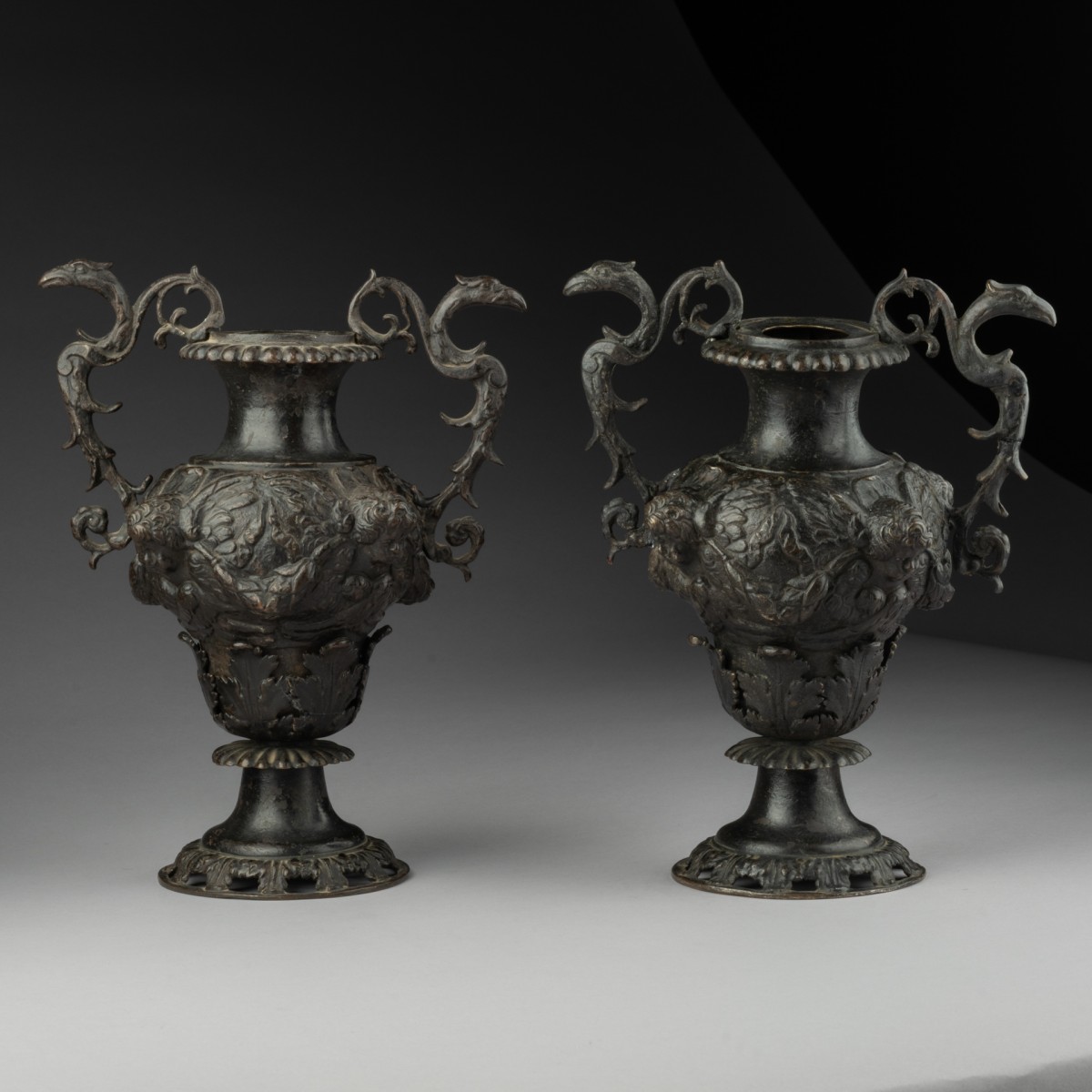
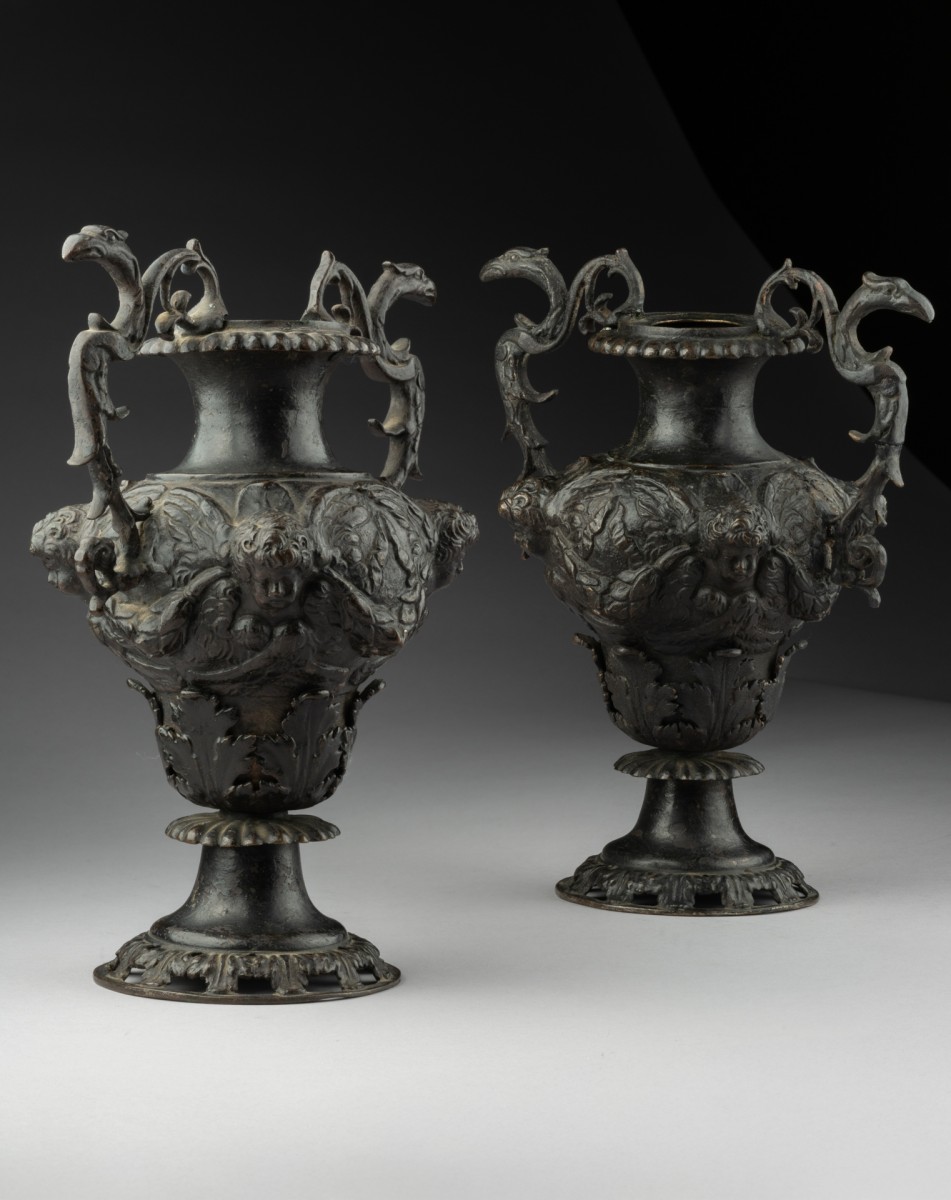
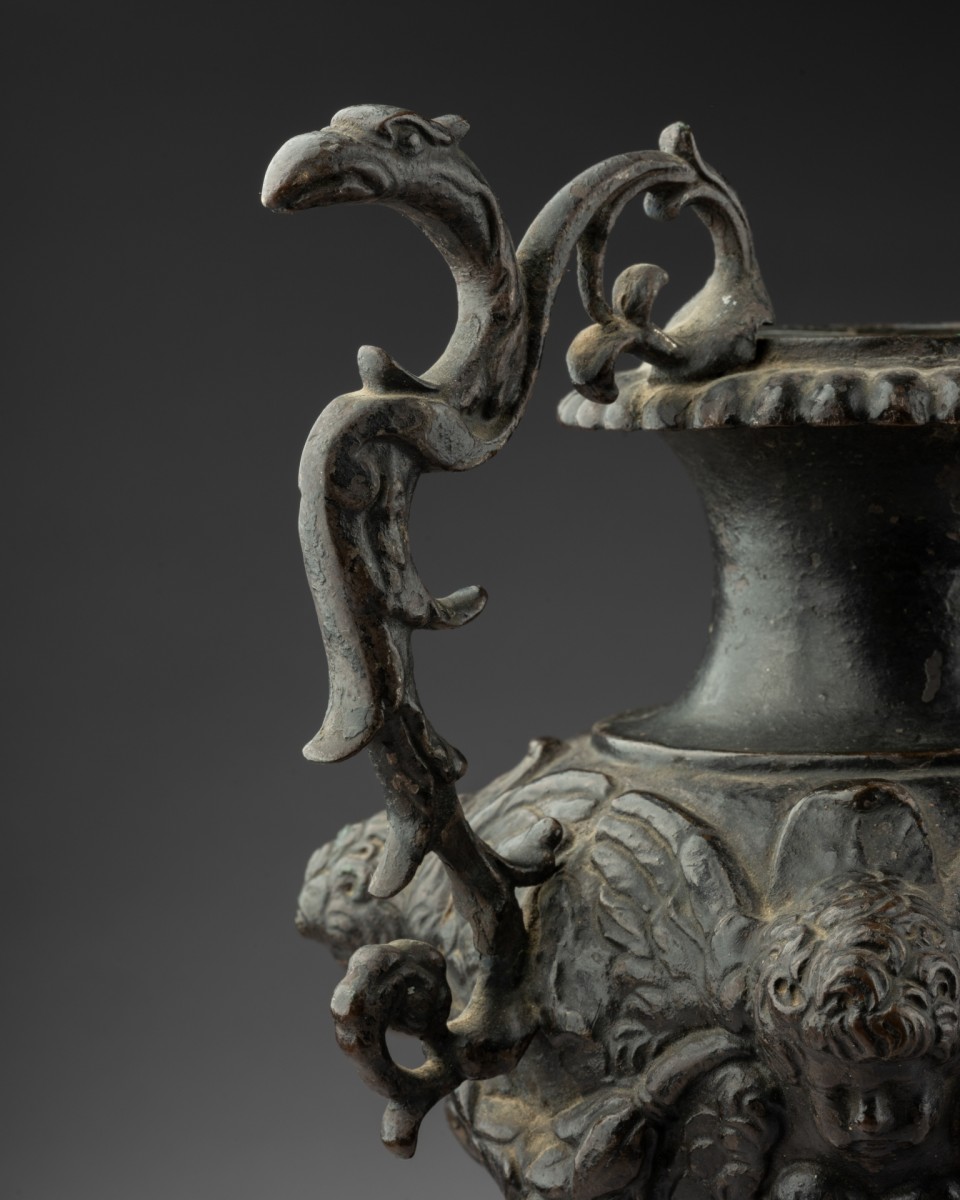

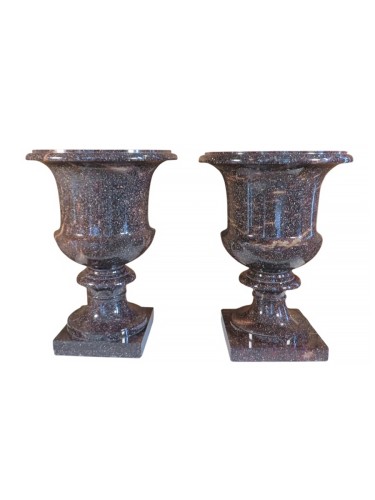
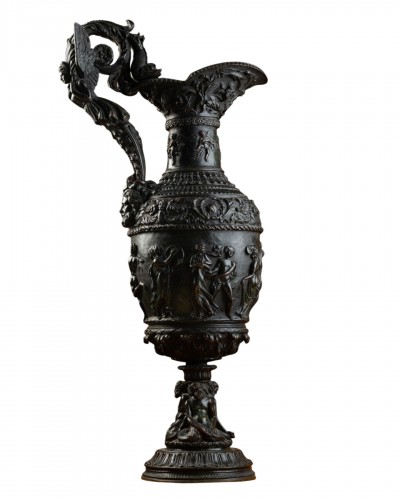
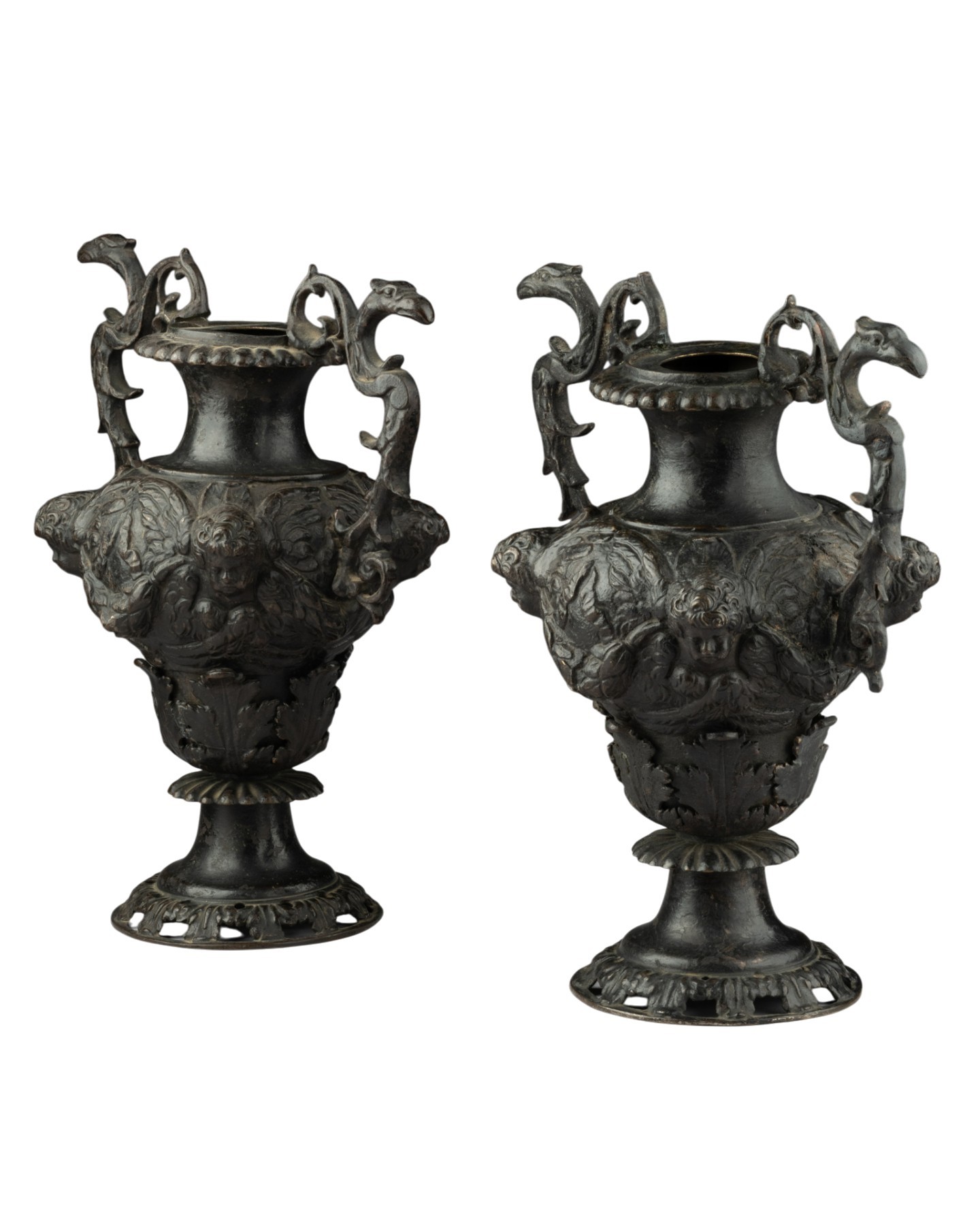
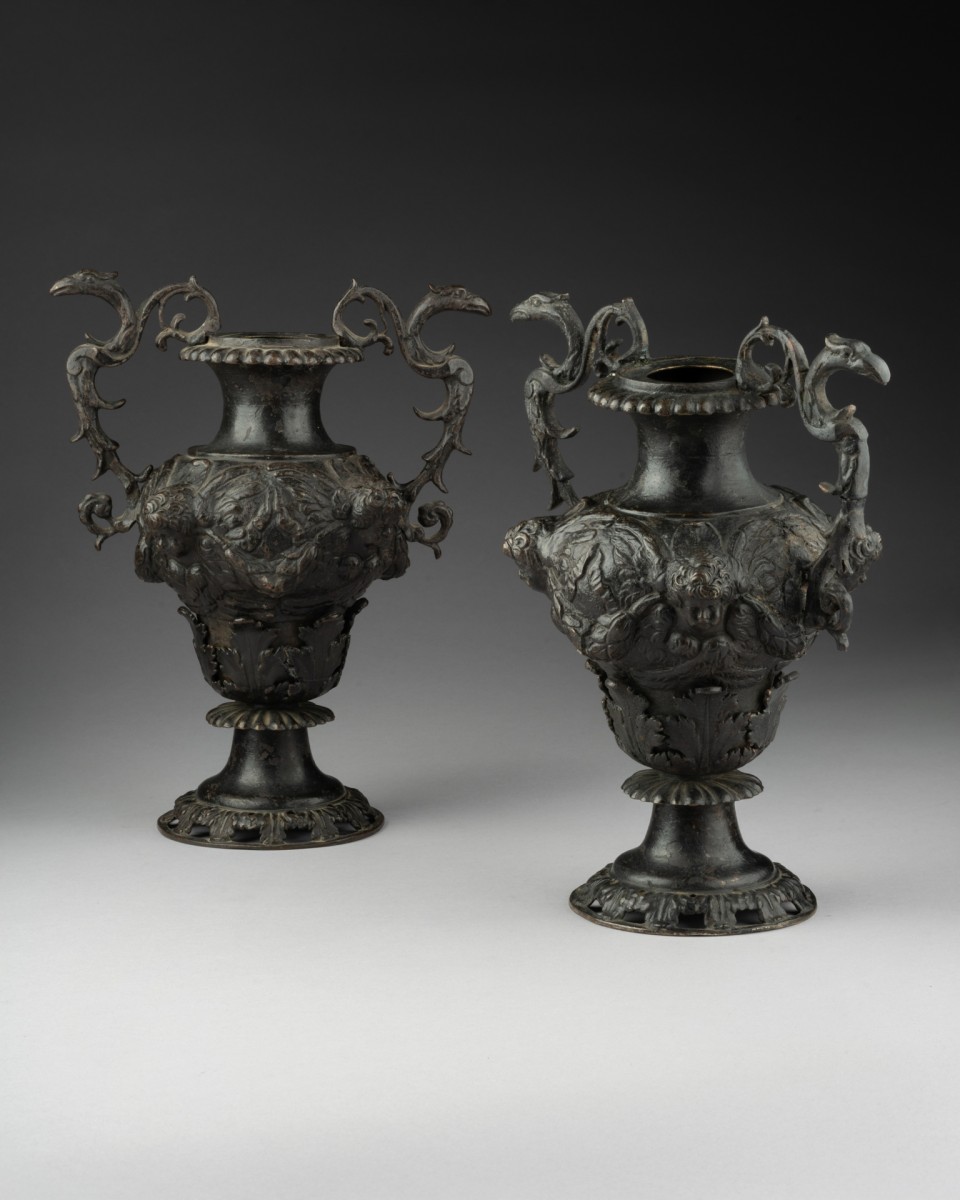
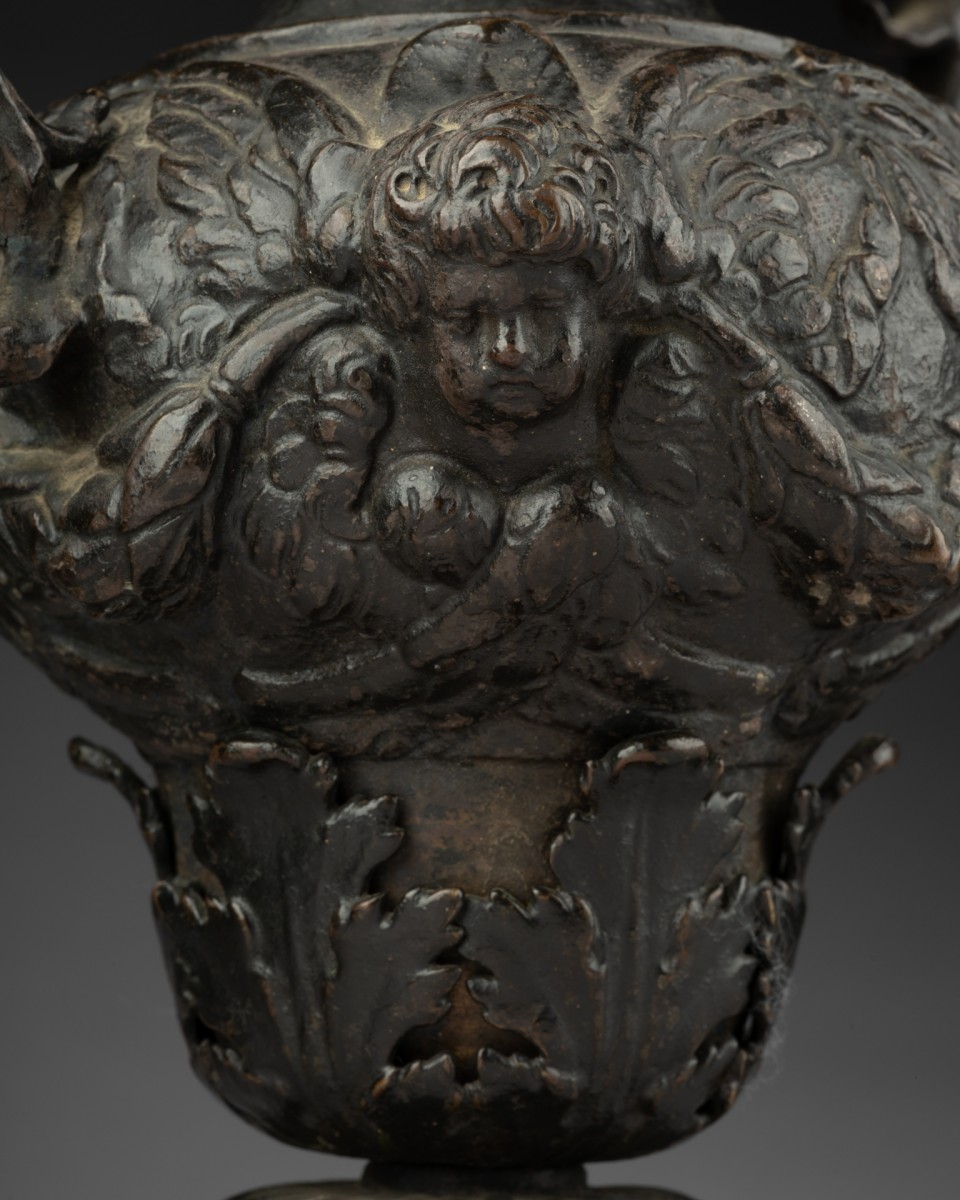
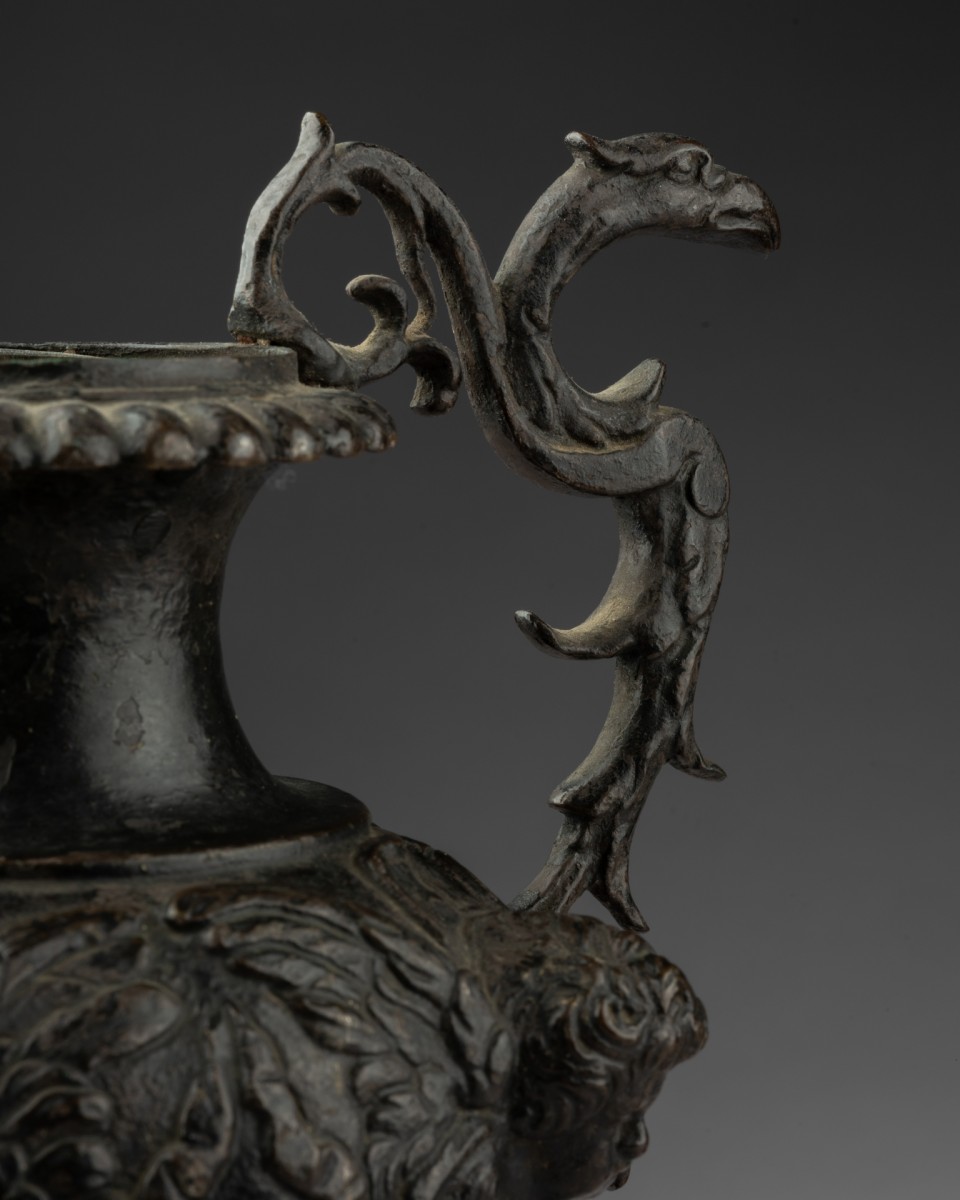
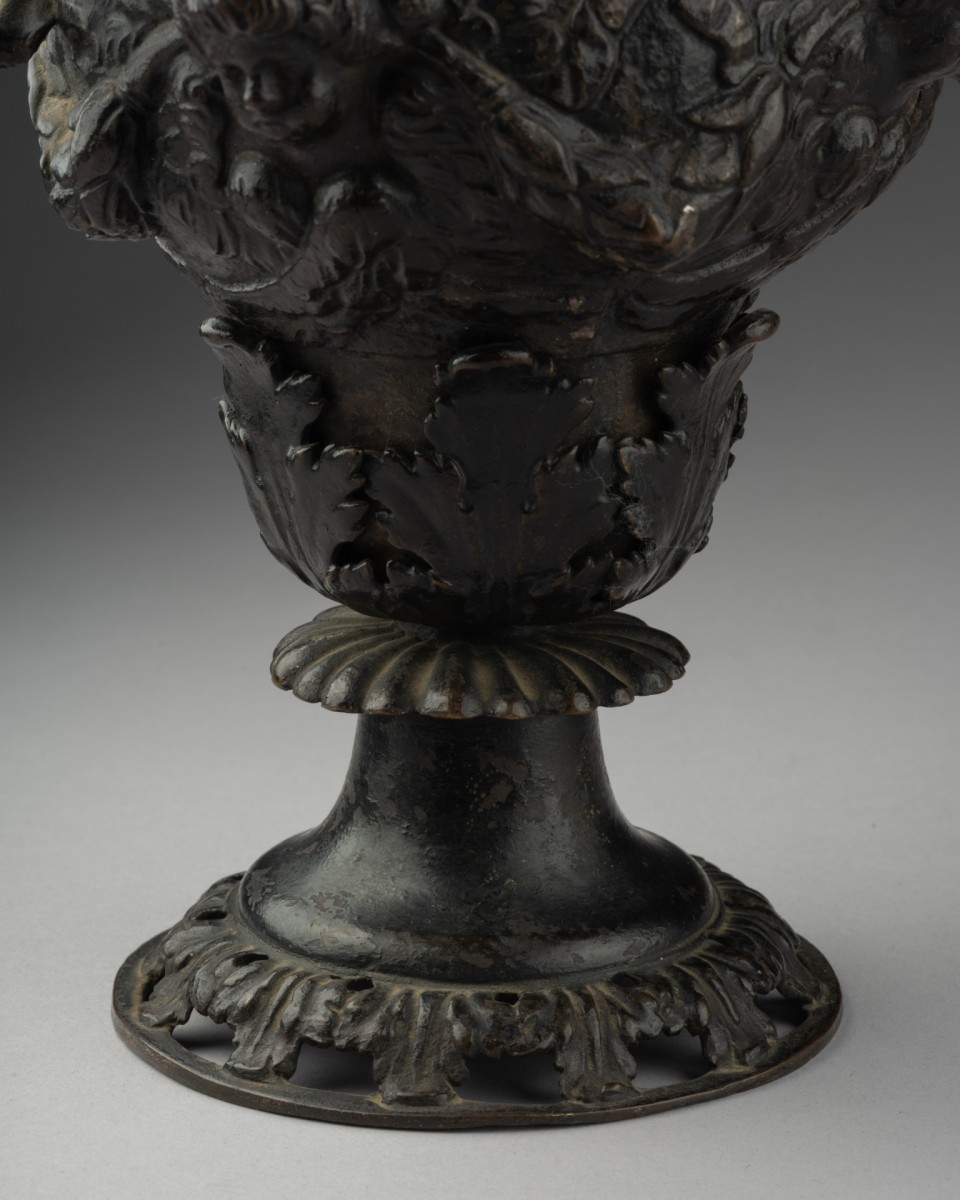
Two-handled vases with slim neck, bulbous body decorated in relief with cherubim and swags, towards bottom of each vase a separately cast wreath of acanthus leaves and below this a separately cast ring of radiating petals. Foot open-work at bottom. The handles of slender foliate design, with eagles' heads.
Mounted on Cast in six pieces:
1. Main body of vase.
2. Acanthus leaf ring.
3. Ring o f radiating petal decoration.
4. Base.
5 and 6. Two handles.
Thelower elements joined by heavy lug screw at bottom of vase, passes through 2 and 3, screws into 4. Handles attached to body of vase with Vase section formed from four identical elements cast in wax and joined before casting, flash lines visible in metal at base of vase, where normally concealed by the acanthus leaf wreath.
The vases have some analogies with the highly individualistic work of the Venetian sculptor Francesco Bertos (1678-1741), but do not seem to be by him. Bertos is not known to have made functional objects using the technique of screwing together different elements, while the cherub heads lack the pointed noses, triangular faces and drilled eyeballs characteristic of Bertos's figures.
They may, nevertheless, be the work of a contemporary or follower, and certainly would seem most likely to be North Italian in origin. There are analogies with some unusual pairs o f large candlesticks in the Kunsthistorisches Museum, Vienna, which came to the Este collection in Vienna from the castle of Catajo in 1896. Of varying origins and dates, they are probably mostly rather later than the sixteenth and seventeenth century dating proposed by Planiscig. One pair in particular has balusters with cherub heads that appear close in form to no. 134.4 The vases are also very similar in form to an idiosyncratic pair of gilded bronze vases inlaid with precious stones, sold in New York i n 1925 with the Tolentino collection, and described i n the catalogue as Roman seventeenth-century work.s
It is possible that no. 134 was the 'Pair of Bronze Vases, Antique', bought in March 1802 by Lord Yarmouth, at the Duke of St Albans sale. Various 'Antique' bronze vases are listed in the 1834 and 1842 inventories of Hertford House, but not in sufficient detail to allow them to be identified.
Delevery information :
We can arrange shipping.