Offered by Desmet Galerie
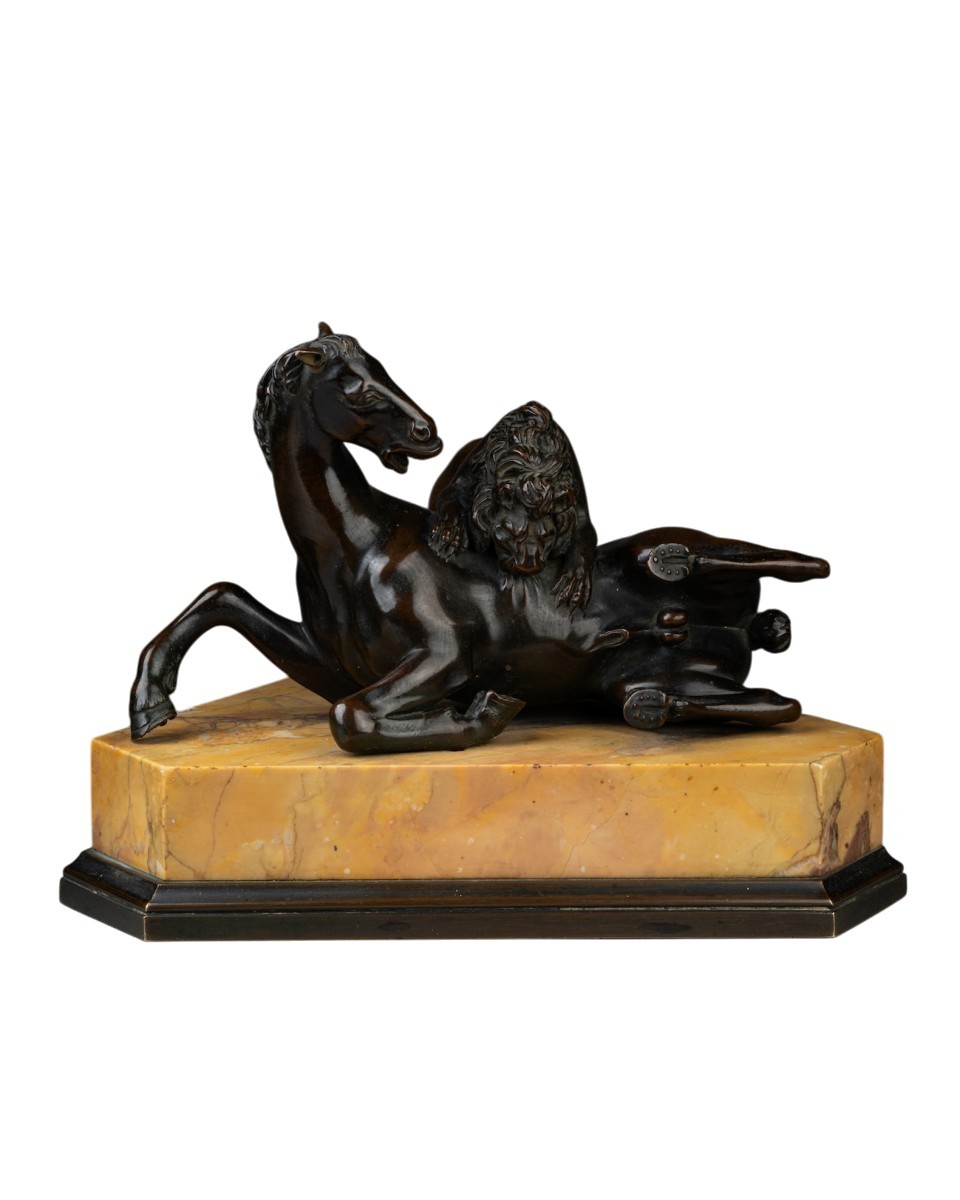
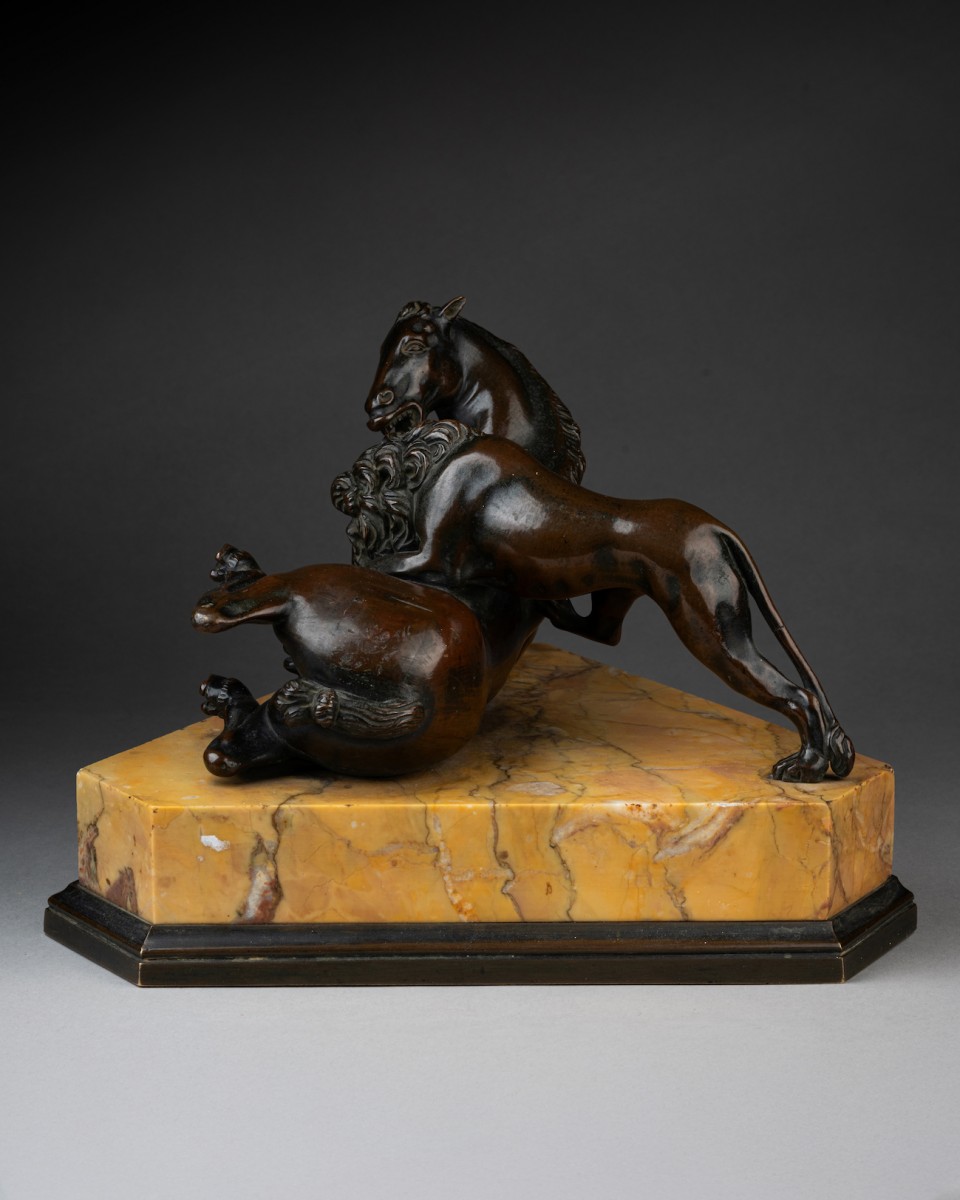
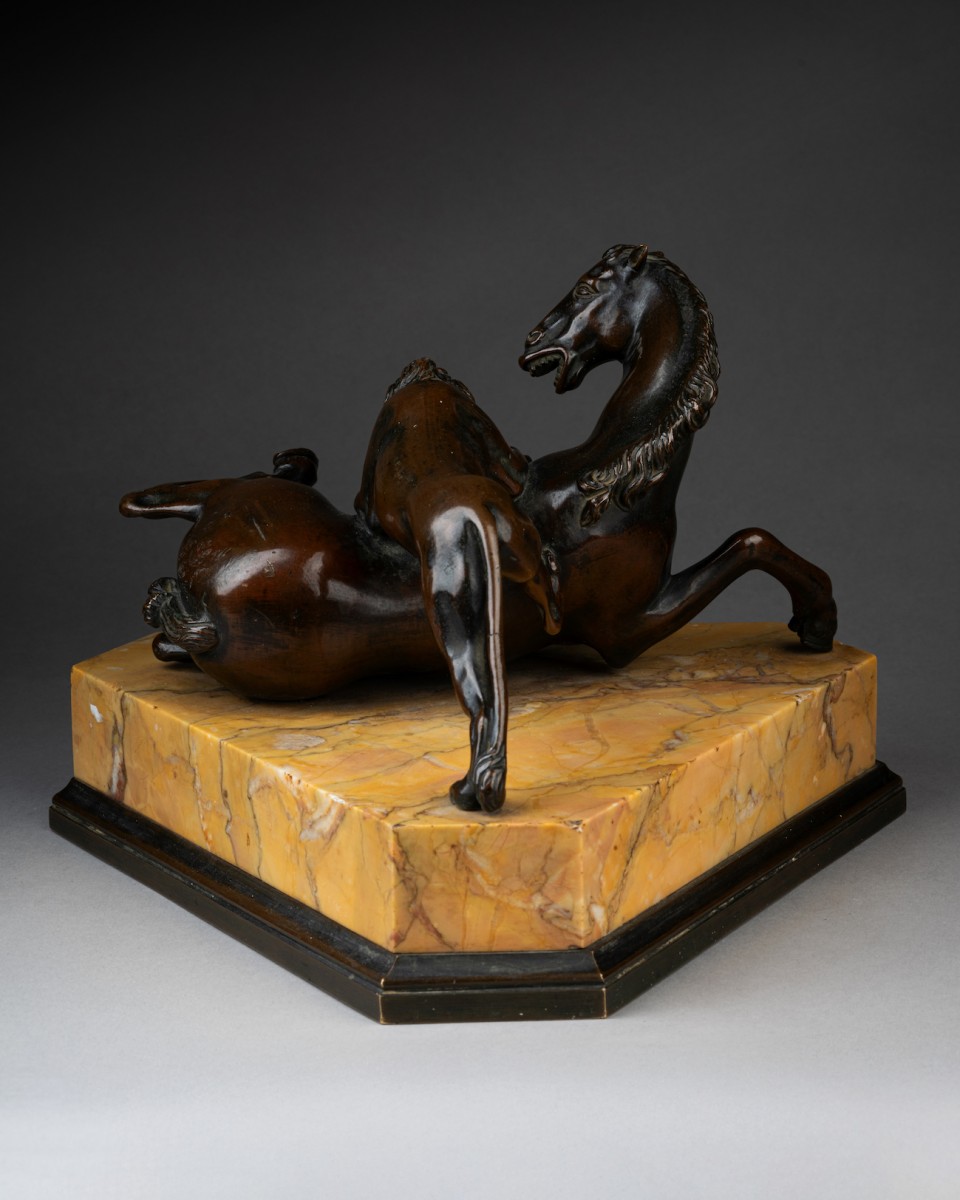

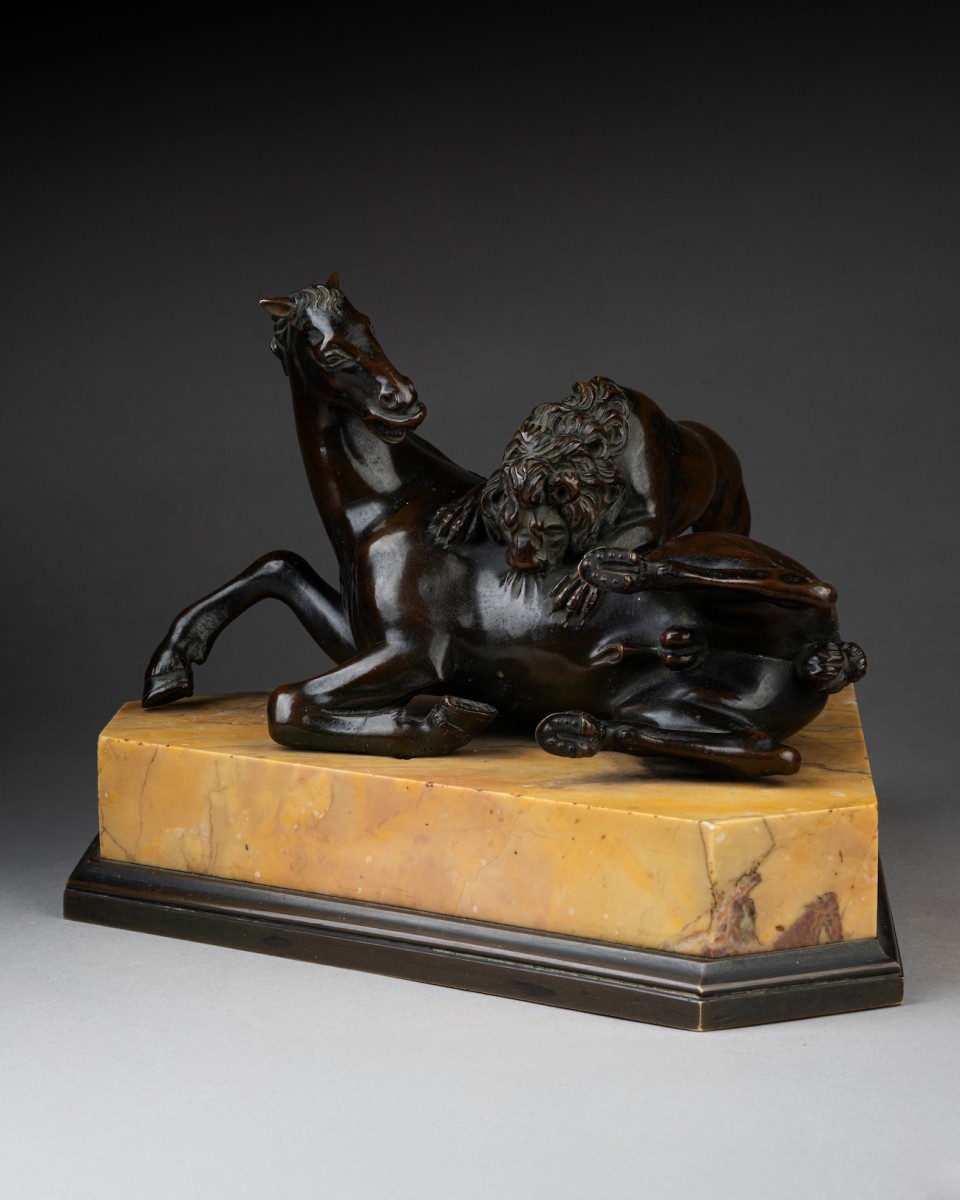
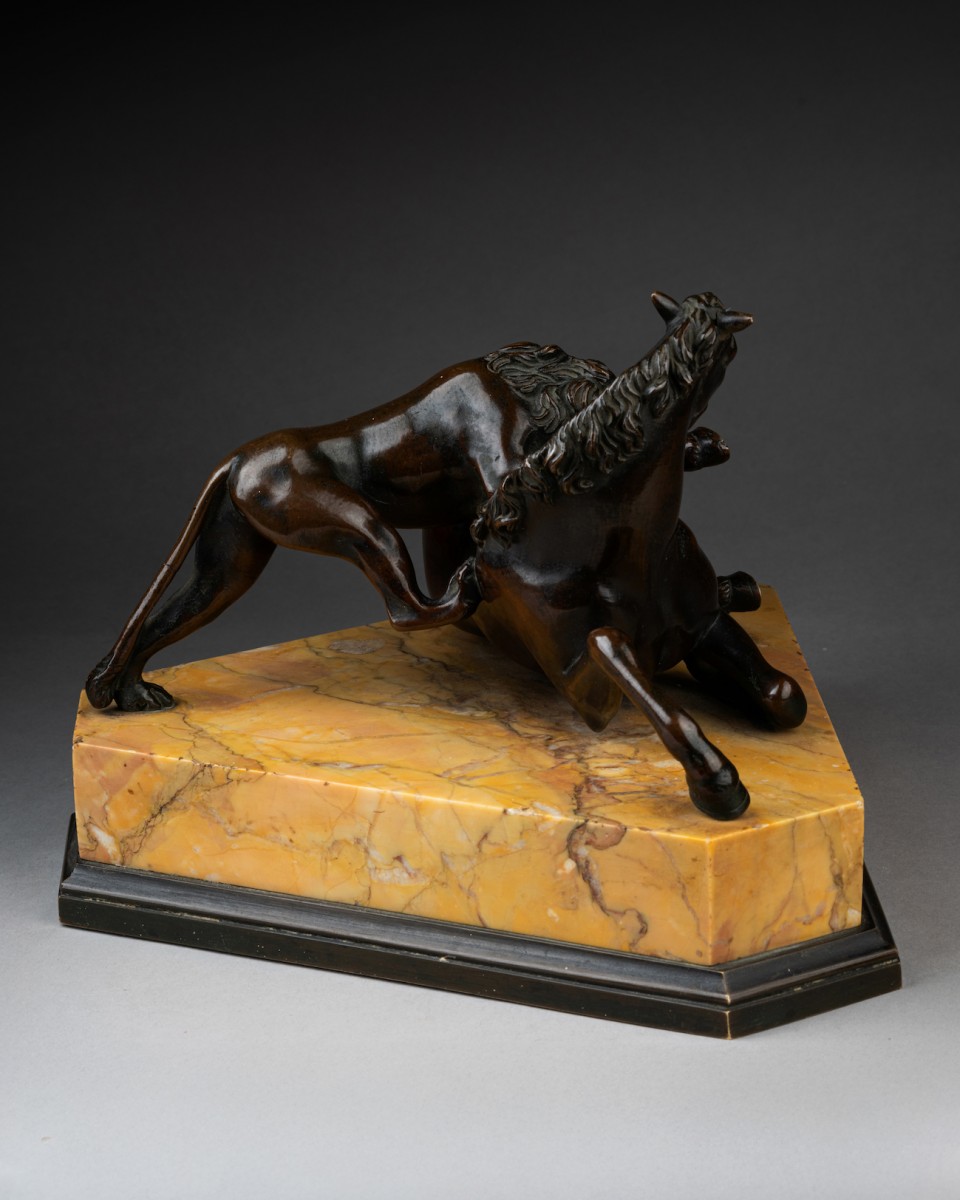
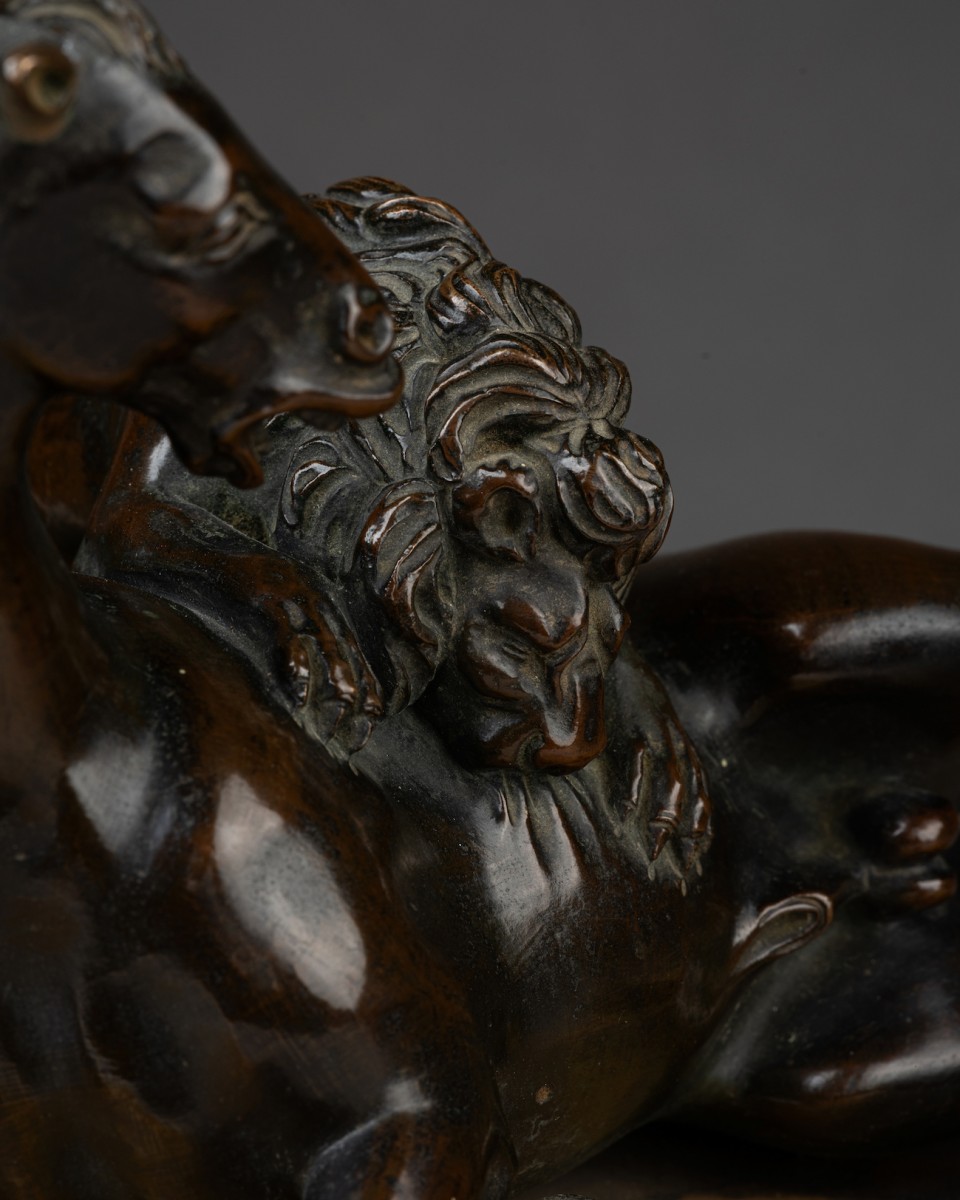
This bronze sculpture of a lion attacking, if not devouring a horse presents
Barthélémy Prieur (1536-1611)’s loose interpretation of the ancient marble group which stood at the Piazza del Campidoglio in Rome for most of the 16th century before being moved to the Palazzo dei Conservatori in 1589.
The marble group of the lion and horse is one of the antique sculptures which
excited the collective imaginary of Renaissance artists. Its wide popularity in the 16th century is evident by the various prints which were disseminated, such as the one by Giovanni Battista de Cavalieri made in 1585. The engraving shows the state of the sculpture before its restoration in 1594 by Ruggiero Bescapè, when the head and limbs of the horse were lost. In other cases, those missing pieces provided a free canvas for draftsmen and sculptors alike to express their creativity, interpreting and tailoring the model to contemporary taste. This is notably the case of Amico Aspertini’s study from the very early 16th century, now held at the Metropolitan Museum of Art, where the rear limbs of the horse are added in as well as its head to depict agonising pain.
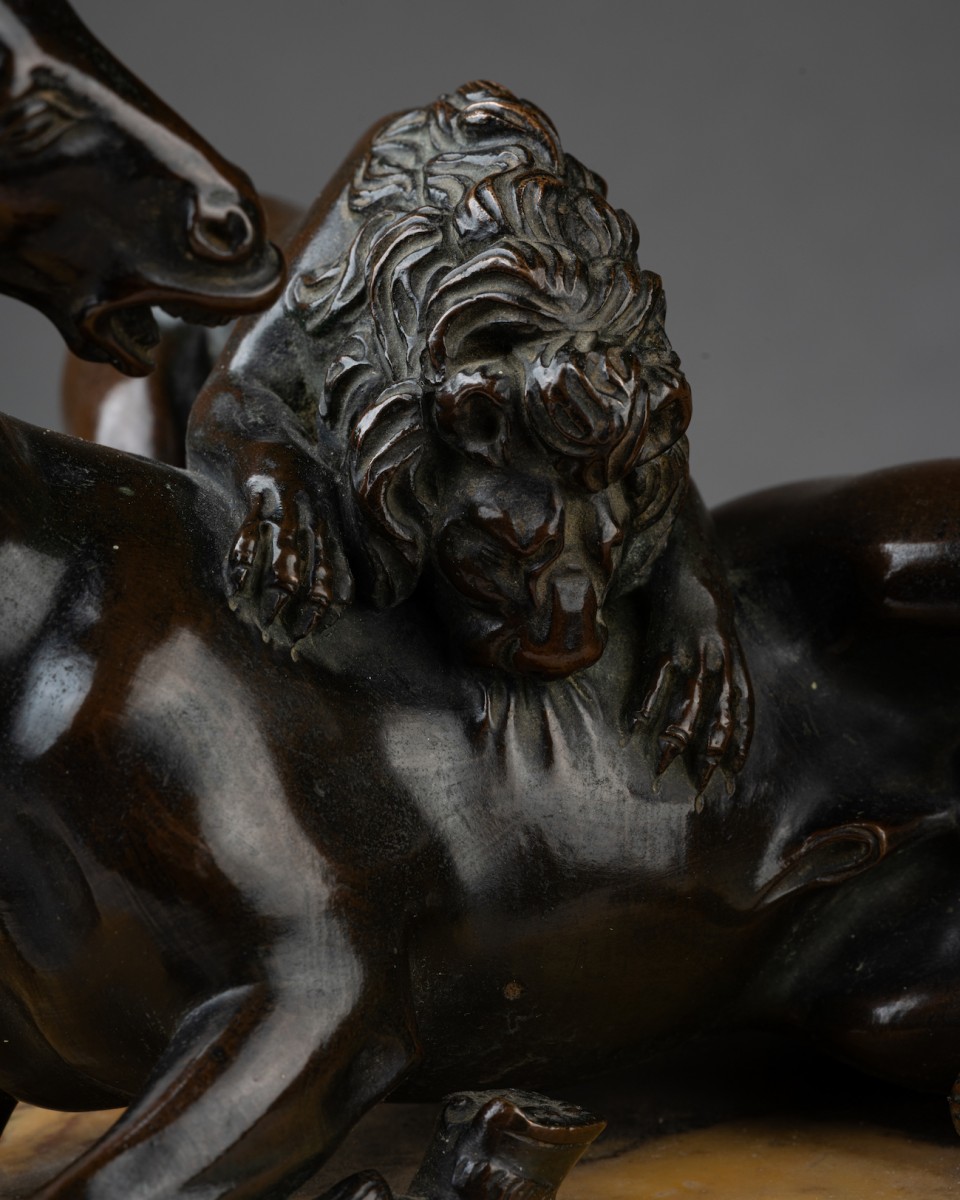
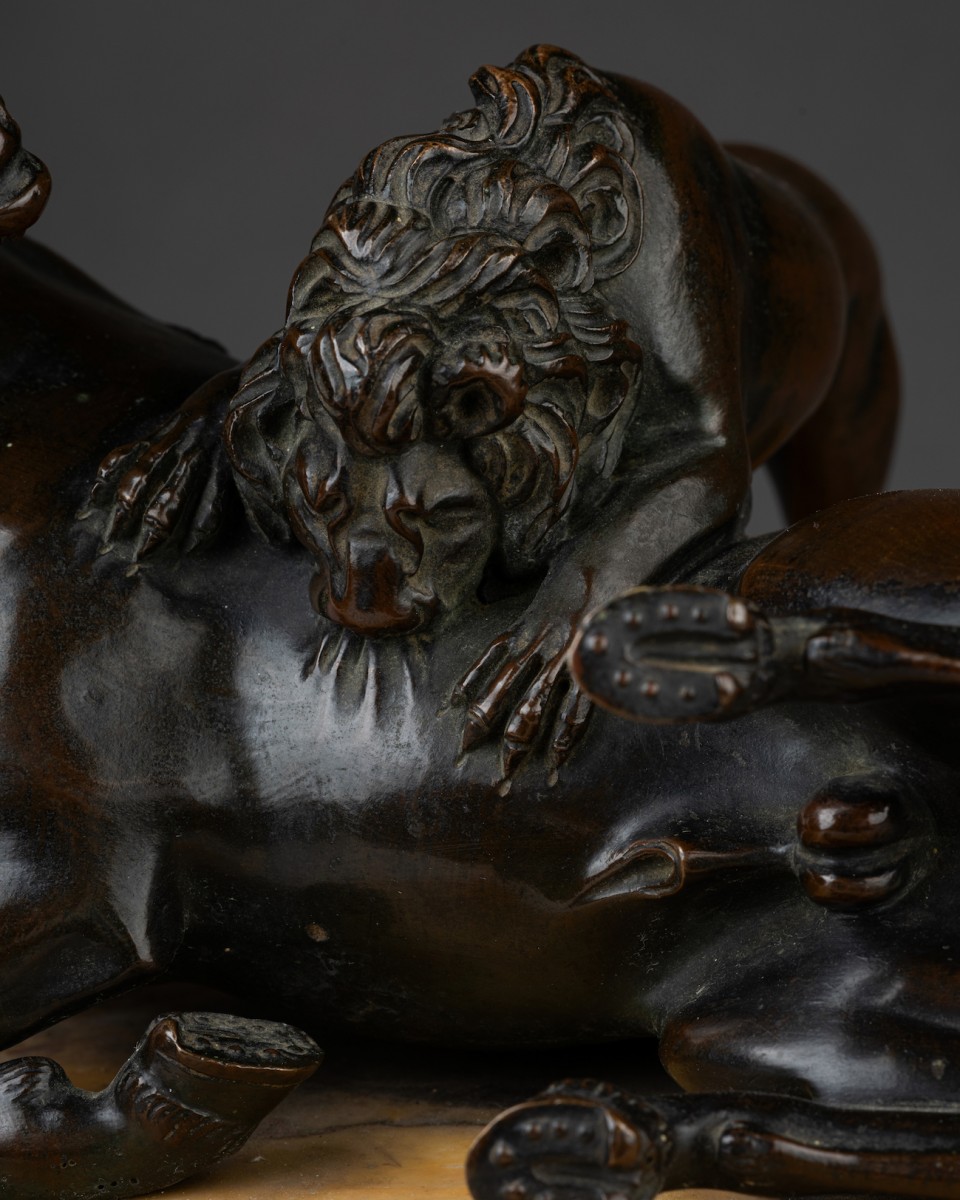
Whether Prieur realised this group before or after the restoration, the bronze is not a strict copy, as it is the sculptor’s hand which is most prevalent, even on the parts of the antique pre-dating 1594. The lion is slenderer and more detached from the horse to let a thinner, yet muscular leg elongate at the back, while the other one pushes against the horse. It is notably these characteristic elements of the lion which have come to be the recognisable mark of Prieur’s facture, Anthony Radcliffe having made the connection between the lion from this group and others. Radcliffe notes the similarities of the type of the lion and the patination with the Lion walking of the Thyssen-Bornemisza collection (also found at the Met) as well as the Lion devouring a doe, now in the Hill collection, of which other casts are known, including one in the Robert H. Smith collection. In addition to presenting a similar lion type, the Lion devouring a doe has a similar composition. The certain attribution of the latter group was made possible by the post-mortem inventory of André Le Nôtre in 1700, the gardener to whom we owe the design of the gardens of Versailles, also an avid collector, which records two bronzes of a lion devouring a doe. Prieur’s inventories, the first one drawn up after the death of his first wife in 1583, the other one made after his own death in 1611, have in fact no mention of such a group. Still, it mentions holding some reductions from antique models and
several models of both lions and horses amongst various animals both in wax and bronze. It is thus safe to argue that the present bronze was created from innovatively assembling the pre-existing casts recorded in the inventories.
Indeed, the horse further allows the identification of this bronze with the work of
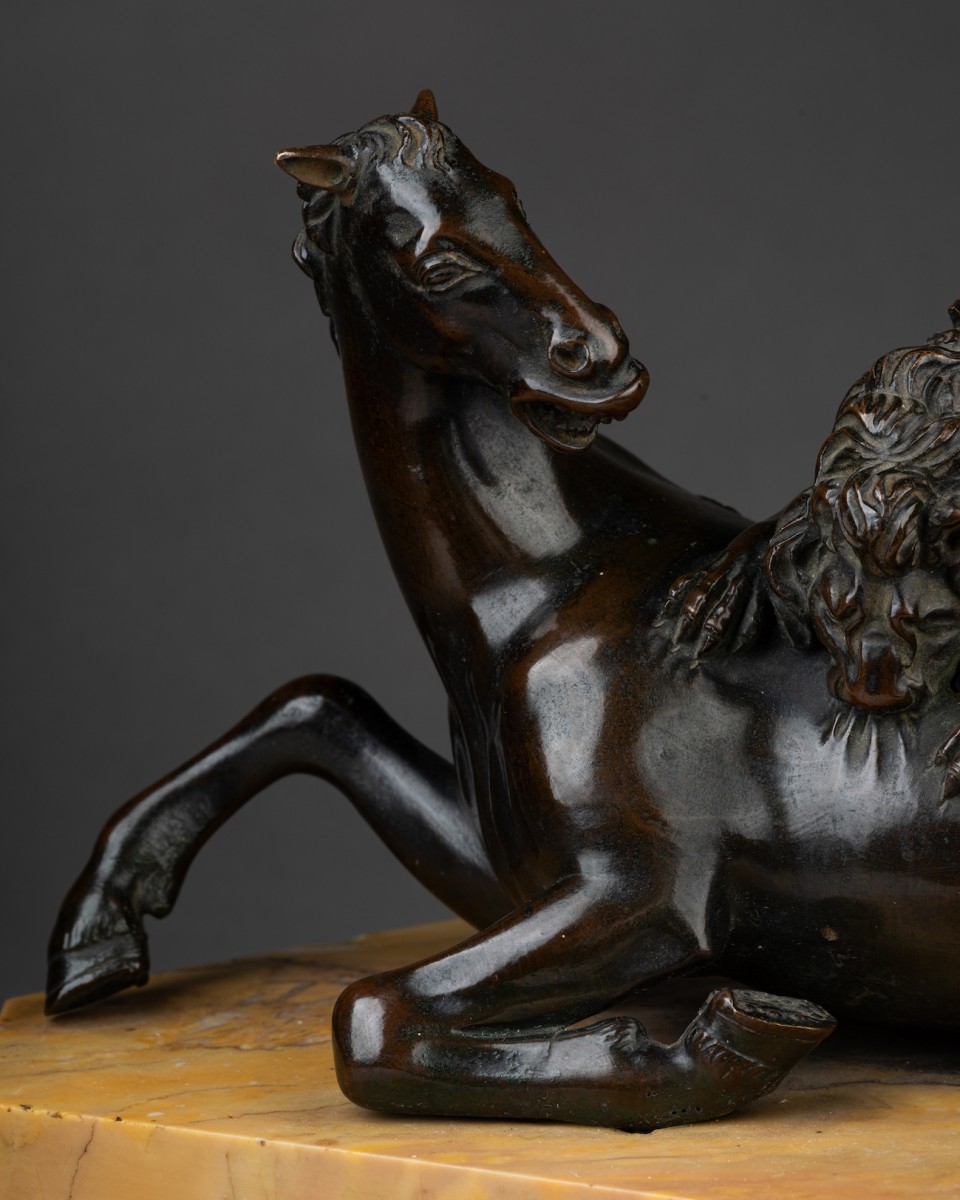
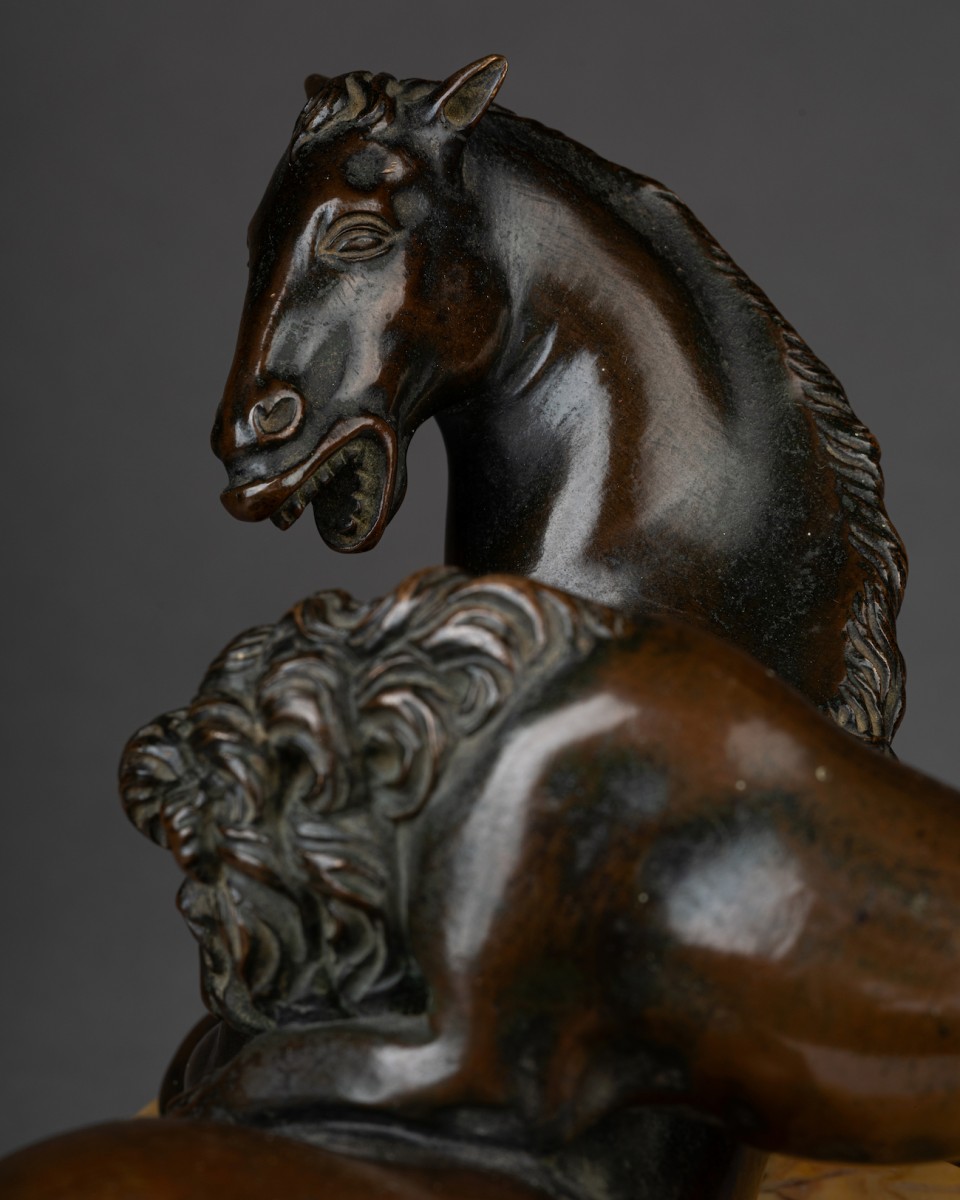
Prieur as it has been related with the one of the equestrian group of Henri IV destroying his enemies held at the Victoria & Albert Museum (Inv. A.42-1956). The cast has been adapted to the group in question, once again reflecting the creative process of Prieur to increase the pathos of the scene. One of the ears of the horse is backwards, emphasising the movement of the horse’s head which is sufficiently turned to witness the attack. If the horse of the present group comes from the model of the V&A horse, it allows to date it probably after 1591, when Prieur was named Court Sculptor, working on the interiors of the Palais du Louvre and multiple portraits of the King and Queen.
Before such an honorific title was bestowed upon him by Henri IV, Barthélémy
Prieur had been Court Sculptor from 1564 to 1567 for the Duke Emmanuel-Philibert of Savoye in Turin. After having come back to Paris, he had to leave the city again for about a decade in 1575 to flee persecution, as Prieur was of protestant faith. His faith limited the types of order he was commissioned, realising fewer religious works than his contemporaries. Still, when he came back to the capital after being called back by the King, he enjoyed there an eminent position.
This bronze group can be placed within a tradition of Renaissance bronzes
stemming from the works and savage groups of Giambologna whom Prieur would have probably been familiar with. Still, his version of the antique subject clearly presents Prieur’s own innovation and elegance to conjure such pathos within the economy of the scale of the work.
Delevery information :
We can arrange shipping.