Offered by Tobogan Antiques
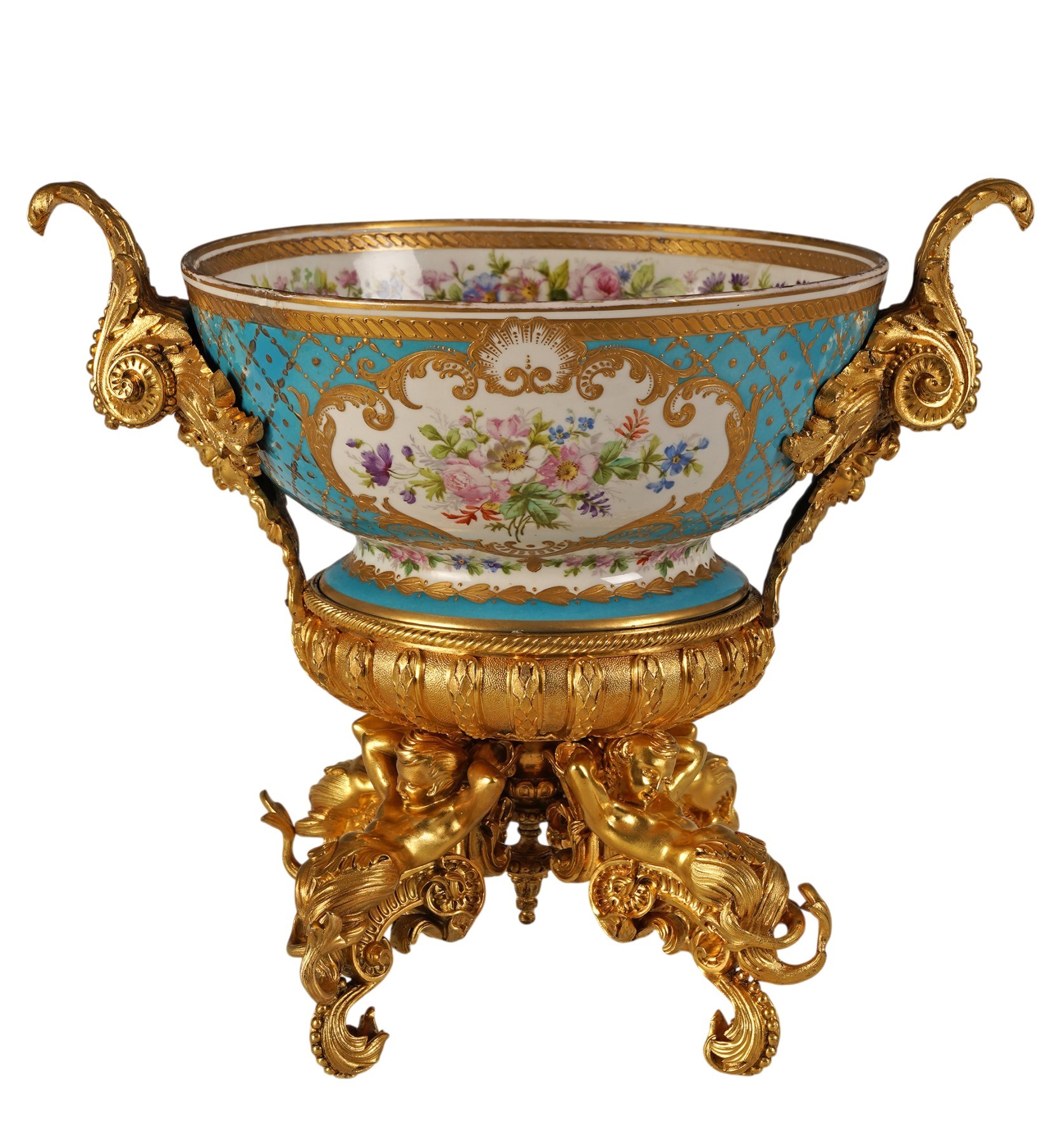
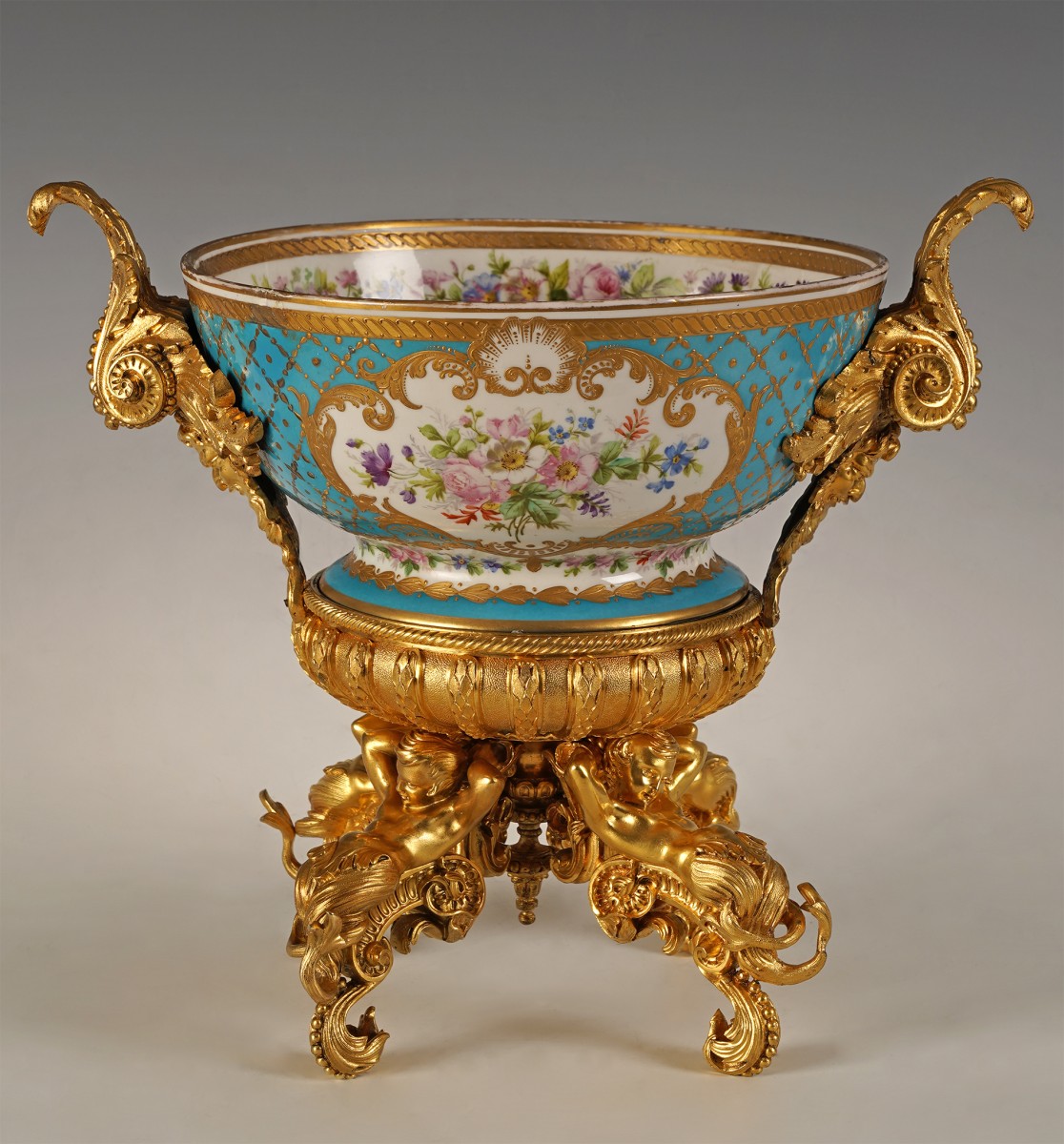
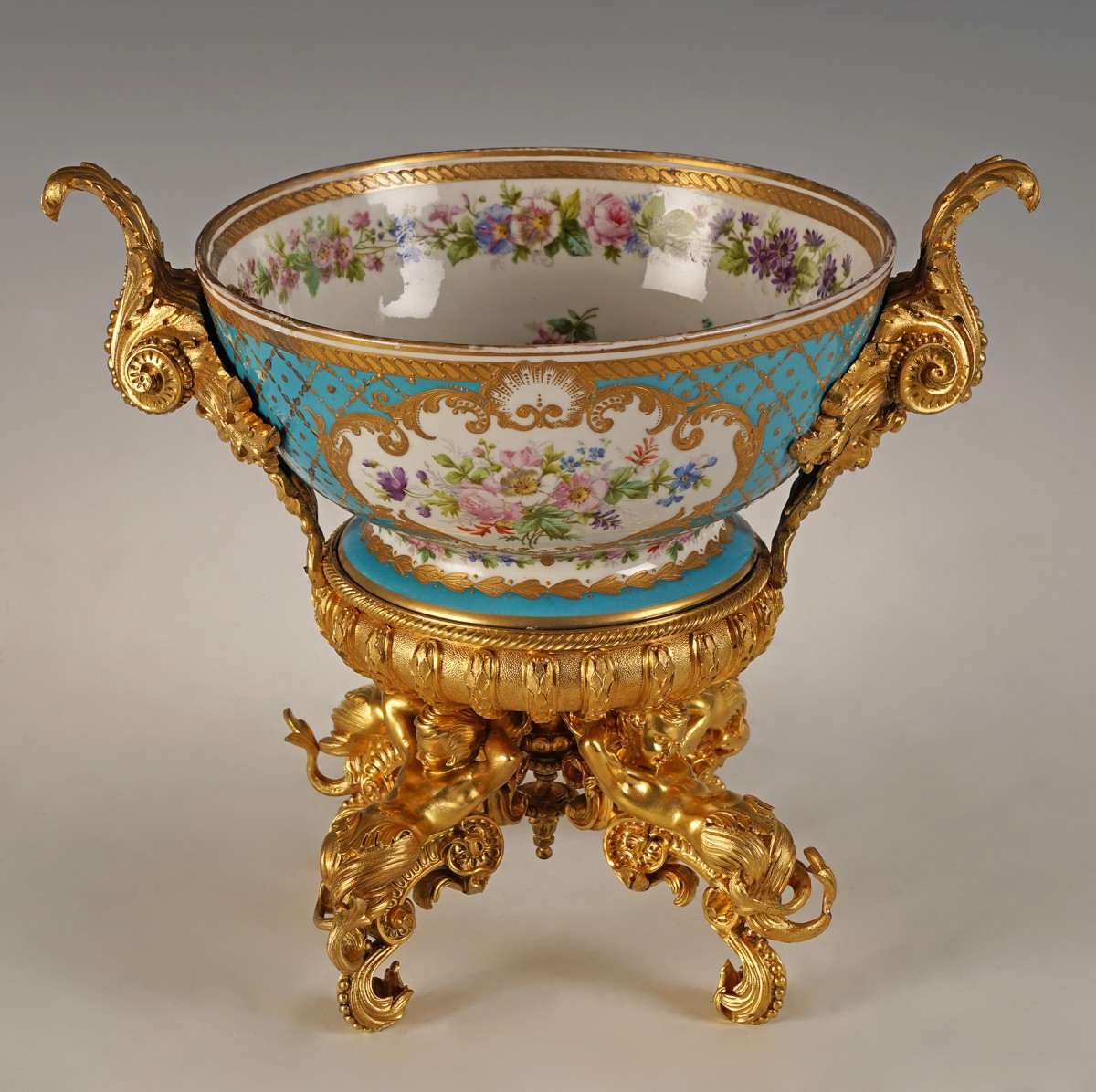
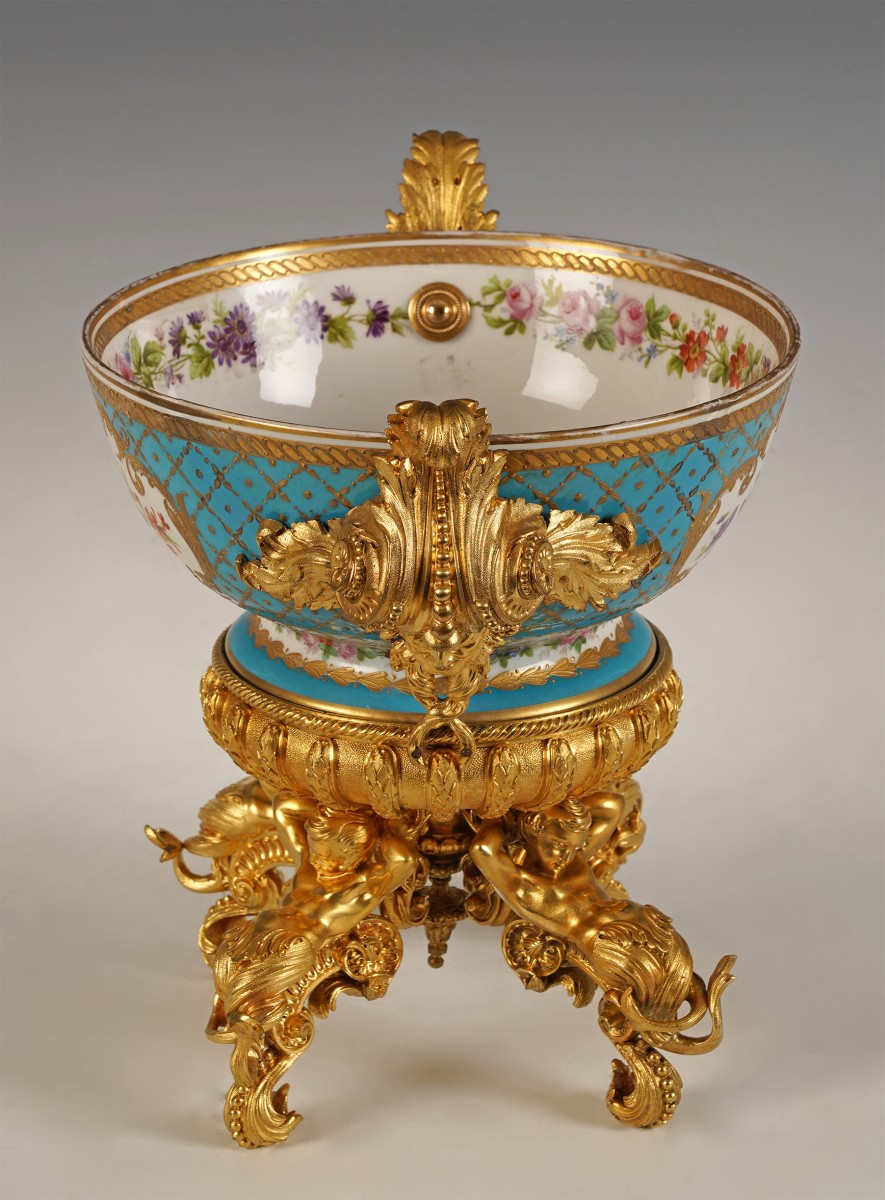
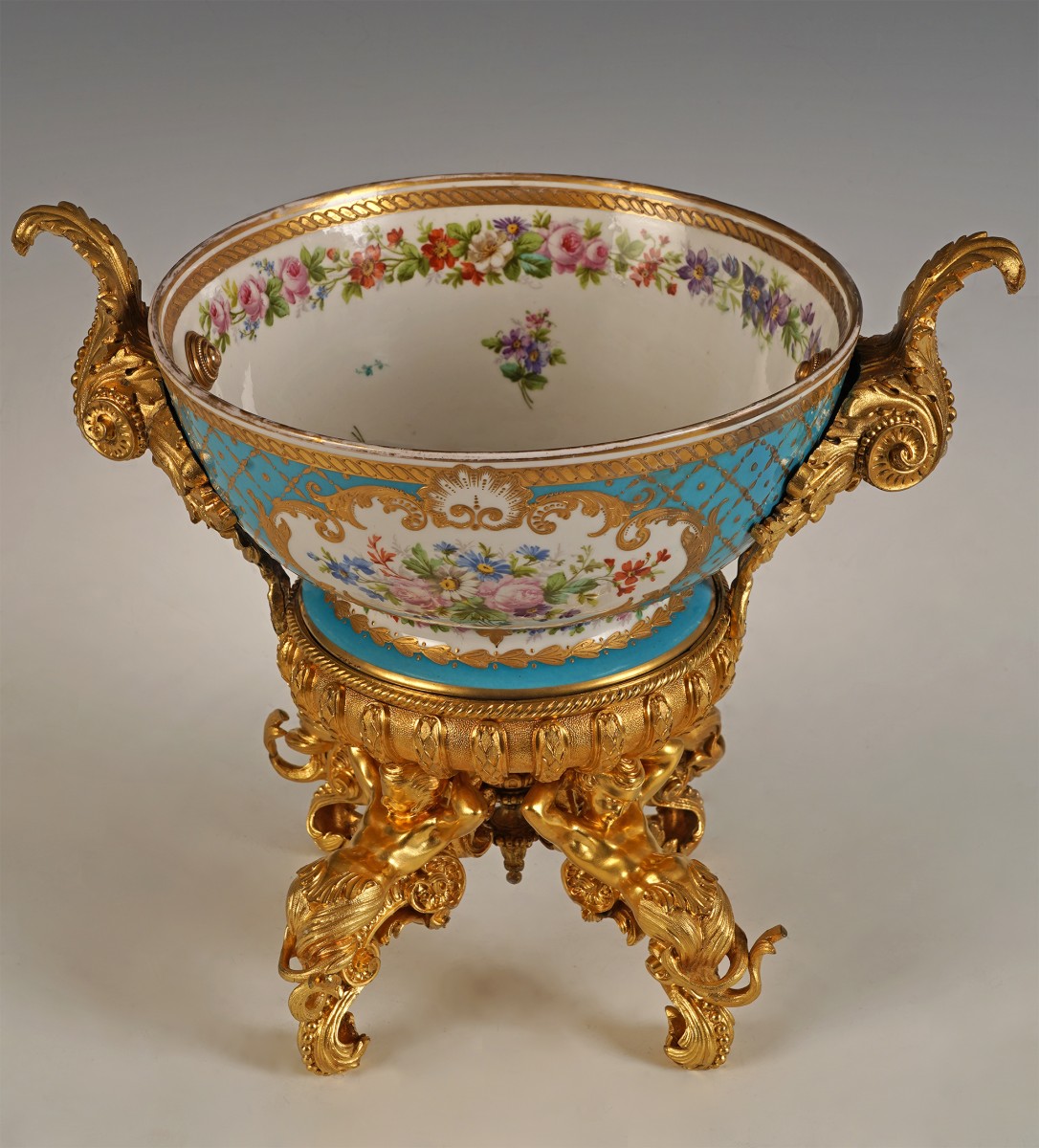

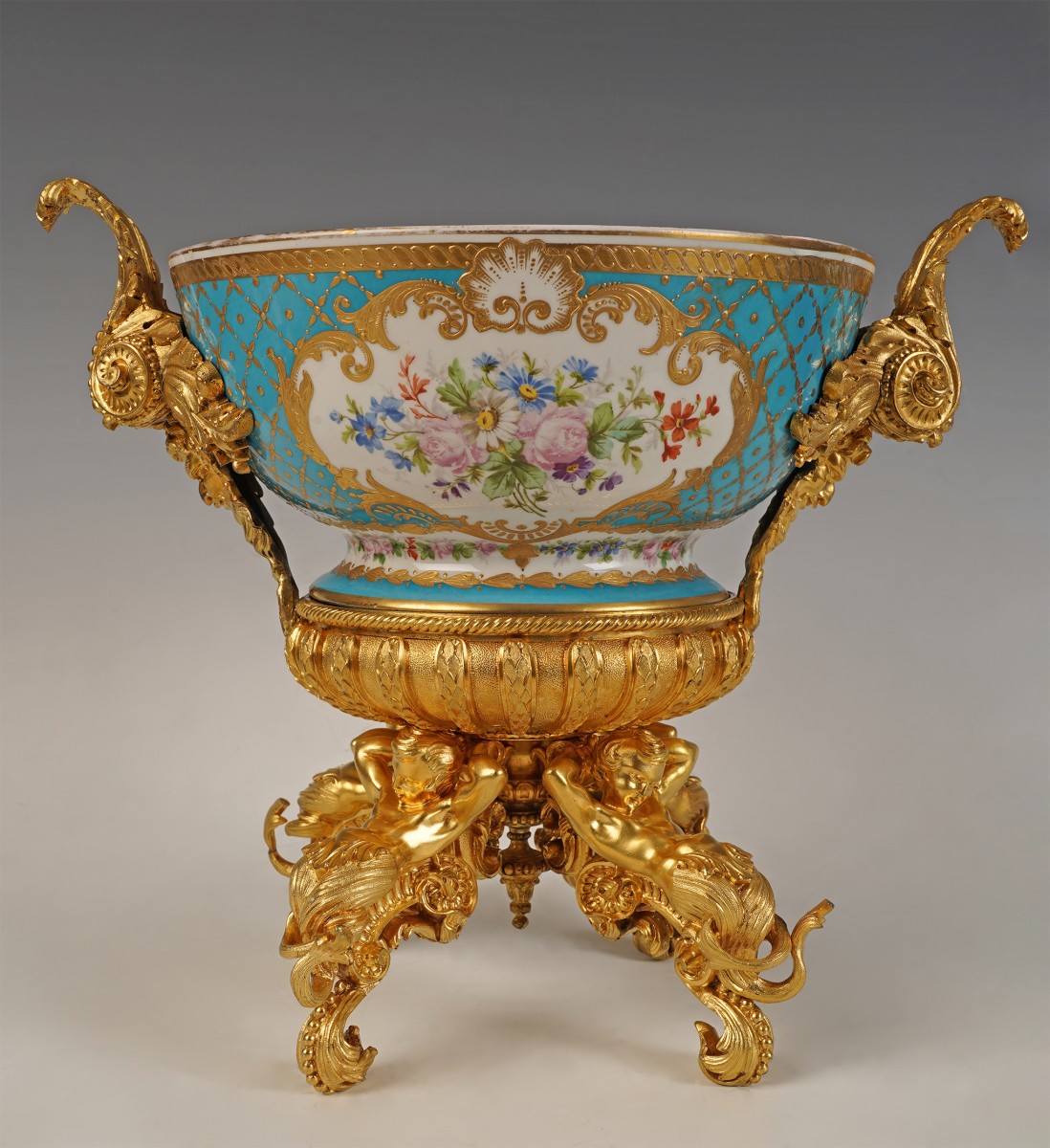
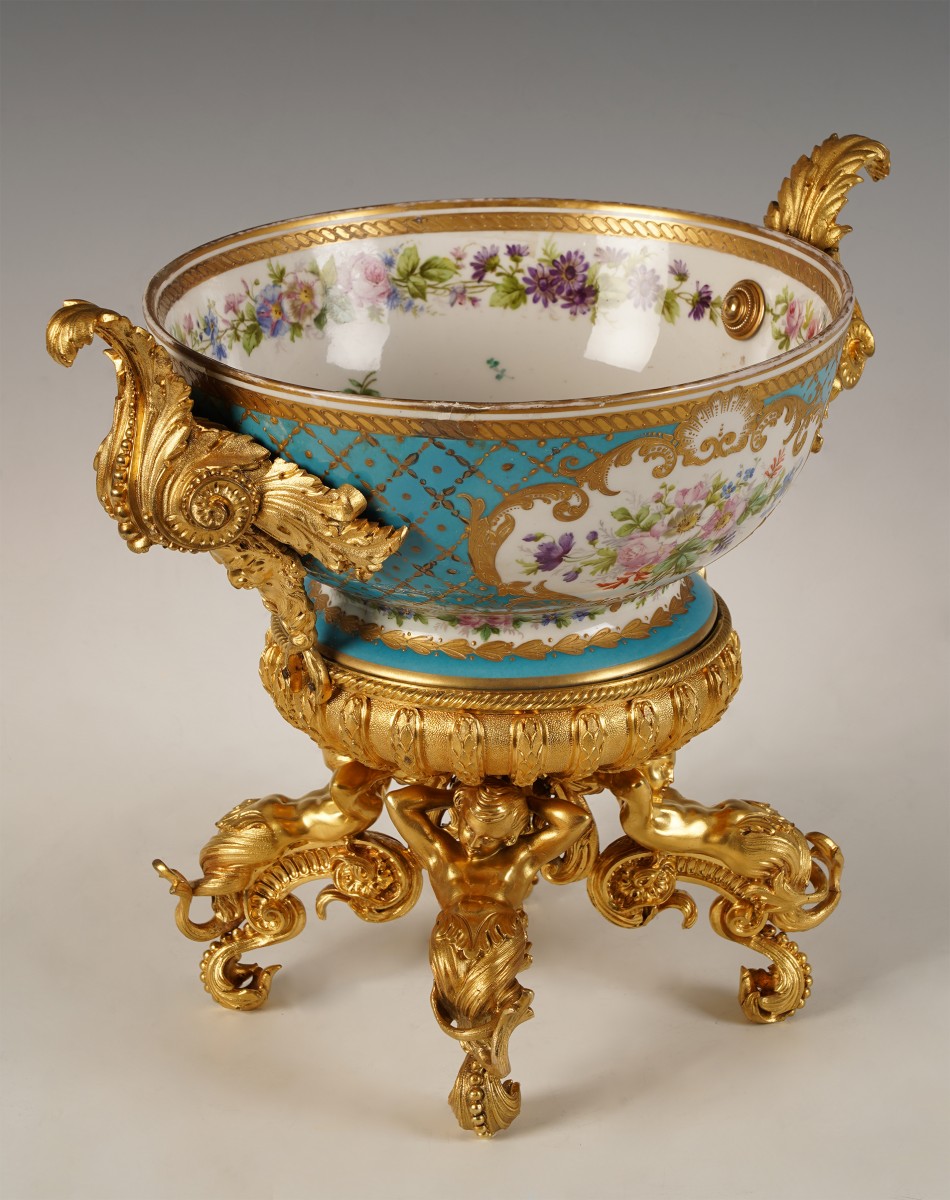
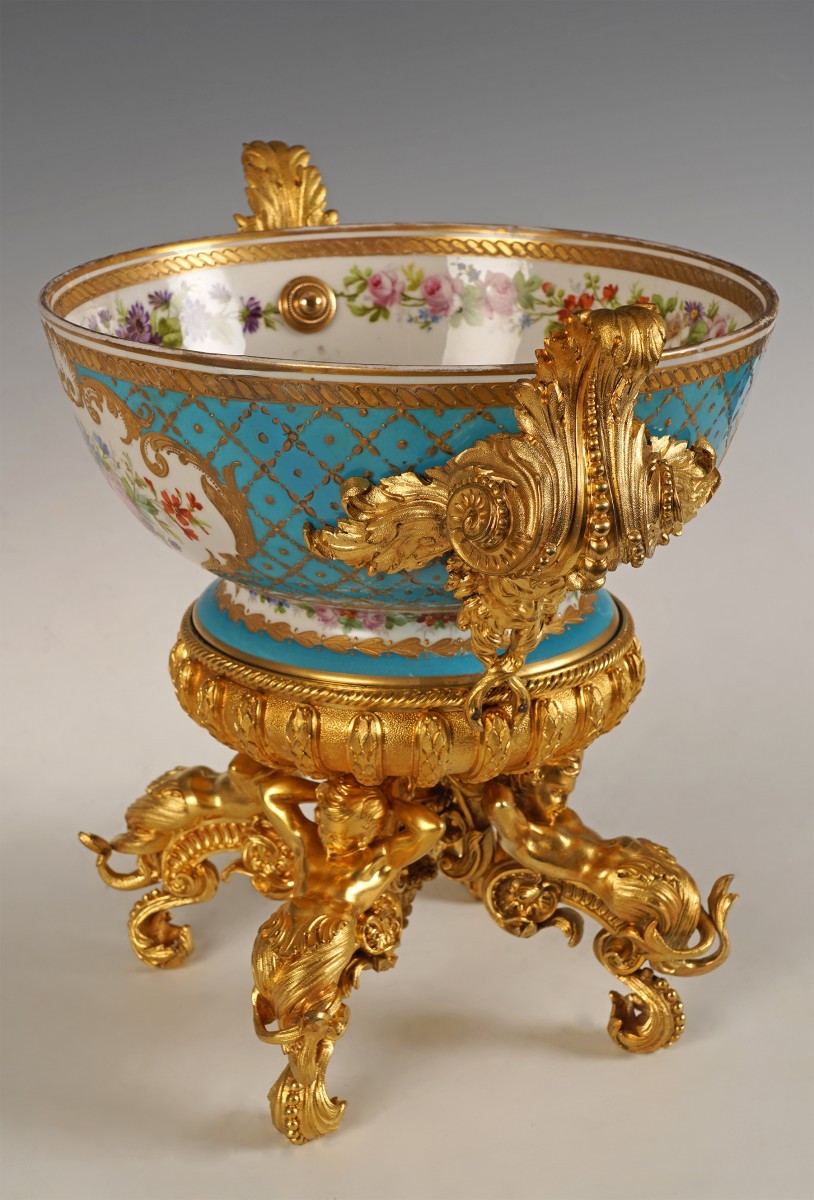
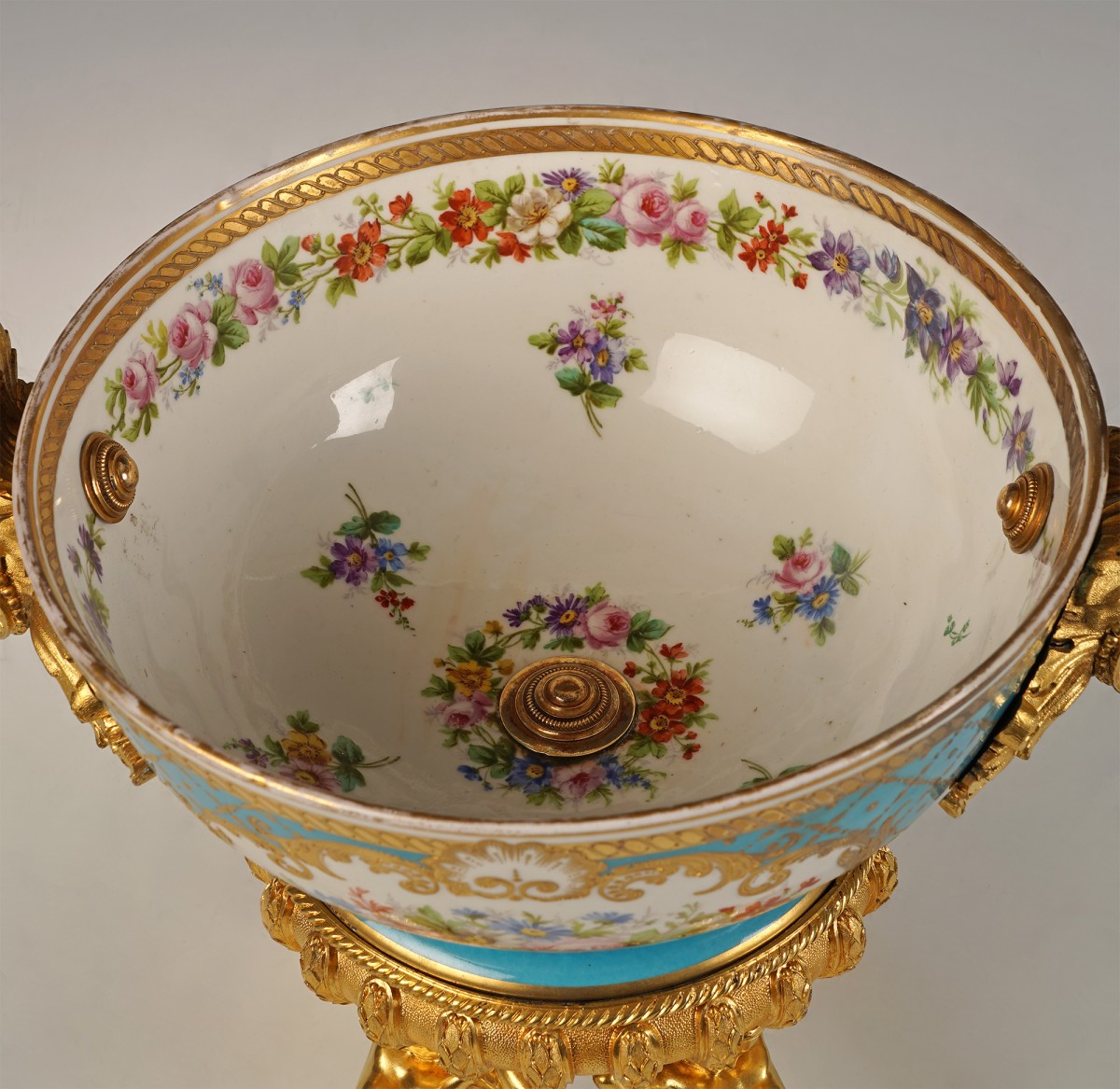
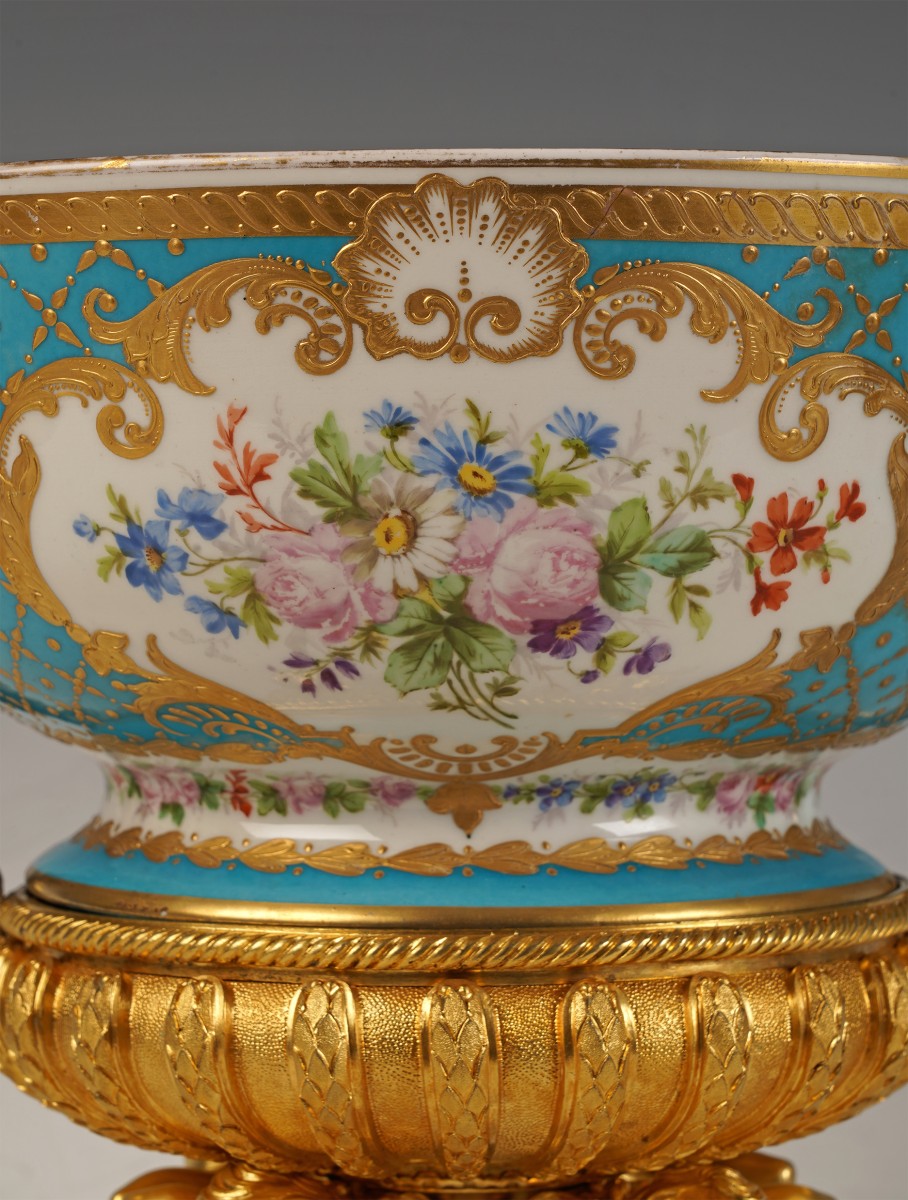
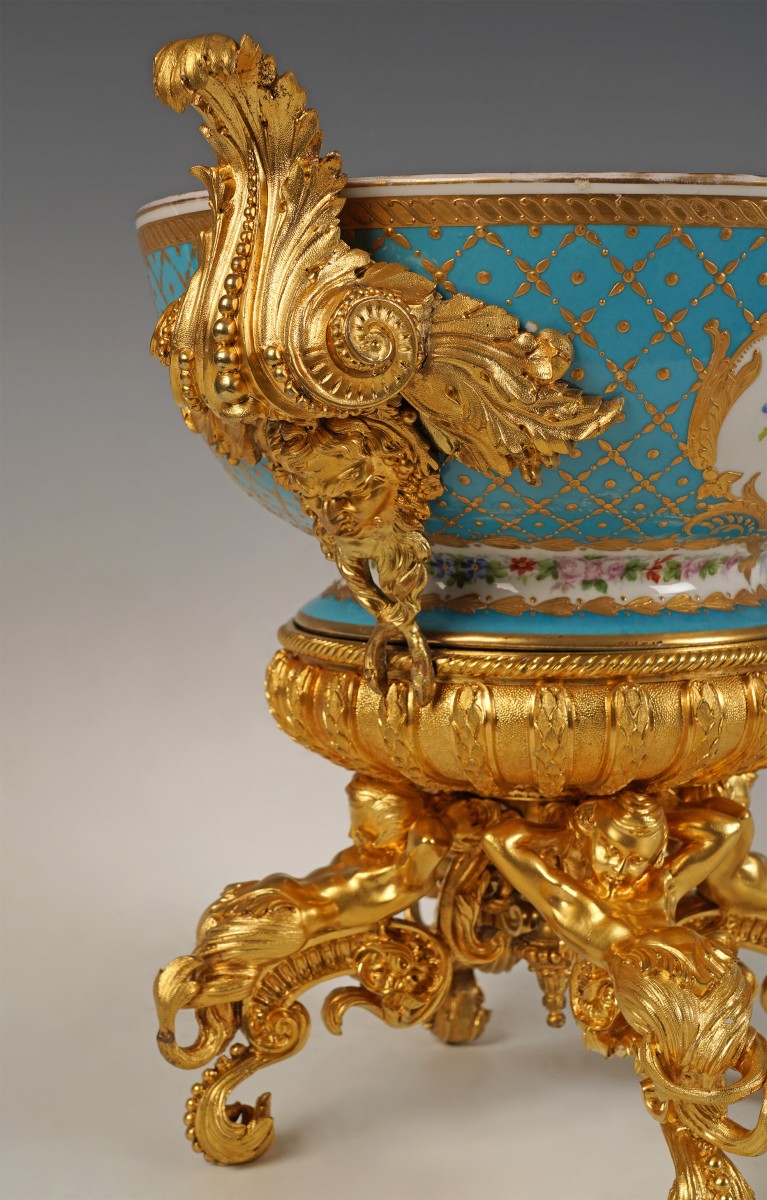
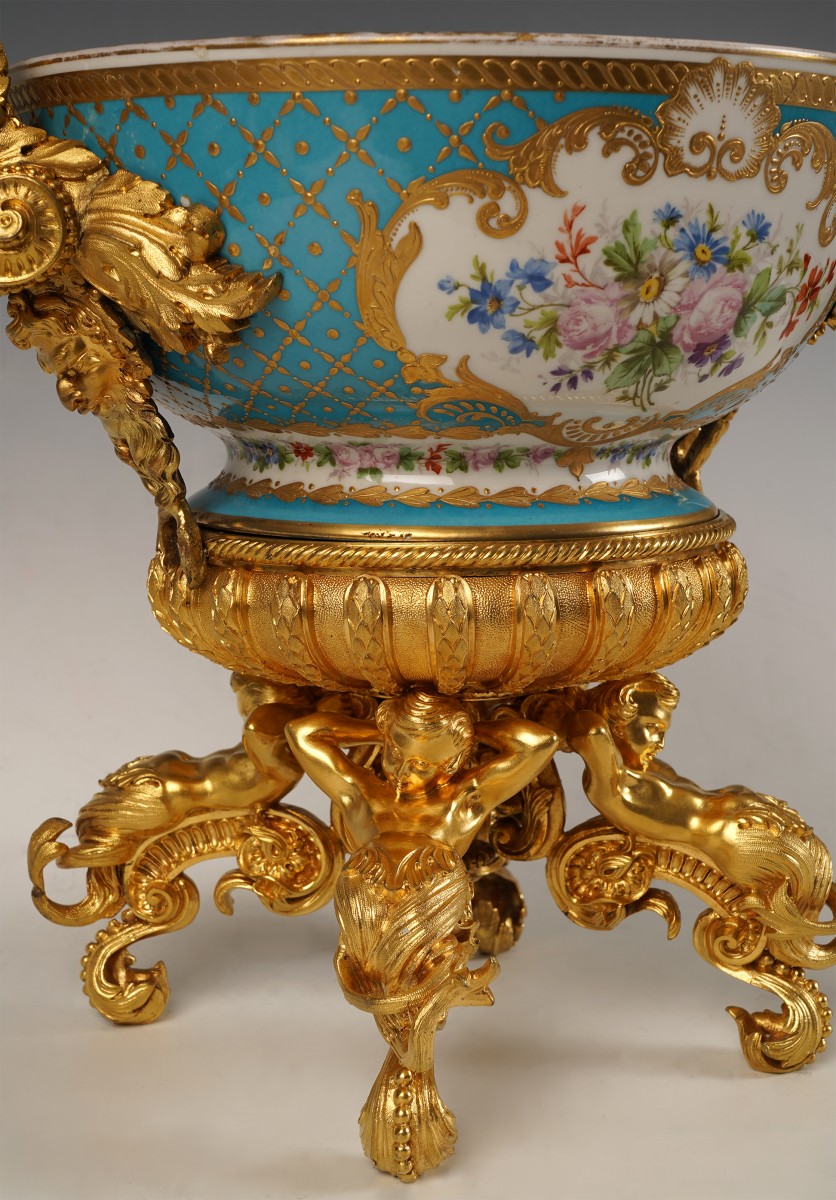
Beautiful polychrome porcelain bowl with a turquoise ground inspired by Sèvres “celestial blue,” enriched with a gilt decoration of scattered lozenge motifs dotted with small flowers, surrounding reserved cartouches with gilt rocaille frames depicting polychrome floral bouquets of roses, pansies, and forget-me-nots, painted with great naturalistic delicacy. The interior of the bowl, left with a white ground, is adorned with floral garlands and bouquets.
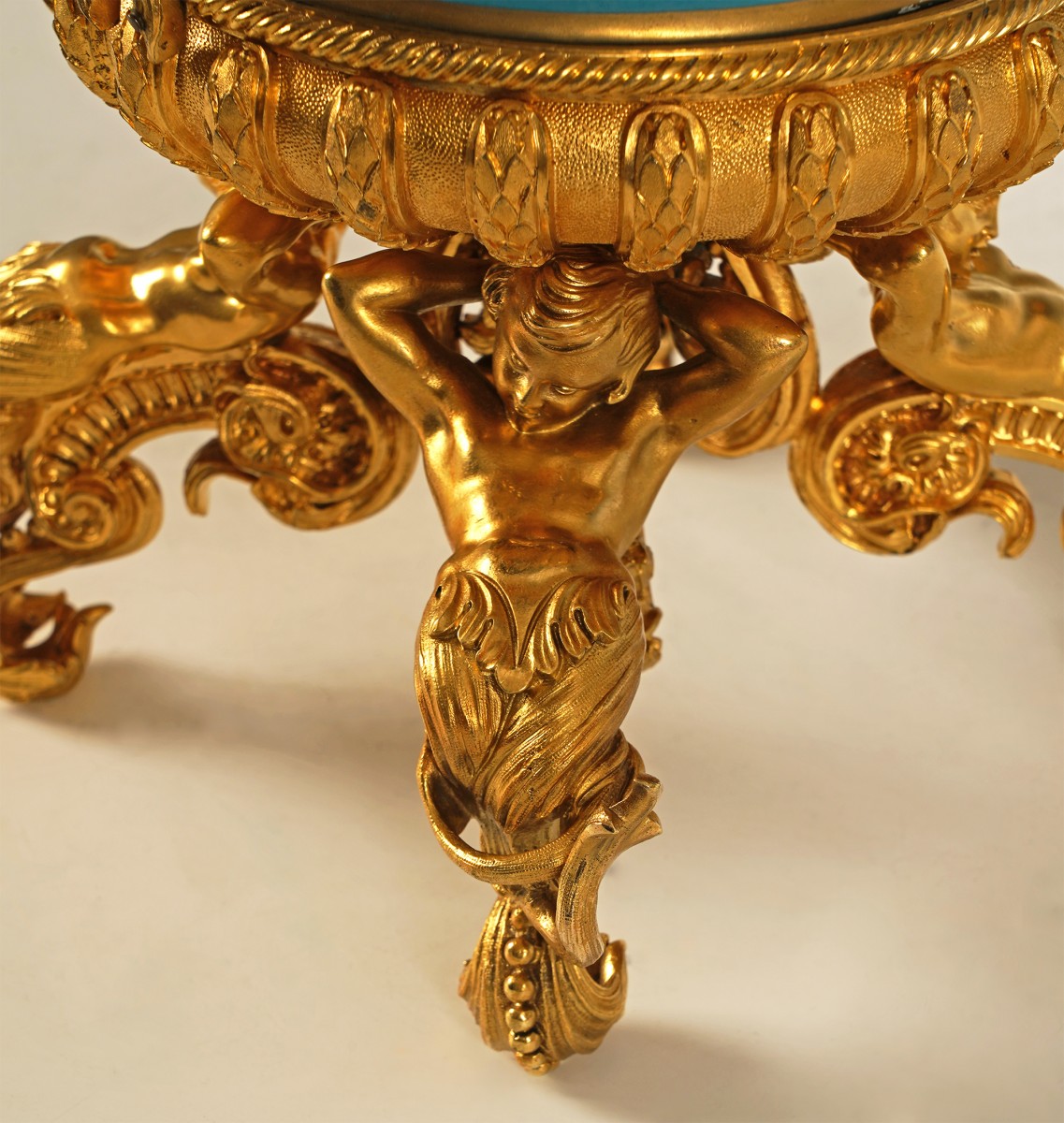
It is set in an ornate mount of finely chased and gilt bronze, composed of two lateral handles formed by scrolling acanthus leaves accented with beading and surmounting satyr heads; a gadrooned pedestal foot decorated with laurel leaves; and a quadripod base representing tritons as atlantes, reclining on asymmetrical rocaille-inspired volutes.
This bowl, belonging to the grand tradition of mounted objects, reflects a 19th-century production in the taste of the 18th century (more specifically the Louis XV style), characterized by the exuberance of rocaille decoration (asymmetry, scrolling foliage, tritons), the combination of precious materials (porcelain and gilt bronze), and a taste for spectacular centerpiece objects. It forms part of a prolific yet often highly refined production, oscillating between imitations of the royal Sèvres manufactory and original creations intended for a bourgeois or aristocratic clientele, appreciative of luxury and technical virtuosity.
Biography :
Since the discovery of kaolin, needed material for the making of porcelain, porcelain factories also called porcelain manufactures are on the increase in all France and naturally in Paris. Most of those manufactures worked in the 18th century under the protection of a member of the Royal family, such the comte de Provence, future Louis XVIII, who protected the Clignancourt manufacture. But during and the 19th century, numerous pieces did bear no making mark. It was then almost imposssible to attribute them to any particular Parisian factory, hence the expression “Paris porcelain” or “Vieux Paris” including all those various productions.