Offered by Dei Bardi Art
REQUEST INFORMATION

Sculptures and works of art from the Middle Ages and the Renaissance
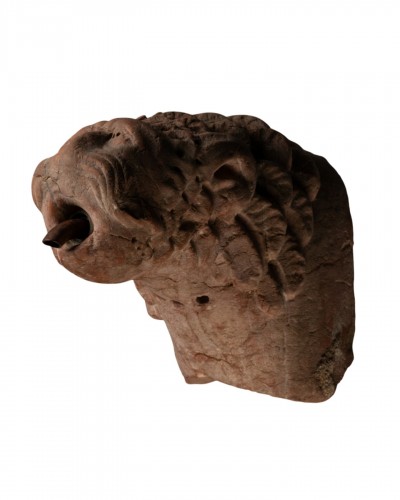
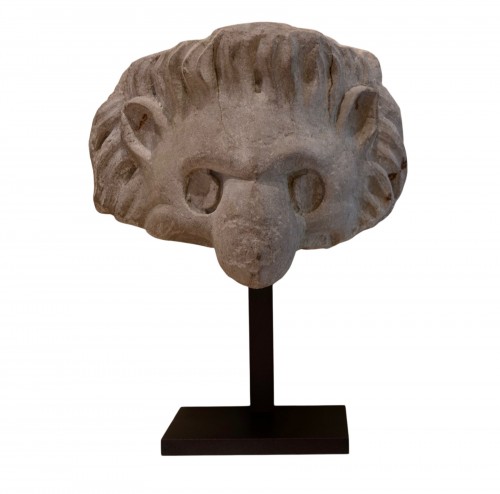
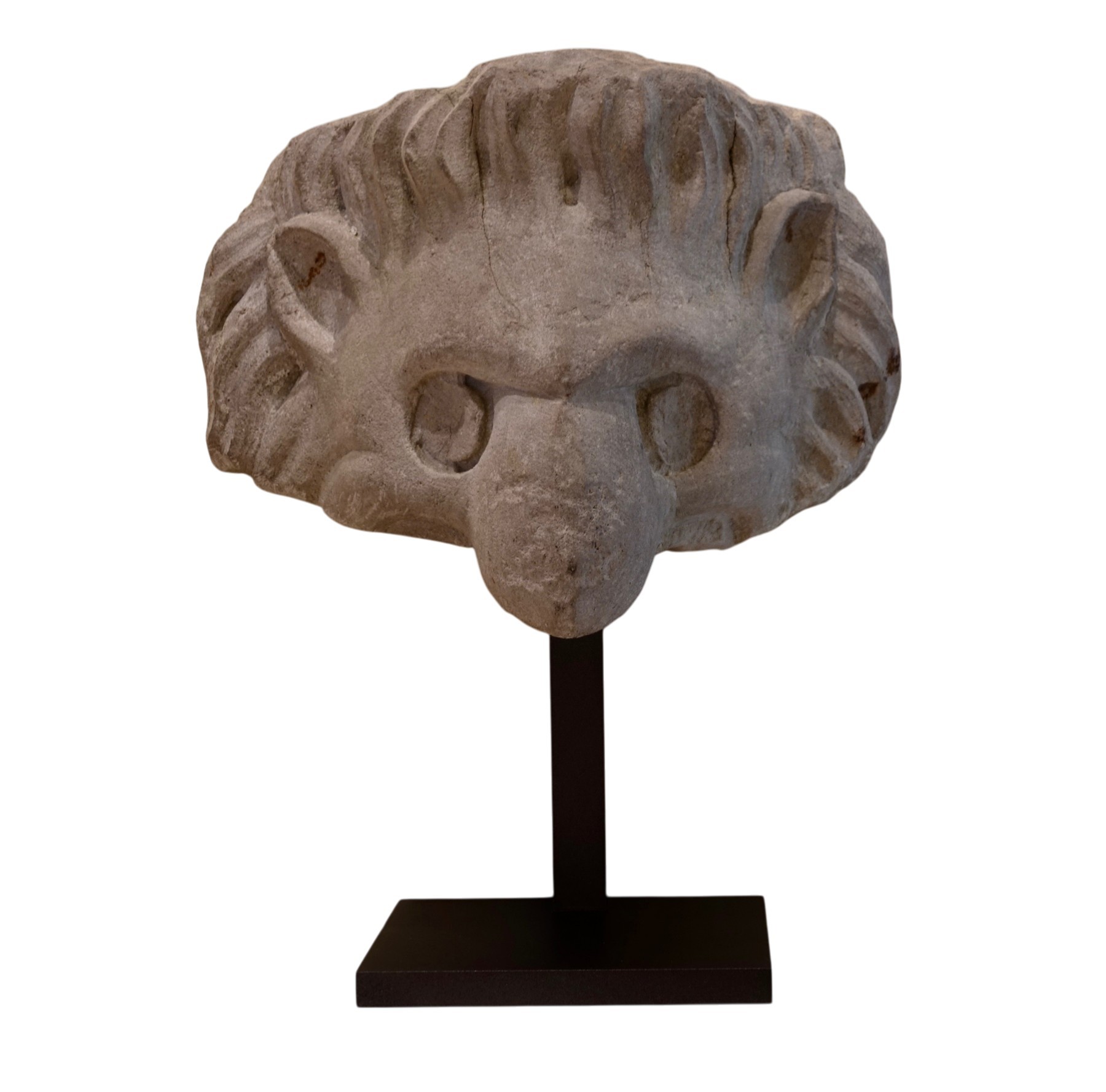
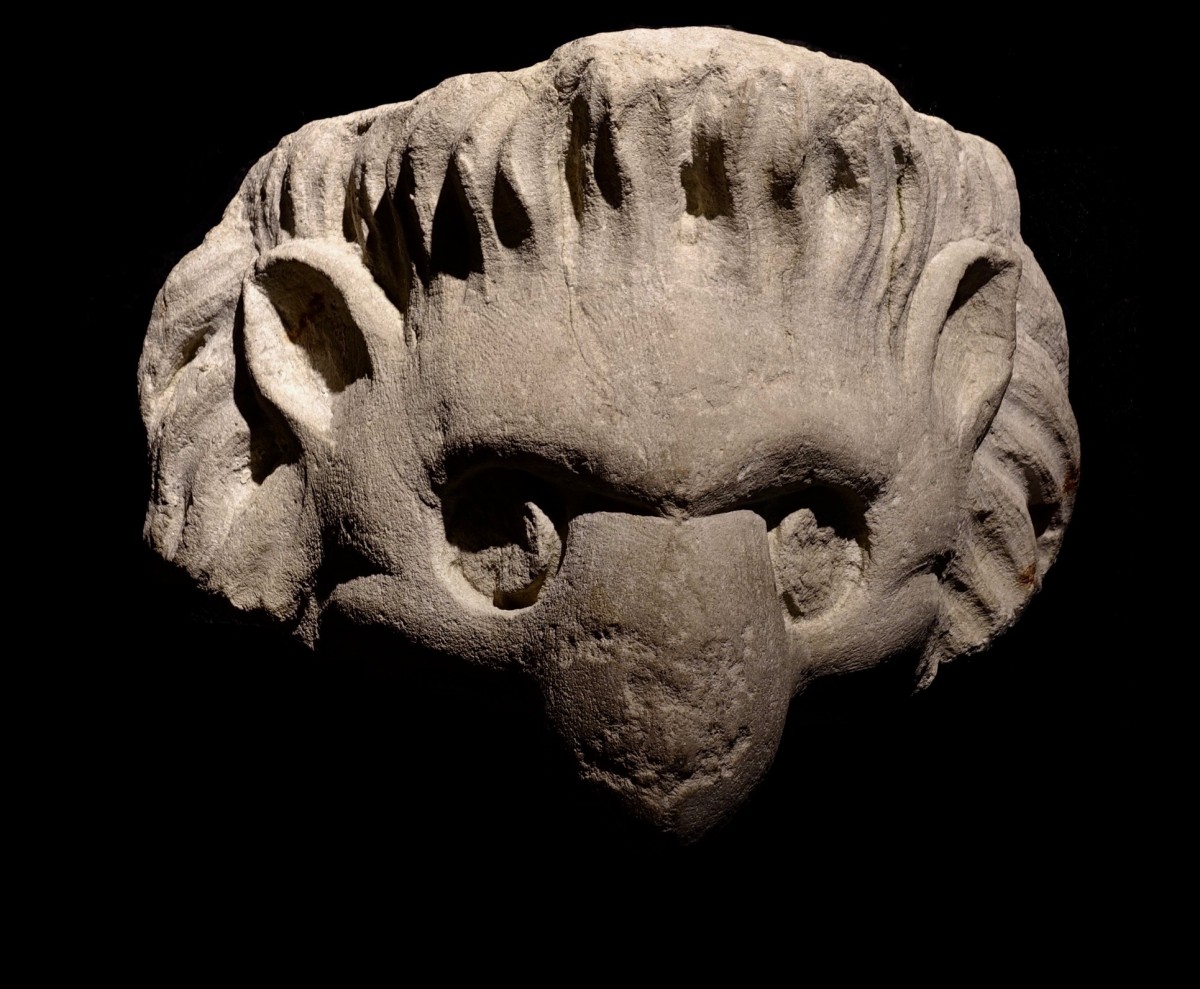
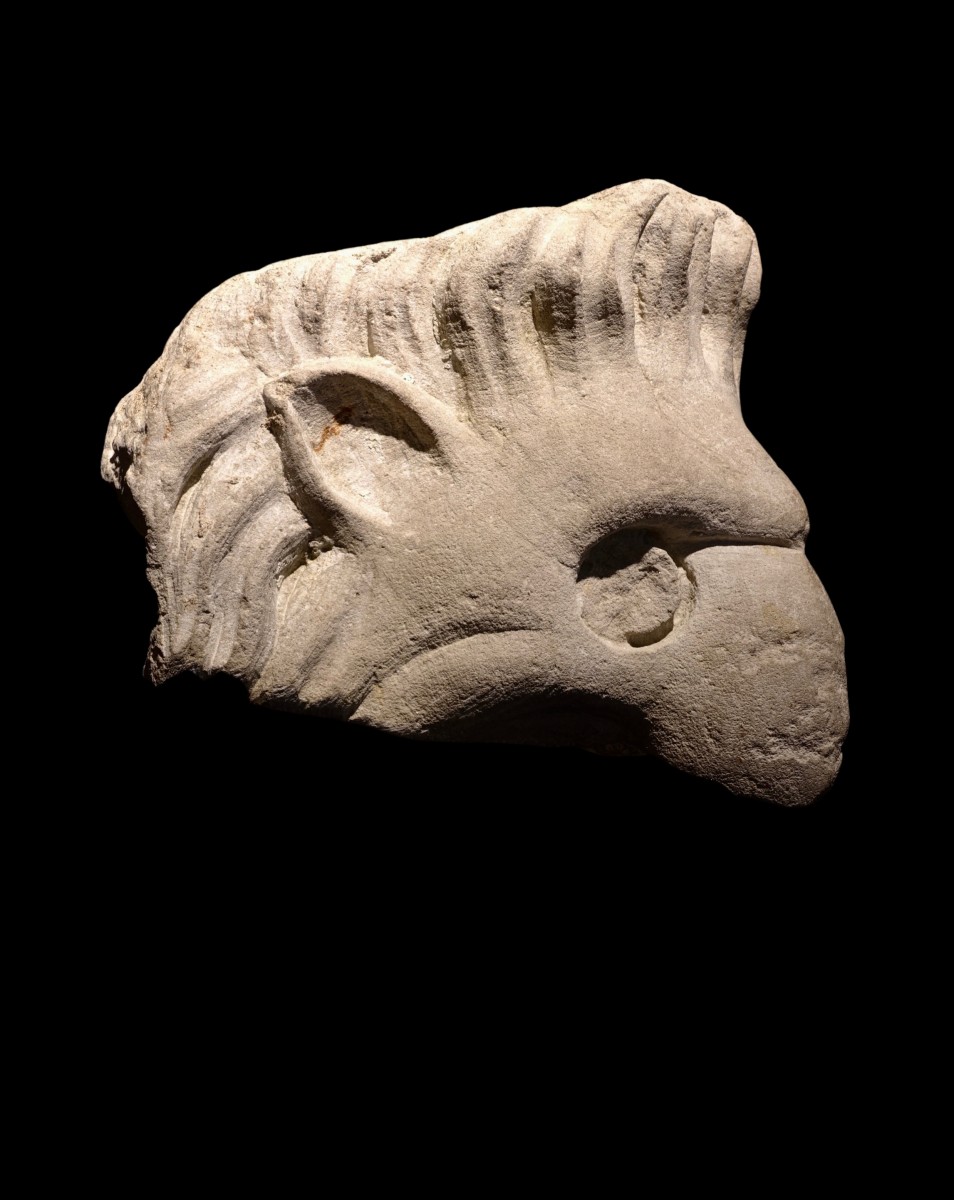
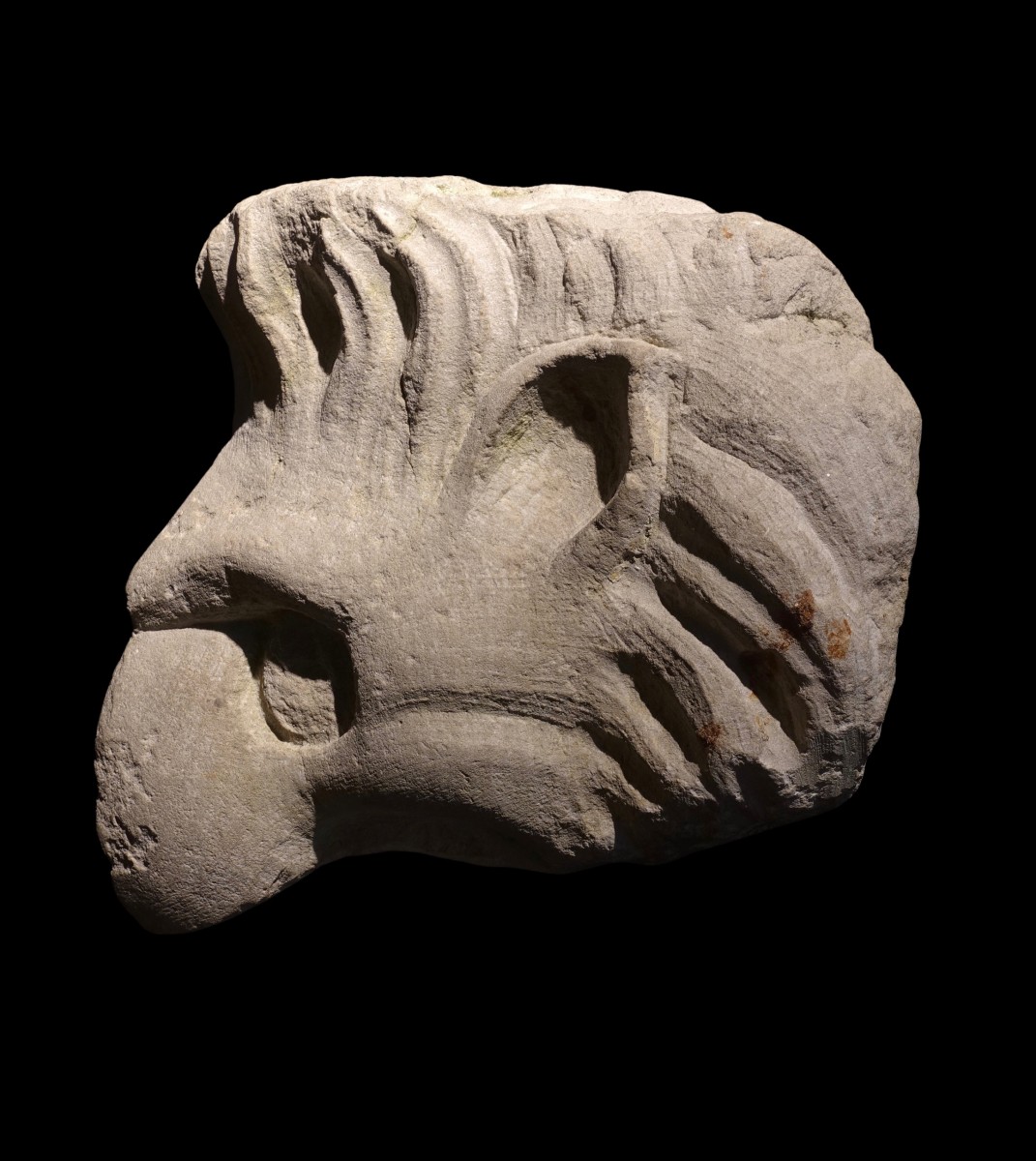
Grotesque Mask (Griffin Head)
Central Italy, 16th century
Carved stone
20 × 29 × 21 cm (excluding the stand)
This carved stone mask depicts a stylised griffin’s head and belongs to the rich tradition of grotesque ornament that flourished in Italian art during the sixteenth century. The creature combines avian and leonine features characteristic of the griffin: a pronounced, beak-like snout, rounded, hollowed eyes, and a compact facial structure framed by radiating, mane-like locks that evoke both feathers and fur.
The griffin, a legendary hybrid creature with the body of a lion, the head and wings of an eagle, and distinctive equine ears, held a place of particular prestige in the medieval imagination. As the lion was regarded as the king of beasts and the eagle as the king of birds, the griffin came to embody supreme strength and majesty. Since classical antiquity, it has also been associated with the guarding of treasures and precious possessions.
As a mythological figure linked to vigilance and protection, the griffin was especially suited to an architectural context, where such imagery could symbolically reinforce the safeguarding of thresholds and significant structural points.
The deeply drilled eyes enhance the play of light and shadow, intensifying the creature’s gaze and reinforcing its expressive, possibly apotropaic function. The surface bears traces of weathering, suggesting prolonged exposure and supporting the hypothesis of an original architectural setting. Nevertheless, the carving preserves a strong sense of volume and decorative clarity, privileging rhythmic pattern and silhouette over naturalistic detail.
This griffin mask exemplifies the Renaissance fascination with hybridity, invention, and symbolic ornament. Situated at the intersection of sculpture and architecture, it embodies both refined decorative sensibility and the enduring cultural resonance of mythological guardians.