Offered by Franck Baptiste Paris
REQUEST INFORMATION
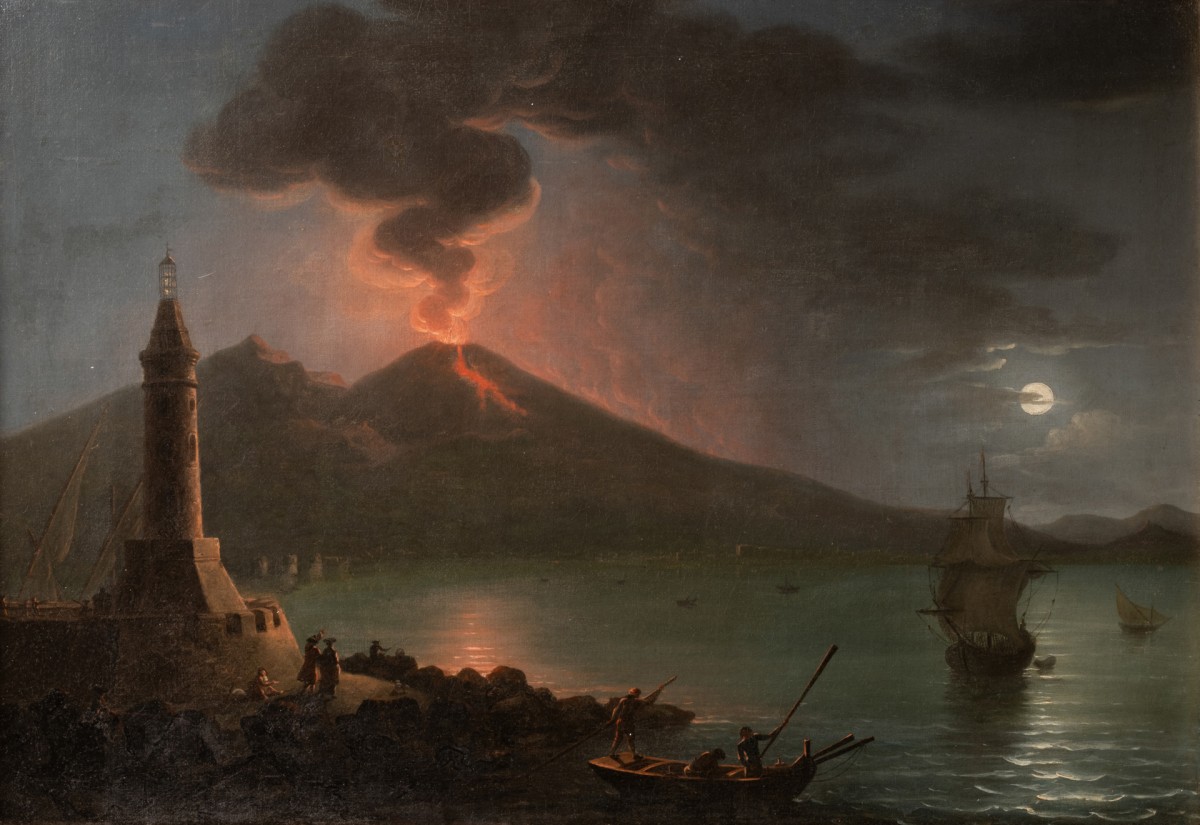

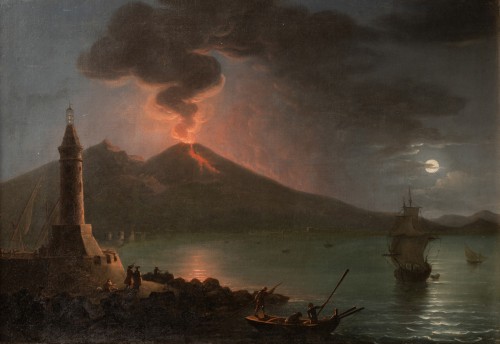
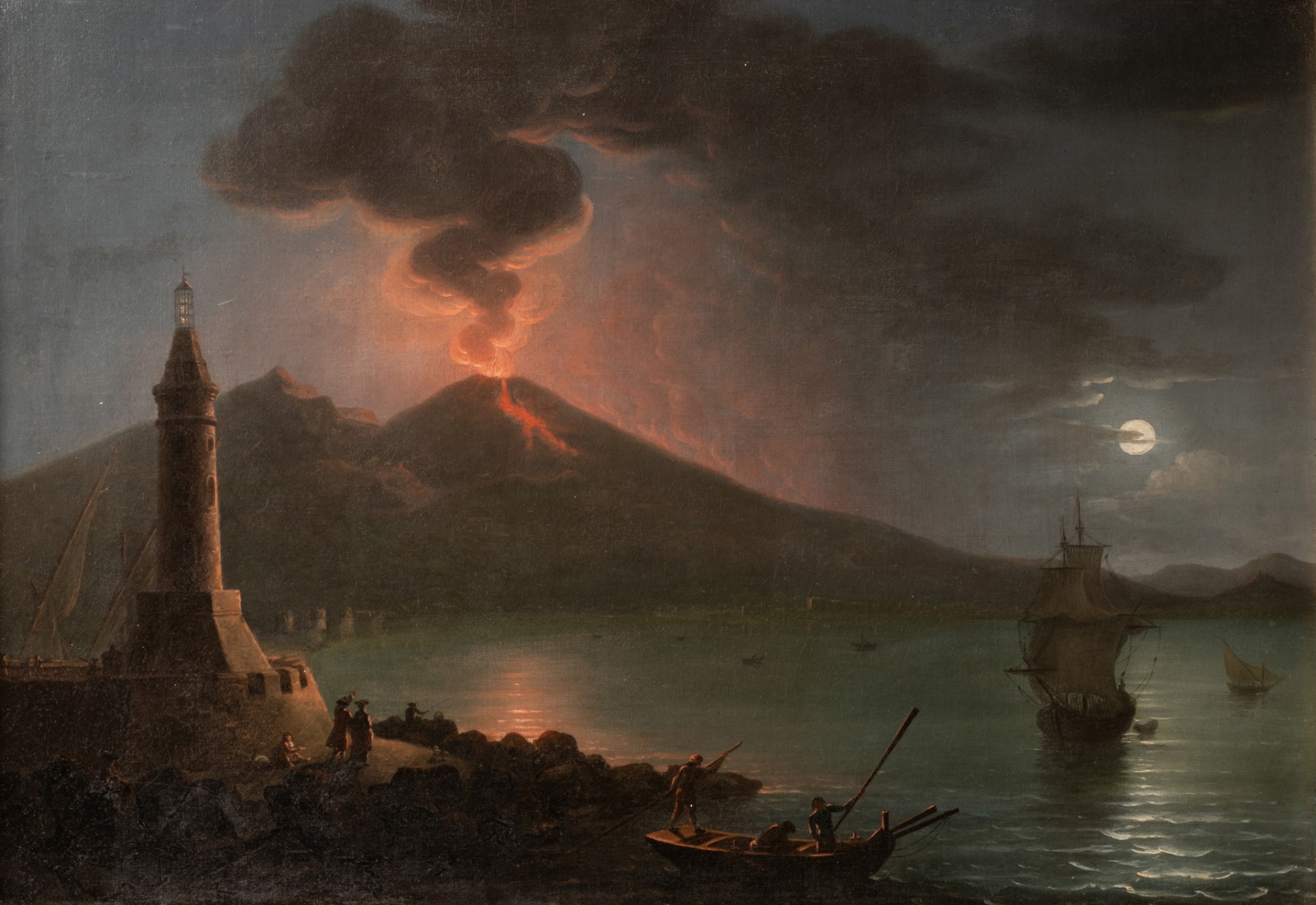
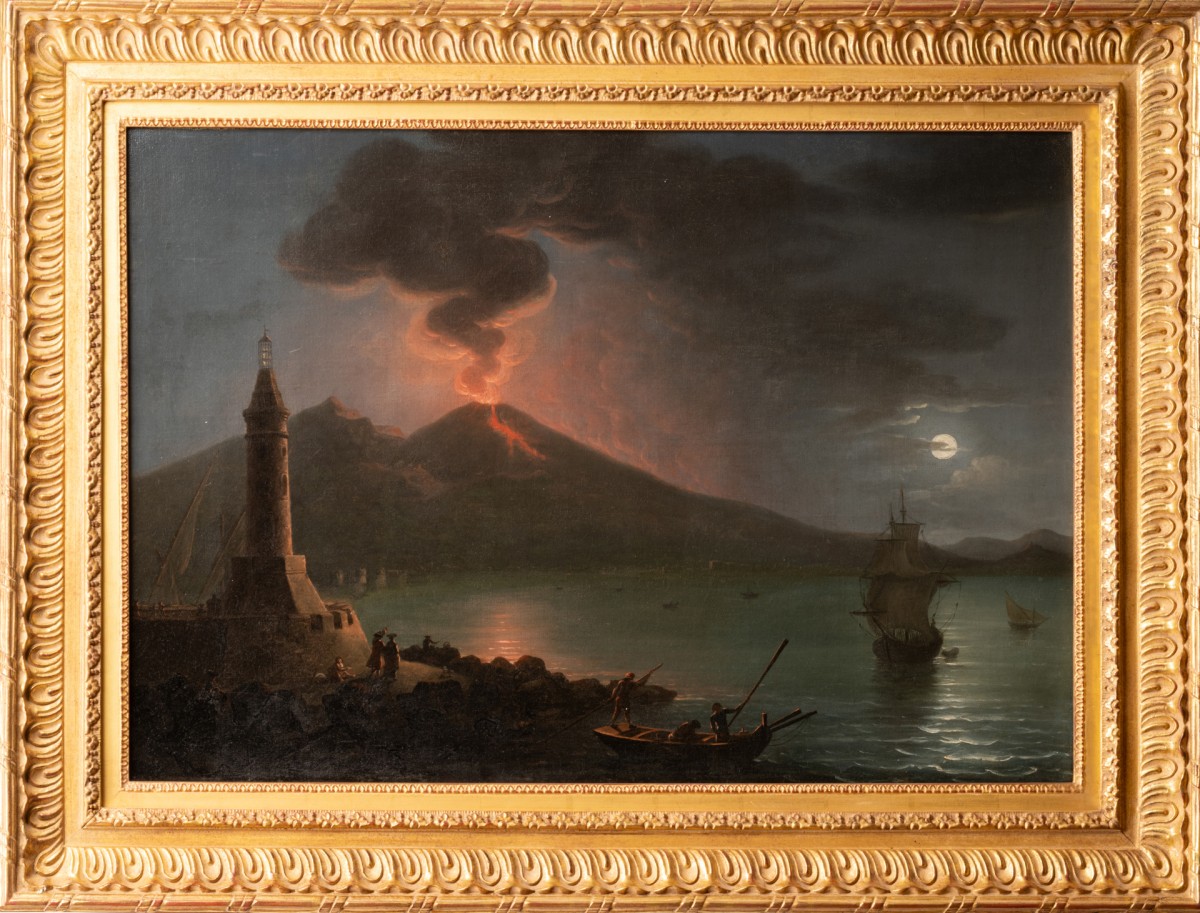
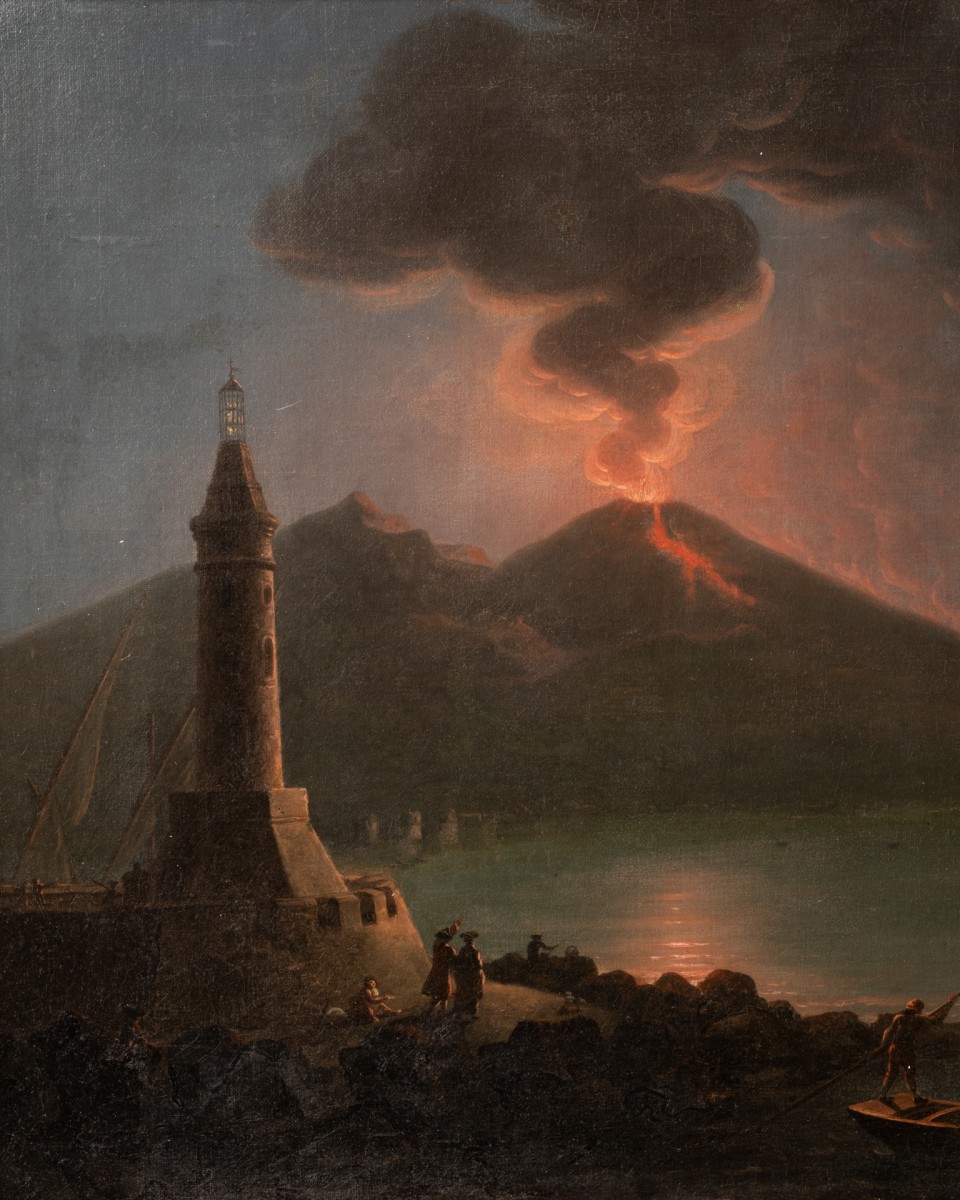
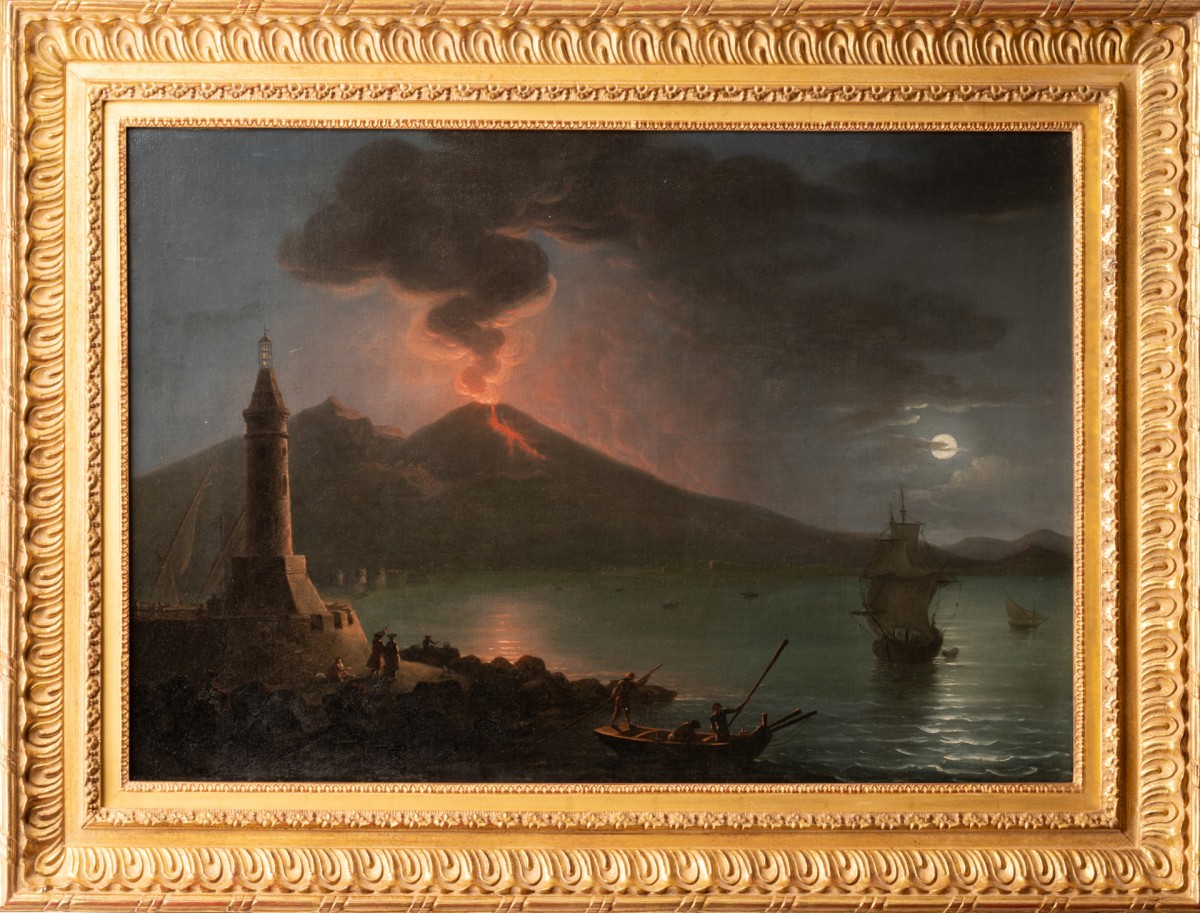
This fine composition depicts a spectacular nighttime eruption of Mount Vesuvius, viewed from the Molo Grande, one of the main piers in the port of Naples, identifiable by its famous lighthouse, the *Lanterna del Molo*, which stands majestically in the foreground.
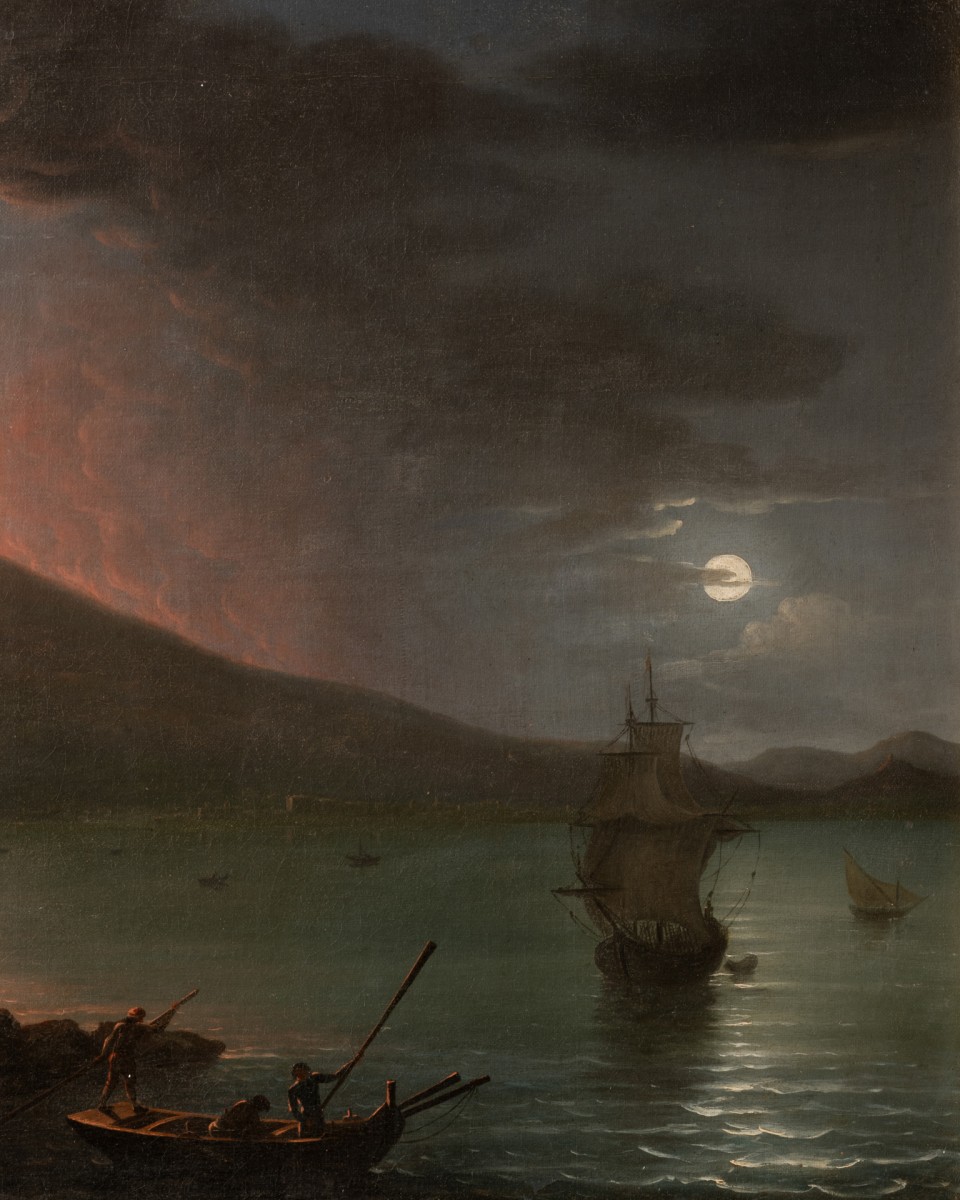
On the rocks bordering the pier, a few strollers have paused to contemplate the striking spectacle of the erupting volcano, while, also in the foreground, fishermen go about their work on a small boat. Further out, in the tranquil waters of the bay, a sailing vessel lies at anchor, silhouetted against the twilight.
The true poetry of this work lies in the dramatic contrast between the stillness of a night bathed in the soft, silvery light of the moon and the violence of the volcanic eruption. To the right, moonlight gently pierces the clouds, casting its reflection across the calm sea; meanwhile, at the center of the composition, a furious Vesuvius hurls a vast, fiery plume of smoke into the sky, illuminated by the glowing red light of lava cascading down its slopes.
With great sensitivity, the painter juxtaposes two facets of nature: the almost surreal serenity of a nocturnal landscape and the indomitable power of the volcano. This interplay between the cool, silvery tones of the moonlight and the warm, incandescent hues of the eruption lends the scene an atmosphere that is at once poetic, mysterious, and profoundly theatrical.
Oil on canvas.
In good condition.
Attributed to Francesco Fidenza (1747–1819) and his studio.
Dimensions:
Canvas: Height: 55 cm; Width: 81 cm
Frame: Height: 77 cm; Width: 102 cm
Our assessment:
From the second half of the 18th century, spurred by the rediscovery of the great ancient sites of Pompeii and Herculaneum, views of Mount Vesuvius in eruption became immensely popular among European travelers and art enthusiasts. Nocturnal depictions, being particularly spectacular, were highly sought-after subjects.
Influenced by prominent French painters such as Joseph Vernet and Pierre-Jacques Volaire, who helped popularize these landscapes, in which nature reveals its full, formidable power, other artists, including Charles-François Lacroix de Marseille and Francesco Fidanza, also took up the challenge of capturing these striking scenes.
Representing nocturnal landscapes posed a significant technical challenge for painters, all the more so when the subject was the spectacle of a volcanic eruption. The difficulty lay in rendering the glowing red light of the lava, its diffusion through the clouds, and the incandescent reflections upon the sea’s surface, while simultaneously maintaining subtle contrasts of light and shadow, as well as the soft, ethereal glow of moonlight.
Mastering these atmospheric effects required careful observation of nature. Extended stays in Italy, the Neapolitan region in particular, allowed artists to study the shifting light and the dramatic manifestations of Vesuvius. These observations, recorded in studies and sketches, subsequently informed the compositions they created in their studios.
Far from being mere topographical records, these works demonstrate true painterly virtuosity, in which precise observation is combined with a deliberate pursuit of emotion and theatricality. If wealthy European travelers on their "Grand Tour" of Italy wished to bring home a souvenir of these grandiose spectacles, they generally had to settle for gouaches, works created on-site by small, specialized workshops that catered to an ever-growing demand.
Owning an actual oil painting of an eruption of Mount Vesuvius by a renowned artist, by contrast, was a privilege reserved for a particularly affluent and discerning clientele. Far less common than the gouaches produced for travelers, these ambitious works required a much higher level of technical mastery and reflected an artistic pursuit that went well beyond the simple creation of a travel memento.
Francesco Fidanza was an Italian landscape painter, born around 1747, likely in Rome or Città di Castello,who died in Milan in 1819.
Coming from a family of painters, he received his initial training from his father, Filippo Fidanza (1720–1790). His brothers, Gregorio and Giuseppe, also dedicated themselves to landscape painting.
Fidanza specialized in seascapes, harbor scenes, and atmospheric effects,most notably storms, fog, snowy landscapes, and nocturnal scenes.
Although long considered a pupil of Joseph Vernet and Charles-François Lacroix de Marseille, it is now understood that these artists primarily exerted a stylistic influence on his work.