Offered by Franck Baptiste Paris
REQUEST INFORMATION
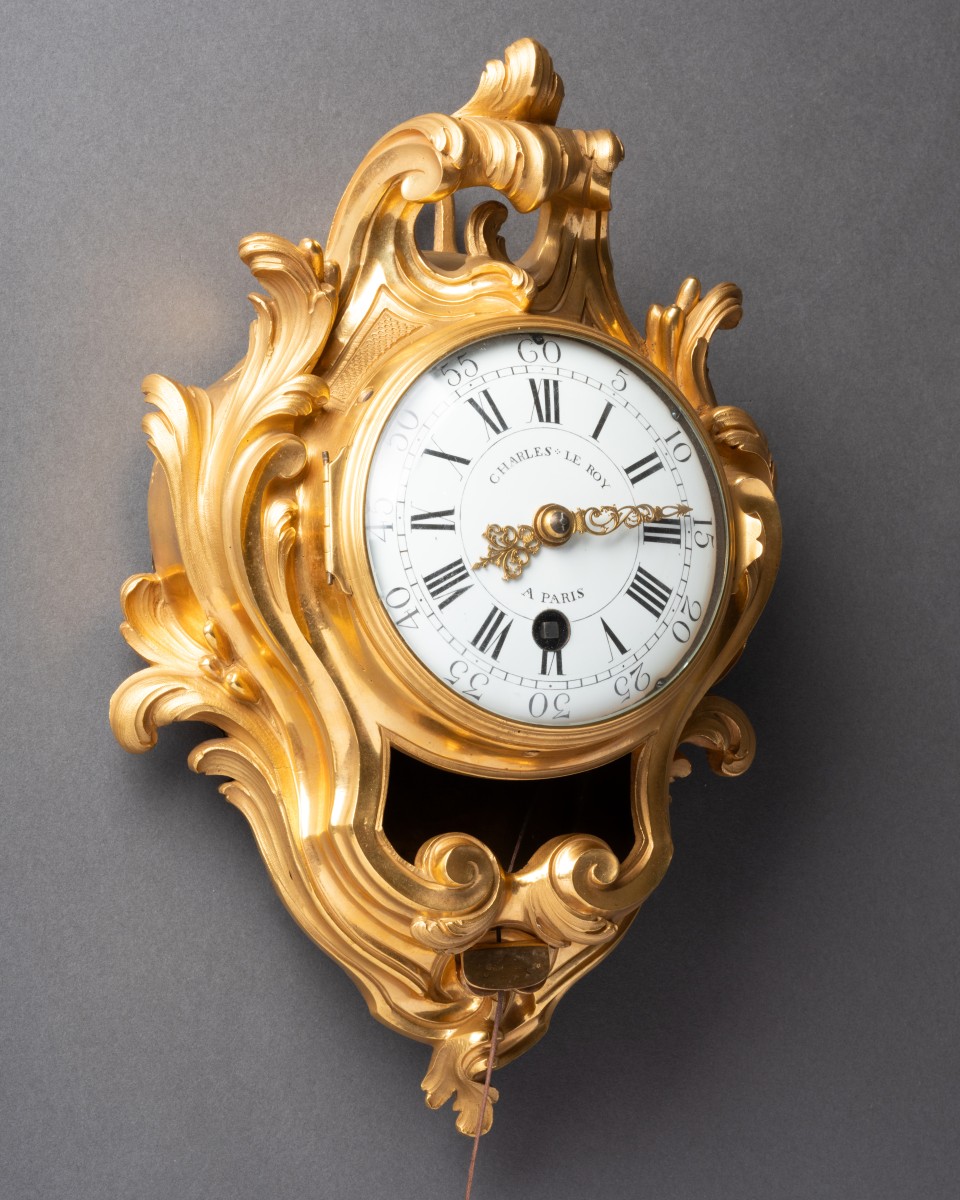

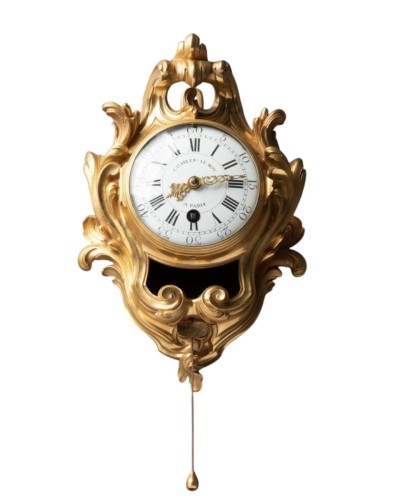
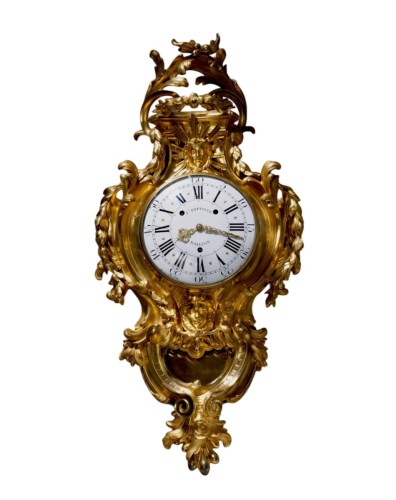
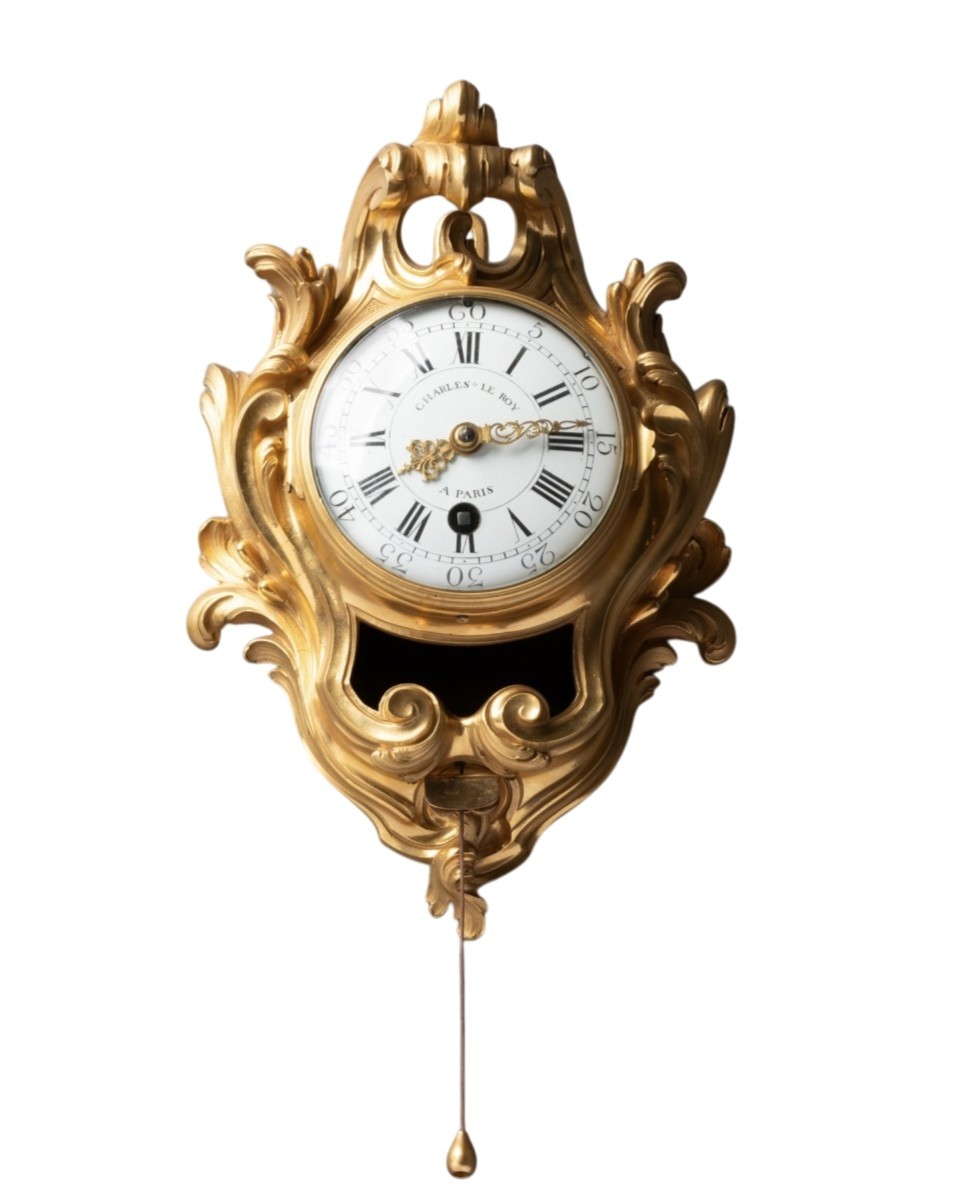
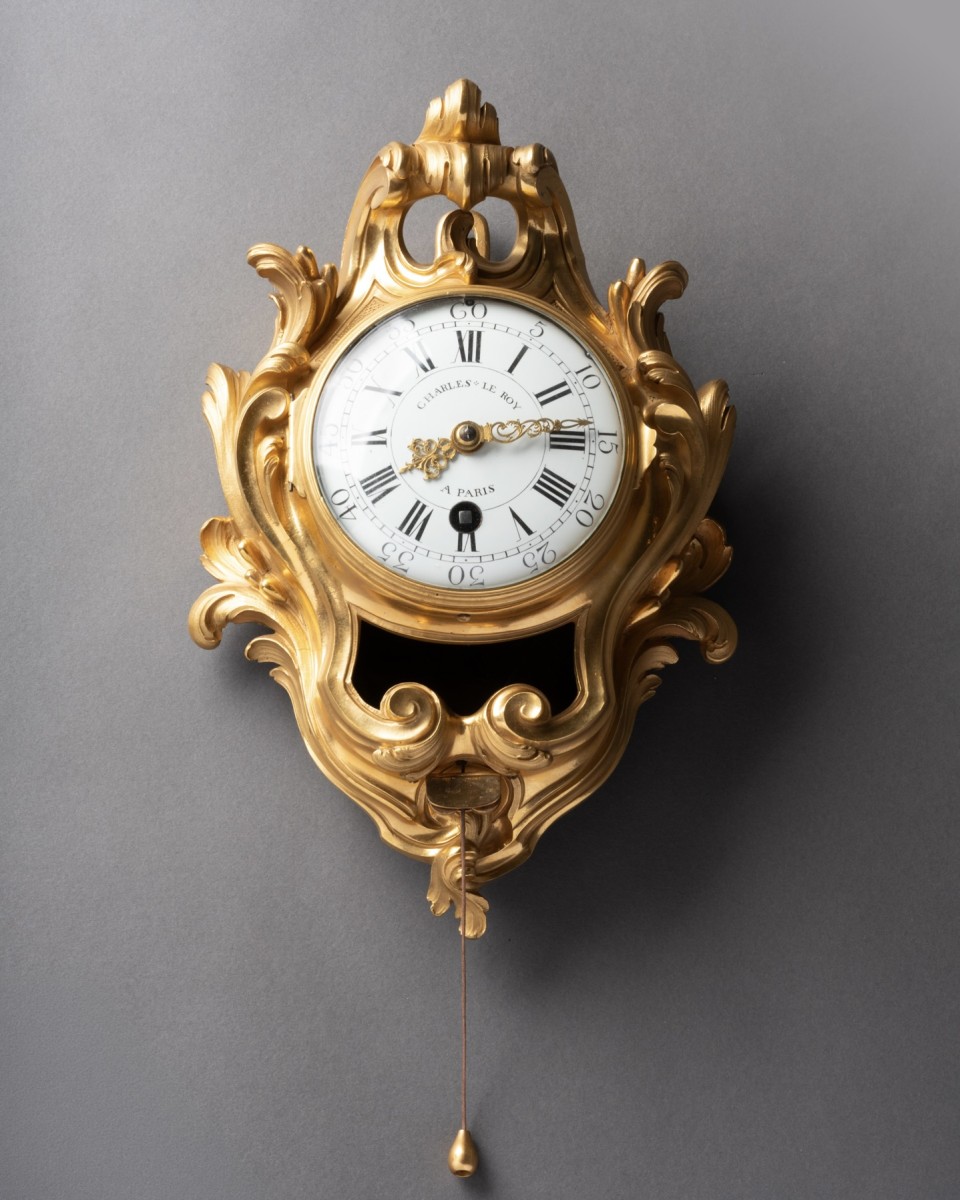
Small alcove clock (*cartel*) in finely chased, mercury-gilded bronze.
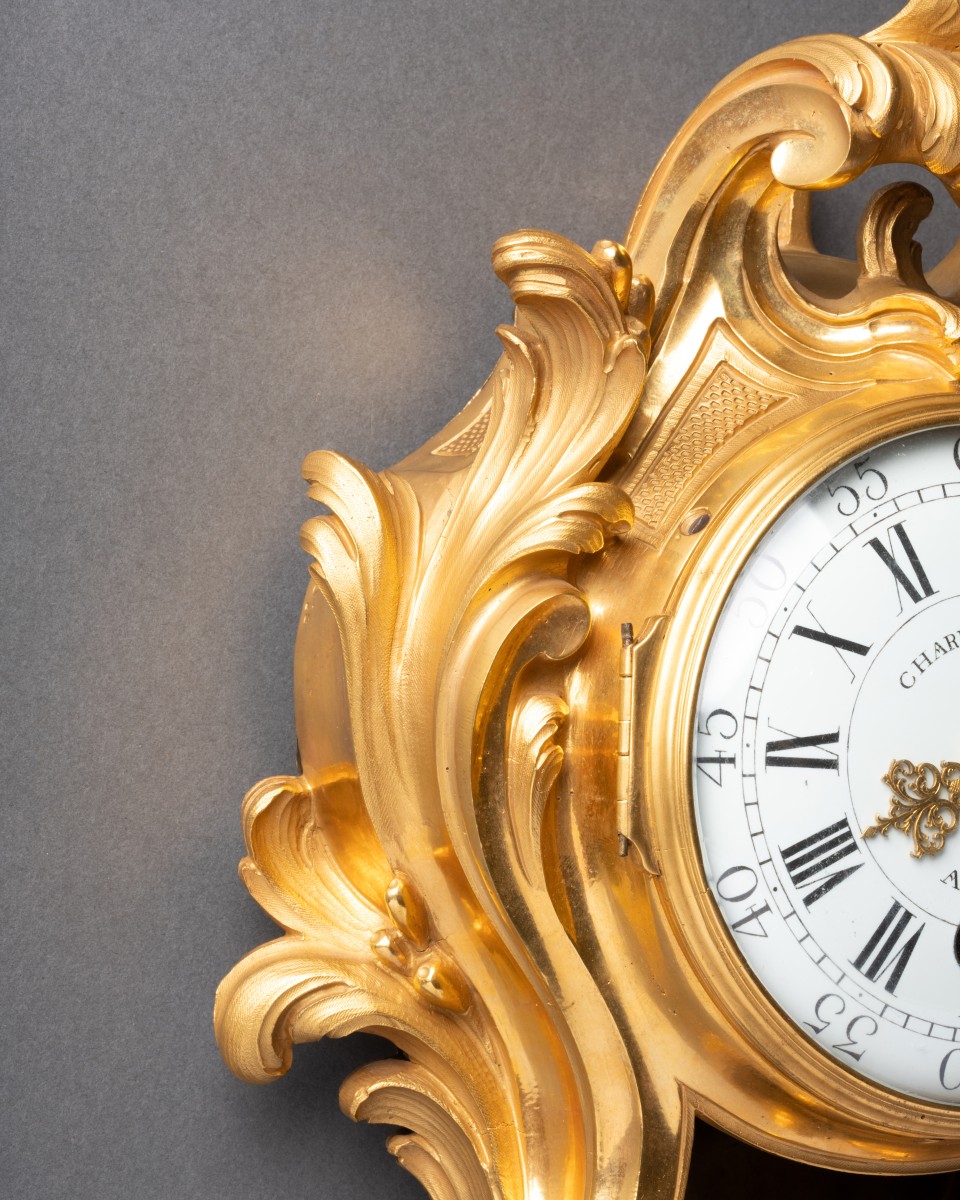
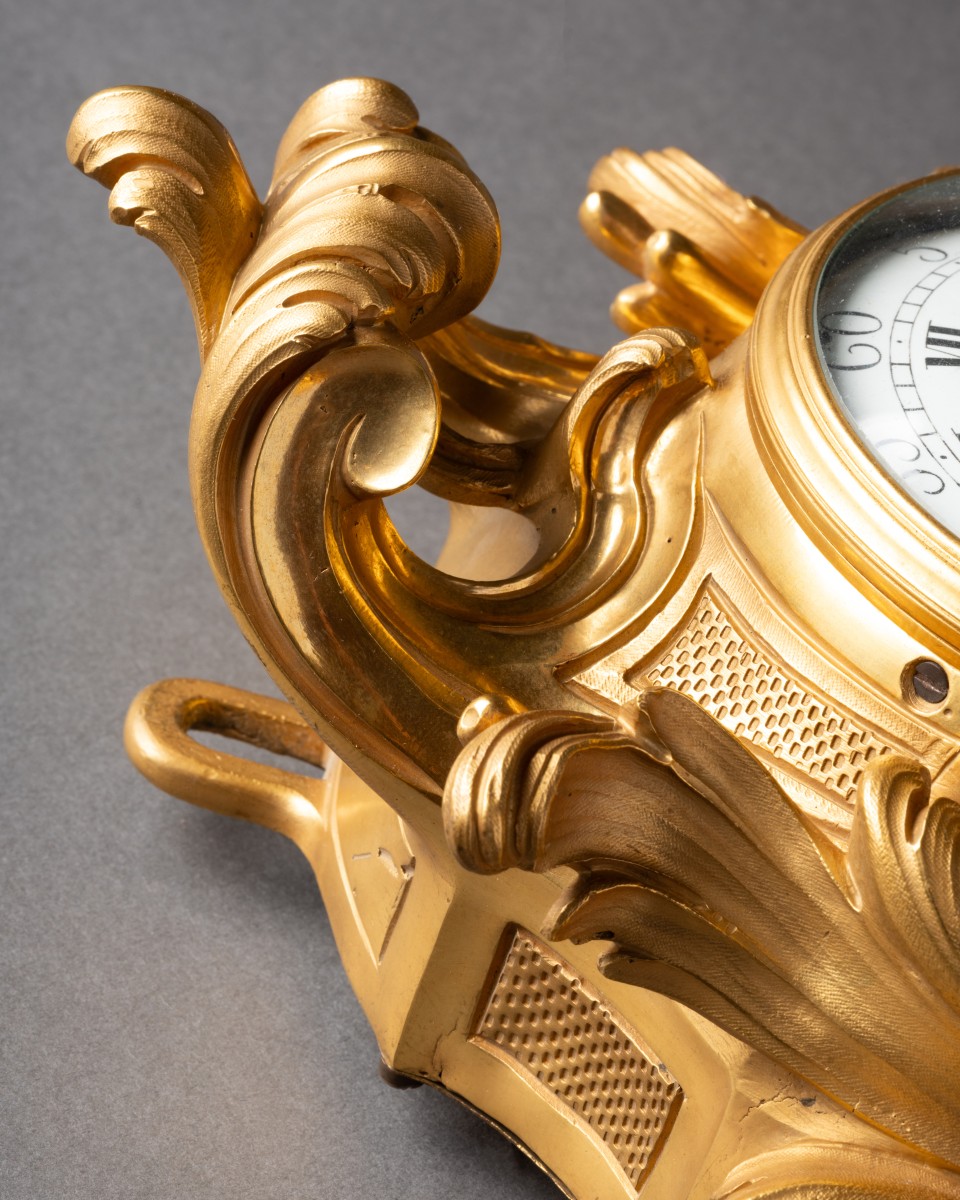
The finely chased and gilded bronze case features a symmetrical composition of bold, scrolling acanthus leaves, forming an opulent *rocaille* frame around a circular, white-enameled dial.
The dial, which displays the hours in Roman numerals and the minutes in Arabic numerals, is signed "Charles Le Roy à Paris."
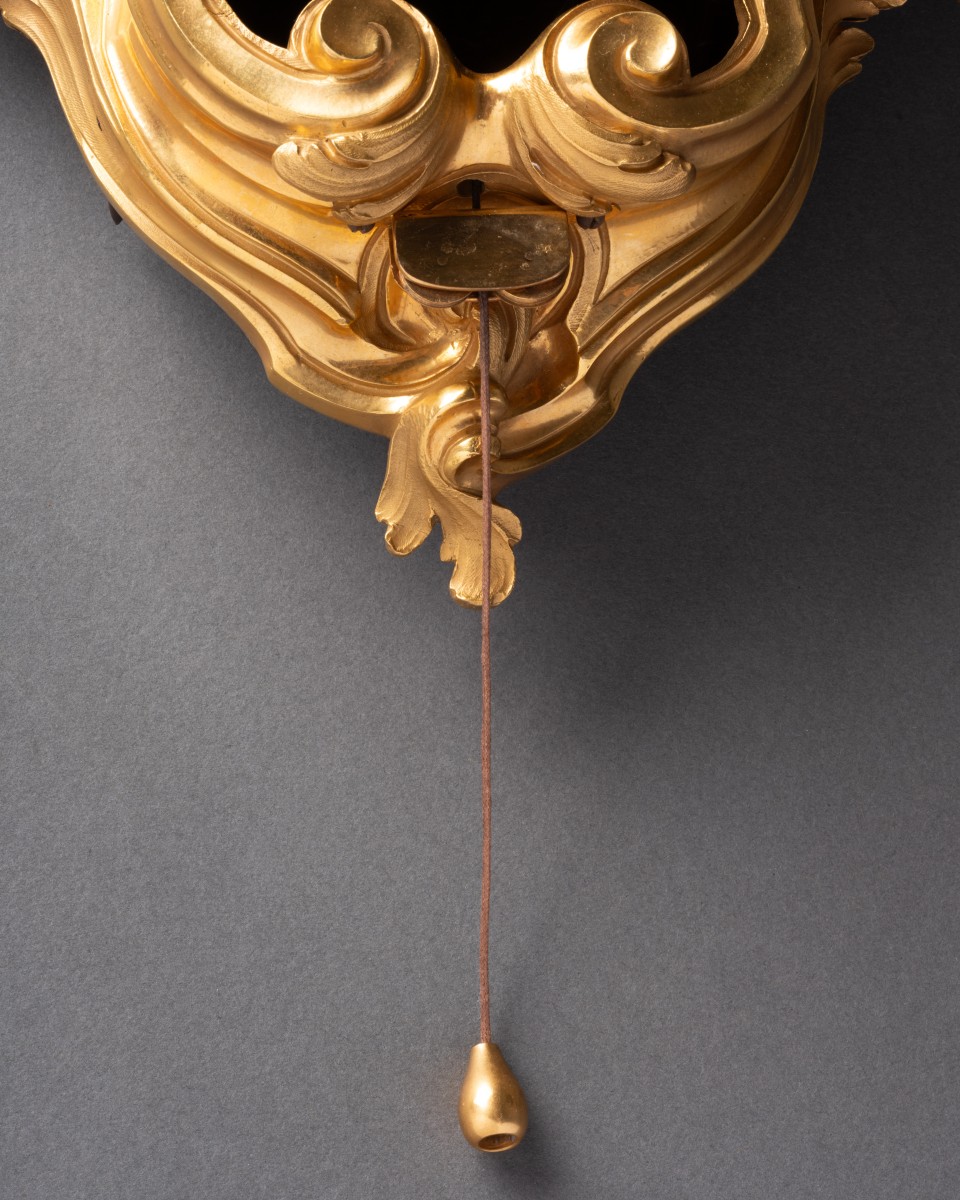
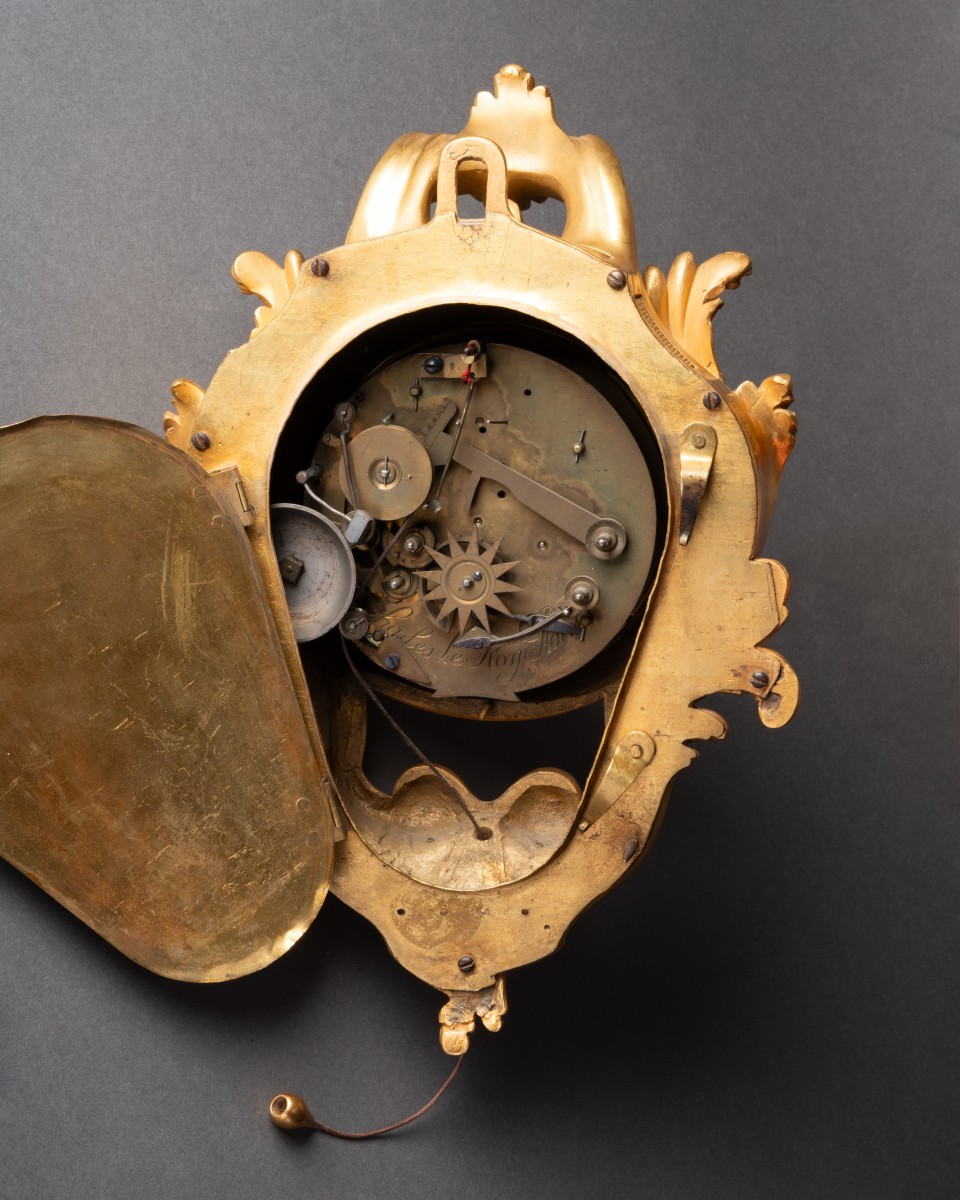
The original movement, featuring a silk-thread suspension, is equipped with a pull-repeat mechanism, allowing the clock to strike the hours, half-hours, and quarters on demand.
In excellent state of preservation; retains its original mercury gilding and is in perfect working order.
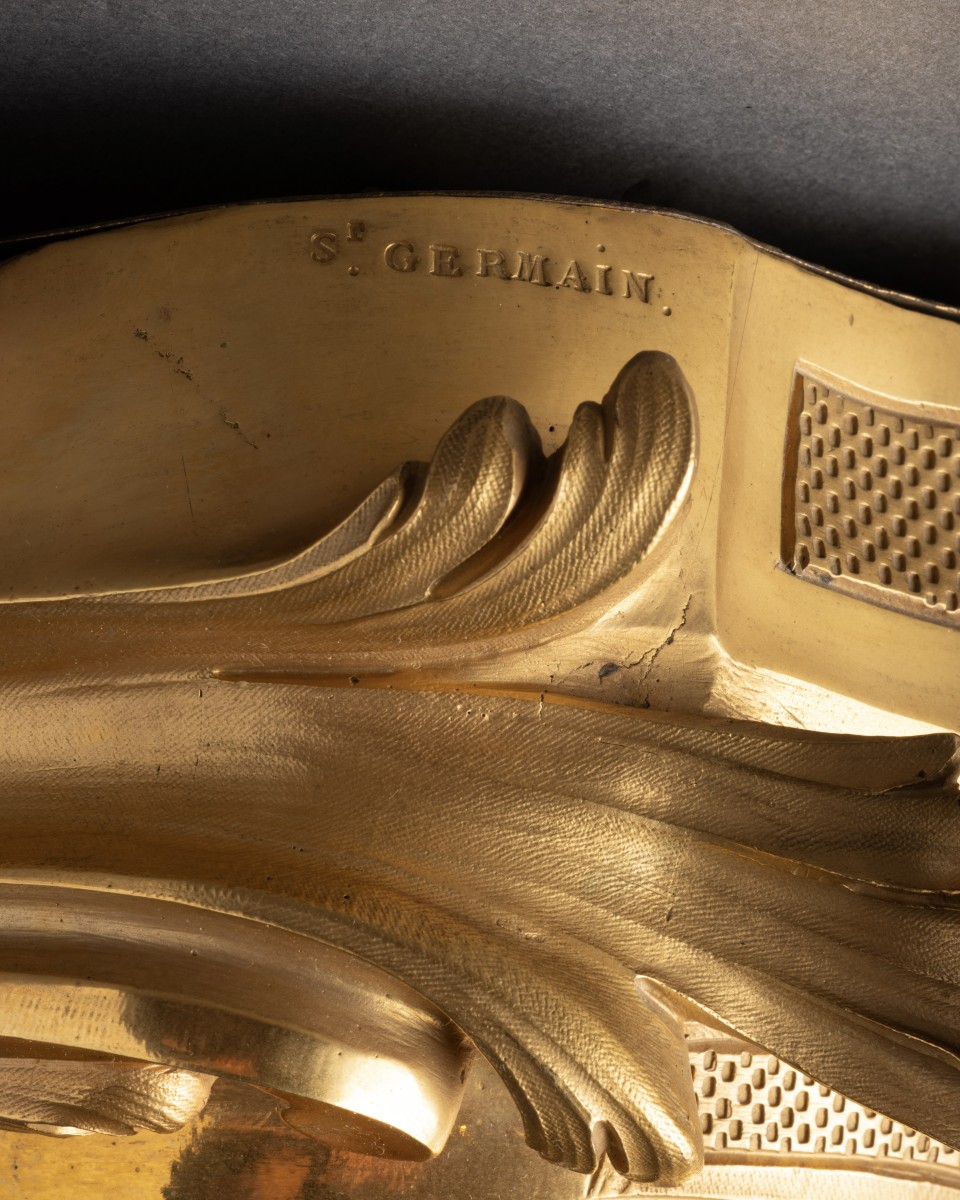
The case is stamped on the left side with "St Germain",the mark of Jean-Joseph de St Germain, a *fondeur-ciseleur* (bronze caster and chaser) to the King.
Parisian work, Louis XV period, circa 1765–1770.
Dimensions:
Height: 34 cm – Width: 24 cm
Charles Le Roy (1709–1771) was one of the most significant Parisian clockmakers during the reign of Louis XV. He attained the status of master on August 16, 1733, and established his workshop on the Rue des Prêcheurs, later moving it around 1745 to the Rue Saint-Denis, opposite the church of Saint-Leu. Within a few years, he gained great renown among the prominent Parisian collectors of the era for the perfection of the movements in his clocks and watches. Following his death in Nanterre in 1771, his son, Etienne-Augustin, continued the family business and was granted the title of *Horloger du Roi* (Clockmaker to the King). Jean-Joseph de Saint-Germain (1719–1791) was a master founder, specializing in casting using earth and sand molds—who attained his master status on July 15, 1748, following the submission of a "masterpiece." He stands as one of the preeminent bronziers of the reign of Louis XV. In 1765, he became a juror for the guild of founders-chasers (*fondeurs-ciseleurs*). A staunch advocate for intellectual property rights, he proposed, and successfully pushed for the adoption of—a regulation requiring bronziers to sign their work. As noted on a promotional label from his workshop on Rue Saint-Nicolas, he sold "all manner of *ormolu* (gilt-bronze) cases and mounts" and also "created designs and wax models." He was the originator of many highly successful designs,s uch as the *cartel* (wall clock) featuring two Chinese figures, as well as clocks incorporating rhinoceroses, elephants, or bulls—making him one of the most frequently copied artists of his time.
Our assessment:
With its modest height of approximately thirty centimeters and an ingenious mechanism for striking the time on demand, the *cartel* clock presented here belongs to the category of *cartels d’alcôve* (alcove clocks).
These elegant timepieces were designed to be placed within the alcove housing a bed, typically positioned above it. By means of a pull-cord system, the owner could—at any point during the night, rigger the clock to strike the hours, half-hours, and quarters, allowing them to ascertain the time without the need to rise or light a lamp. In terms of its decorative approach, this *cartel* clock belongs firmly to the "restrained *rocaille*" style, a movement characterized by a gradual return to symmetry and greater ornamental moderation, emerging from the 1760s onwards. Acanthus leaves echo one another harmoniously within a more measured and balanced composition, already signaling a shift in taste toward Neoclassicism.
Jean-Joseph de Saint-Germain, who designed his own compositions and created his own models, appears to have drawn inspiration for the sober yet exceptionally pure lines of this clock from the work of architect and ornamental designer Pierre Contant d’Ivry (1698–1777), a leading figure in this "restrained *rocaille*" style that gained prominence during the 1760s and 1770s.
The extraordinary finesse of the chasing, testifying to the complete mastery of Saint-Germain, who served as a *fondeur-ciseleur* (founder and chaser) to the King, combined with a high-quality movement signed by Charles Le Roy, one of the most celebrated horologists of his era, renders this small *cartel* clock an exceptionally refined and prestigious timepiece, representative of the finest Parisian craftsmanship from the end of the reign of Louis XV.