Offered by Franck Baptiste Paris
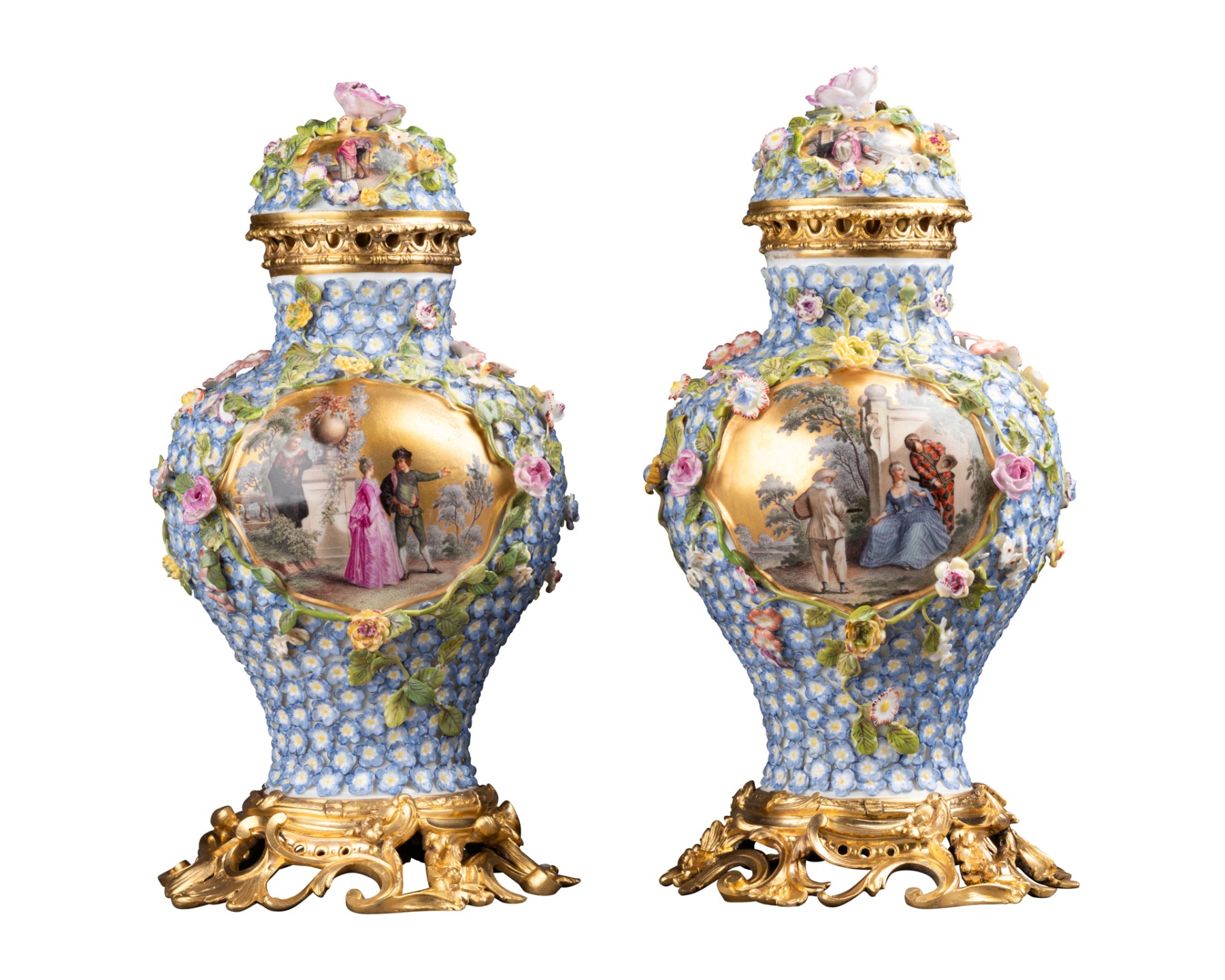
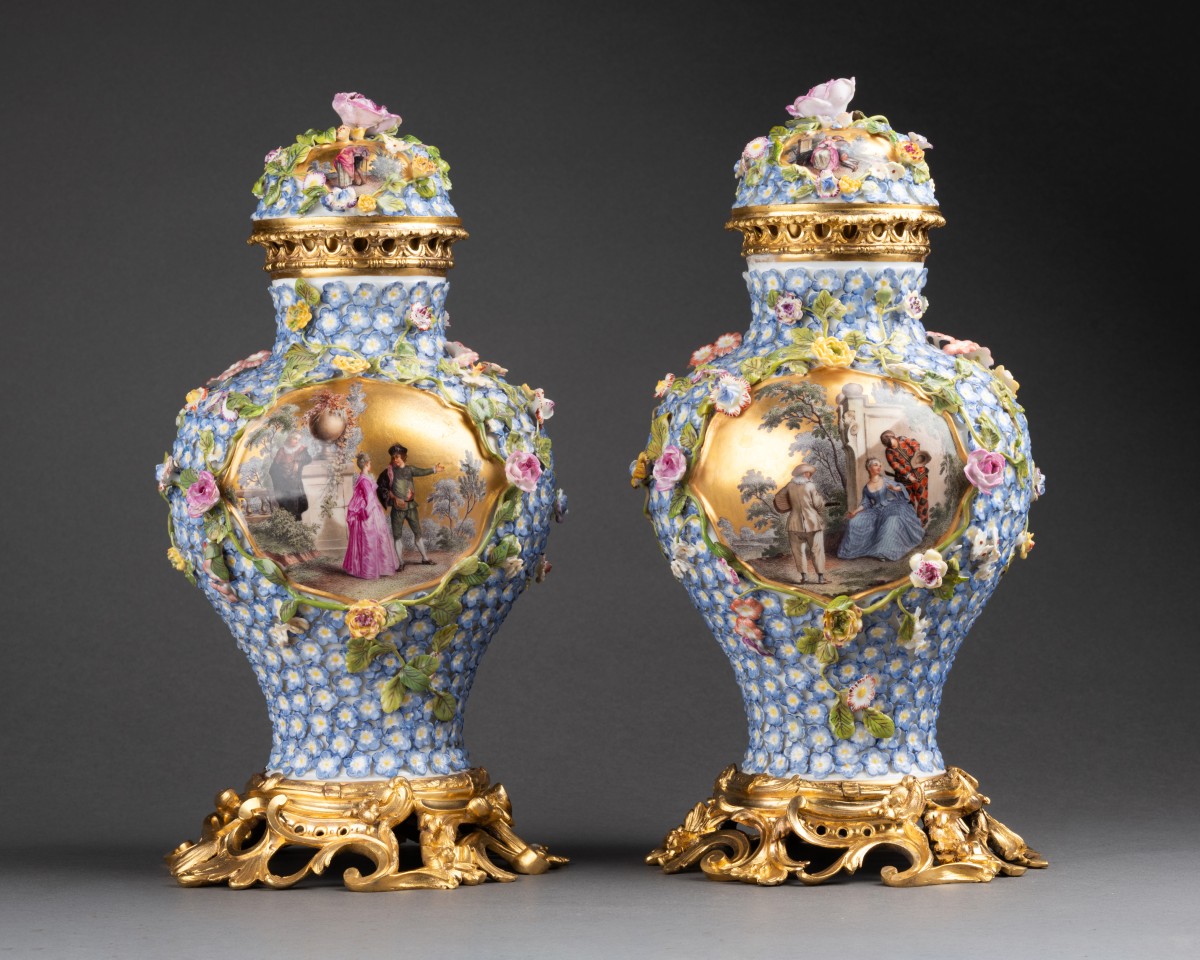
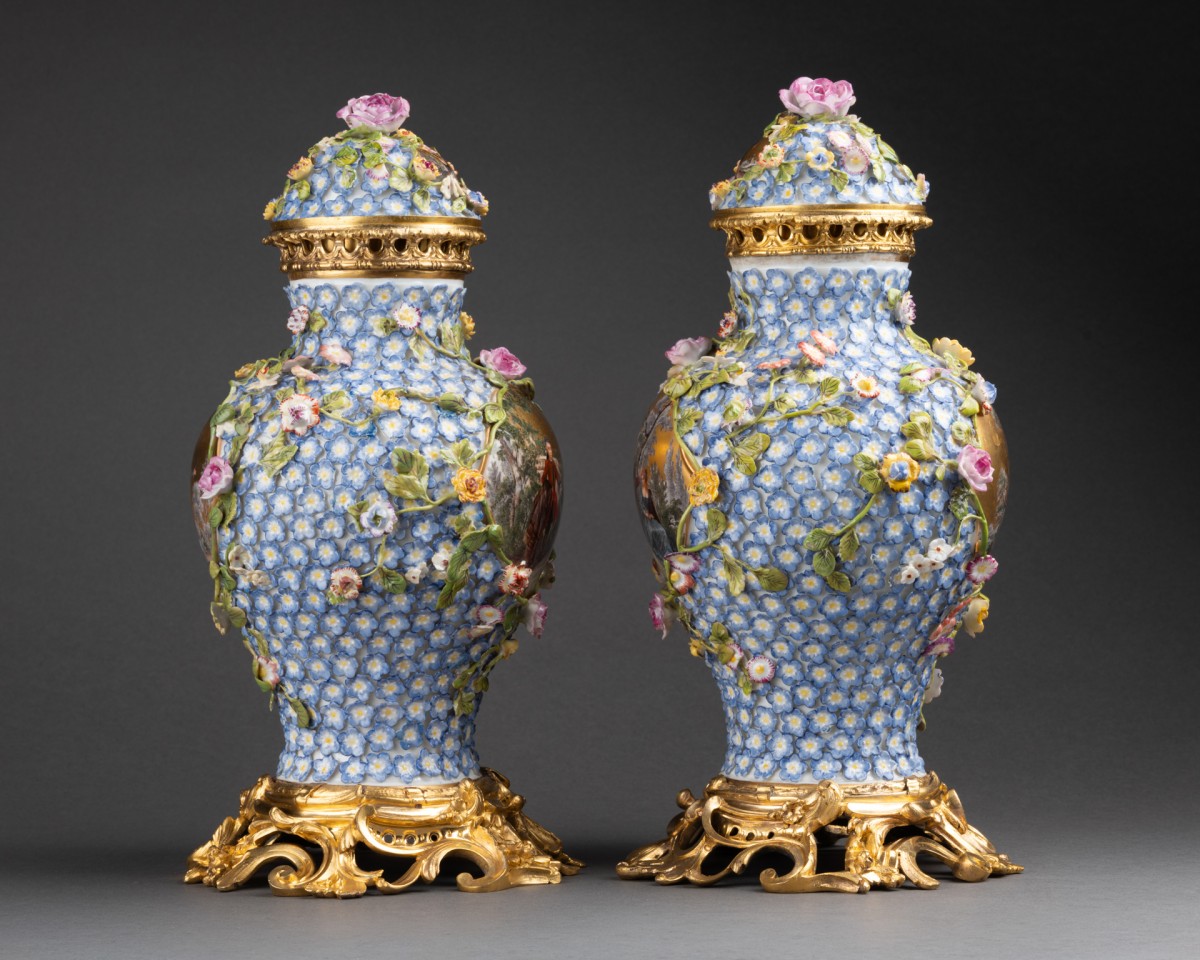
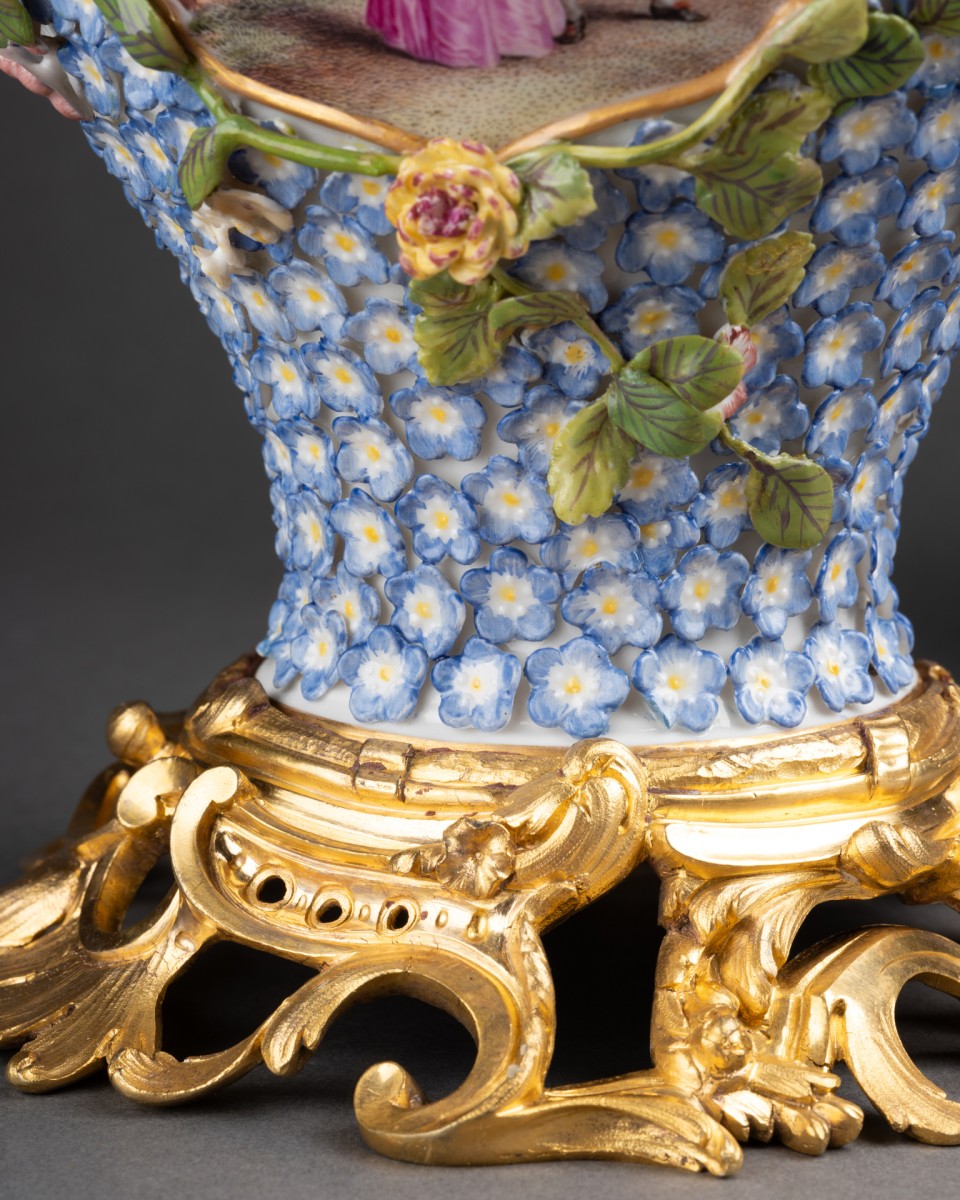

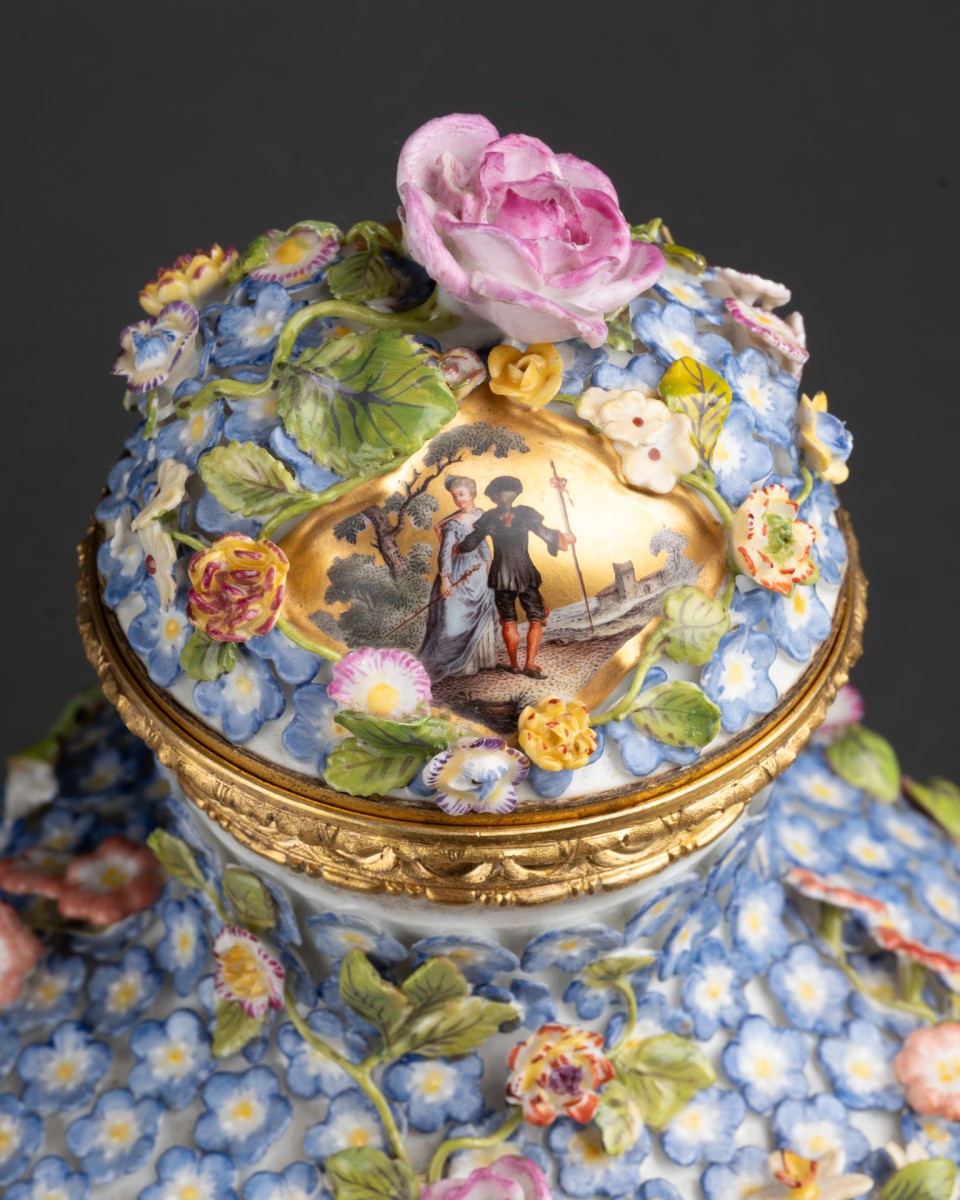
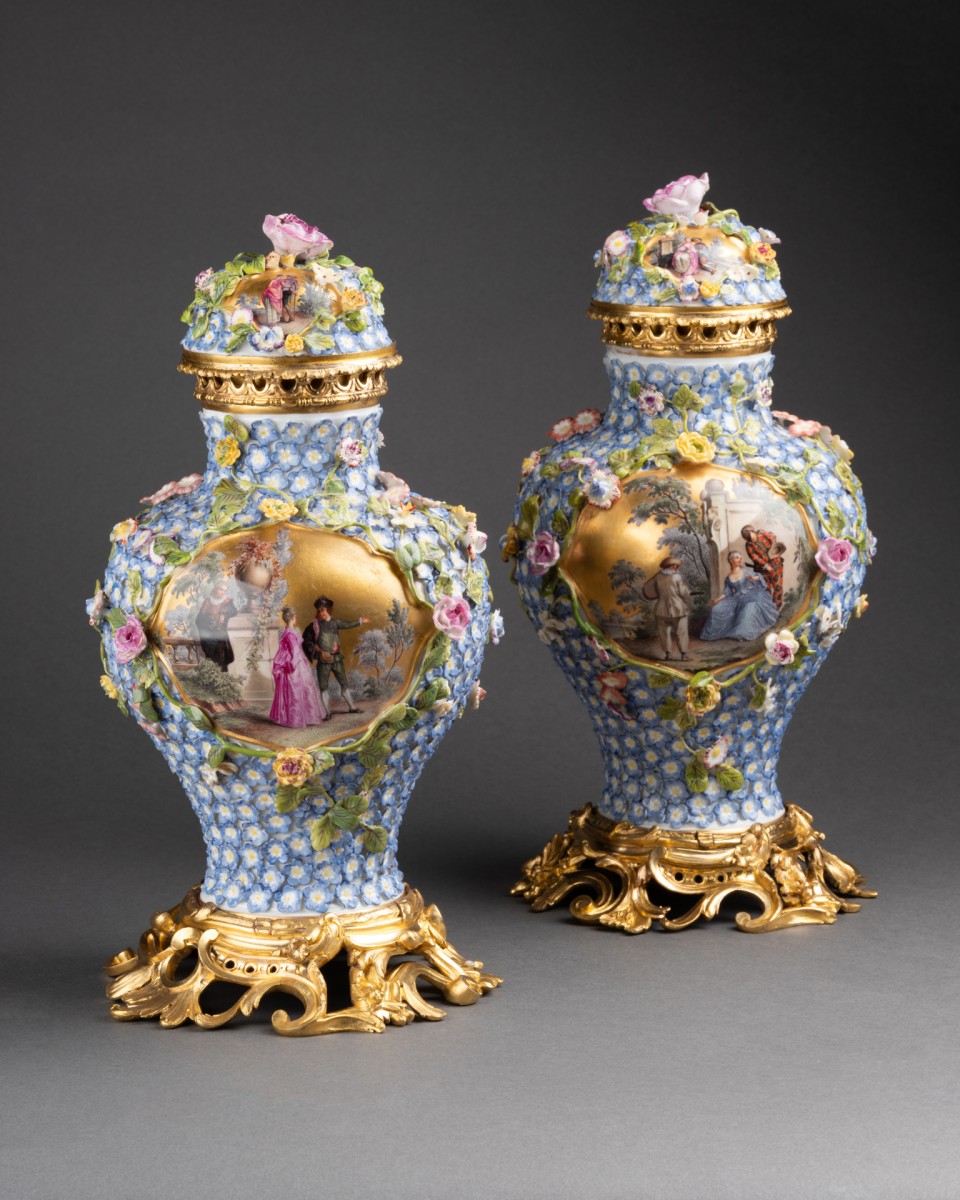
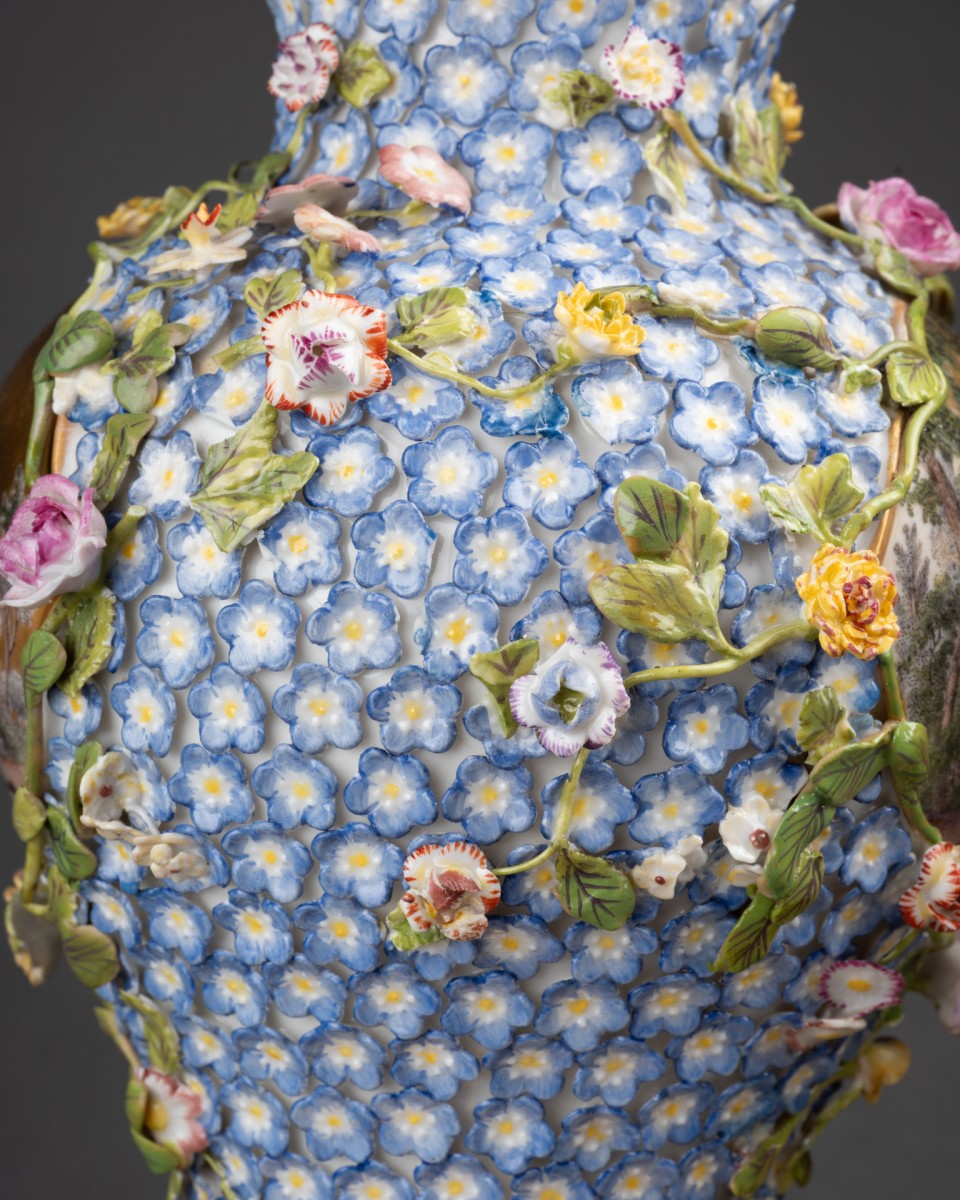
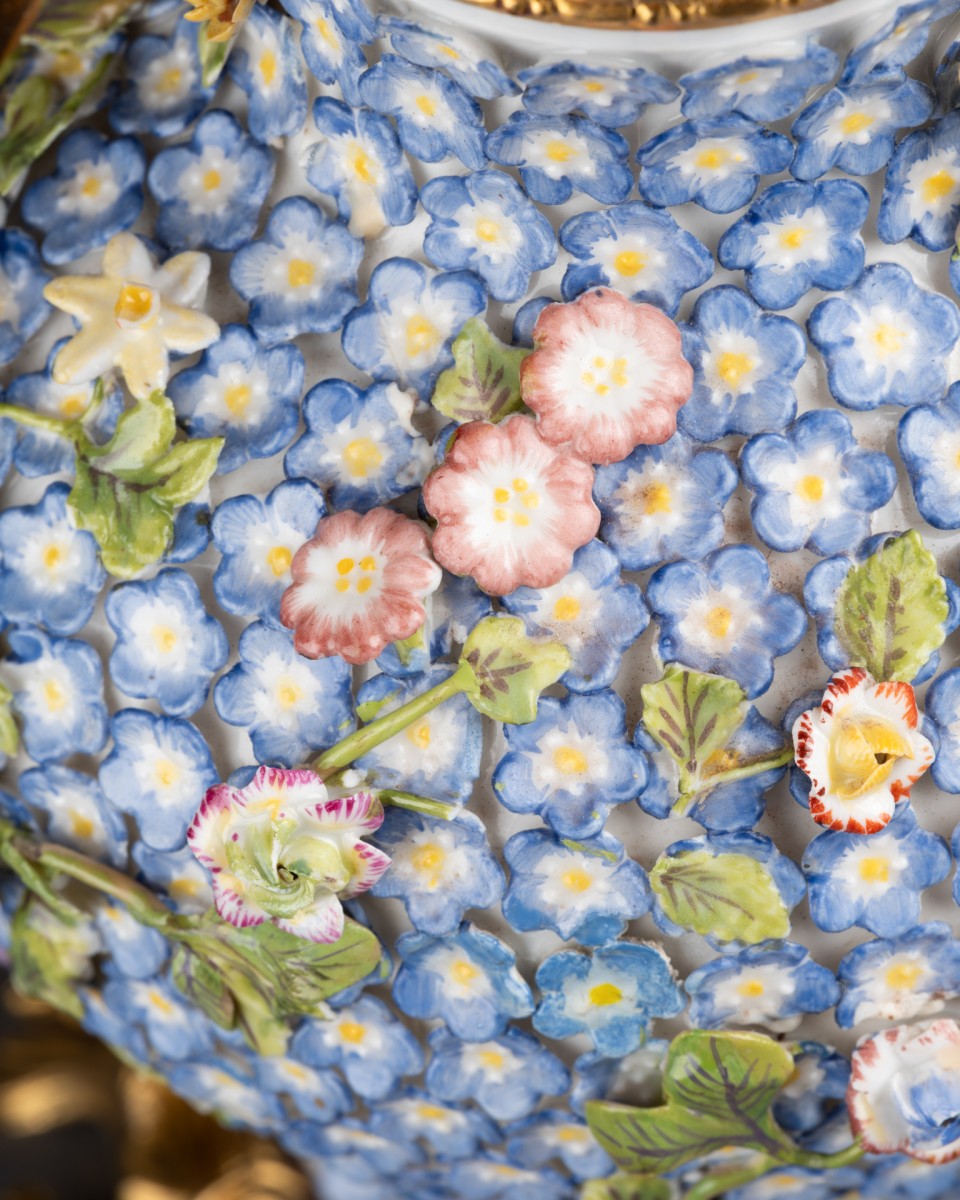
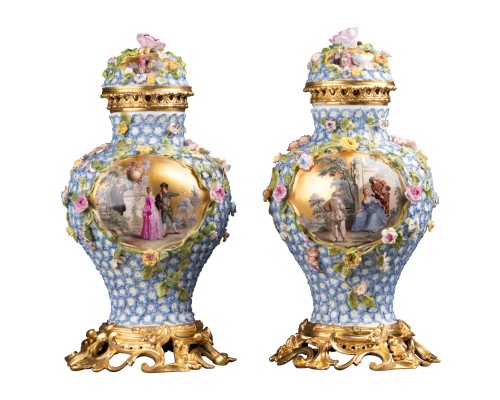
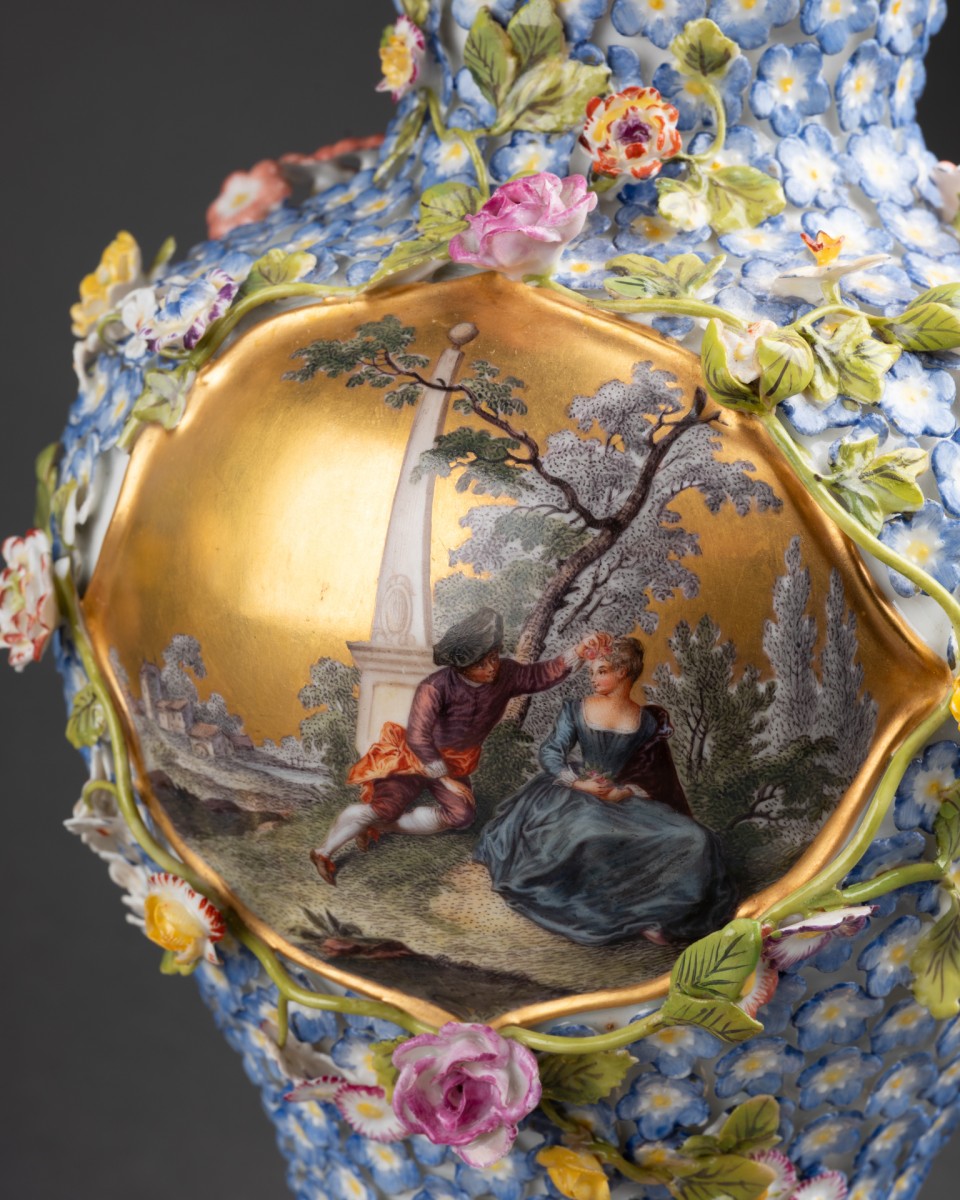
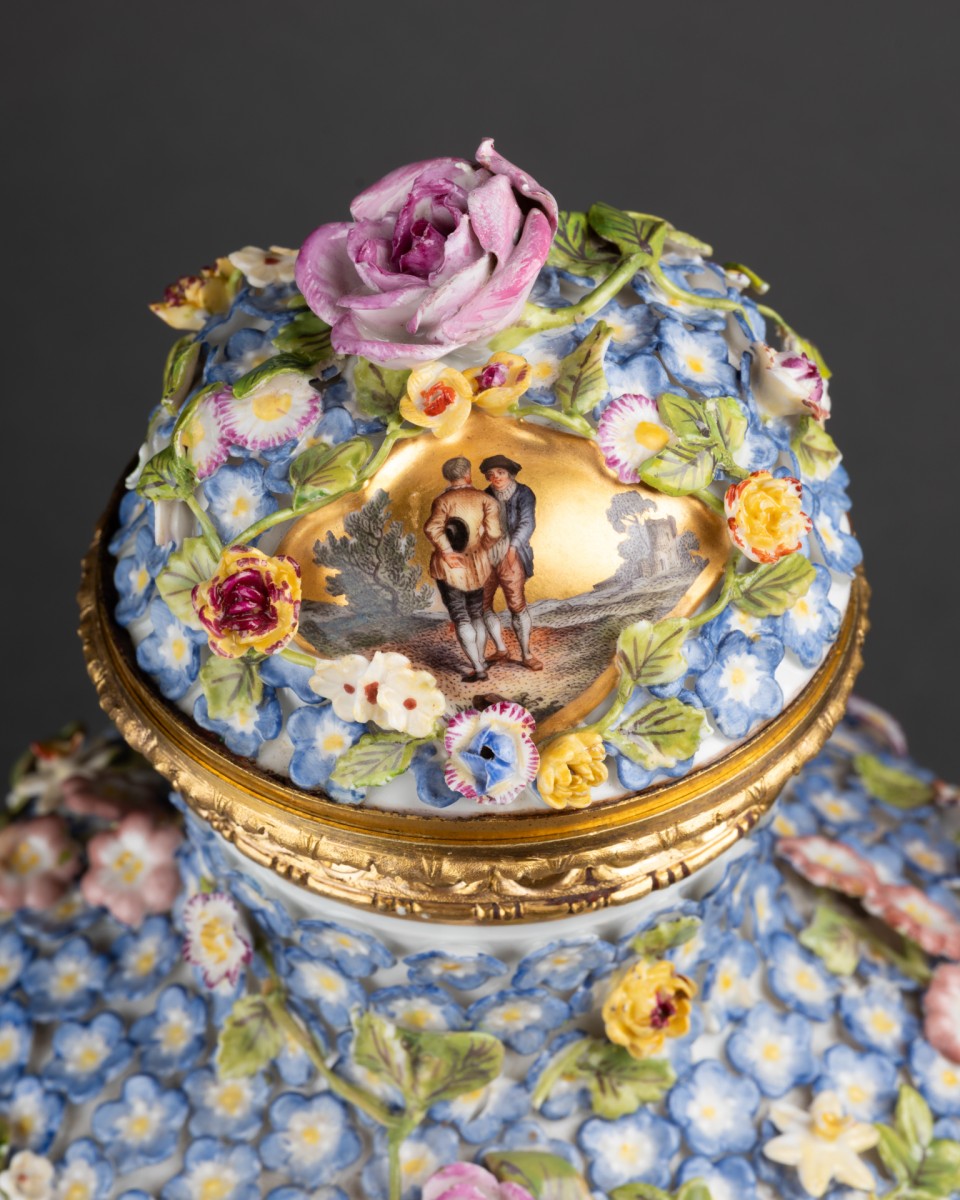
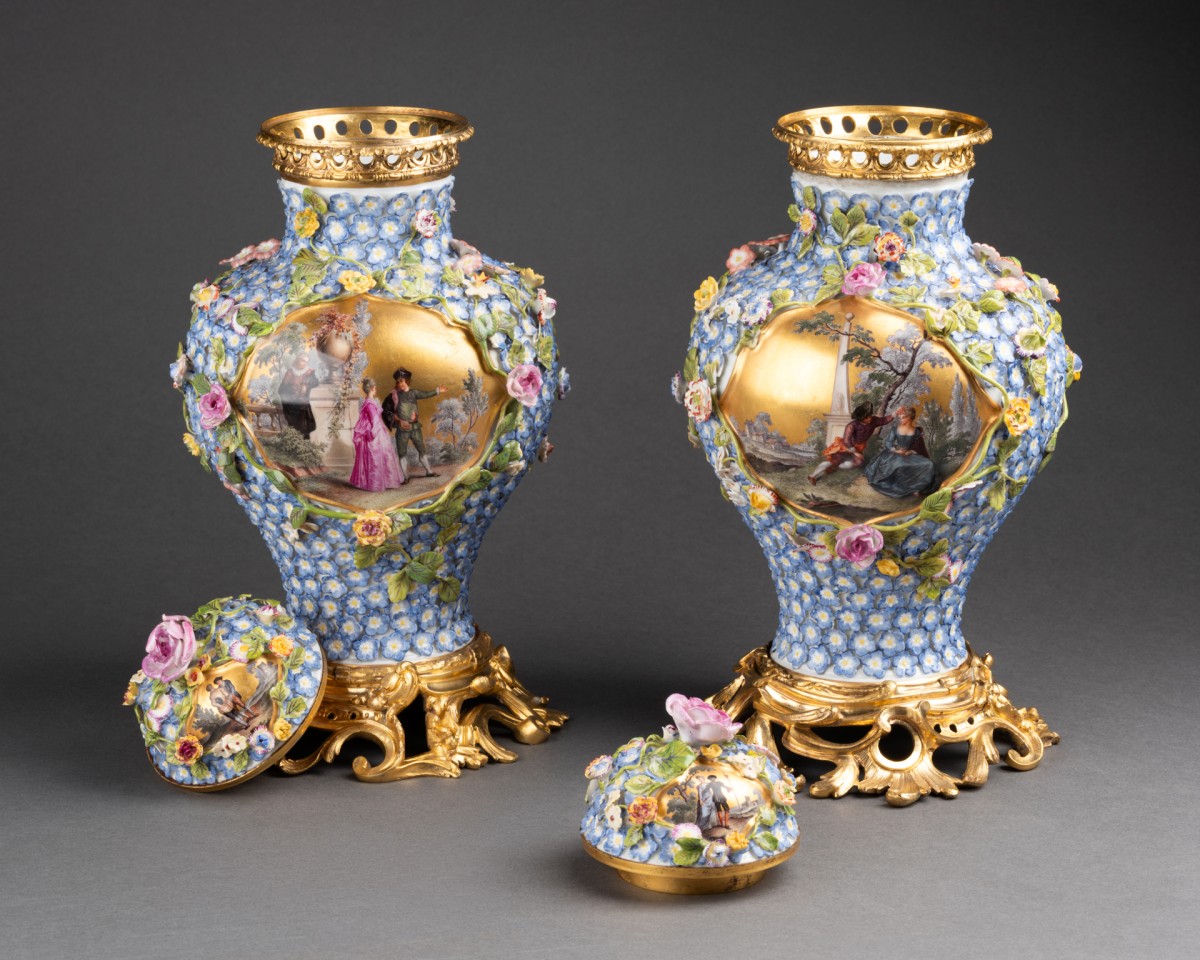
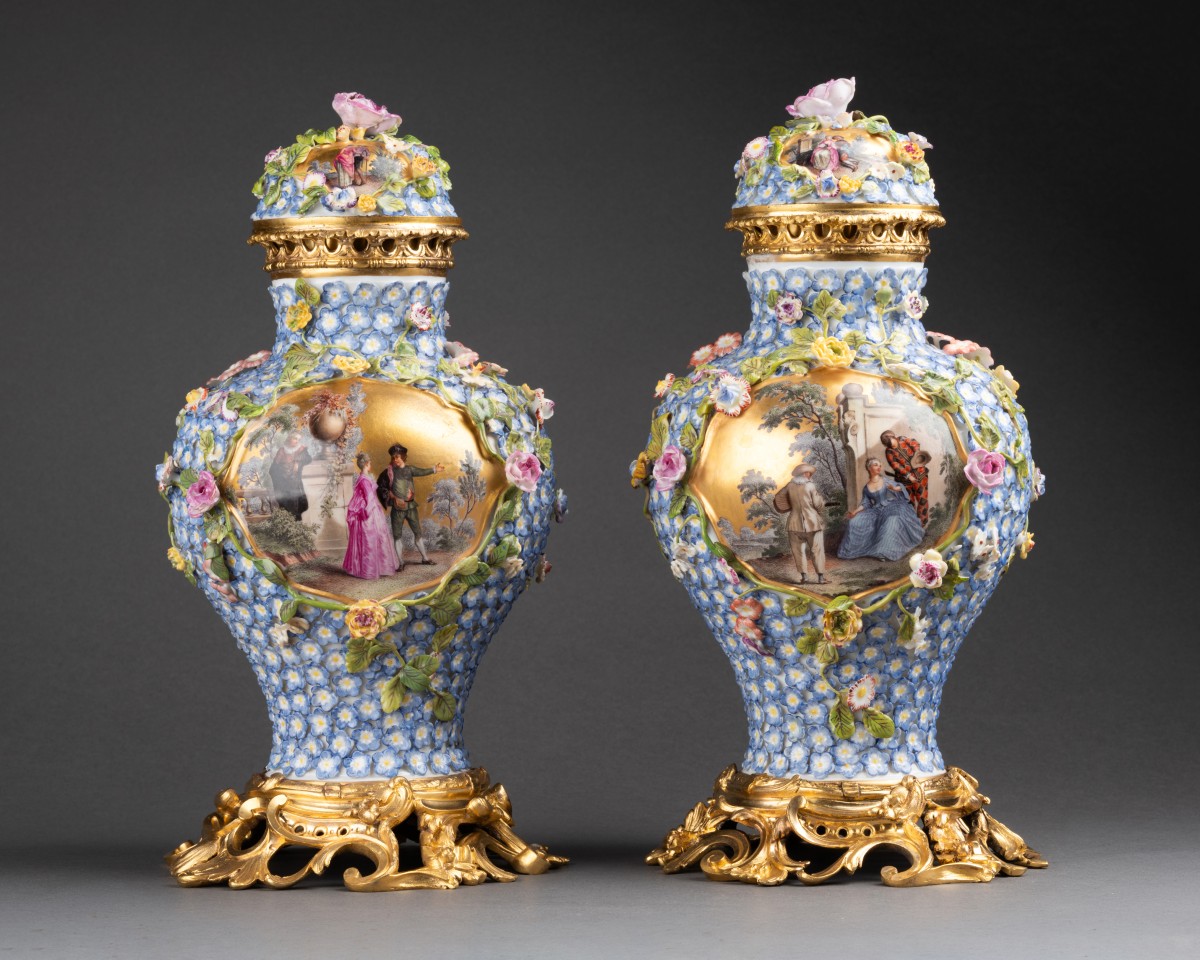
Rare pair of baluster-shaped polychrome porcelain vases from the Meissen manufactory, featuring a remarkable decoration known as “Schneeballen” (snowballs), characterized by a delicate scattering of small blue flowers, modeled in relief and covering almost the entire surface of the vases.
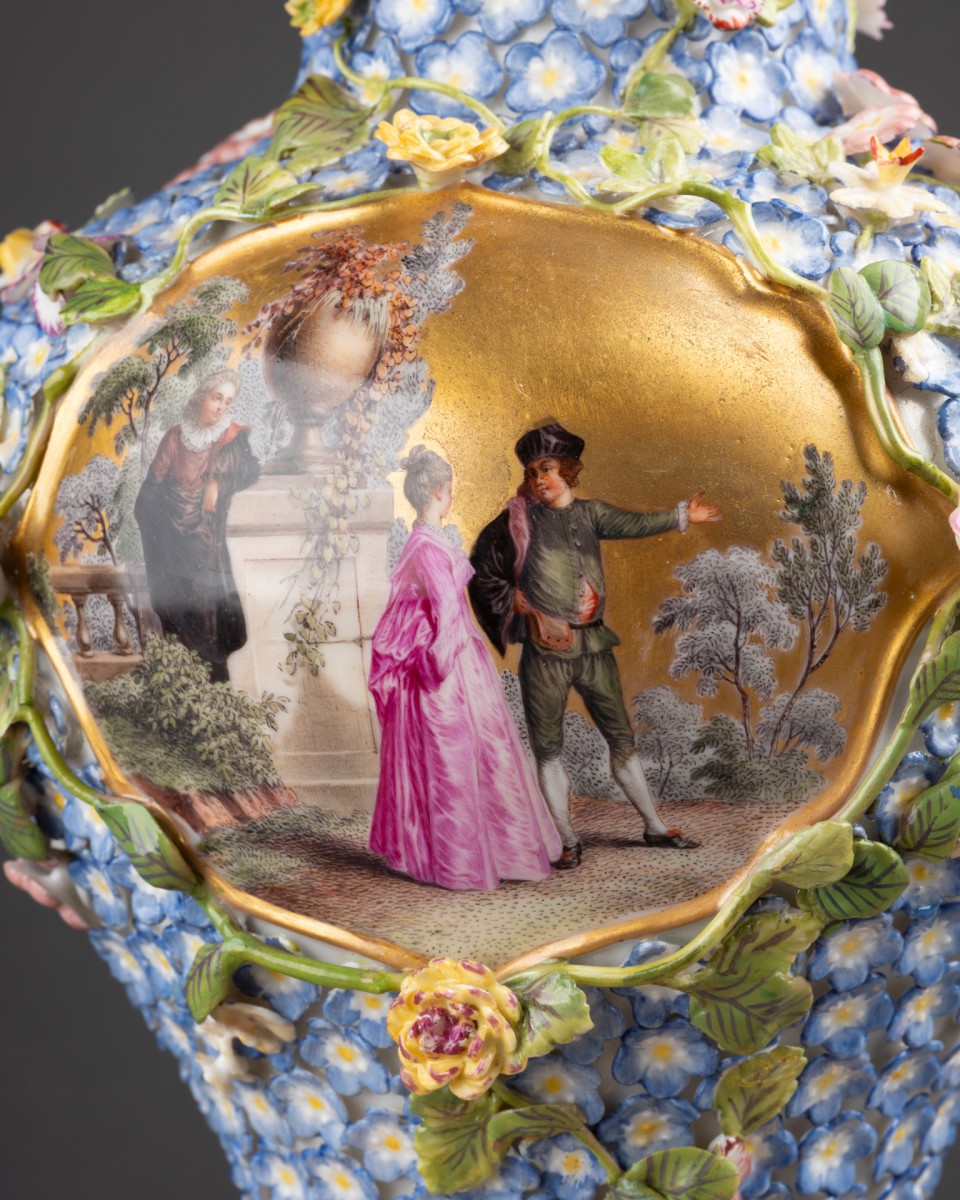
This rich floral decoration is enhanced by finely executed scrolls of polychrome flowers, framing gilt-edged reserves containing delicate miniature gallant scenes inspired by the compositions of Antoine Watteau.
The vases were transformed into potpourri vessels in the mid-18th century through the addition of sumptuous rocaille mounts in finely chased and mercury-gilt bronze. Each vase features an elaborately shaped base and a pierced neck allowing the fragrance to diffuse, the ensemble displaying an elegant interplay of curves and counter-curves characteristic of the Parisian Rococo taste during the reign of Louis XV.
Porcelain: Meissen manufactory, Johann Joachim Kändler period, circa 1745–1750.
Mounts: Paris, Louis XV period, circa 1750.
Condition: Good overall condition. Minor old restorations to the petals of the flowers modeled in relief. The mounts retain their original mercury gilding.
Dimensions:
Height: 29 cm – Width: 15 cm.
Similar Examples:
Edmond de Rothschild Collection at Waddesdon Manor, a set of three vases, published on page 50 of the catalogue.
Victoria and Albert Museum, a set of three vases, inventory No. 832B-1882.
Janet Wrightsman Collection, collection catalogue, Volume II, page 474.
A pair illustrated in Pierre Kjellberg's book “Objets montés du Moyen Âge à nos jours”, page 75.
Our Opinion:
Created at the initiative of a Parisian marchand-mercier, this rare pair of potpourri vessels reflects the refinement and exceptional sophistication of French decorative arts in the mid-18th century.
The marchand-mercier selected two precious vases from the Meissen manufactory, remarkable for the delicacy of their floral decoration, entirely modeled in relief and painted by hand, and embellished them with sumptuous rocaille gilt bronze mounts, whose finely chased details rival the virtuosity of the Saxon porcelain makers.
The ensemble perfectly illustrates the “Pompadour” taste, particularly fashionable at the royal court at the time. The Marquise de Pompadour herself may have been responsible for the growing popularity of Saxon “Schneeballen” porcelain enriched with gilt bronze mounts.
Indeed, the ledger of the celebrated marchand-mercier Lazare Duvaux records that, as early as June 1750, under entry No. 592, he supplied her with “a Saxon porcelain potpourri painted with subjects after Watteau, fitted with mercury-gilt bronze mounts”, followed by four vases in June 1752, under entry No. 1138: “Four matching Saxon porcelain vases with flowers in relief and cartouches containing miniatures, mounted in mercury-gilt bronze”, which corresponds perfectly to the description of this type of covered vase.
Through the richness of their polychrome decoration, their exuberant ornamentation evoking the abundance of nature, their delicate gallant scenes inspired by Antoine Watteau and their sumptuous gilt bronze mounts with flowing lines, these potpourri vessels embody the quintessence of the Rococo style, then at its height during the reign of Louis XV.