Offered by Franck Baptiste Paris
REQUEST INFORMATION
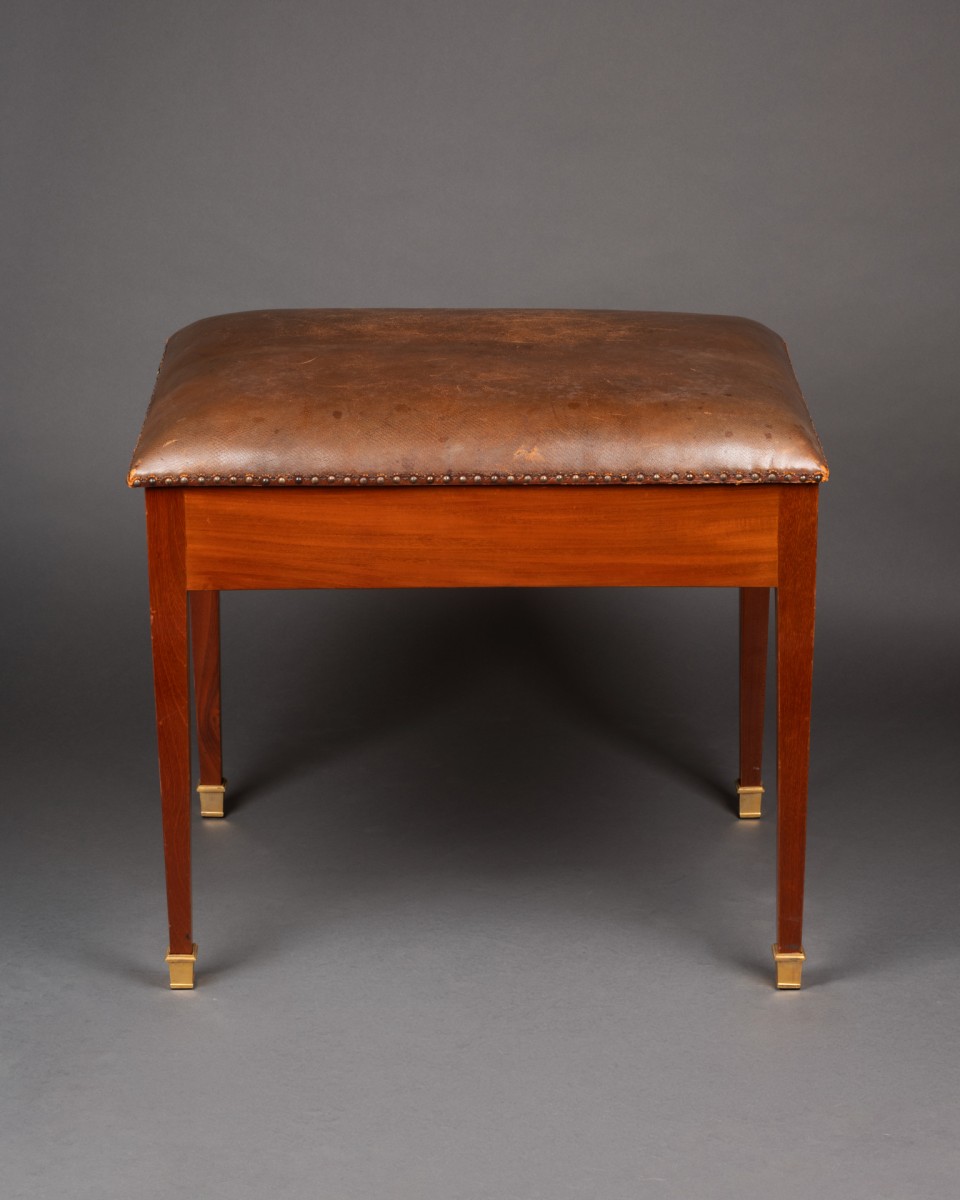
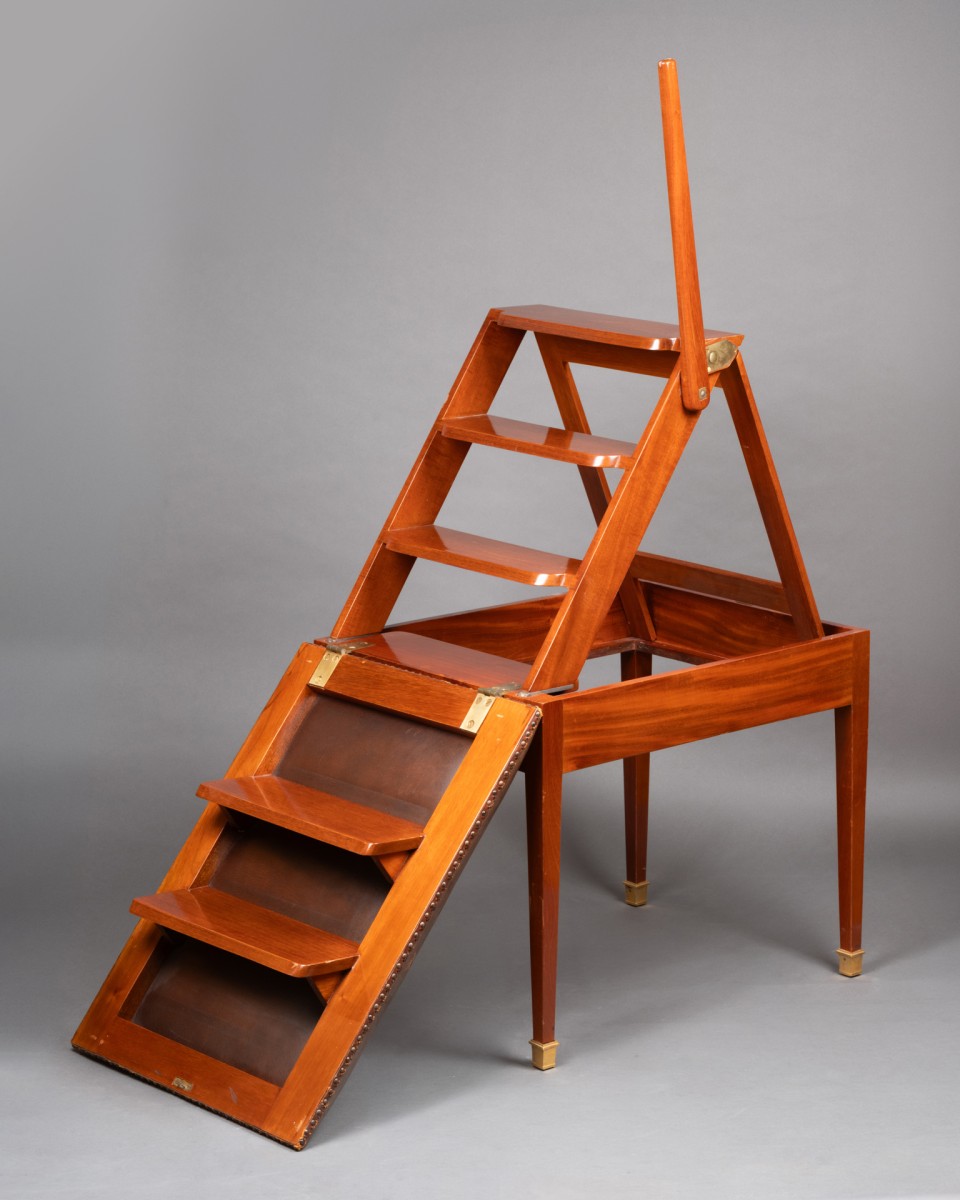
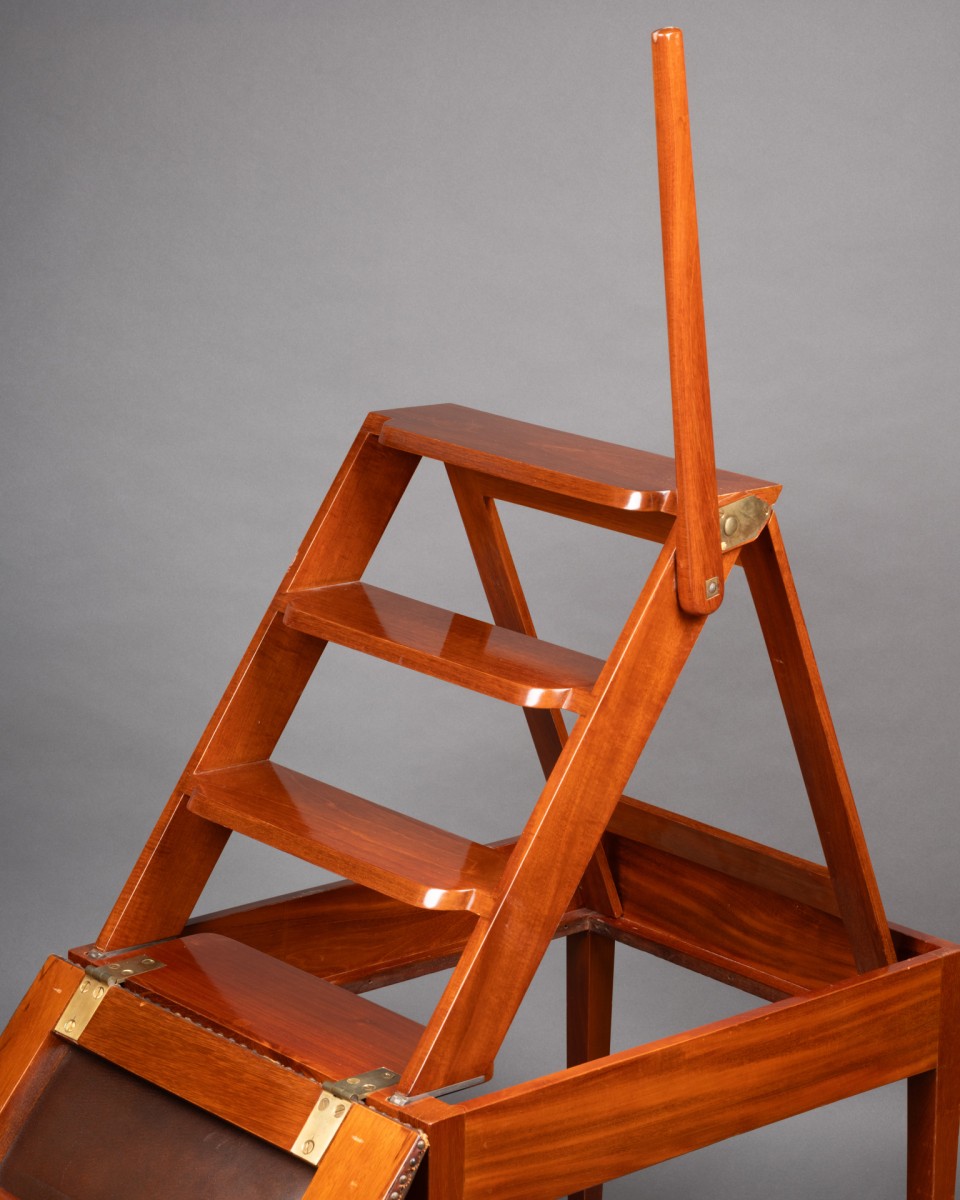

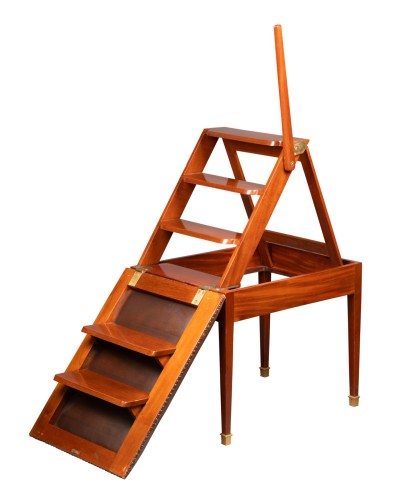
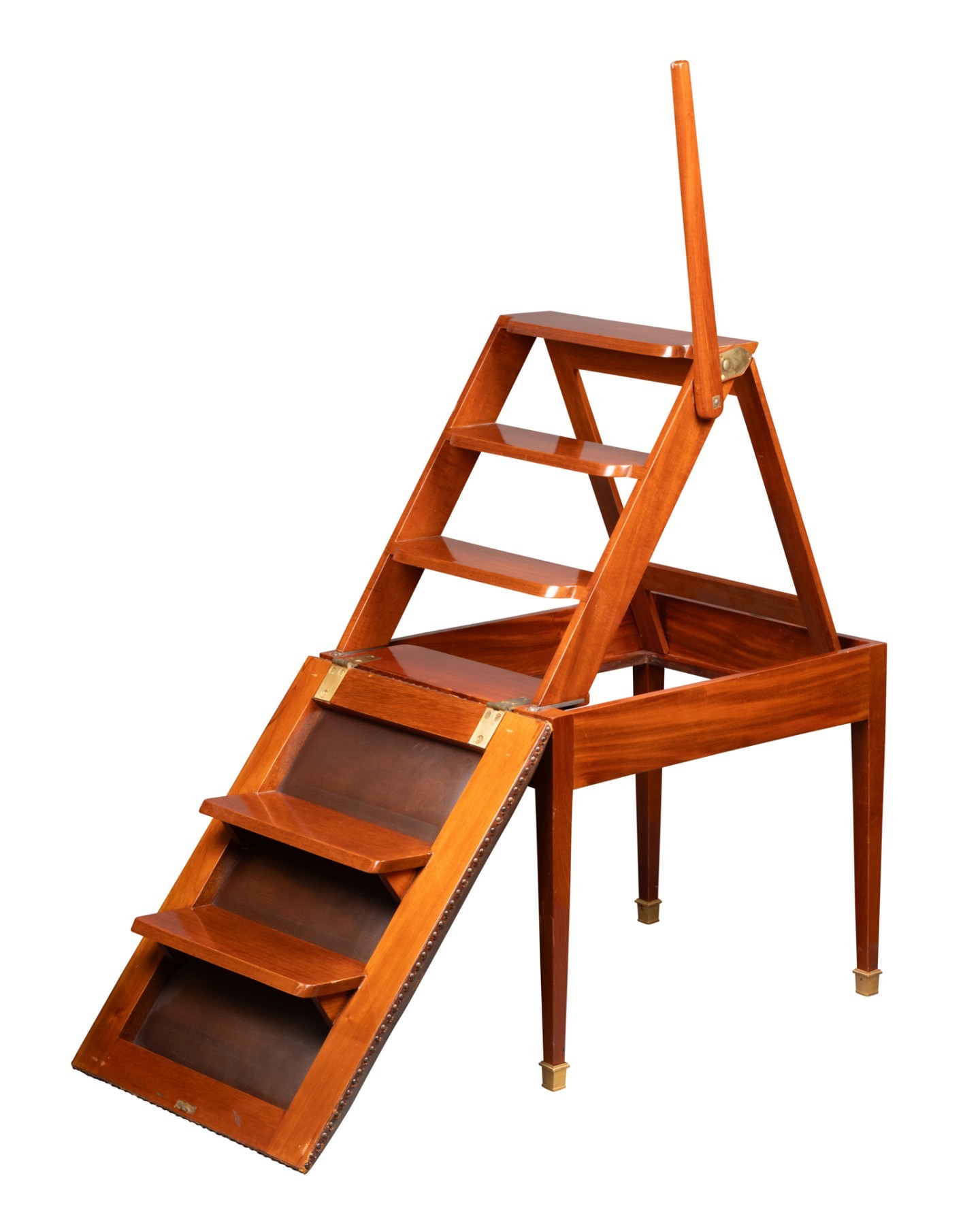
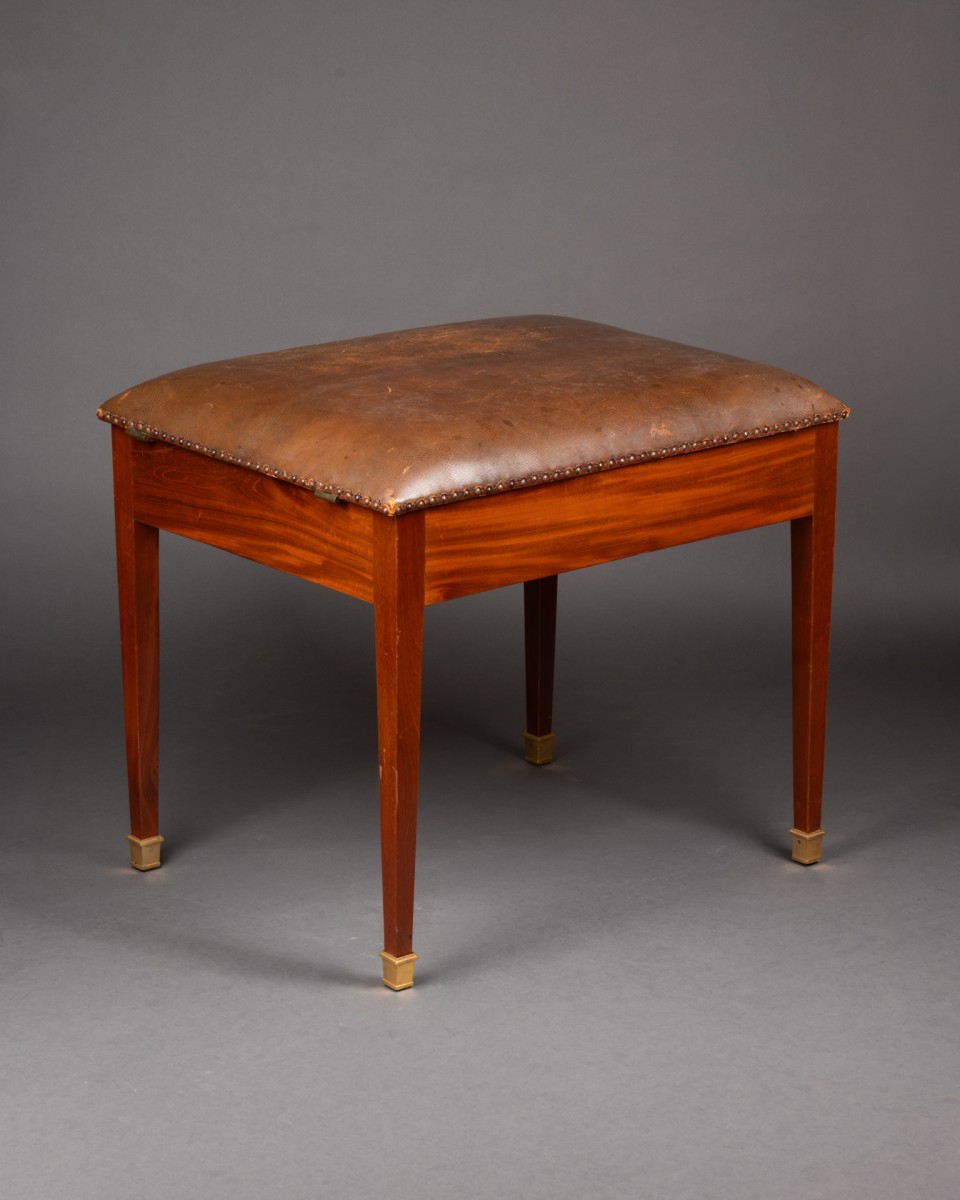
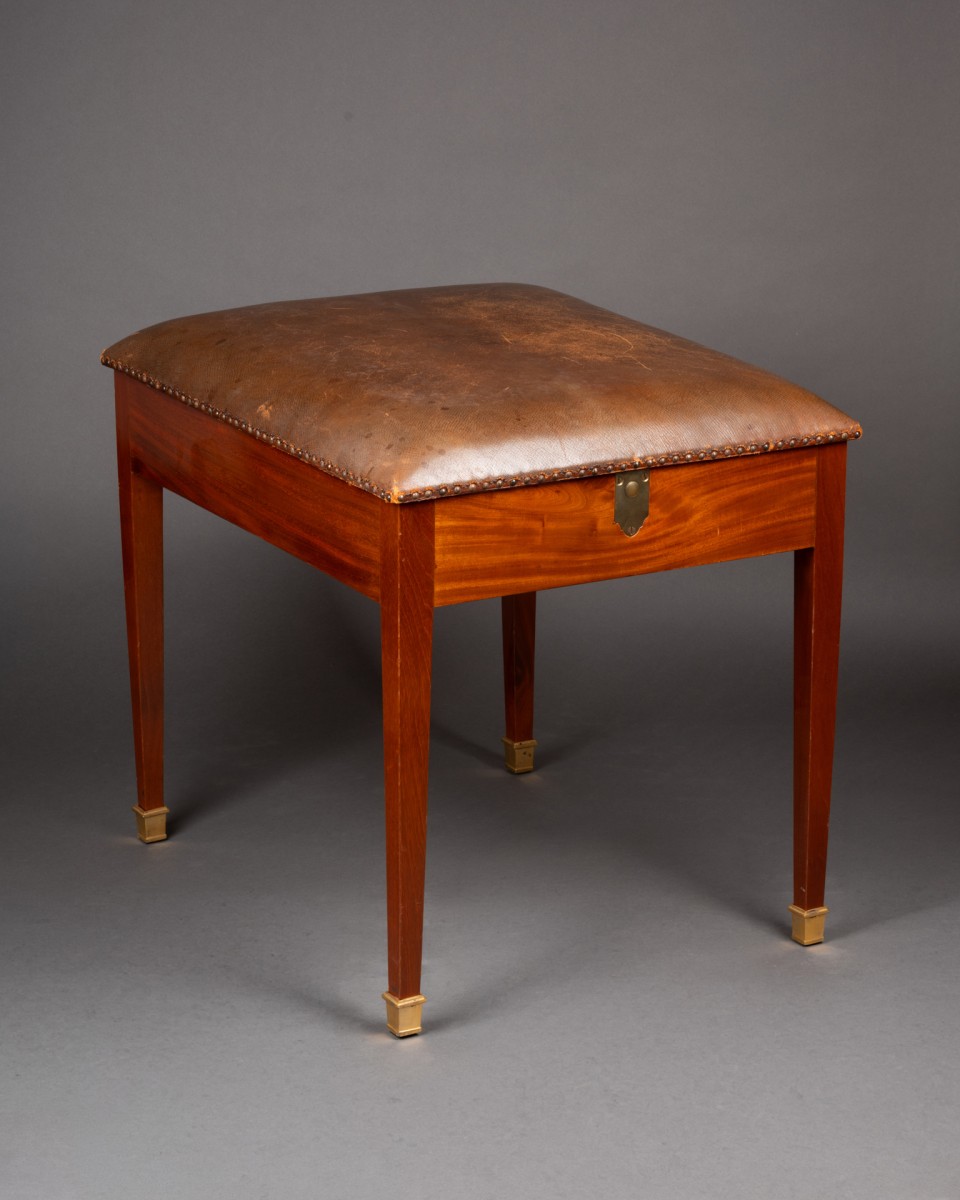
Rare, transformable library stool in solid mahogany.
Rectangular in shape and resting on four cylindrical legs, it is upholstered in tan-colored leather.
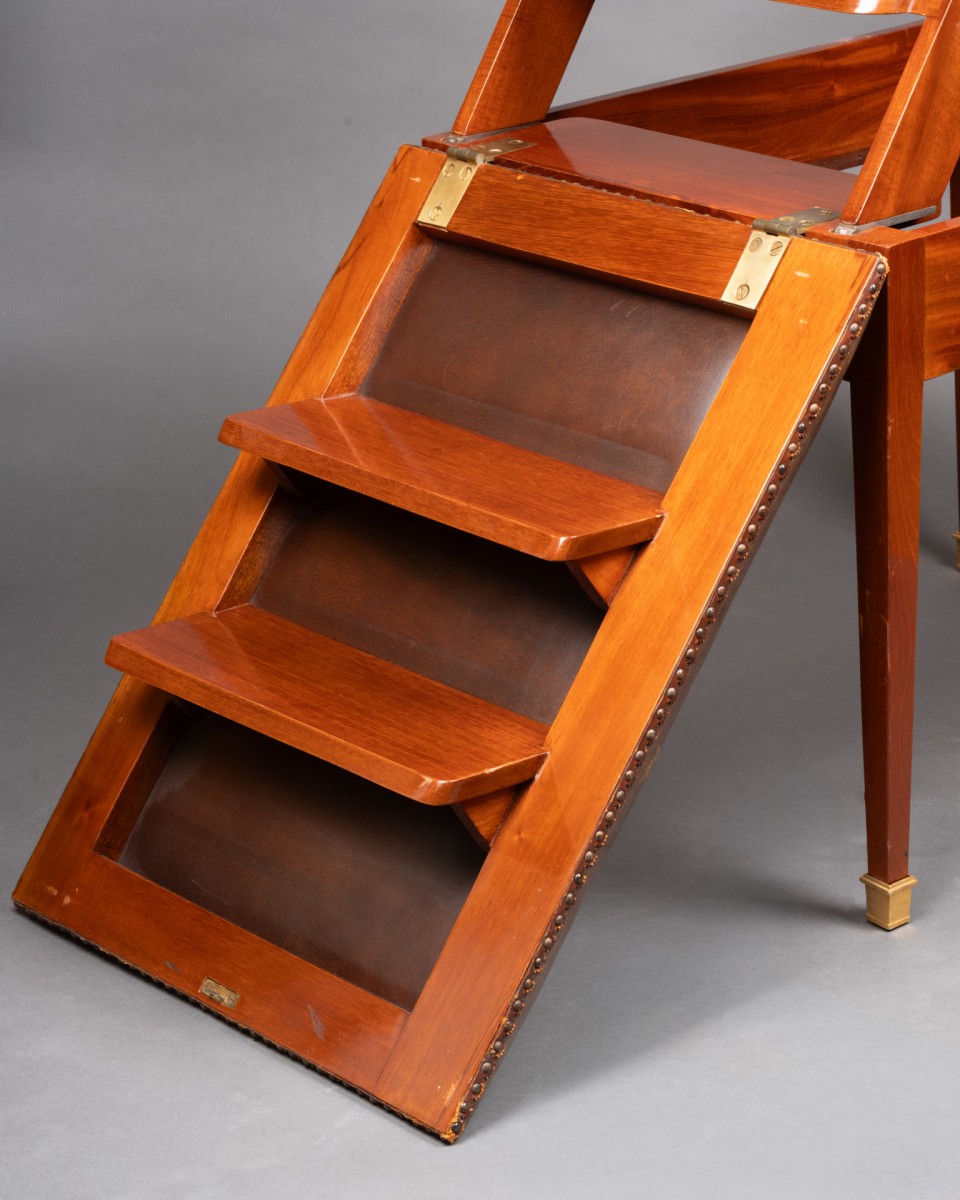
Through an ingenious push-button mechanism, the top—which houses the upholstery—unfolds to reveal a retractable, six-step library staircase, complete with a detachable handrail.
In excellent condition.
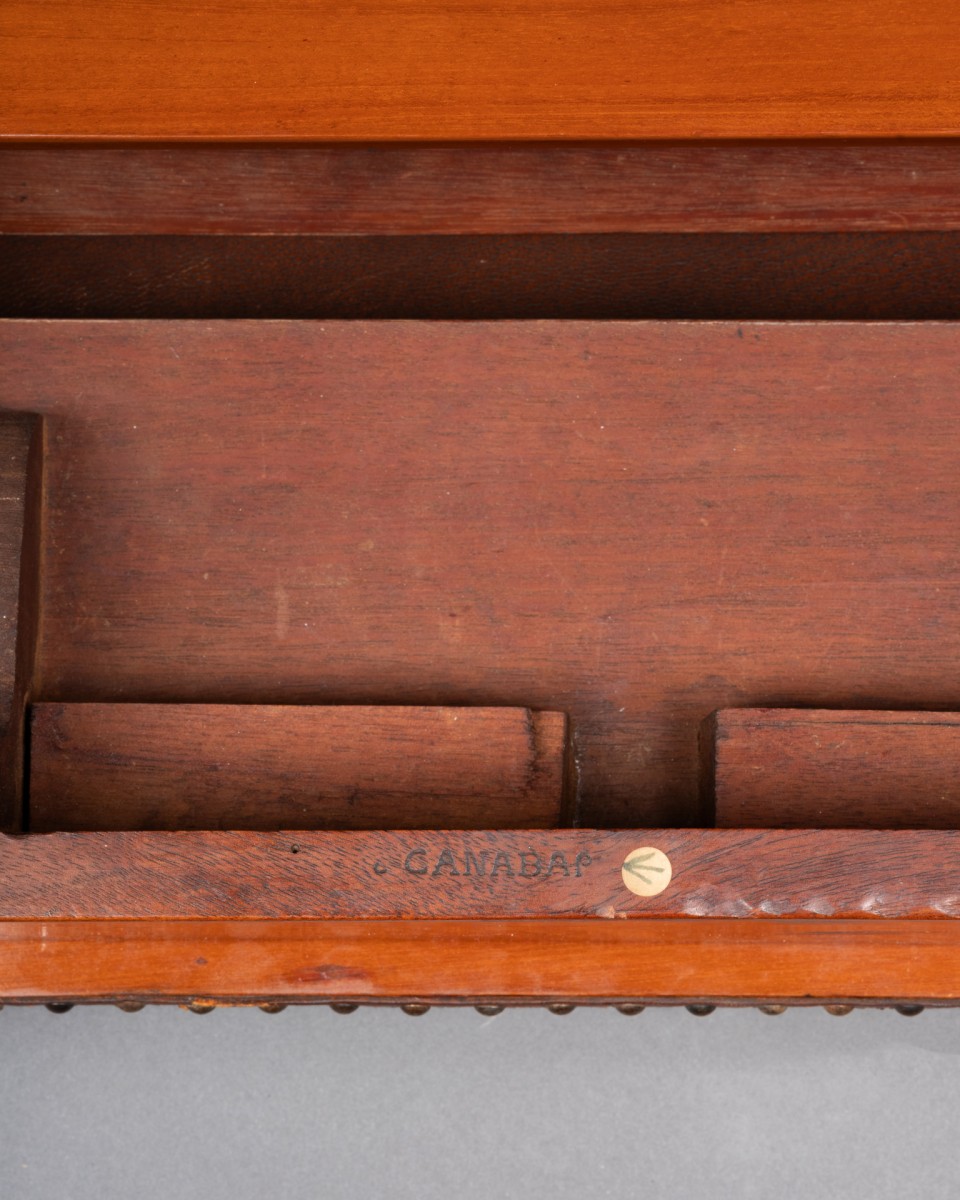
Stamped "Canabas" on a side rail.
French, Directoire period, circa 1790–1795.
Dimensions:
Width: 93 cm; Depth: 50 cm; Height: 56 cm
Similar examples:
- The "cabinet topographique" (topographical cabinet) of Emperor Napoleon I at the Palace of Versailles (Grand Trianon).
- Tajan auction, December 20, 2000, lot 264, stamped "CANABAS" (sold for 47,280 euros).
- Artcurial auction, October 9, 2013, lot 83 (sold for 28,758 euros).
Gengenbach, known as Canabas (1715–1797).
Canabas is the preeminent master of small, transformable Louis XVI-style furniture crafted from solid mahogany.
For his pieces, he selected wood of exceptional quality—mahogany with a very tight grain and soft, chocolate-toned hues—which he shaped by carving flutes and grooves directly into the solid timber.
This aesthetic is defined by a complete absence of superfluous ornamentation, paired with flawless joinery. The staircase presented here exhibits all its characteristic features; while it might appear quite simple to produce at first glance, the complexity involved in working with a very hard wood—combined with the assembly of the steps using dovetail joints on an inclined plane—reveals this to be a truly fine example of 18th-century Parisian cabinetmaking.
Indeed, it is precisely for these reasons that our library staircase remains in a perfect state of preservation to this day.