Offered by Schoppmann Art and Antiques
REQUEST INFORMATION
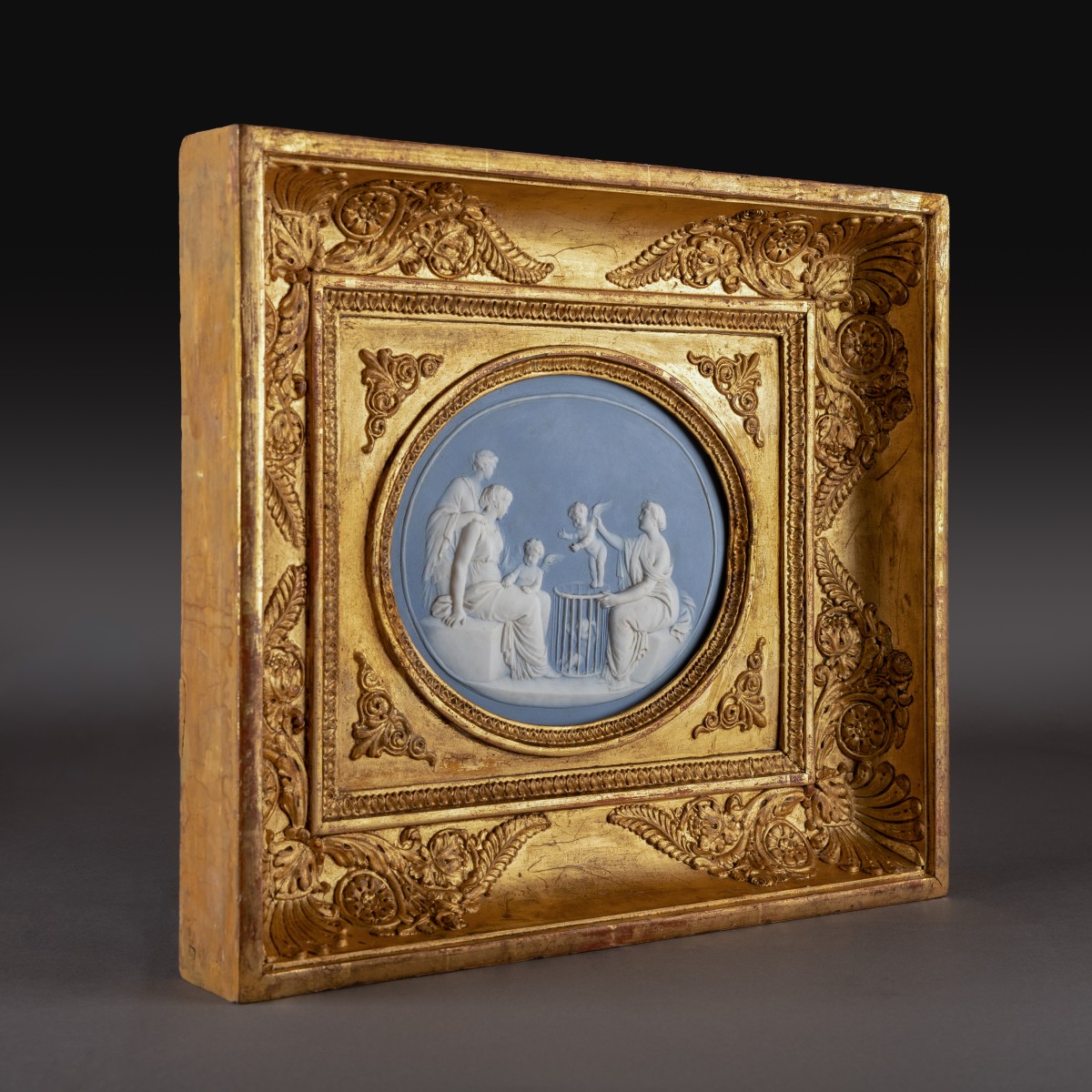
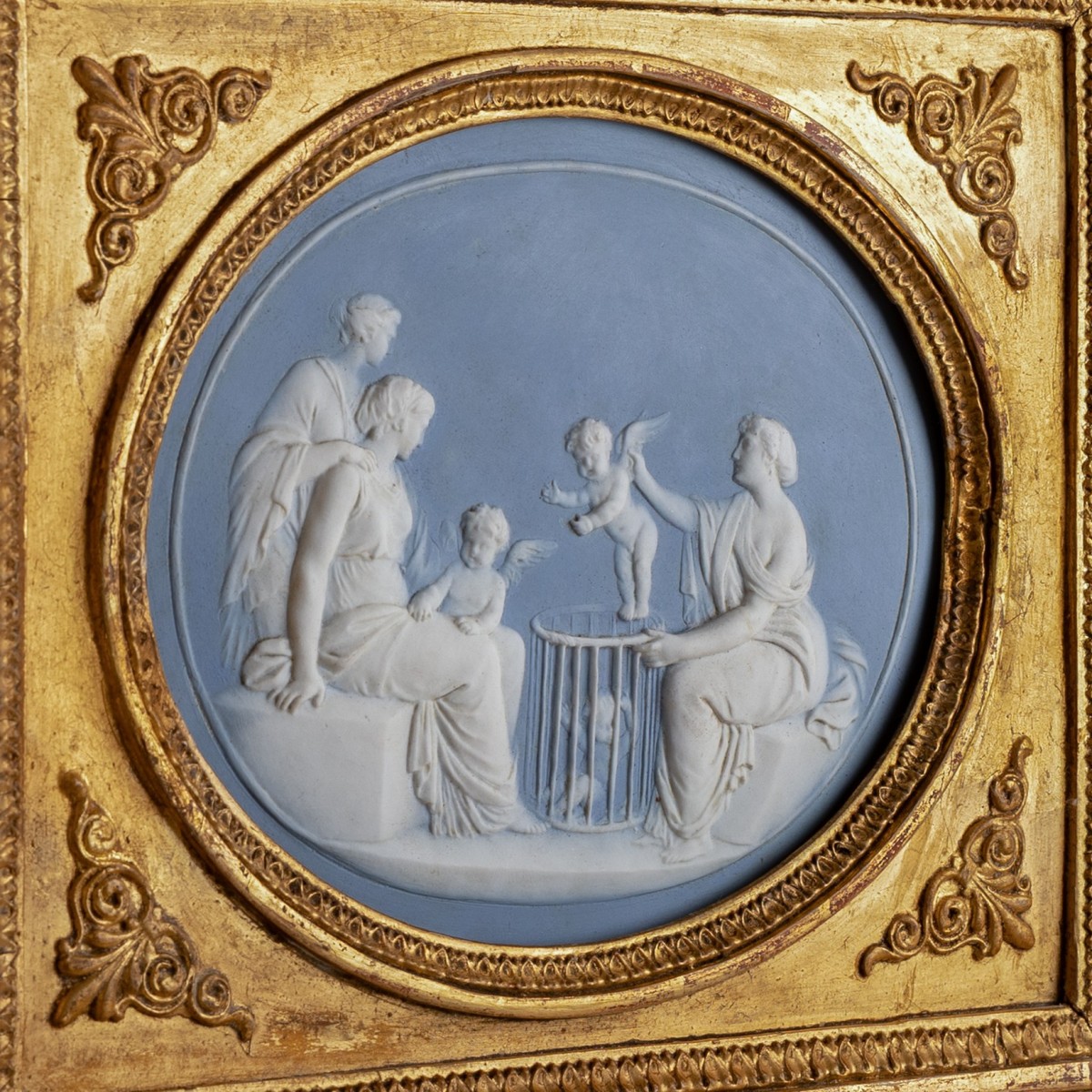

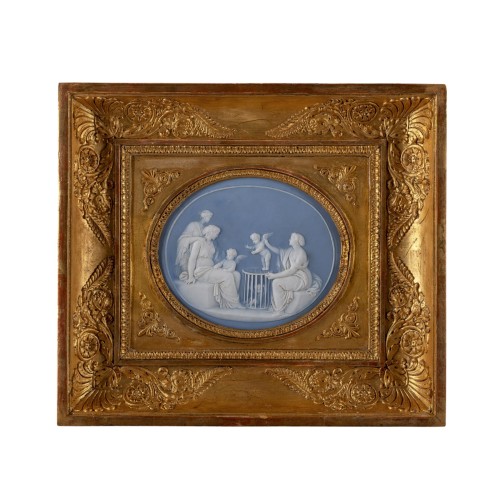
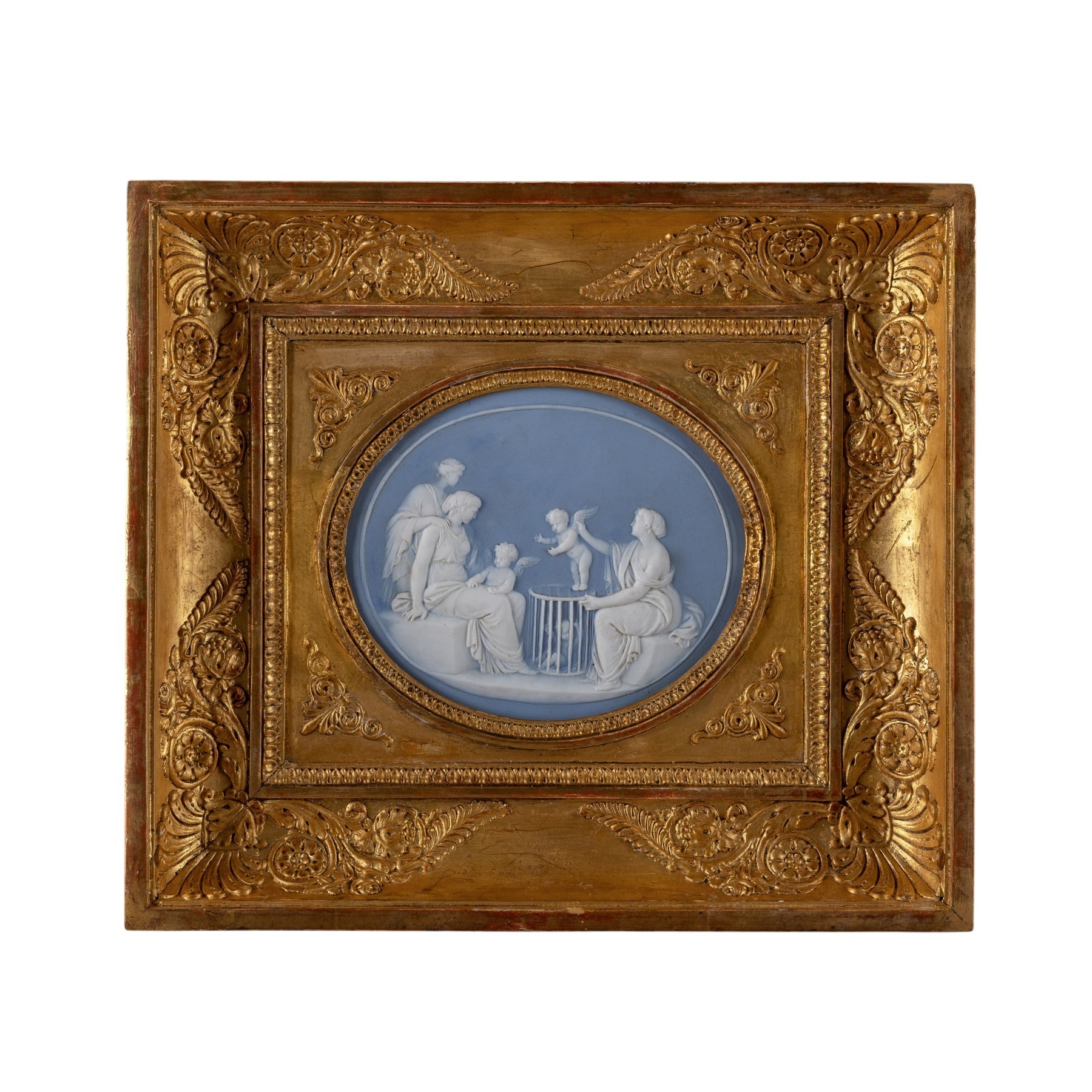
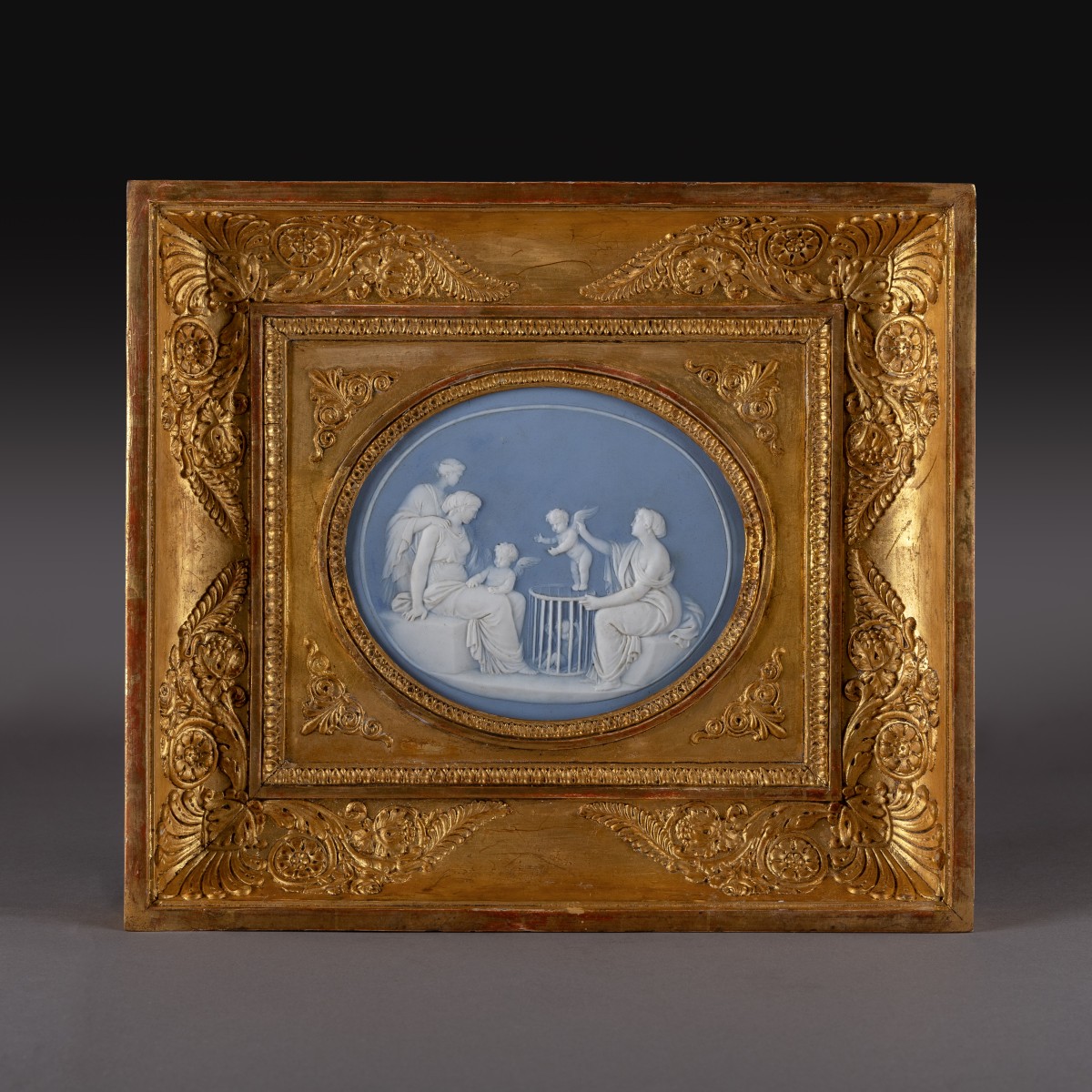
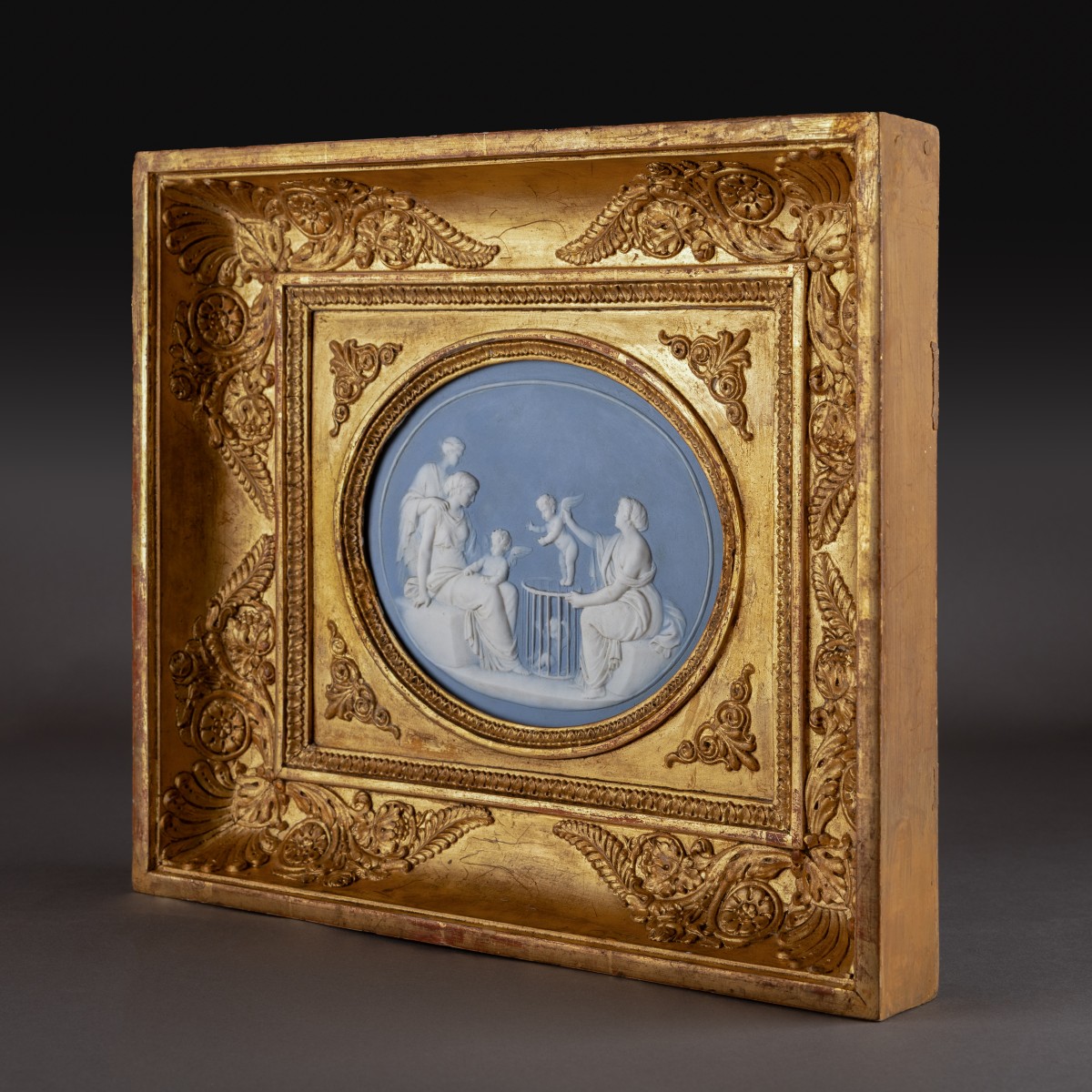
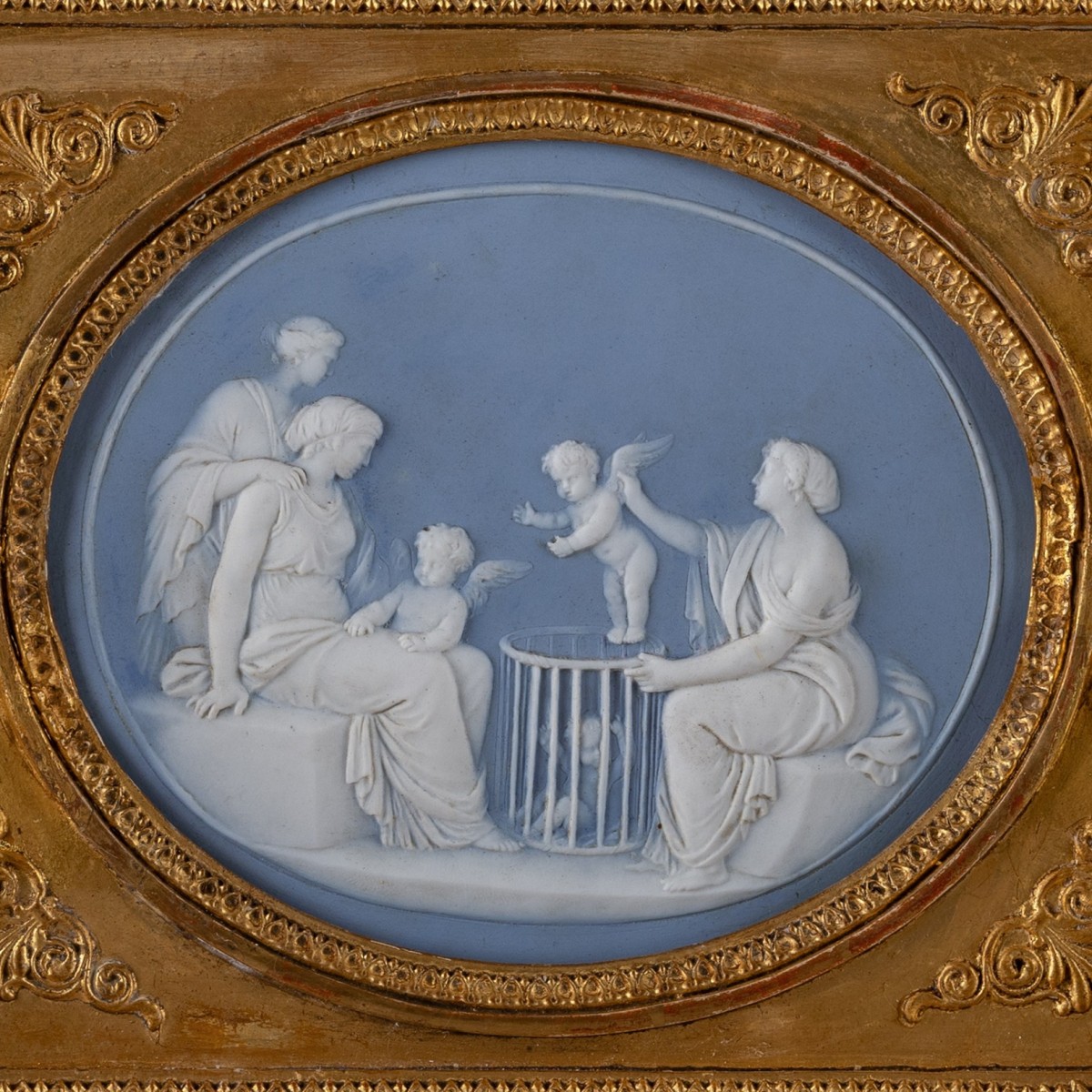
Framed medallion
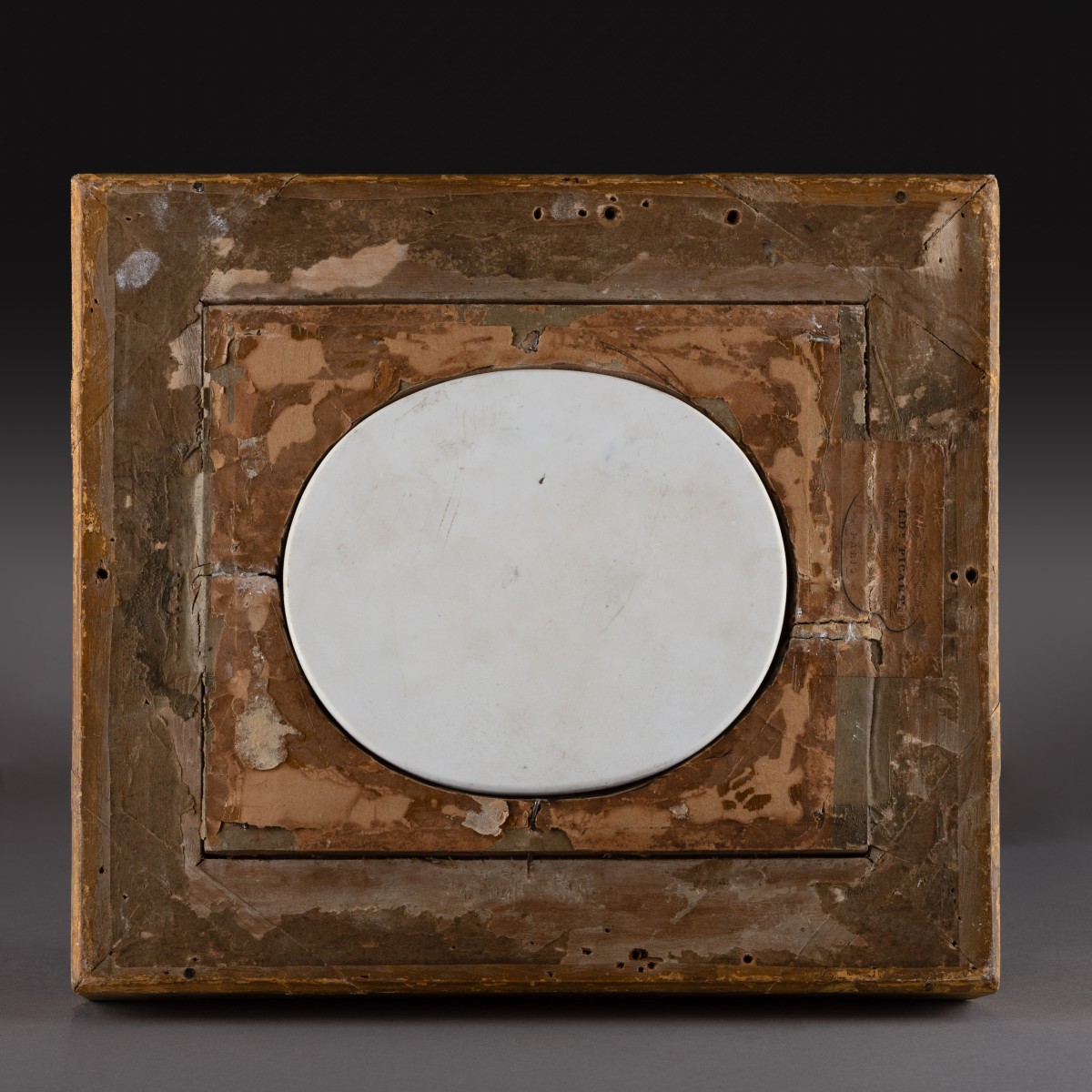
Hard-paste porcelain bisque with a molded, carved, and stuccoed frame.
Overall dimensions: H. 31; W. 35.5 (cm).
Visible dimensions: H. 19; W. 16 (cm).
Sèvres, circa 1785 (biscuit)
Paris, circa 1830 (frame)
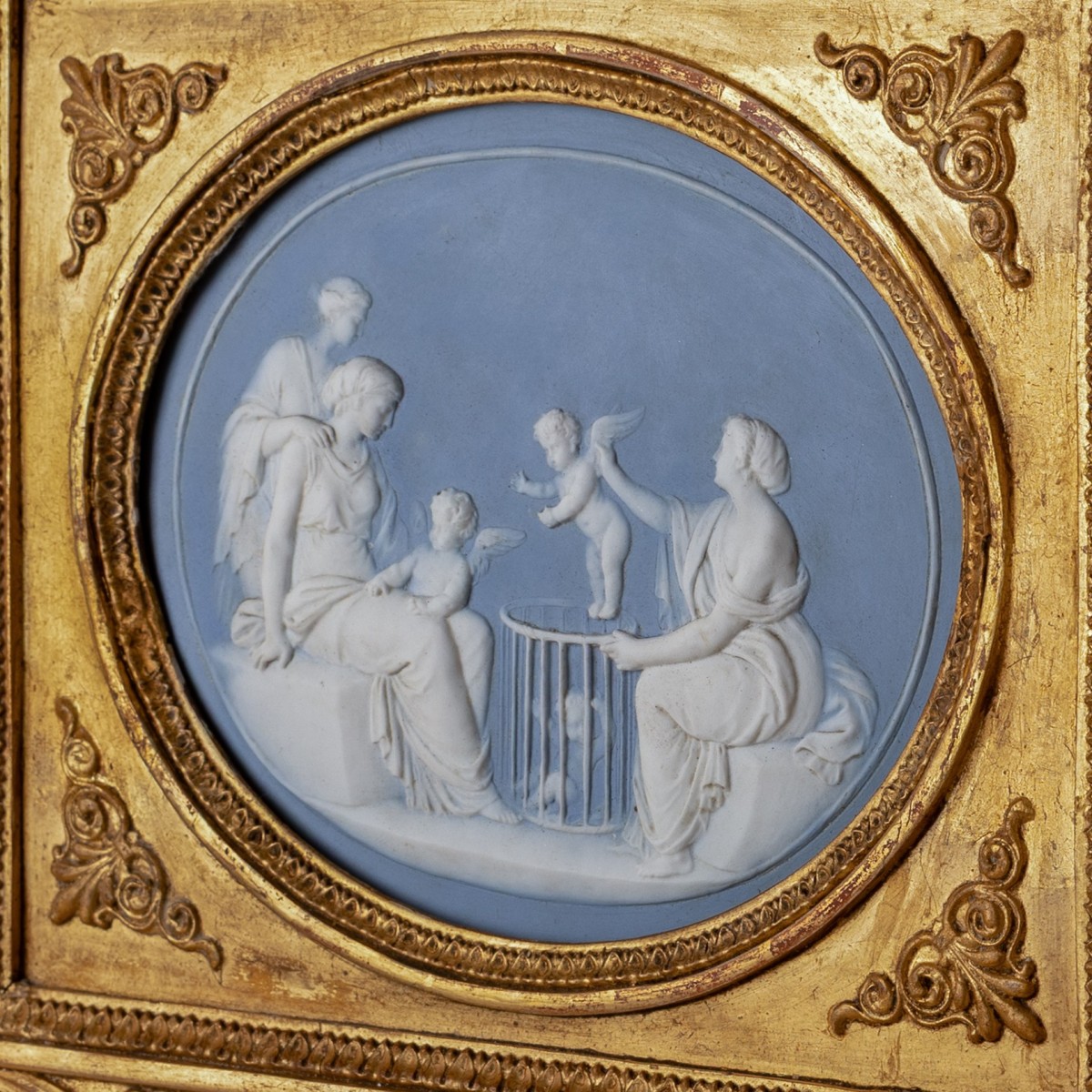
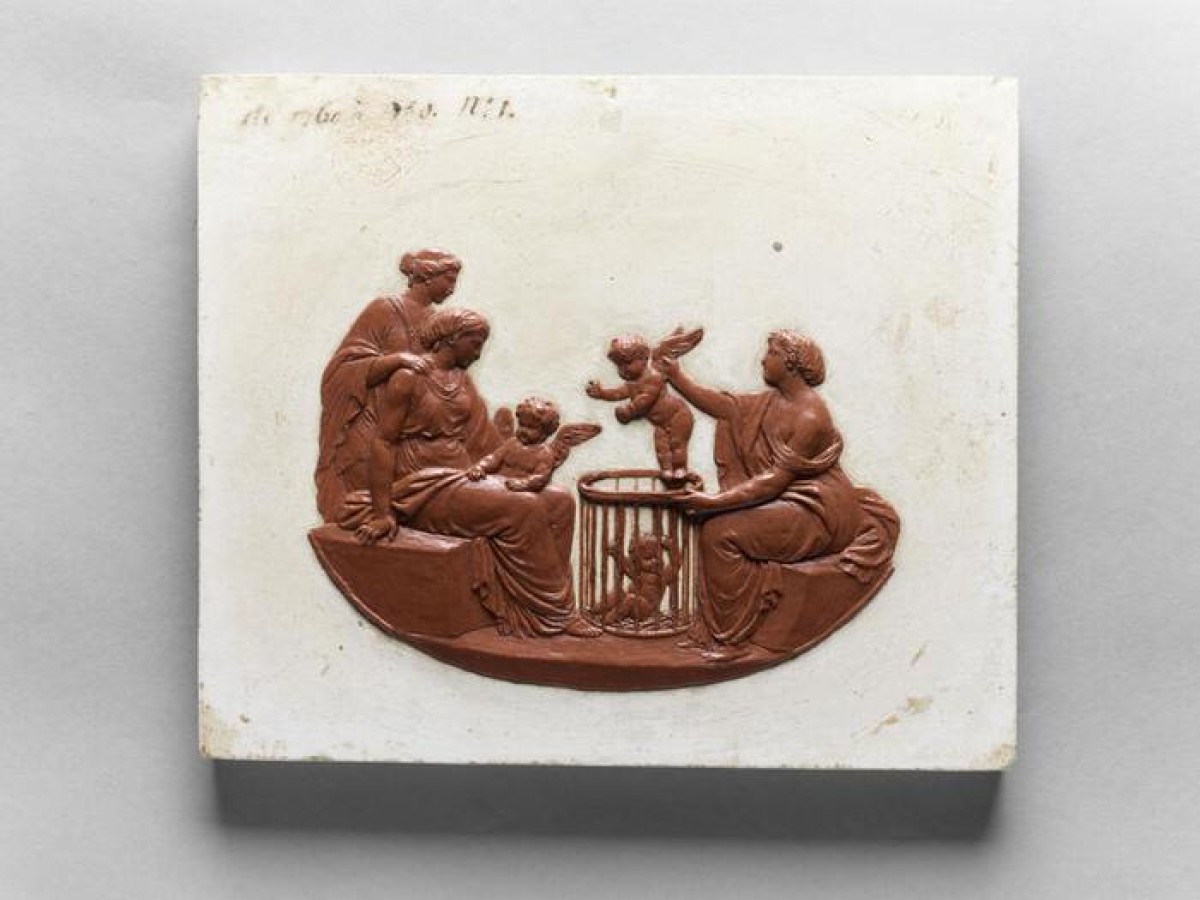
A rare plaque, or medallion, made of partially tinted hard-paste porcelain titled “La marchande d’Amour” or “L’amour en cage,” created under the direction of Louis-Simon Boizot. Modelled after cameos and Wedgwood’s famous jasperware, this plaque depicts, in alternating colors, a neoclassical scene in the antique style centered around a caged Cupid separating three draped women and two cherubs. Finely crafted, in near-round-bosse style from hard porcelain biscuit, tinted blue on the top.
This scene is inspired by a fresco discovered in Campania in 1759. The iconography was likely introduced to France by the Count of Caylus. It was engraved by Nolli in 1762 in his collection *Les antiquités d’Herculanum*. The entire composition was reinterpreted by Vien in a painting exhibited at the 1763 Salon and now housed at Fontainebleau. This work is a true manifesto of the Neo-Greek style prevalent among the Parisian and Versailles elites. A bas-relief by Clodion exhibited at the 1773 Salon may also be cited as a likely source of inspiration for this bas-relief model by Louis-Simon Boizot and his workshop.
Related work:
-The preparatory model for this medallion is housed at the National Museum of the Sèvres Manufactory; it is dated 1785 and illustrated in *La Manufacture des Lumières: Sculpture at Sèvres from Louis XV to the Revolution*, edited by Tamara Préaud and Guilhem Scherf, Faton, 2015. Reproduction on p. 156, inv. MNC 21704.
- One copy sold to Count Louis de Narbonne in December 1788 for 144 livres [Arch. Sèvres, Vy 10 f° 304]
- One copy in the Rothschild collection at the Hôtel Lambert
Louis-Simon Boizot (1743–1809) A student of Slodtz, he won the Prix de Rome in 1762 and consequently spent five years at the Académie de France. He became a member of the Academy in 1778. Furthermore, he owed his great renown to his role as head of the sculpture workshops at the Sèvres porcelain manufactory, while also working concurrently for Dihl and Guérhard. In the 1780s, he produced a whole series of these decorative medallions, which were entirely neoclassical and particularly popular with an Anglo-Saxon clientele, as well as with certain haberdashers who incorporated them into their cabinetry.
Condition report: in perfect condition; later frame, with gilding largely original.
Delevery information :
All our objects are visible in Paris. Worldwide delivery by DHL.