Offered by Franck Baptiste Paris
REQUEST INFORMATION
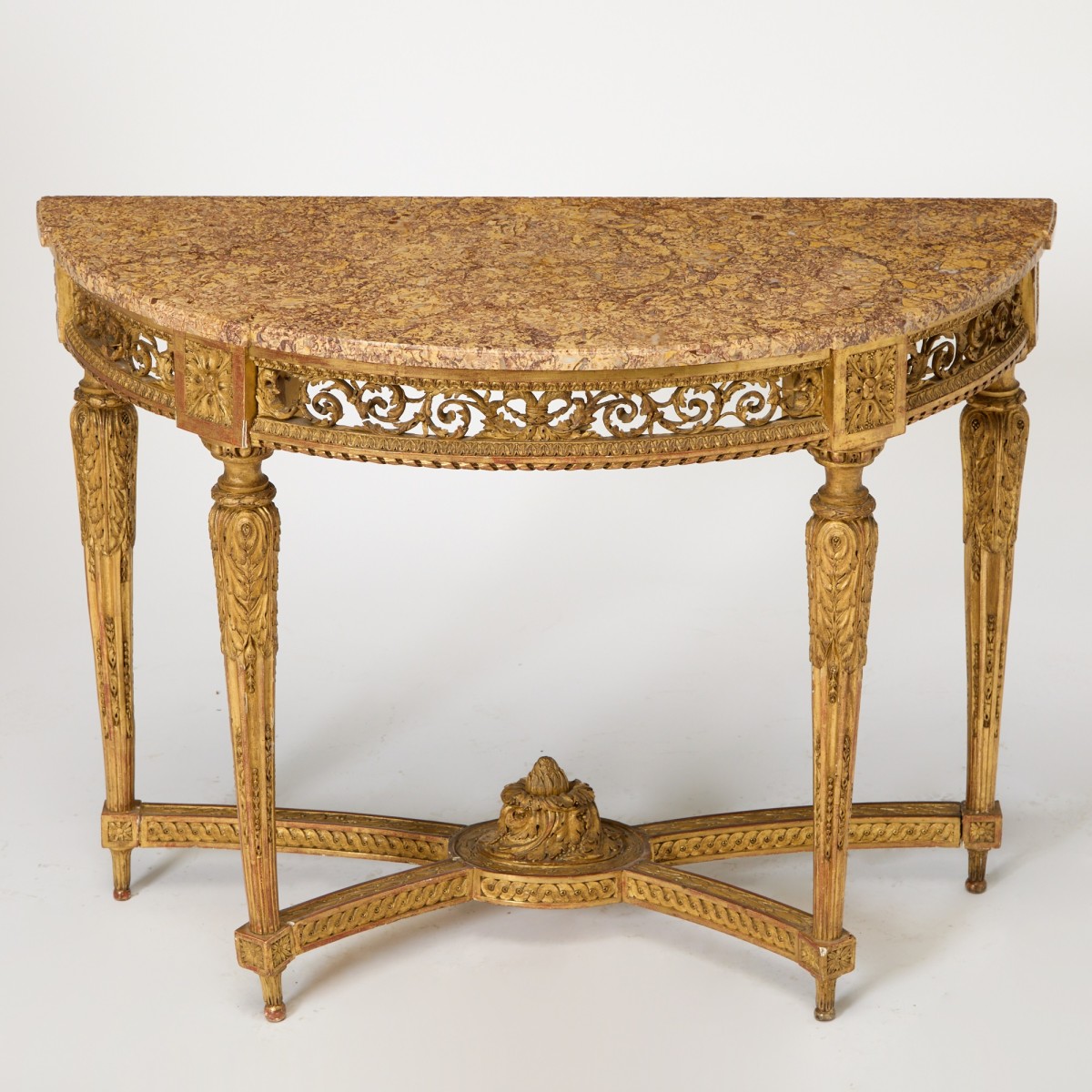

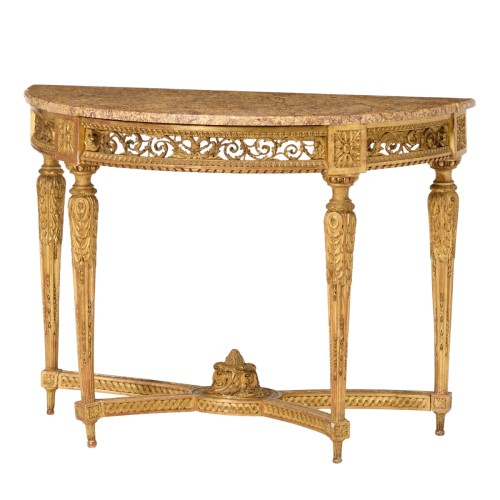
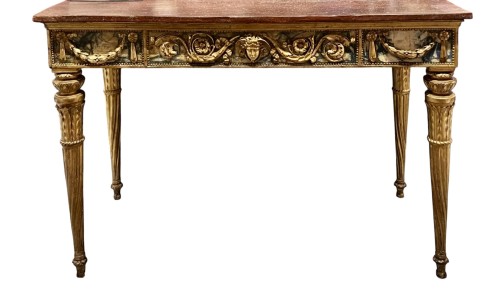
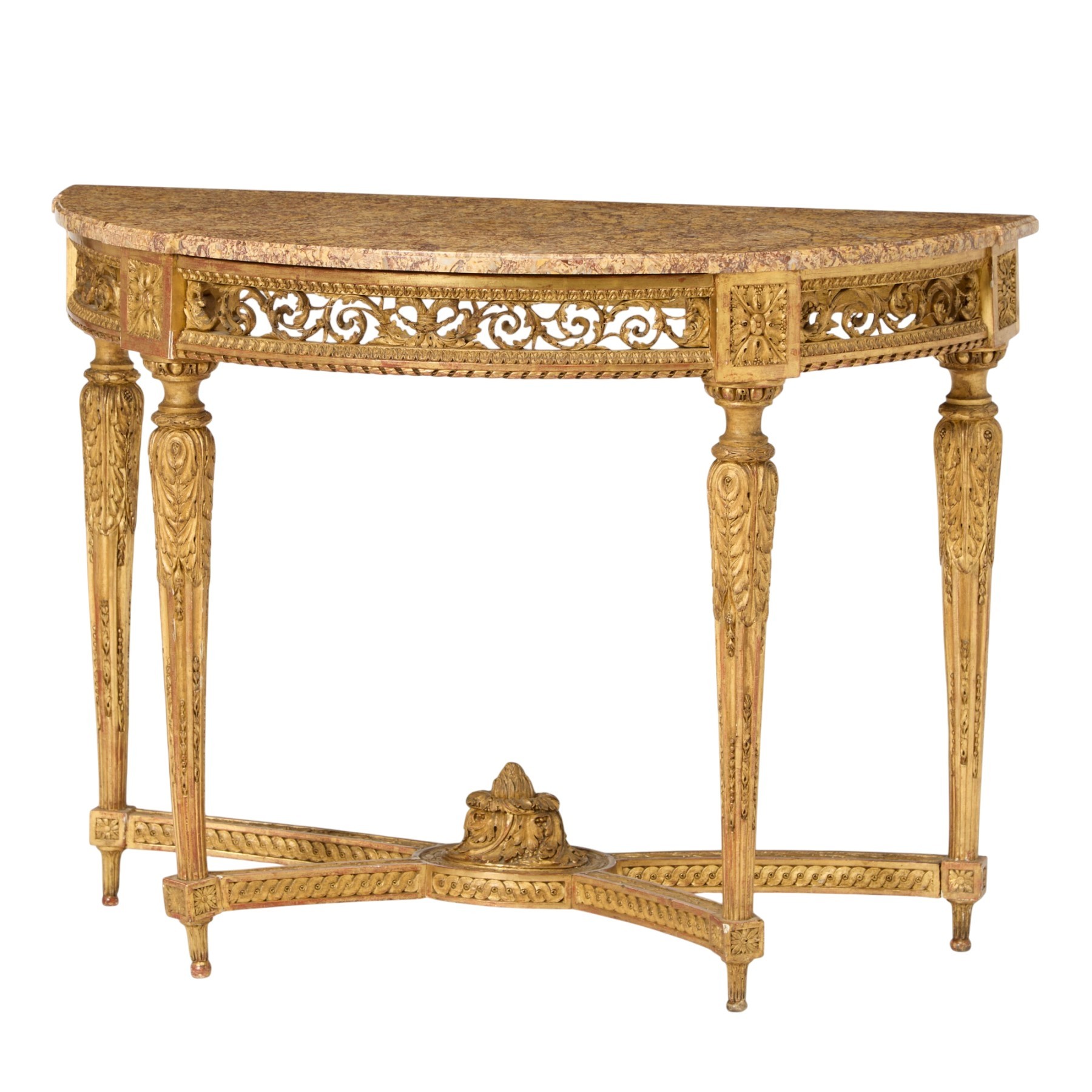
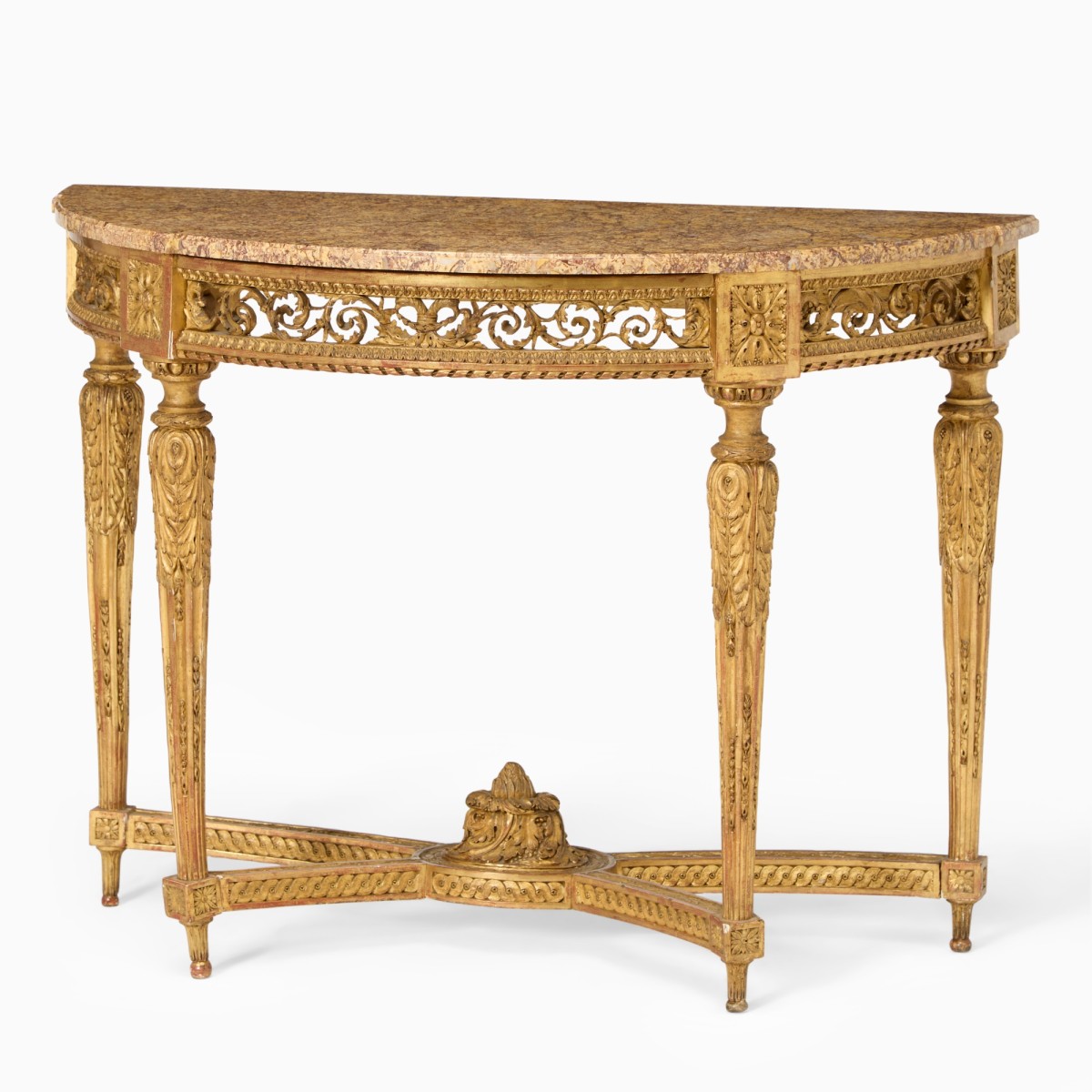
A fine console table in finely carved and gilded oak.
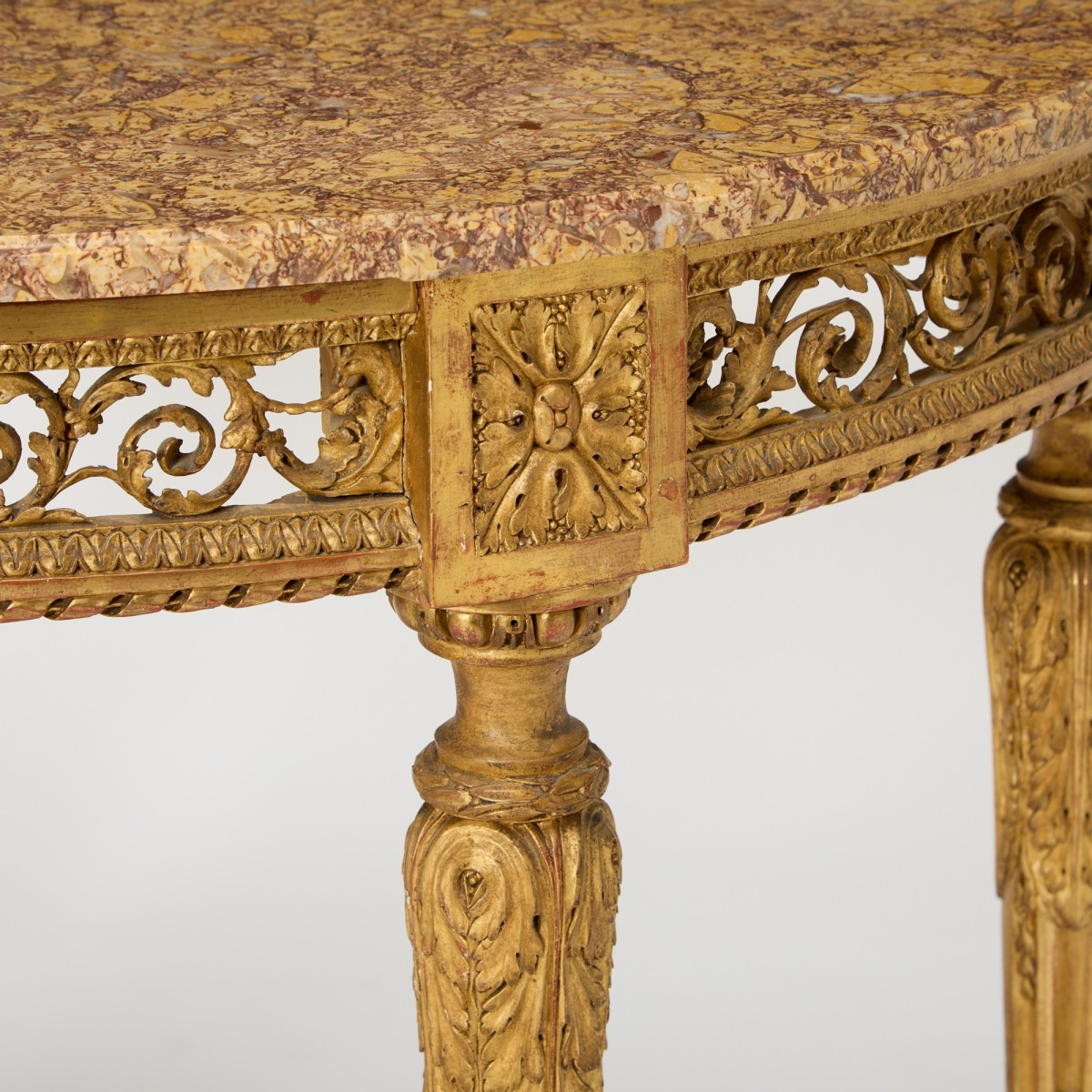
The frieze features delicate openwork rails adorned with acanthus leaf scrolls and eagle heads, set within frames of *rais-de-cœur* (heart-shaped leaf) motifs and interlaced ribbons.
The rails connect to the legs via corner blocks embellished with expansive acanthus leaves.
The four tapered, fluted legs—featuring *rudenture* (reeds or rods filling the flutes) are topped with capitals decorated with gadrooned friezes. They are further enriched by collars of laurel tori and sumptuous acanthus leaf swags.
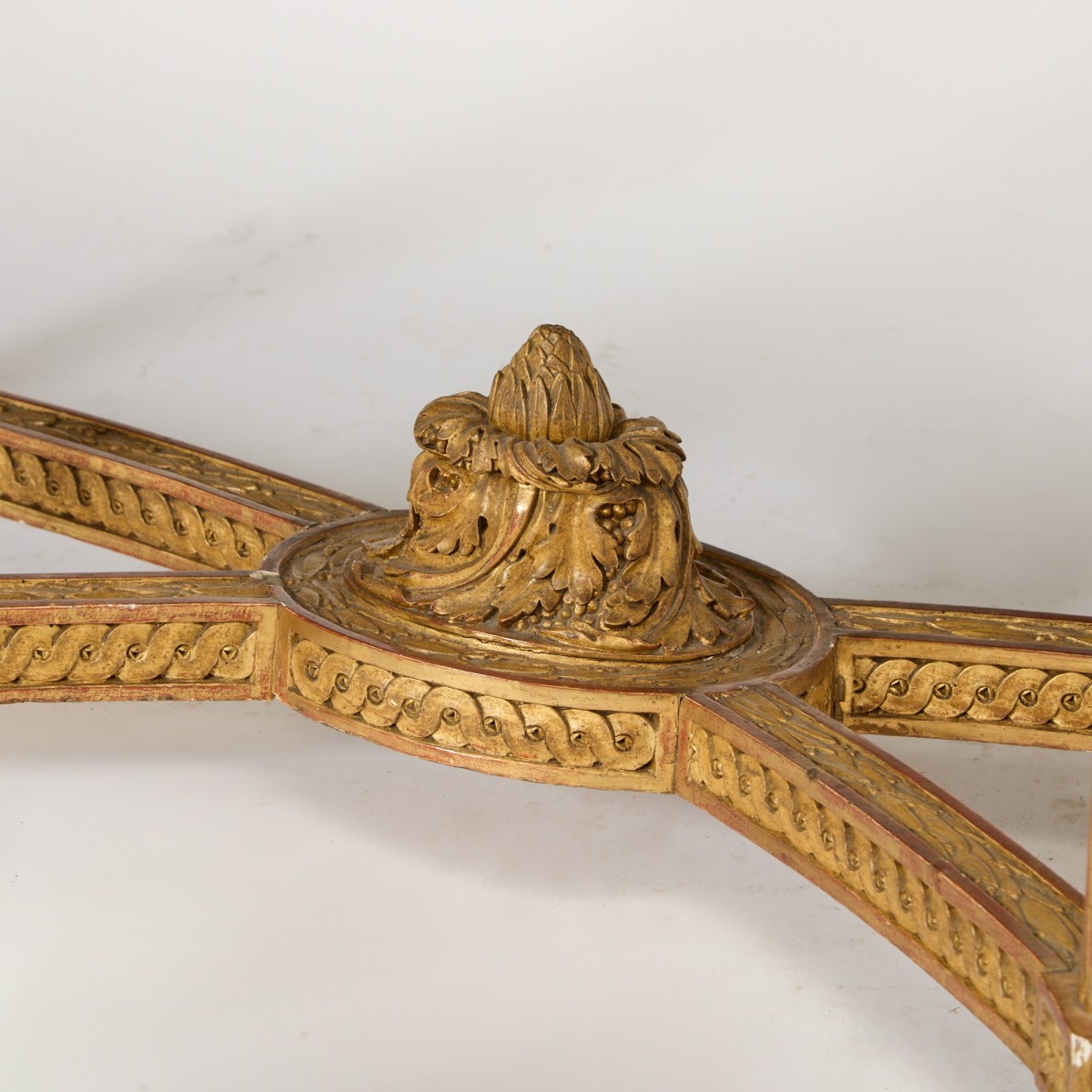
The legs are joined by an X-shaped stretcher, finely carved with laurel-leaf friezes on its upper surface and interlaced patterns along its sides.
At the central junction of the stretcher rises an imposing carved *culot* (ornamental base), terminating in a bud.
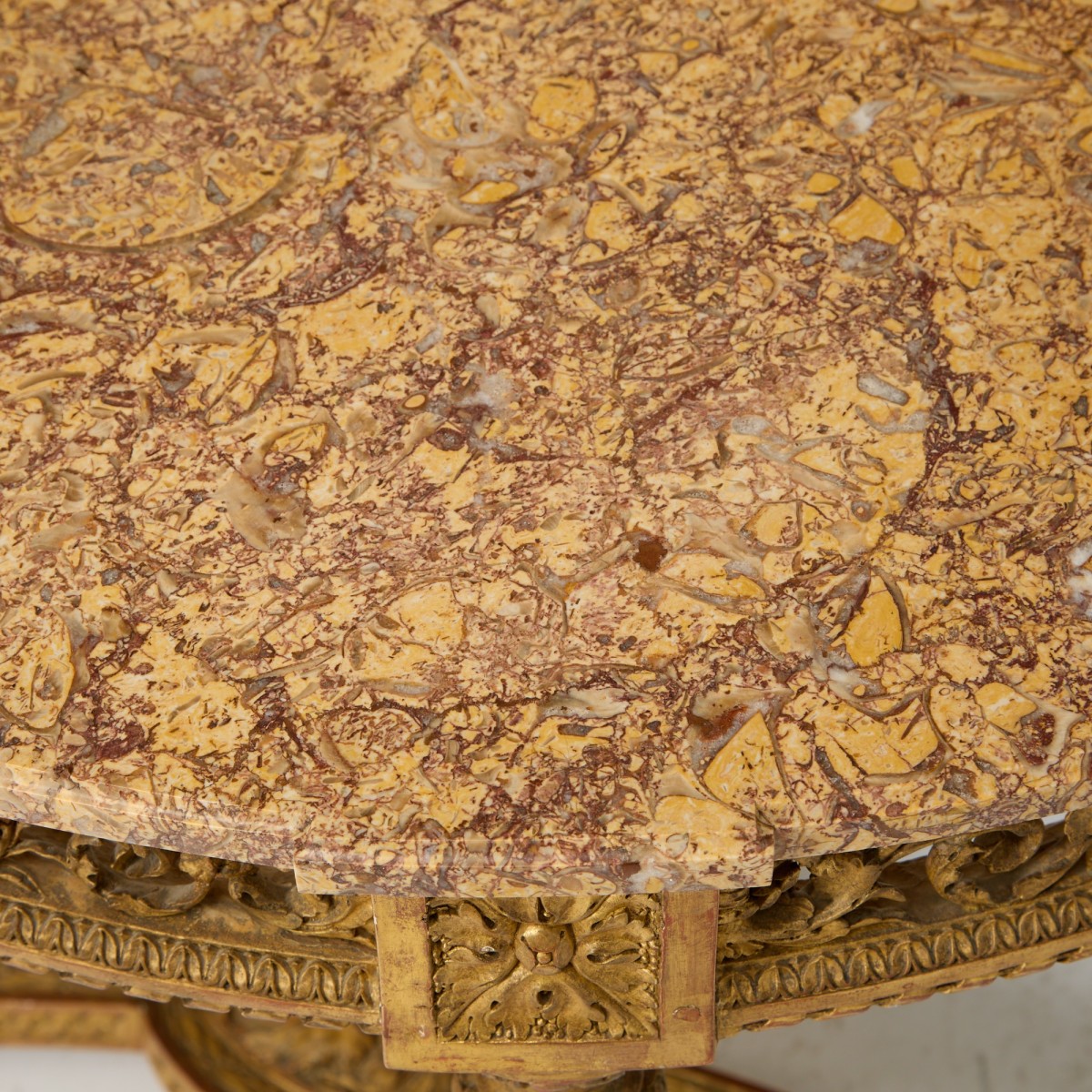
Original Spanish *brocatelle* marble top.
In an excellent state of preservation, retaining its original gilding.
Parisian work, Louis XVI period, circa 1785; attributable to Georges Jacob (1739–1814).
Dimensions:
Width: 106 cm; Depth: 49 cm; Height: 79 cm
Our assessment:
The console table presented here belongs to a small corpus of furniture crafted in Paris between 1785 and 1788. It exemplifies the most refined expression of the "Greek style"—a aesthetic that, at the time, was enjoying a resurgence in popularity within the Royal Family. This final evolution of the neoclassical style—characterized by rigorous architecture, clean lines, and an ornamental repertoire drawn directly from antiquity—had only a limited reach, as its development was cut short by the upheavals of the French Revolution.
While the identity of the person who created the designs for these console tables remains unknown, Richard Mique (1728–1794)—architect to Marie-Antoinette and the *Bâtiments du Roi* (the Royal Works department)—is a plausible candidate, given that some similar pieces were incorporated into interiors executed under his direction.
The creation of these furnishings involved some of the foremost craftsmen of the late reign of Louis XVI, including the renowned chair-maker Georges Jacob (1739–1814) and the *Bâtiments du Roi* sculptors Jules-Hugues Rousseau (1743–1806) and Jean-Siméon Rousseau (1747–1820).
The latter, in particular, produced a semi-circular console table for the bathroom of Madame Adélaïde at the Palace of Versailles; it is now held in the palace’s collections under inventory number MV 8066.
The use of oak, the exceptional quality of the carved details—such as the capitals adorned with gadrooned friezes and the *chutes* (ornamental drops) featuring acanthus leaves, which are identical to those found on our console—make for a particularly compelling link to that body of work.
Unlike *ébénisterie* (fine cabinetwork), *menuiserie*—which includes pieces such as console tables—was generally not assigned an inventory number by the *Garde-Meuble de la Couronne* (the Crown’s furniture repository). Thus, despite the abundance of items delivered to royal residences, only the presence of original labels or the precise details found in certain later inventories allow us to confirm a royal provenance with certainty today.
Nevertheless, this console table embodies all the stylistic and technical characteristics of the prestigious cabinetwork supplied to the royal family during the final years of the Ancien Régime. Through the rigor of its architecture, the excellence of its carving, and the refinement of its ornamentation, it aligns perfectly with the latest aesthetic explorations of Parisian workshops on the eve of the Revolution—standing as one of the ultimate achievements in French furniture-making.