Offered by Franck Baptiste Paris
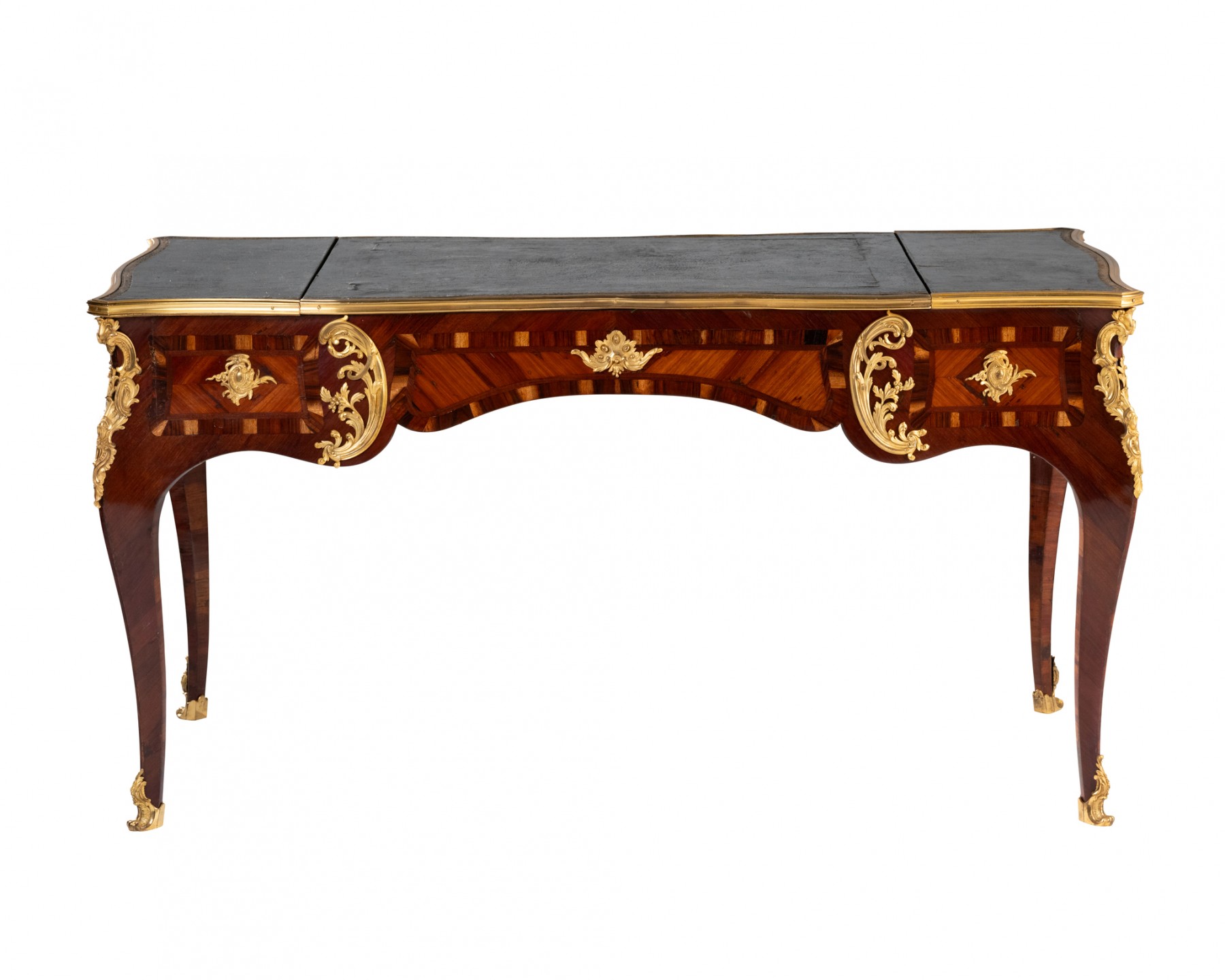
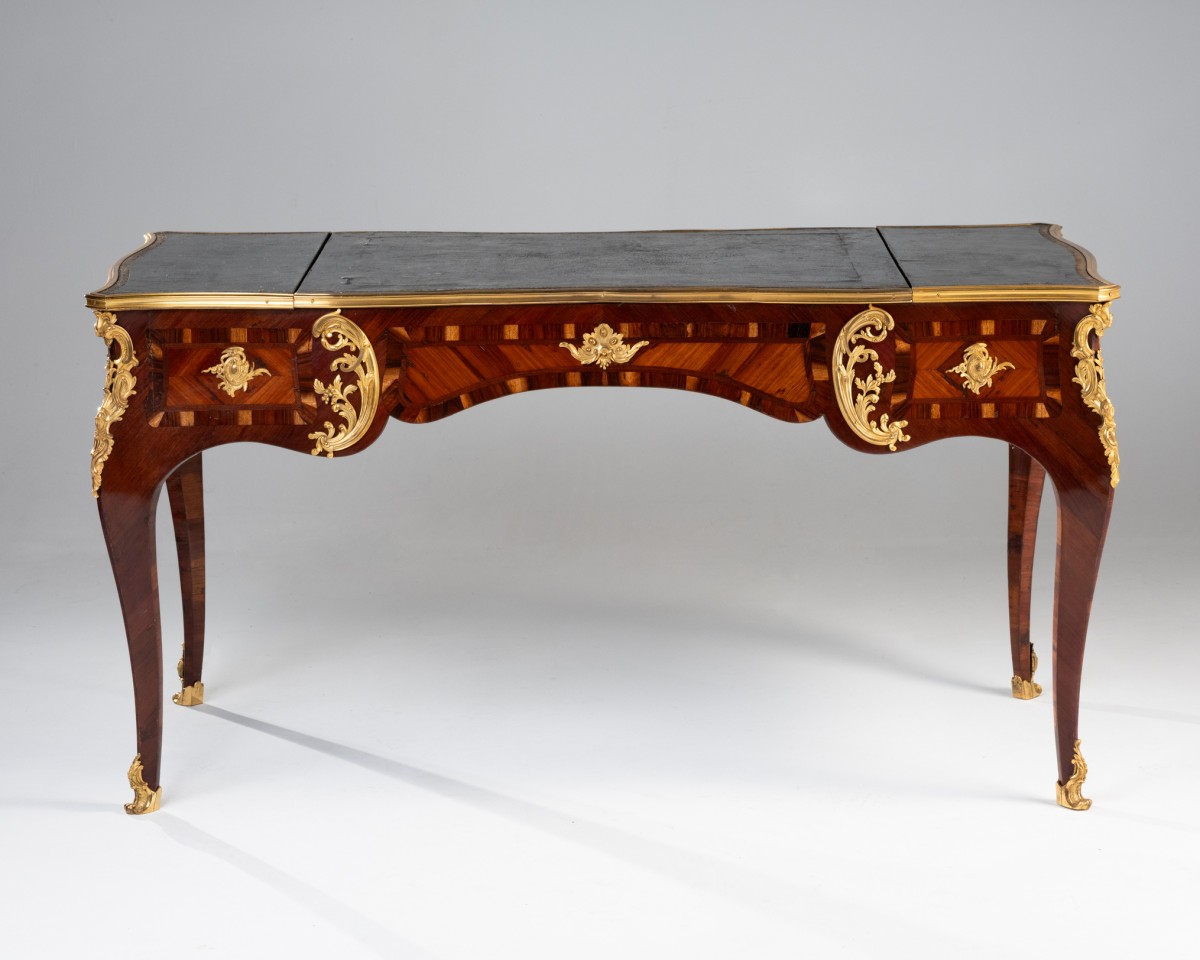
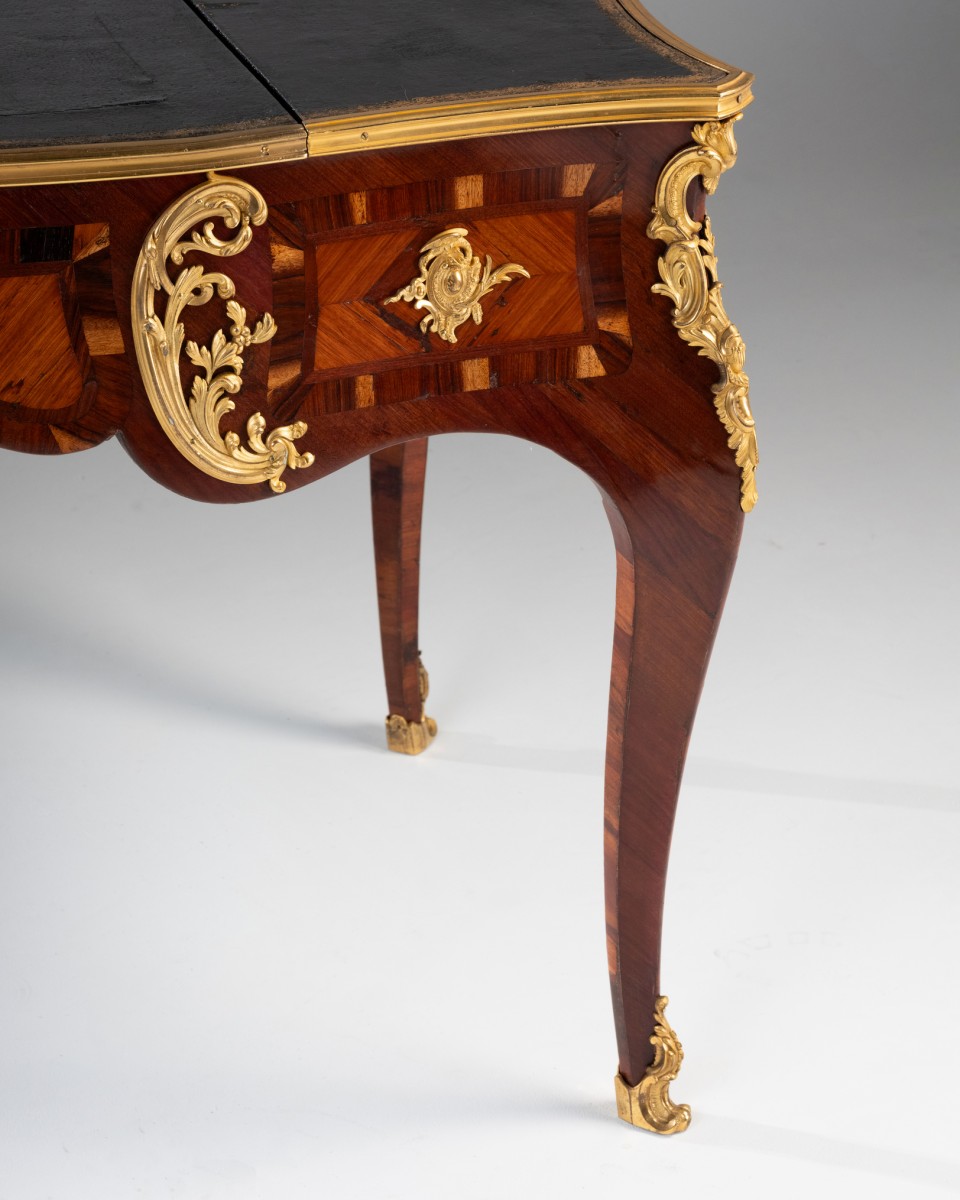

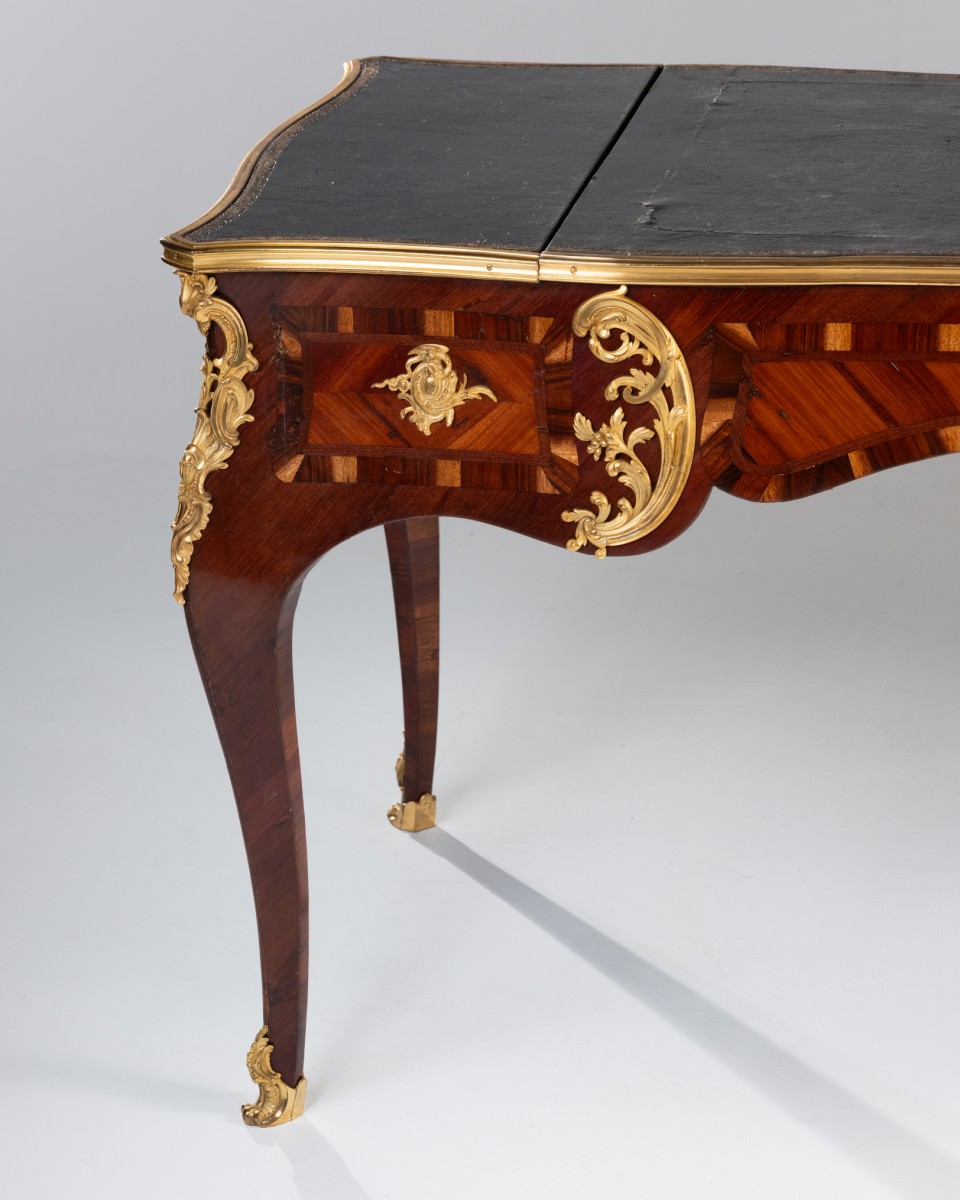
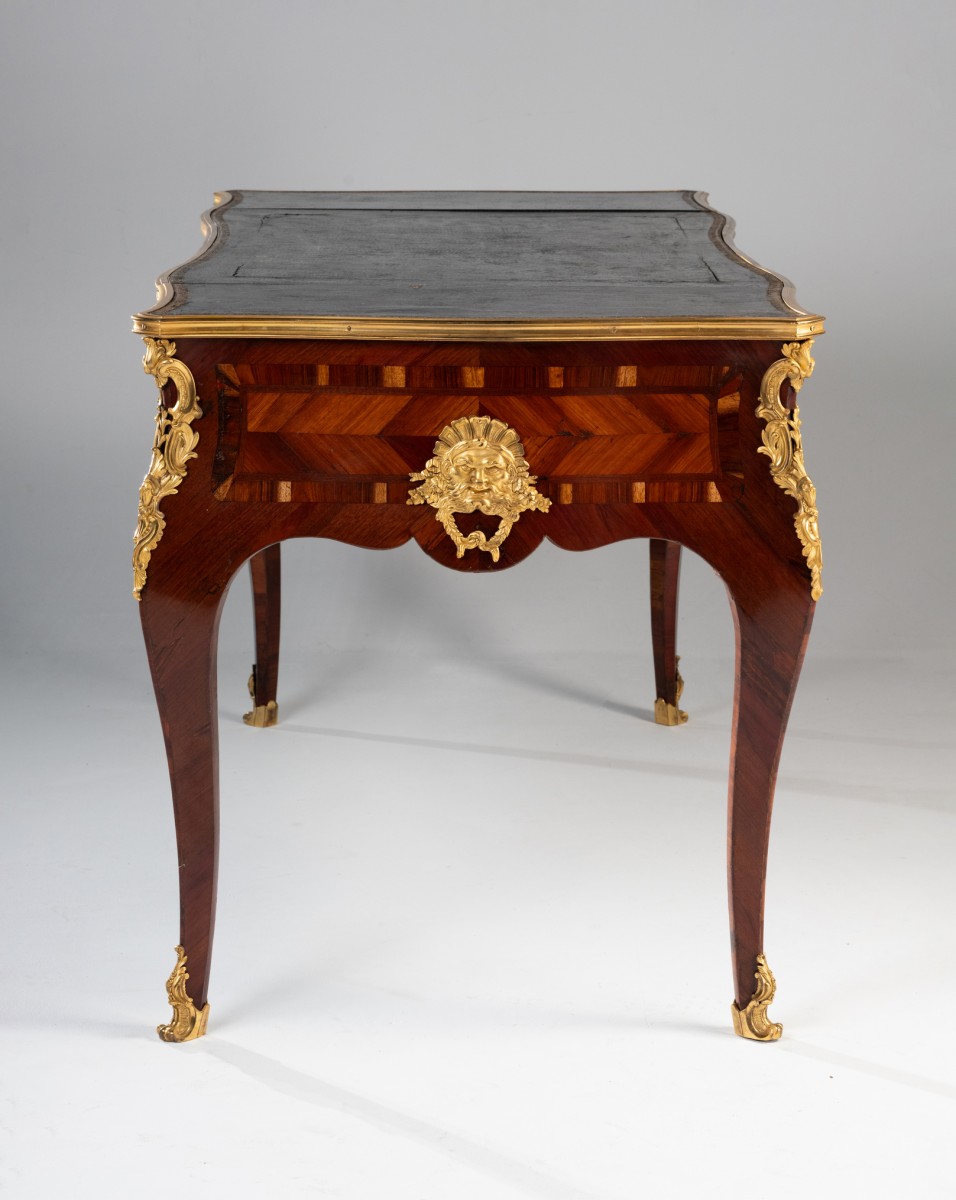
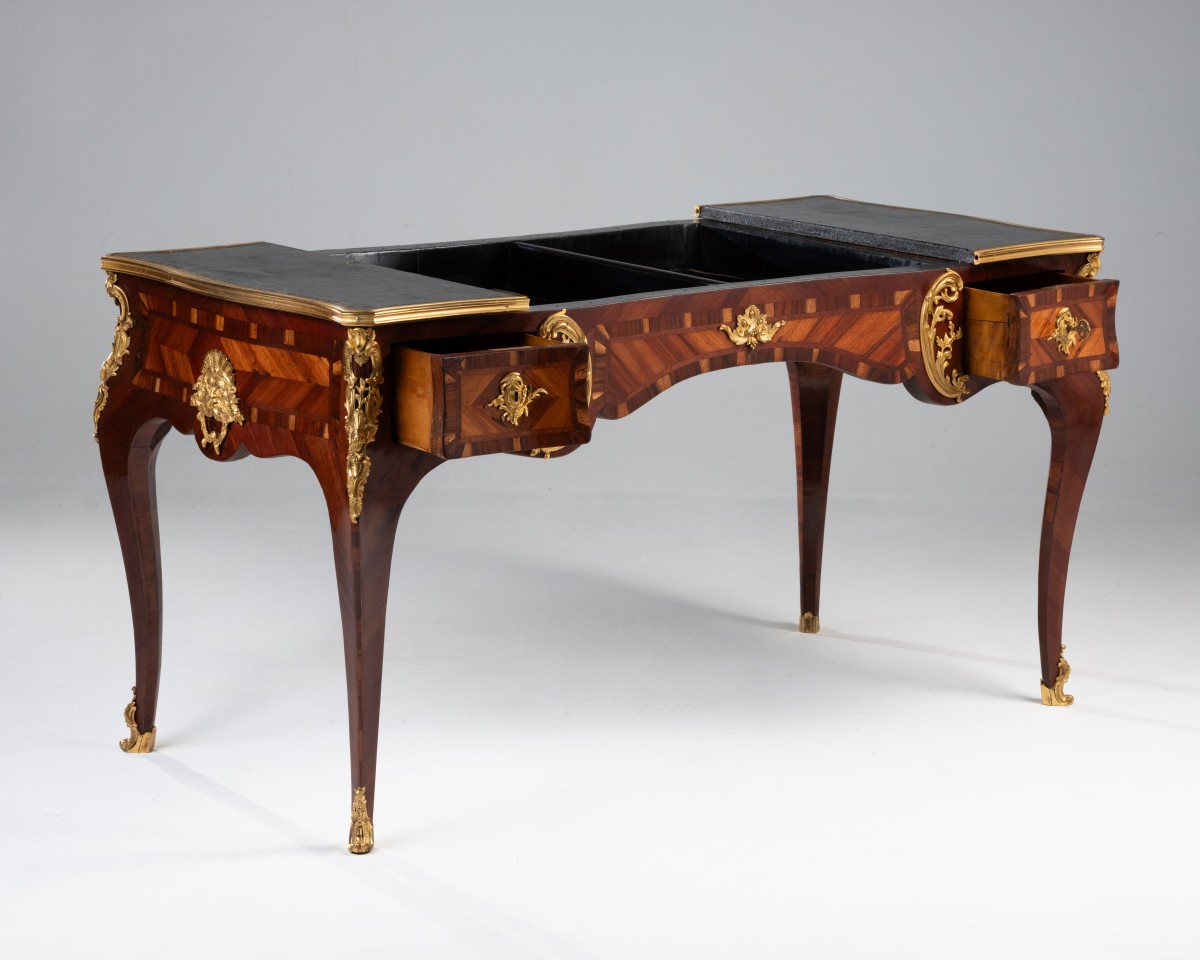
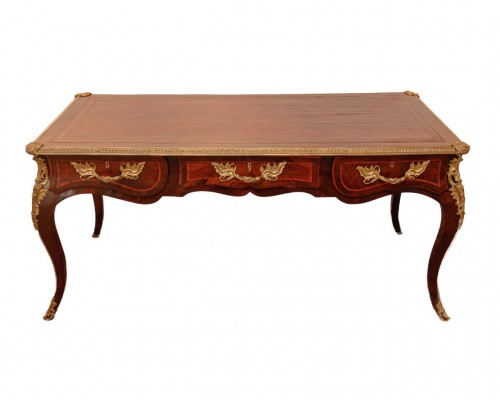
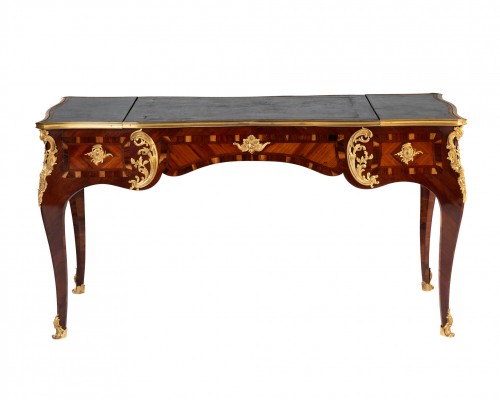
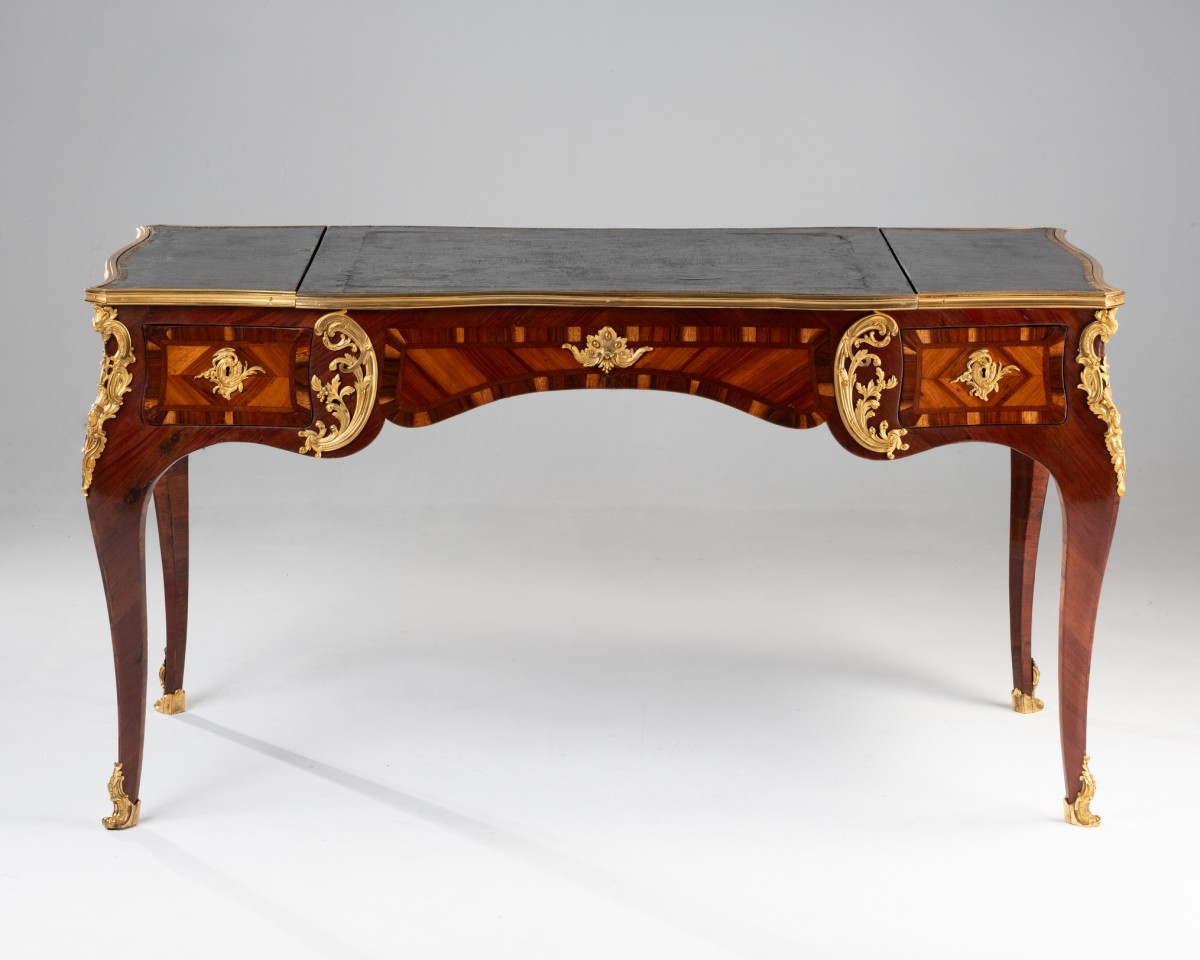
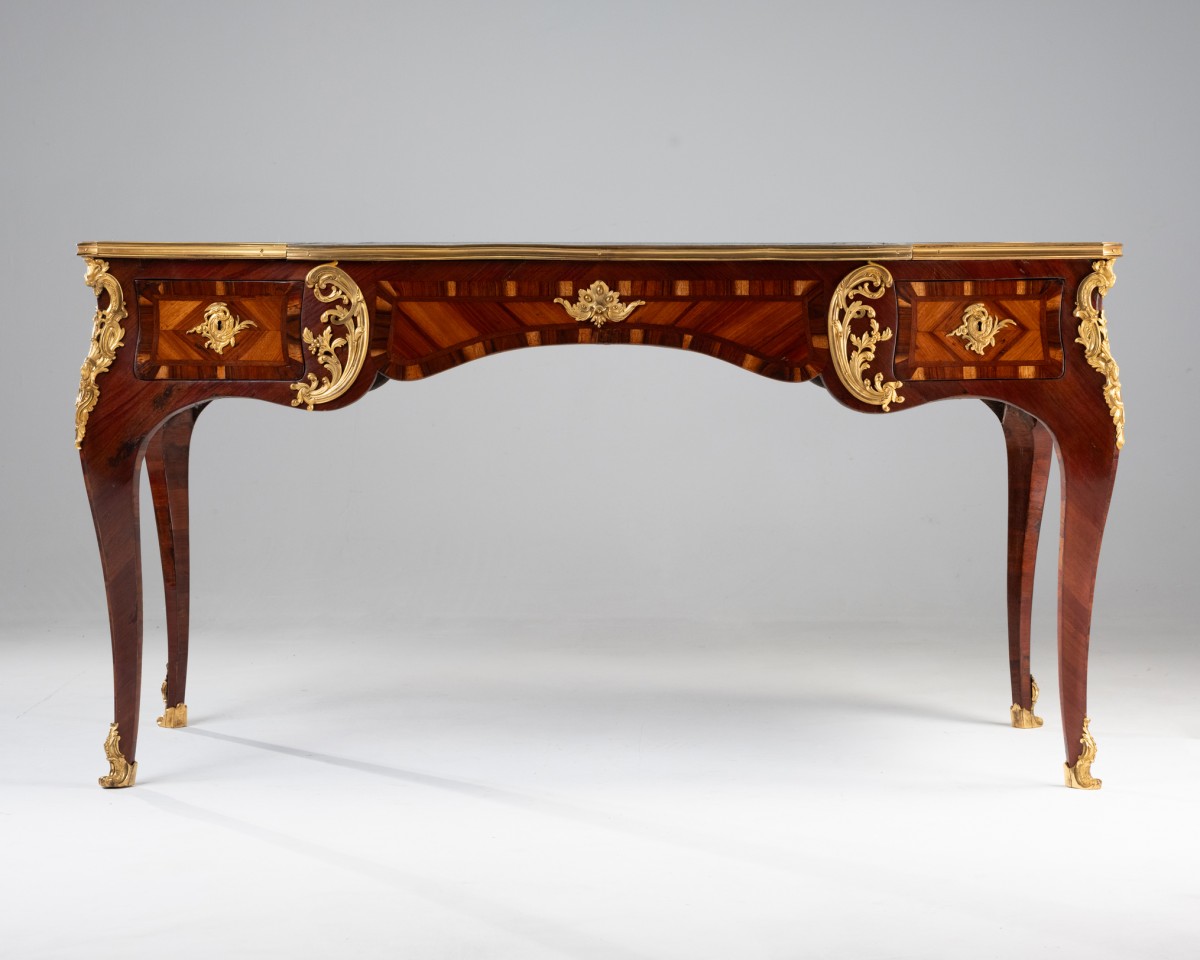
A rare, free-standing *bureau plat* (flat-top desk) with a serpentine shape on all sides, veneered in satiné wood and amaranth arranged in alternating cube and geometric patterns.
It stands on four strongly cabriole legs joined by shaped stretchers.
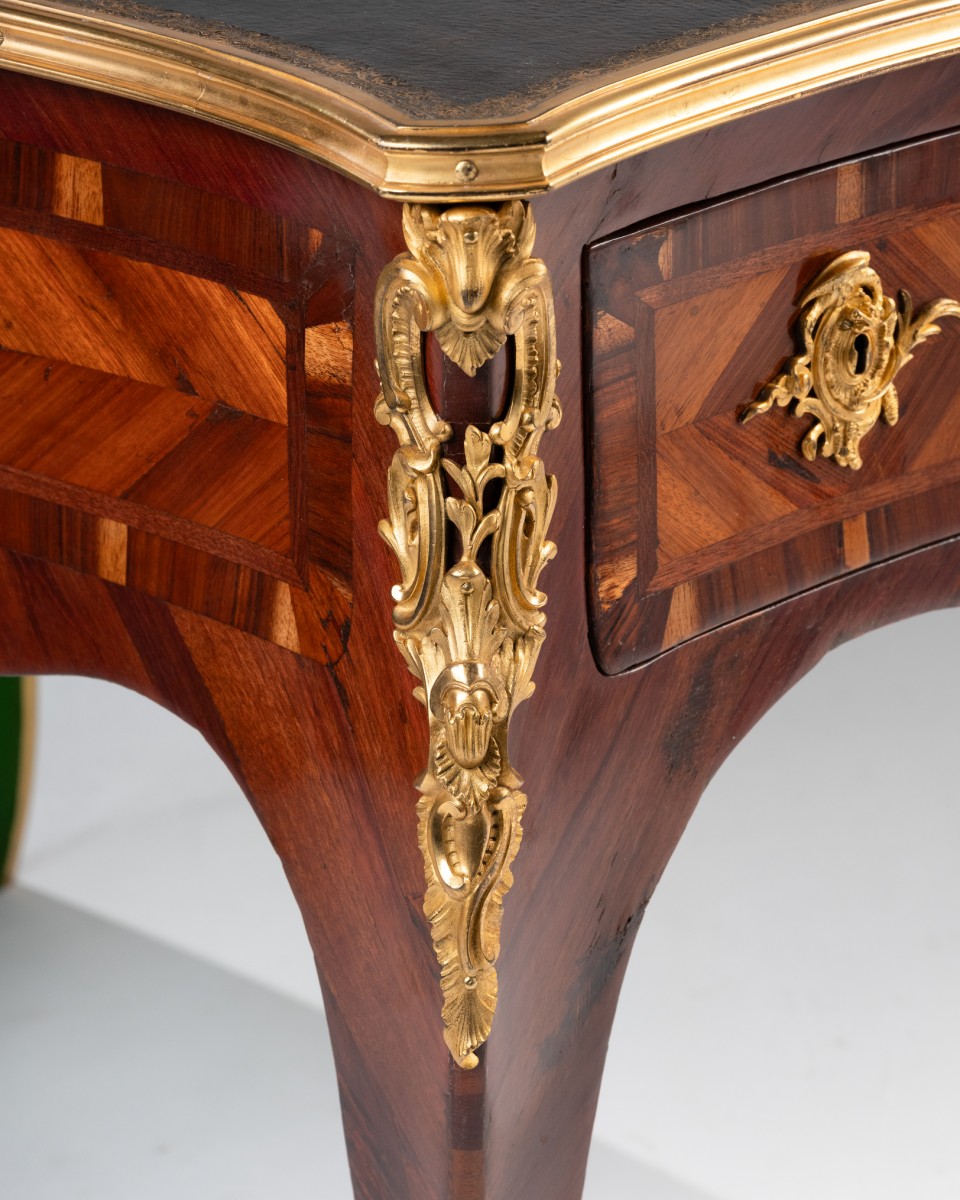
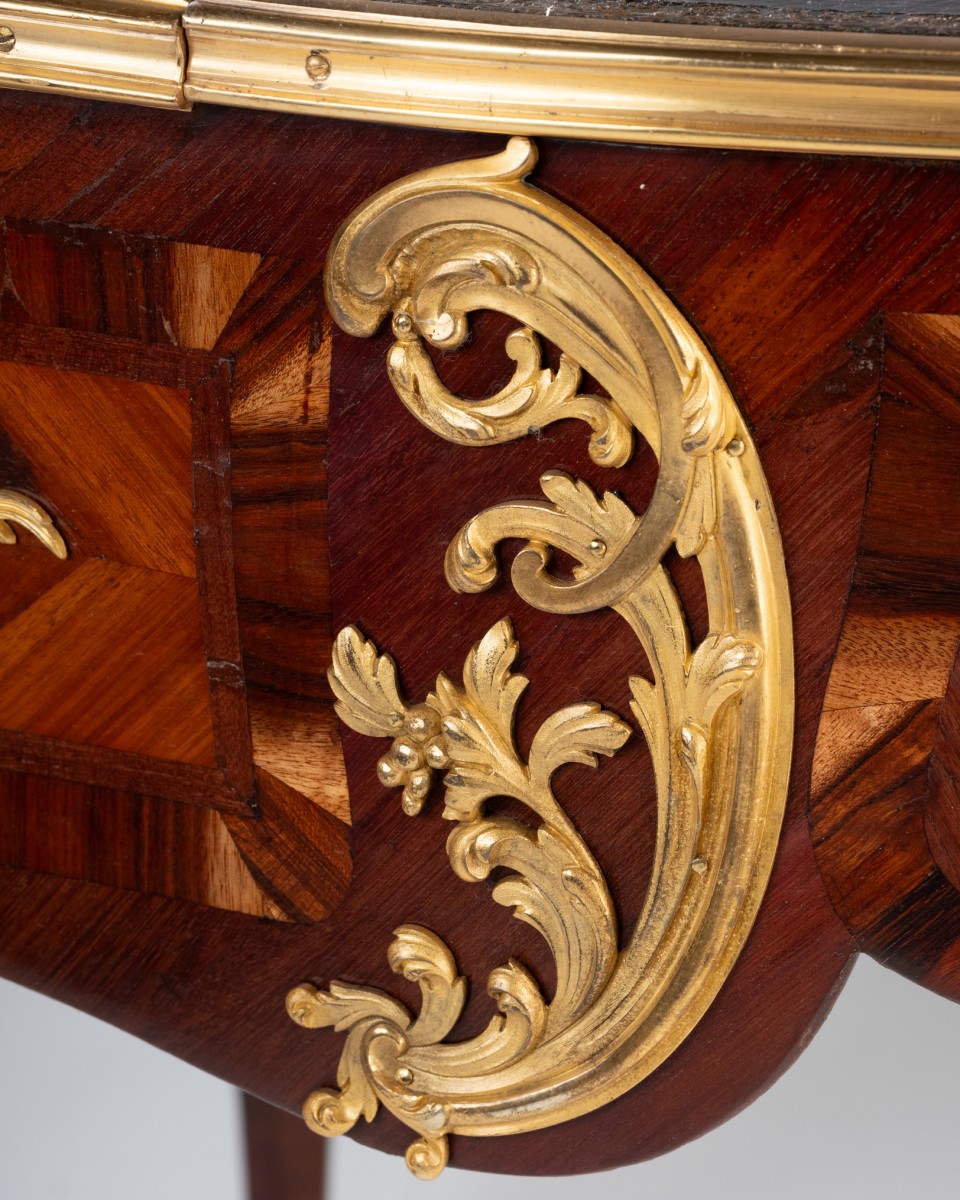
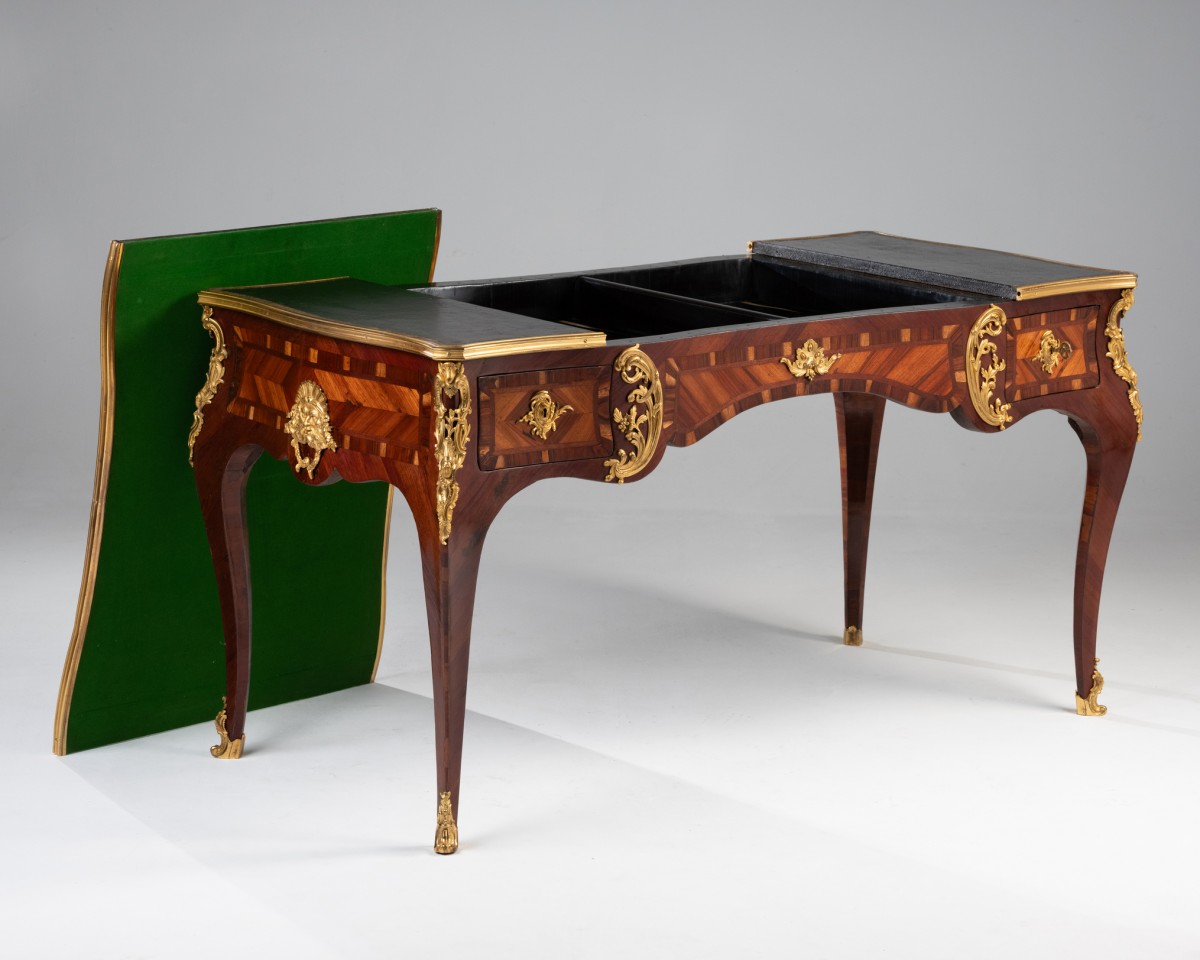
Designed to stand in the center of a room, it features two symmetrical facades, each simulating three drawers defined by gilt-bronze mounts in the form of C-scrolls and acanthus clasps.
The main facade opens to reveal two side drawers.
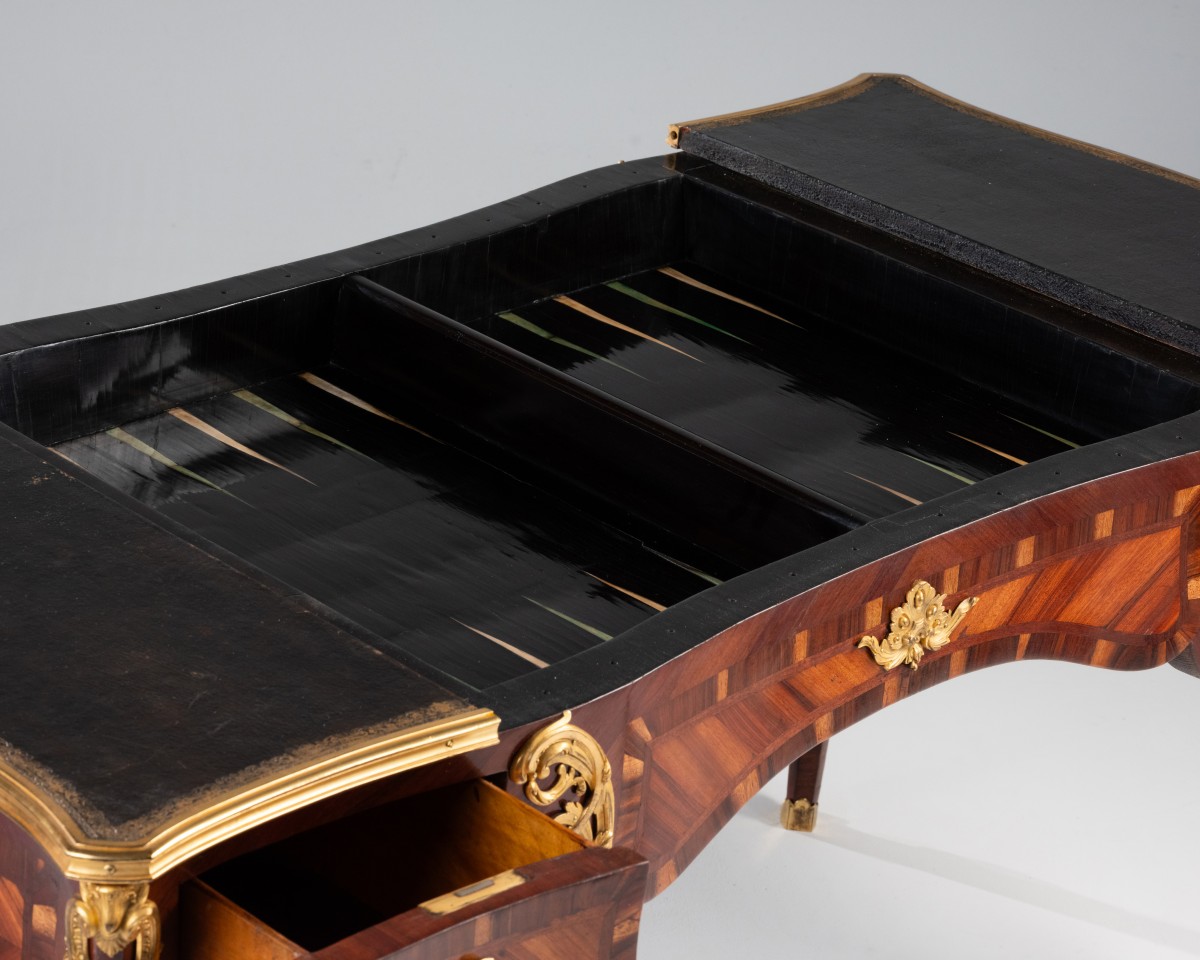
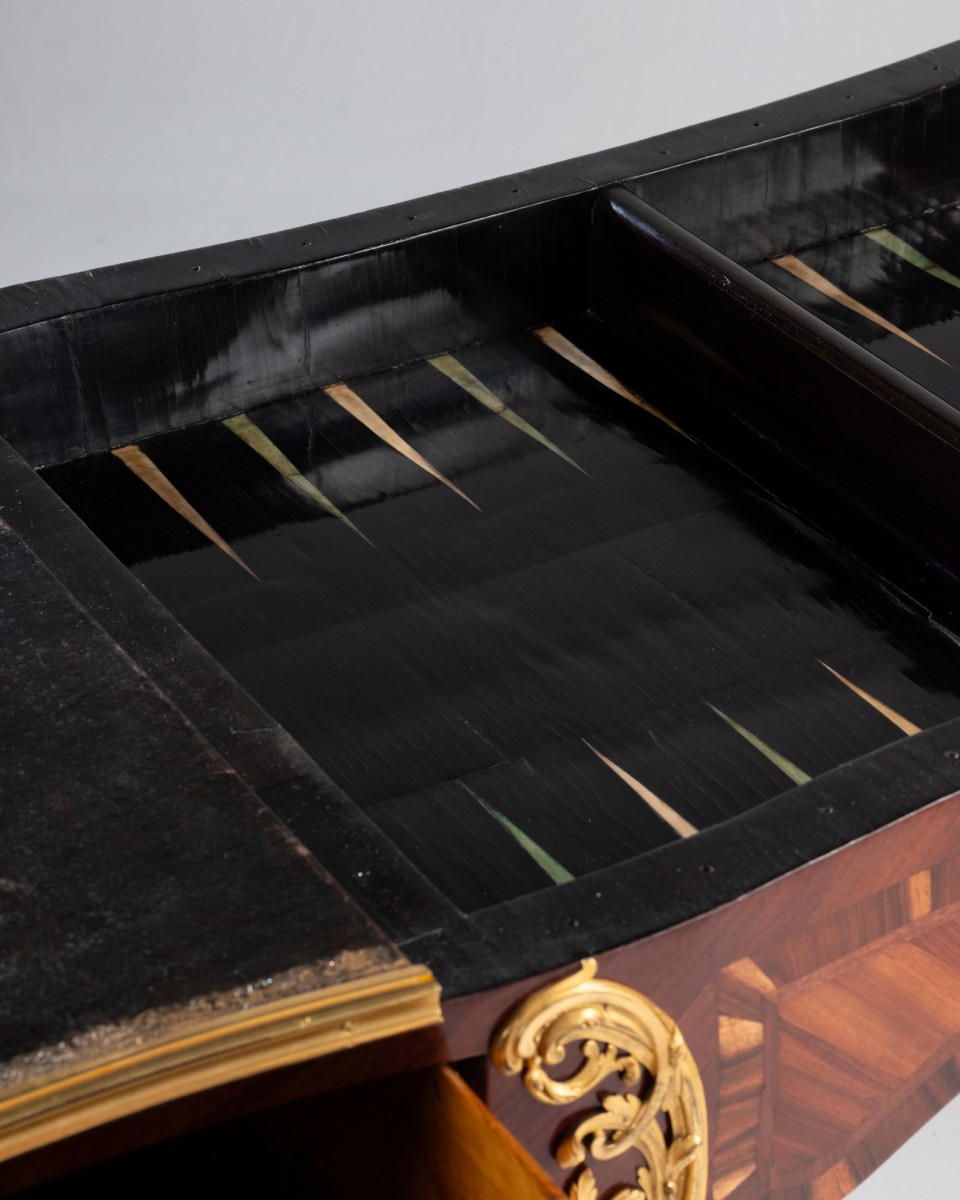
The top, bordered by a substantial gilt-bronze *lingotière* (molded rim), is inset with black leather tooled in gold and arranged in three sections. The removable central section reveals a backgammon board veneered in ebony, ivory, and green-stained bone.
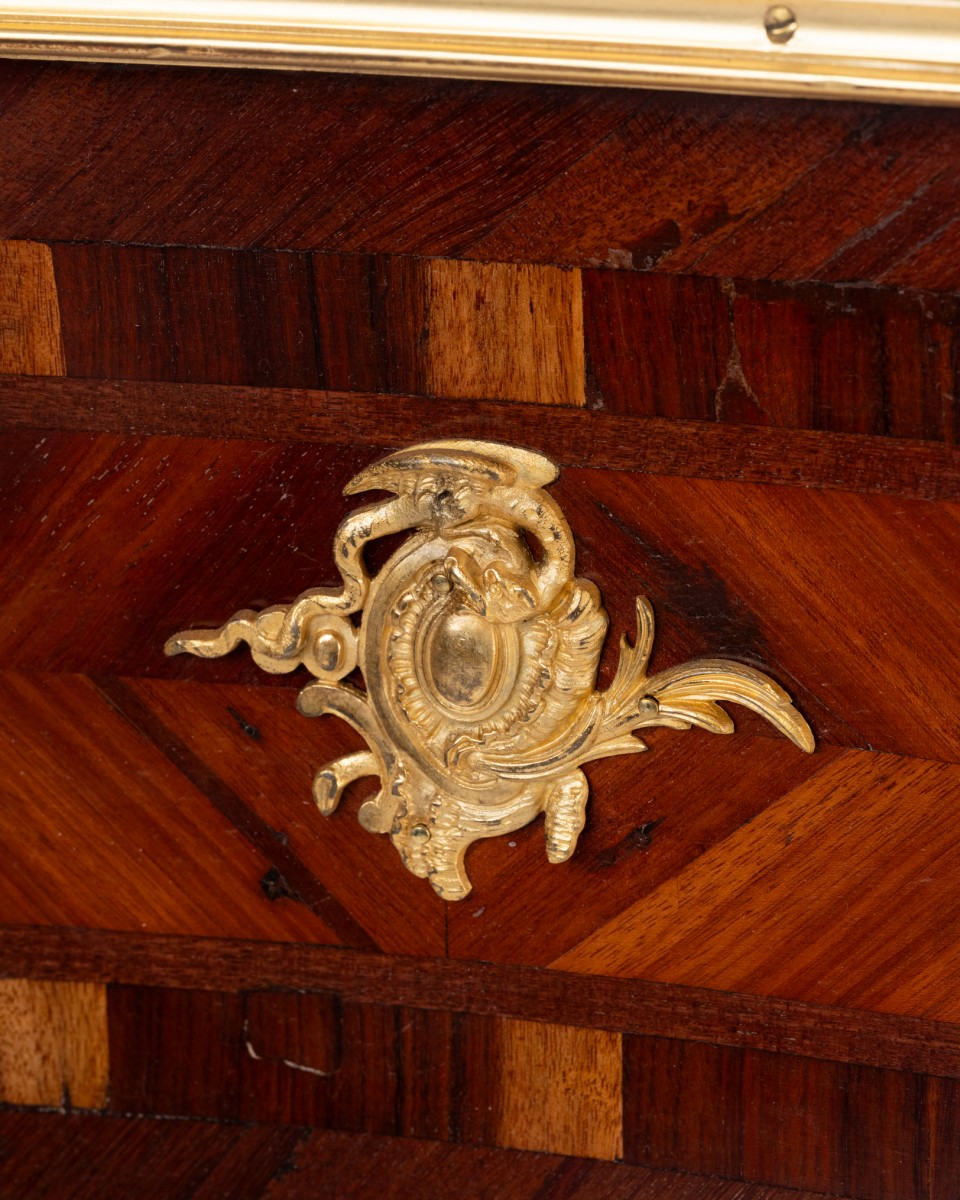
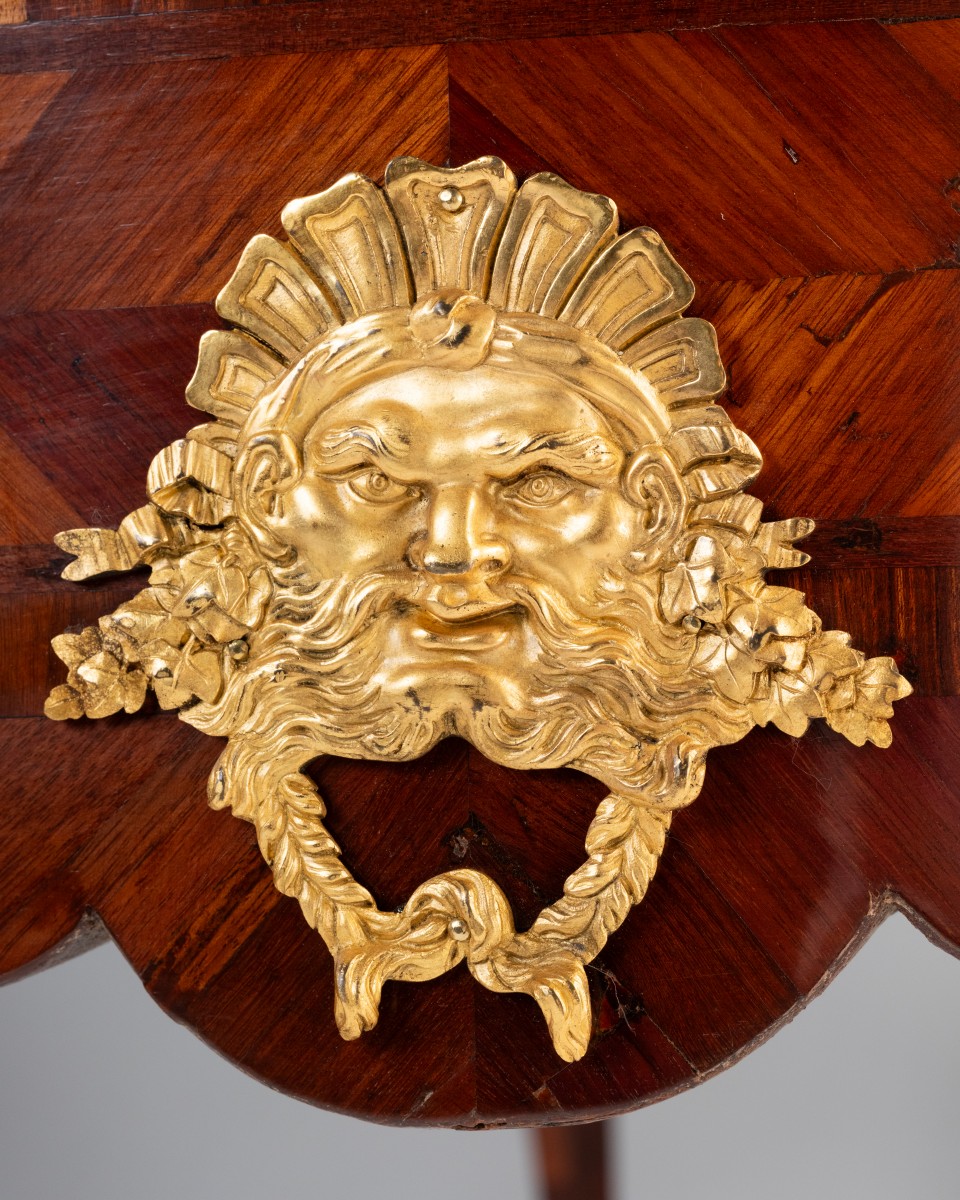
The piece is enriched with remarkable ornamentation of finely chased, mercury-gilt bronze: large openwork Rococo shoulder mounts, C-scroll clasps, side *mascarons* (masks), scrolled sabots (feet), a contoured three-part rim, and spectacular asymmetrical escutcheons featuring roaring chimeras.
Fir carcass; drawer interiors in walnut.
Excellent state of preservation; minor restorations to the marquetry consistent with age and use.
Stamped "J. Dubois" and bearing the "JME" guild stamp beneath the left side stretcher.
Parisian work from the Louis XV period, circa 1750, by the *ébéniste* (master cabinetmaker) Jacques Dubois.
Dimensions:
Width: 138 cm; Depth: 66 cm; Height: 72 cm
A *bureau plat* by Jacques Dubois featuring the same contrasting cube and geometric veneer pattern is held in the collection of the Petit Palais Museum in Paris.
Our assessment:
This spectacular free-standing desk perfectly exemplifies the style of the renowned cabinetmaker Jacques Dubois, who remains one of the finest craftsmen of the Louis XV era. The opulent, swelling contours on all sides, the exuberant richness of the bronze mounts, and the originality of its dual function are indeed characteristic of his finest work.
Freestanding mechanical desks bearing the stamps of great Parisian cabinetmakers remain extremely rare today.
This model appears to be previously unrecorded in the oeuvre of Jacques Dubois and perfectly exemplifies the ingenuity of this great master.
Jacques Dubois (Pontoise, 1694 – Paris, 1763) ranks among the most important Parisian cabinetmakers of the reign of Louis XV. Likely trained by his half-brother—the cabinetmaker and dealer Noël Gérard—he initially worked as an independent craftsman in the Faubourg Saint-Antoine before becoming a master in 1742. Established on the Rue de Charenton, he served as a juryman for his guild from 1752 to 1754.
His output is distinguished by the elegance of its *rocaille* forms, the quality of its marquetry, and the use of precious Far Eastern lacquer panels, often enhanced by rich gilt-bronze ornamentation. Catering to an aristocratic French and European clientele, Jacques Dubois produced highly refined pieces, primarily commodes, desks, secretaries, and corner cabinets. After his death, his workshop was taken over by his son, René Dubois, who had himself become a master cabinetmaker in 1755.