Offered by Franck Baptiste Paris
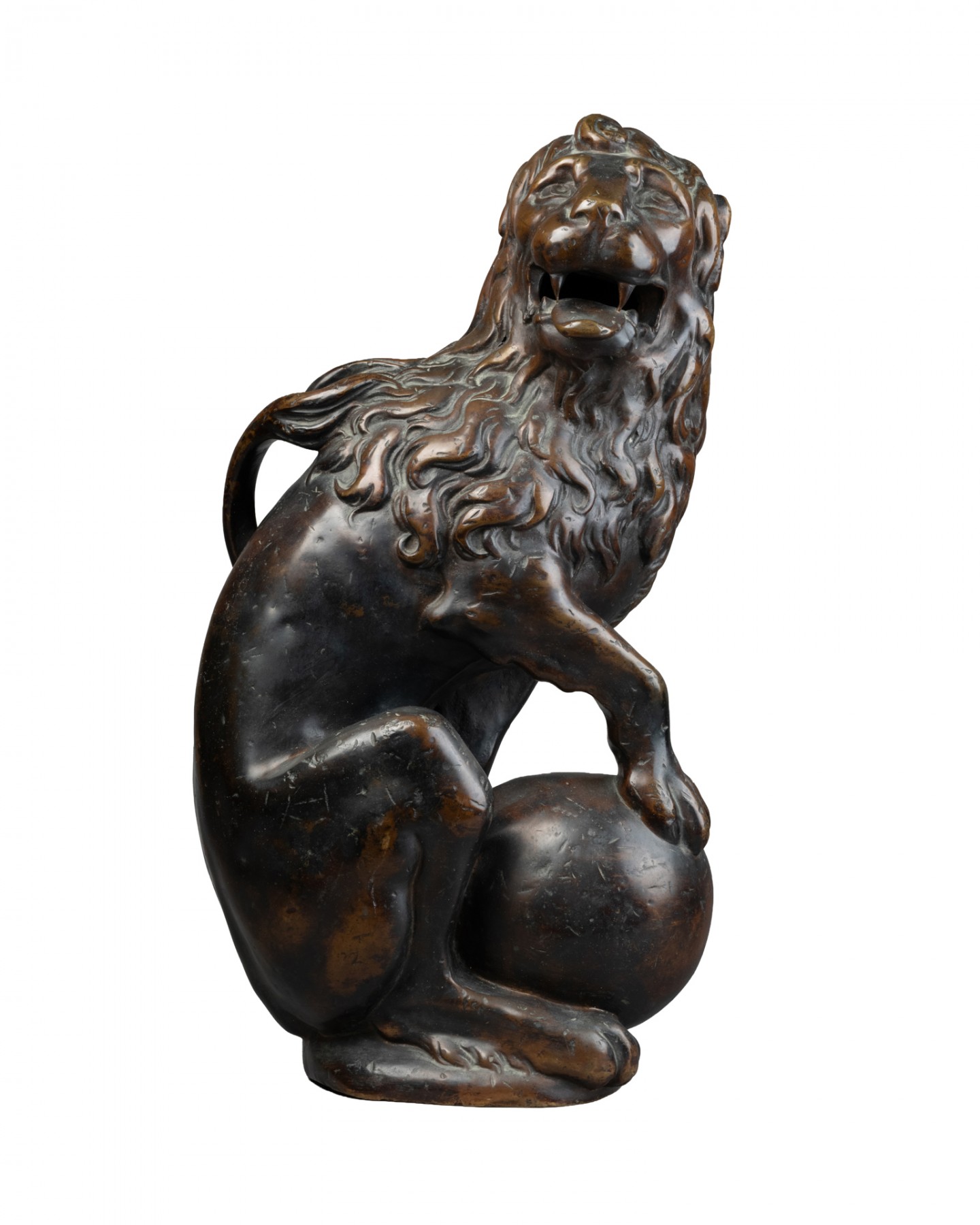
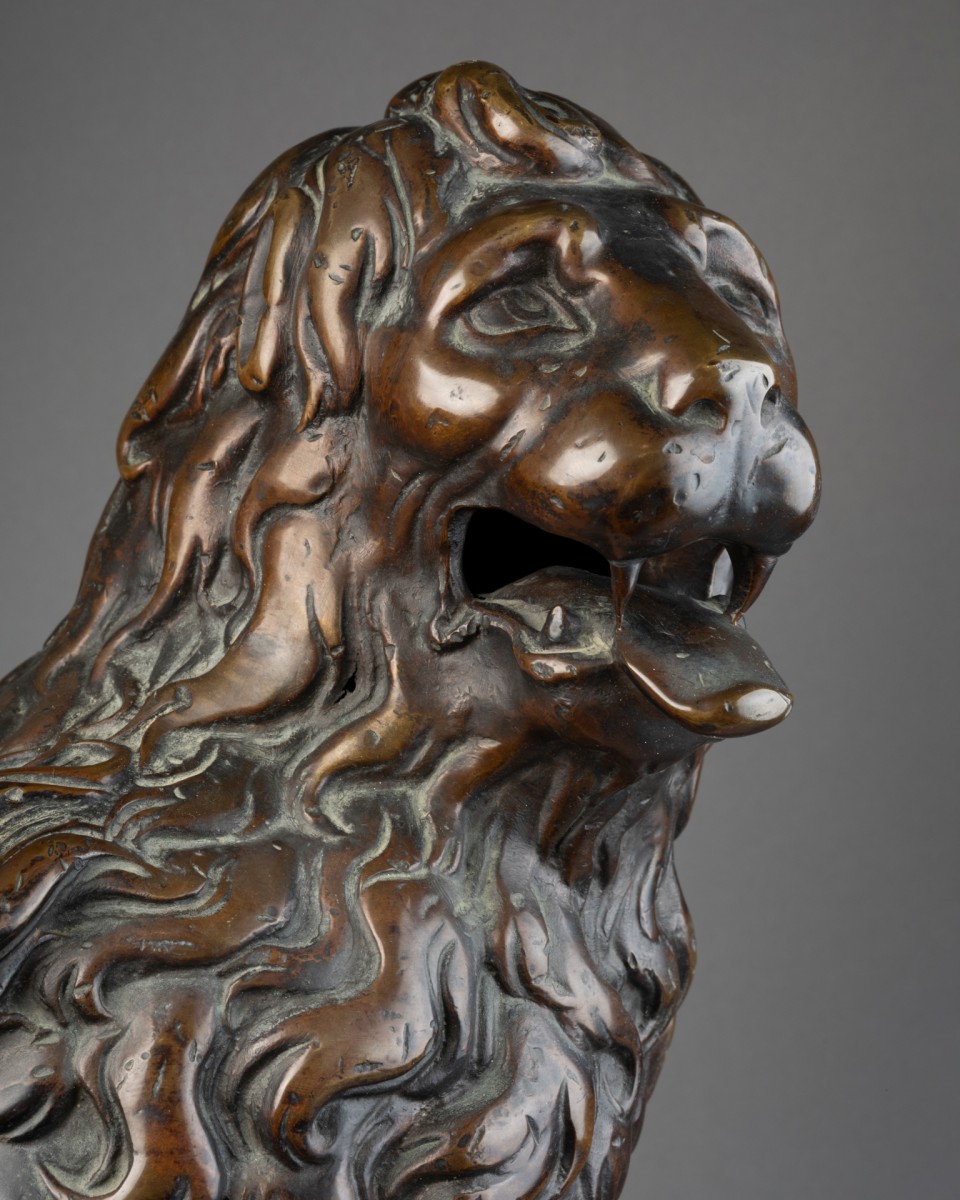
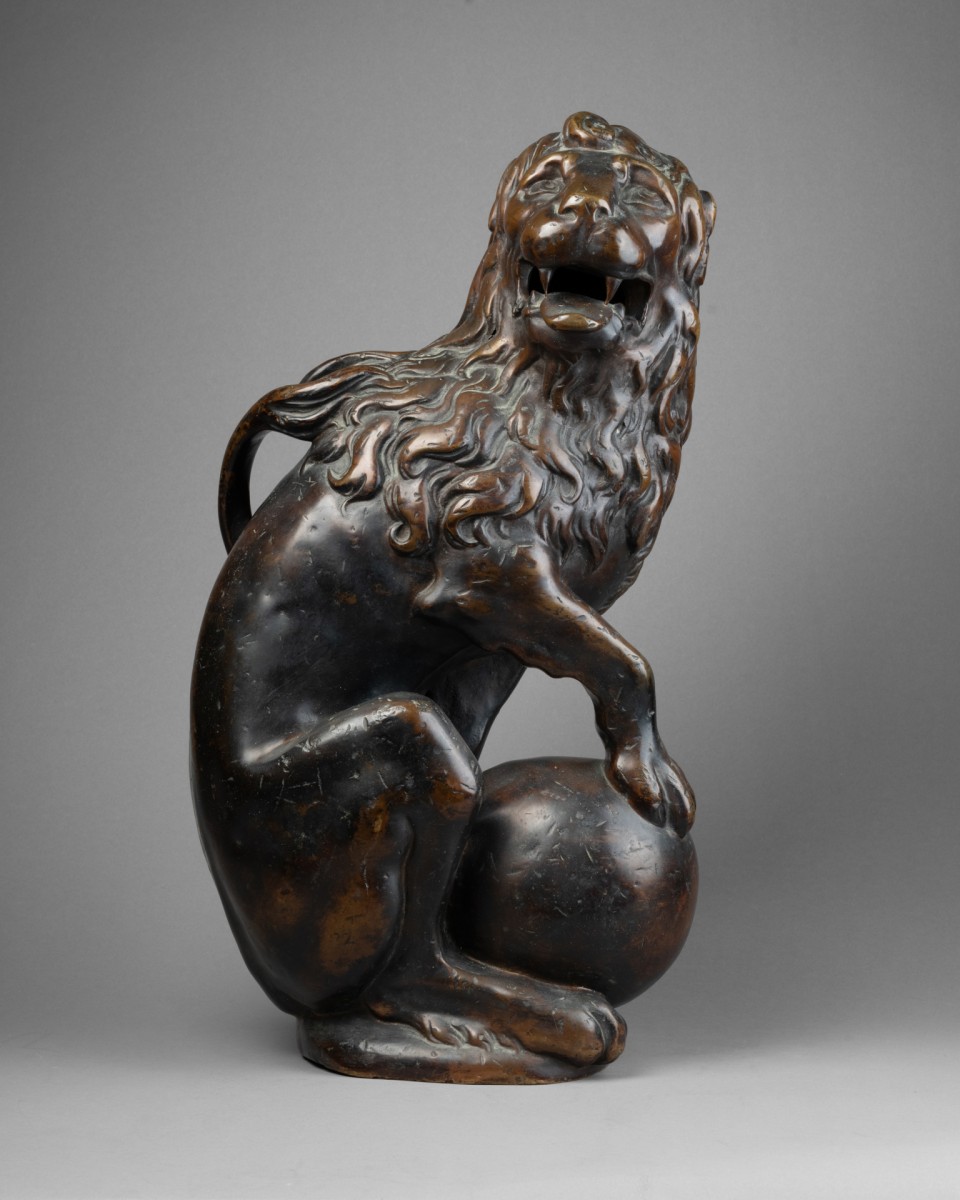
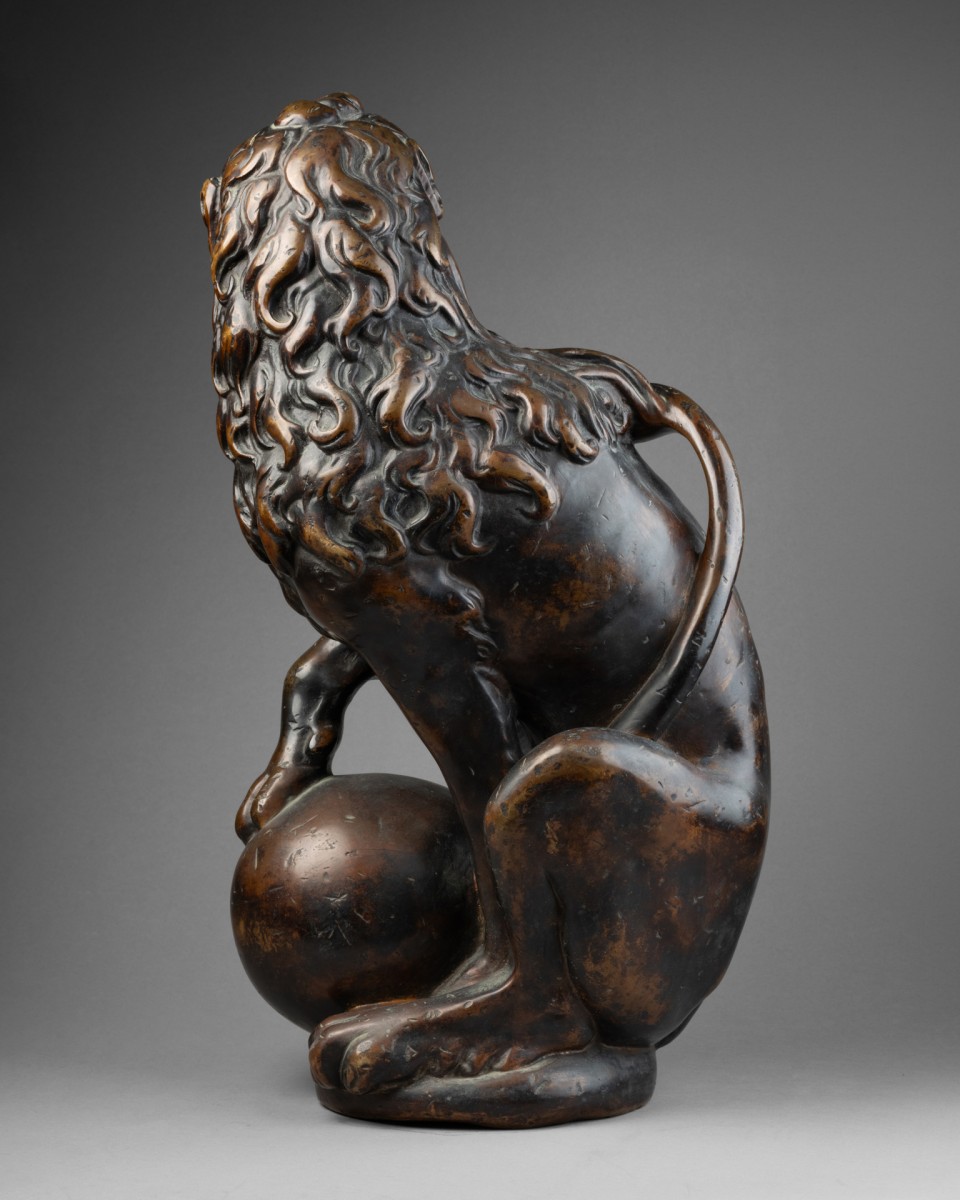
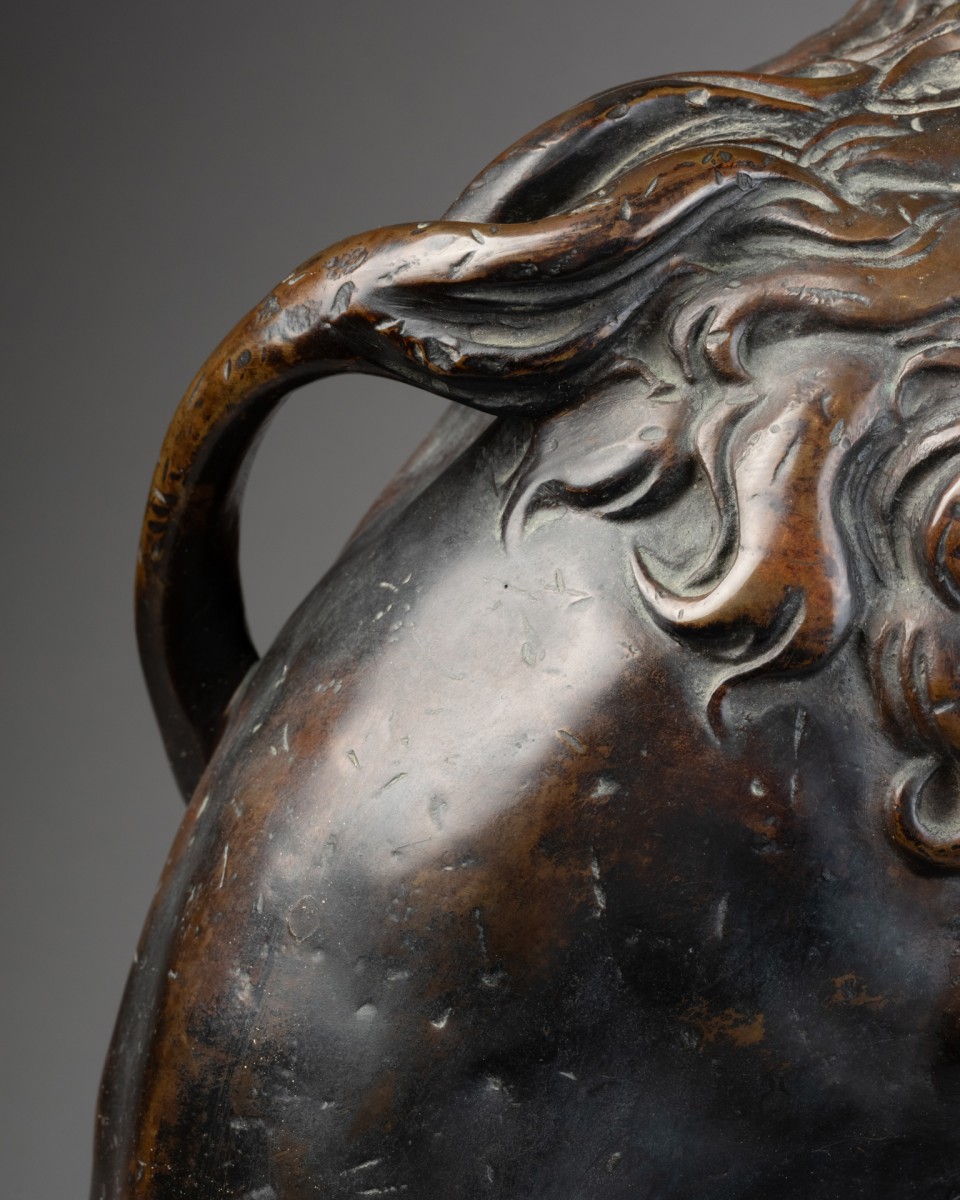

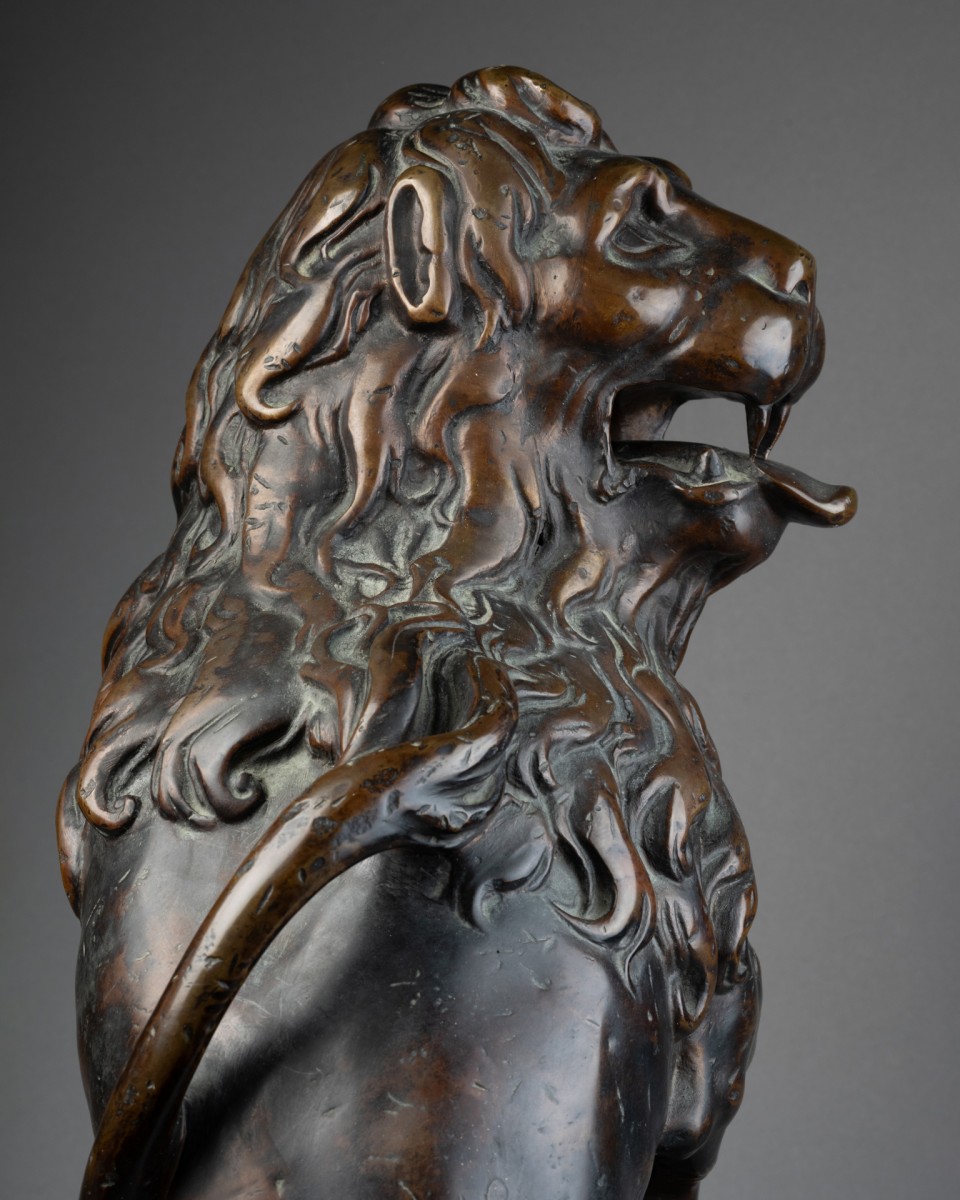
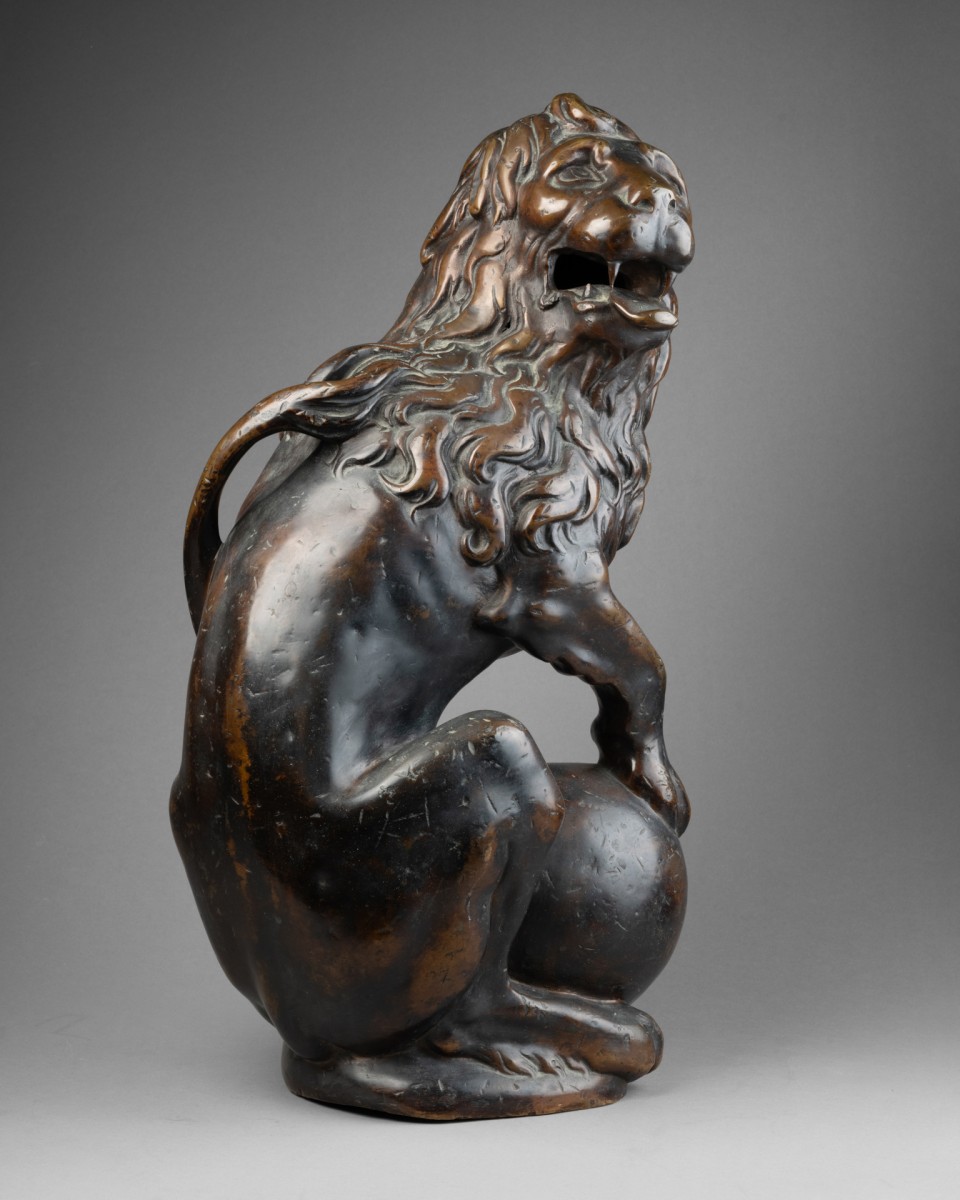
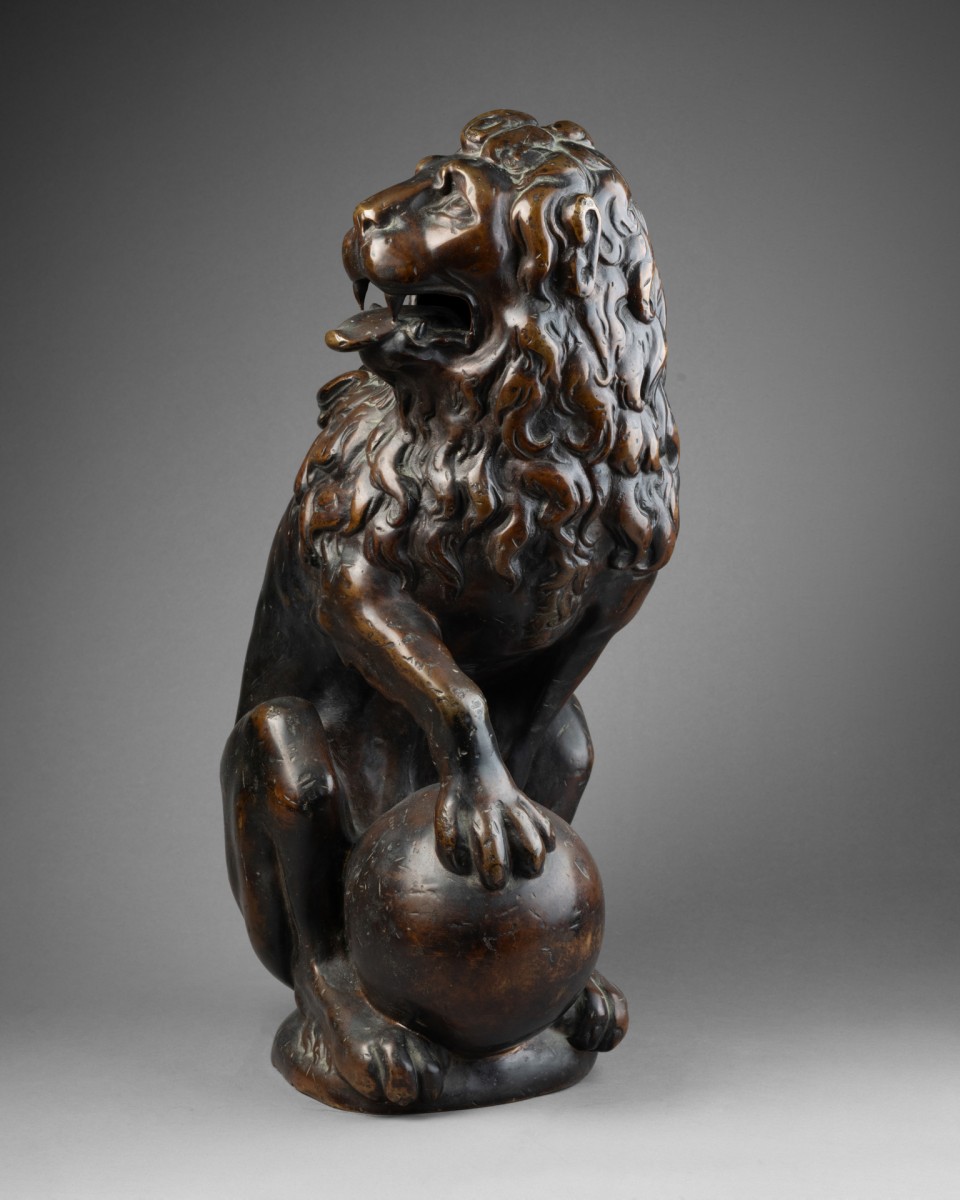
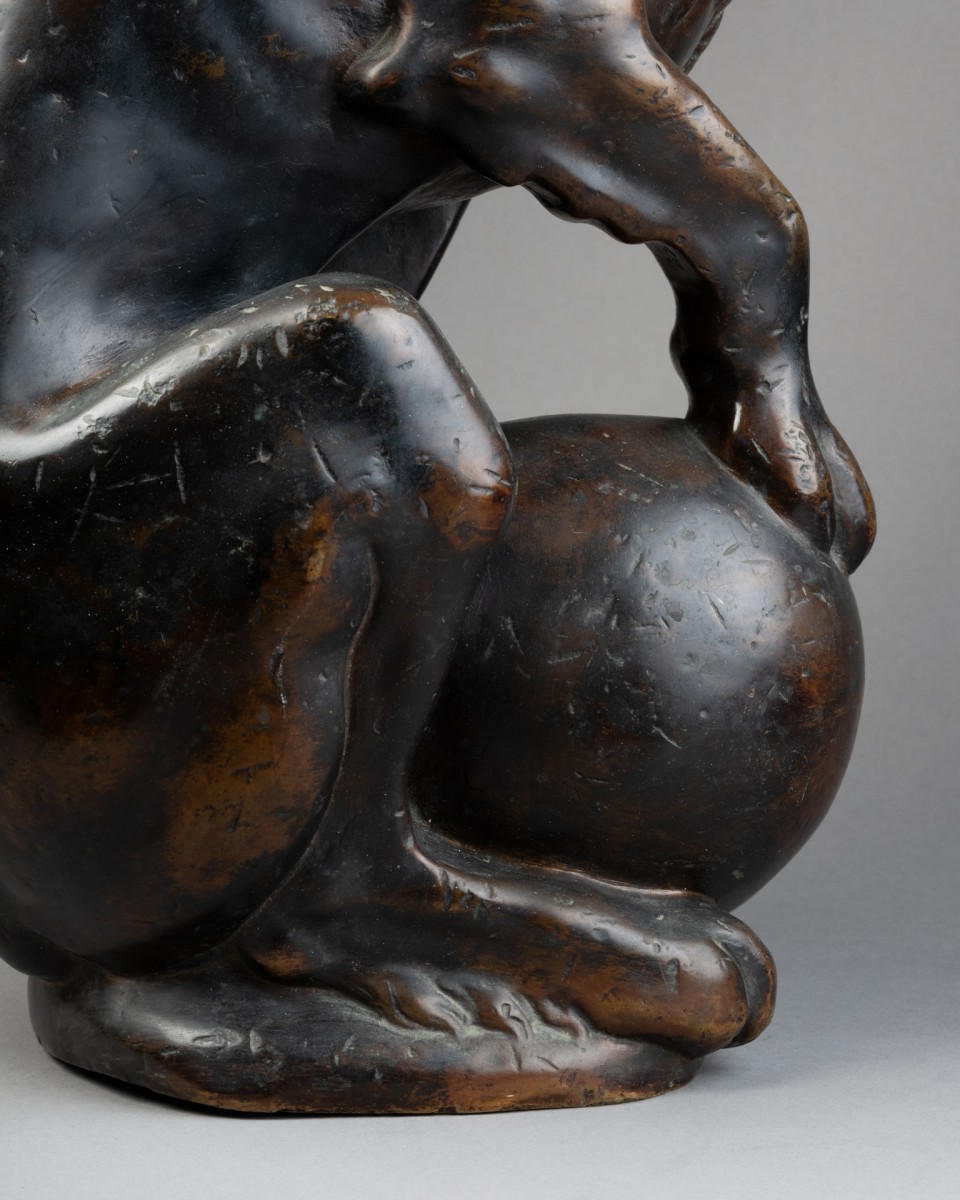
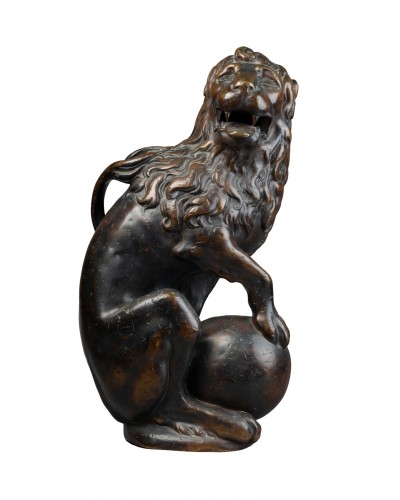
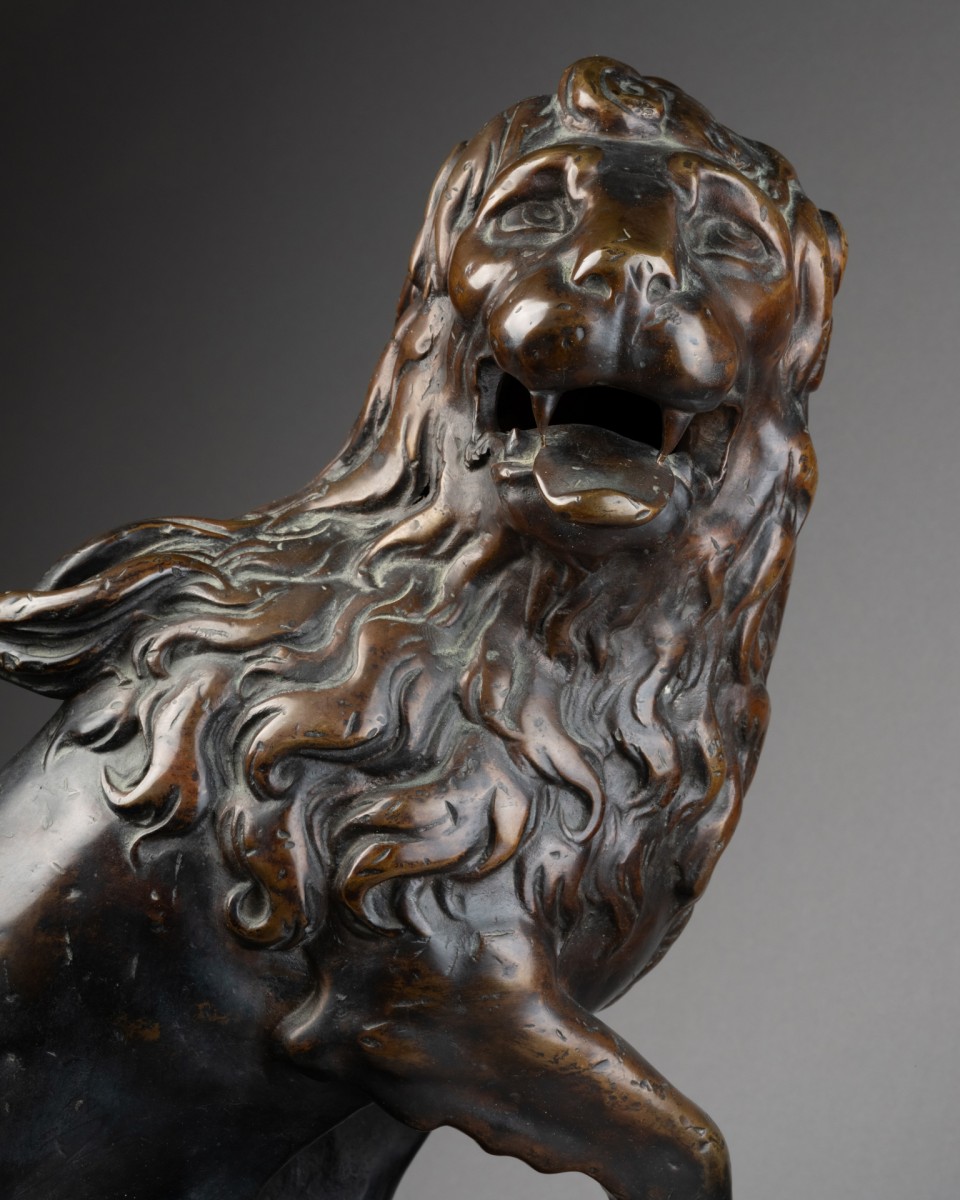
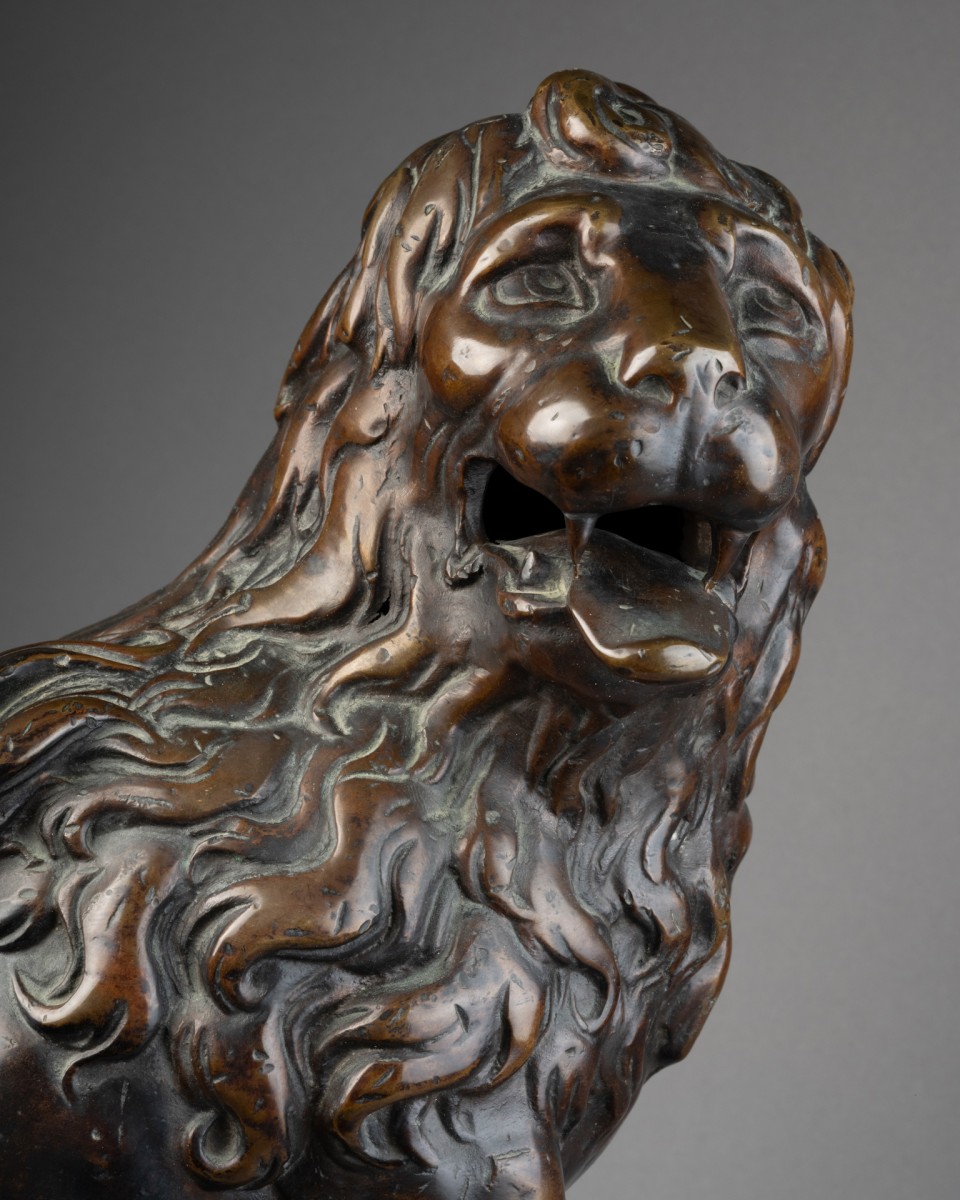
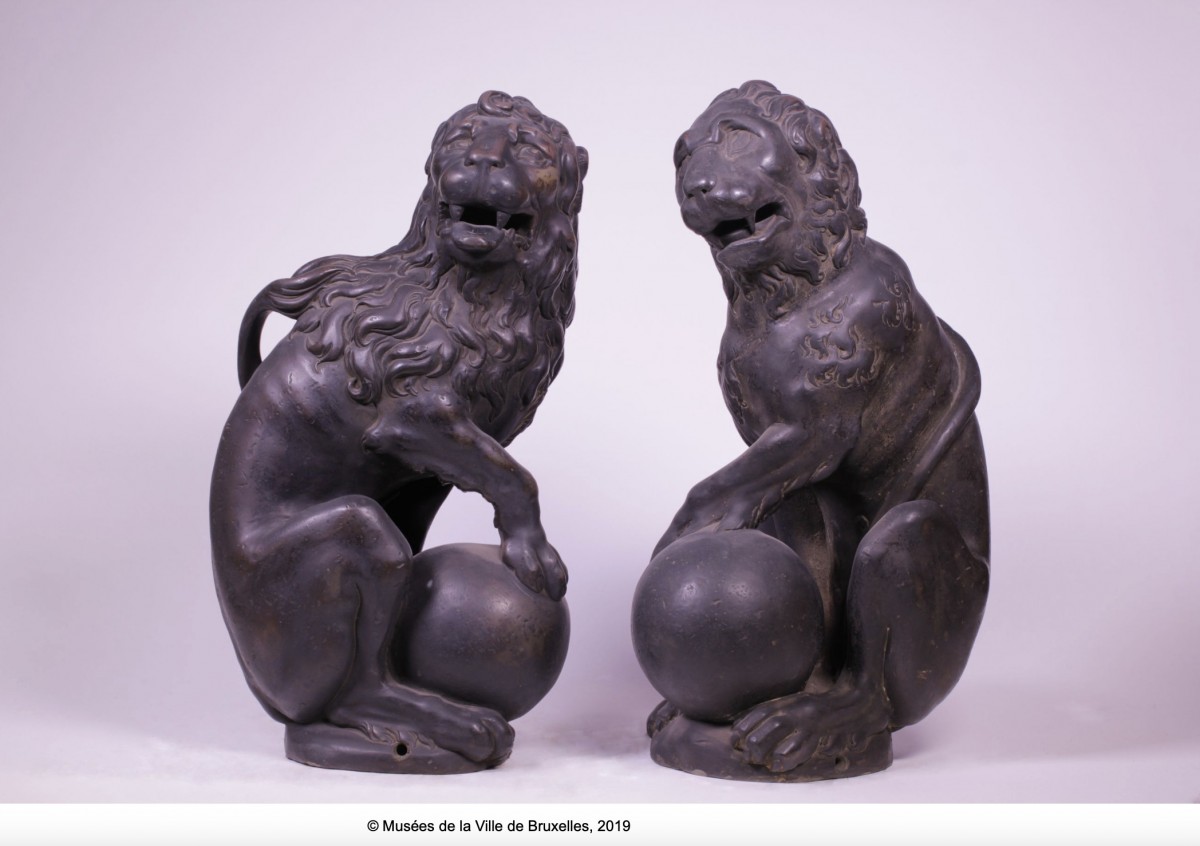
A large bronze lion with a brown patina, depicted seated with a forepaw resting on a sphere placed between its legs, in a monumental heraldic pose. Its open mouth reveals fangs and a hanging tongue, accentuating the animal's expressive and almost theatrical character.
The vigorous modeling of the mane—rendered in powerful, deeply recessed, undulating locks—links this work to the great tradition of Flemish and Brussels decorative sculpture from the early 18th century.
The surface displays a magnificent, aged brown patina with particularly harmonious wear; in places, this reveals softened, satiny transitions that give the bronze an almost smooth appearance on certain projecting areas. This natural surface evolution significantly enhances the sculpture's presence and authenticity.
Fine sand casting.
Excellent state of preservation; original patina with wear and traces of limestone deposits in the recesses of the mane.
Flemish work, 18th or 19th century; almost certainly originating from the "Lion Fountain" at the Brussels Town Hall.
A similar lion has been held in the Brussels City Museum since 1887; it is believed to be one of the two models replaced at that time by the lions sculpted by Guillaume de Groot (1839–1922), which remain in place today.
Dimensions:
Height: 50 cm; Width: 26 cm; Depth: 20 cm
Our assessment:
Our lion—entirely hollow and created using the sand-casting process—was very likely originally intended for the Town Hall fountain located on Rue de l’Amigo in Brussels.
This fountain was installed in 1706, as indicated by the stone inscription carved by stonemason Henri Rémy (1672–1720), who created the basins. Following the French bombardment of Brussels in 1695, the Town Hall and the Cloth Hall located behind it were largely destroyed and subsequently rebuilt to house the Estates of Brabant, which met there between 1706 and 1717.
For this project, the architect—working alongside master stonemason Cornelis van Nerven (1660–1715)—abandoned the Flemish Baroque style (still visible on the houses of the Grand-Place) in favor of the modern Louis XIV aesthetic.
Given this political function, the lion—Brabant’s historic emblem—was naturally chosen to adorn one of the fountains in the complex.
Another fountain, situated in the courtyard and symbolizing the two main rivers flowing through Belgium, was designed by Johannes Andreas Anneessens (1687–1769).
The execution of the two bronze groups representing the Meuse and the Scheldt was entrusted to the Antwerp-born sculptor Pierre-Denis Plumier (1688–1721), who had recently been admitted to the Brussels Guild of the Four Crowned Martyrs.
Based on the dating of our model, its style, and Plumier’s documented presence at the site, it is plausible that he was also the creator of the two lions for the first fountain.
It is therefore quite possible that the lion presented here is one of the two original early 18th-century models, although assigning it an exact date remains difficult.
Its deep patina, natural wear, and the softened relief details point to an early date of production; however, this type of outdoor bronze possesses very specific characteristics. Castings intended for monumental fountains are generally unusually thick and have been exposed for long periods to the elements, the constant flow of water, and repeated handling by the public. These conditions of use can significantly accelerate surface changes, giving some castings a highly weathered appearance that is sometimes difficult to interpret with certainty.
As was frequently the case with public fountain sculptures, the original model may also have been replaced at a later date due to various events: wars of occupation (War of the Austrian Succession, the conquest of the Austrian Netherlands during the French Revolution, the Napoleonic era), looting, vandalism, theft, or successive restorations and refurbishments of urban monuments. Such replacements and alterations make the definitive identification of surviving original elements particularly complex today.
The turbulent history and the few recorded early versions of the famous Manneken-Pis serve as a reminder of this.
Our bronze, however, cannot postdate 1869, the year Guillaume de Groot created the two lions currently adorning the Brussels Town Hall fountain—lions that remain in place to this day. The latter feature iconography and a style of execution...