Offered by Franck Baptiste Paris
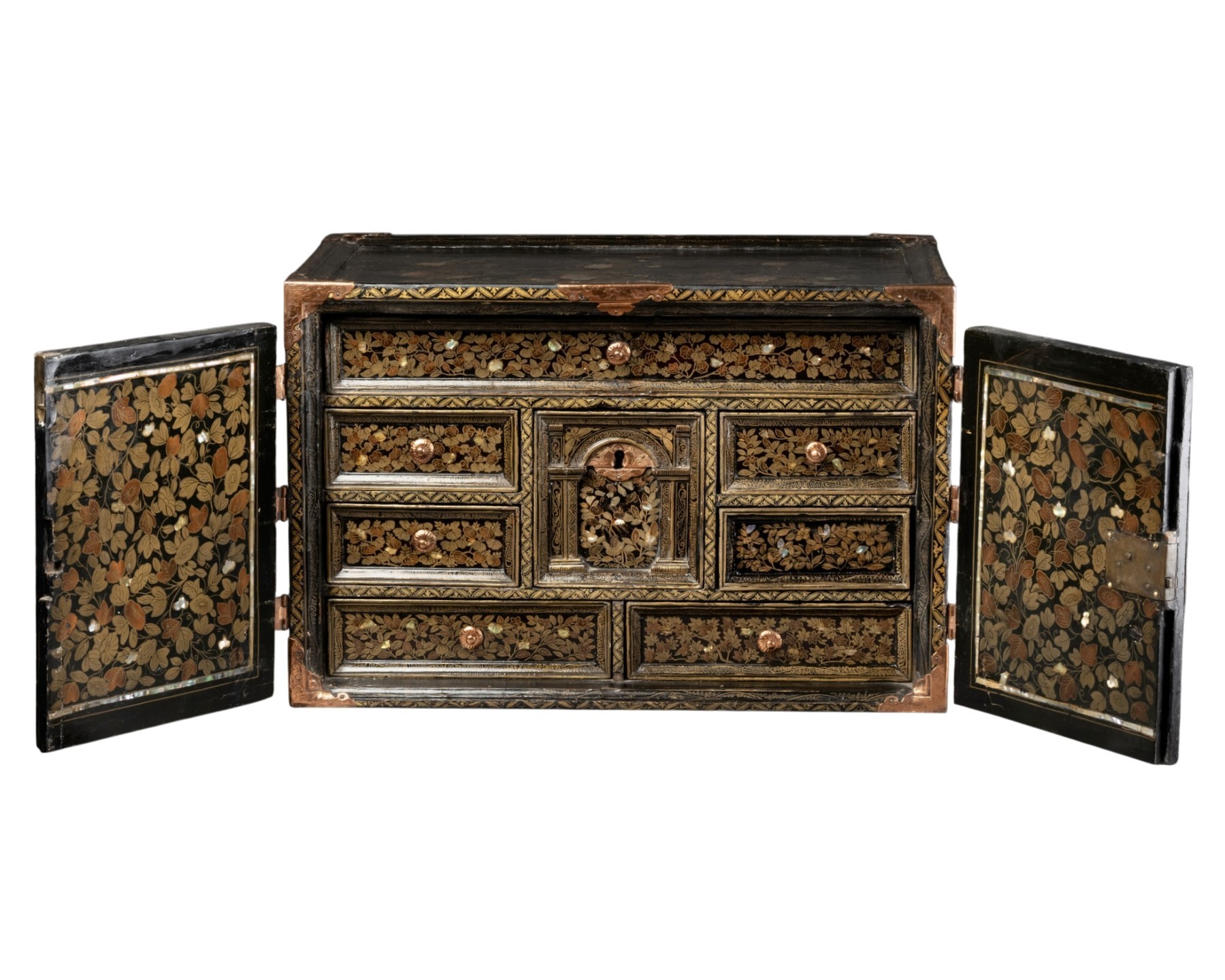
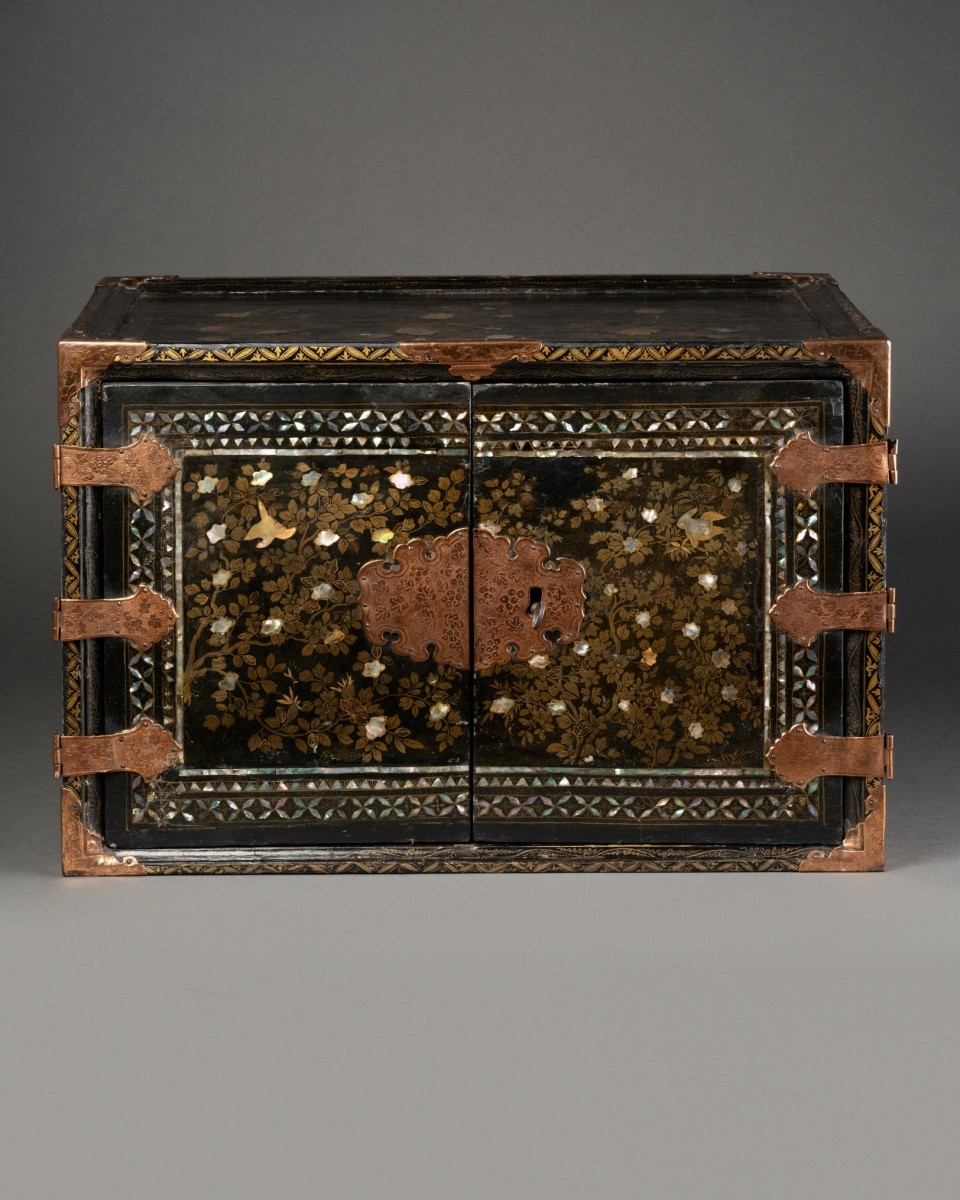
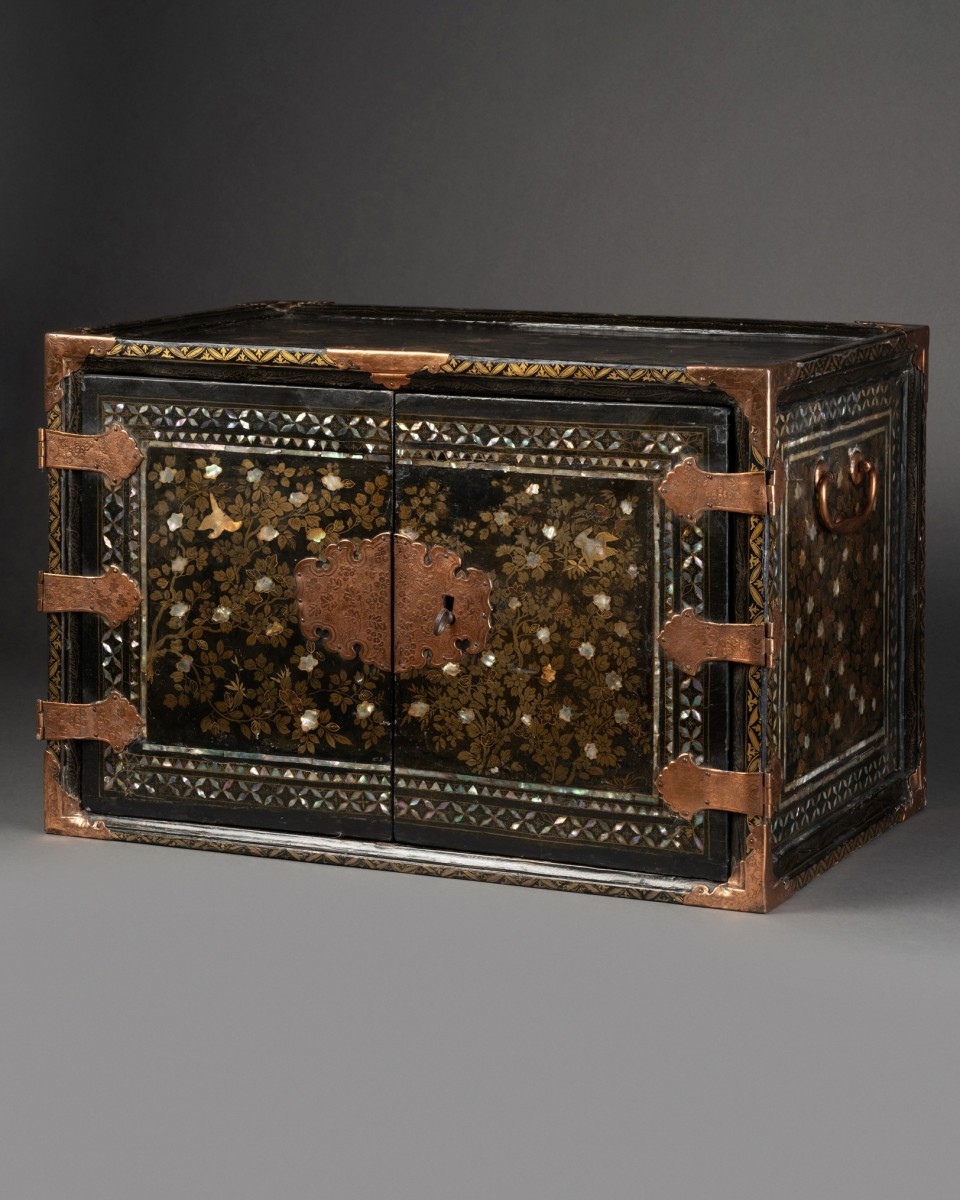
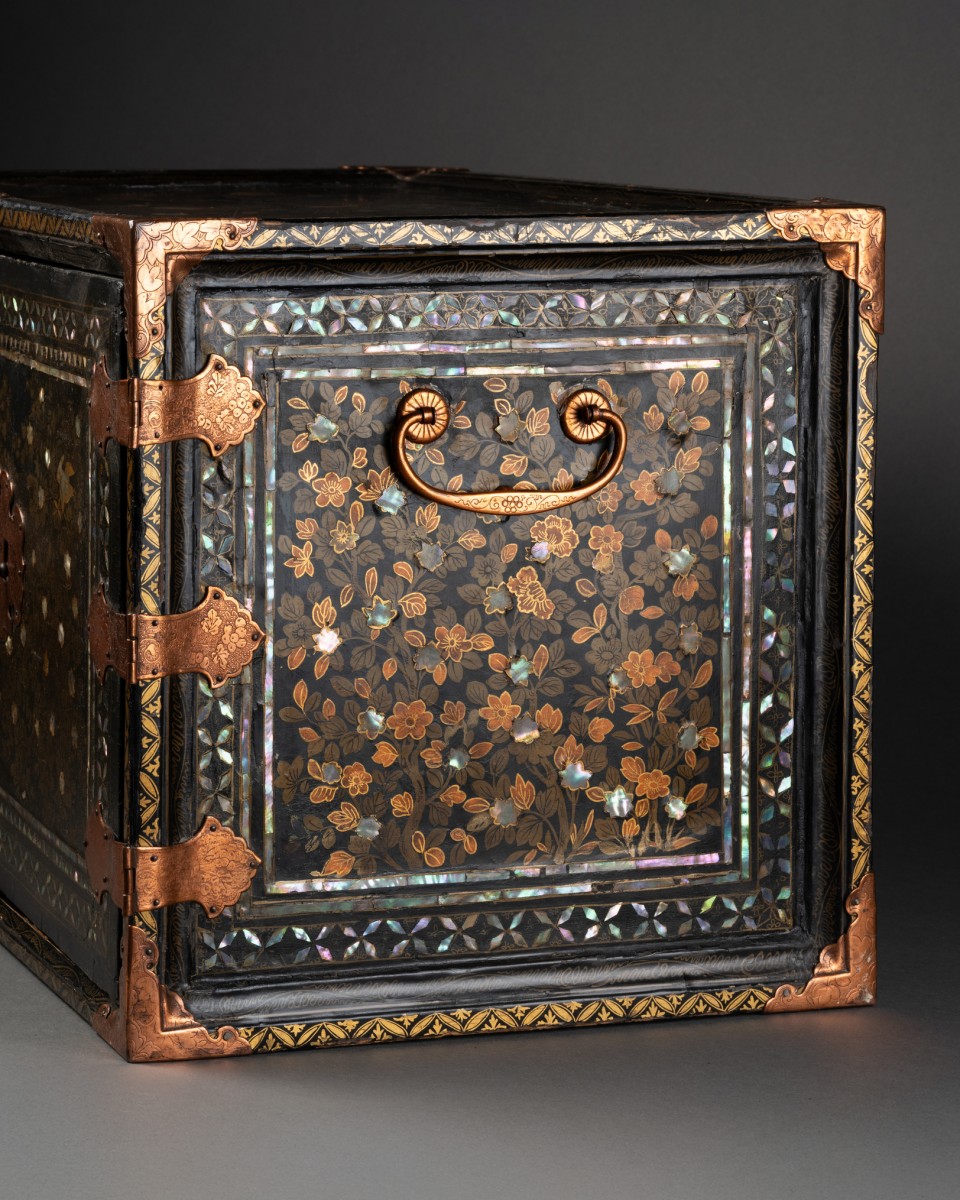

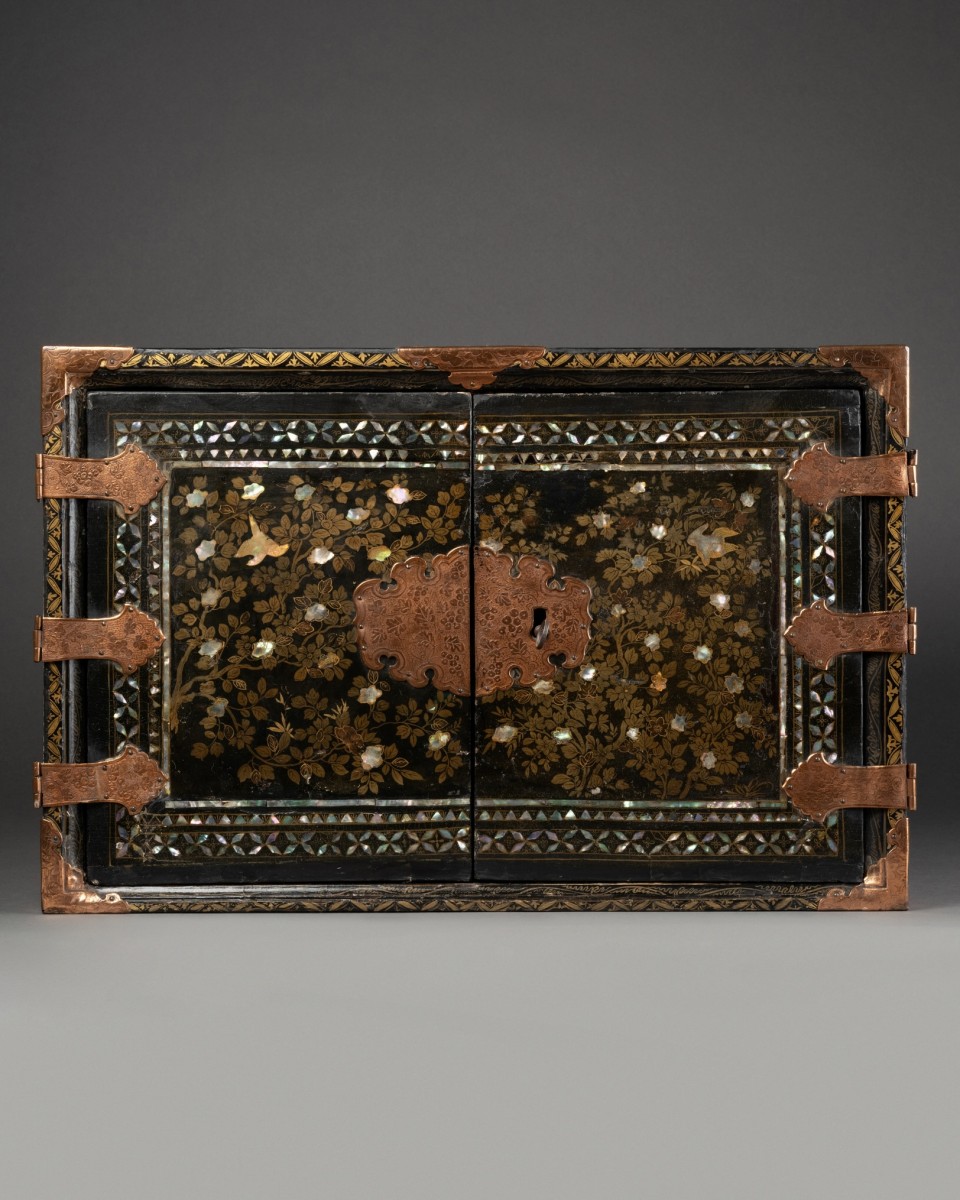
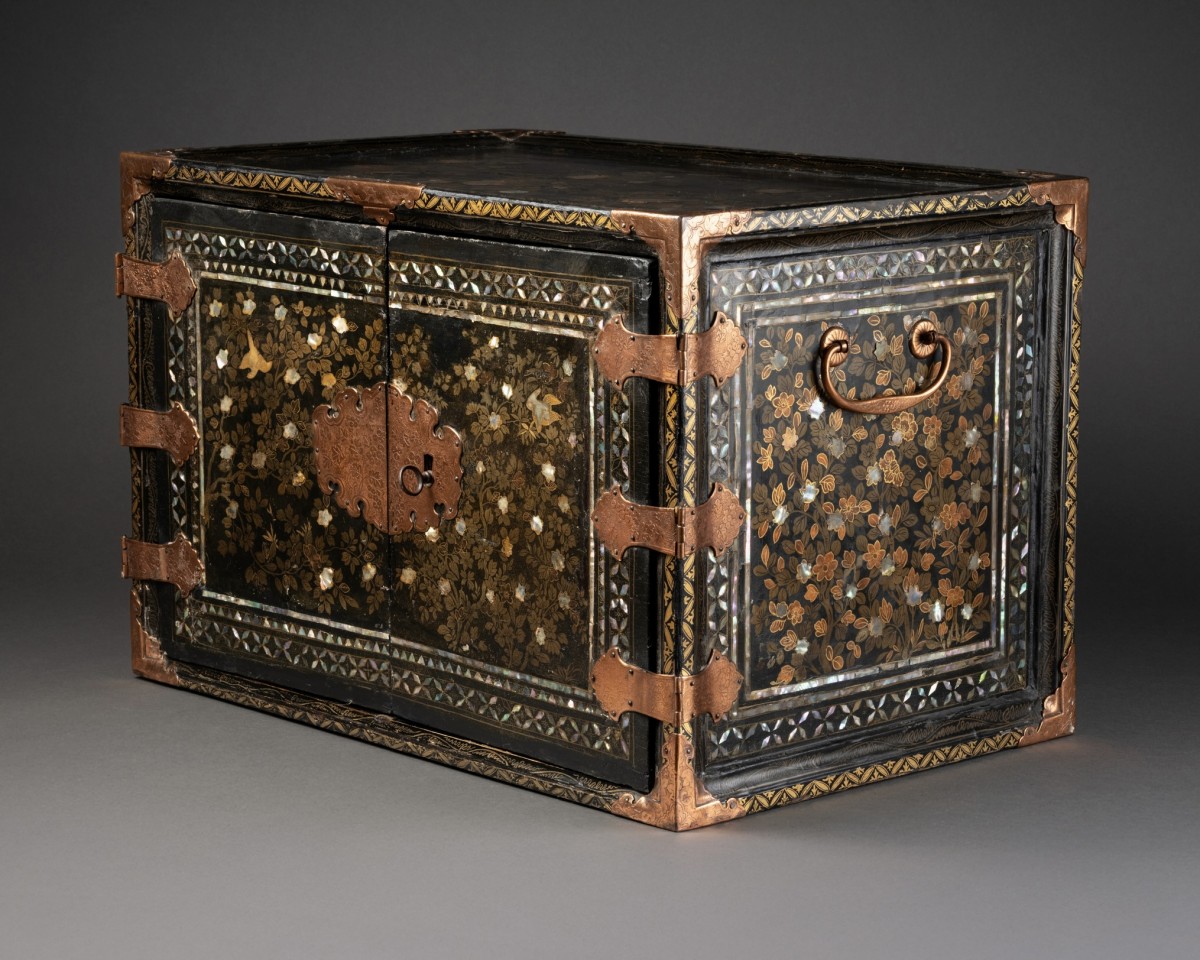
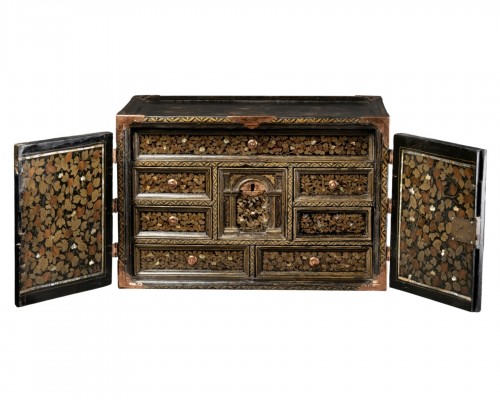
A rare "Nanban" cabinet made of black lacquered wood, decorated with gold powder (*maki-e*) and inlaid with mother-of-pearl (*raden*).
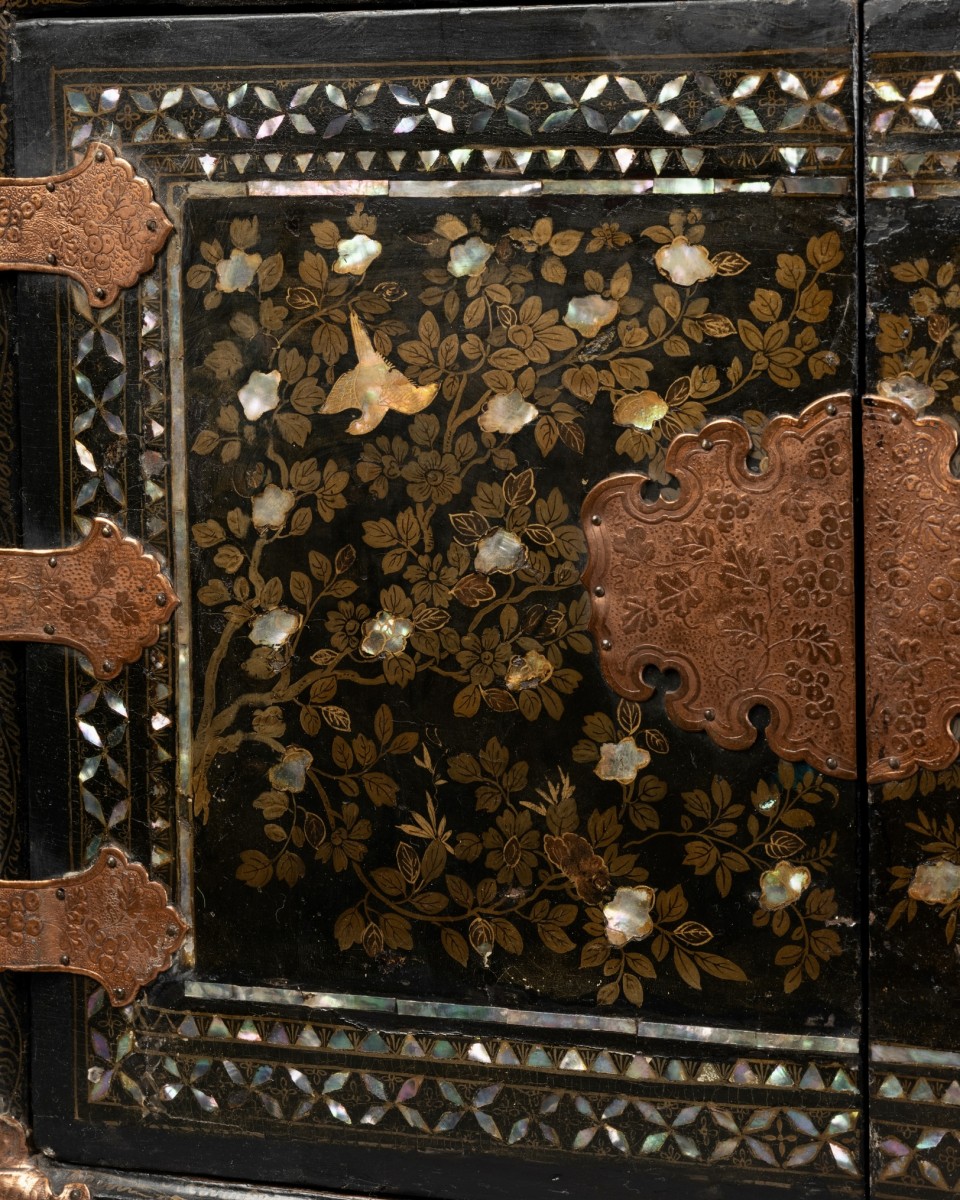
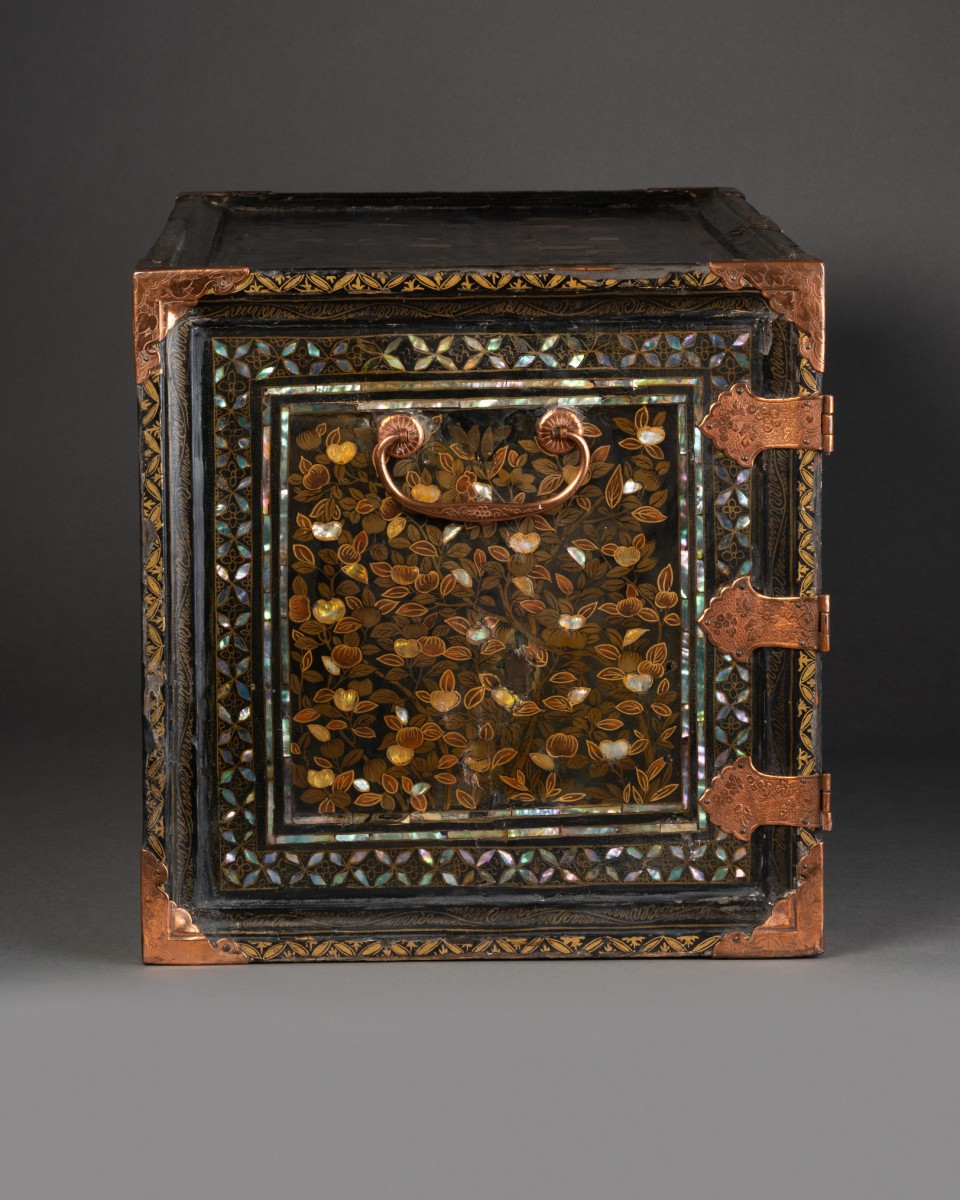
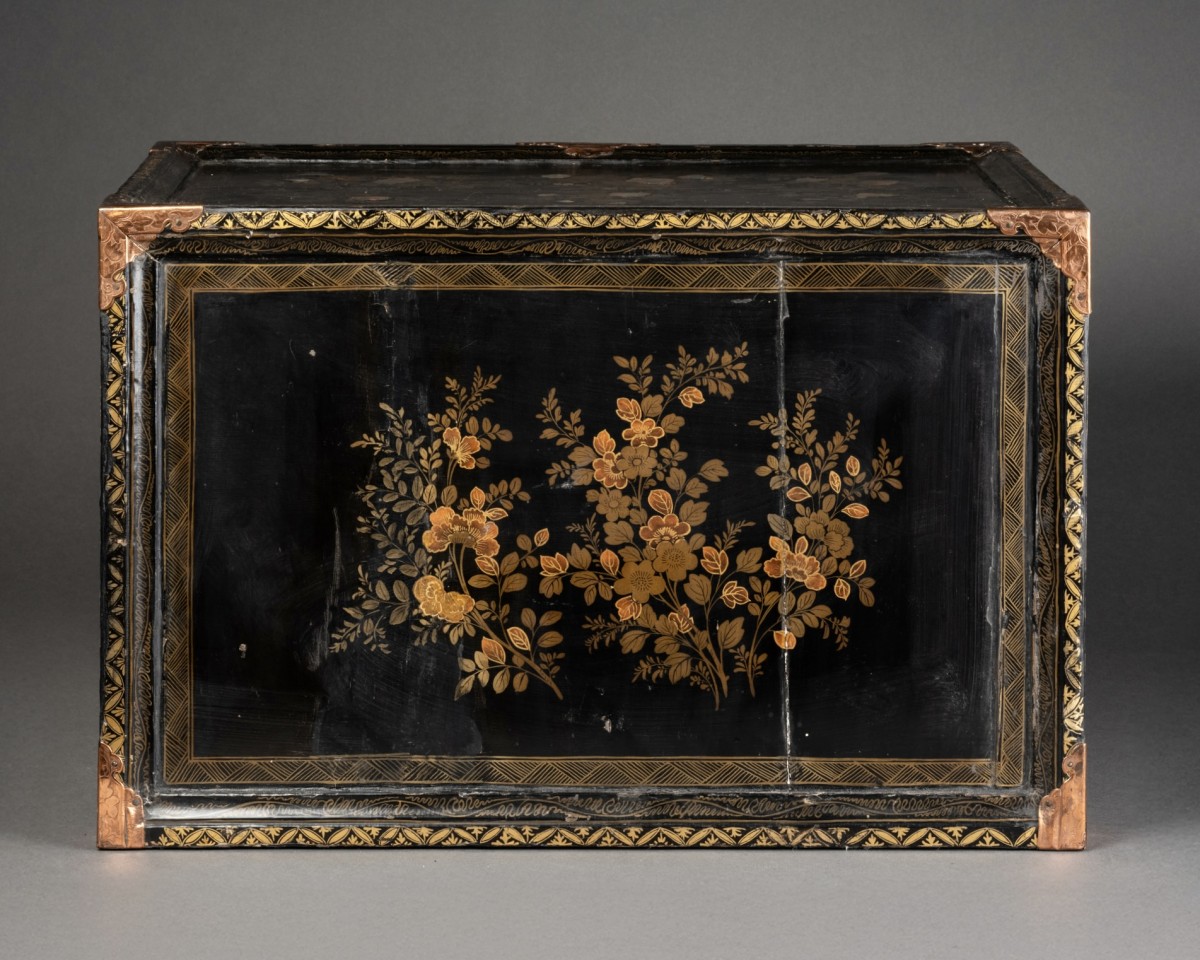
The front, sides, and top feature an elaborate design with geometric mother-of-pearl borders framing clusters of morning glories, maple leaves, and chrysanthemums, accented by scattered petals and swallows rendered in mother-of-pearl.
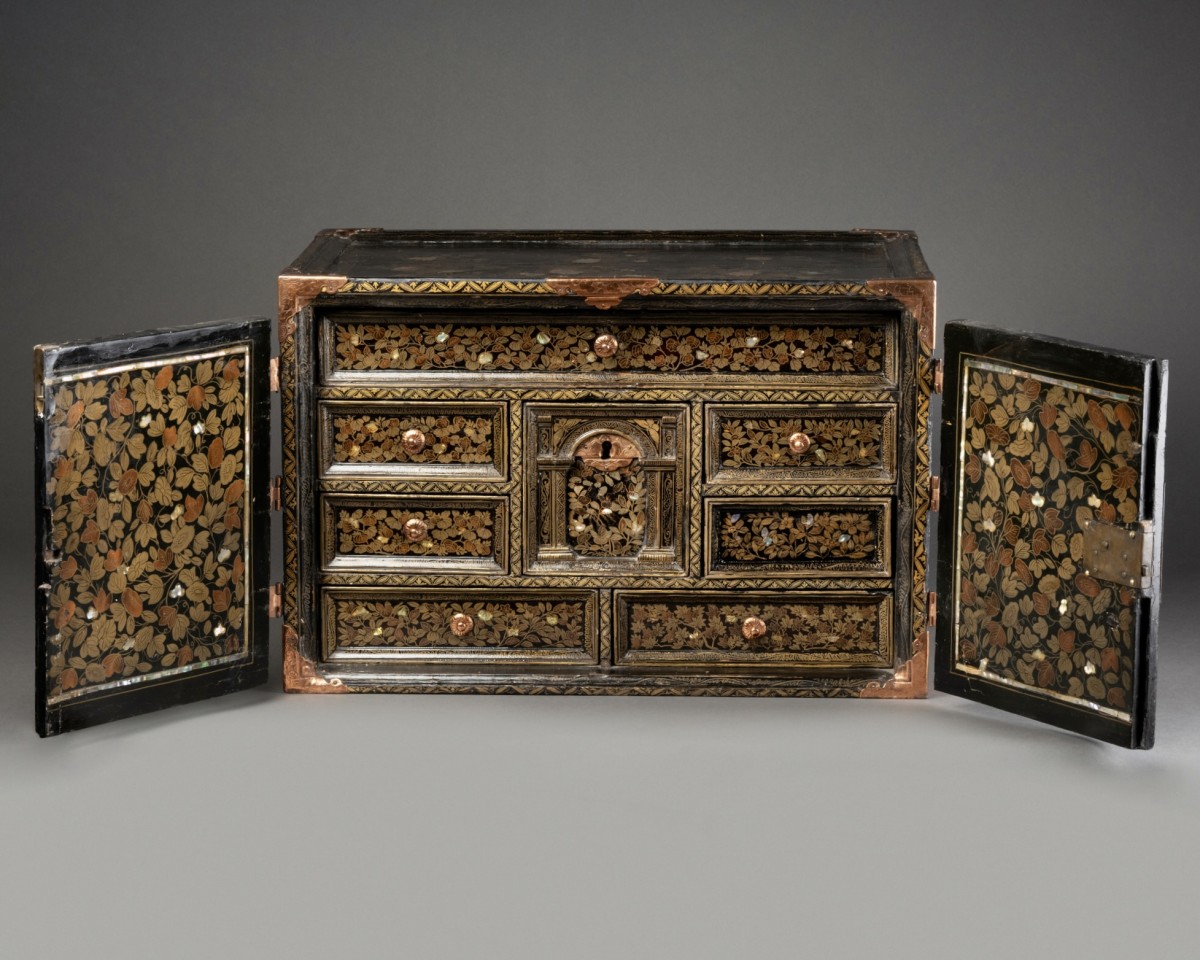
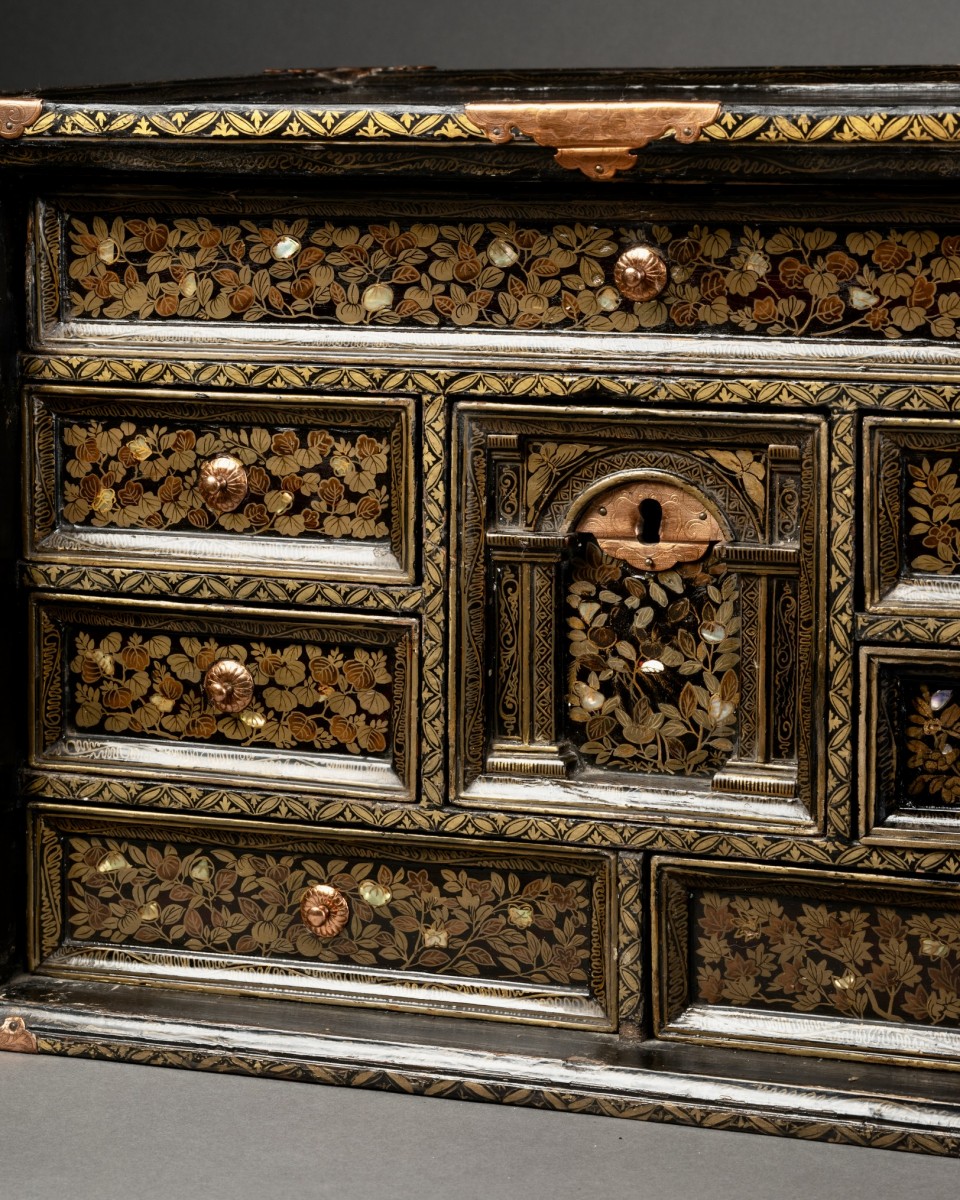
The front opens via two doors to reveal seven drawers and a central niche shaped like a *mihrab*.
The insides of the doors and the drawer fronts display the same dense floral motif, studded with mother-of-pearl petals.
Exquisite copper ornamentation—including hinges, corner mounts, and lock plates—delicately chased with floral designs.
Fine condition; minor restorations consistent with age and use.
Japanese craftsmanship for the Portuguese market; late Azuchi-Momoyama period (1573–1603).
Dimensions:
Width: 50 cm; Height: 33 cm; Depth: 32.5 cm.
A very similar model is held by the Museum of Fine Arts in Arras (Inv. No. 2009.0.1).
Our assessment:
The cabinet presented here is a classic example of "Nanban" art.
The term—meaning "Southern Barbarians"—referred to goods intended for Portuguese merchants.
Among these items, cabinets were the most sought-after for export to Europe, where lacquerware was still a novelty and highly prized.
The form of these early cabinets derives from the Iberian *escritorio*, featuring a central niche reminiscent of the *mihrab* found in mosques—a legacy of the Muslim rule of the Al-Andalus Caliphate. The mother-of-pearl decoration is also inspired by the Muslim craftsmanship of the Mughal Empire—works the Portuguese admired but struggled to acquire.
It is paired with dense floral ornamentation covering the entire surface, following the principle of *horror vacui* (fear of empty space), a key concept in European Renaissance decoration.
Thus, this type of piece—crafted in Japan for the European market—combines a Western form with Asian decoration and a touch of Muslim influence.
Intended for a princely elite, these cabinets are extremely rare today; they were costly to produce and scarce on the market—especially given that the Portuguese were expelled from Japan in 1640, while the Dutch, who were the only ones permitted to trade on the island, held very different tastes.