Offered by Galerie Gilles Linossier

Louis XV Period Work
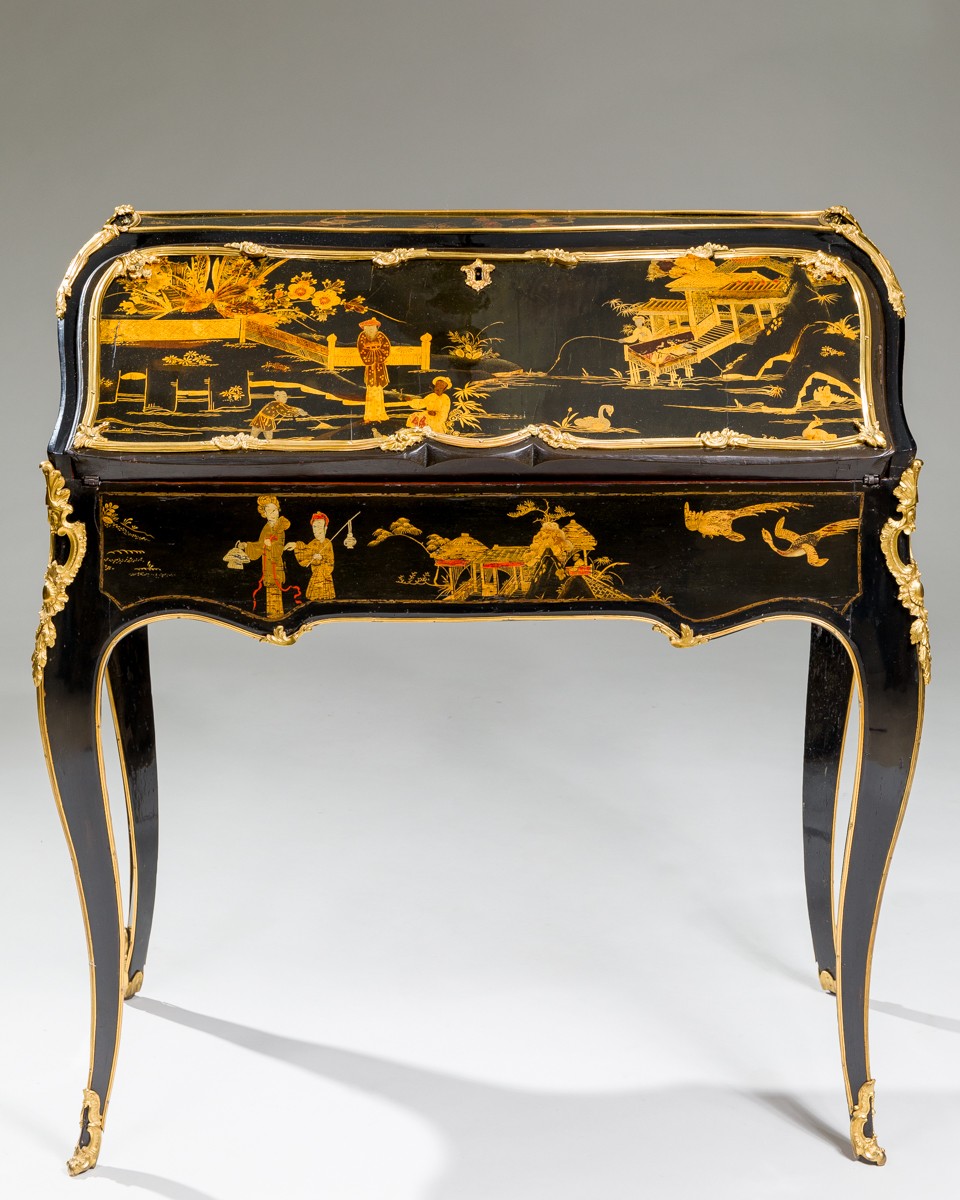
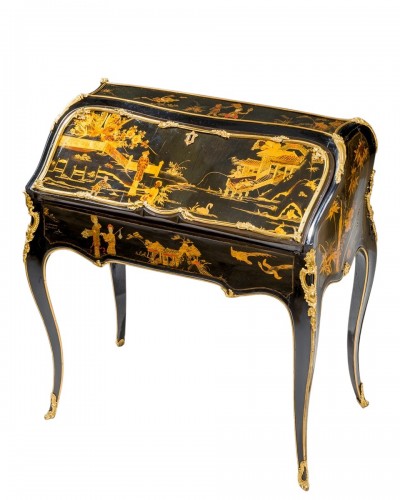
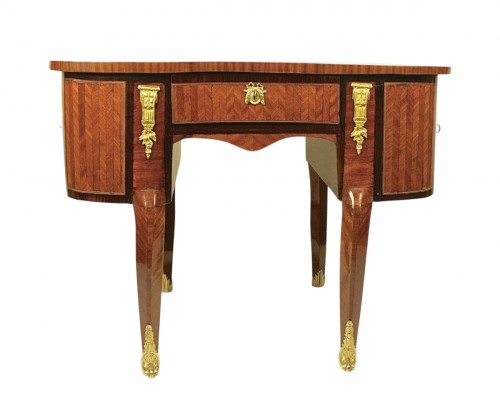
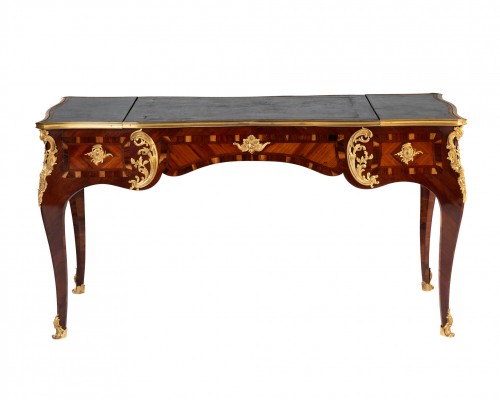
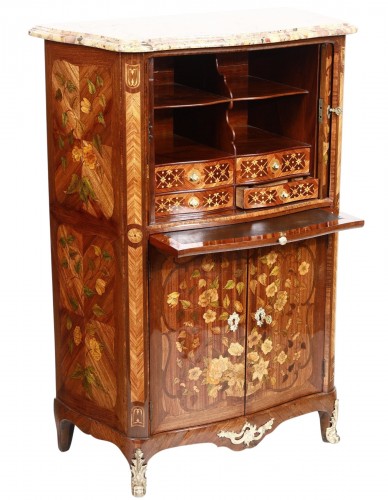
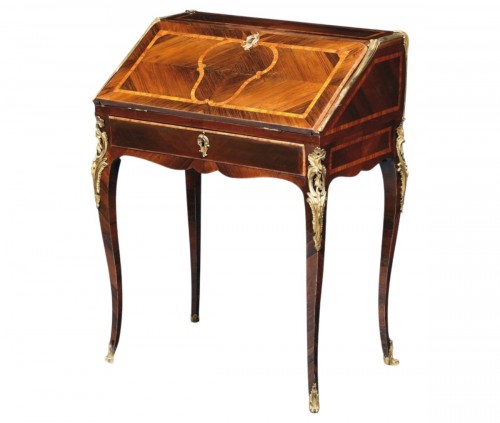
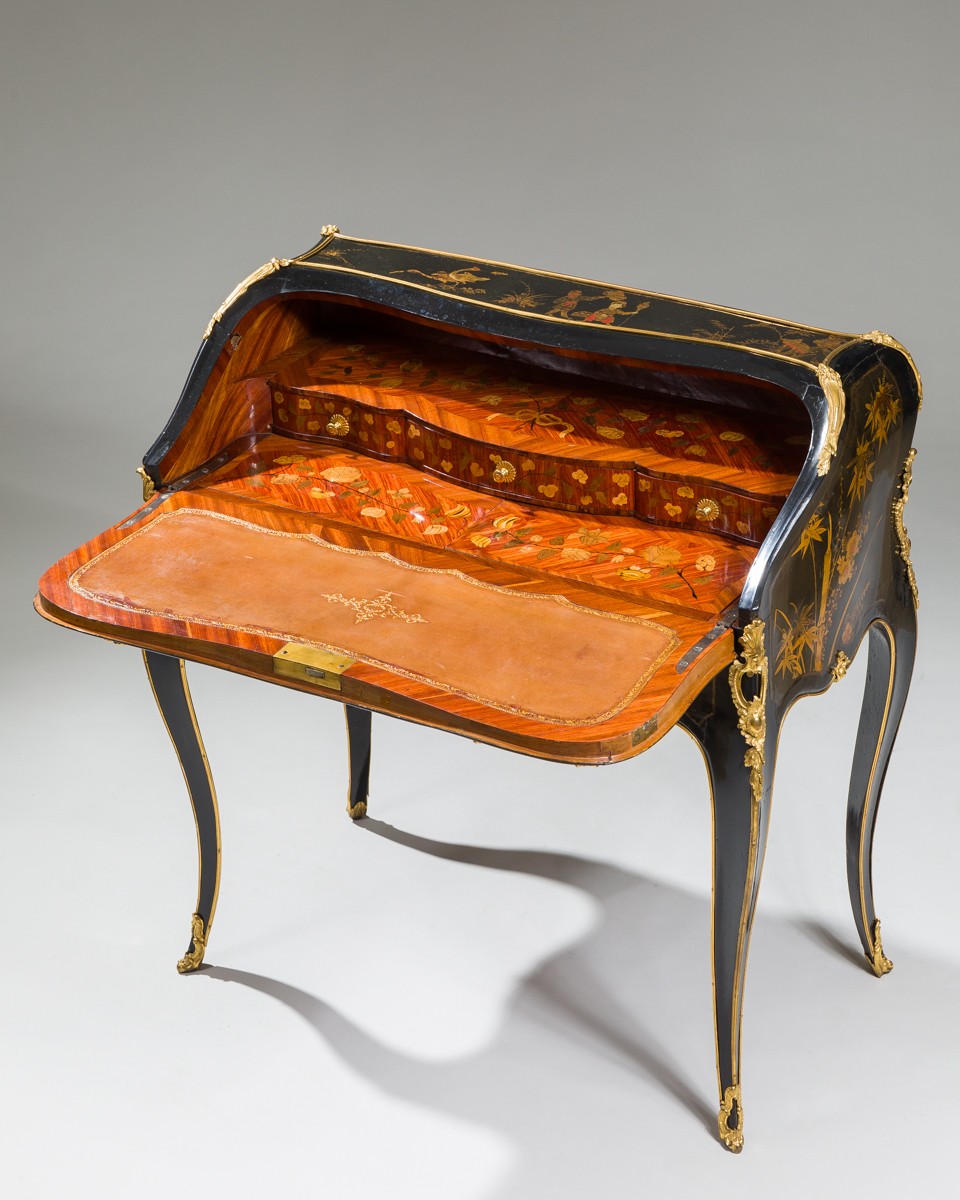
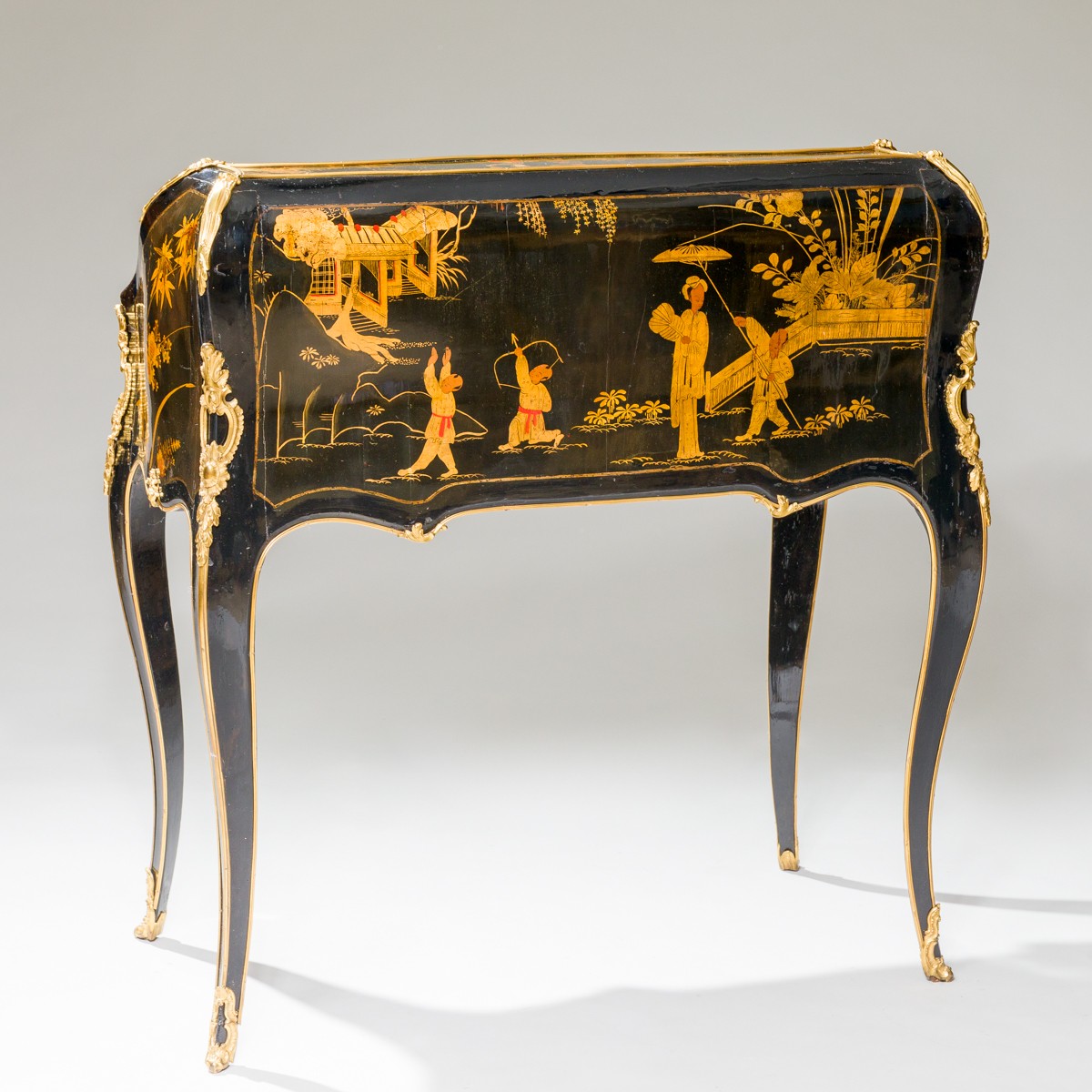
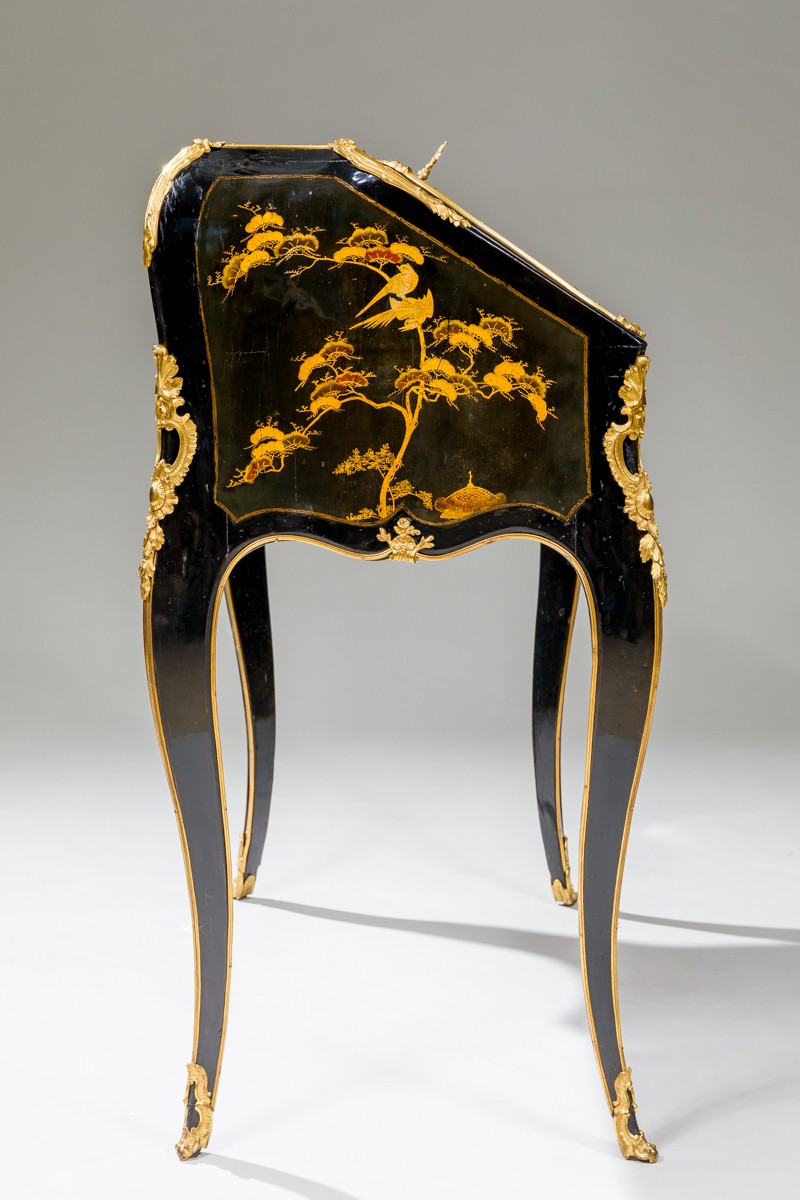
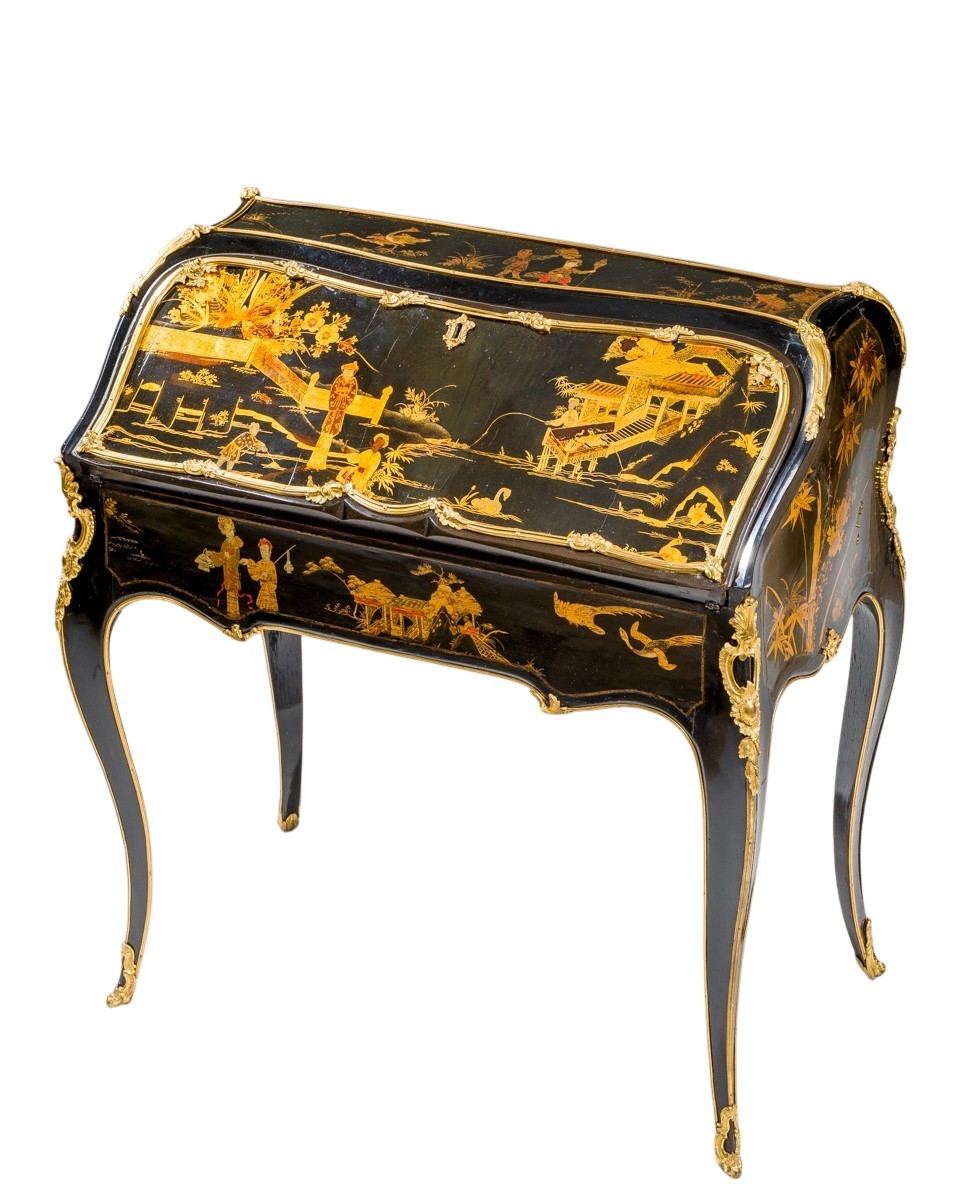
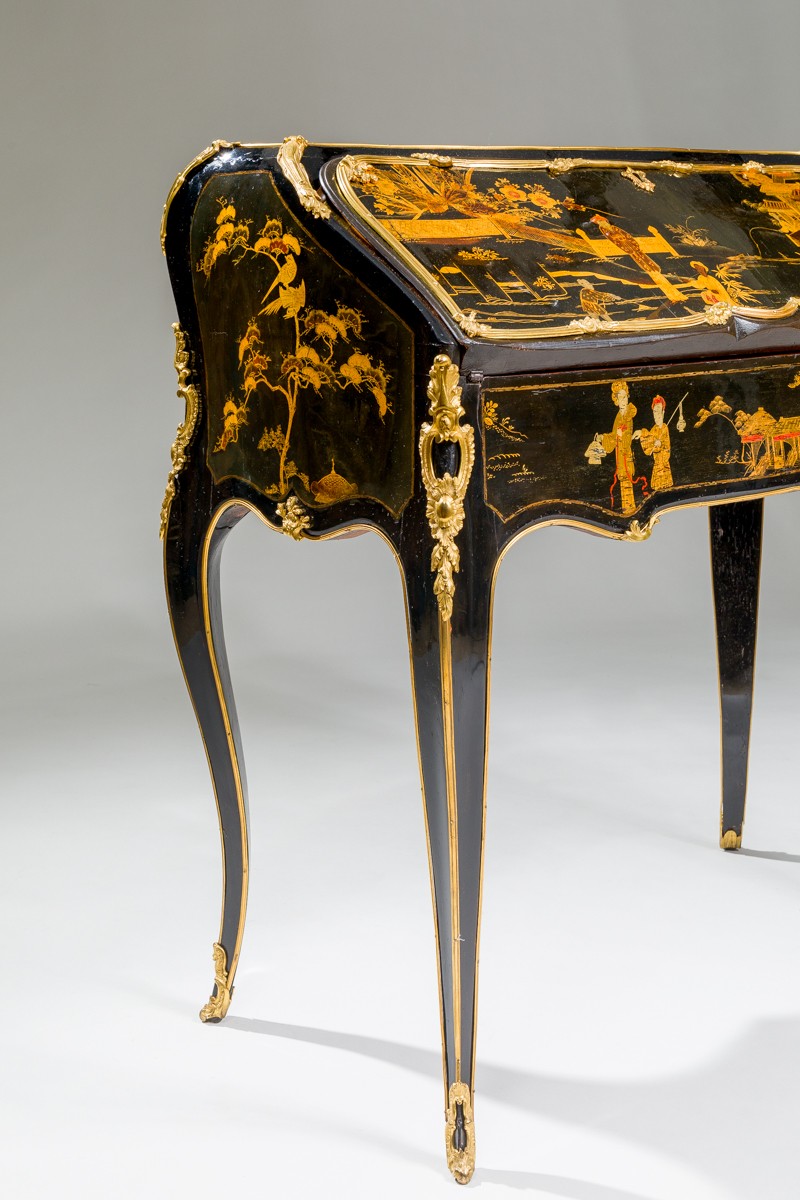
A magnificent Louis XV period lady’s lacquer writing desk, known as a desk "en pente", attributed to Jacques Dubois and featuring European lacquerwork.
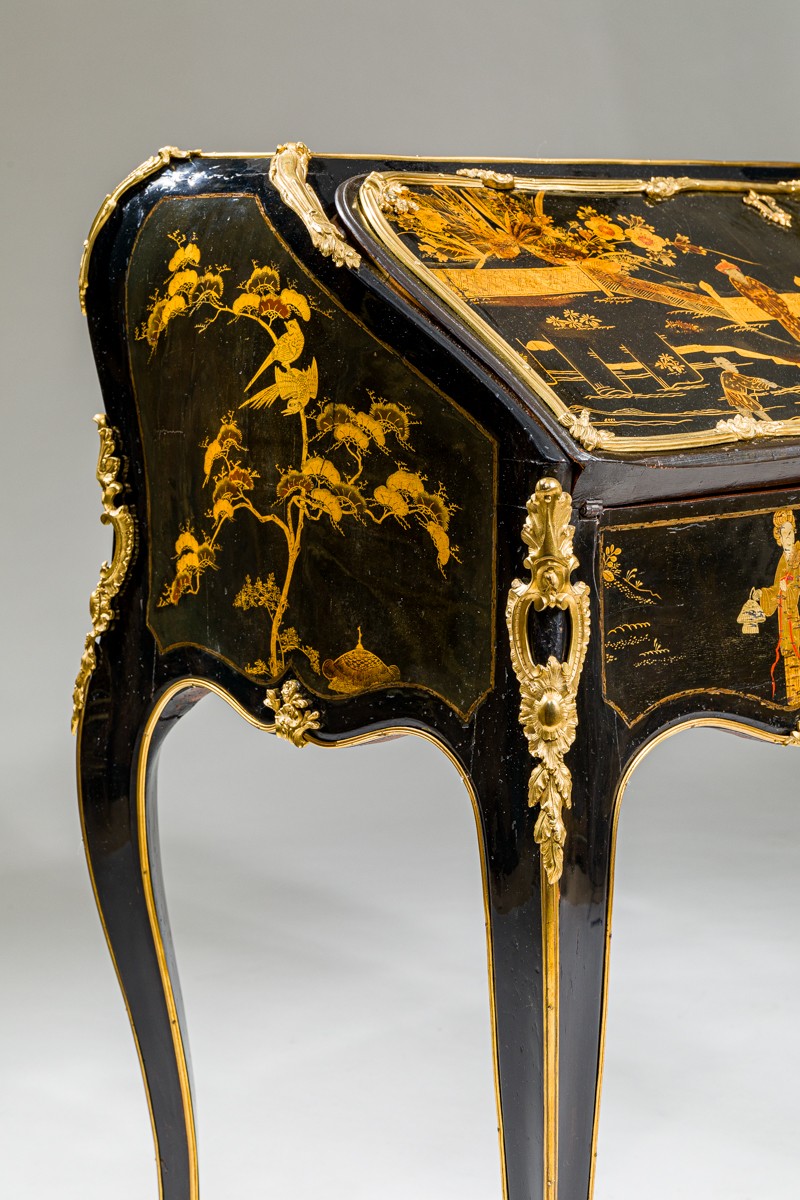
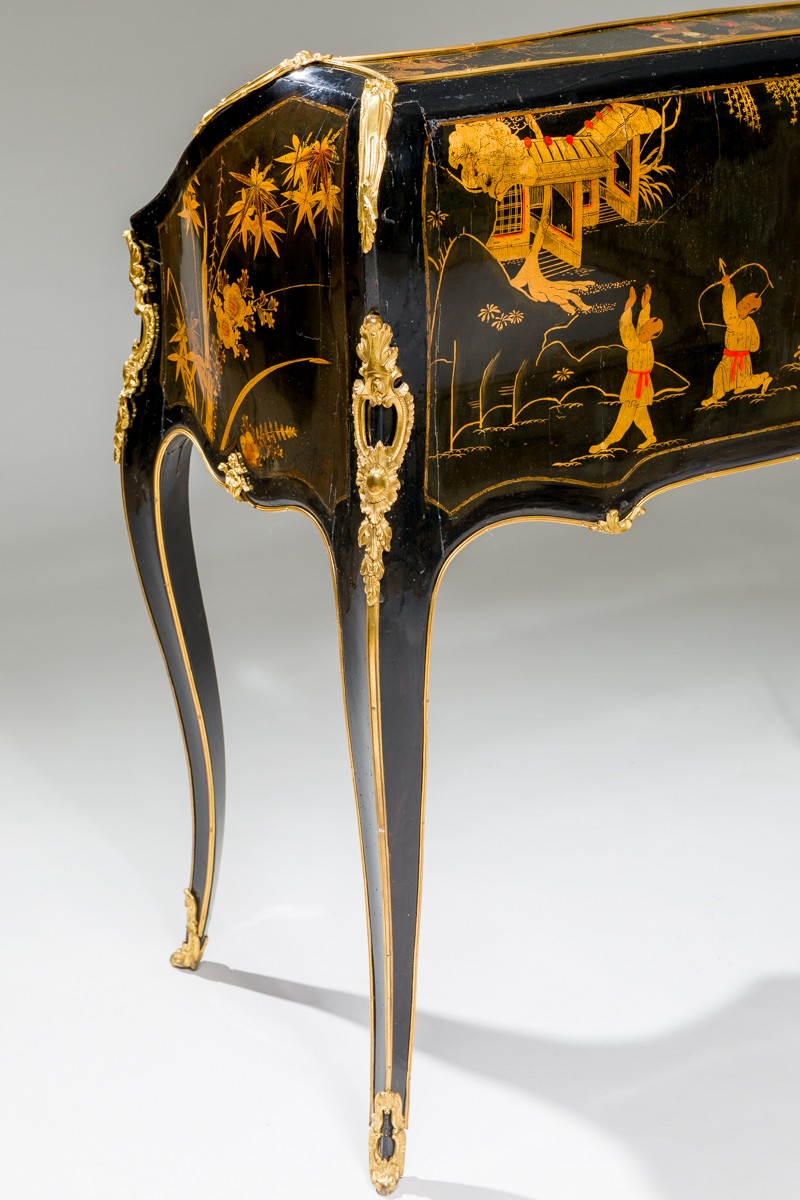
The rectangular body is gently bombé and rounded on all four sides; it rests on a shaped apron and tall cabriole legs terminating in openwork bronze sabots that wrap around the feet.
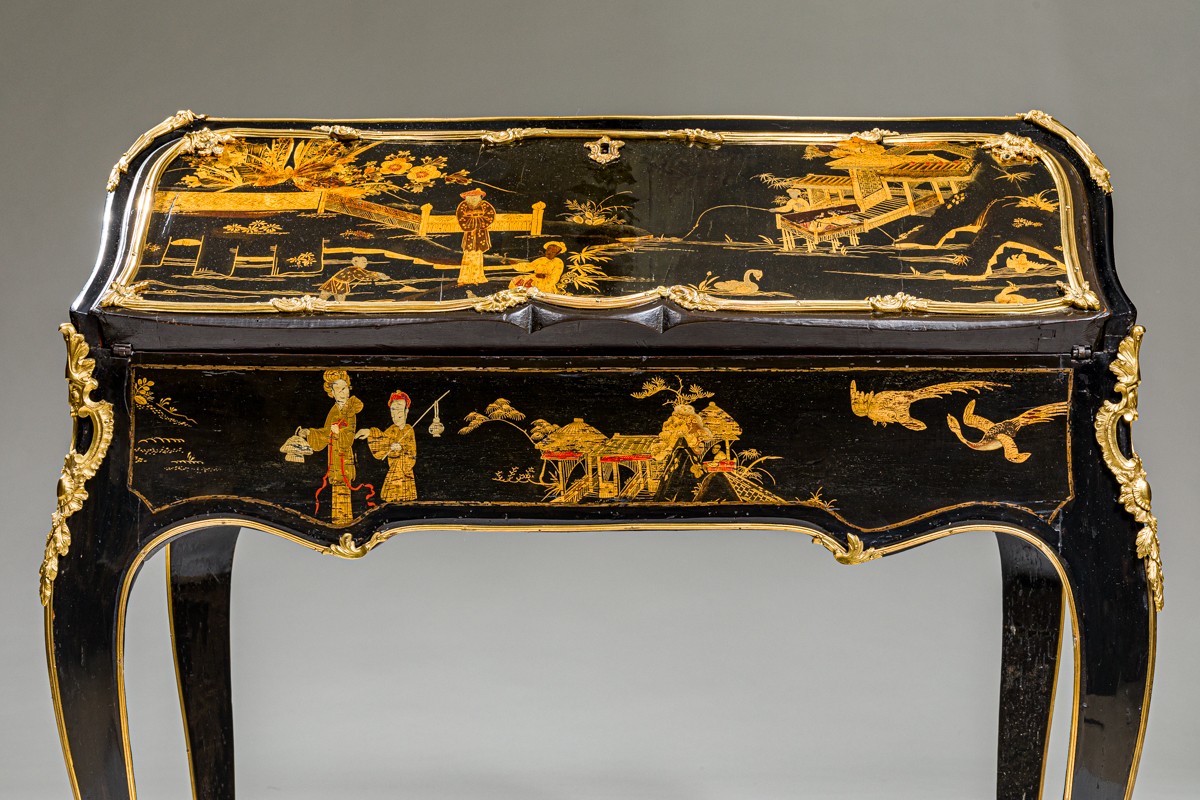
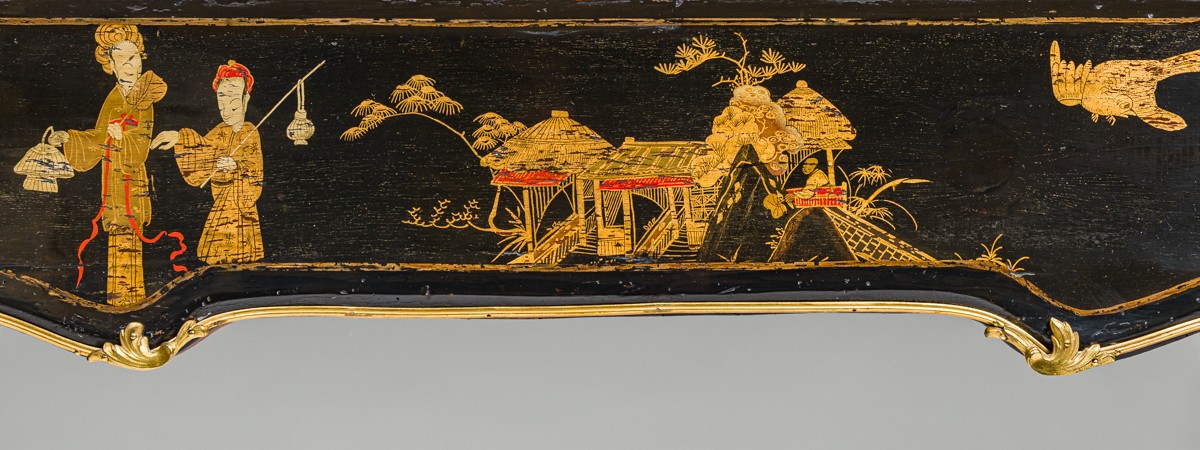
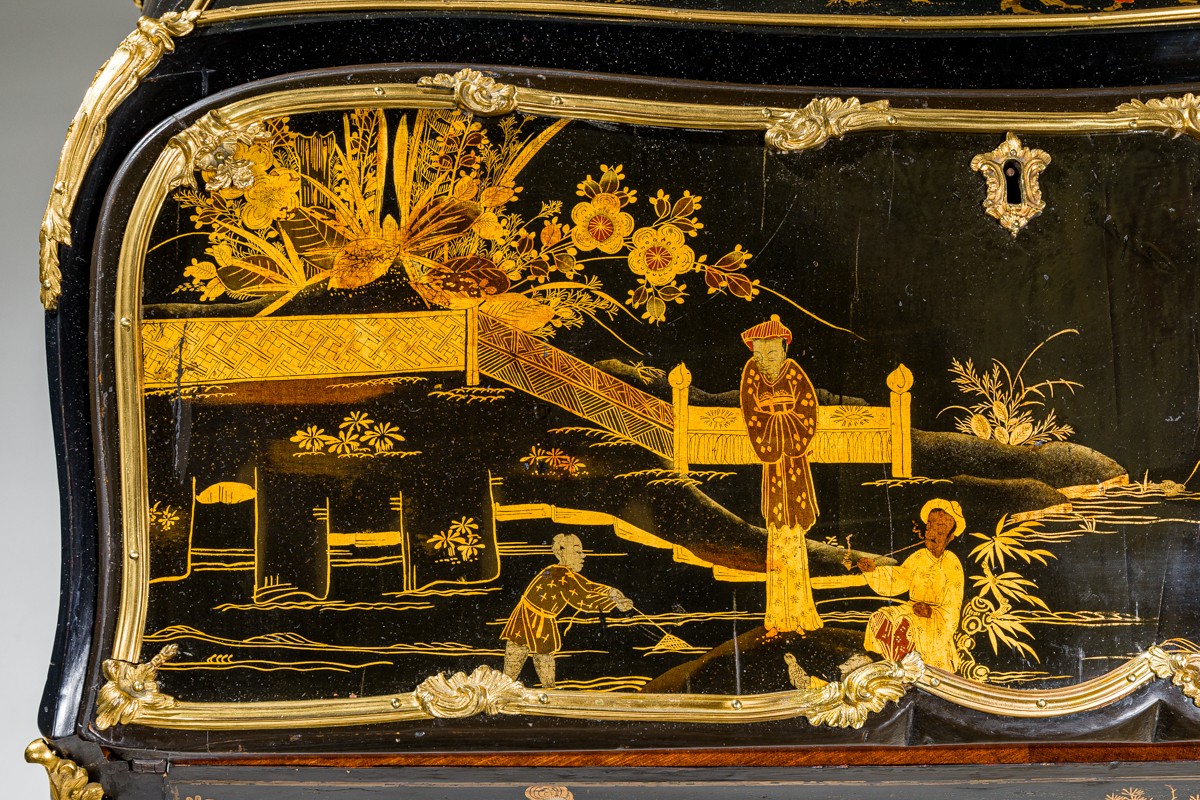
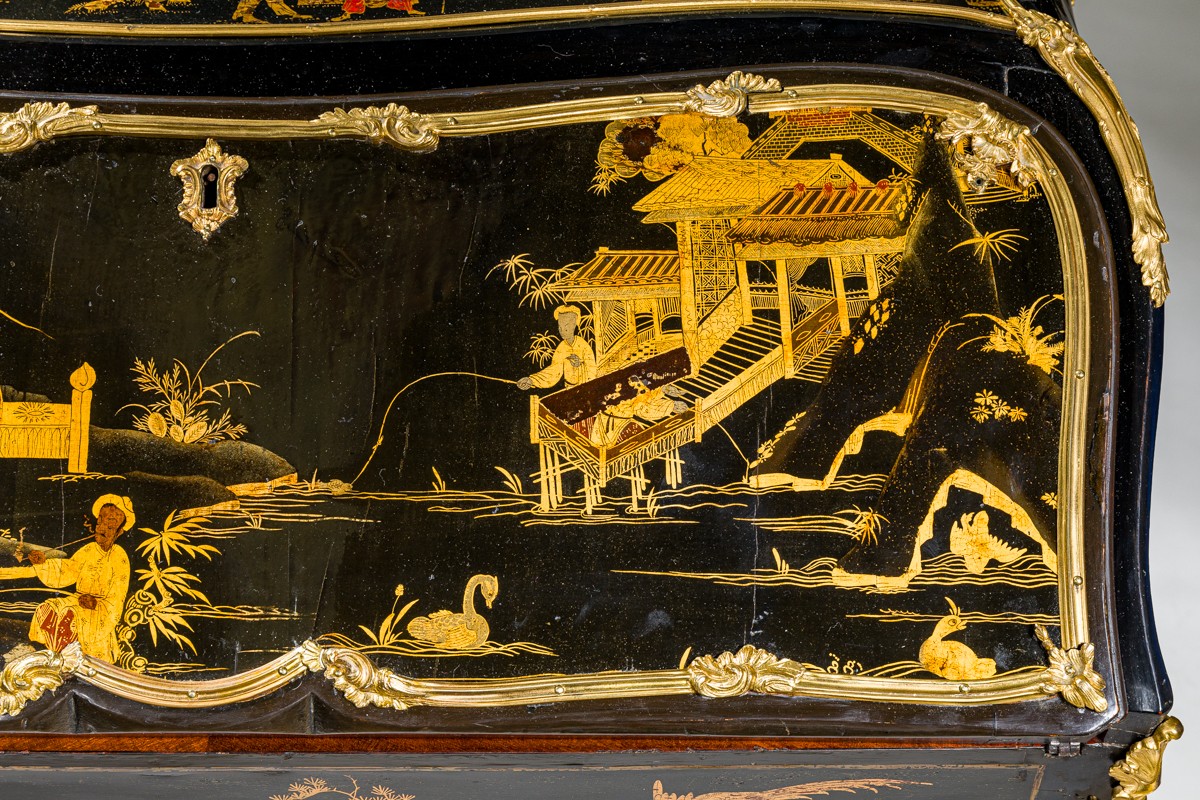
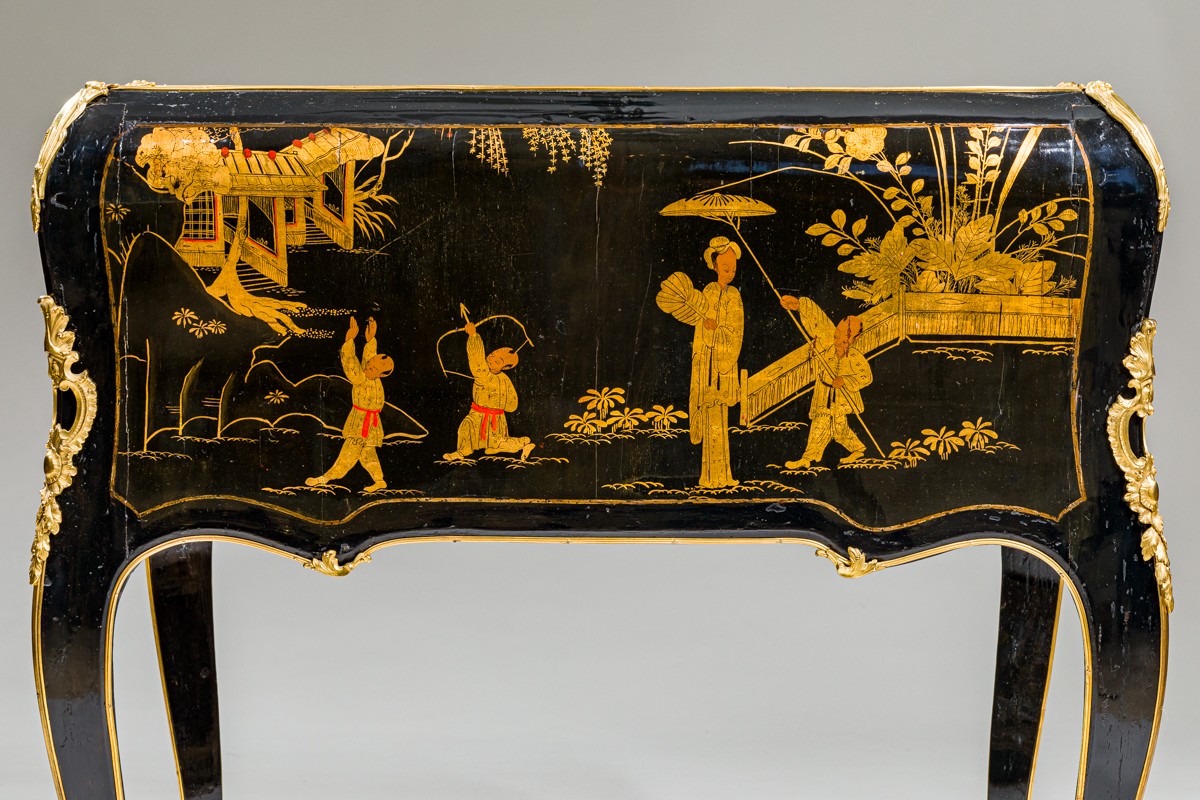
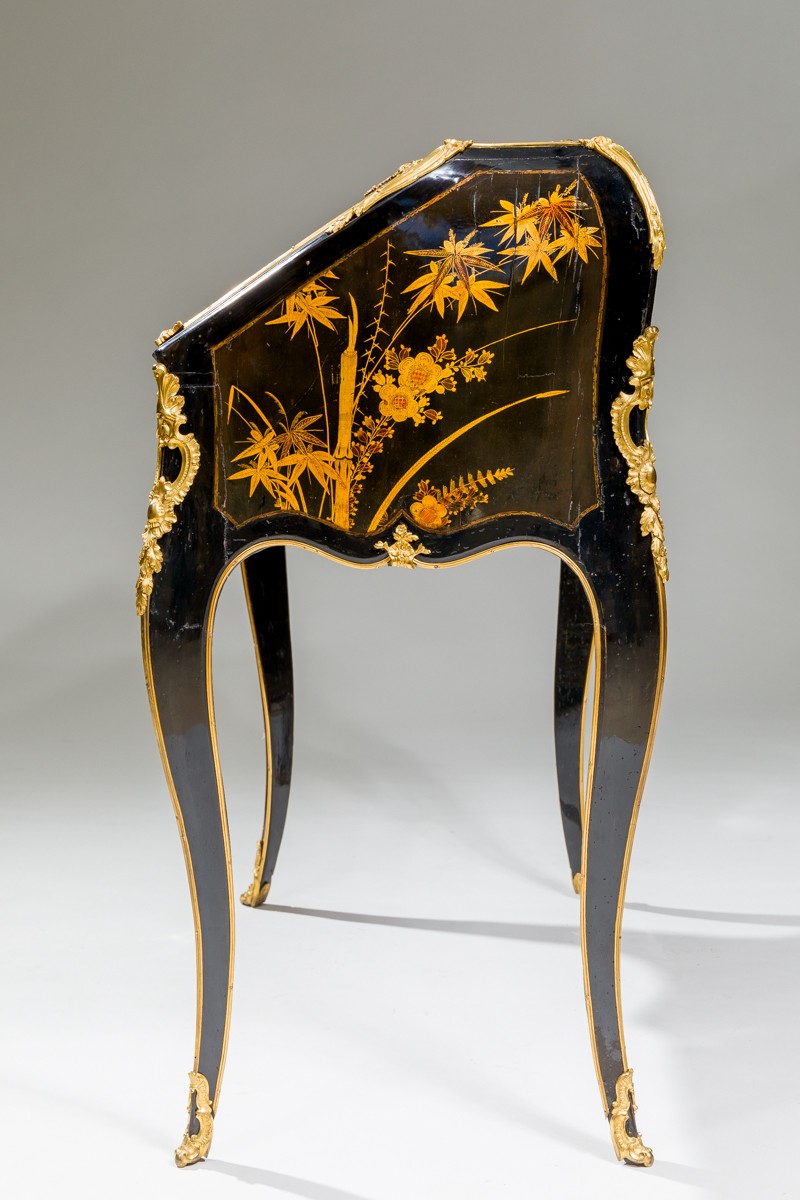
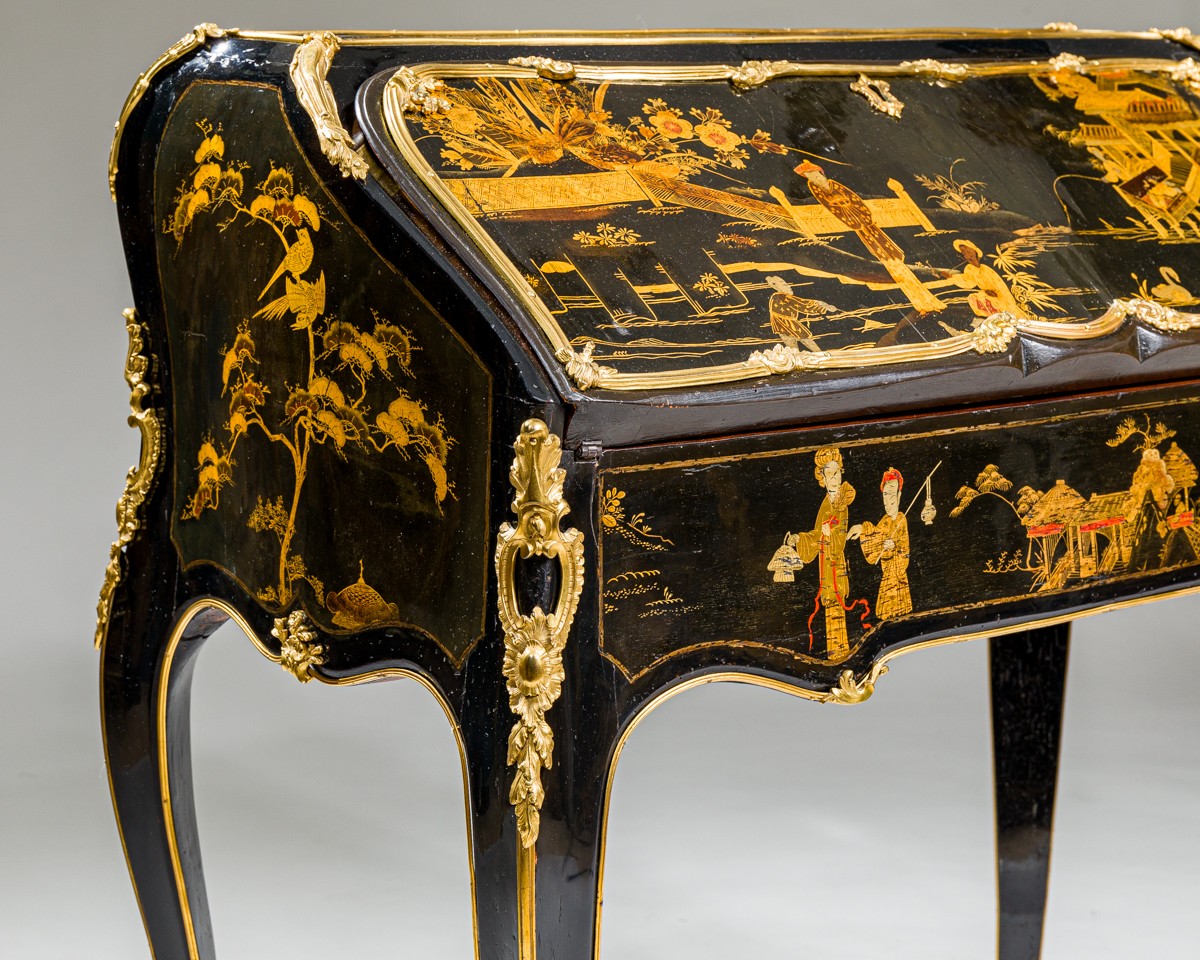
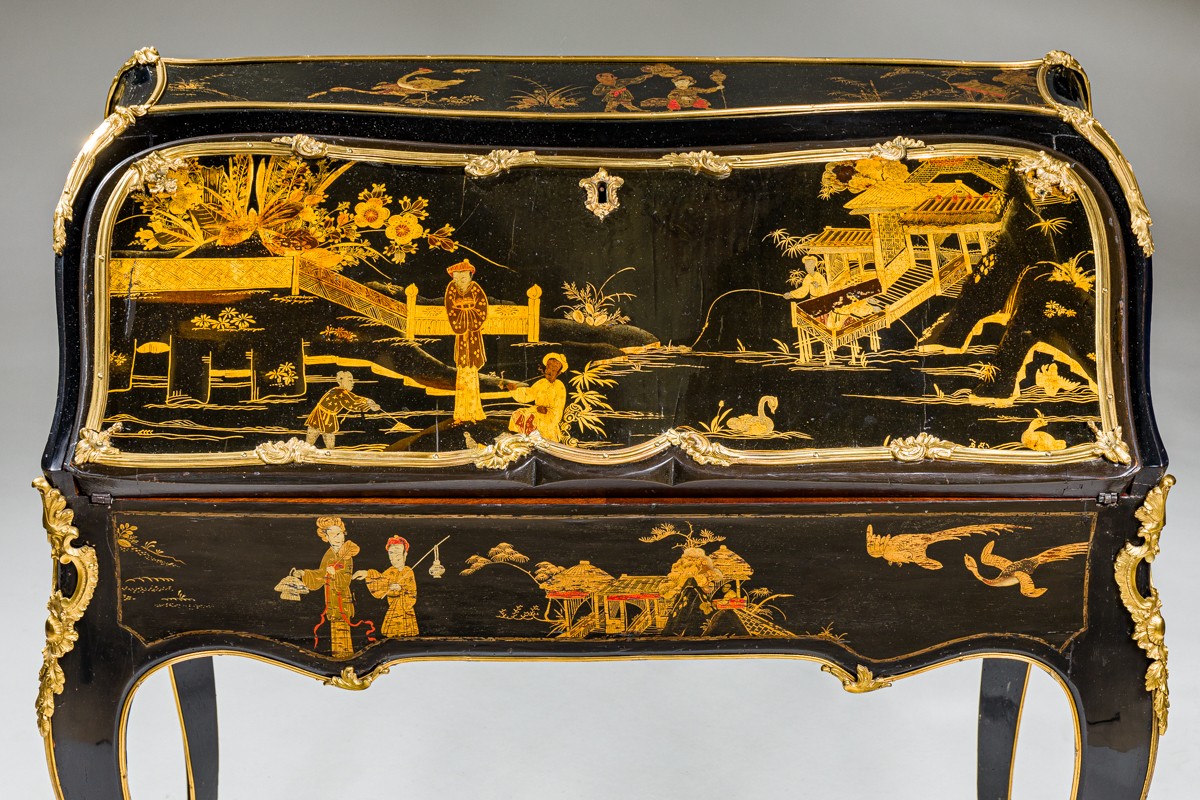
The top, the fall-front, and the front and back aprons are decorated with figures moving through a parkland setting featuring architectural structures and pavilions; the sides depict a tree inhabited by a bird, surrounded by bamboo and reeds. The gold and ochre tones are rendered in three distinct finishes, matte, burnished, and powdered, set against a black background with occasional red accents.
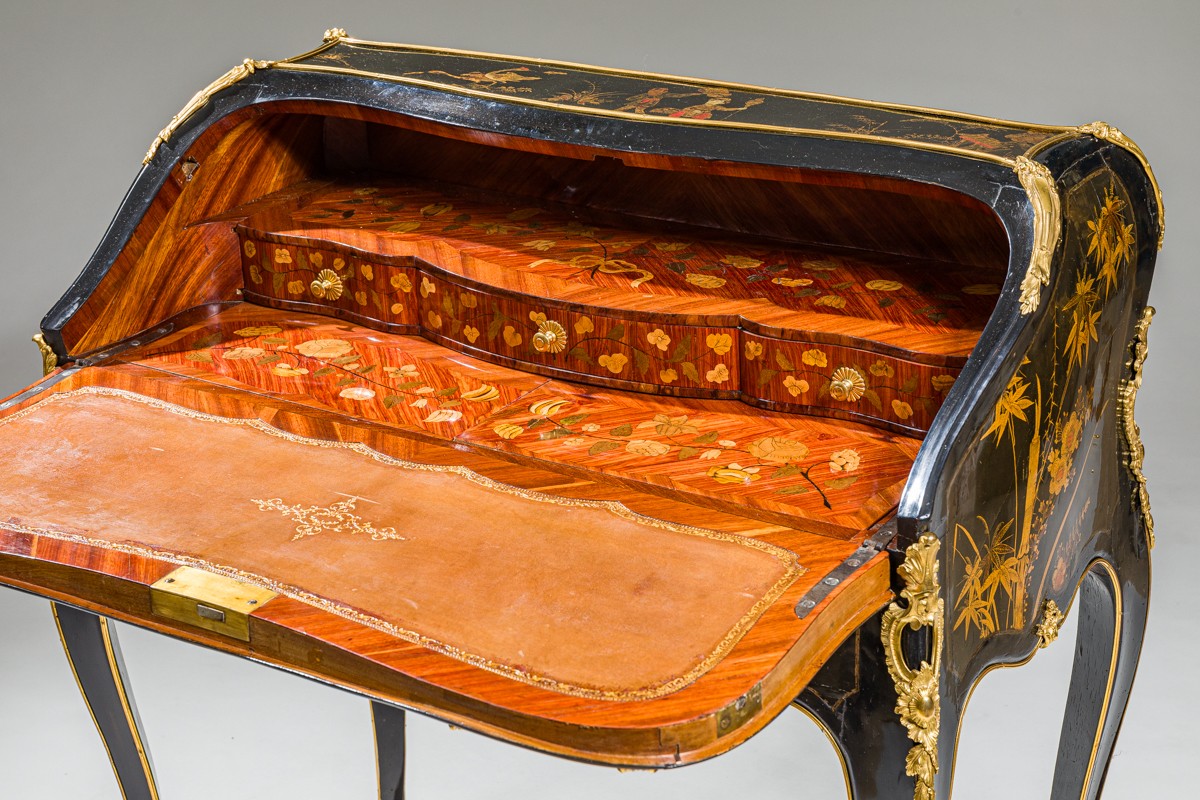
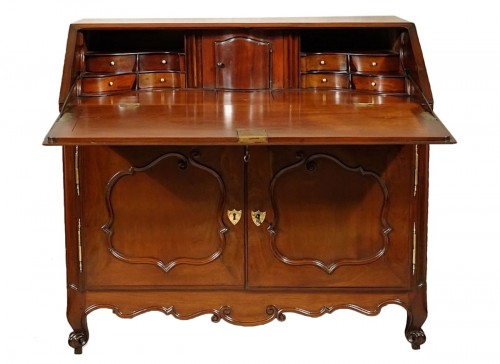
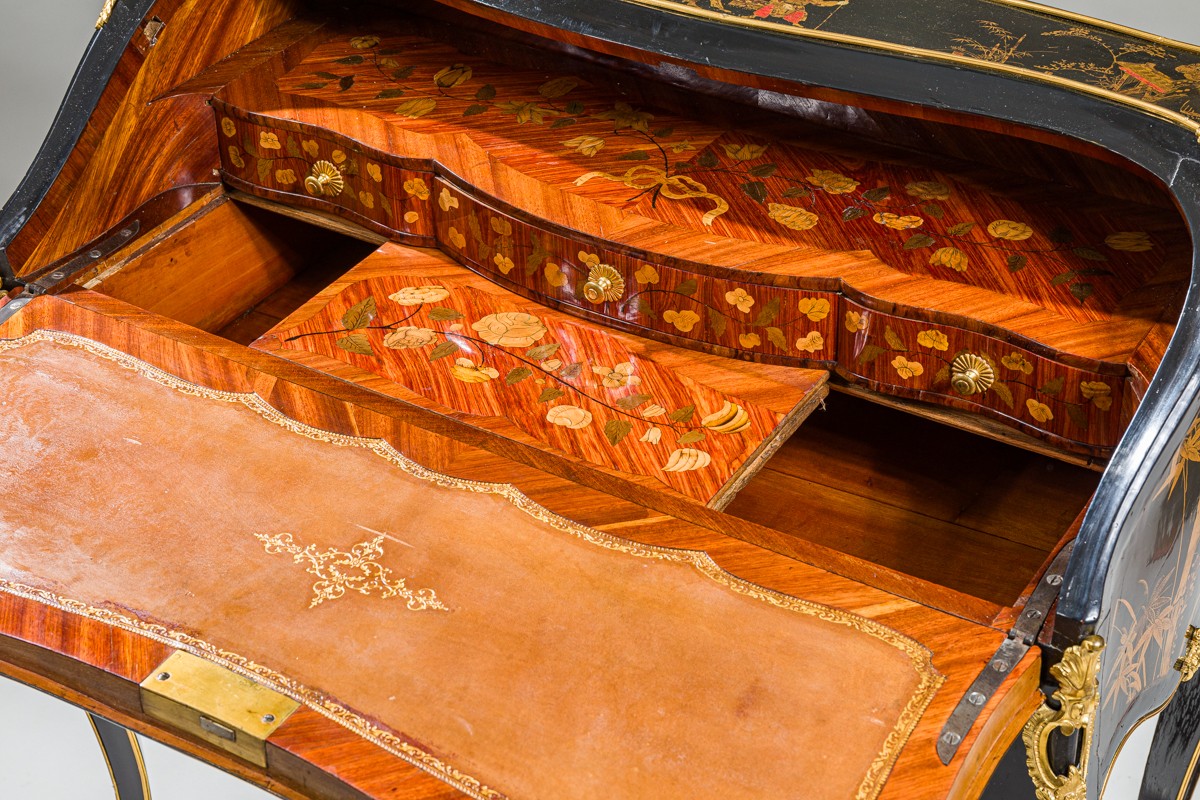
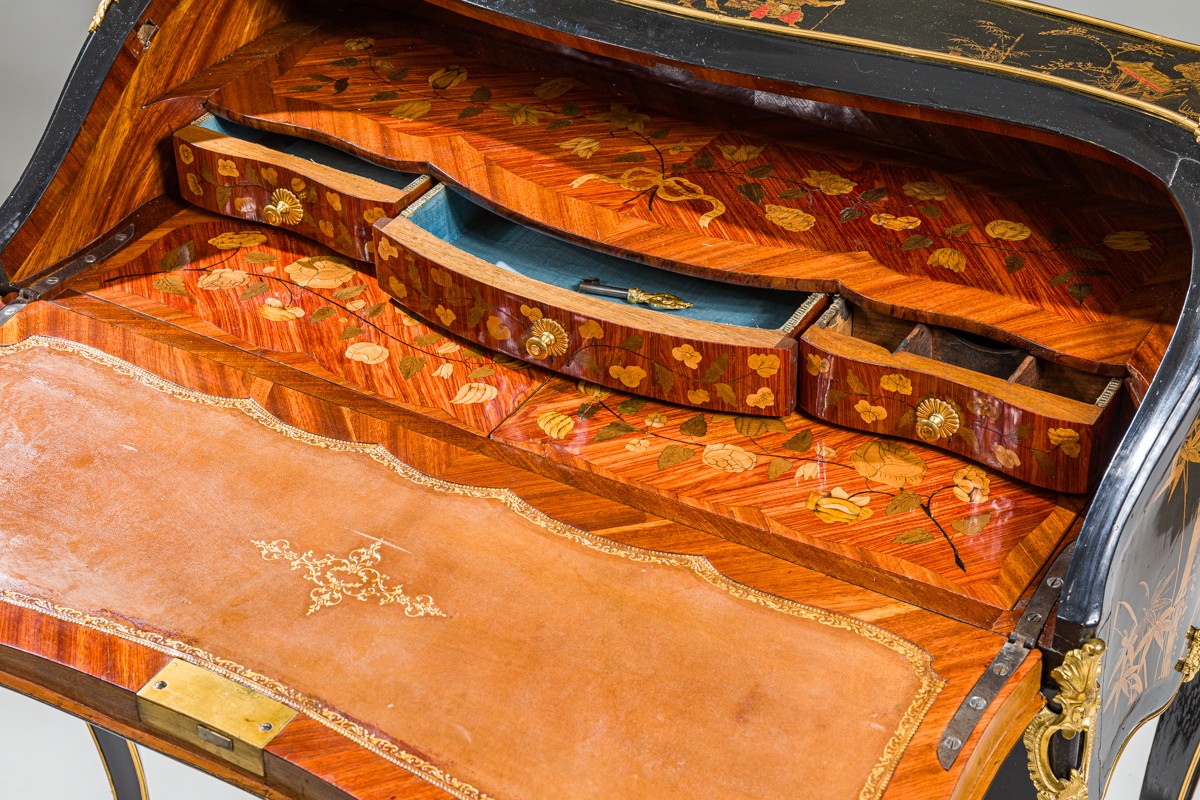
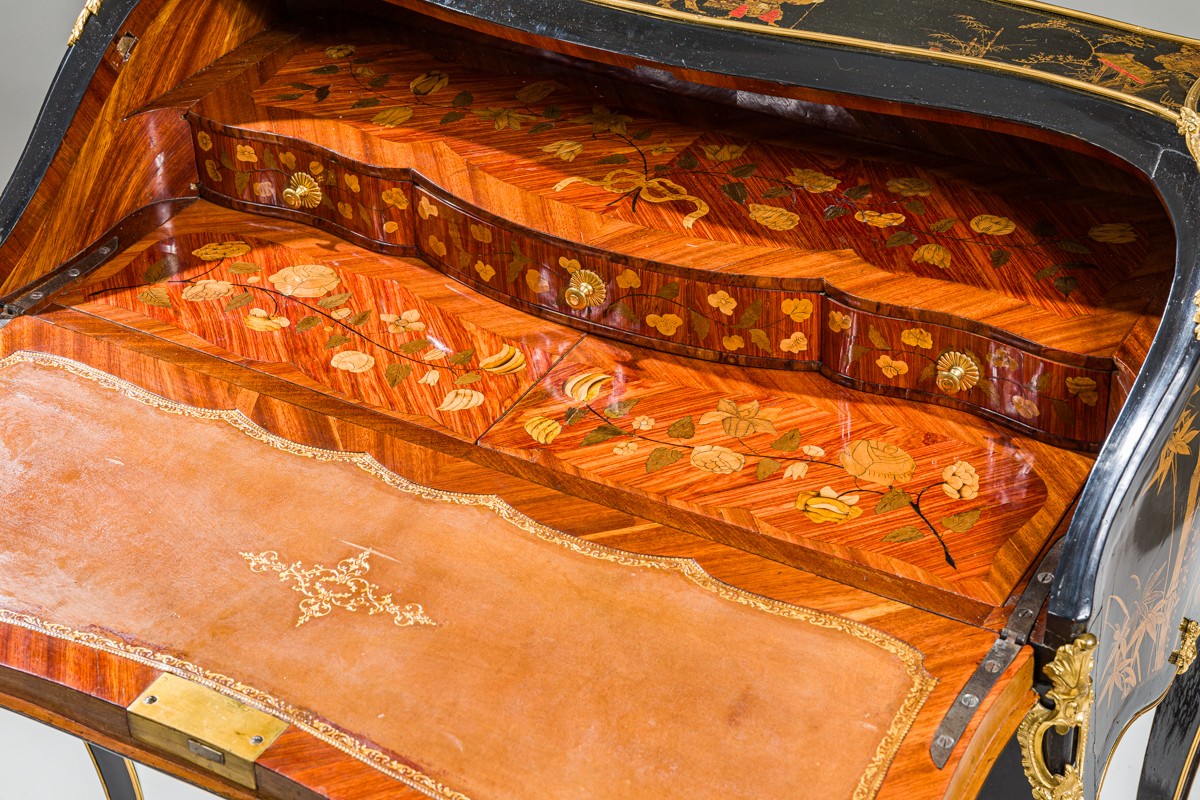
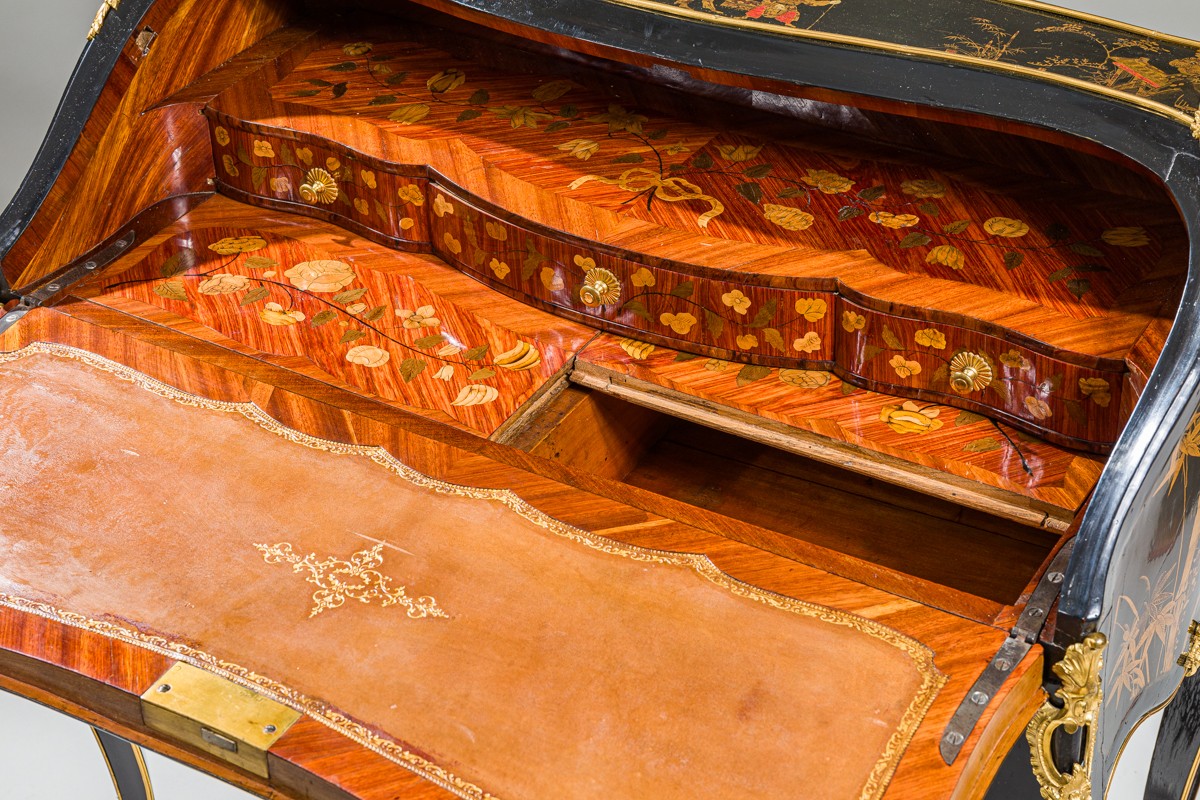
The fall-front opens to create a writing surface lined with brown morocco leather, tooled in gold with fine patterns. It reveals a spacious interior featuring three bombé drawers arranged in a row, complemented at the back by two sliding panels.
The interior is entirely inlaid with flowering branches executed in rosewood, amaranth, and partially dyed woods, with shading achieved through hot-sand scorching.
The contrast is intentional: a dark, exotic, and self-contained exterior that reveals a bright, floral interior only when in use. The chased and gilt-bronze mounts, including frames, shoulder mounts, sabots, and escutcheons, are abundant and finely crafted. The three-bolt lock is preserved and comes with its key.
A similar lady’s slant-front desk held at Waddesdon Manor, stamped I. DUBOIS and dated circa 1755, is described as having a European lacquer exterior inlaid with five panels of black-and-gold Japanese lacquer, cut from a 17th-century Japanese cabinet. The catalogue entry notes that the front and sides feature European lacquer touch-ups intended to conceal flaws in the original lacquer, a practice documented as early as 1752, when the "marchand-mercier" Lazare Duvaux billed the Marquise de Pompadour for restoring the lacquer on two commodes and adding relief details to hide areas where the lacquer was missing.
This piece, closely resembling ours, features a body with bombé contours on all four sides, the same tall cabriole legs ending in bronze sabots, the same black-and-gold lacquer exterior framed by *rocaille* borders, and the same light-colored rosewood veneer interior, though its dimensions are more compact than ours (88.5 × 50.8 × 39.4 cm).
The Waddesdon entry notes that a very similar example was delivered in 1755 to the Marquise de Pompadour for her Château de Choisy, featuring the same sun-motif bronze mounts on the front. Jacques Dubois’s furniture was indeed supplied, through "marchands-merciers", to the kingdom’s most elite clientele; the desk in question belongs to this select group of small pieces designed for private apartments, where the same stylistic approach recurs from one example to the next.
The slant-front desk, also known in the period as a "dos d’âne" belongs to the generation of small furniture pieces that emerged between 1740 and 1760, accompanying the transformation of the home into a series of private rooms. Designed for writing while seated, whether in a study or a bedroom, it could be closed with a single movement: once the fall-front was lowered, correspondence vanished from sight. Its arrangement of drawers and sliding panels fostered a sense of privacy that the large, flat-topped desks, intended for display, did not offer.
No woman did more to champion this type of furniture than the Marquise de Pompadour; she commissioned numerous lacquer pieces from the dealer Duvaux for her residences at Bellevue, Choisy, and Versailles. In 1756, Boucher painted her leaning not against a formal desk, but against a small writing table, an inkwell and quill resting on top, papers tucked underneath, and an open book on her lap. It is a portrait of a woman who reads and writes, perfectly illustrating the very purpose for which this furniture was designed.
Jacques Dubois was admitted as a master craftsman on September 27, 1742; he was nearing fifty at the time and had long been active in the Faubourg Saint-Antoine district. Elected a warden of the guild in 1752, a role that entailed overseeing the work of his peers and stamping pieces with the official guild mark, he ran one of the most significant Parisian workshops of his generation on the Rue de Charenton.
Every aspect of this desk reflects his craftsmanship: the profile of the body, curved on all four sides; the shaping of the apron and the spirited lines of the cabriole legs; the layout of the floral marquetry within the interior; and, finally, the richness and intricate chasing of the bronze mounts framing the lacquer panels. The guild mark stamped beneath the cross-rail attests to the inspection by the guild of which Dubois was a leading member.
A fine example of Louis XV craftsmanship bearing the guild mark,
Private collection, Switzerland
Dimensions: H 83 cm x W 89 cm x D 44 cm