Offered by Franck Baptiste Paris
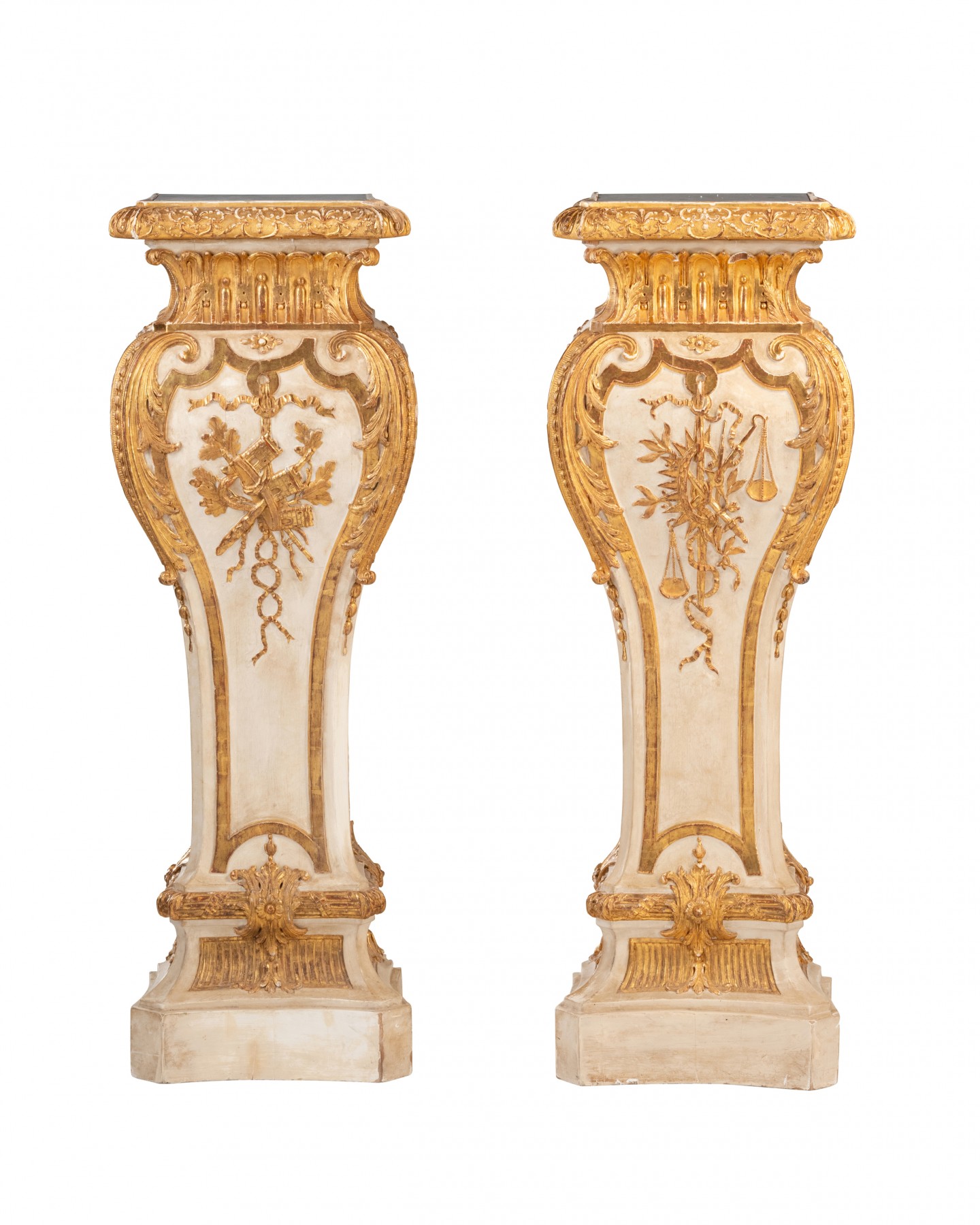
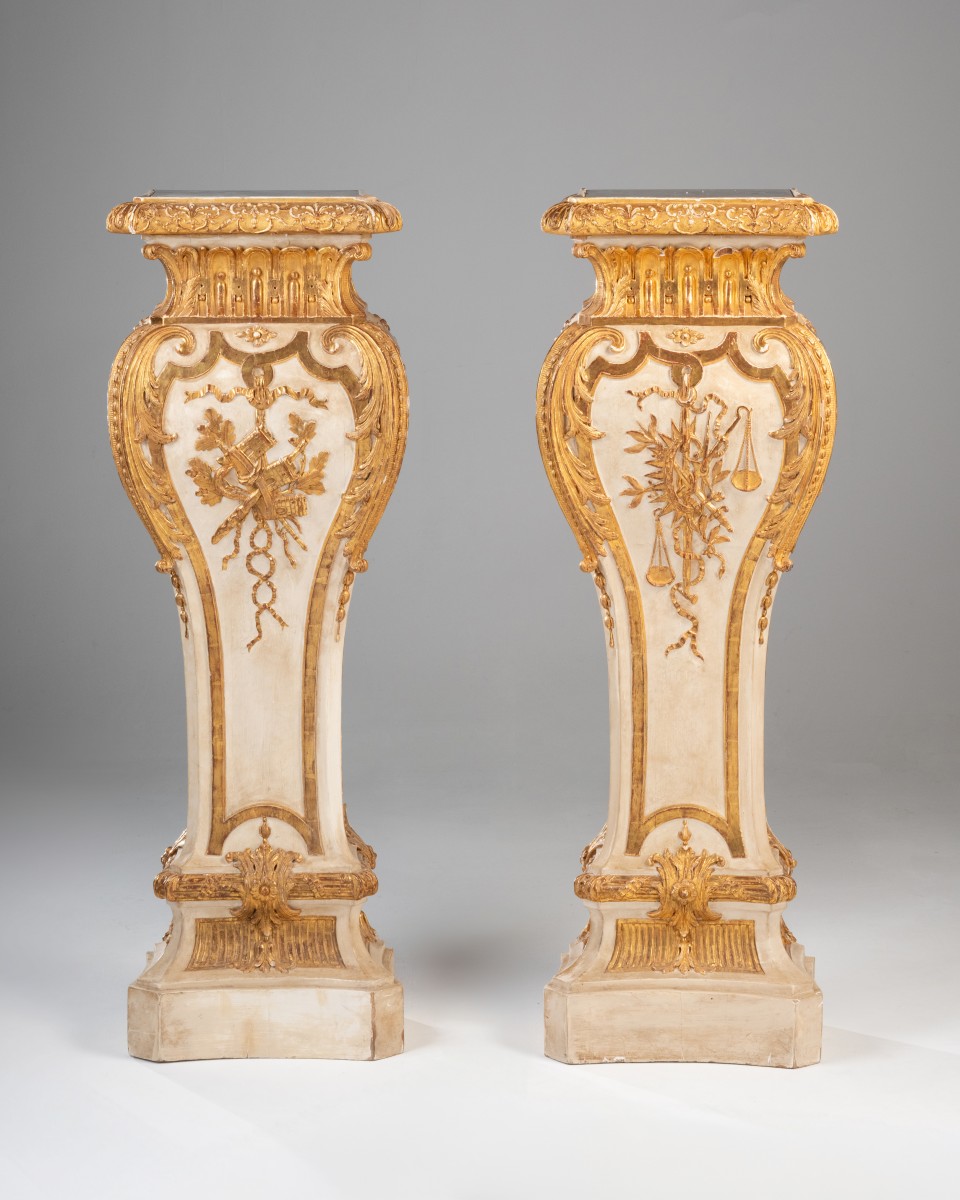
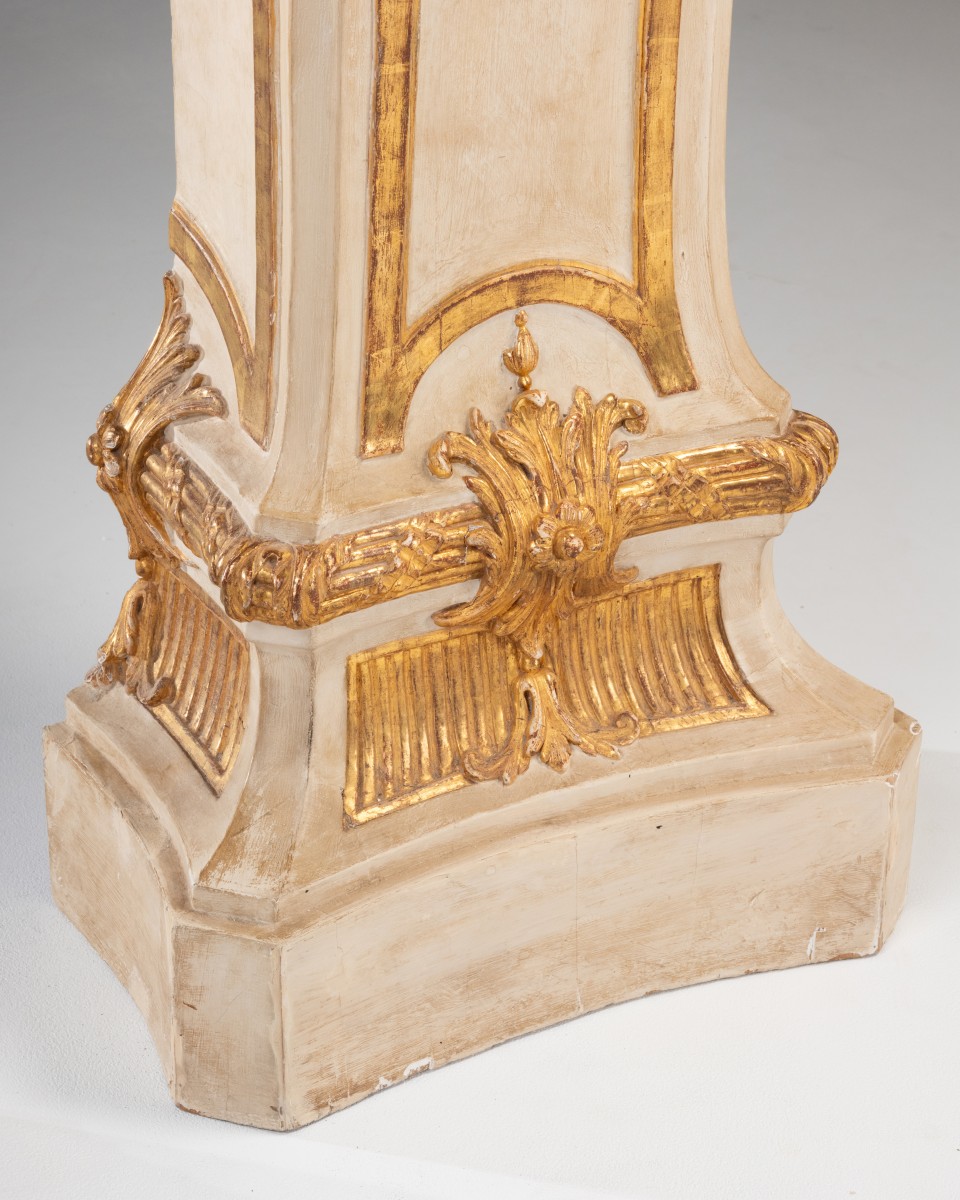
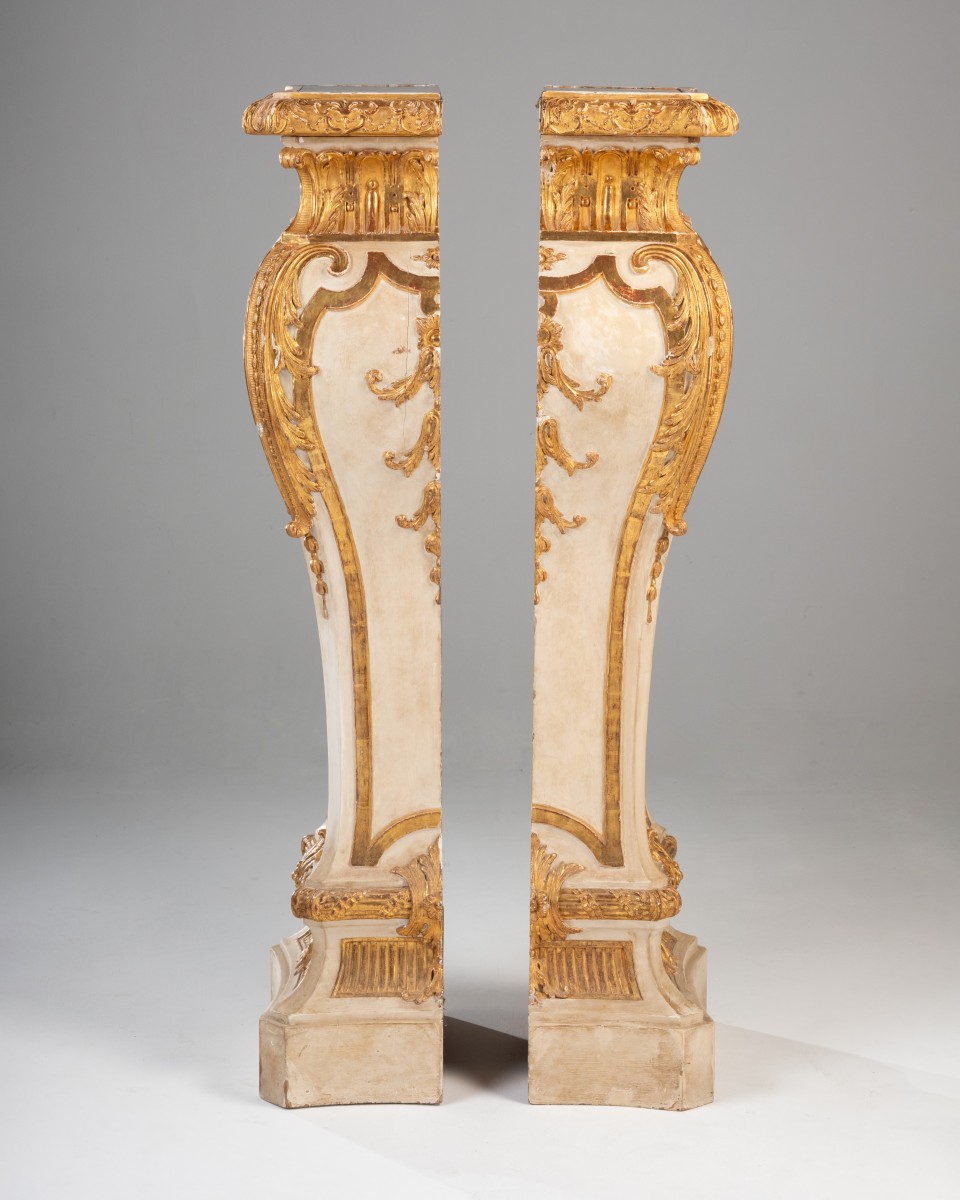

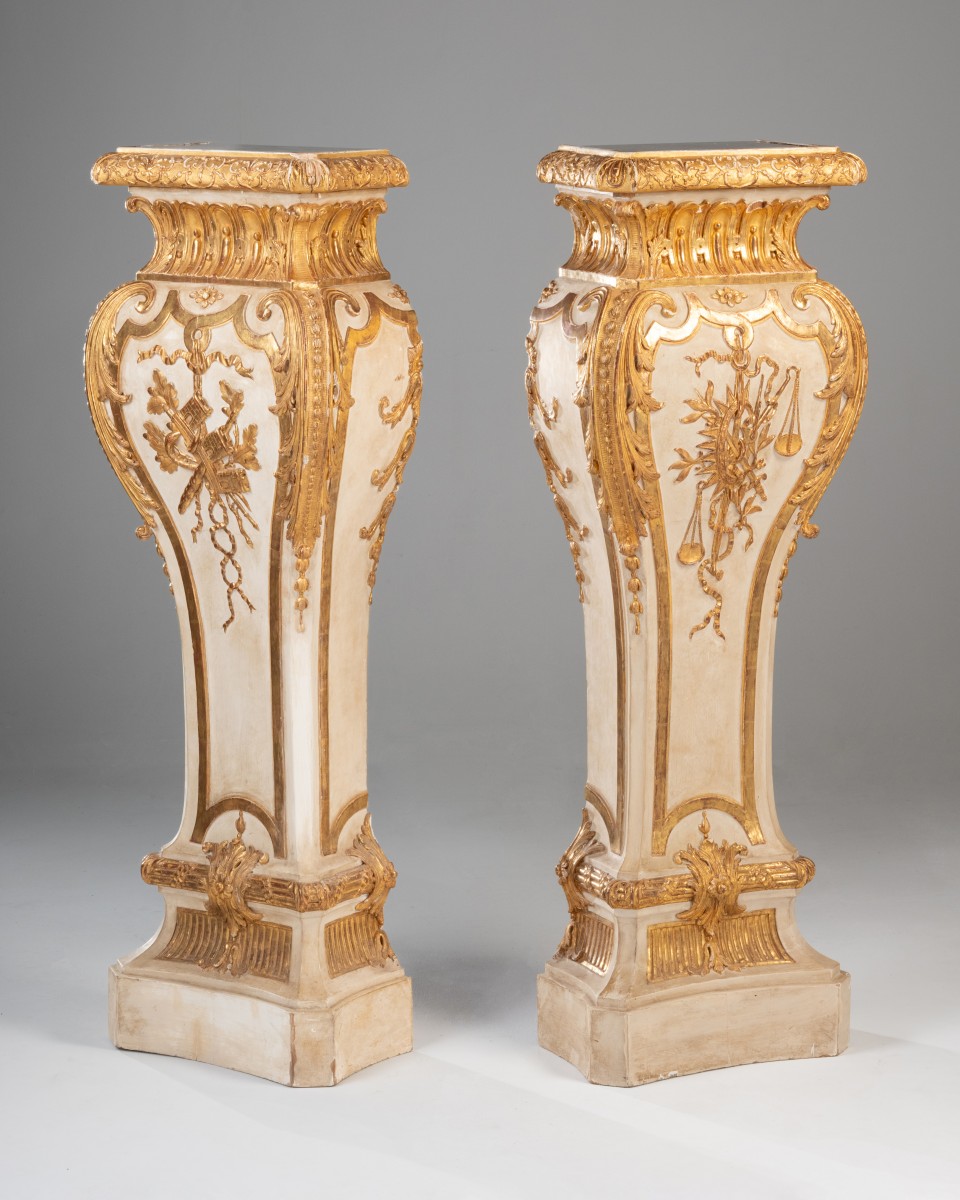
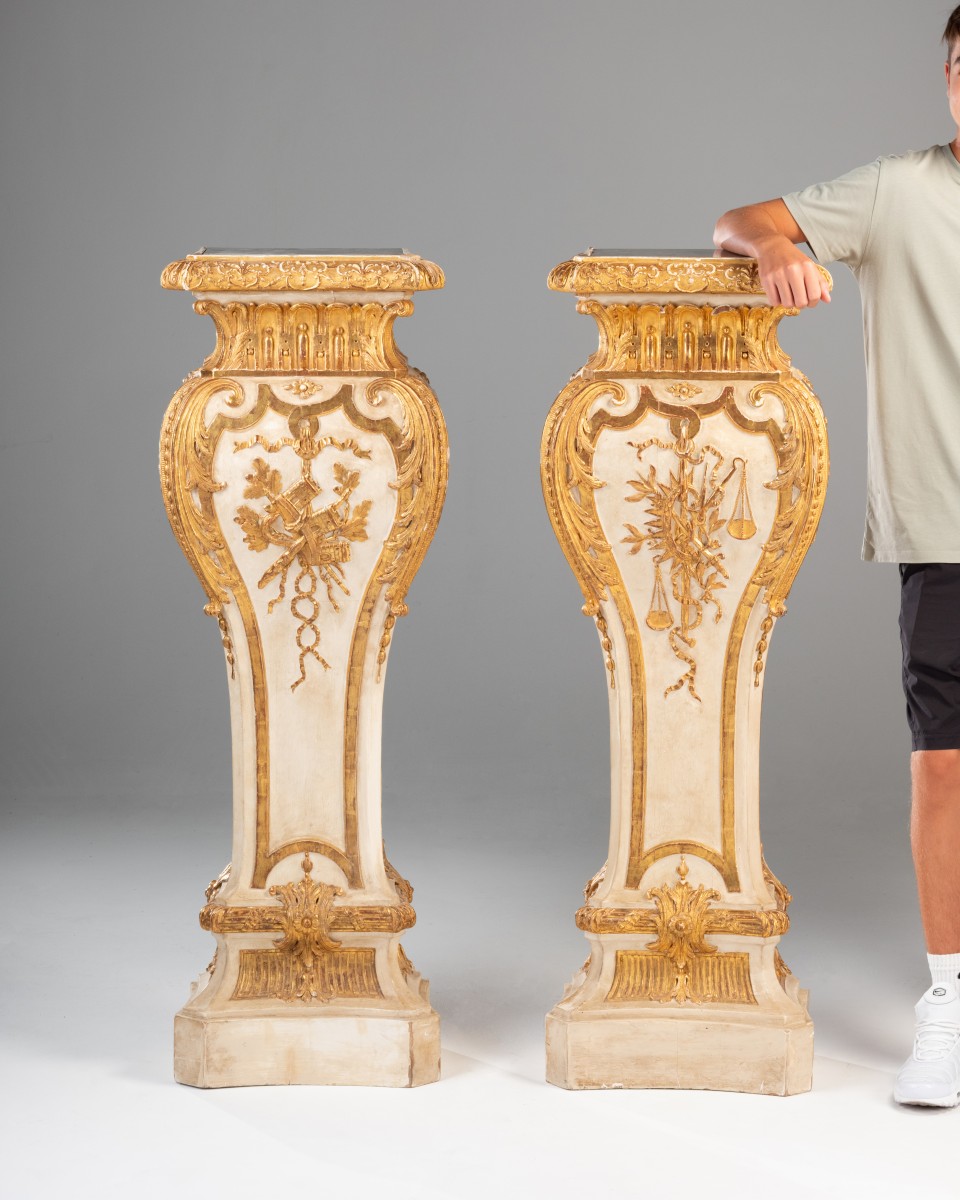
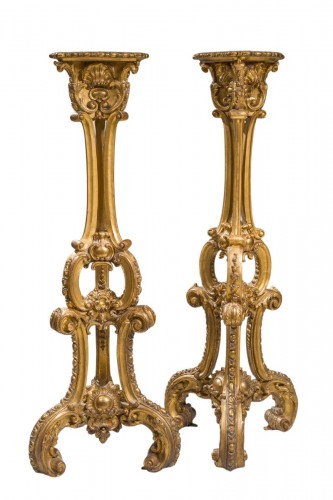
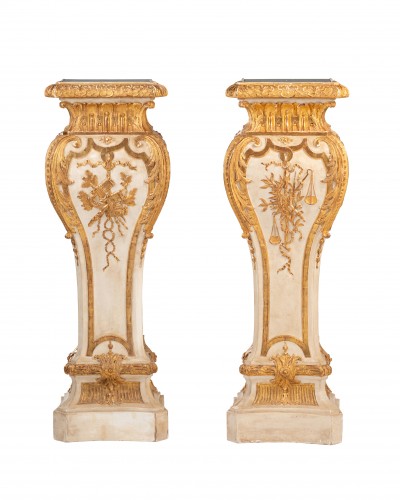
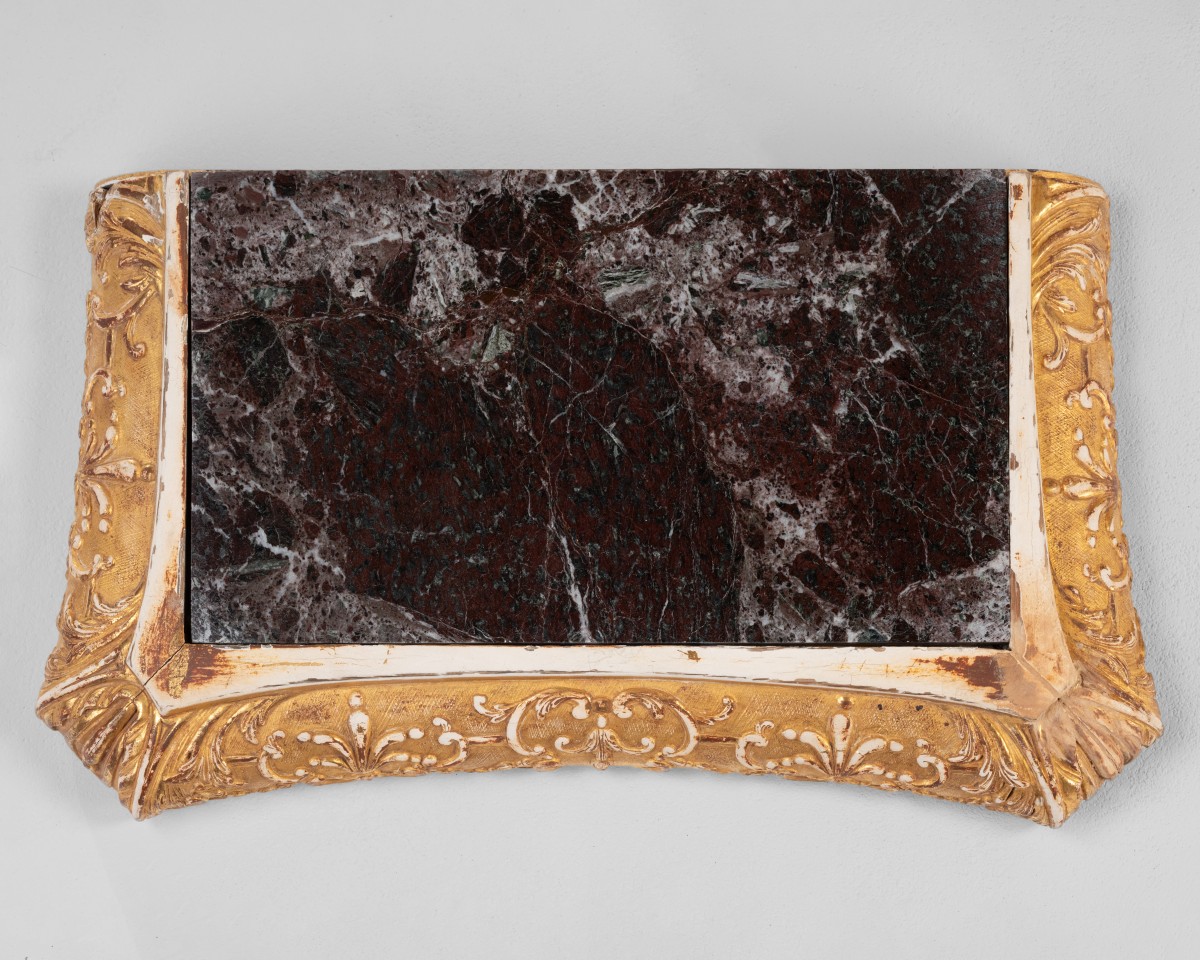
Pair of carved oak pedestals, cream lacquered and highlighted with gold leaf. Of baluster form, each features a curved shaft resting on a molded base, surmounted by a canted-corner top into which a tablet of red “Levanto” marble is inset.
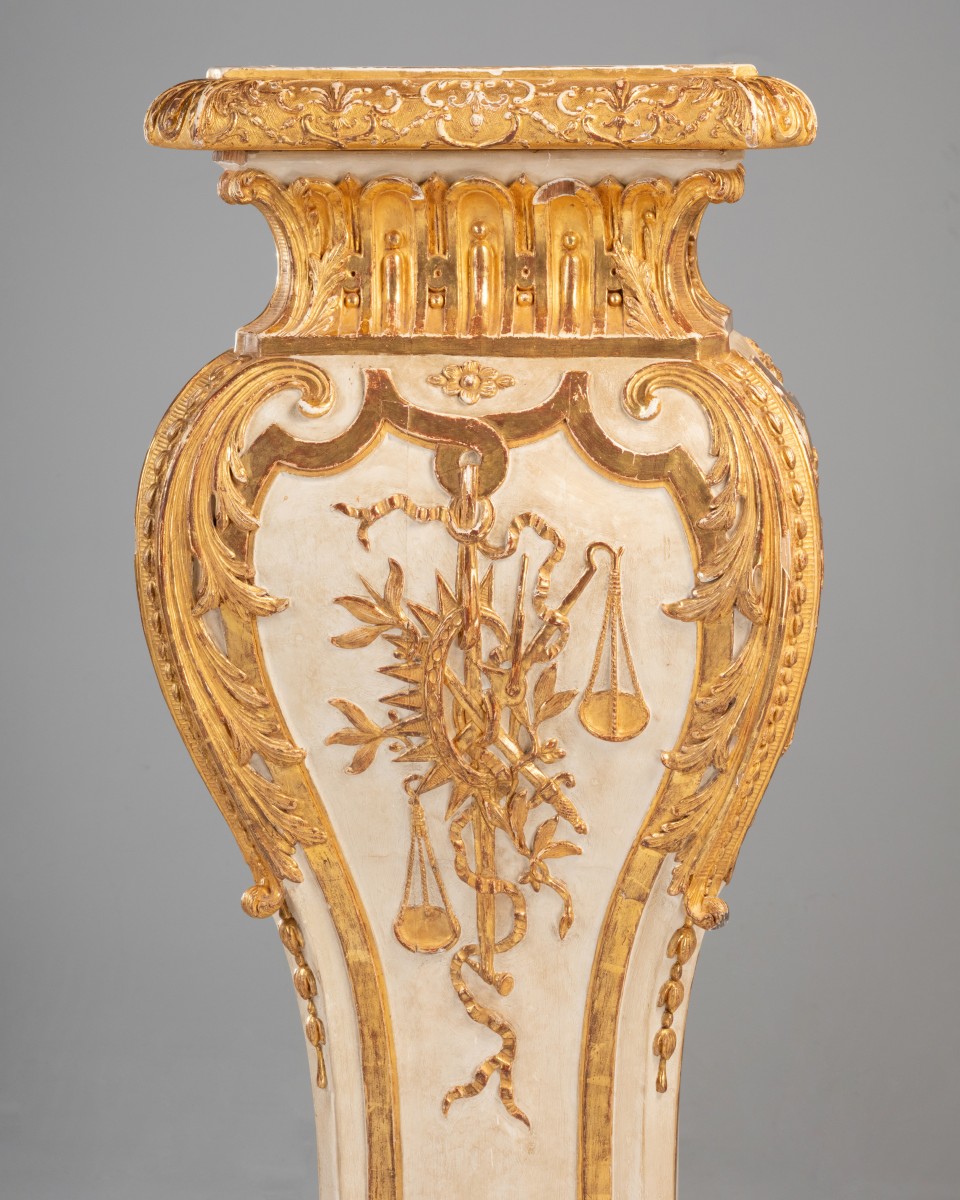
The entire surface of the pedestals is adorned with particularly refined decoration, finely carved with friezes of palmettes running along the edges of the tops, gadroons, drops of acanthus leaves, shells, and fasces inherited from the ornamental vocabulary of Jean Bérain.
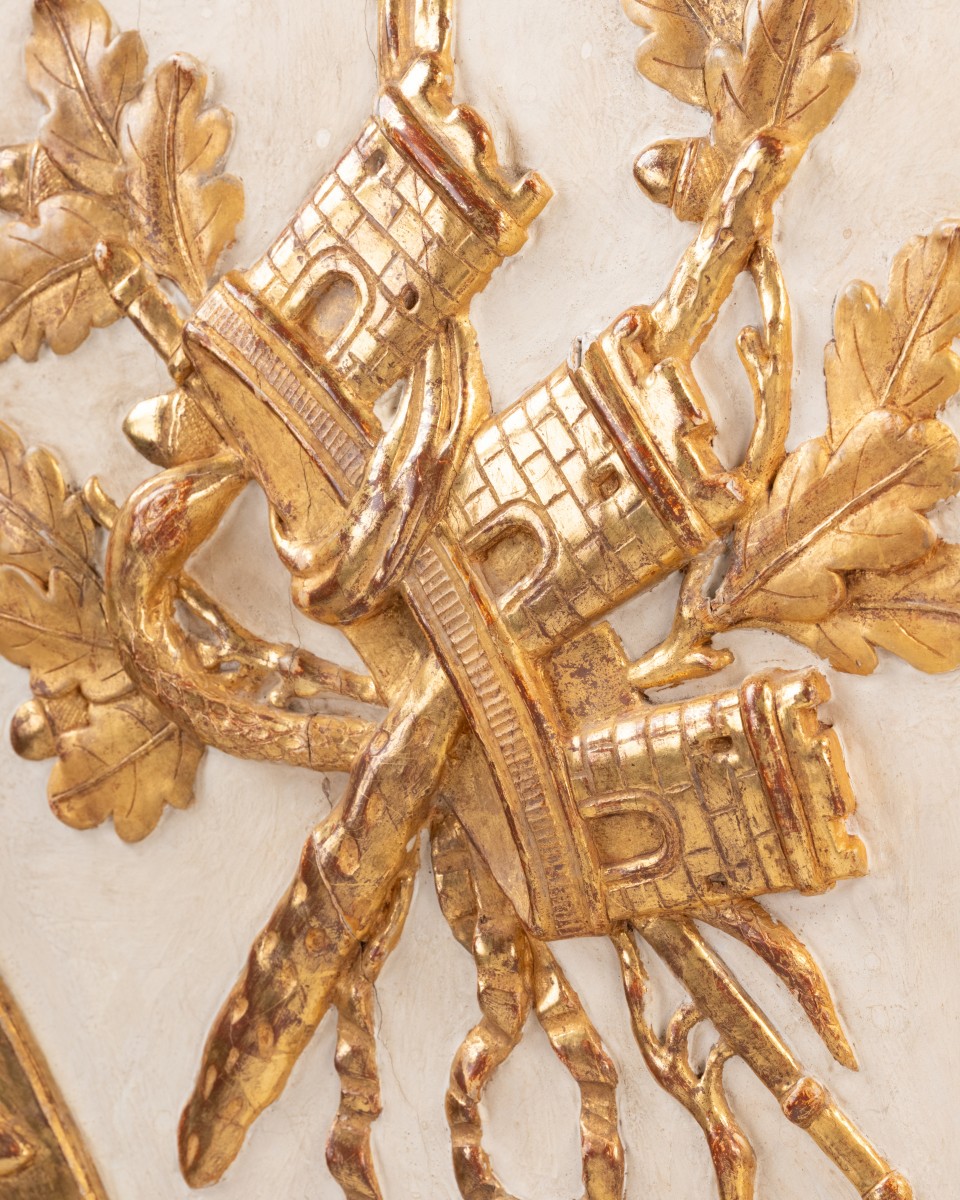
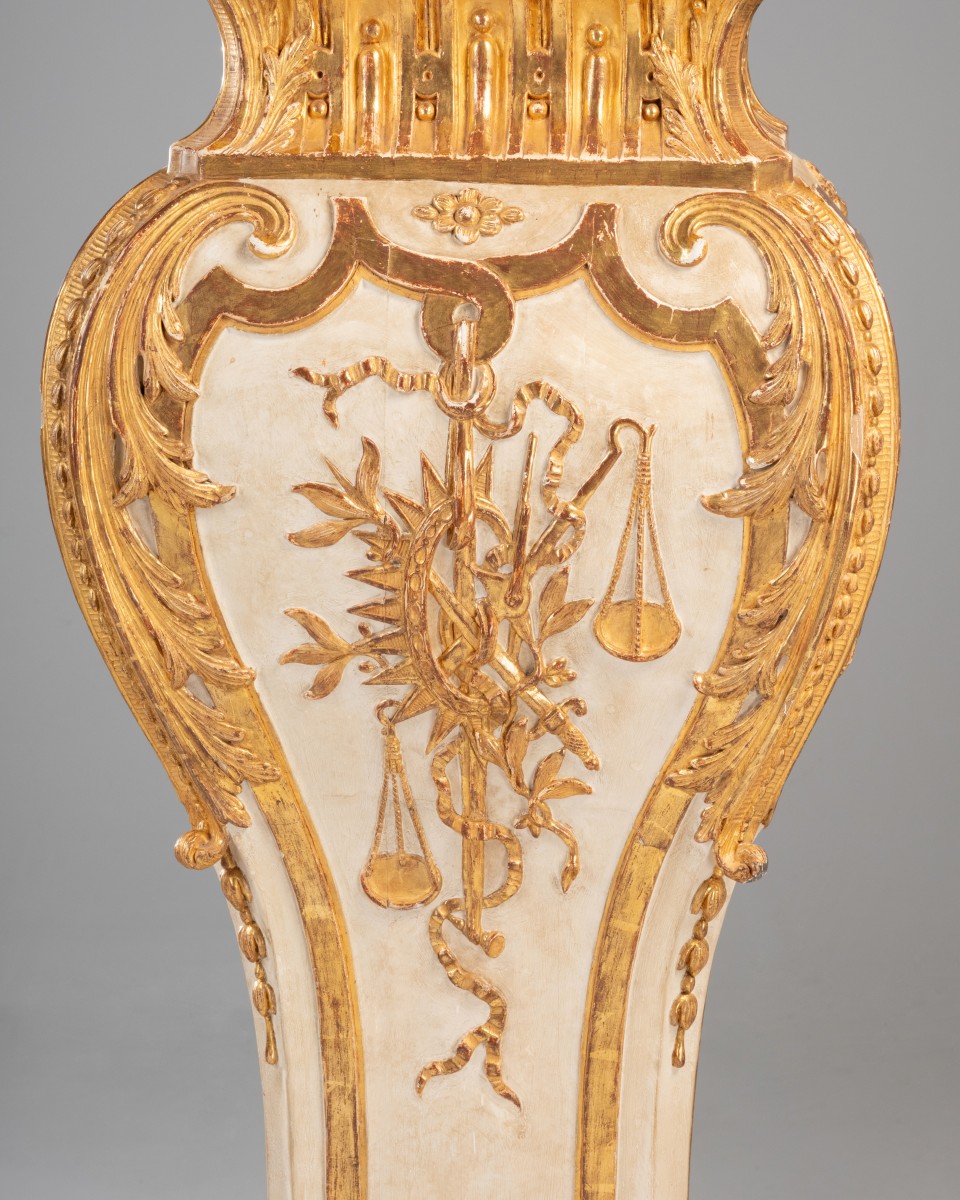
The central section of each pedestal is decorated with a trophy suspended from a ribbon bow. The first presents an allegory of Strength, composed of a mural crown with three towers set against a background of oak branches, symbols of power and constancy. The second depicts an allegory of Justice, combining scales, a sword, and a royal crown against a background of olive branches, emblems of equity tempered by peace.
Very fine state of preservation, with original gilding and lacquer. Minor restoration to the lacquer consistent with use.
Parisian work from the Louis XV period, circa 1740–1750.
Dimensions:
Height: 130 cm; Width: 42 cm
Provenance: Sotheby’s, Monaco, July 3, 1993, Lot 175
Our opinion:
The pair of pedestals we present is distinguished by an absolutely exceptional quality of execution. Their elegantly curved silhouette, still imbued with the spirit of the Régence, is enriched with finely carved decoration of remarkable finesse inspired by the designs of Bérain. Every detail is treated with uncommon precision and vigor, revealing the hand of a sculptor of the highest order. This virtuosity is further enhanced by the use of particularly dense oak, characteristic of works executed in the great workshops of the capital. Through both the quality of their design and their execution, these pedestals unquestionably rank among the finest Parisian productions of the first half of the 18th century.
Even more remarkable is their iconographic program. Far from being merely ornamental, each pedestal is enriched with an allegorical trophy suspended from a ribbon bow. One celebrates Justice, through scales and the attributes of judicial authority; the other exalts Strength, through a composition combining fortified towers and oak branches. The association of these two cardinal virtues goes far beyond the context of civil decoration. It belongs to the symbolic language of State institutions under the Ancien Régime, where Justice and Strength embody the two foundations of sovereign authority. Such a decorative program evokes rather a Palace of Justice, a residence of the high magistracy, or a building of the royal administration.
The exceptional quality of the carving naturally invites comparison with the workshops of the Bâtiments du Roi, where the greatest ornamental sculptors of the 18th century worked. Among them, Jacques Verberckt (1704–1771), of Flemish origin, occupies a major place. Active in the service of the Crown for several decades, he participated in the execution of the most prestigious carved wood interiors of the royal residences and established an ornamental vocabulary of remarkable virtuosity, characterized by the depth of the reliefs, the precision of the modeling, the vigor of the trophies, and great elegance in the treatment of ribbons, foliage, and attributes.
One of the trophies notably features a mural crown with three towers, an emblem closely associated with Madame de Pompadour, of which it constitutes a discreet but evocative reminder. This iconographic detail, associated with the allegory of Strength, reinforces the official and prestigious character of the decoration.
This reference takes on even greater significance as Jacques Verberckt worked precisely under the authority of Madame de Pompadour’s brother, Abel-François Poisson de Vandières, then Director General of the Bâtiments du Roi, while Madame de Pompadour exercised its superintendence.
The sculptor also worked personally for the Marquise, notably during the decoration of the Château de Bellevue and the Hôtel d’Évreux. The stylistic similarities observed here — confidence of design, powerful relief, balance of the compositions, and refinement of the carving — thus allow this work to be placed within the artistic environment of the great royal projects of the 1740s–1750s. Designed to form part of a vast ensemble of ceremonial woodwork, these pedestals were most likely intended to support two busts representing figures associated with royal authority, as part of a decorative program in which architecture, sculpture, and symbolism formed a perfectly coherent whole.