Offered by Galerie de Frise
REQUEST INFORMATION
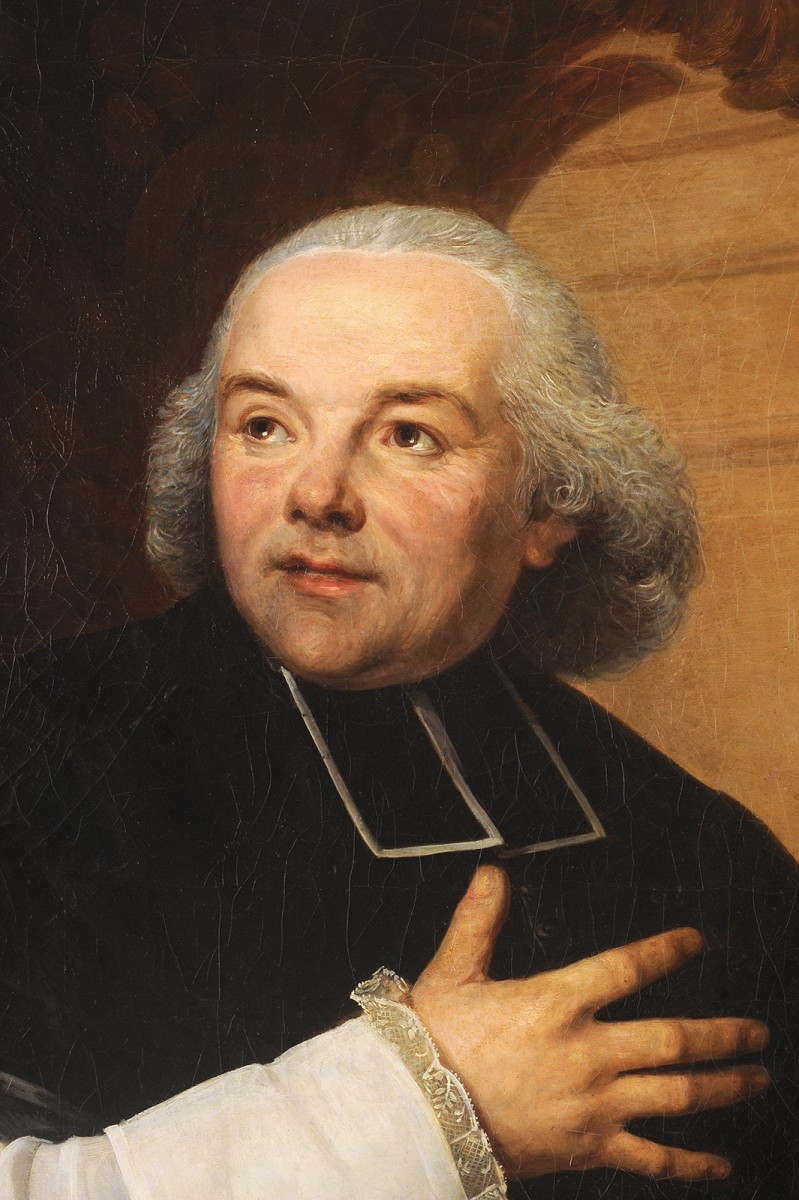

Claude François Henry PETIT de VILLENEUVE
(Paris 1764 – Paris 1820)
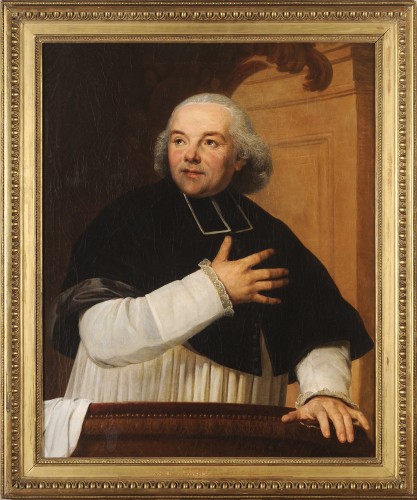
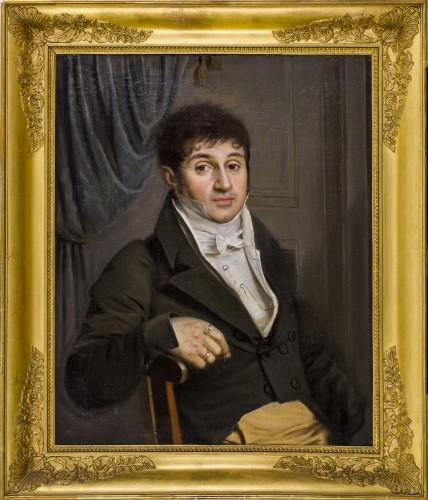
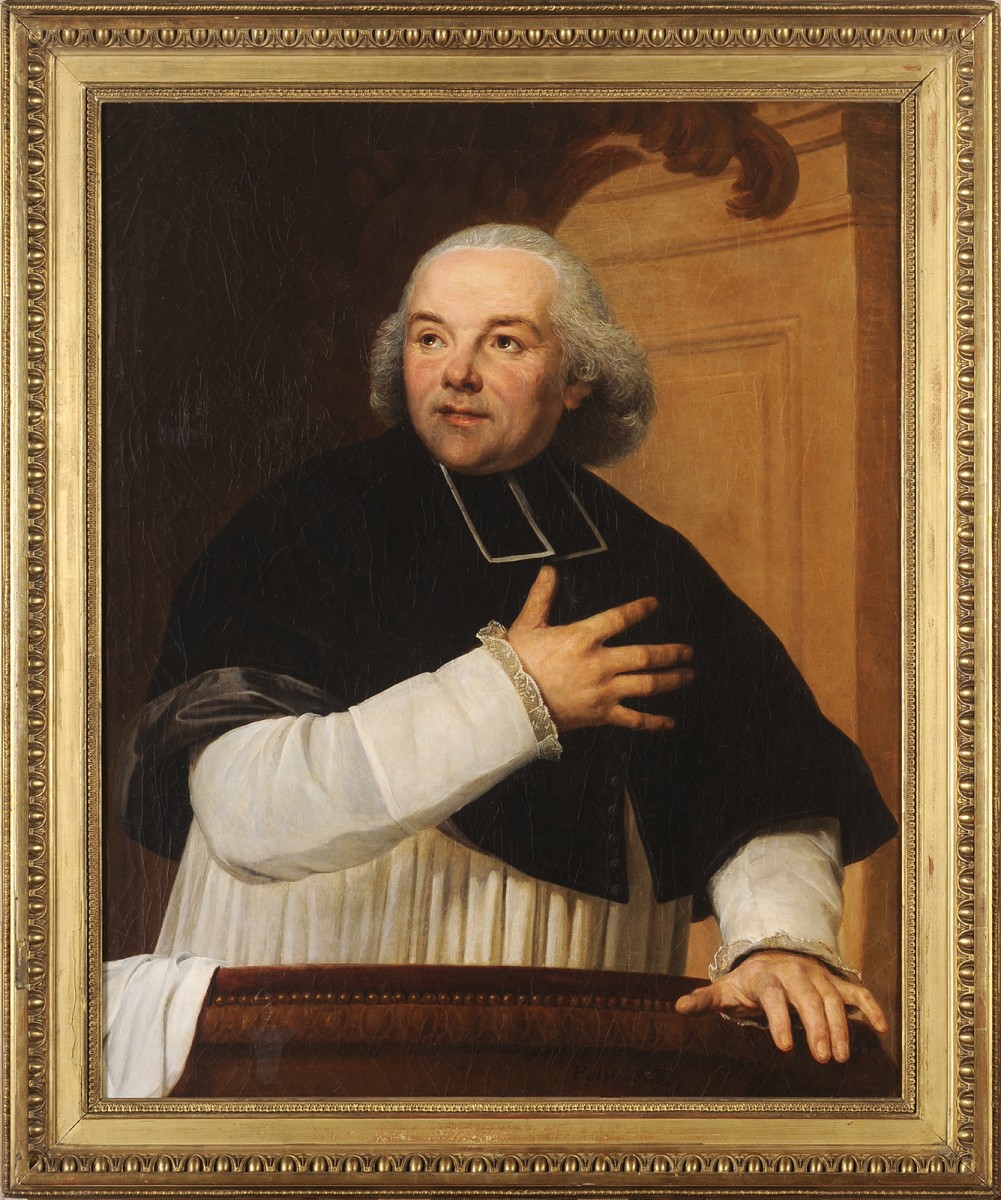
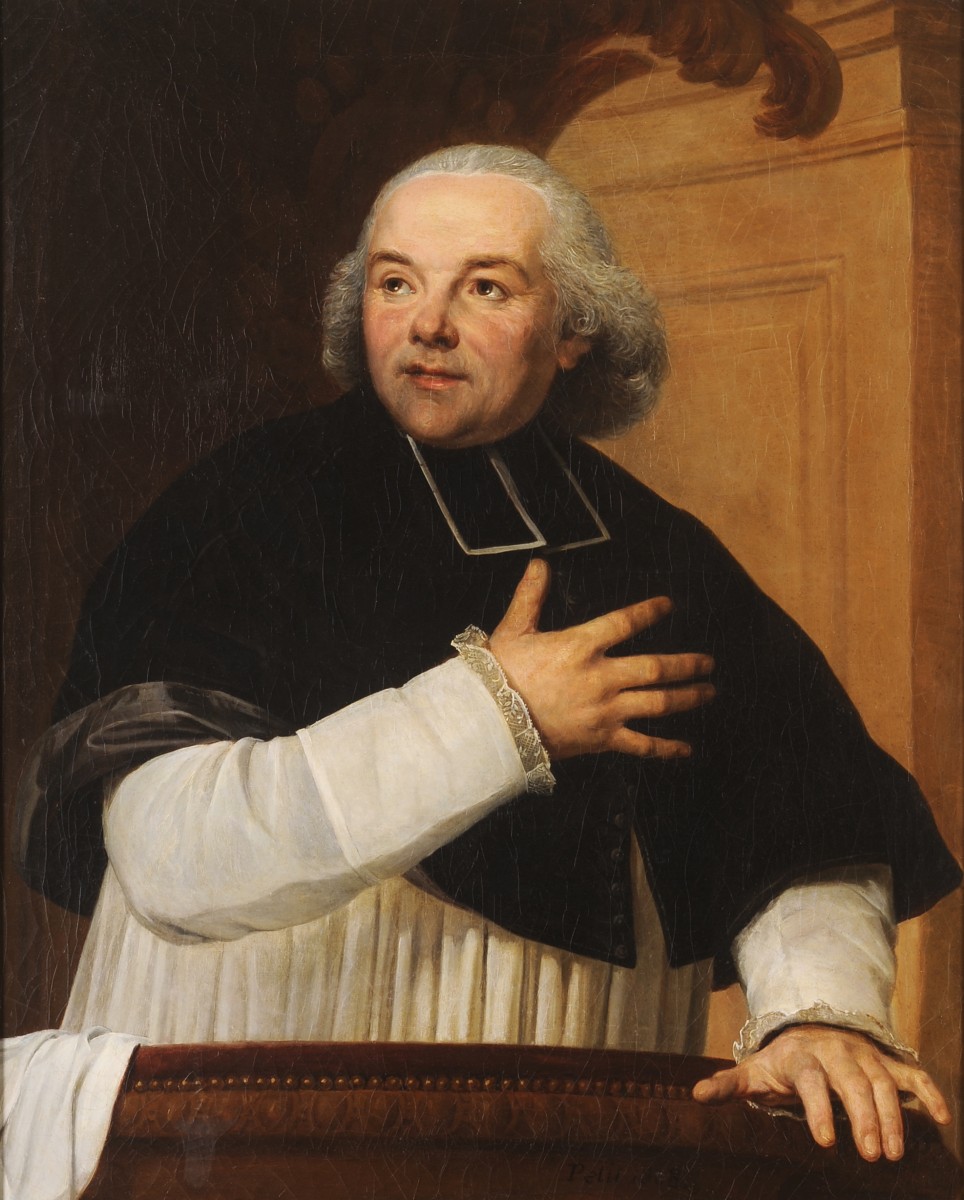
Portrait of a Priest Delivering a Sermon
Oil on canvas
H. 83 cm; W. 68 cm
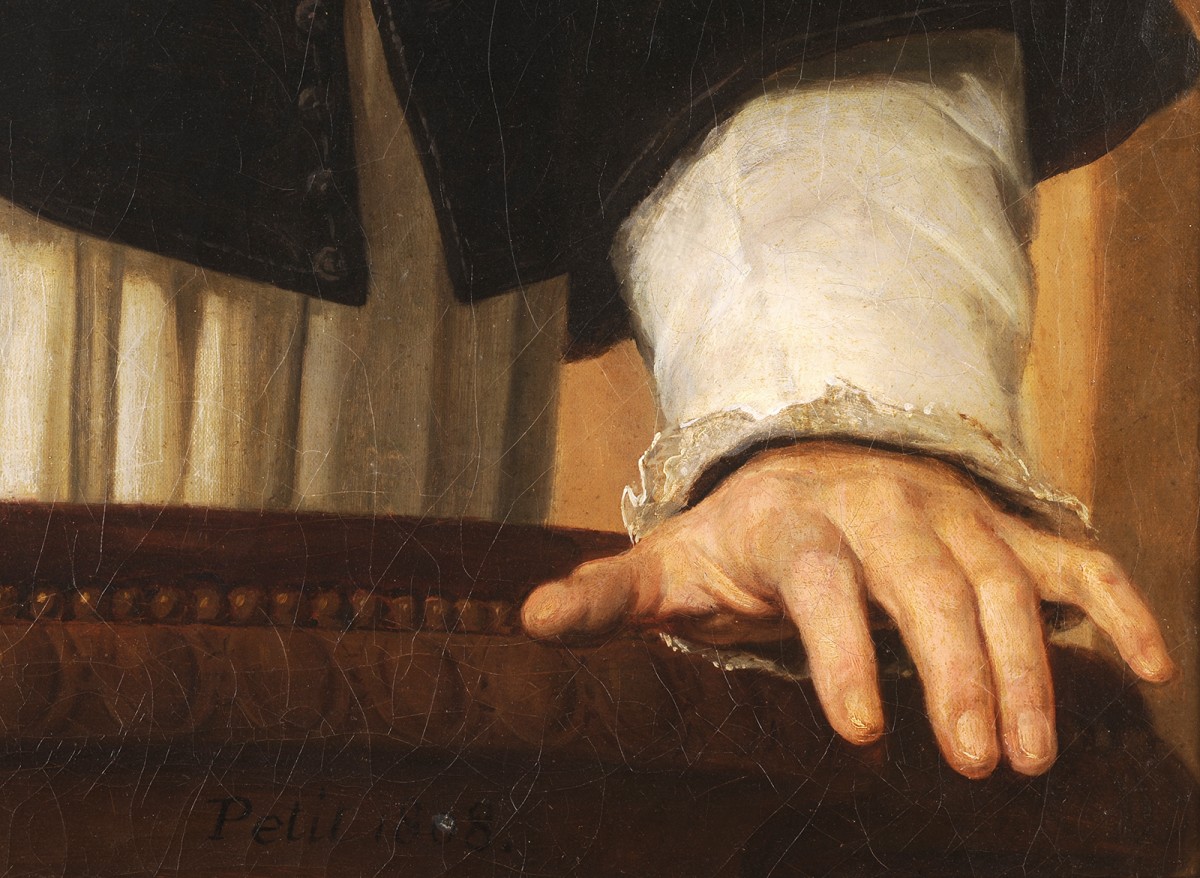
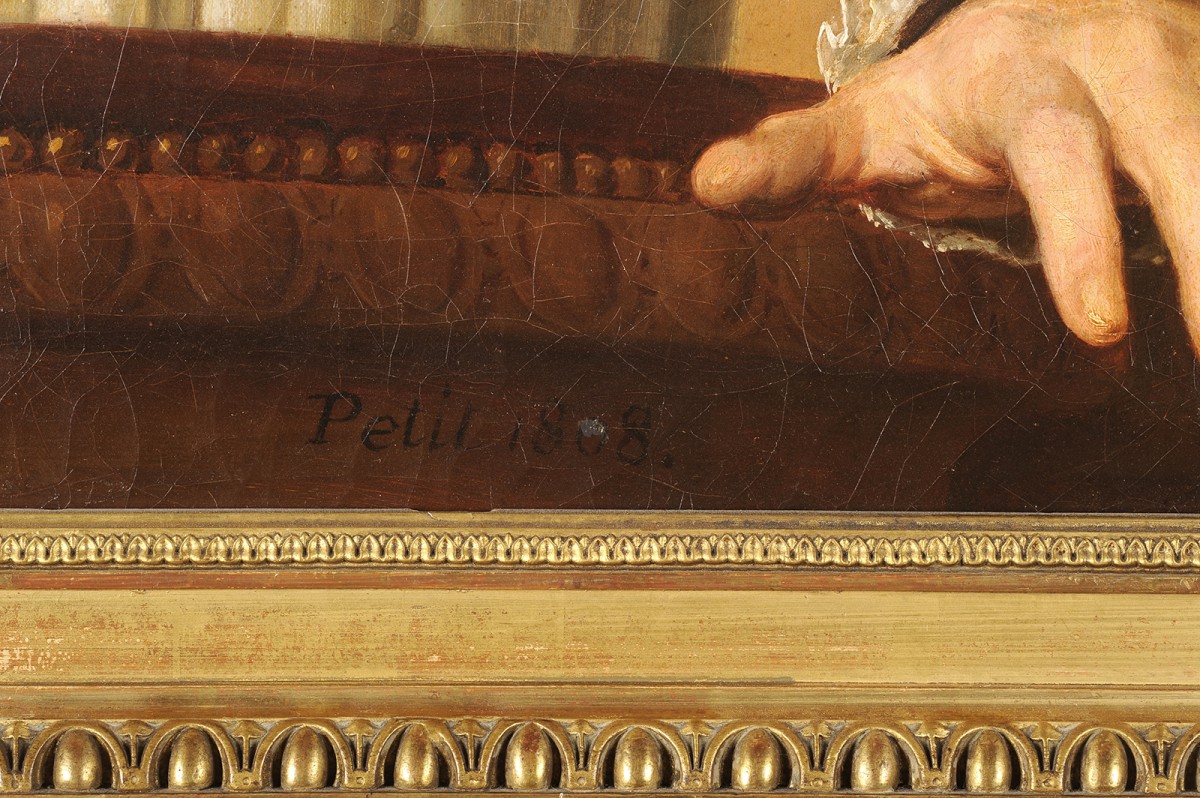
Signed lower center, dated 1808
Exhibition: Possibly Salon of 1808, no. 468 “Several portraits. Same number”
Claude François Henri Petit de Villeneuve came from a family connected with the decorative arts: he was the grandson of a Parisian silversmith and was also descended from several renowned clockmakers, including his great-grandfather, Jean-Baptiste Dutertre de Véteuil (1705–1773). His family name also presents a particularity: “de Villeneuve” did not result from the purchase or ownership of an estate, but from the addition of his mother’s surname. Throughout his career, Claude François used his full name in various forms, and it would appear that this designation was adopted only after his father’s death. His brothers, meanwhile, chose other family names. Thus, at the Salons de la Correspondance of 1781–1782, Pahin de la Blancherie mentioned Simon and Jean-Baptiste Petit, even though Simon does not appear in the family records.
In Paris, Claude François married Rosalie, also known as Rozalie, Paupe. Historical sources indicate that she was the daughter of Jacques-Nicolas Paupe, a merchant established in Paris, and Rose Molière. Jacques-Nicolas Paupe was both an art lover and a close acquaintance of the draughtsman Aignan-Thomas Desfriches (1715–1800). His collection notably included works by Greuze, Fragonard, Danloux, and Taunay. He also played an important role as a patron of Joseph Vernet (1714–1789), from whom he commissioned around twenty paintings over a period of ten years. The Paupe family also had connections in Troyes. Although the date of Rosalie’s death is unknown, it is established that Claude François married for a second time in 1796, to Louise-Thérèse Andry. Her family also had ties with Troyes, a fact that may suggest affinities with Jansenist circles.
The artist’s birth and death records were reconstructed in 1872 at the initiative of his grandson, who was an architect. Among the documents recovered at that time was his certificate as a student of the Académie royale de peinture et de sculpture. From 1781 onward, Claude François participated in the Salon de la Correspondance. He subsequently continued to exhibit at various Paris Salons, notably in 1808, 1810, 1814, and 1817. His artistic activity encompassed several techniques, as he worked in oil painting, miniature, and pastel. After the Restoration, he was awarded the Médaille de la Fidélité.
In 1820, following the closure of his studio, a sale of his works was organized at 11 Rue des Blancs-Manteaux.
This highly animated portrait depicts one of the few moments during Mass when the priest spoke in French, ascending the pulpit to preach to his congregation. Here, he leans over the velvet-covered balustrade, his hands in motion illustrating his words.