Offered by Galerie de Frise
REQUEST INFORMATION

Louis Jean Marcel GENLIS (Paris, 1880–1957)
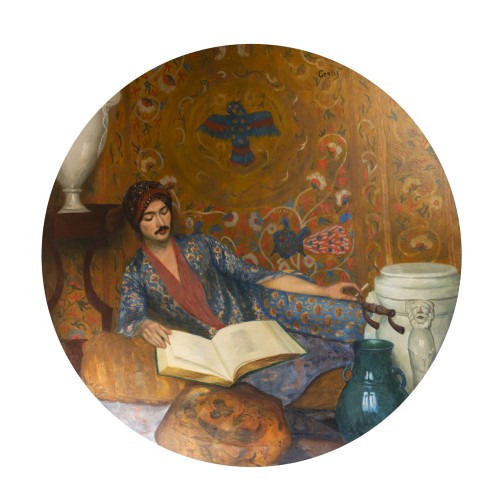
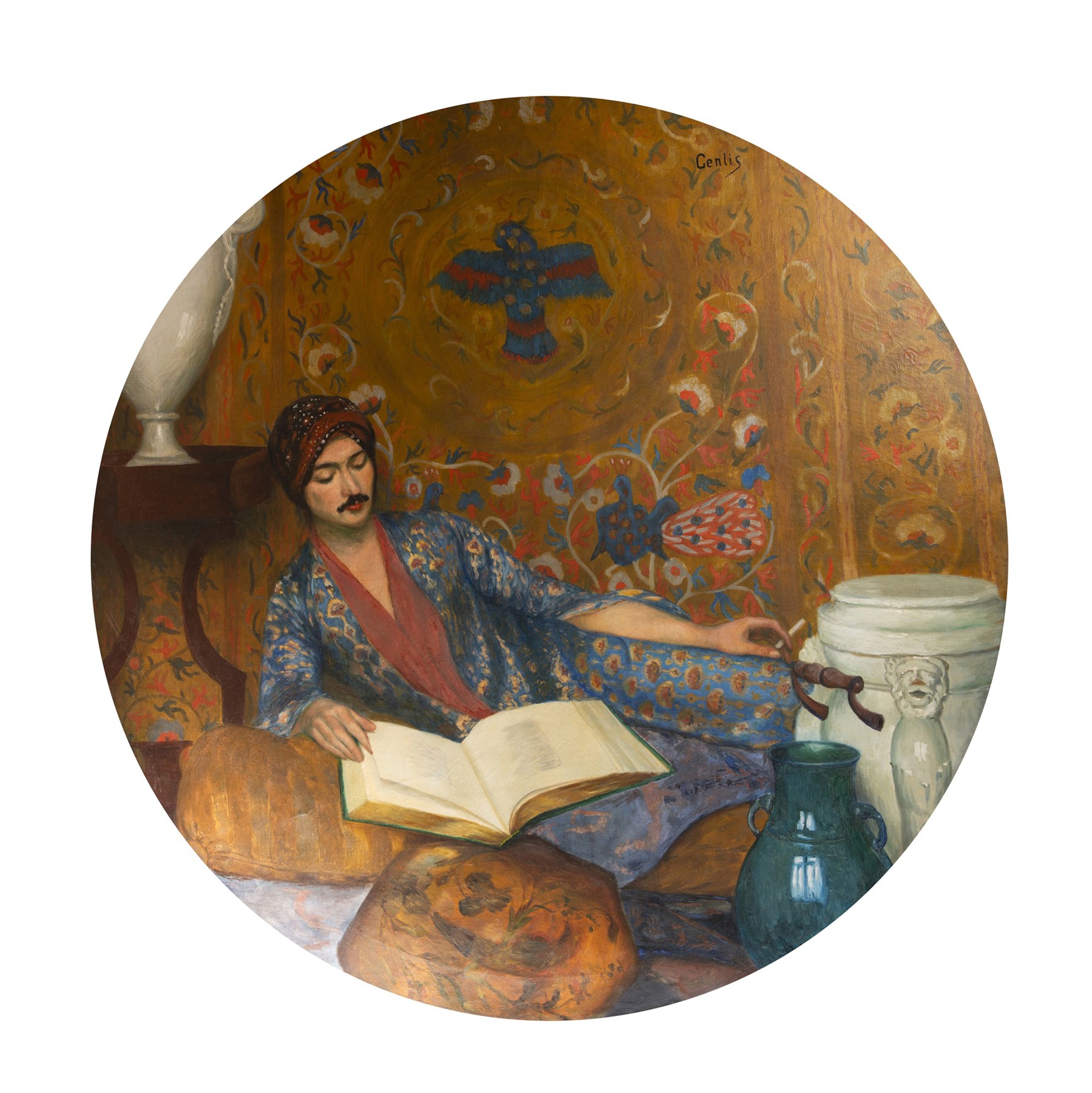
Orientalist Interior
Oil on canvas, tondo format
Diameter: 150 cm
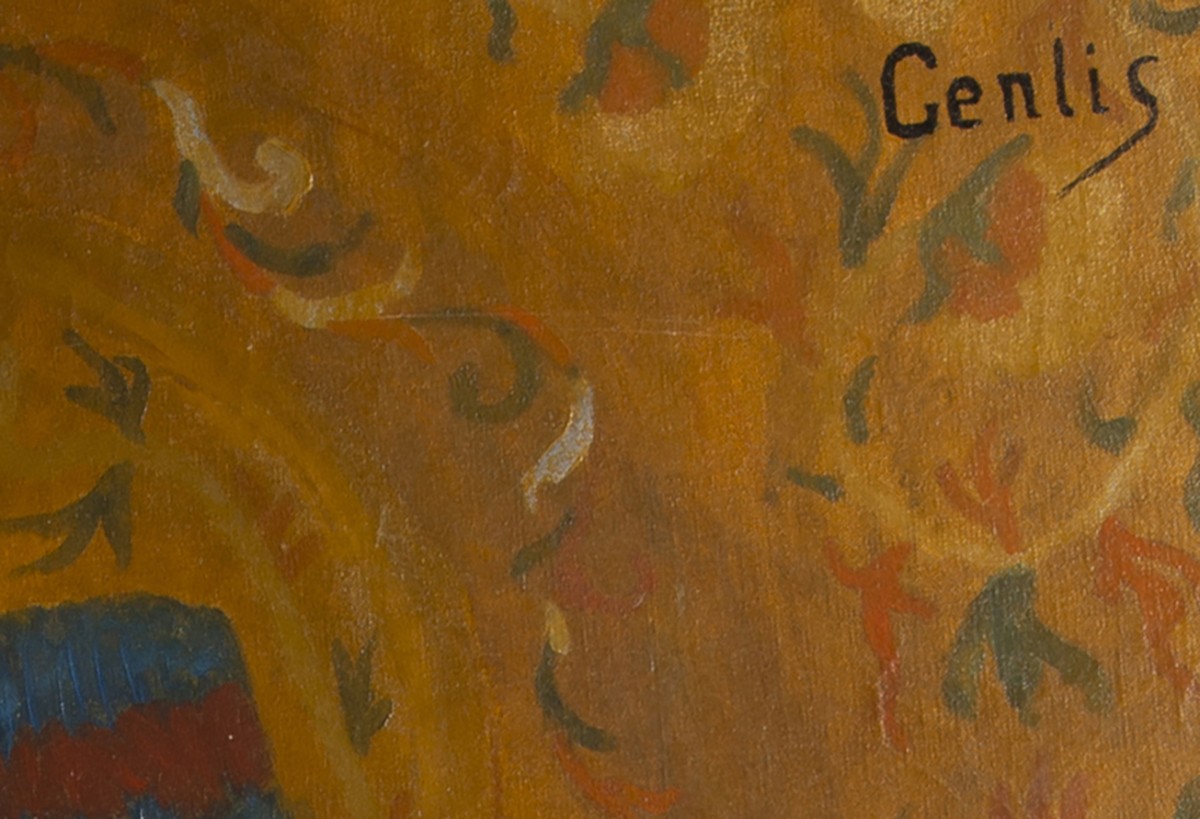
Signed upper right
Circa 1910
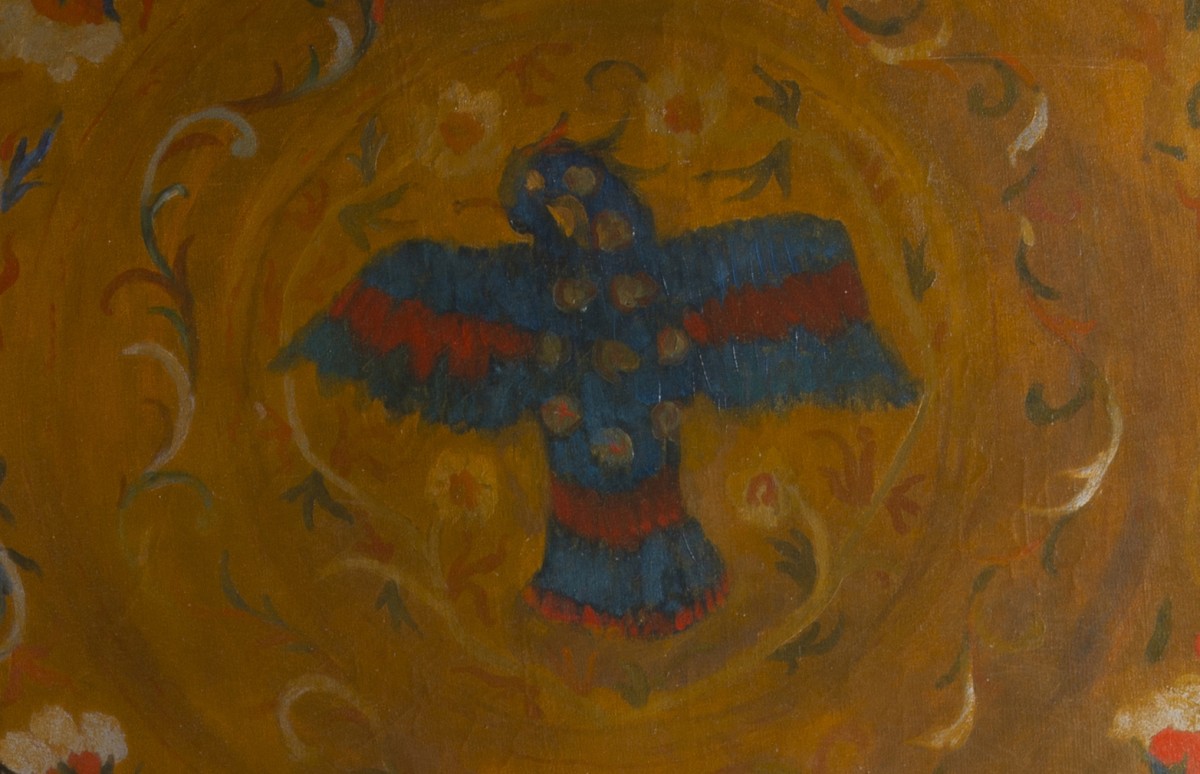
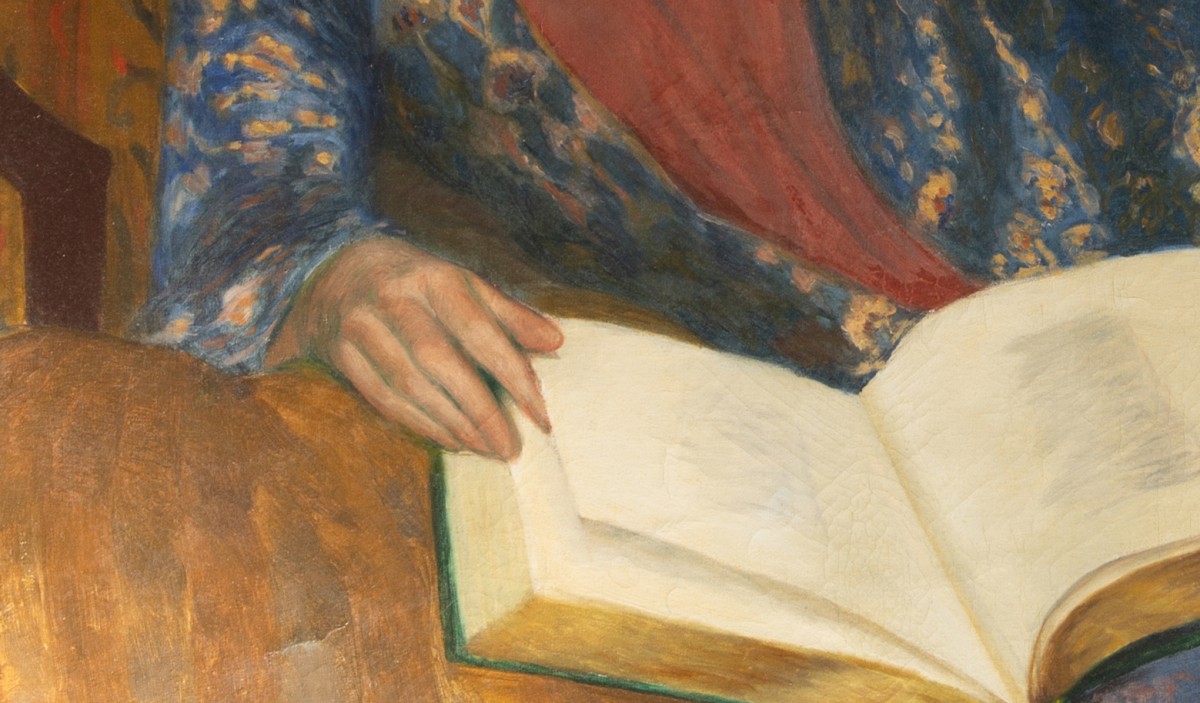
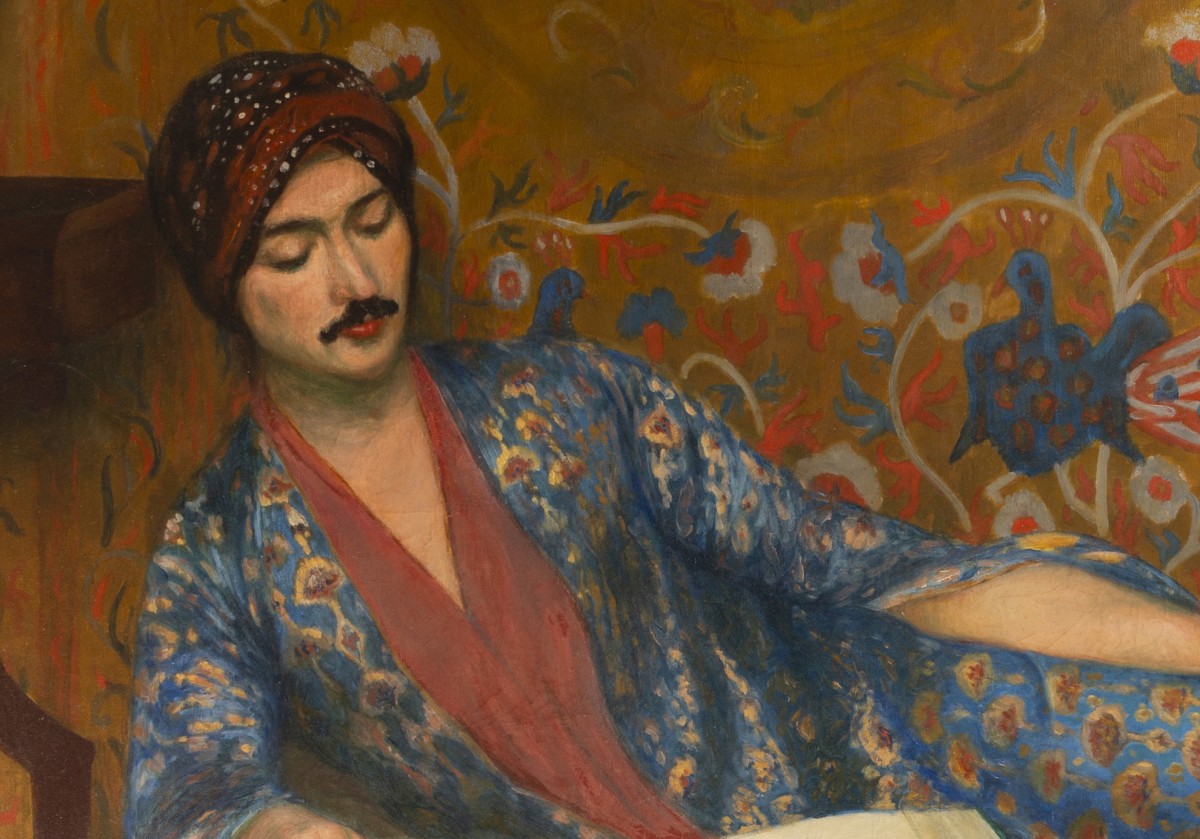
It is hardly surprising that this painting was sold to us as a portrait of Pierre Loti – a hypothesis that was quickly dismissed. Yet the Turkish costume worn by this young man, who is leafing through an album and smoking a cigarette while reclining nonchalantly on cushions, and the exotic assortment of objects surrounding him – an Indian or Persian hanging, Chinese ceramics – all evoke the fin-de-siècle fantasies of the many eccentrics who recreated a corner of the Orient in their own homes. Some were travellers who assembled their own private museums from souvenirs brought back from distant lands, like Loti. Others were members of a dreamy bourgeoisie who, with the help of a few accessories, could embark on a journey around their own rooms. Such may well be the case with our fashionable boulevard Turk…
We are inclined to see a humorous self-portrait in this painting, whose very format suggests an original and unconventional spirit. Little is known about Marcel Genlis, although one may suspect that a comfortable private fortune allowed him to paint without having to concern himself with pursuing a career. We do know, however, that he lived in Paris at 13 Rue de Lisbonne and that he exhibited at the Société Nationale des Beaux-Arts between 1909 and 1912, and again in 1922. He probably associated with Lucien Simon, to whom he was likely connected through his family (his mother being a member of the Dauchez family). We have been informed of a beautiful Parisian apartment in which several paintings by Marcel Genlis hung alongside works by Lucien Simon.
Could the artist have taken his self-mockery so far as to title this painting Le Divan (Still Life) – the title of a painting Genlis exhibited at the Société Nationale des Beaux-Arts in 1911? Can this patchwork of shimmering fabrics, against which the glossy surfaces of celadon porcelain stand out, really be considered a still life? Whatever the case, the languid tranquillity of the young sitter contrasts with the whirlwind of colourful patterns swirling across the hanging in the background.