Offered by Galerie de Frise
REQUEST INFORMATION

Léon COGNIET (Paris 1794 – Paris 1880)
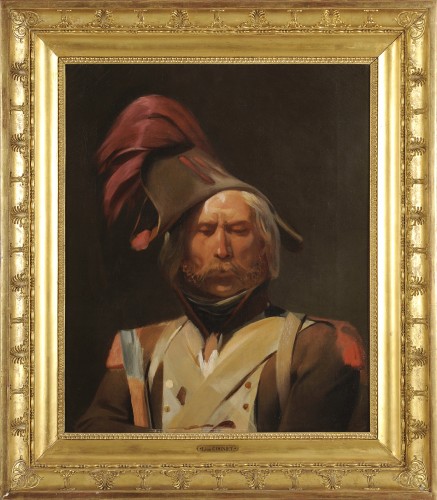
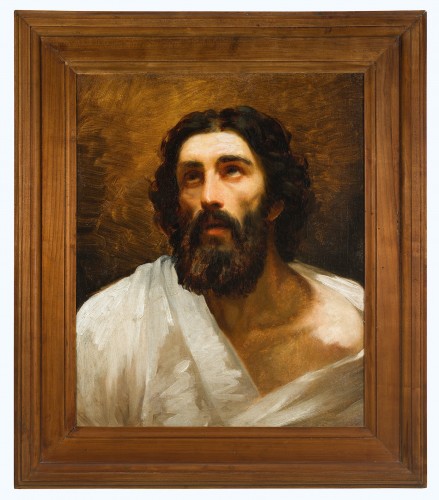
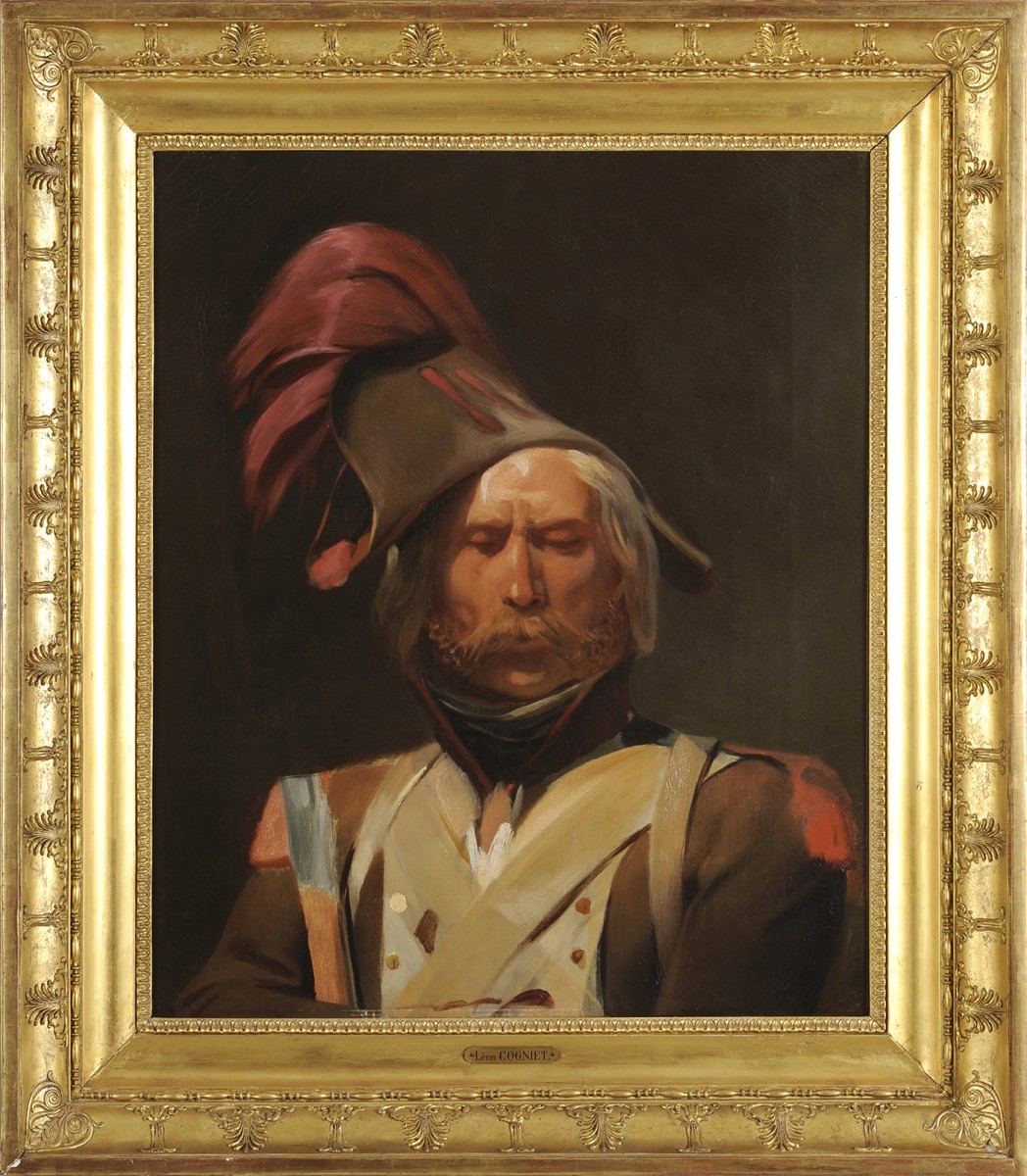
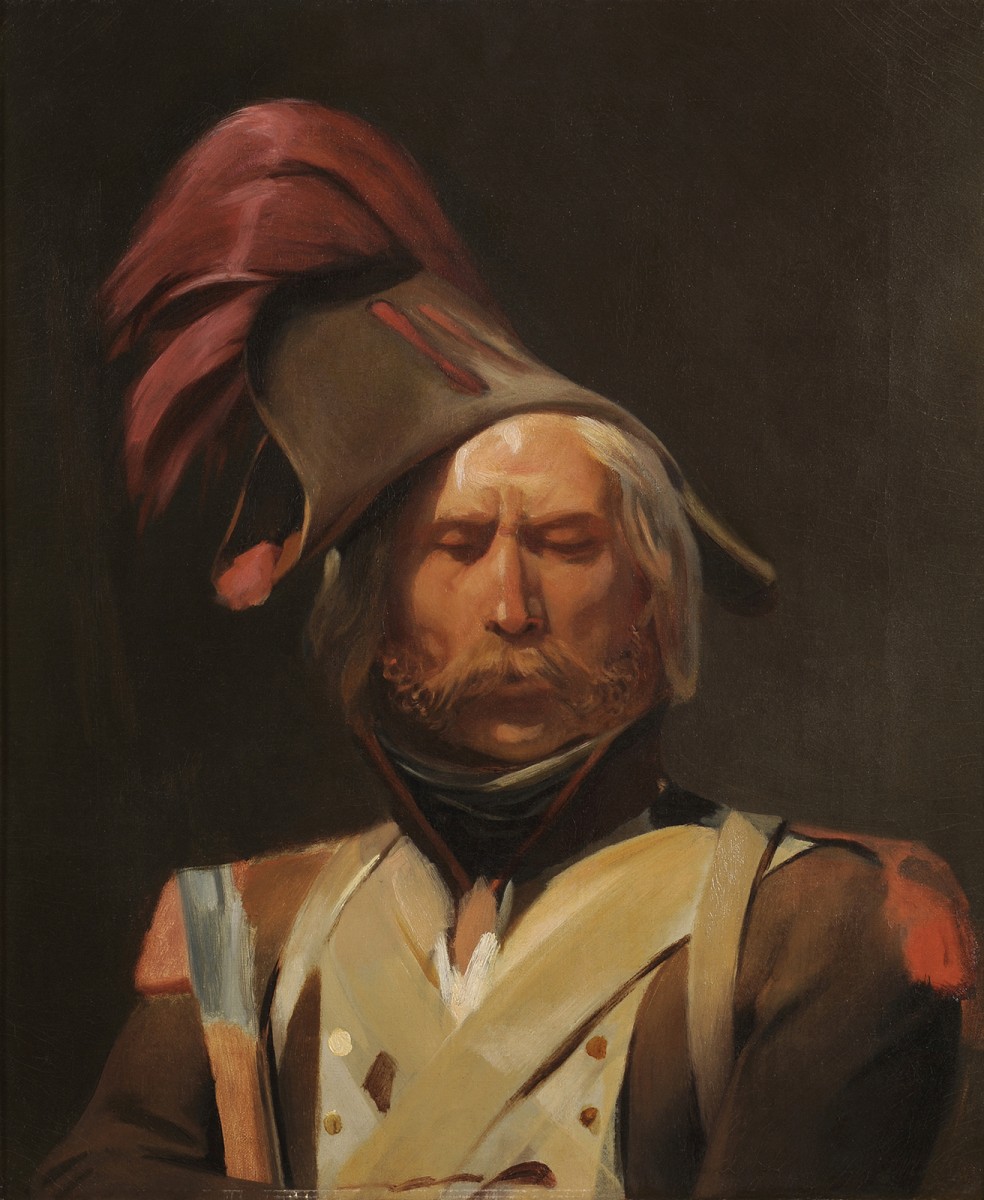
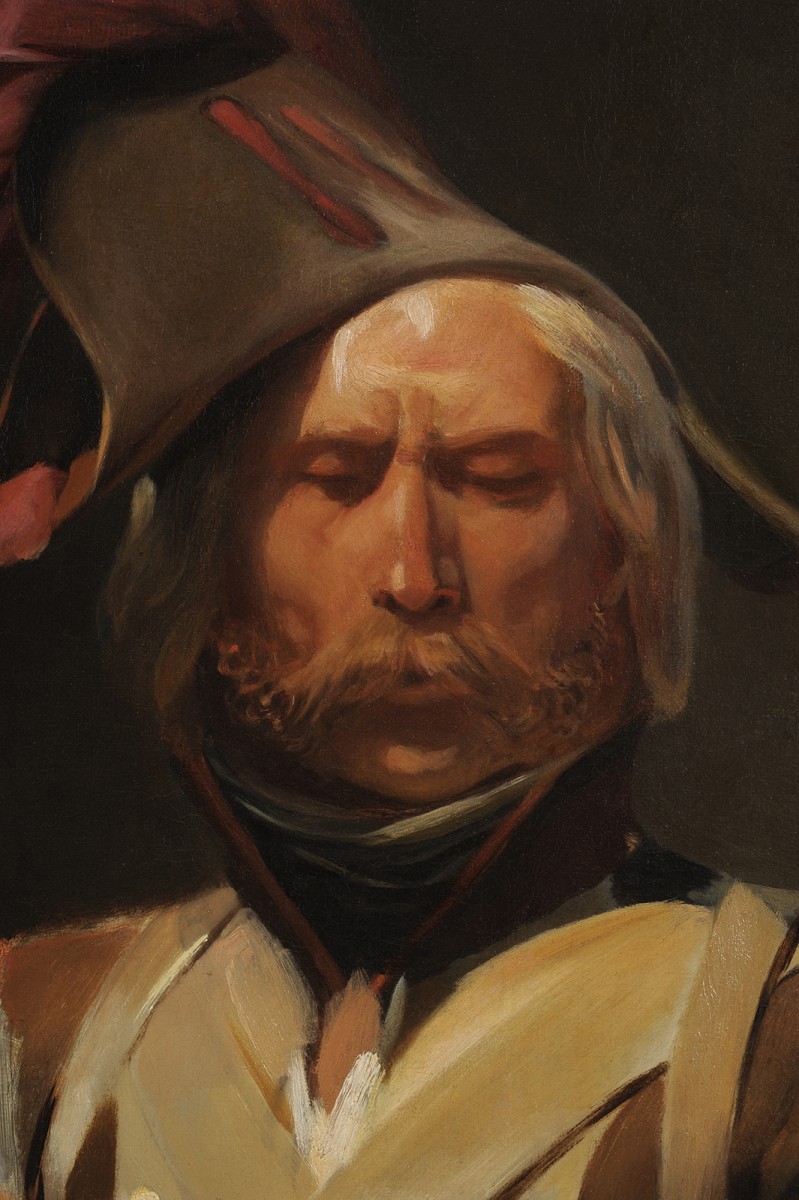
Study for the Figure of the Guard in the Louvre Ceiling Painting:
“The Egyptian Expedition under the Command of Bonaparte”
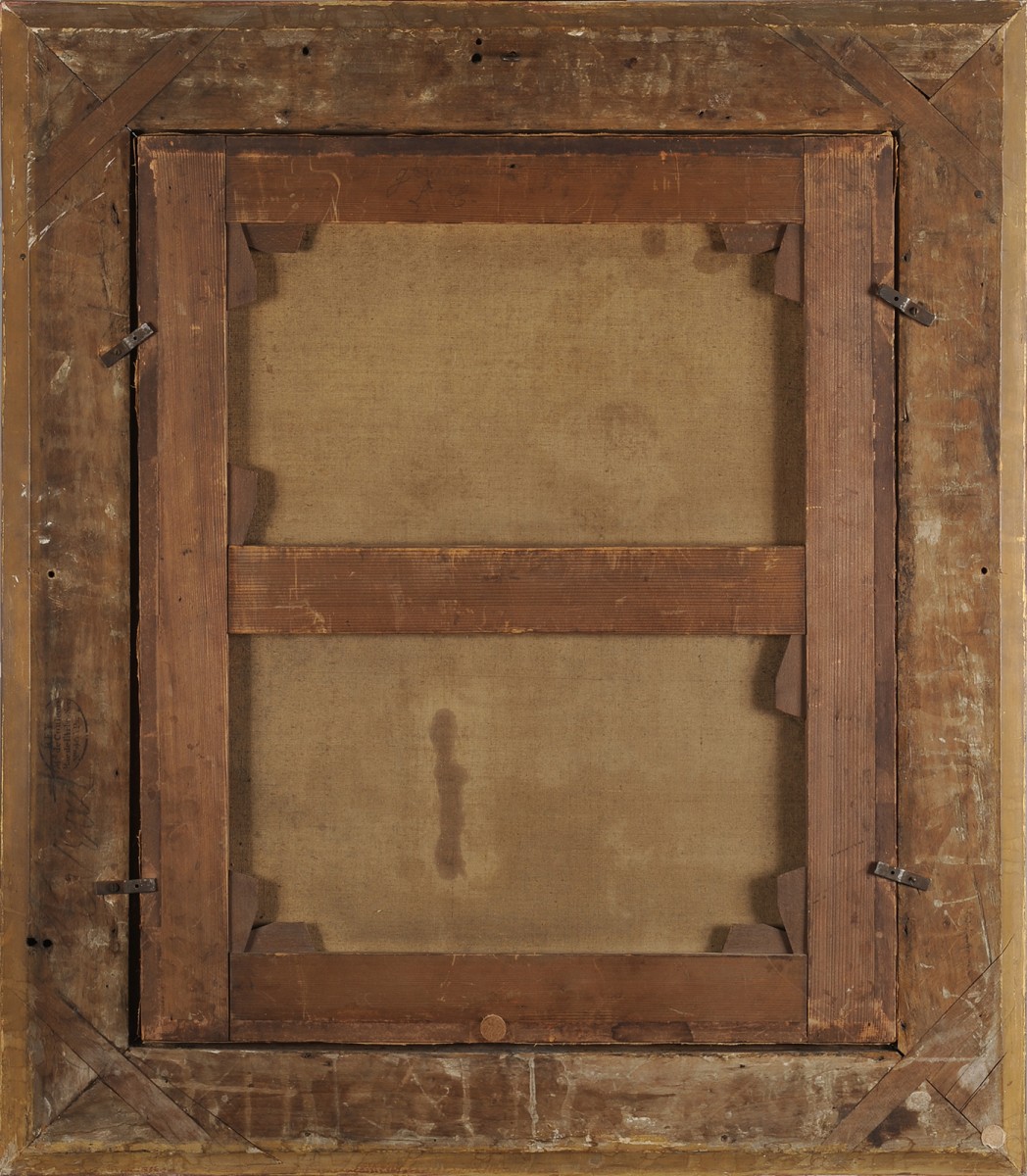
Oil sketch mounted on canvas in the mid-19th century
H. 65 cm; W. 54 cm
Circa 1830–1833
Related work:
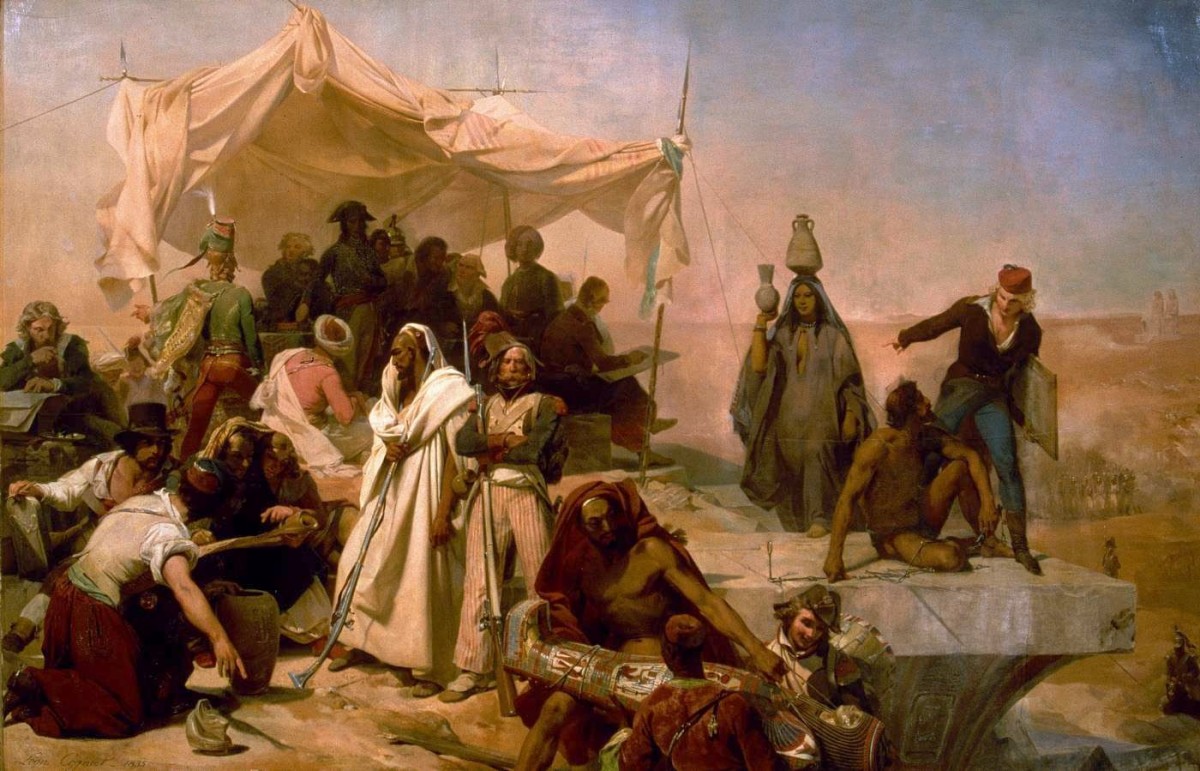
- The Egyptian Expedition under the Command of Bonaparte, ceiling painting commissioned in 1828 for the Room of Papyri and Greek Manuscripts on the first floor of the southern wing of the Old Louvre (Campana Gallery).
Our study is preparatory to the bust of the central figure of the guard in the Louvre ceiling painting. Commissioned under Charles X, this ceiling was the subject of hesitations and successive projects. Completed only in 1835, it was still unfinished when presented at the Salon of 1833. Cogniet was, moreover, known to be slow and meticulous in his work.
Without resorting to allegory, the artist proposed a historical fiction showing Bonaparte surrounded by scholars and artists, witnessing the discovery of a sarcophagus during the Egyptian campaign — thus highlighting France’s scientific role during this disastrous expedition.
The finished work is, in fact, disconcerting and stands apart from the other decorations of the Louvre. Bonaparte, in the shadow of a tent, is barely visible. The reception was mixed: “Commonplace, dark figures are digging in coffee-colored ground: that is all!” exclaimed Paul Mantz.
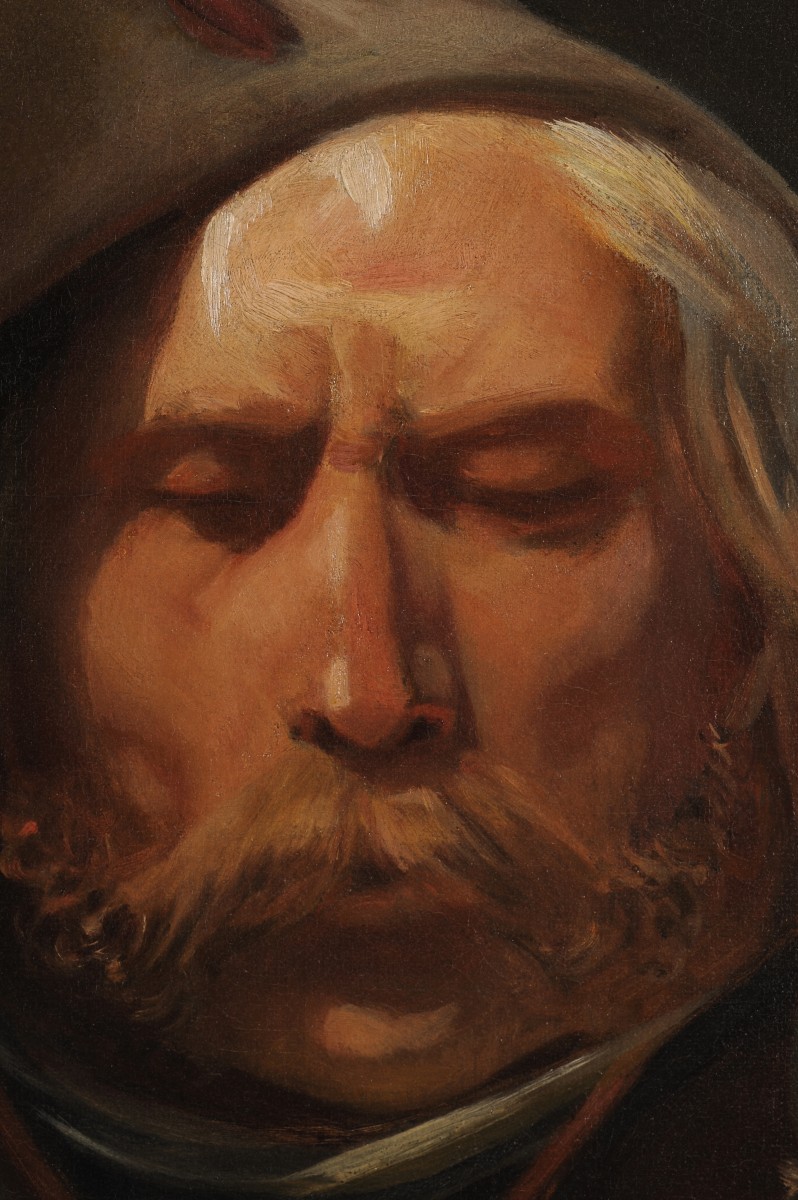
The figure of our guard is no less surprising: Cogniet depicts him as an old, drowsy veteran of Napoleon’s army, leaning on his rifle. His bicorne, tilted to one side of his head, adds a comical element to a scene that is not intended to be humorous.
Yet comparison with an overall study for the ceiling, predating our canvas, proves that Léon Cogniet altered the guard’s original pose to deliberately give him this sympathetic and somewhat ridiculous appearance — a transformation all the more significant because the veteran occupies the center of the composition!
The existence of our sketch, executed at almost life size, also demonstrates that the painter gave considerable thought to this figure.
The study is painted with vigor, using suggestive brushwork without unnecessary details: the rifle is barely indicated, and its bayonet is reduced to a blue-silver patch.
There is still something of Géricault in this sketch, in which Léon Cogniet reveals himself to be far more nonconformist than a man of the “juste milieu.”