Offered by Galerie Magdeleine
REQUEST INFORMATION

Paintings and drawings from the 17th to the 19th century
Nicholas Joseph CROWLEY (Dublin, 1819 – London, 1857)
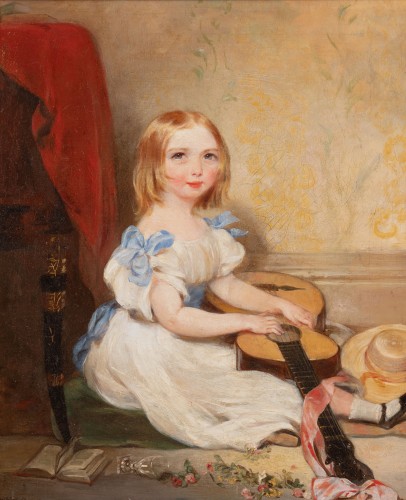
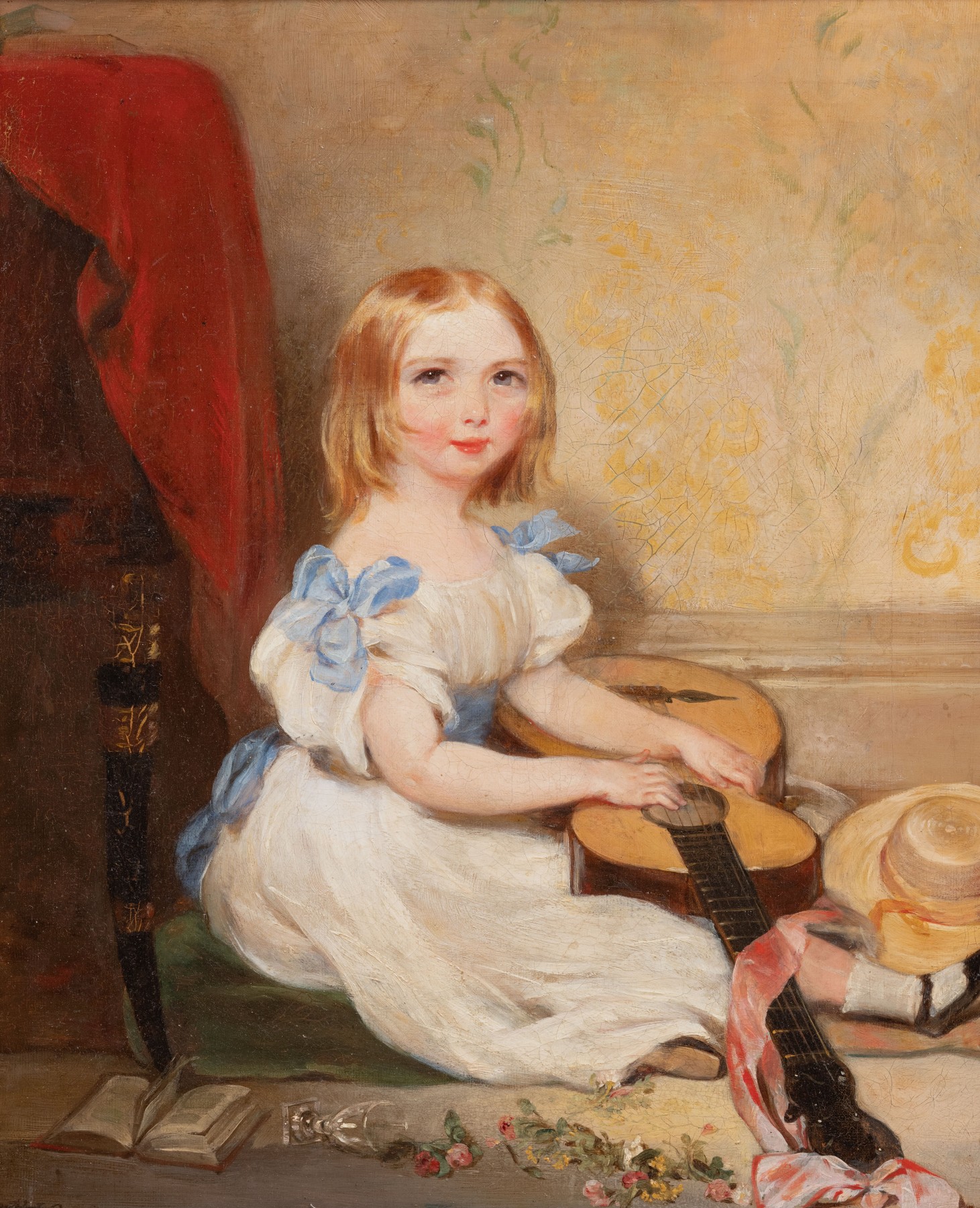
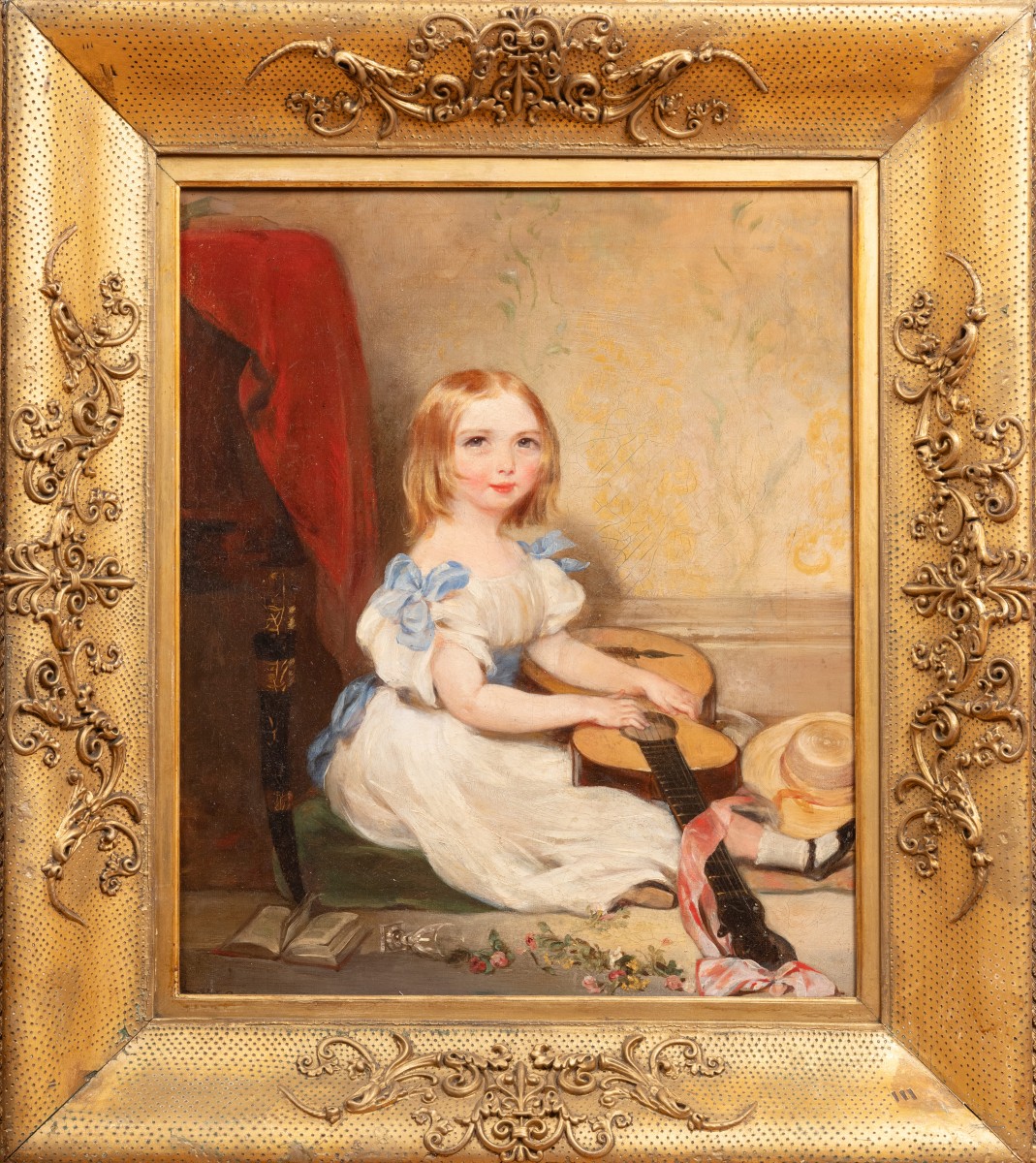
Portrait of Camilla with a Guitar
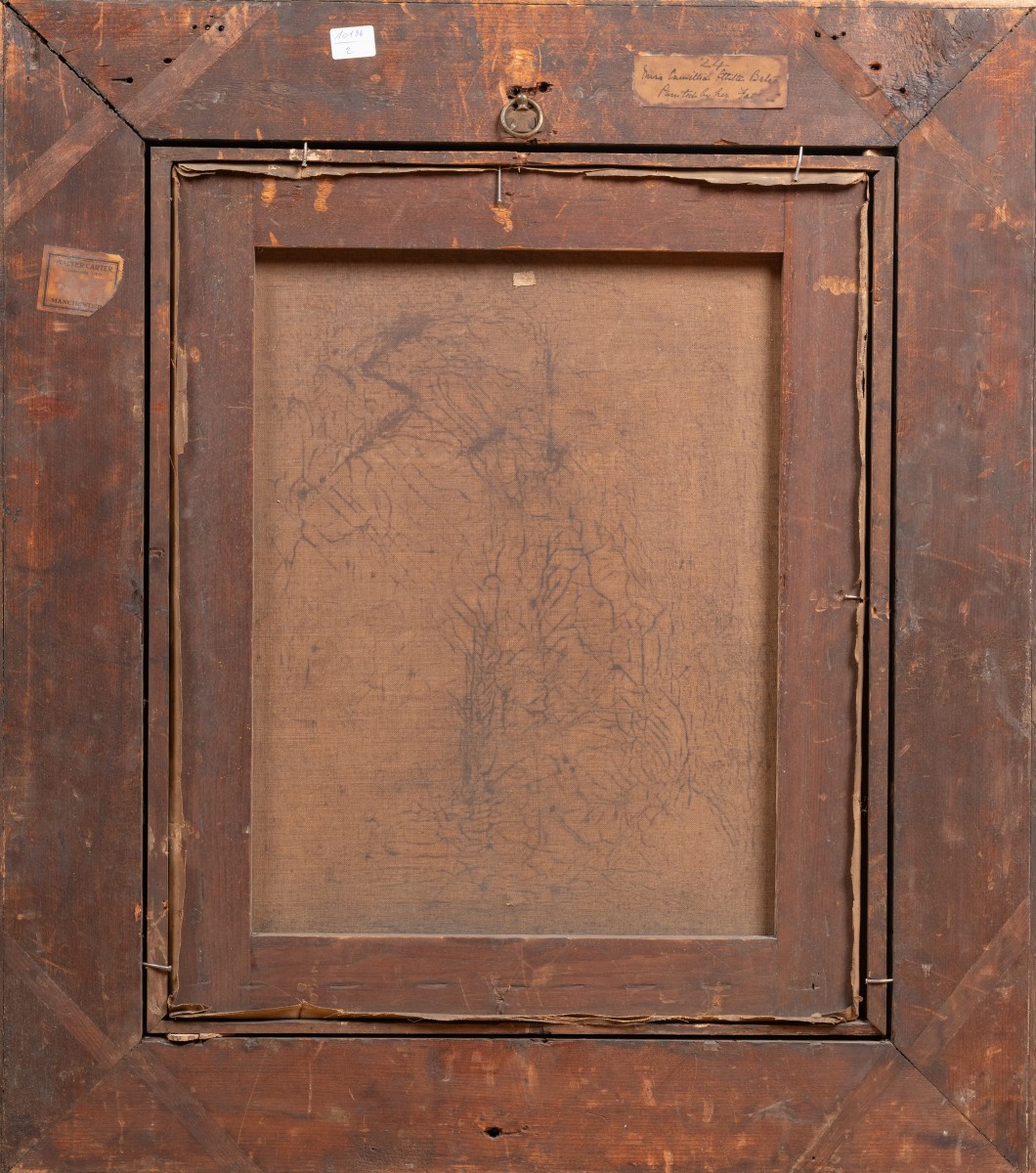
1838, signed and dated lower right: N J Crowley 1838. Oil on canvas. H: 53.5; W: 43.5 cm. On the reverse, handwritten label: “Miss Camillia Bates”.
History: Commissioned by William Henry Bate.
William Henry Bate was born in Ireland around 1788. He belonged to a family of artists and art dealers particularly active between Dublin and London at the turn of the 18th and 19th centuries. Recent research suggests that he was most probably the son of Chichester Fortescue Bate (circa 1760–1840), a picture restorer and art dealer established in London from at least 1803.
His early life remains imperfectly documented. In November 1811, he was registered at the British Museum as “Mr W. Heny Bate, 36 Brownlow Street, Long Acre”, on the recommendation of the painter Henry Fuseli, one of the major figures of the British art scene. Several London views exhibited at the British Institution around 1810, notably a View on the Thames, near Millbank, are generally attributed to him. However, exhibition catalogues of the period simultaneously mention several artists from the Bate family, sometimes making it difficult to identify their respective works precisely.
On October 9, 1824, he married Maria Louisa Murphy, sister of the Irish writer and art historian Anna Jameson. This marriage connected him to one of the most influential intellectual circles of 19th-century Anglo-Irish society. A first daughter, Geraldine, was born from this union in 1829, followed by Camilla, the sitter in our portrait, in late 1835.
From the 1830s onward, William Henry Bate was increasingly identified as a picture dealer rather than an artist. The diaries of the scholar Henry Crabb Robinson mention him several times between 1836 and 1839 as an intermediary responsible for selling a group of paintings from the estate of George Barret Aders, a collector and art enthusiast.
In December 1836, Robinson, who had agreed to serve as one of the trustees, wrote: “I made calls on Bates a picture dealer who has some of Aders pictures to sell for us, he pleases me, he is the brother-in-law of Mrs Jameson, he asked me to take tea with him but he does not expect to dispose of the pictures till the spring.”
In March of the following year, the arrangement between the two men appears to have been formalized: “called on Mr Bates and left him a letter authorising him to consider Mr Lovenhagen as the proprietor.”
It was at this time, during 1838, that William Henry Bate commissioned Nicholas Joseph Crowley to paint the portrait of his youngest daughter, Camilla. Bate chose a painter from his own community, both men being Irish, for this highly personal portrait, reflecting the important friendships and professional connections within the Irish diaspora in London.
A child prodigy, Crowley was admitted to the schools of the Royal Dublin Society as early as 1827, where he won several prizes between 1828 and 1832.
Elected an associate of the RHA on June 18, 1836, he became a full member on May 27, 1837, making him the youngest member ever elected to the Academy. In 1838, Crowley, then in his nineteenth year, had just been admitted as a full member of the RHA and divided his professional activity between Ireland and London.
As early as the year following this commission, Robinson recorded the difficulties Bate was experiencing in his business affairs. In April, he wrote: “Bates who does not deliver up our pictures”, then, a few days later: “called on Lovenhagen who had received an angry letter from Mr Bates. The pictures are to come from Liverpool and I fear they will not come in time.”
Indeed, in 1839, Bate's business collapsed abruptly, to the point that his sister-in-law Anna Jameson had to take responsibility for part of his family, notably his eldest daughter Geraldine. The exact circumstances of this bankruptcy remain poorly understood. It may be explained by the investments he had made to arrange the sale of paintings from the Aders collection, which achieved very disappointing results when they were eventually dispersed at auction.
The last record mentioning the father and his daughter appears in the 1851 census. The document describes William Henry Bate as an Irish artist aged approximately sixty, residing at Broomfield Place, Ealing, with his wife, his daughter Camilla, and a servant.
He died shortly afterward and was buried in Ealing on July 6, 1854, at the age of sixty-five.