Offered by Galerie de Frise

Pierre LADUREAU (Dunkirk 1882 – Château-Thierry 1974)
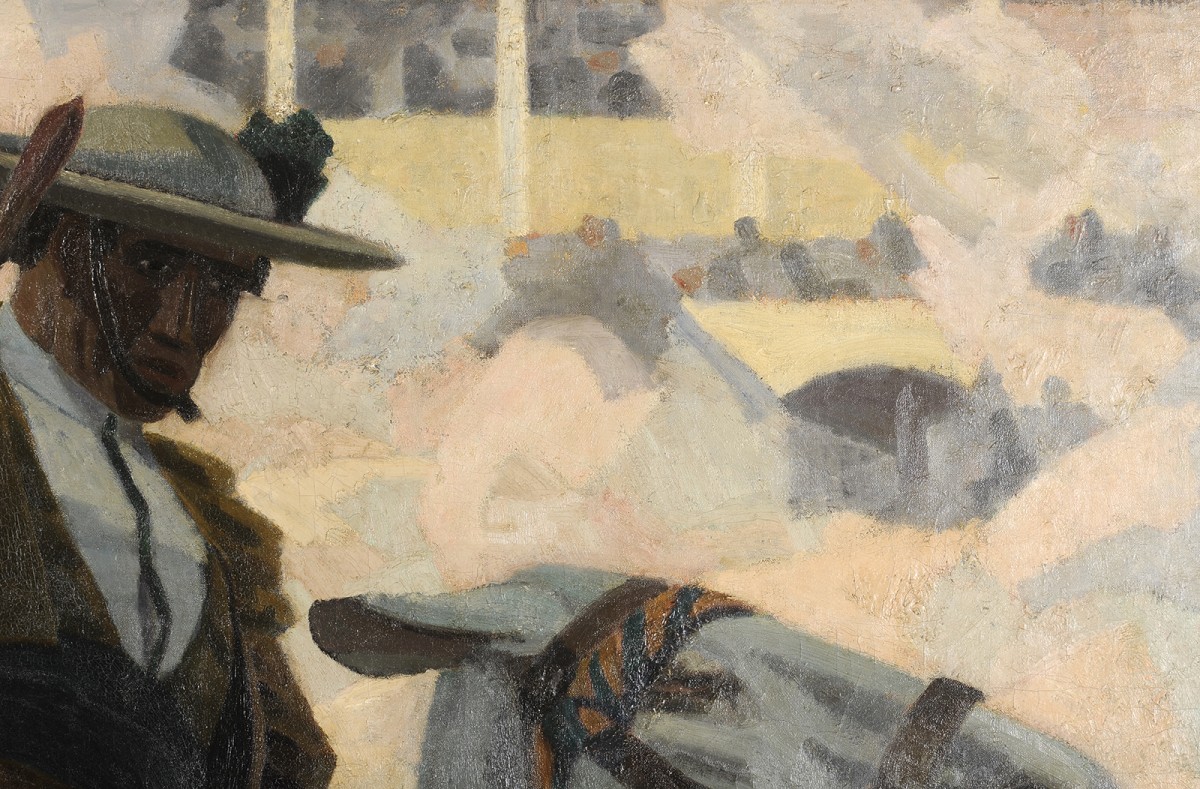
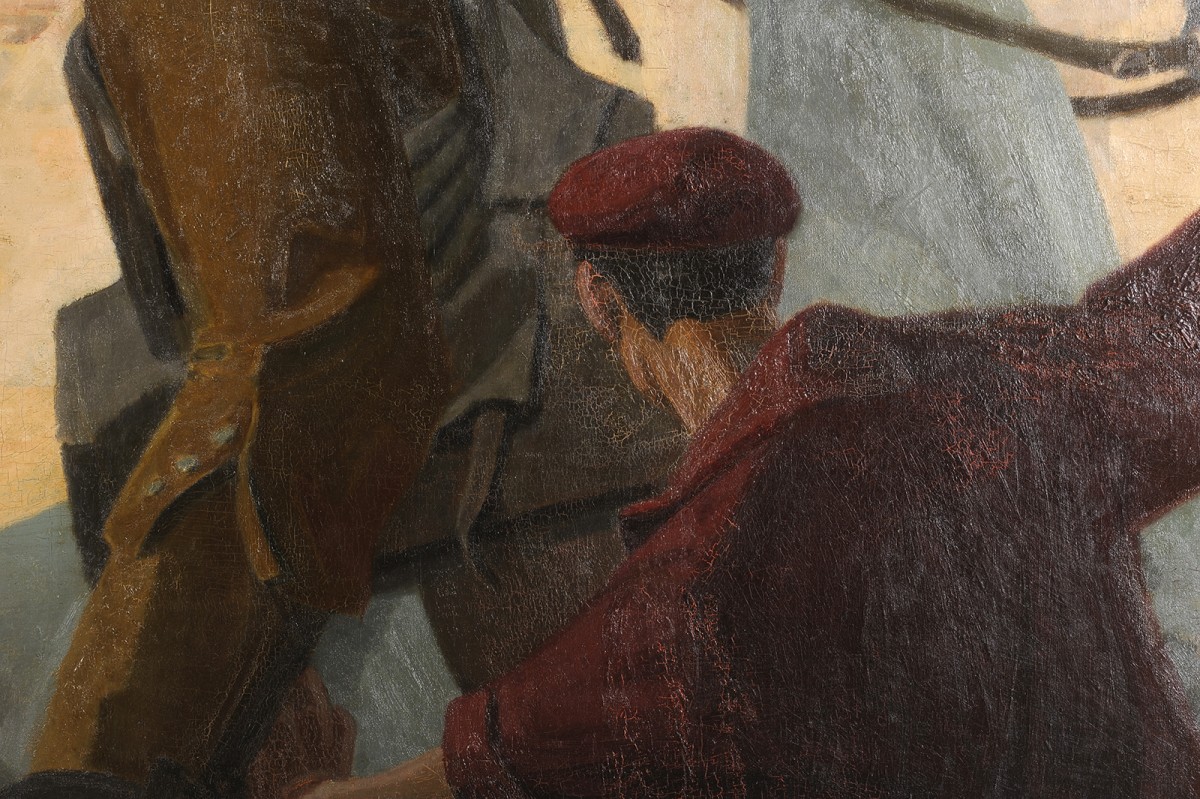
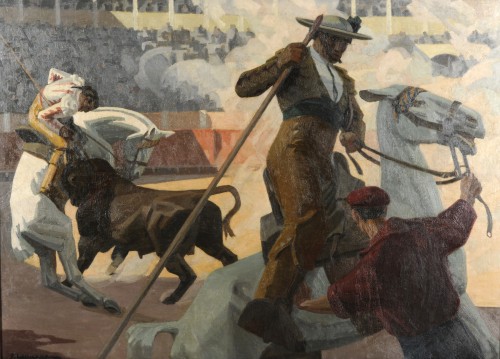
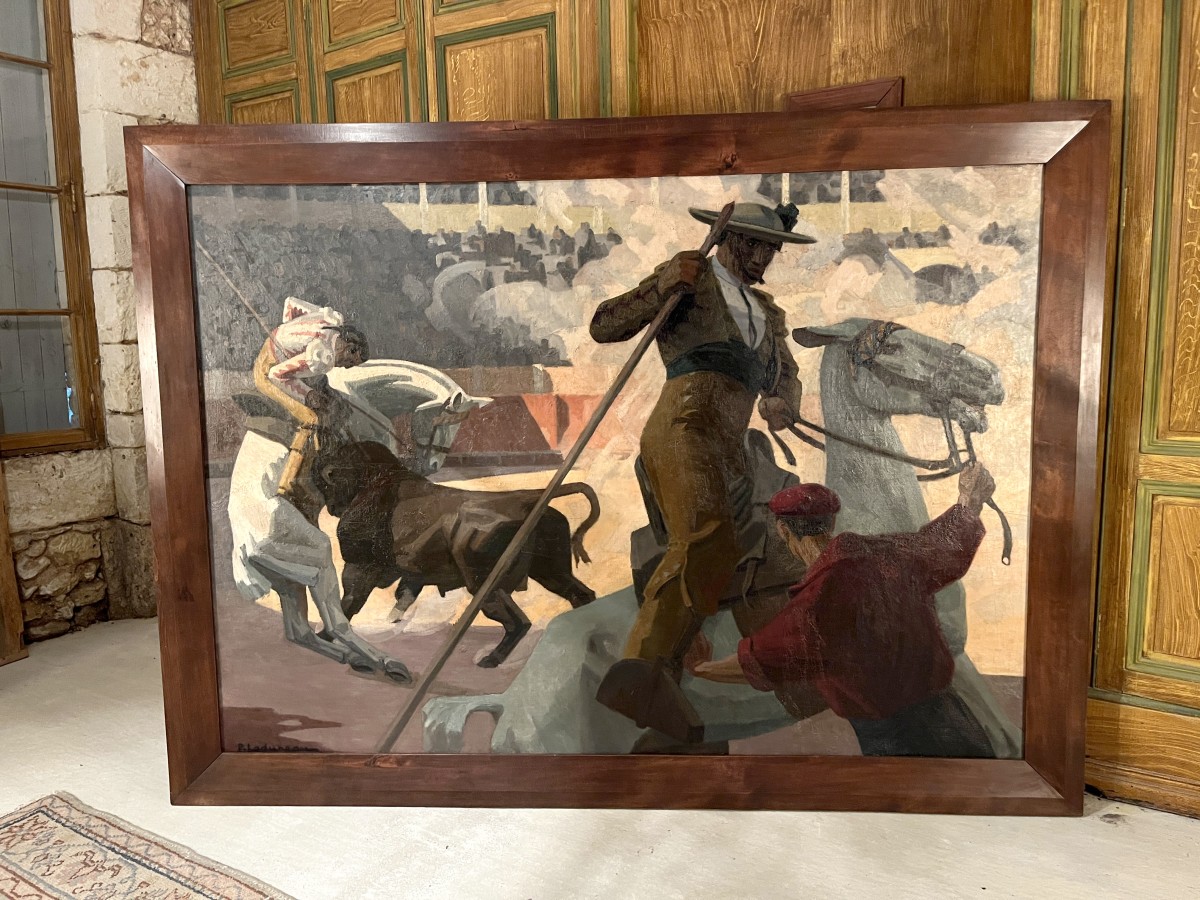
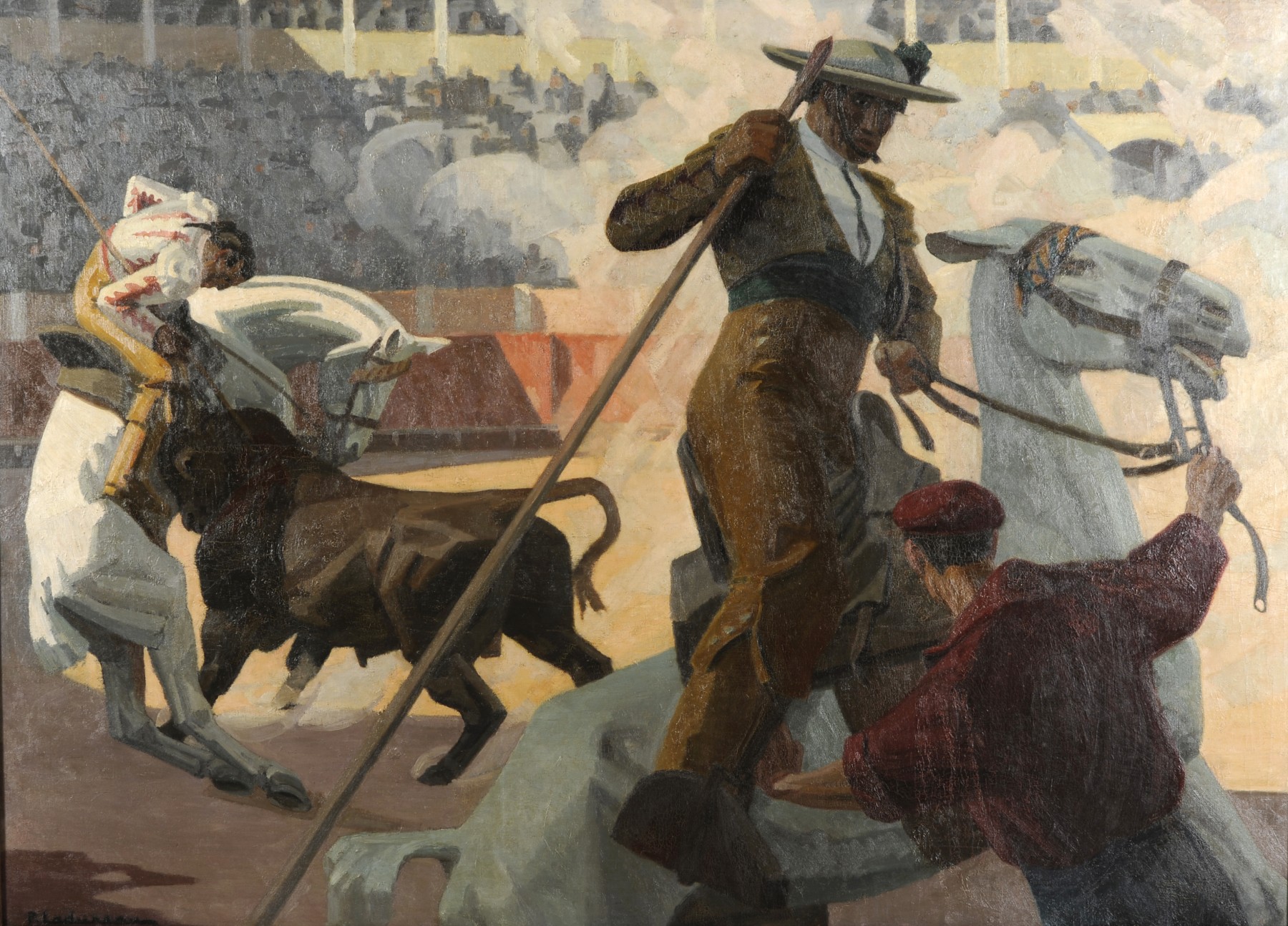
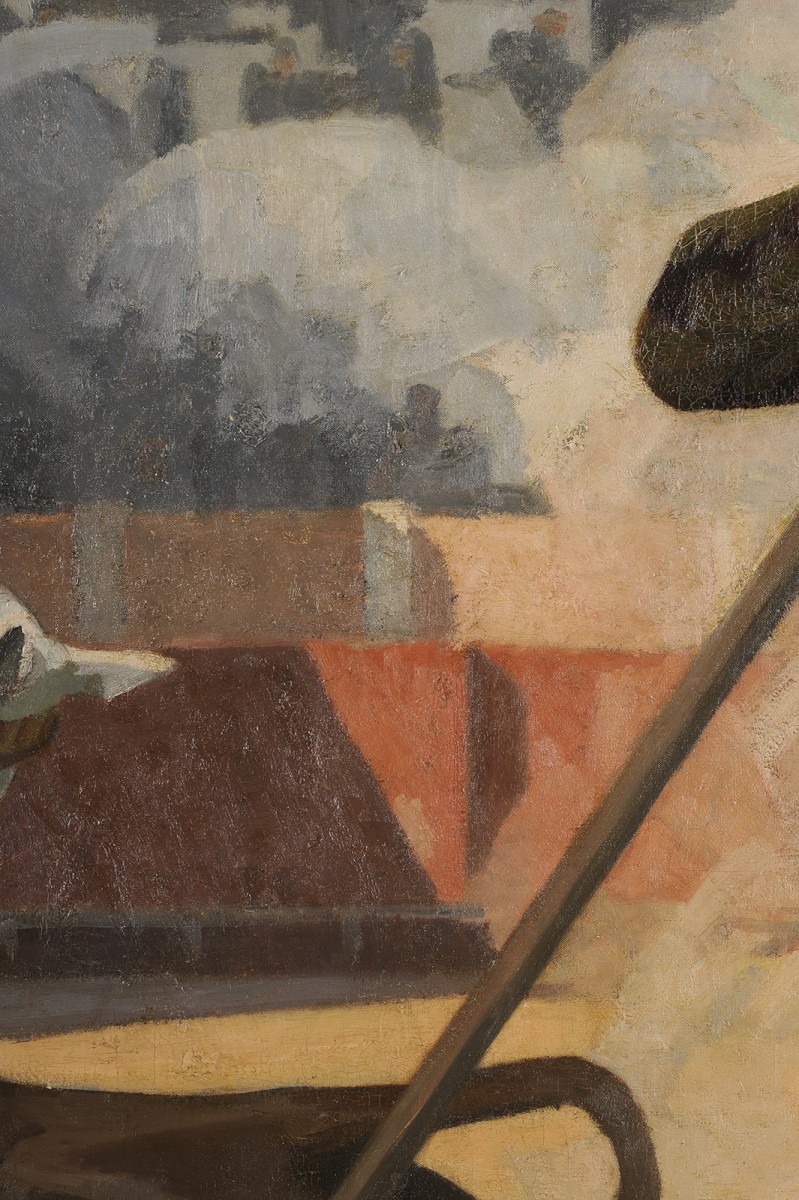
The Picadors
Oil on canvas
H. 160 cm; W. 225 cm, excluding frame
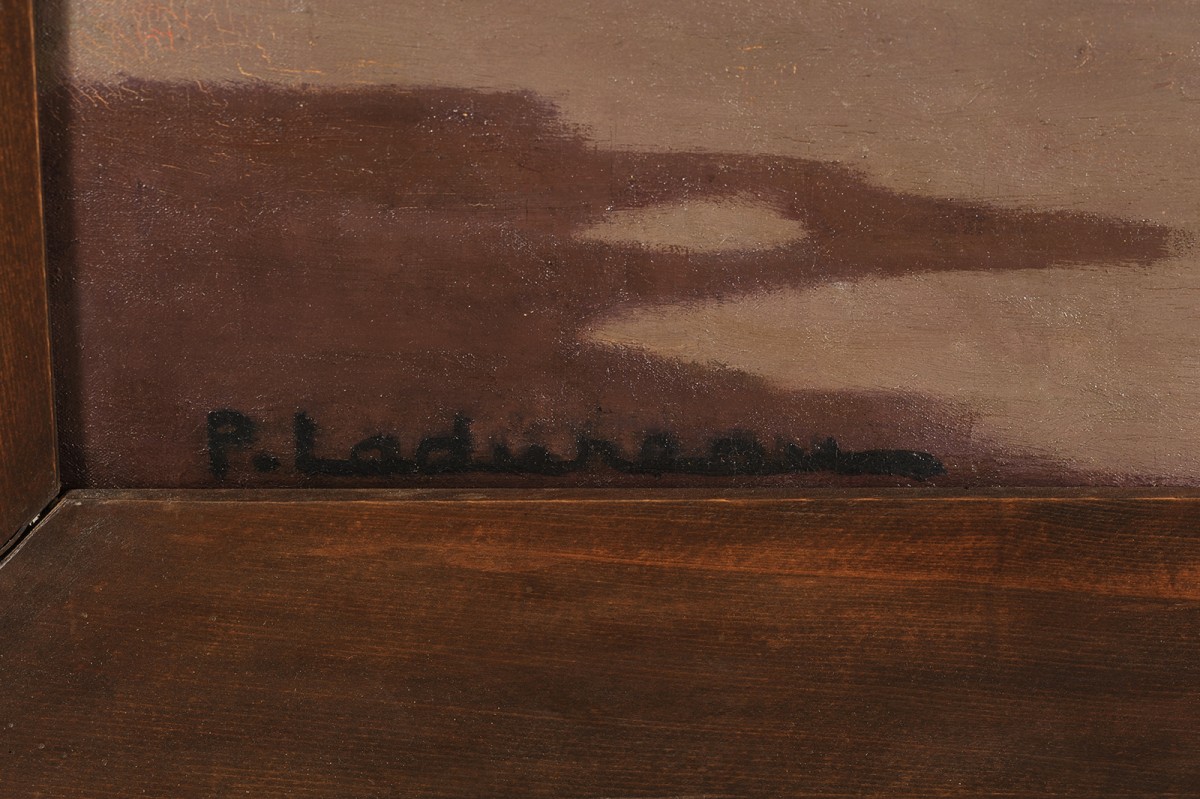
Signed lower left.
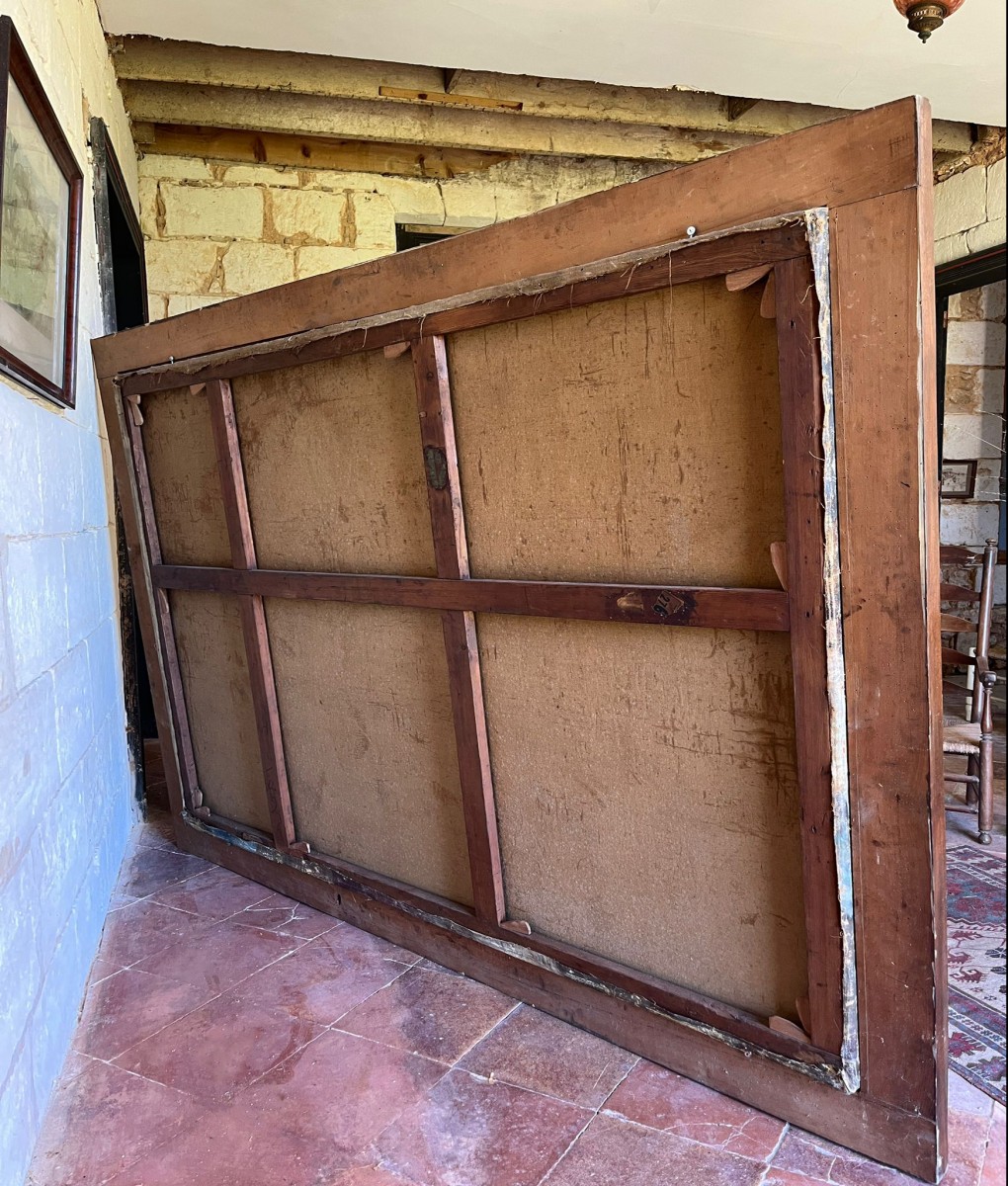
Titled on the reverse of the stretcher. Numerous transport and exhibition entry labels from various Salons, entry numbers in grease pencil.
1921
Provenance: Private collection in Avignon.
Exhibitions:
- 1922, Salon de la Société Nationale des Beaux-Arts, no. 574 (room 22 or 23)
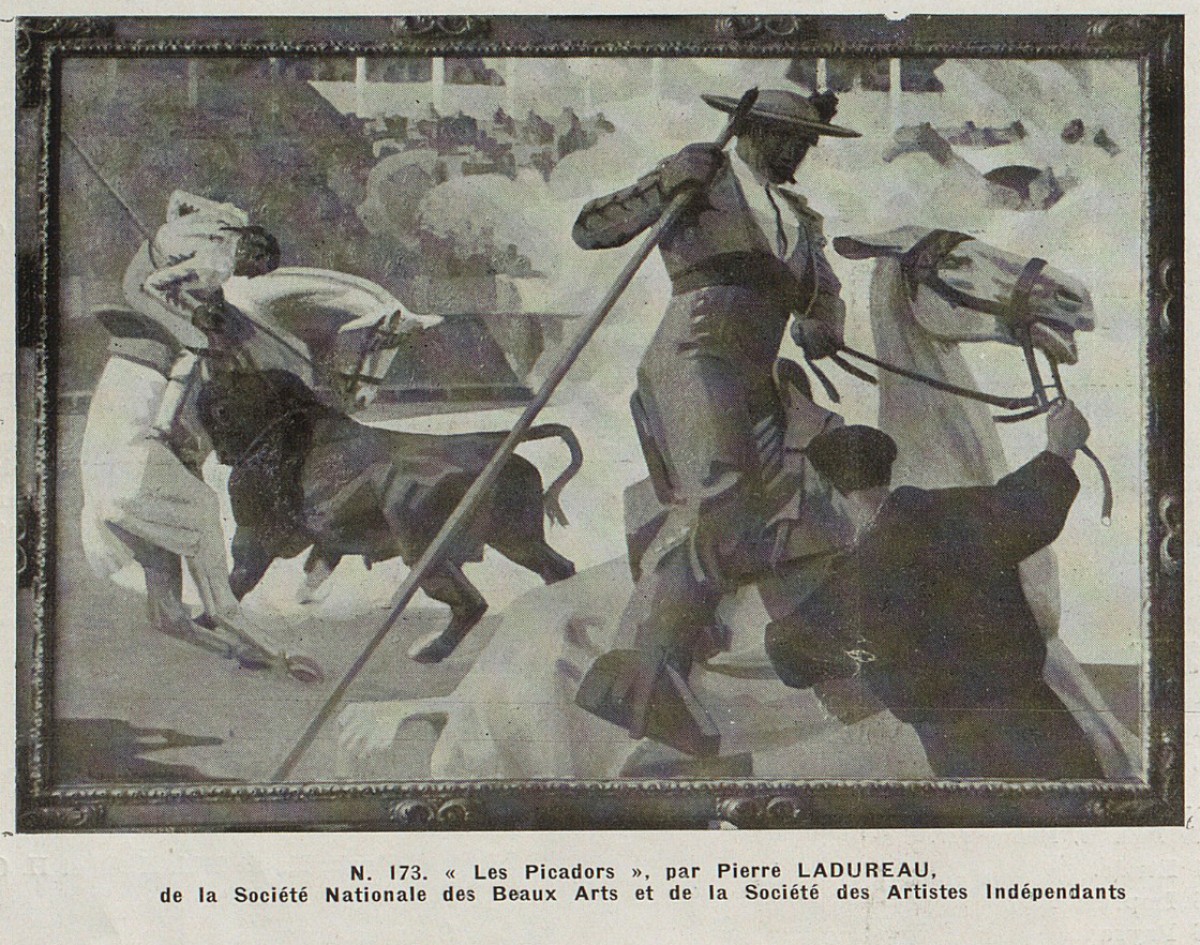
- 1925, Salon des Beaux-Arts de Montpellier, no. 173
Bibliography:
- April 15, 1922, Comœdia, p. 2
- April 16, 1922, Ancienne Gazette des étrangers, p. 2
- April 24, 1922, Le Petit Journal, p. 2
- July 17, 1923, Grand écho du Nord de la France, illustrated p. 1
- May 16, 1925, Hebdomadaire de la vie Intellectuelle et Mondaine (Montpellier), illustrated p. 10
Trained in Paris, notably at the École des Beaux-Arts and the Académie Julian under Jean-Paul Laurens, Pierre Ladureau developed a body of work devoted to the representation of landscapes, figures, and scenes of contemporary life. Exhibiting at the major Parisian Salons — Artistes Français, Salon d’Automne, Salon des Indépendants — he developed a highly individual style of painting, attentive both to observed reality and to the intrinsic qualities of material and composition.
His interest in Spain and, more particularly, bullfighting constitutes one of the most distinctive aspects of his work. For Ladureau, the corrida is never reduced to a picturesque scene or a simple depiction of an event. It becomes a true pictorial subject, offering the painter an exceptional field for experimentation with movement, light, crowds, and the monumentality of space.
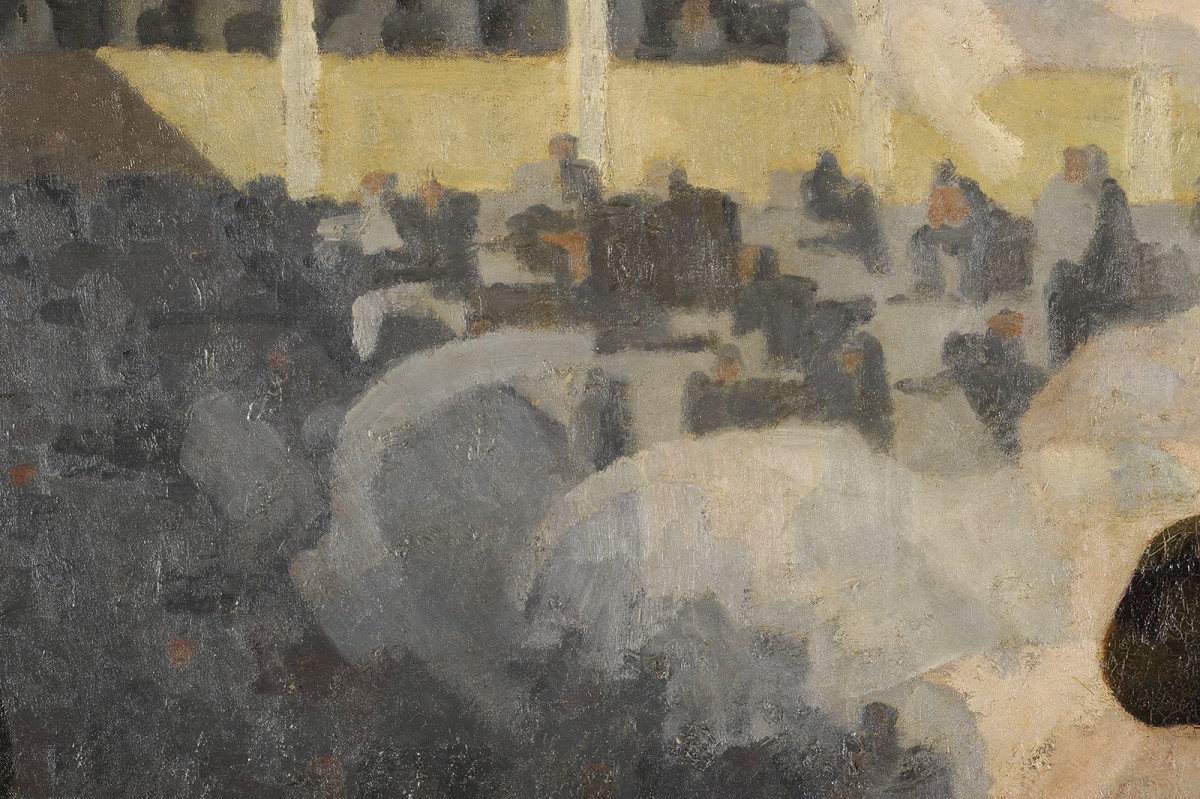
The bullring functions as a pictorial architecture: its curves, tiers of seating, and perspective effects structure the composition, while the bullfighter and the bull introduce a dynamic tension at the heart of the image. The painter thus captures the profoundly theatrical and ceremonial nature of the corrida. The movement of the animal, the verticality of the matador, the anticipation of the crowd, and the brilliance of the light compose a visual choreography in which each figure contributes to a carefully constructed balance.
This dimension is particularly evident in La Sortie triomphale du Toréro or L’Idole, presented at the Salon des Indépendants in 1954. The chosen moment — the bullfighter’s exit — allows Ladureau to transform popular acclaim into a genuine scene of celebration. The central figure acquires an almost monumental presence, while the crowd becomes a vibrant pictorial mass.
With Les Arènes, vues du toril, Ladureau instead adopts a more architectural perspective. The bullfighting arena itself becomes the subject of the painting: circle, perspective, light, and human presence are arranged in a composition where anecdote gives way to structure.
For collectors, these works are therefore of particular interest: they reveal a freer, more synthetic Ladureau, deeply committed to the expressive possibilities of his subject. Bullfighting provides him with a vocabulary of forms and movements that echoes his enduring interest in landscape and popular life, while giving his compositions an immediately recognizable intensity and presence.
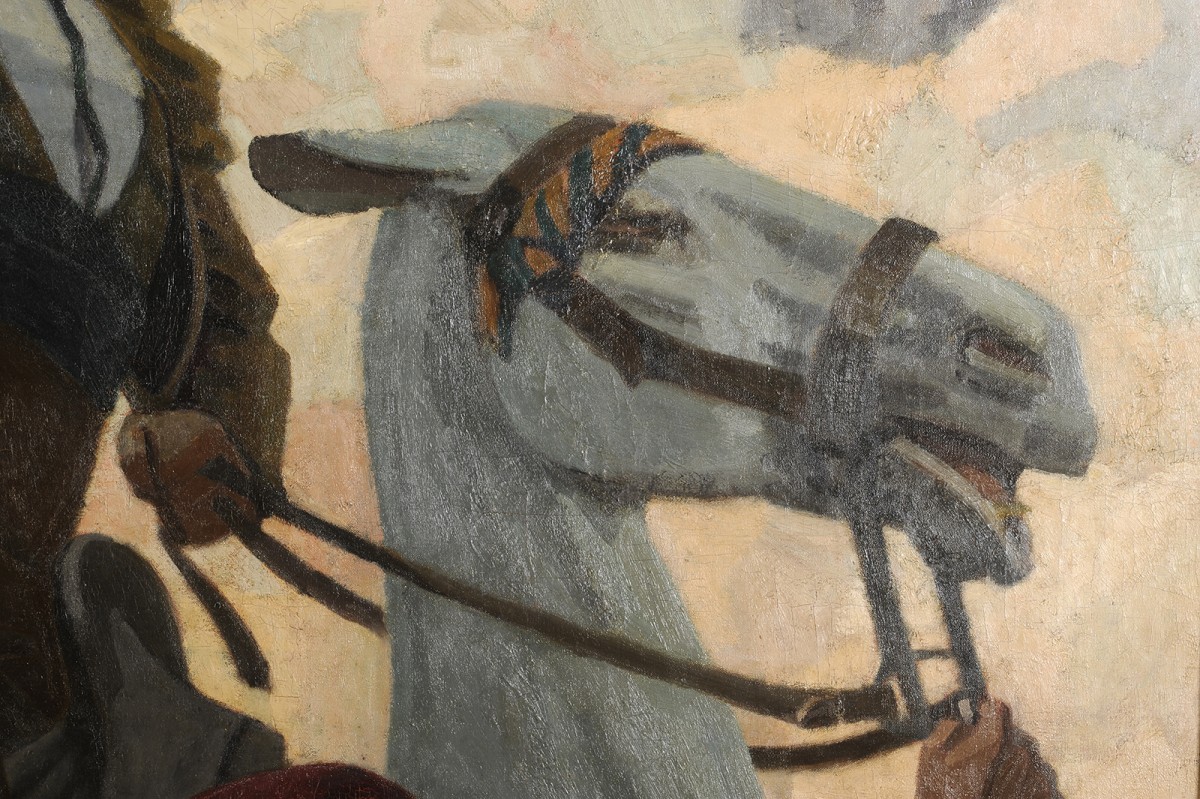
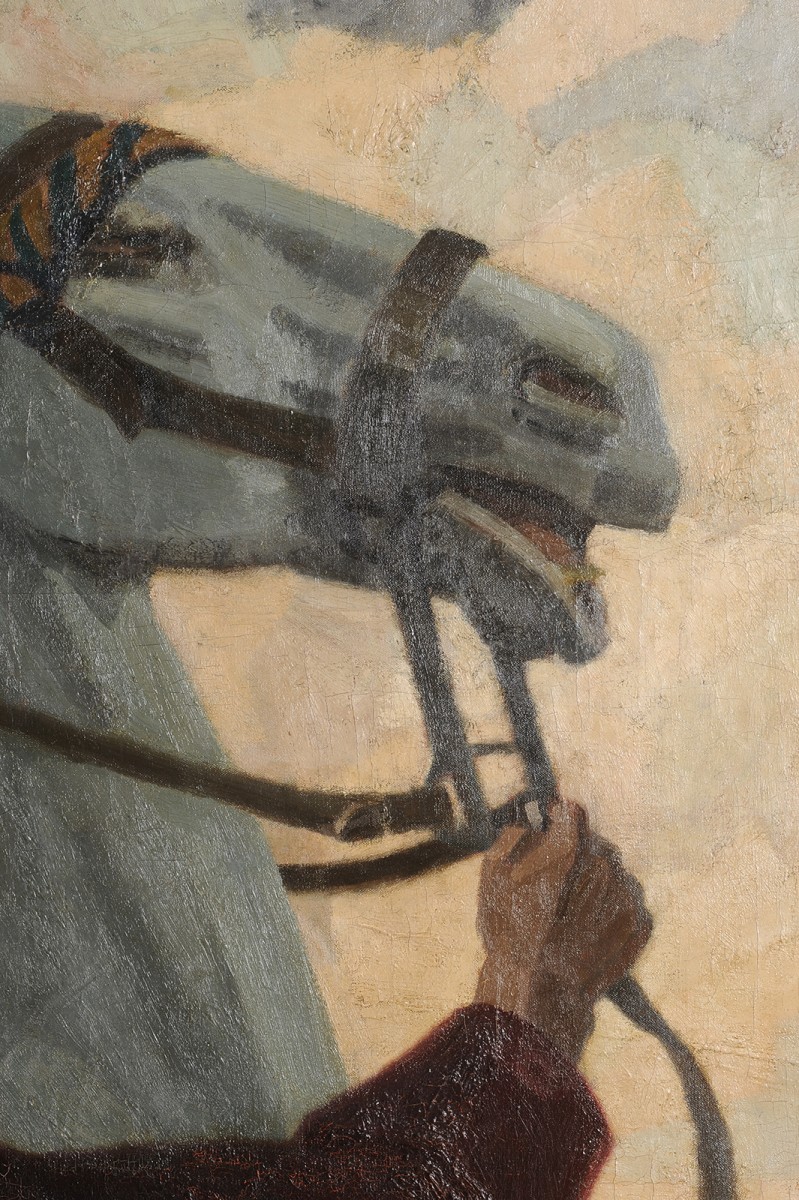
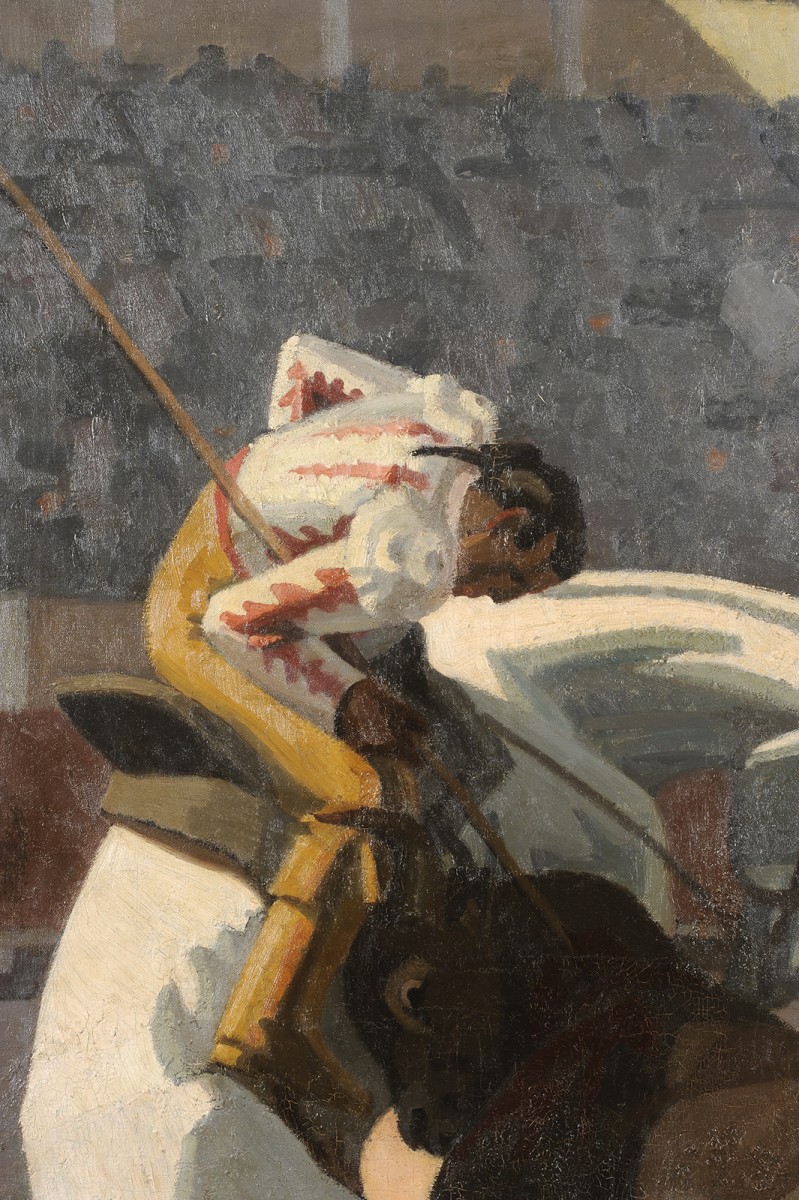
Our canvas, presented for the first time at the Salon de la Nationale in 1922, is exceptional in two respects. Firstly, for its modernity, with Cubist influences visible throughout the composition: physiognomies, tiers of seating, spectators, etc., but also for its imposing size. Indeed, it measures 2.25 meters in length, excluding the frame… Its remarkable state of preservation makes it an exceptionally rare piece for such a subject.