Offered by Galerie de Frise
REQUEST INFORMATION

Camilo BLAS (José Alfonso SÁNCHEZ URTEAGA, known as)
(Cajamarca 1903 – Lima 1985)
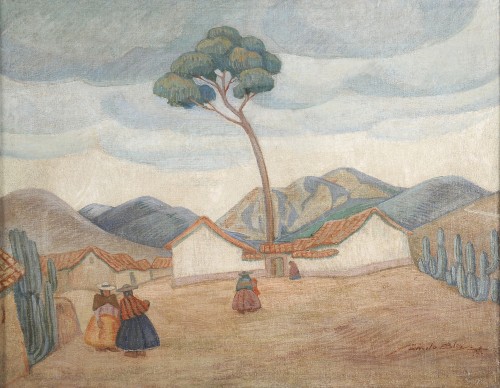
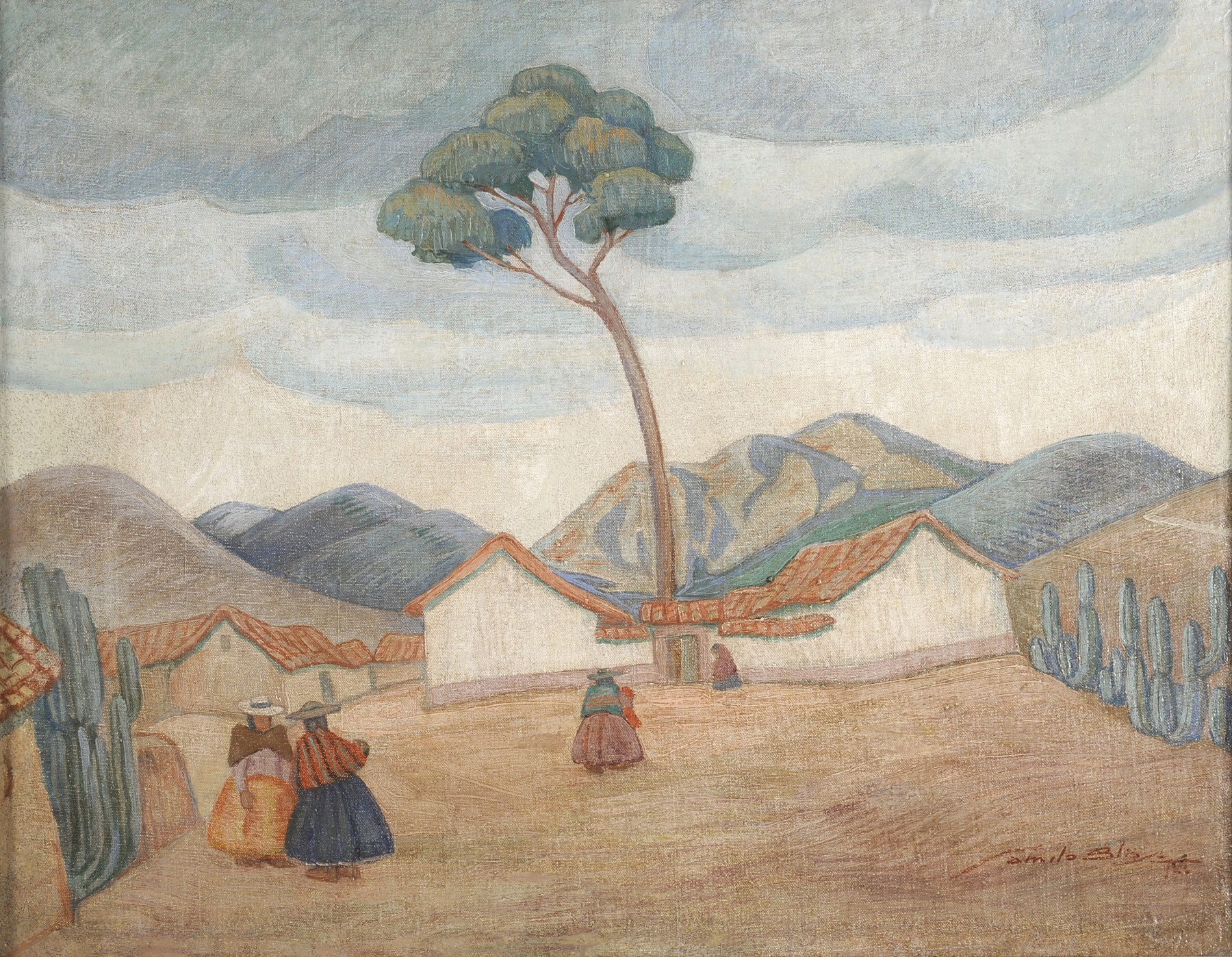
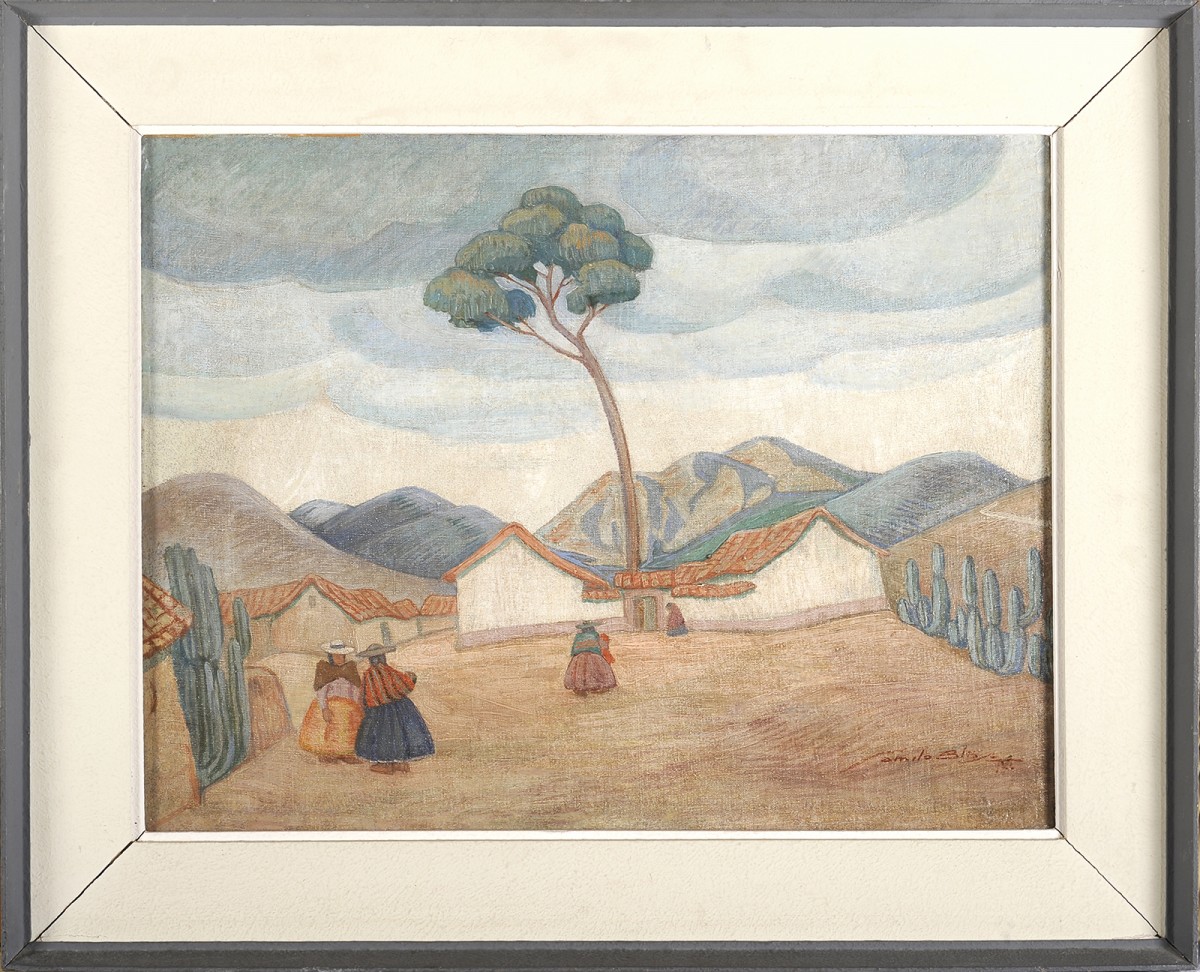
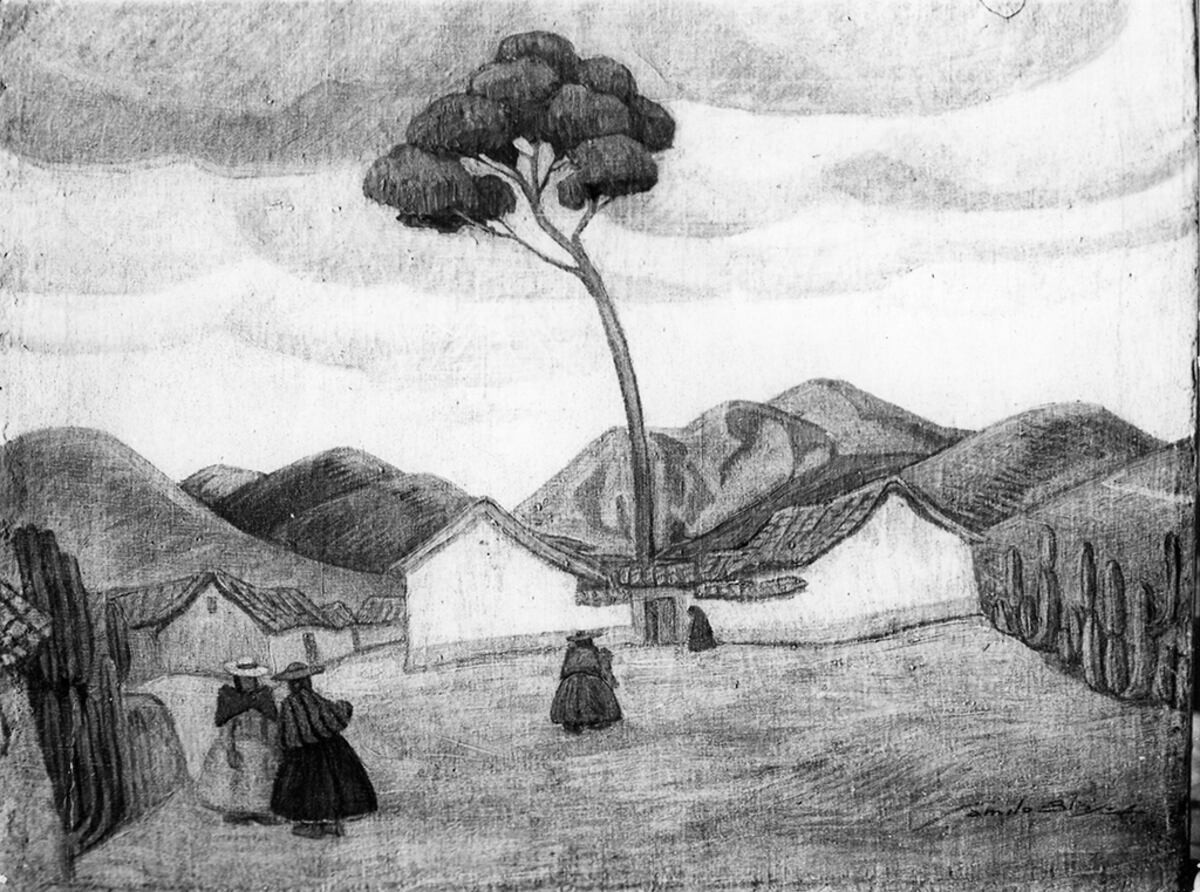
Andean Landscape – “Paisaje Andino”
Oil on canvas
H. 47.5 cm; W. 62 cm
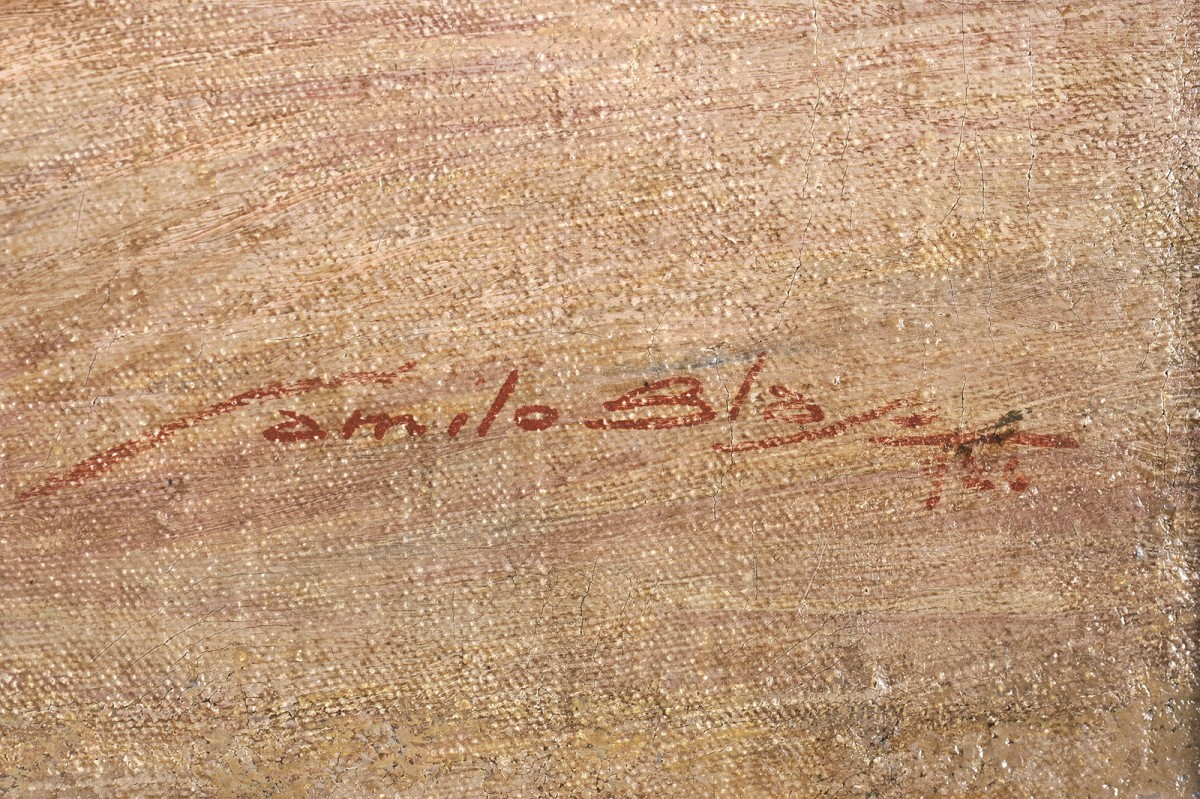
Signed lower right and dated 1926
Exhibition: Lima, Casino Español, Exposición de Camilo Blas, July 1927.
Bibliography:
- Variedades, Lima, July 9, 1927, in the article “La exposición de Camilo Blas”, section “Arte Nacional”, reproduced under the title Paisaje.
- El Comercio, Lima, July 24, 2020, in the article “Camilo Blas, 35 years after his death: an assessment of his contribution to Peruvian art”, reproduced under the title Paisaje Andino.
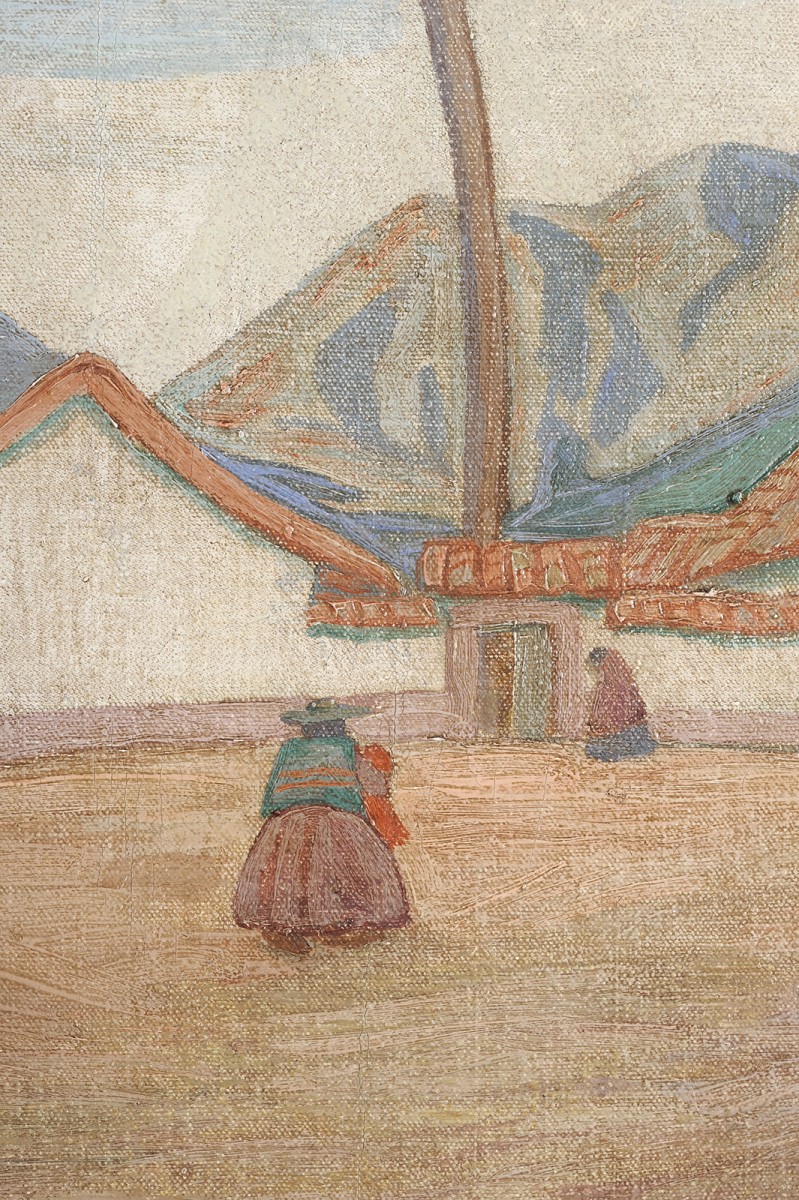
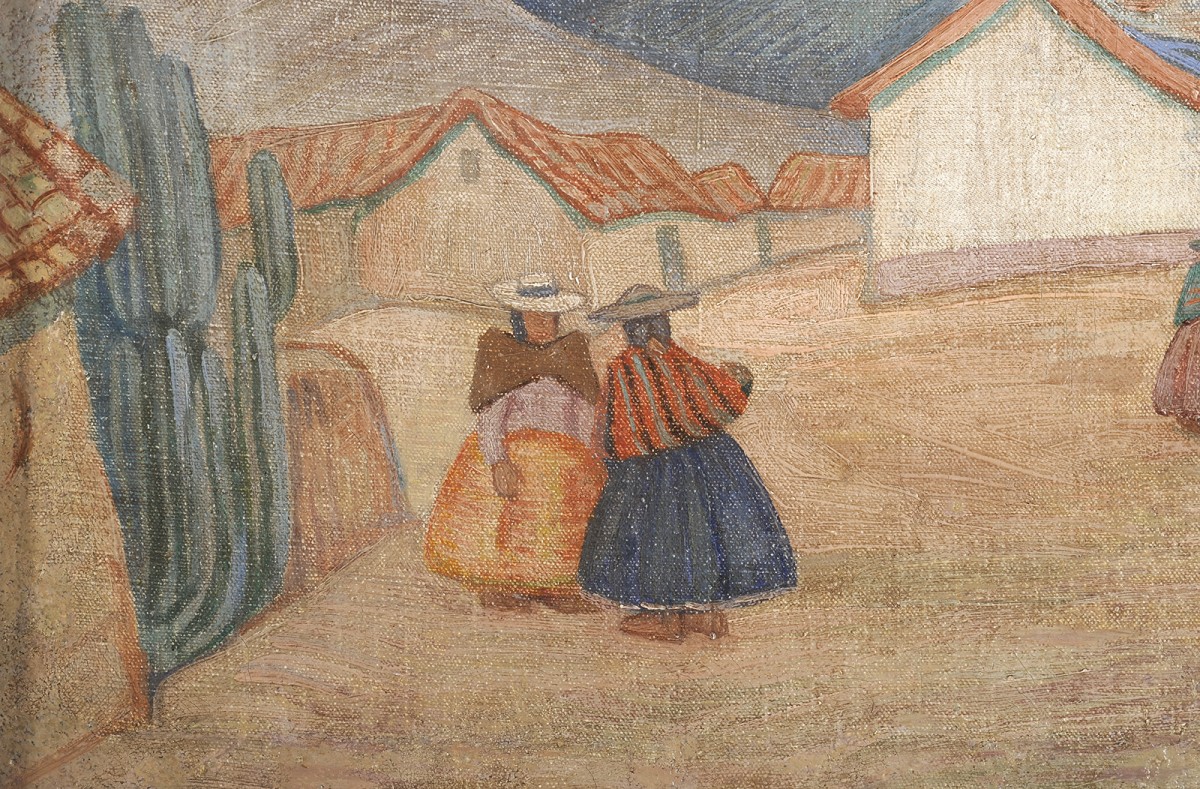
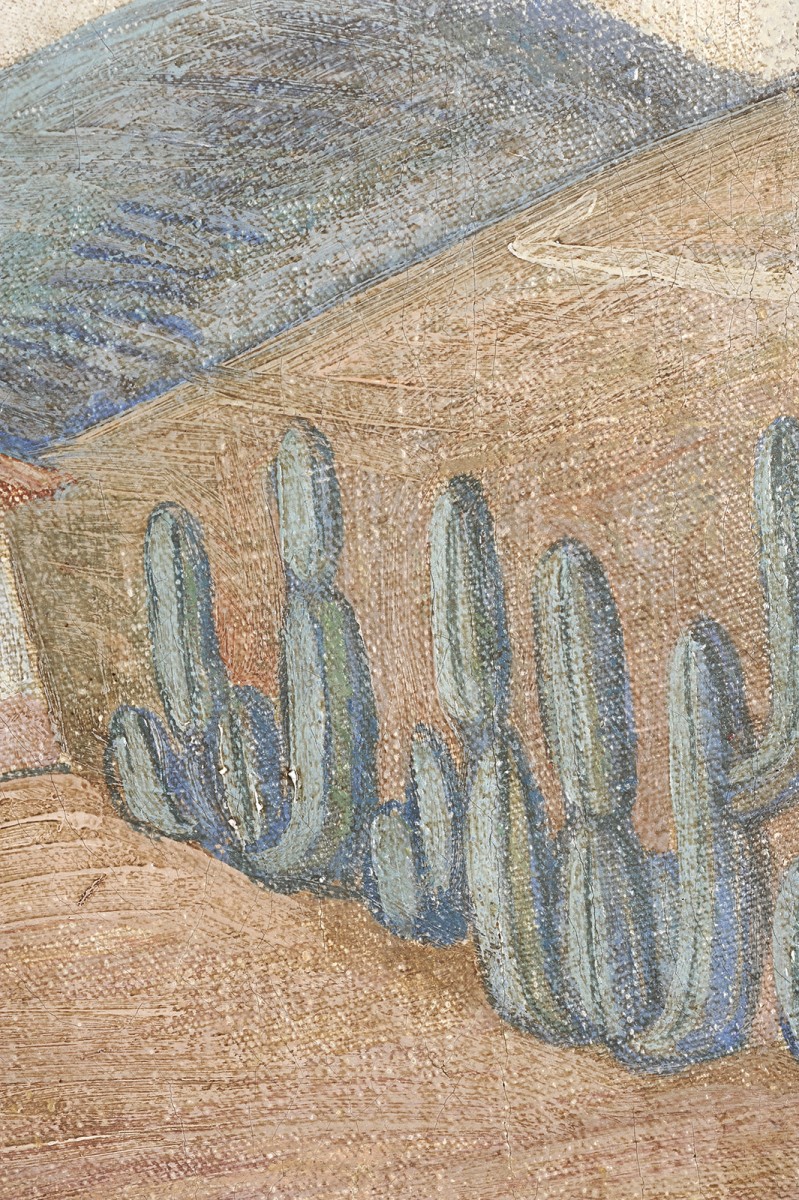
Dated 1926, this composition belongs to the most productive period of Camilo Blas’s career, during his extended stay in Cuzco between 1924 and 1926. The artist depicts a peaceful scene of Andean life: several women in traditional dress cross a vast square bordered by rural dwellings, while mountains unfold in the background. Tall cacti occupy both sides of the composition, and a solitary tree, placed at the center, becomes the vertical axis around which the landscape is organized.
The work testifies to Blas’s interest in a direct and sensitive representation of the contemporary Andean world. Far from a monumental or archaeological vision of indigenous populations, the painter focuses here on everyday life, vernacular architecture, and the place of human figures within their environment. The women, seen from behind or in profile, are not treated as isolated figures but as natural elements of the social landscape they inhabit. Their clothing, in muted yet contrasting colors — reds, greens, blues, and ochres — introduces a discreet animation into the sobriety of the setting.
The treatment of the landscape is characteristic of this period: the mountains are reduced to large masses of color, almost abstract, while the successive planes unfold within a slightly veiled atmosphere. The composition thus favors a sense of space and tonal harmony rather than topographical precision. The central tree, with its slender trunk and rounded crown, gives the ensemble an almost symbolic dimension, like a link between the village and the mountains.
This work must be placed within the context of the work Blas was then producing in Cuzco. These two years of travel represent a period of research for the artist into the representation of contemporary Andean populations and cultural mixing. A recent study devoted to his paintings of the 1920s specifically emphasizes that Blas did not seek to reconstruct an idealized indigenous world frozen in an “Inca” past, but rather to represent a living, popular, and culturally mixed Peru. This approach has led some art historians today to prefer the notion of a “Peruvianist project” to that of Indigenism when characterizing his artistic approach.
In 1926, José Sabogal published his text devoted to Blas in the third issue of Amauta. The four pages devoted to the painter reproduce several of his then-recent works. The text specifies that Blas, following his journey with Sabogal, returned to Cuzco to work on scenes of local life.
Upon his return in 1927, Blas exhibited 54 paintings from his travels in Lima. Our painting was included in this exhibition and was reproduced in the magazine Variedades on July 9, 1927. The image was also recently reused, in 2020, in an El Comercio article discussing the painter’s contribution to Peruvian art. Our painting is presented there as one of the notable works in his body of work.