Offered by Antichità Castelbarco

Paolo De Matteis (Piano del Cilento, 1662 – Naples, 1728) attributed to / workshop
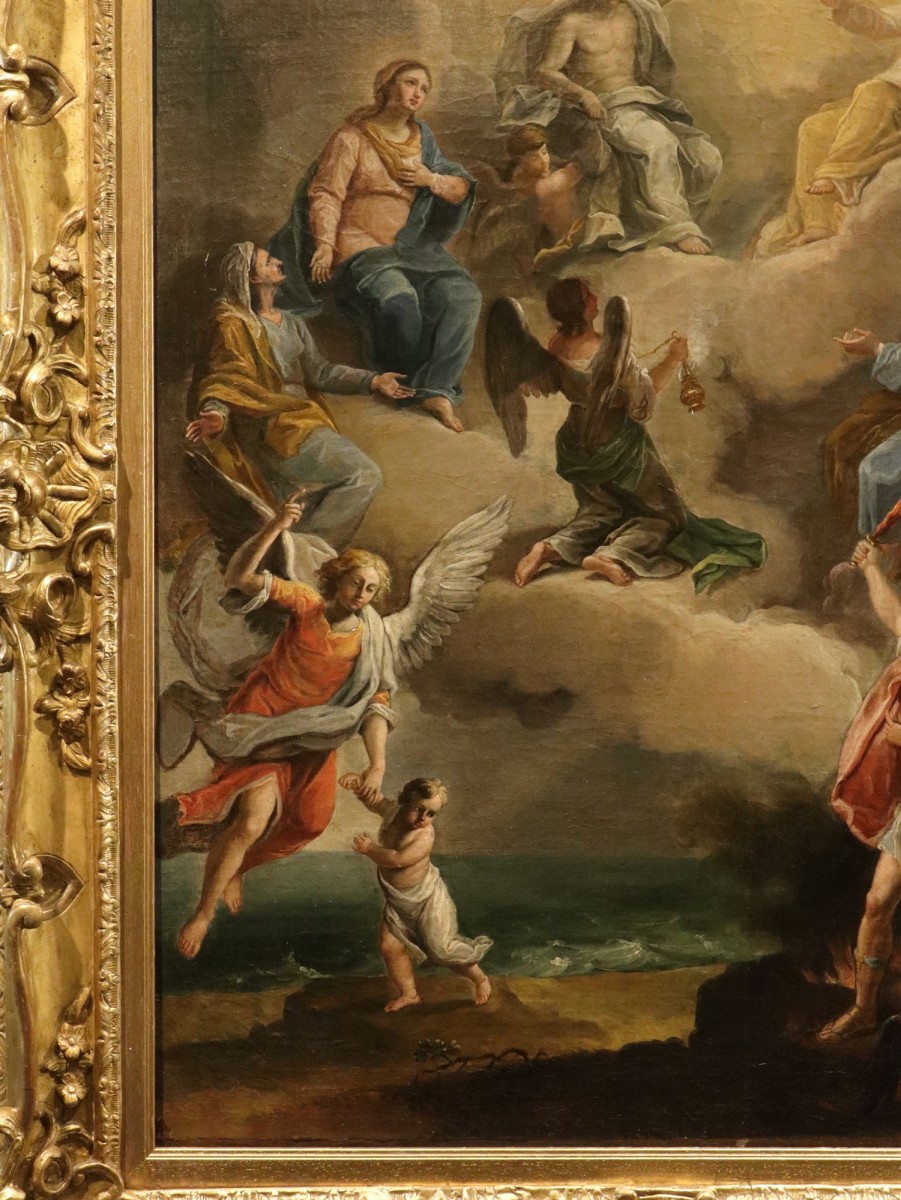
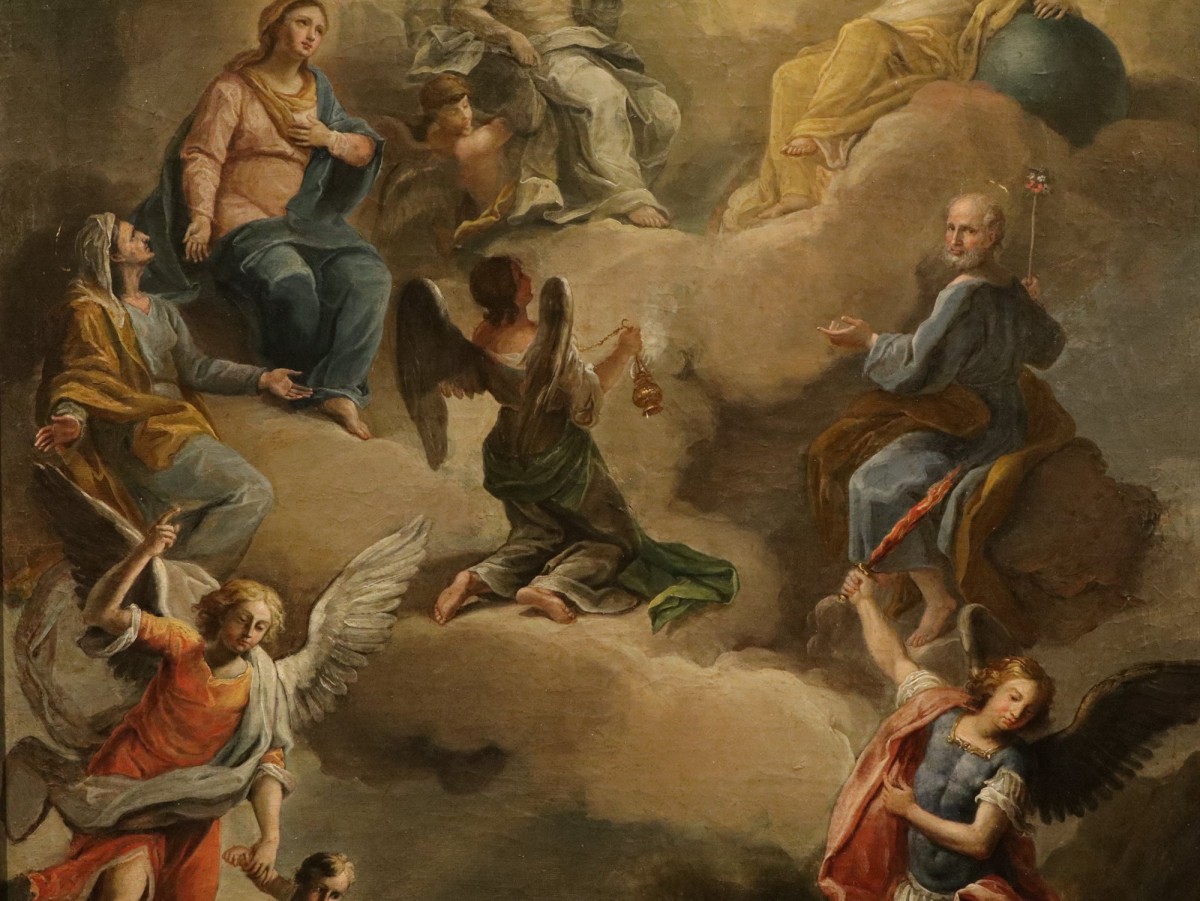
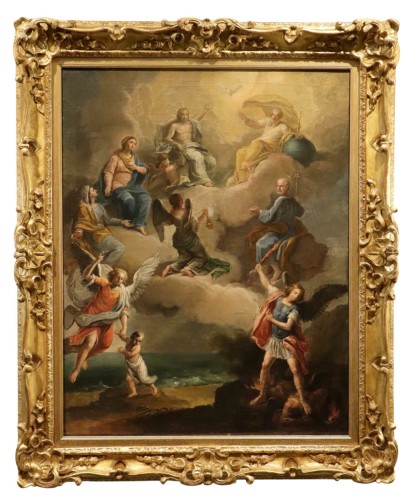
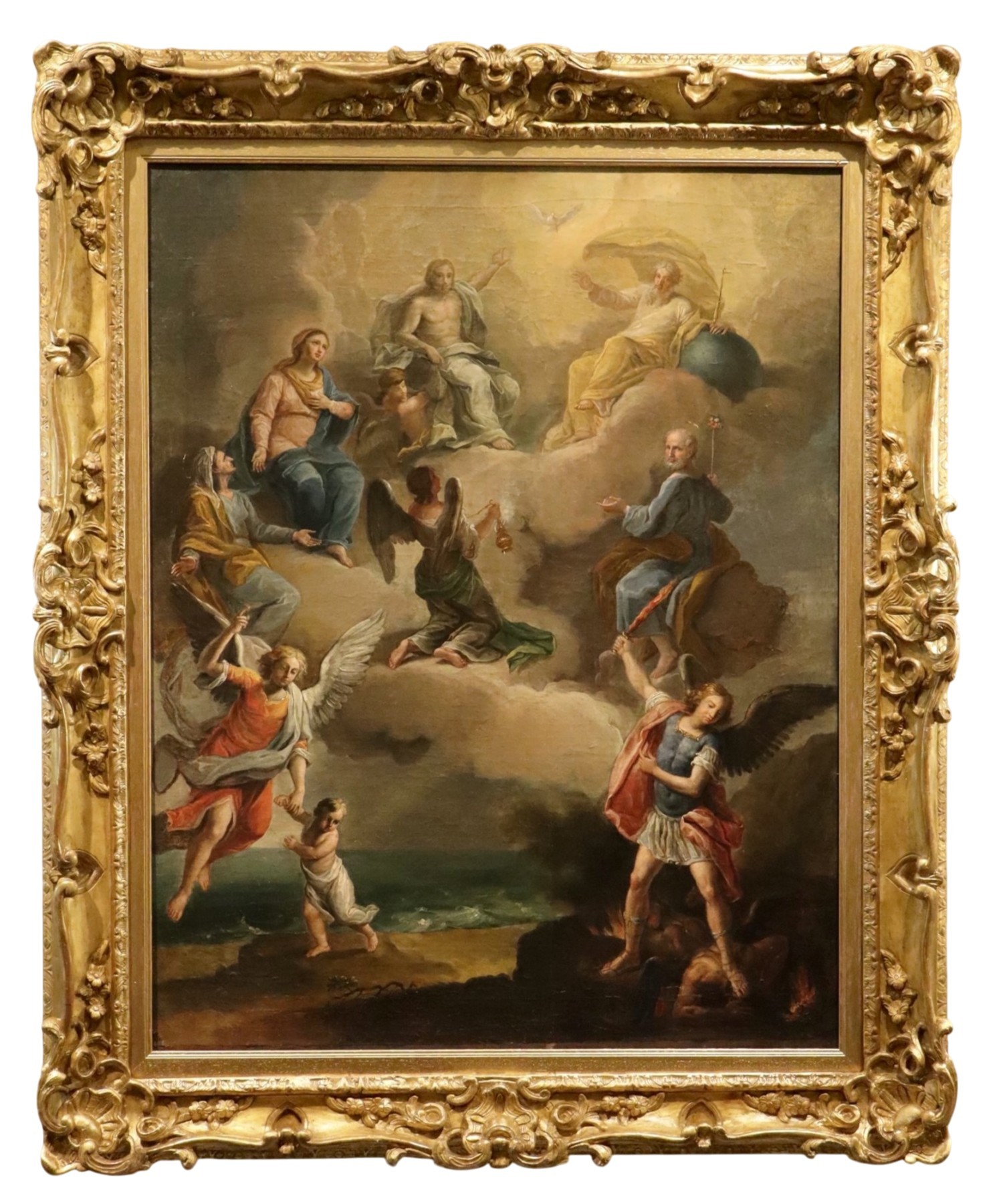
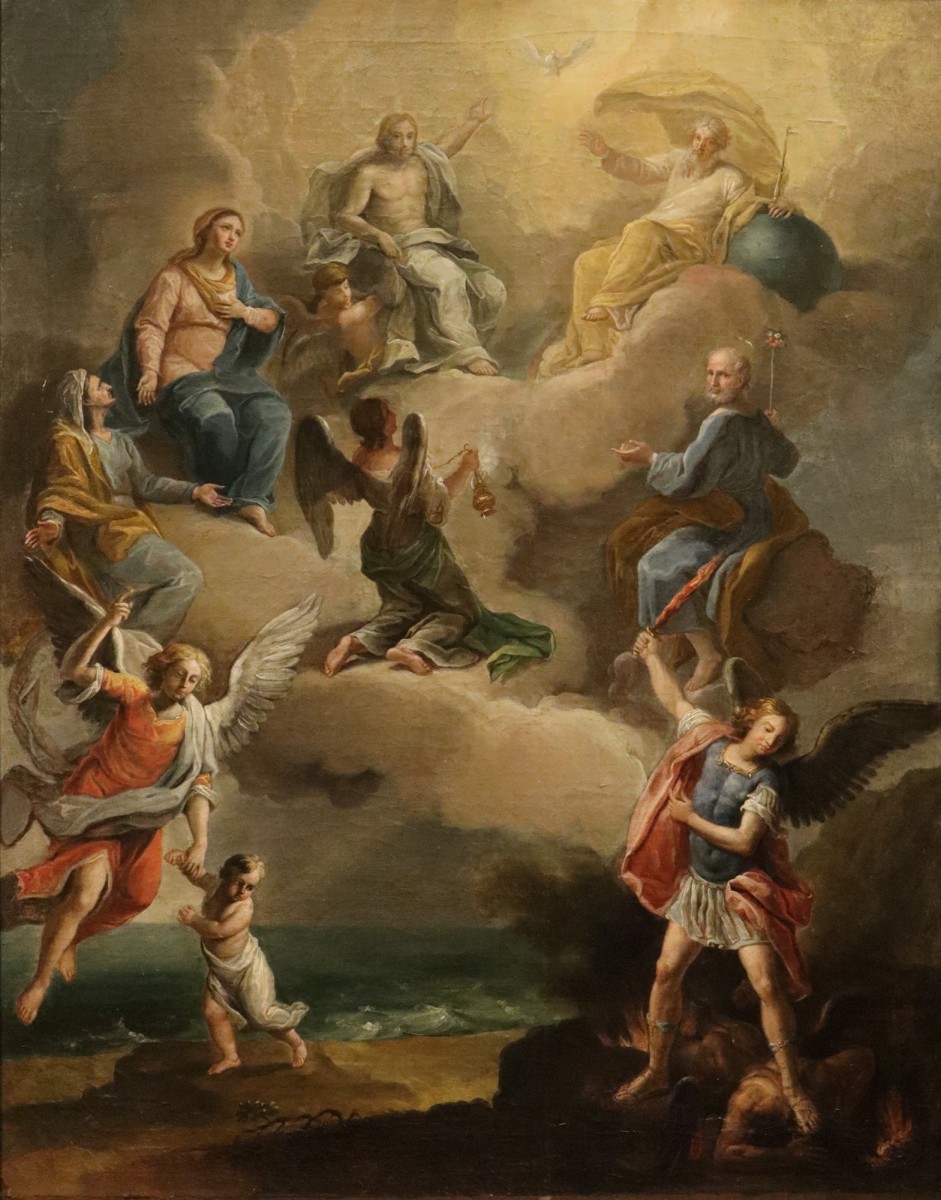
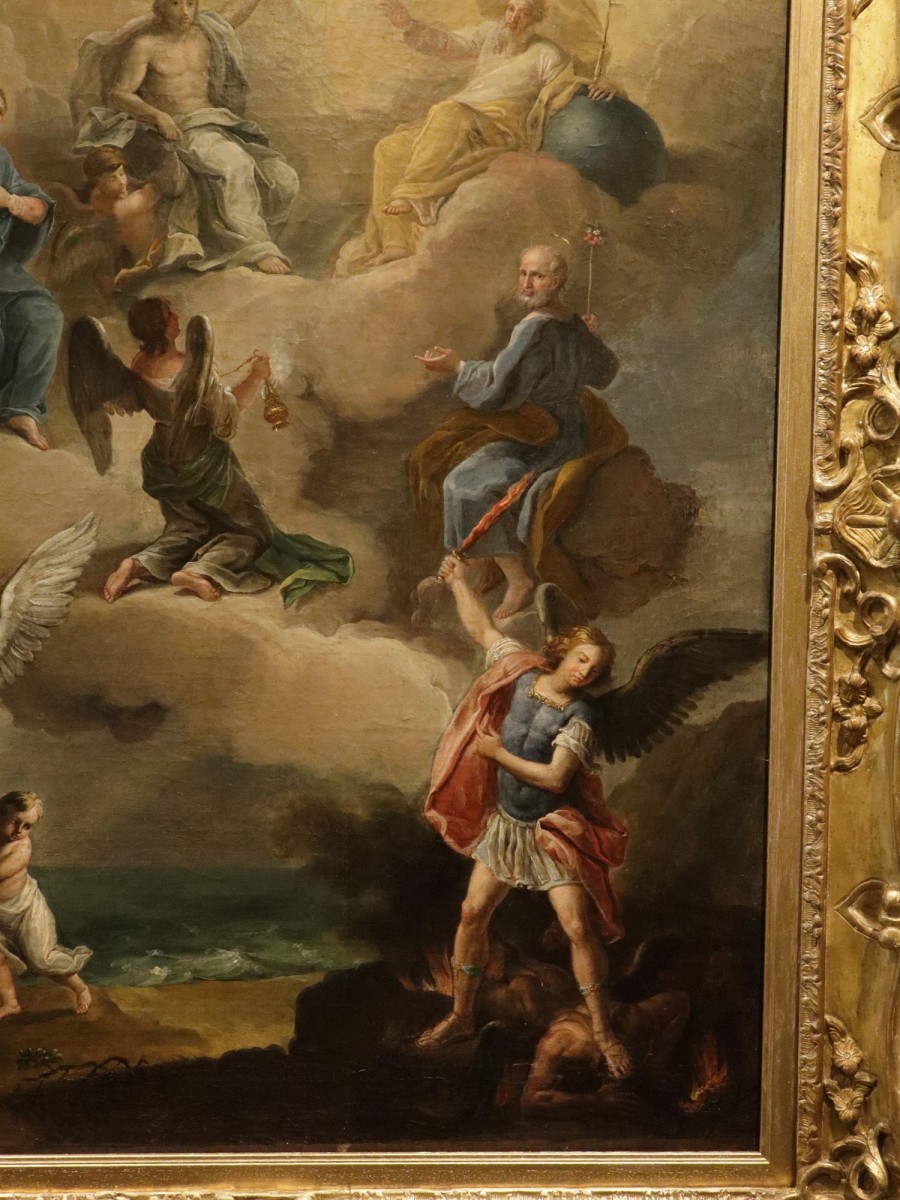
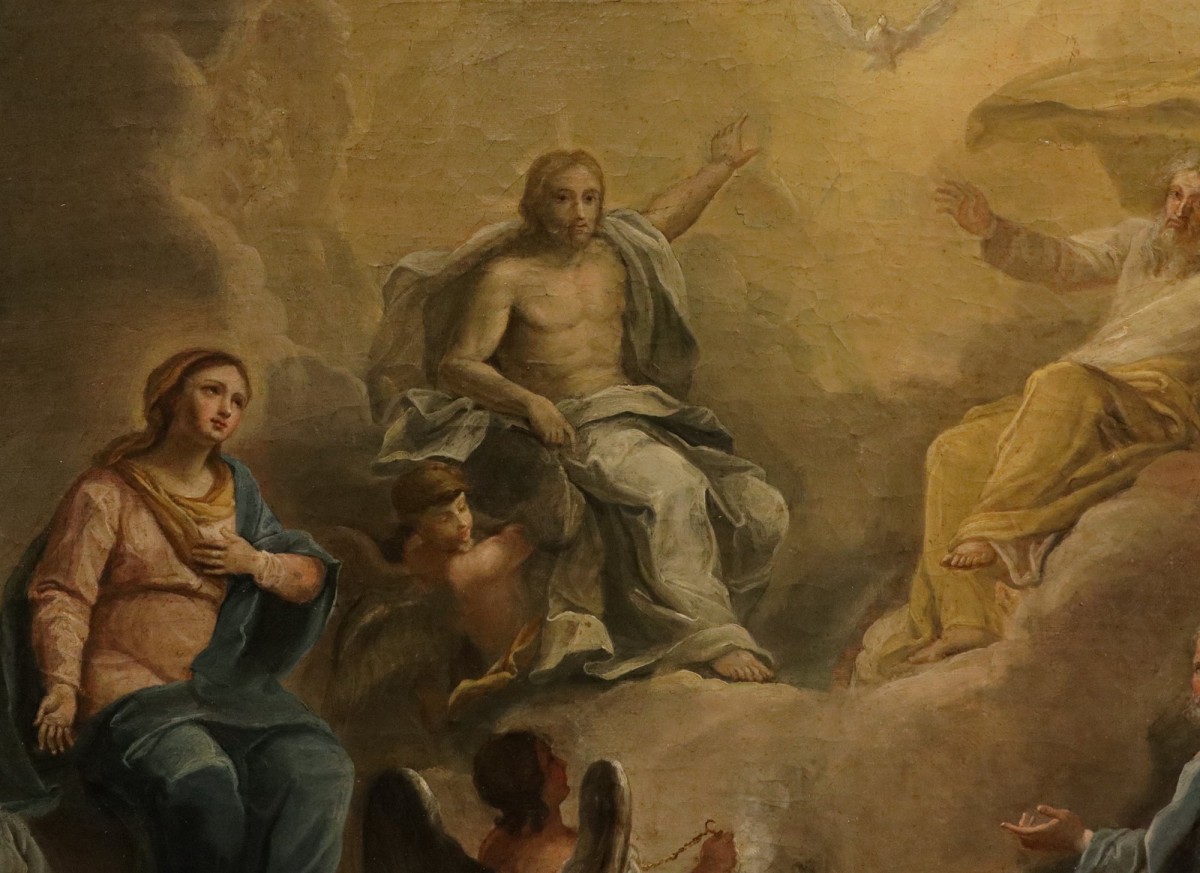
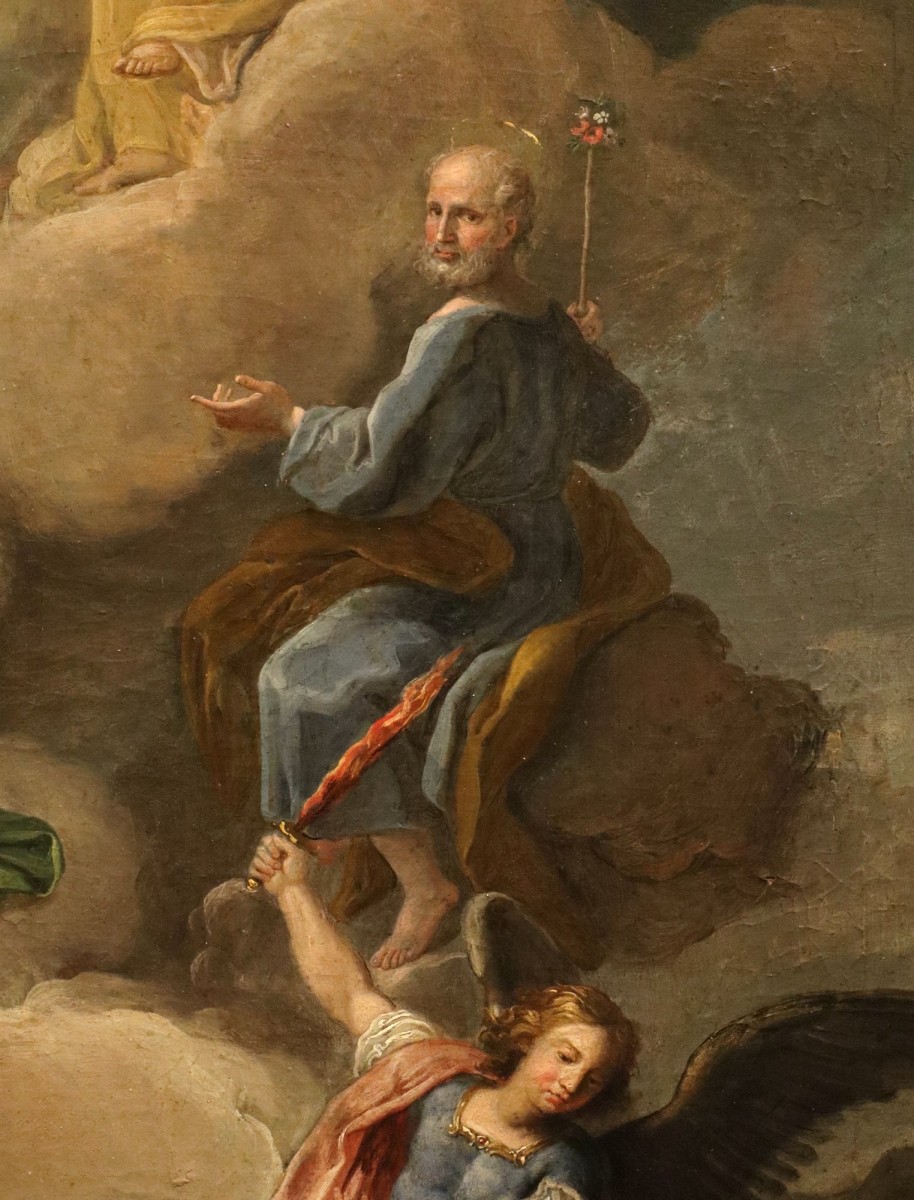
Triumph of the Trinity with the Virgin Mary, Saint Anne, Saint Joseph and the Archangels Michael and Raphael
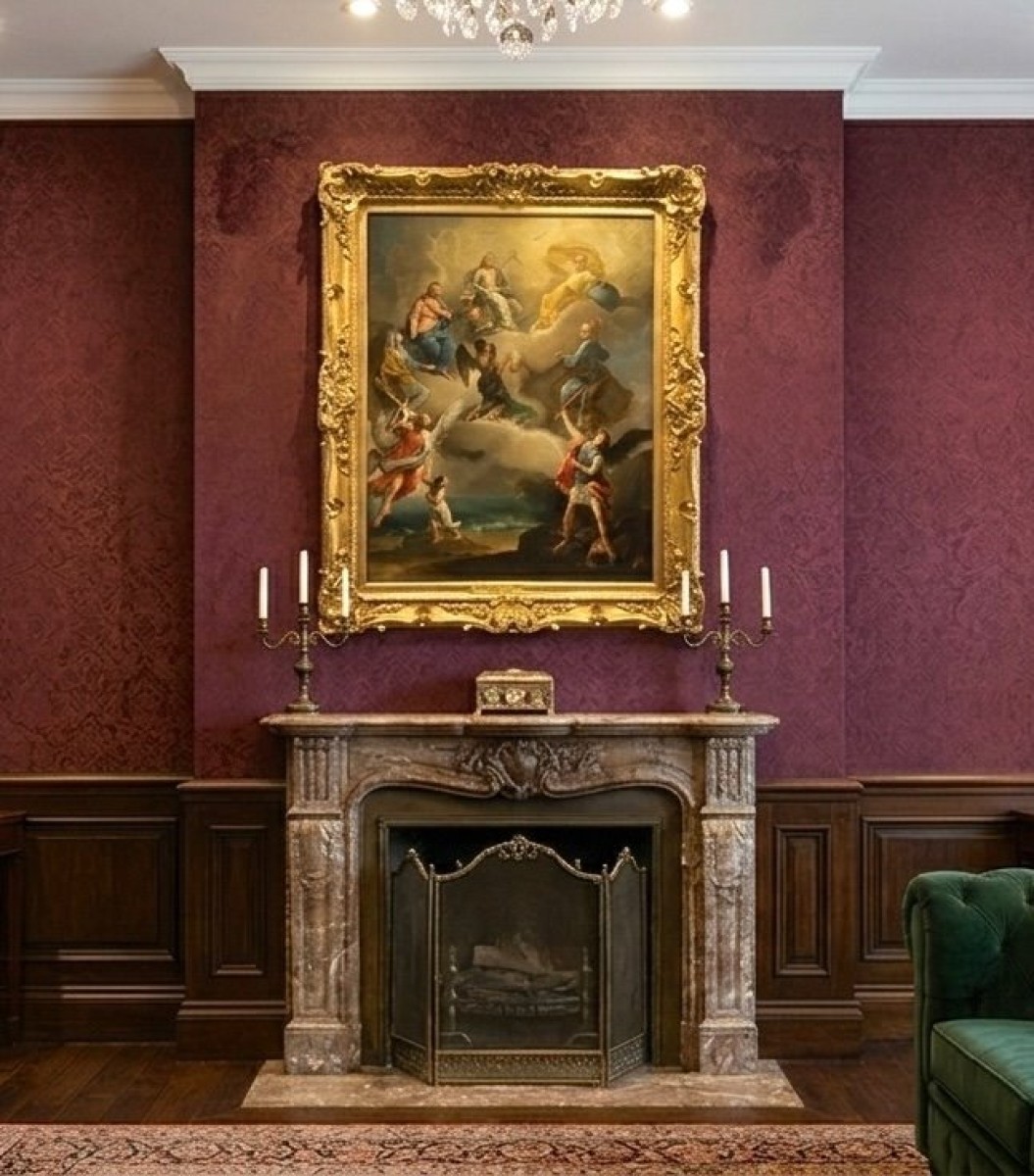
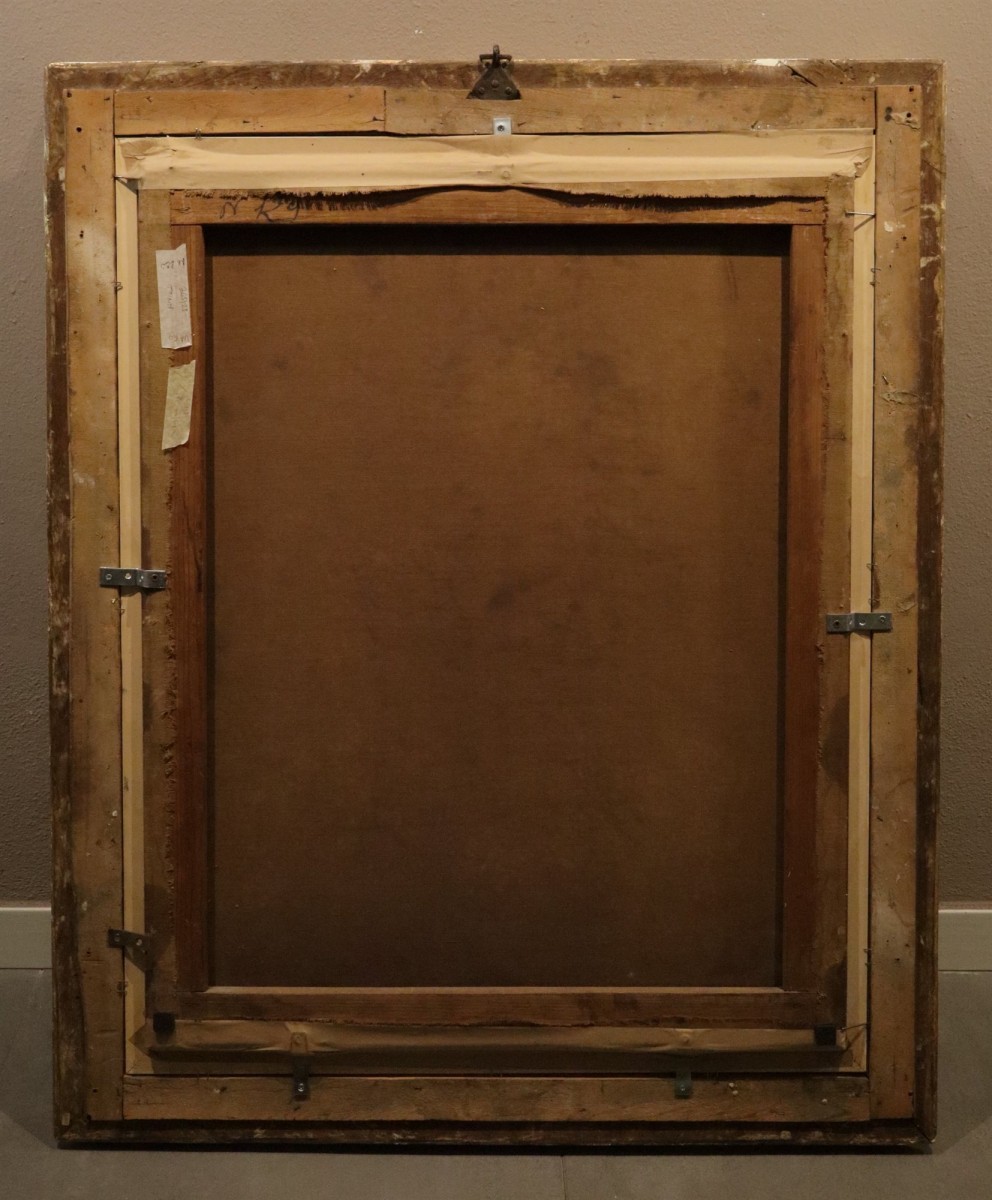
Oil on canvas (87 x 69 cm – with antique frame 107 x 89 cm)
Private collection, Rome
This fascinating painting, depicting the ‘Triumph of the Trinity’, is a fine example of the golden age of Neapolitan painting between the late 17th and early 18th centuries, a period of extraordinary artistic vitality in which the theatrical exuberance of the Baroque began to give way to the luminous grace of the Rococo.
In particular, upon admiring its stylistic elements and compositional choices, we are inclined to attribute the painting to the artist Paolo De Matteis (1662–1728), who was one of the key figures of this cultural shift; trained in Naples but who went on to achieve fame throughout Europe, from papal Rome to the Paris of Louis XIV.
Our painting is emblematic of his pictorial language, which we might define as a refined synthesis between the luminous and vibrant Neapolitan Baroque of Luca Giordano and the rigorous and elegant classicism of the Roman artist Carlo Maratta.
From Giordano, his first teacher in Naples, De Matteis inherited the rapid brushstrokes, the warm colour palette and the ability to orchestrate vast, choral scenes suspended amongst the clouds (Fig. 1 – see *The Holy Trinity*, Luca Giordano, c. 1685–1690, New York, The Metropolitan Museum of Art).
This blends with a tendency towards a sense of balance acquired in the papal city whilst working alongside Maratta, which led him to temper the dramatic contrasts of the seventeenth century in favour of more airy compositions, pastel hues and figures of an almost Arcadian gentleness.
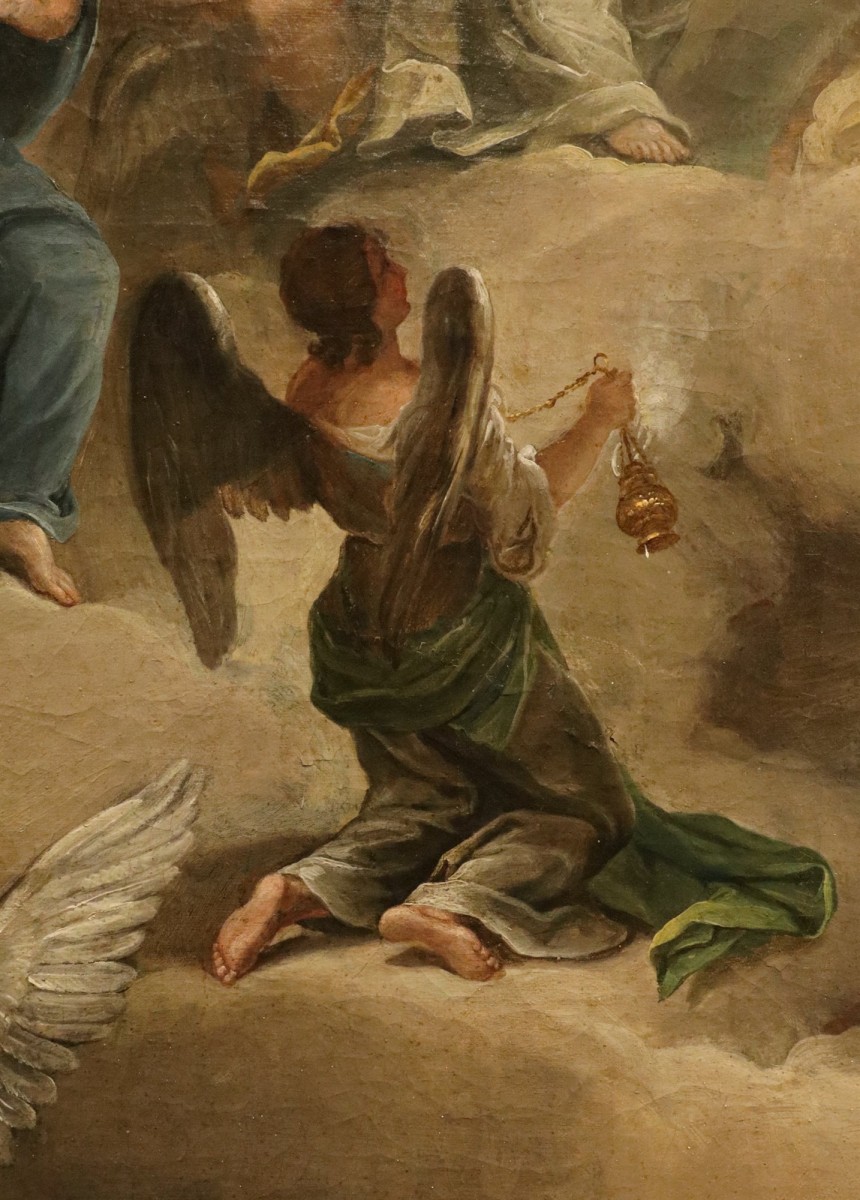
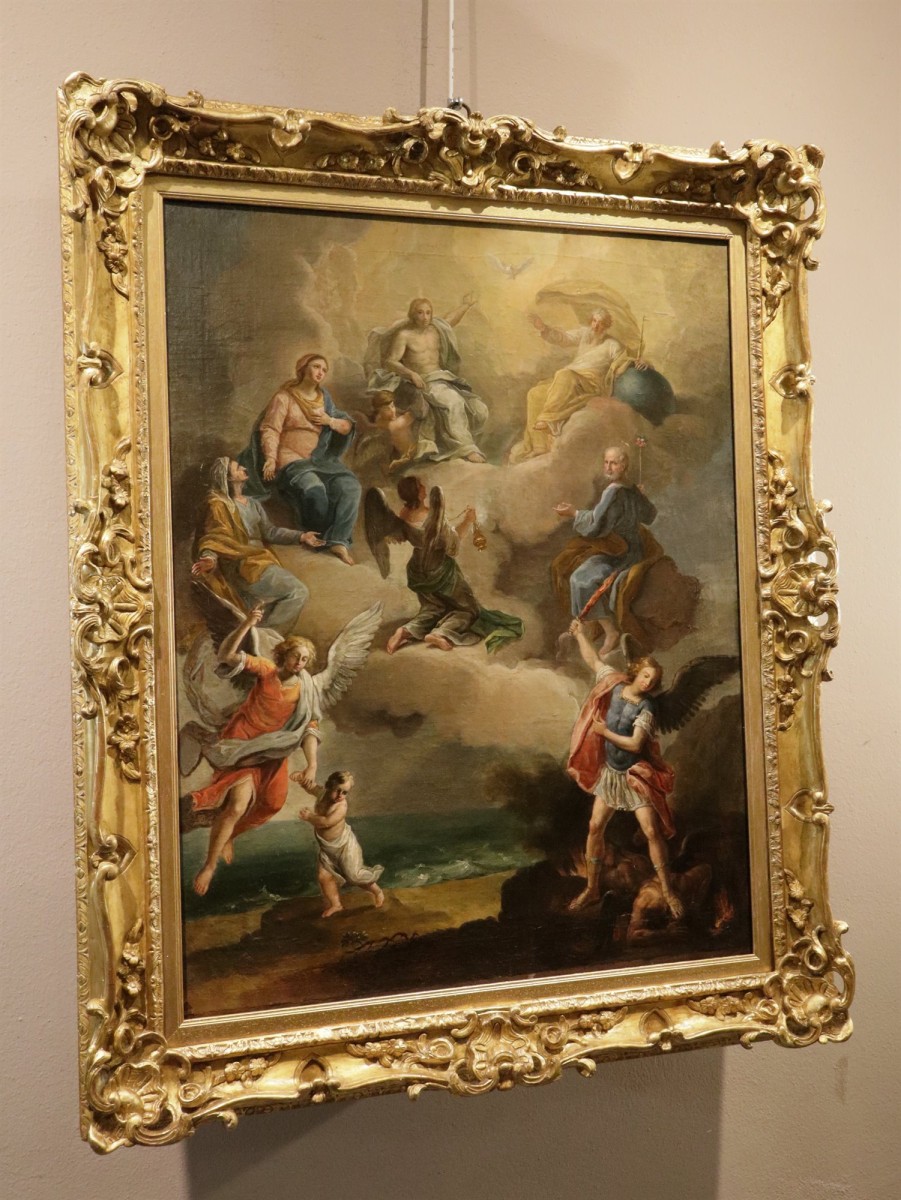
Let us now turn our attention to the intriguing structure with which the composition has been orchestrated, playing upon several overlapping planes, populated by celestial figures immersed in a dense blanket of luminous clouds that slope down towards an earthly and infernal landscape in the lower part.
The Holy Trinity dominates the sky, with the dove of the Holy Spirit—the source of divine light—Jesus Christ and God the Father, solemnly resting against the blue globe.
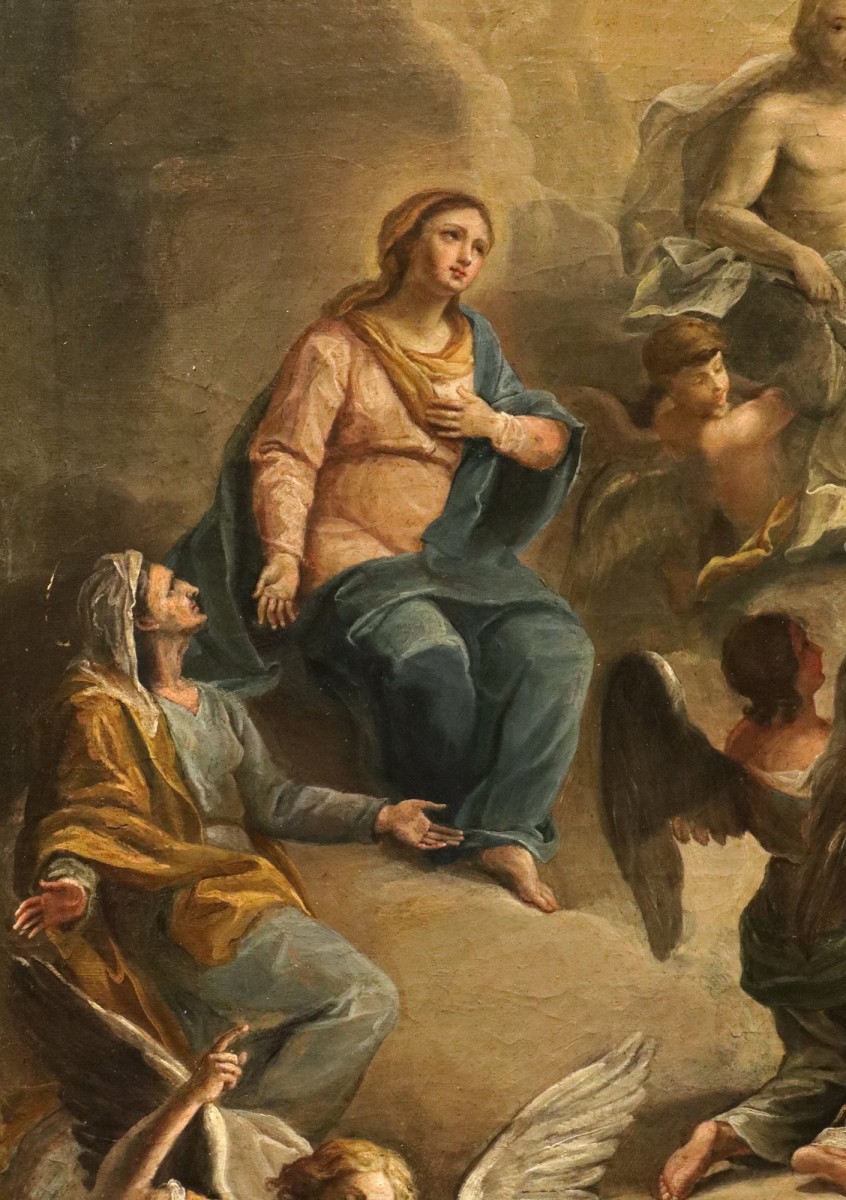
Before them, we can recognise the Virgin Mary in the company of Saint Anne, depicted in a posture of devout intercession, whilst on the opposite side we see Saint Joseph with his flowering staff.
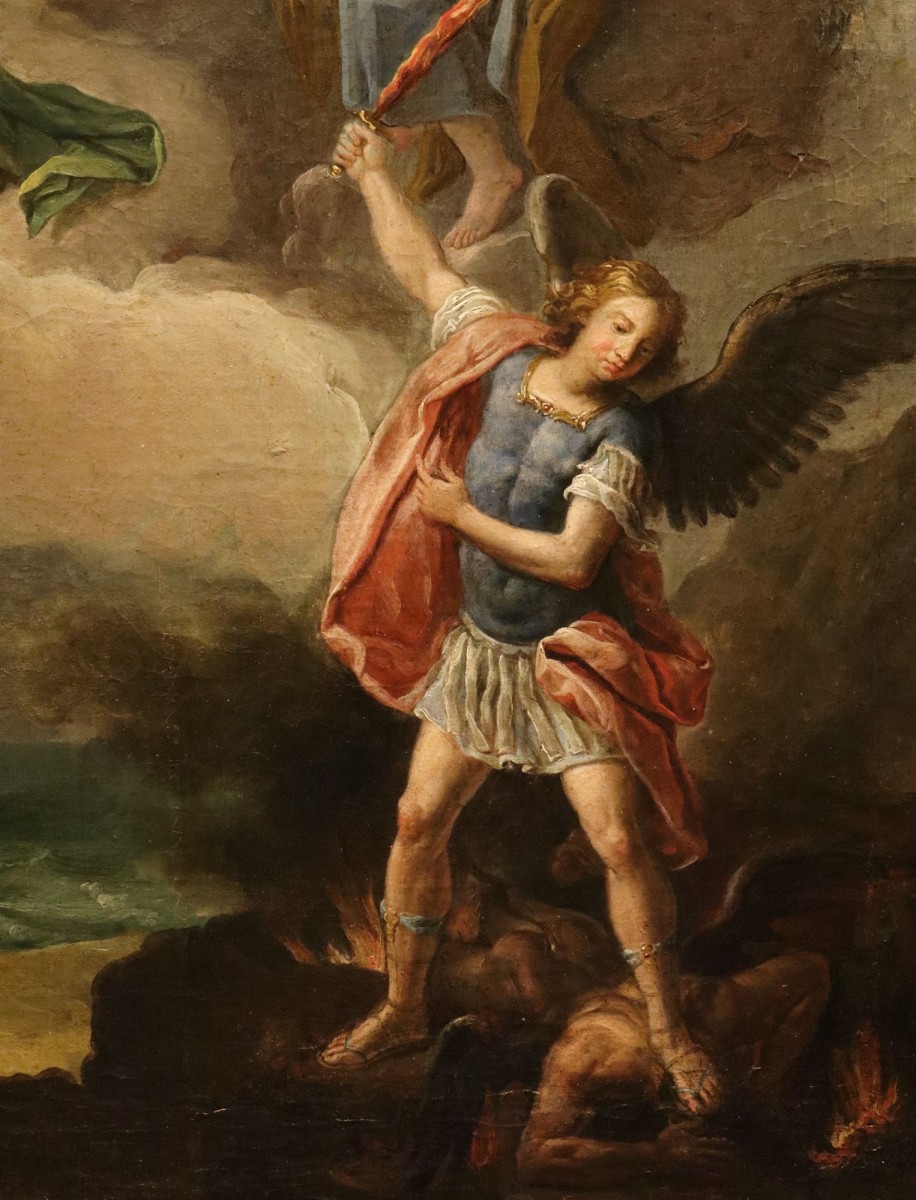
In the lower register, two archangels stand majestically, figures alluding to the eternal struggle between Good and Evil, intended to exalt the triumph of faith and divine protection: specifically, Saint Michael the Archangel, the warrior angel in his armour with outstretched wings, in the act of subduing a demon in the flames of hell.
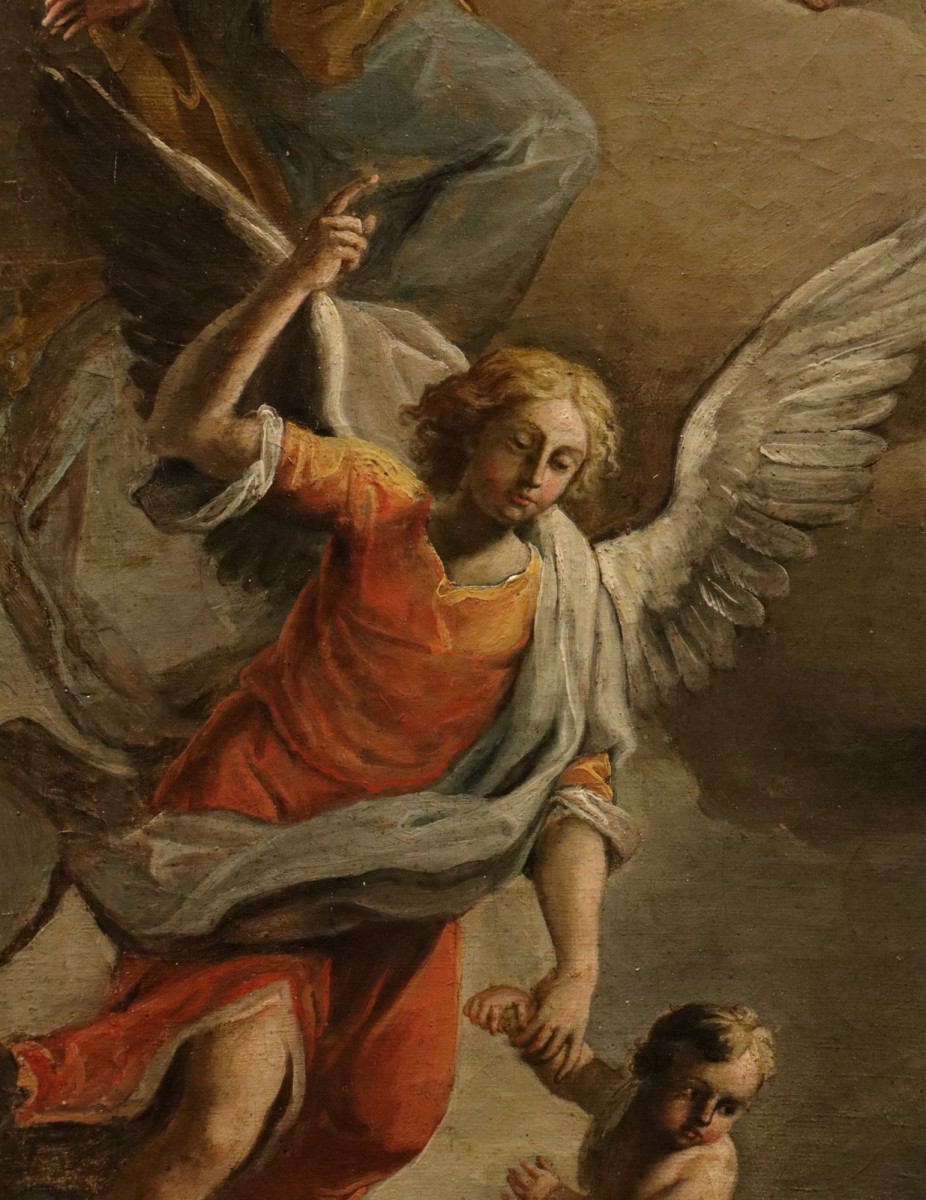
On the opposite side, Saint Raphael the Archangel, in the role of Guardian Angel, protects a child by holding his hand and leading him away from the flames of darkness.
The theme of the Trinity, which De Matteis addressed on numerous occasions, was a cornerstone of 18th-century Neapolitan devotional painting, yielding grandiose, theatrical compositions bathed in a mystical and enveloping luminosity.
Among these are the frescoes of the Madonna in Glory with the Trinity at Guardia Sanframondi (Fig. 2) and, furthermore, the detail of the Trinity in Glory at San Cataldo (Fig. 3). Paolo De Matteis, assisted by his workshop, distinguished himself precisely through his vast output of large decorative fresco cycles in churches and noble palaces: our canvas may well reproduce one of these, as it could be a model or preparatory sketch for a monumental composition. Fig. 1 – Luca Giordano, The Trinity, c. 1685–1690, 26 × 38 cm. New York, Metropolitan Museum of Art Fig. 2 – Madonna in Glory with the Trinity, Paolo De Matteis (attributed). Guardia Sanframondi Fig. 3 (Detail) – Paolo De Matteis, Glory of San Cataldo, 1714–1715, fresco. Taranto, Chapel of San Cataldo
Delevery information :
We take care of and organise the transport of the purchased works, both for Italy and abroad, through professional and insured carriers.
We take great care We personally take care of the packaging, to which we devote a great deal of care: each work is carefully packed, first with arti- cle material, then with a custom-made wooden box.
Should you have the desire to see this or other works in person, we would be happy to welcome you to our gallery in Riva del Garda, Viale Giuseppe Canella 18, we are always open by appointment only.