Offered by Antikvariat Nice
REQUEST INFORMATION

Sculpture, paintings and art objects of the 18TH and 19th centuries
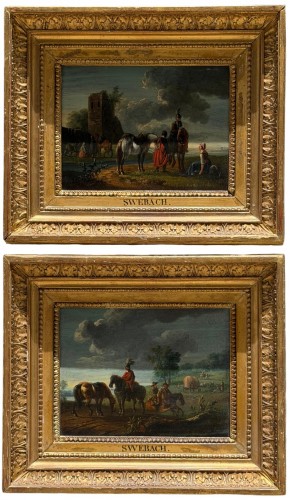
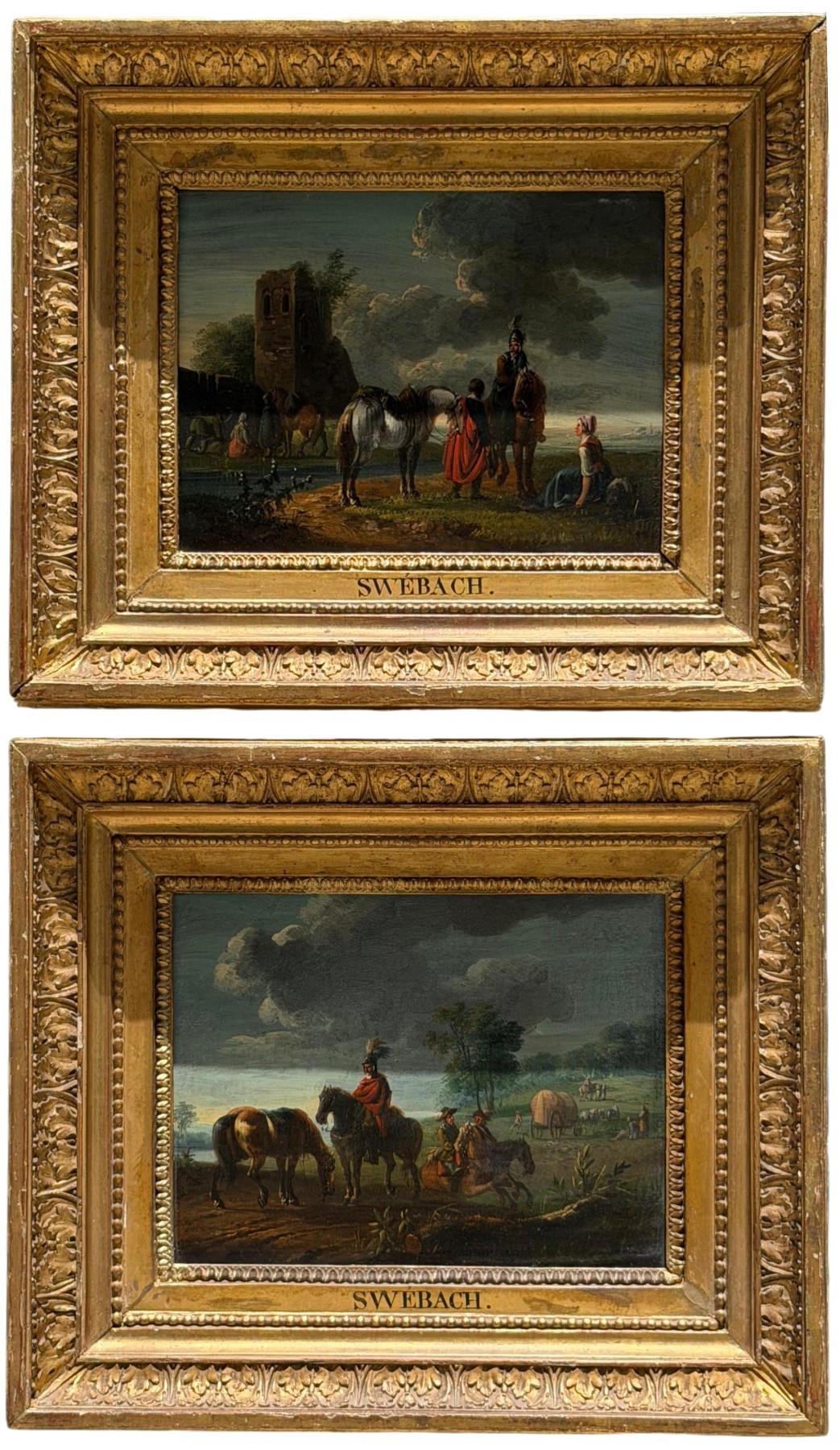
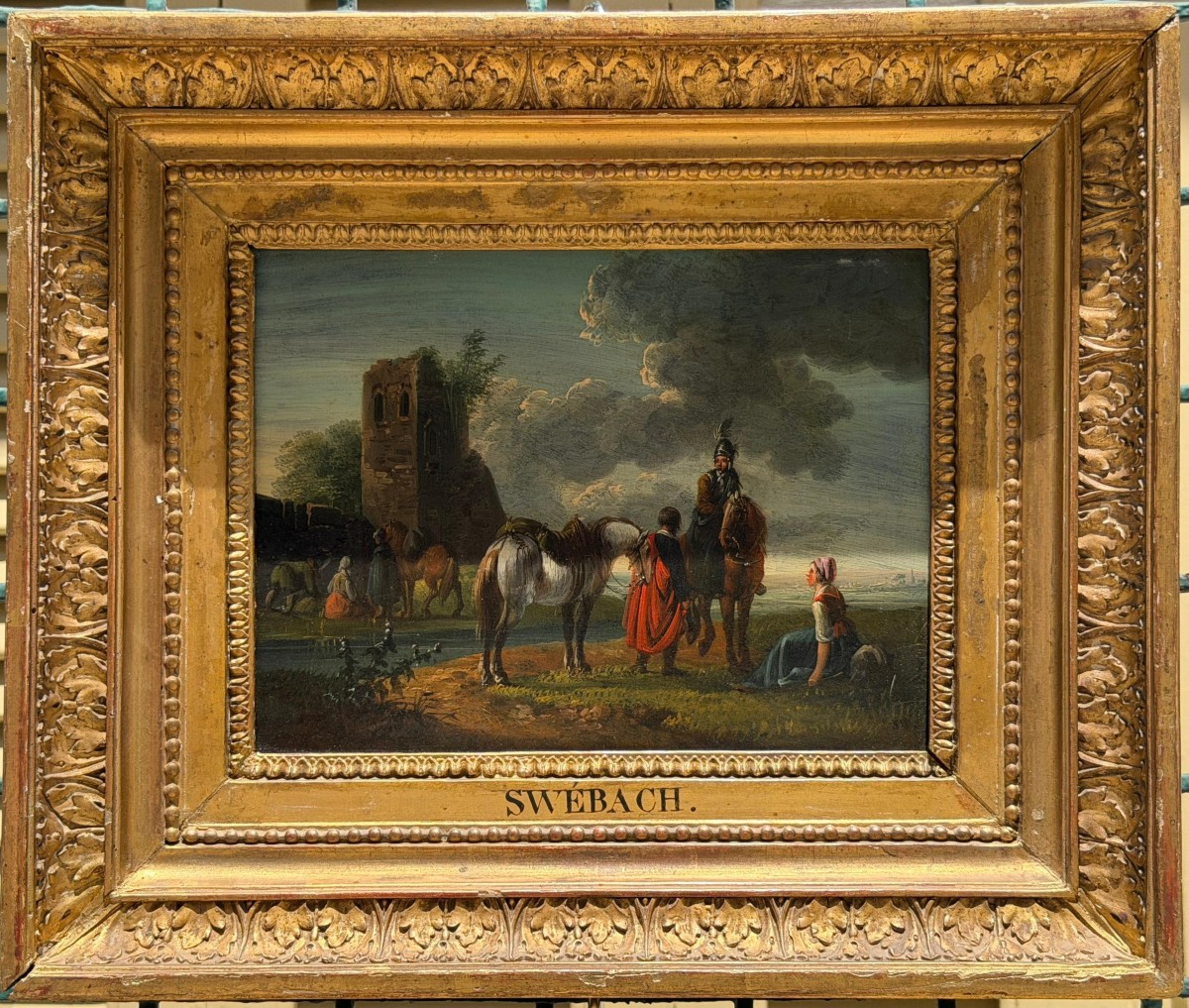
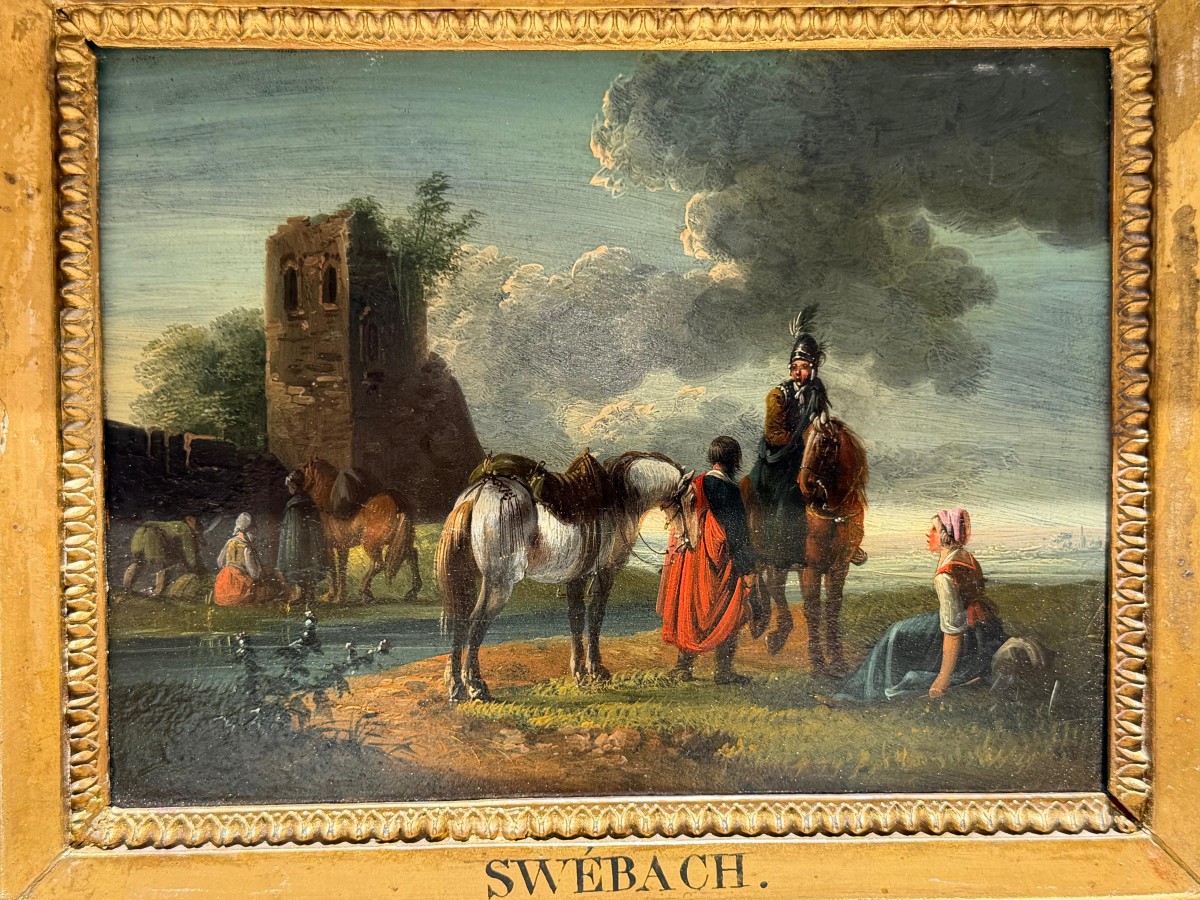
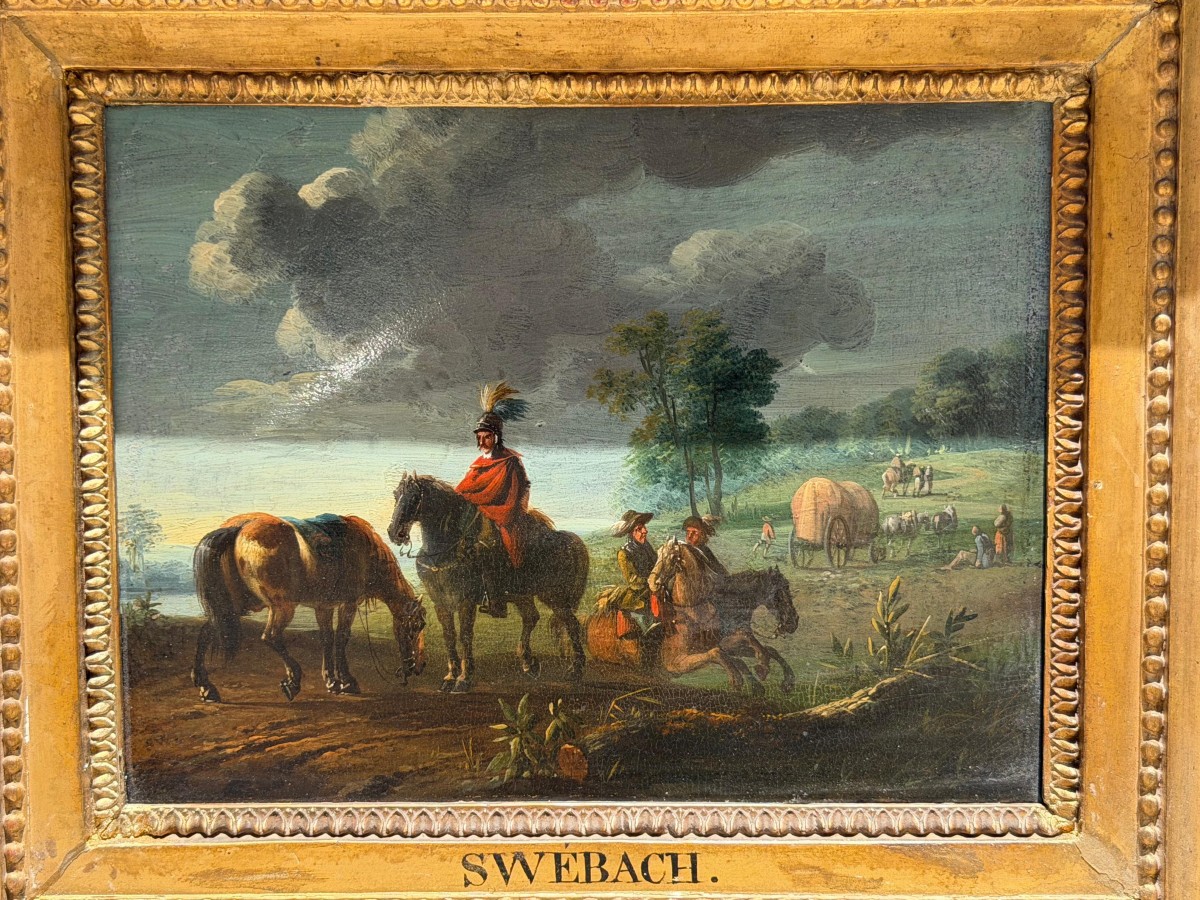
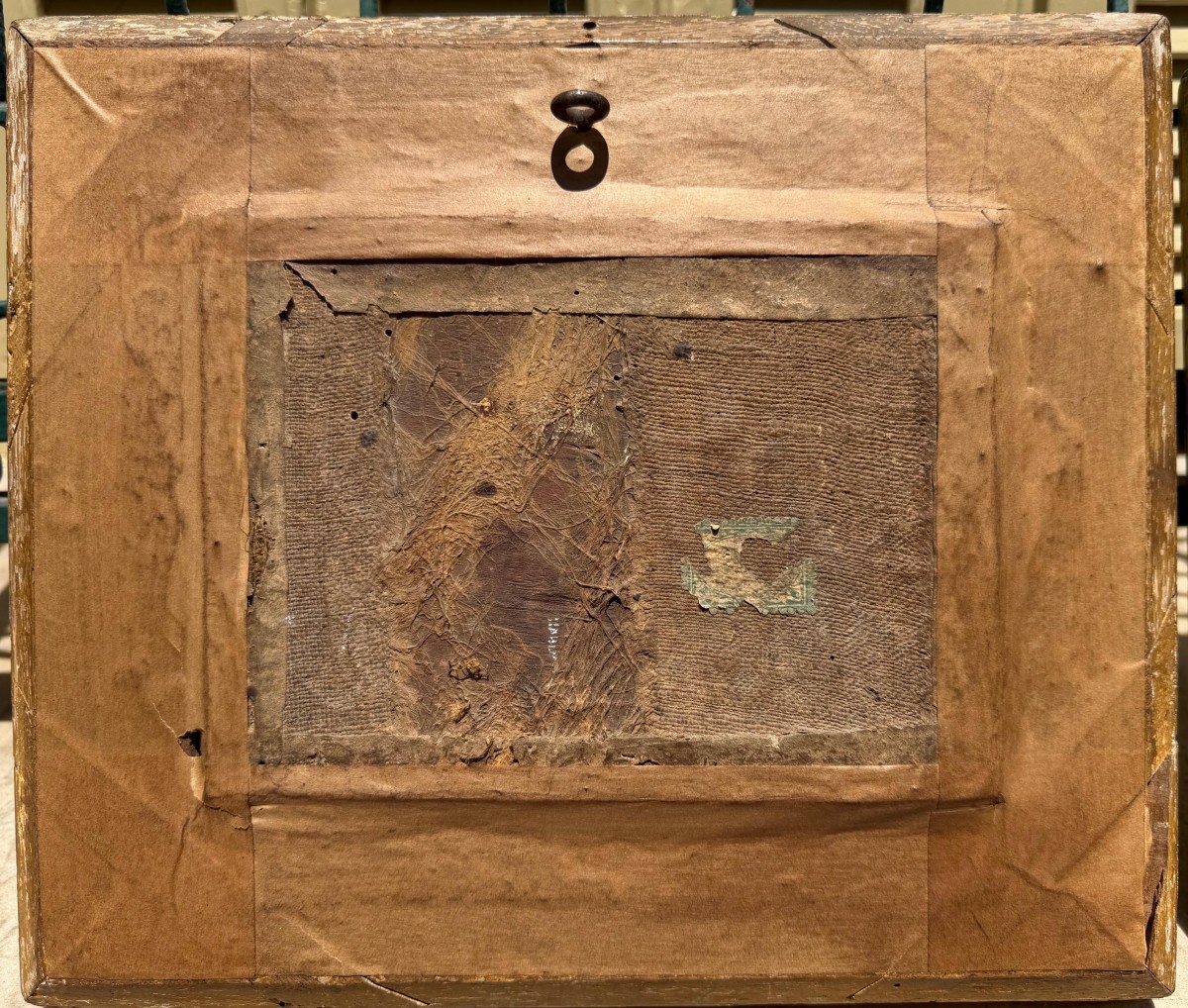
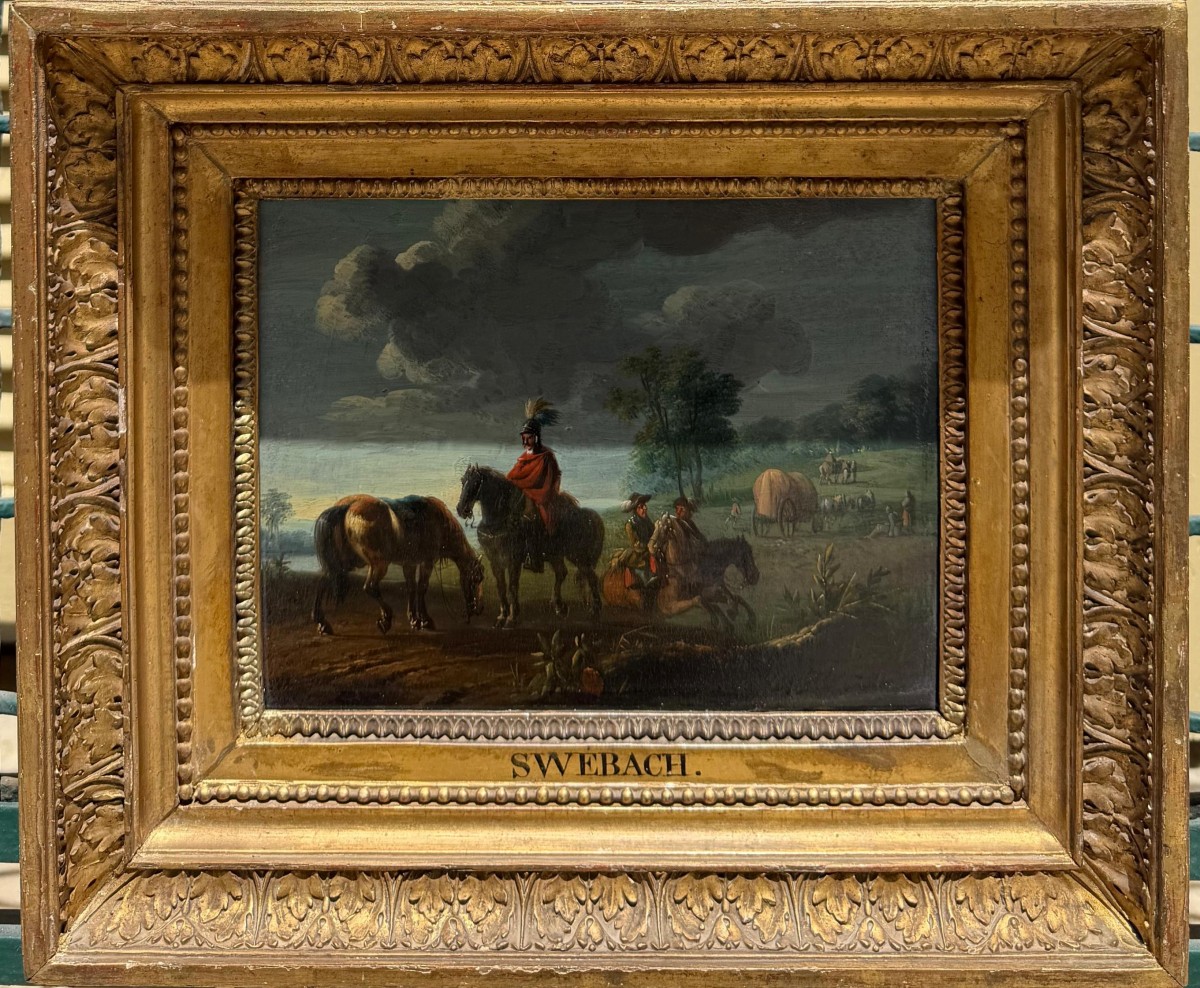
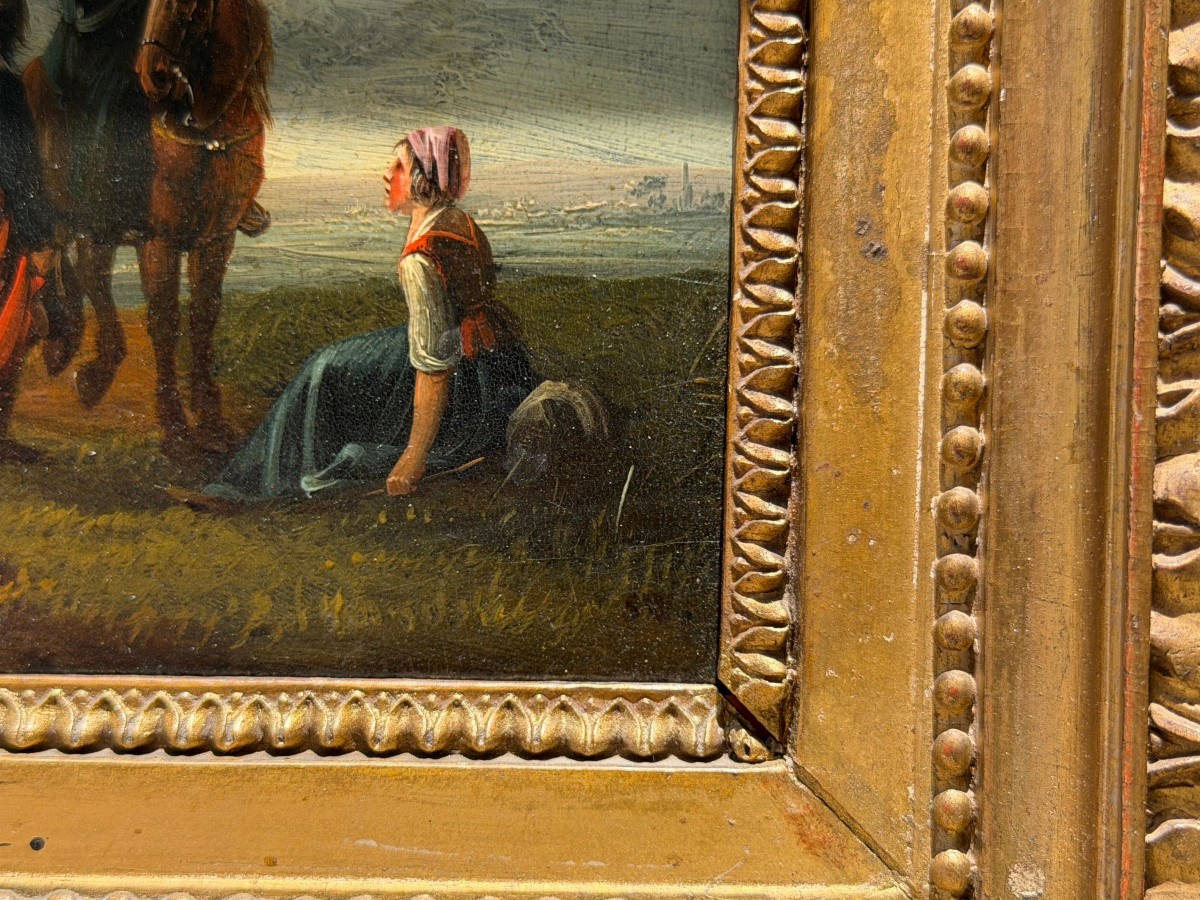
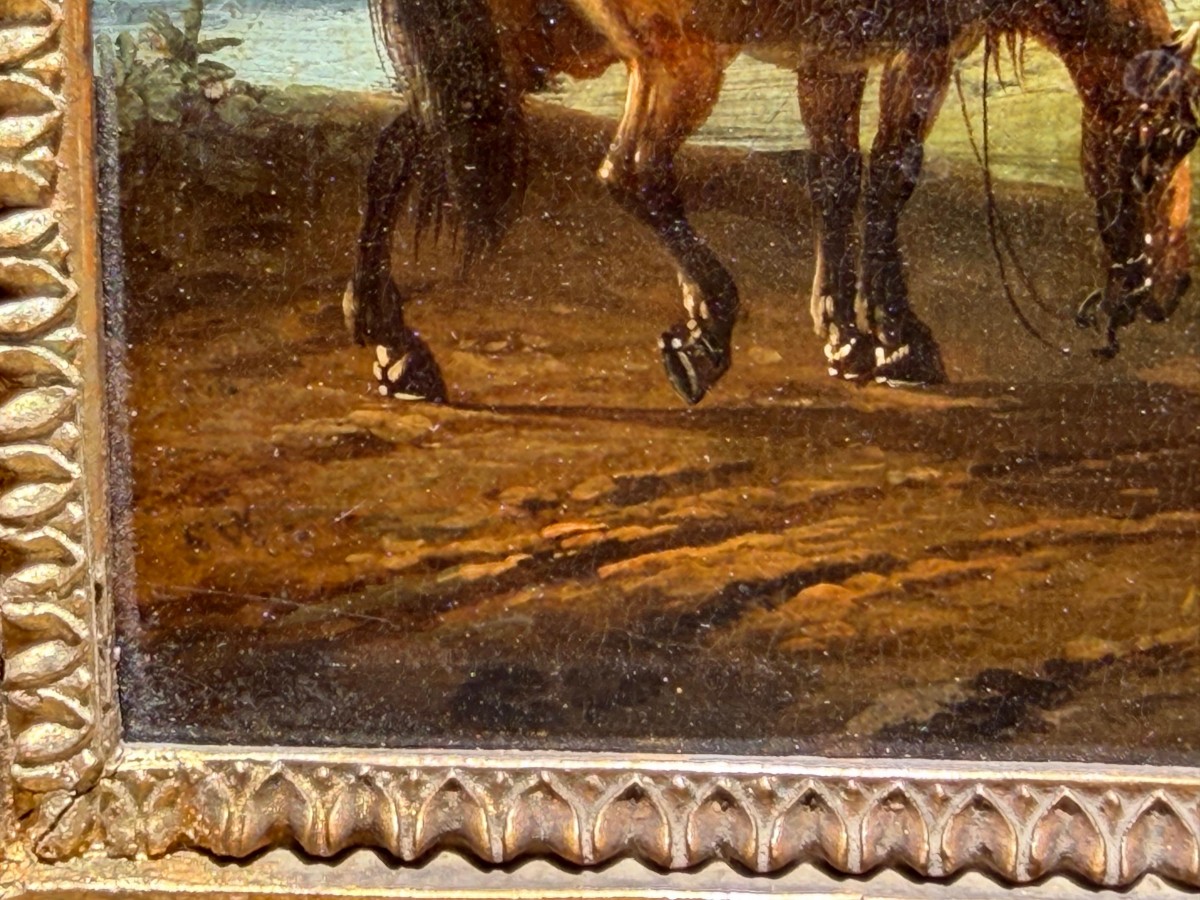
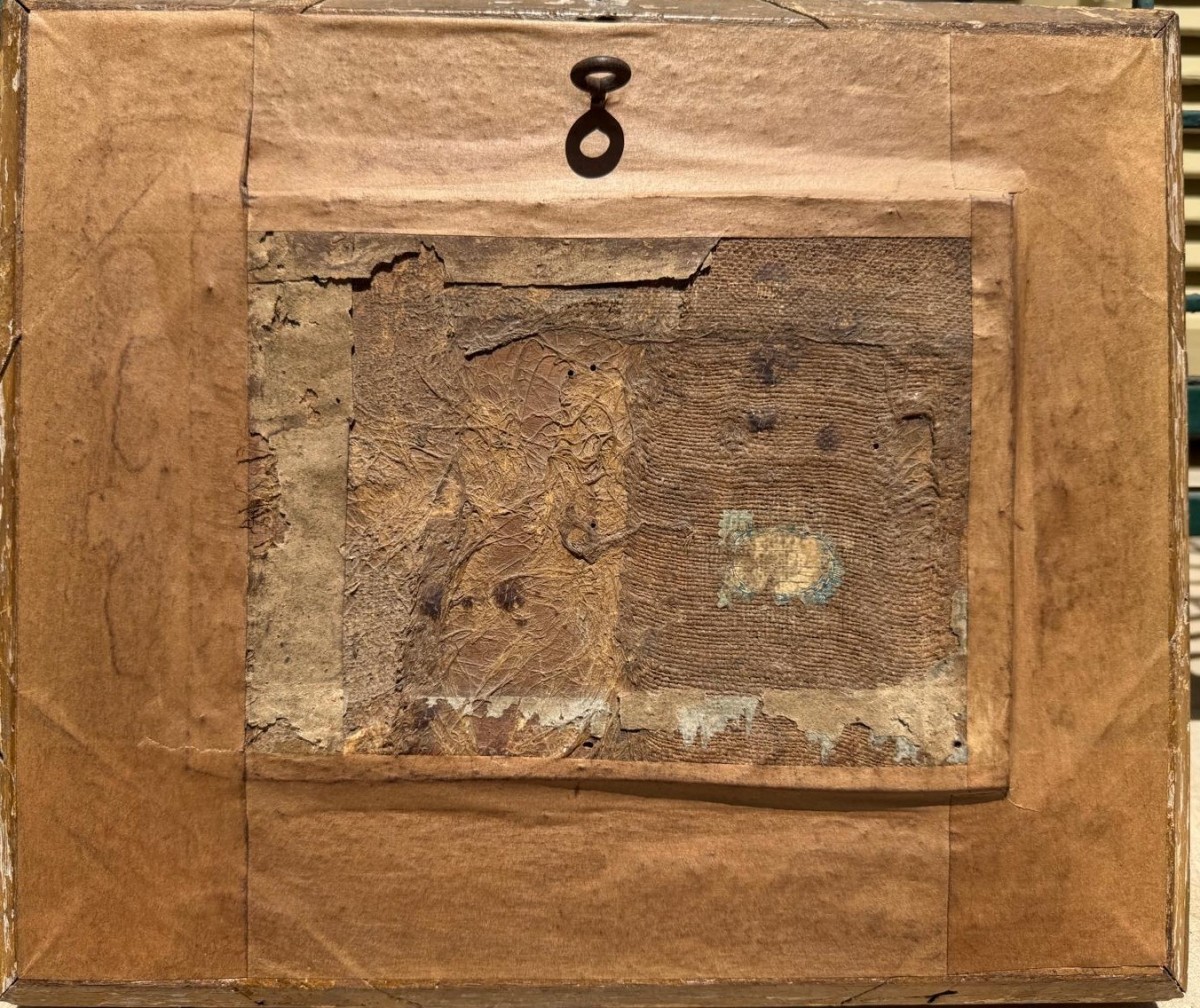
Pair of oil paintings on panel from the early 19th century. Monogrammed SW.
Born in Metz in 1769, Jacques François Joseph Swebach trained in the art of drawing with his father, a painter and engraver, from whom he would take the nickname “de Fontaine”. After settling in Paris, he entered the studio of Michel Hamon Duplessis and, at only fourteen years old, began his artistic career under the name Coutein, exhibiting some of his works at the Salon de la Correspondance and the Salon de la Jeunesse.
The Revolutionary period, favourable to the emergence of new talents, enabled him to establish himself in artistic circles. From 1791 onwards, Swebach took part each year in various salons, exhibiting paintings mainly devoted to military subjects. Quickly noticed by the publisher Pierre Didot the Elder, the young artist was commissioned to produce several drawings to illustrate an important collection of engravings published under the title Tableaux historiques de la Révolution française.
From the end of the century onwards, alongside his military paintings, the artist produced genre scenes and drawings that testify to his dual interest in the representation of horses and the art of landscape, which he combined perfectly in hunting scenes. In 1800, Swebach received the prestigious commission for a painting for Malmaison, the residence of Joséphine de Beauharnais. The work, entitled Cavalcade and Carriage Ride, includes among its figures a portrait of the future Empress on horseback. From then on, the presence of elegant horsewomen became a constant feature of his compositions.
From 1802, Swebach began a collaboration with the Sèvres manufactory. The artist contributed to the production of the main imperial and diplomatic commissions until his departure for Russia in 1814. In Saint Petersburg, he worked for the Imperial Porcelain Manufactory and trained numerous artists, on whom he would have a lasting influence.
Back in France in 1820, Swebach, assisted by his son Édouard, continued his work, favouring drawings and small-format paintings with equestrian themes. He died in Paris in 1823.
In very good overall condition.
Dimensions without frame: 22 × 16 cm
Dimensions with frame: 33 × 28 cm