Offered by Galerie Piatti
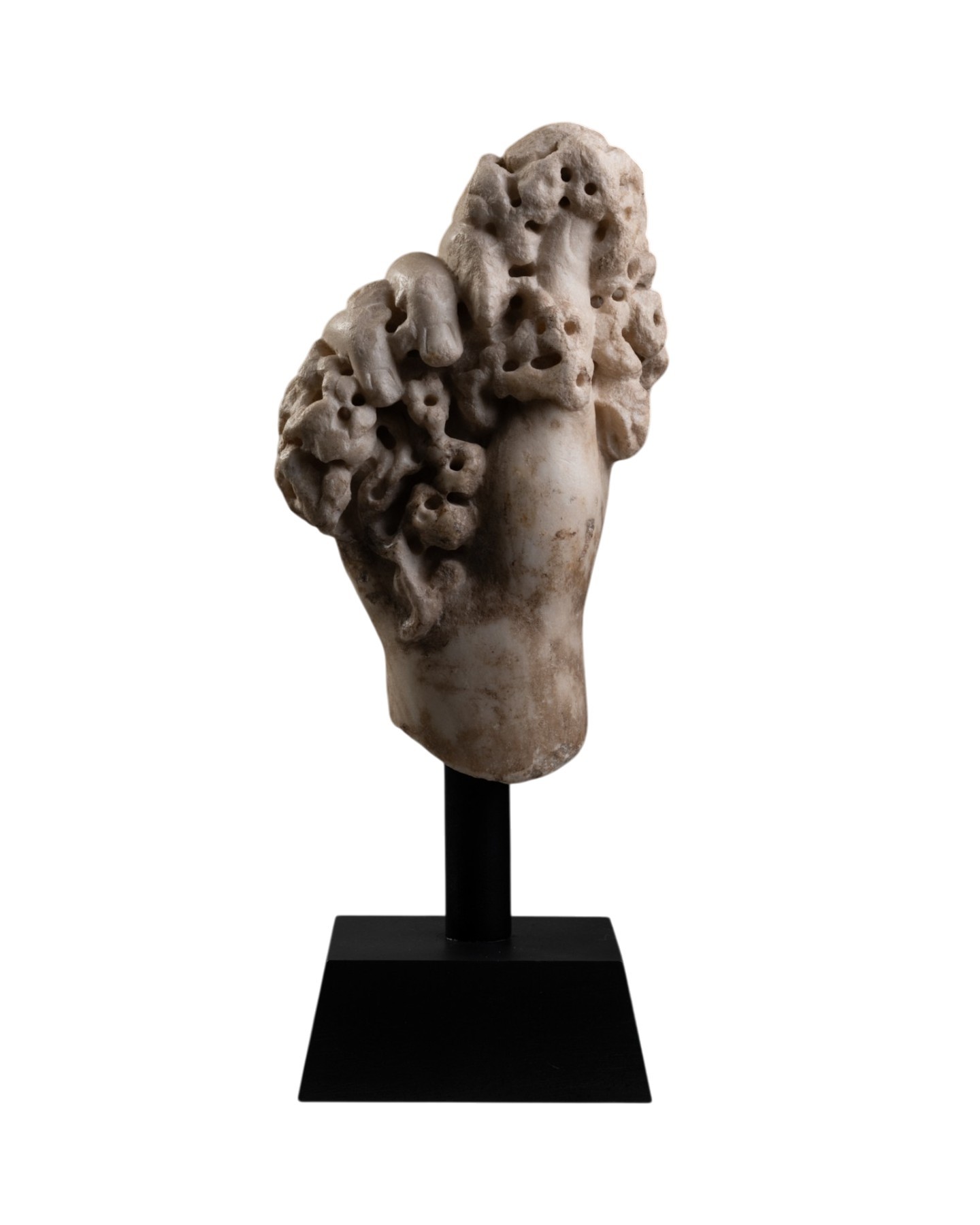
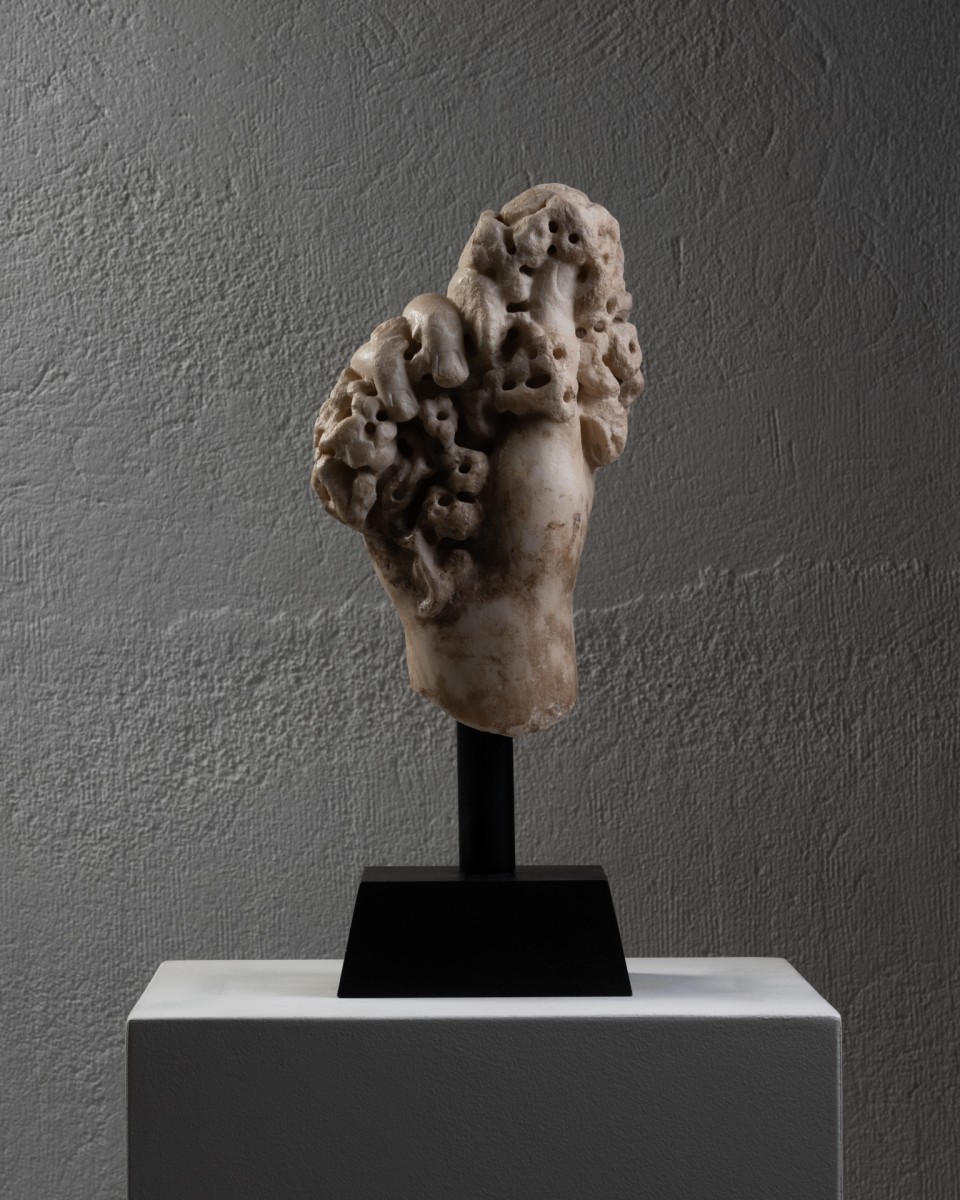
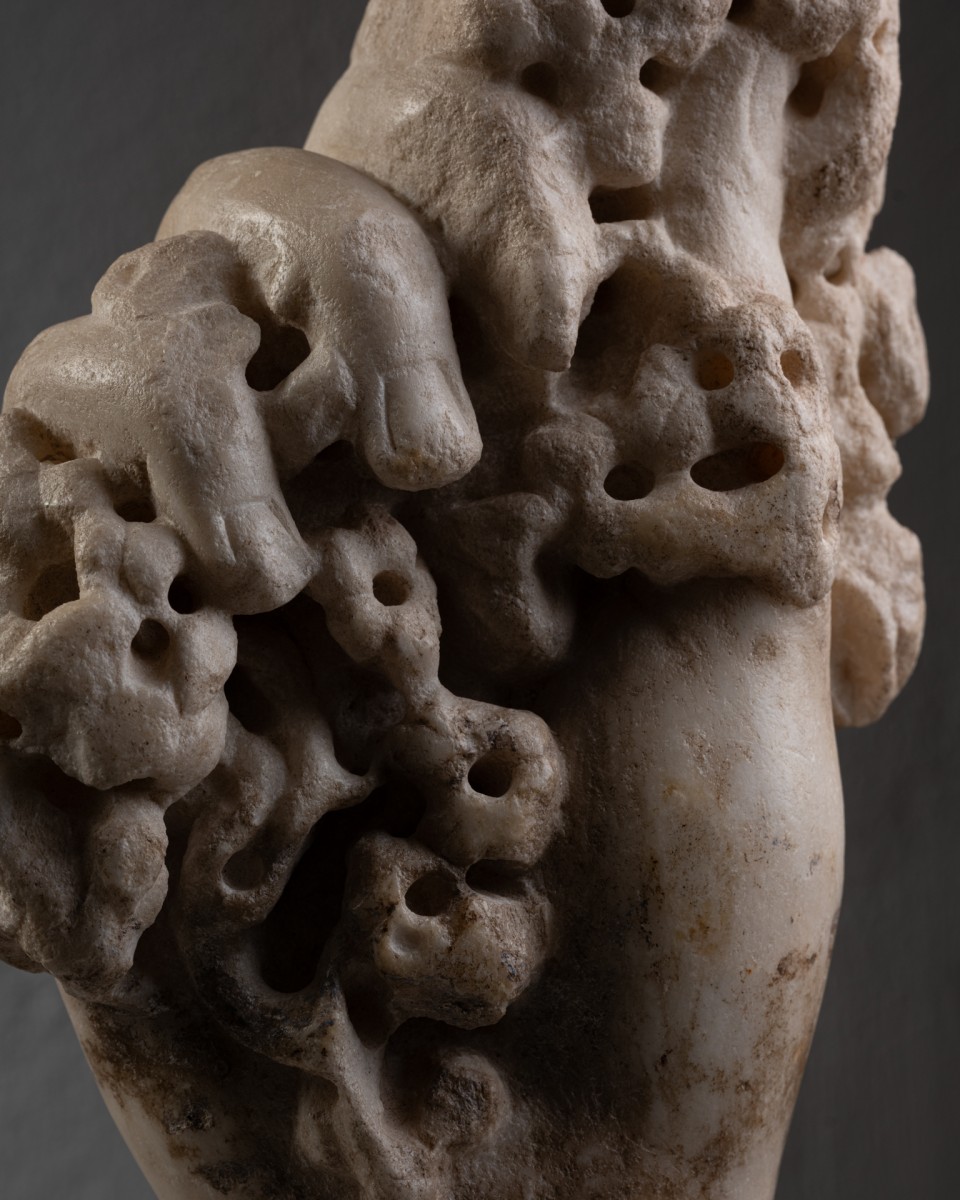
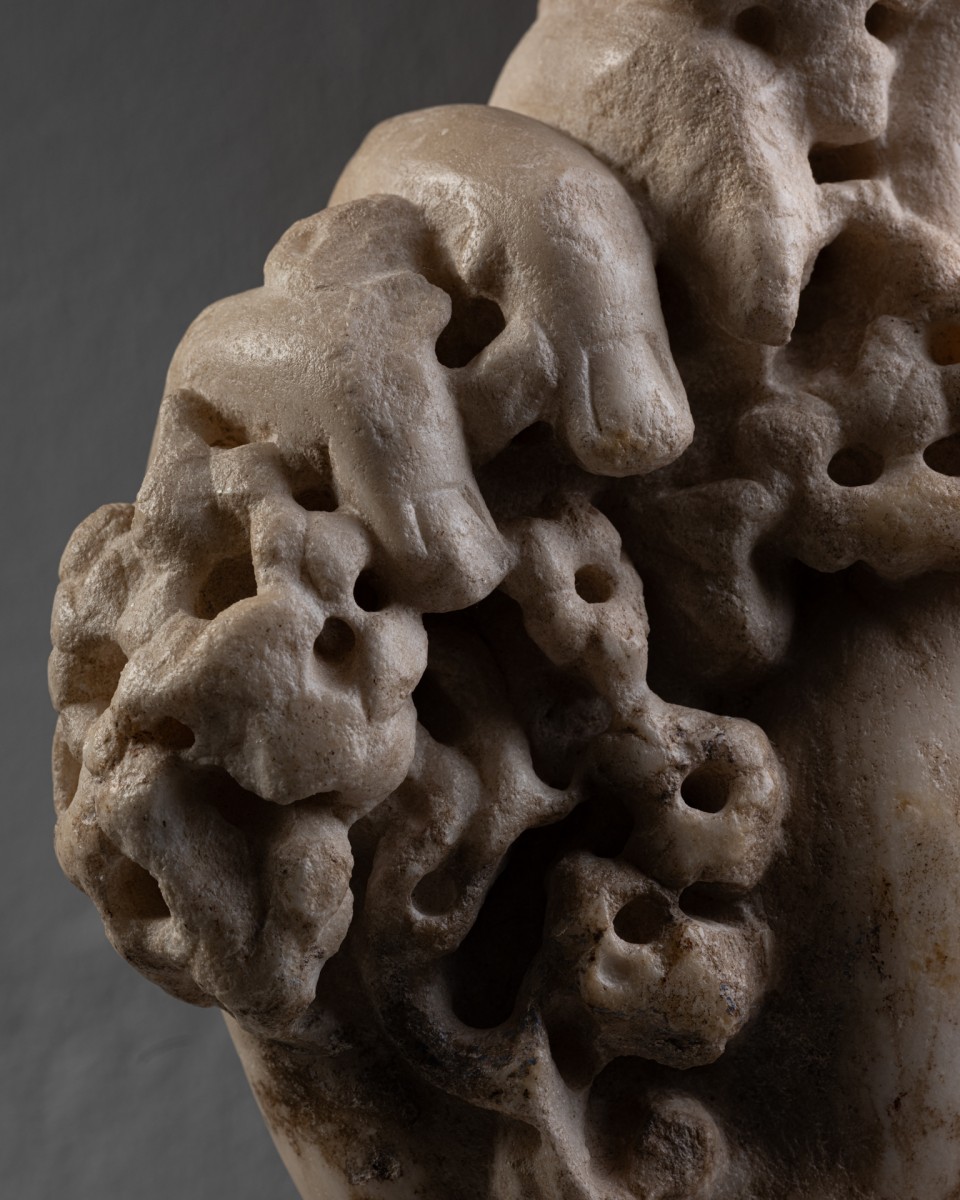
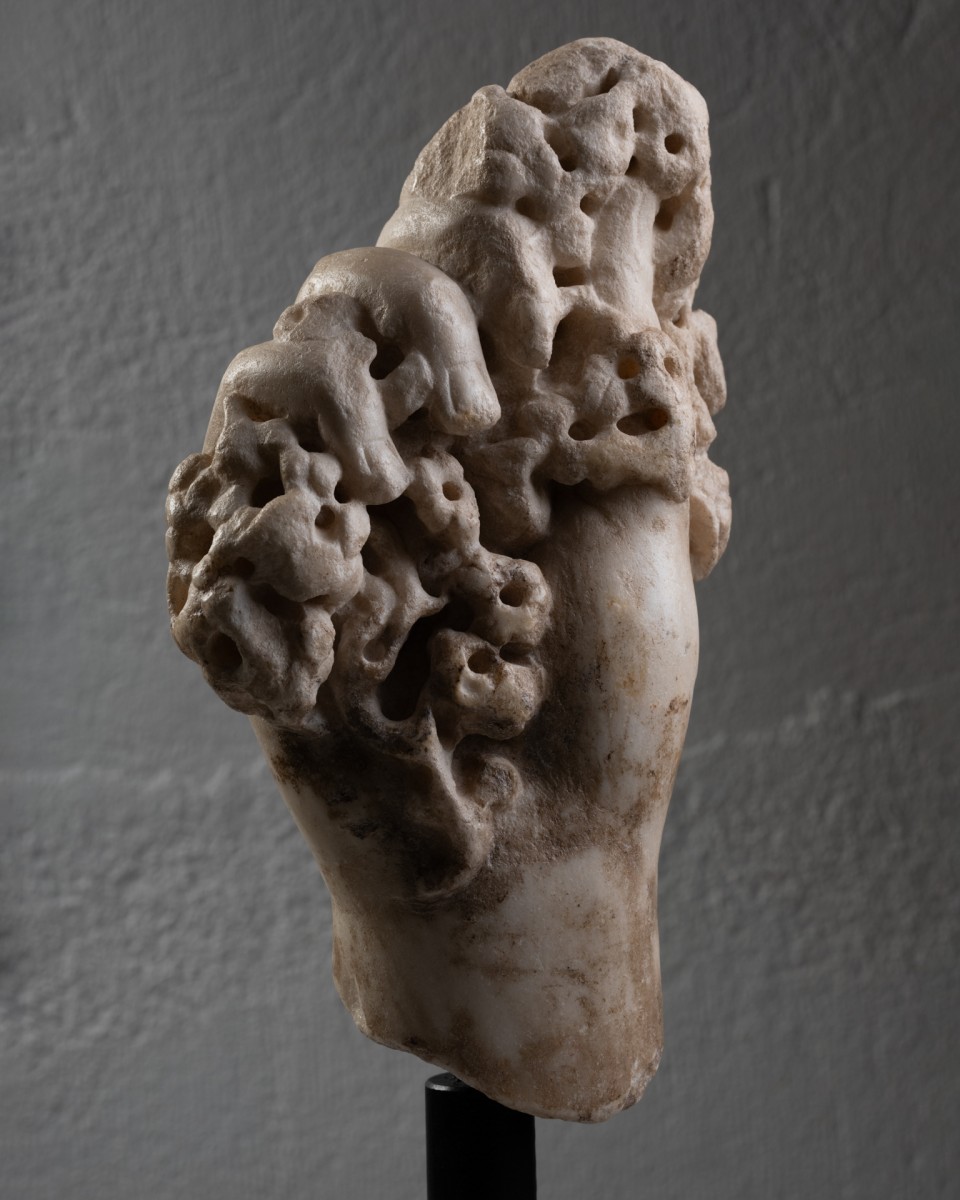

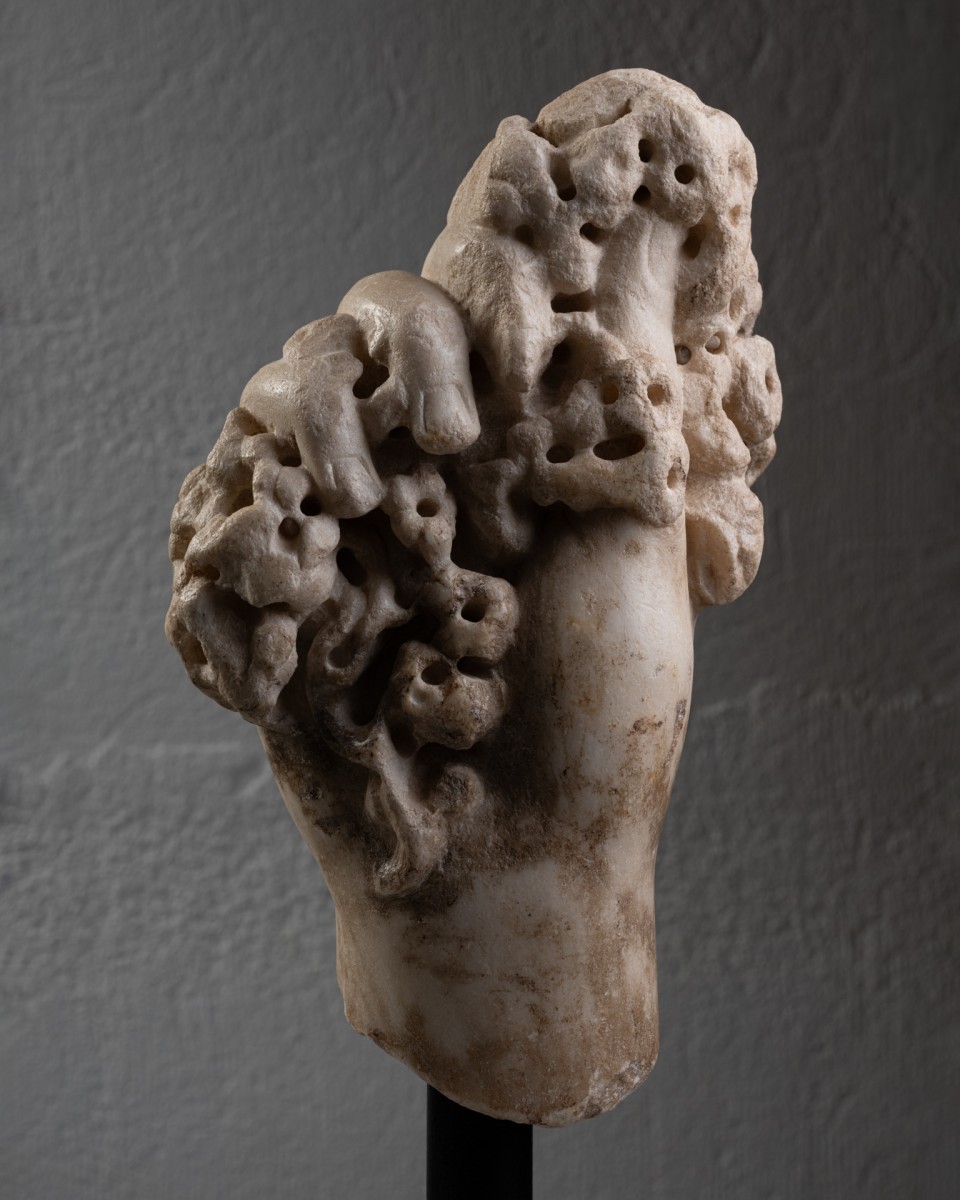
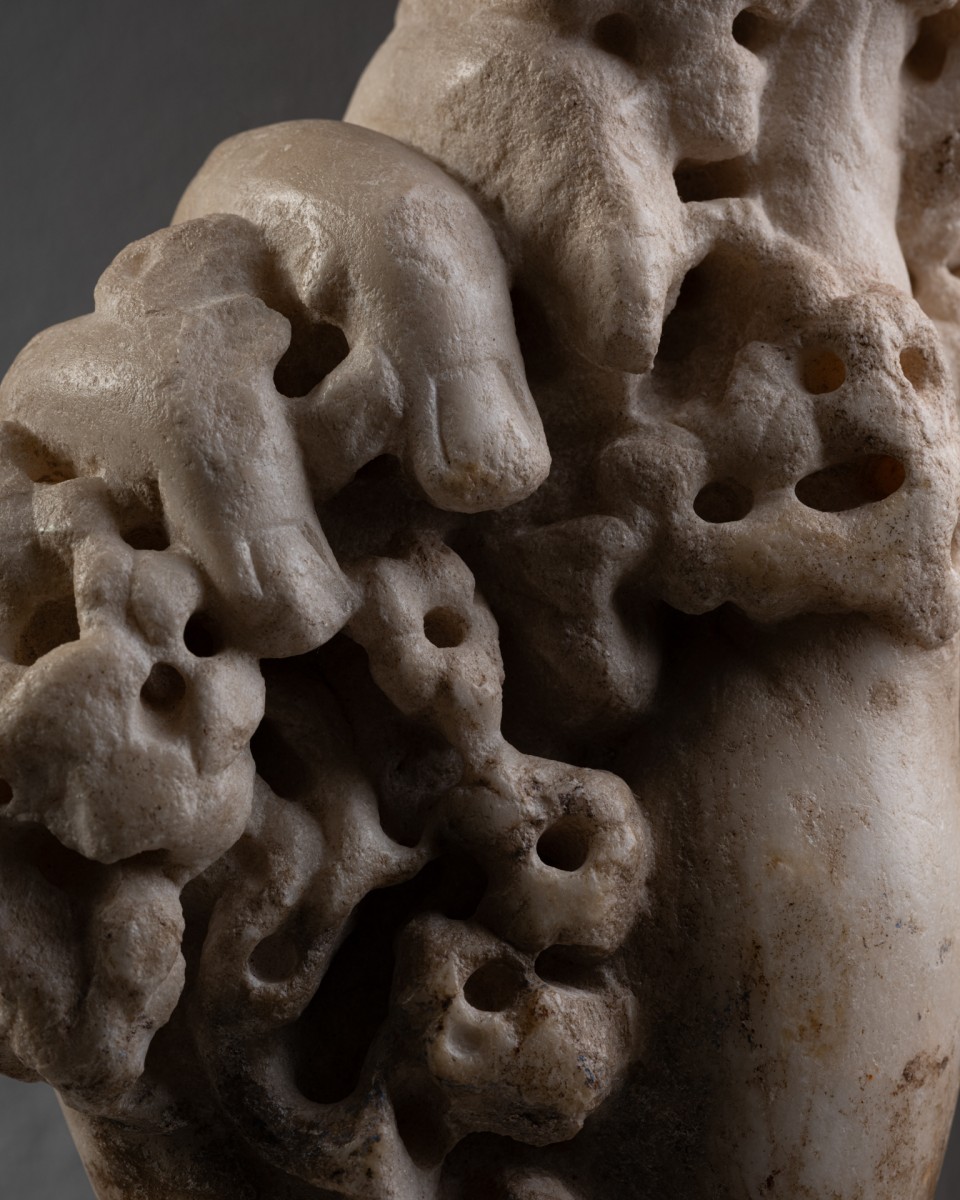
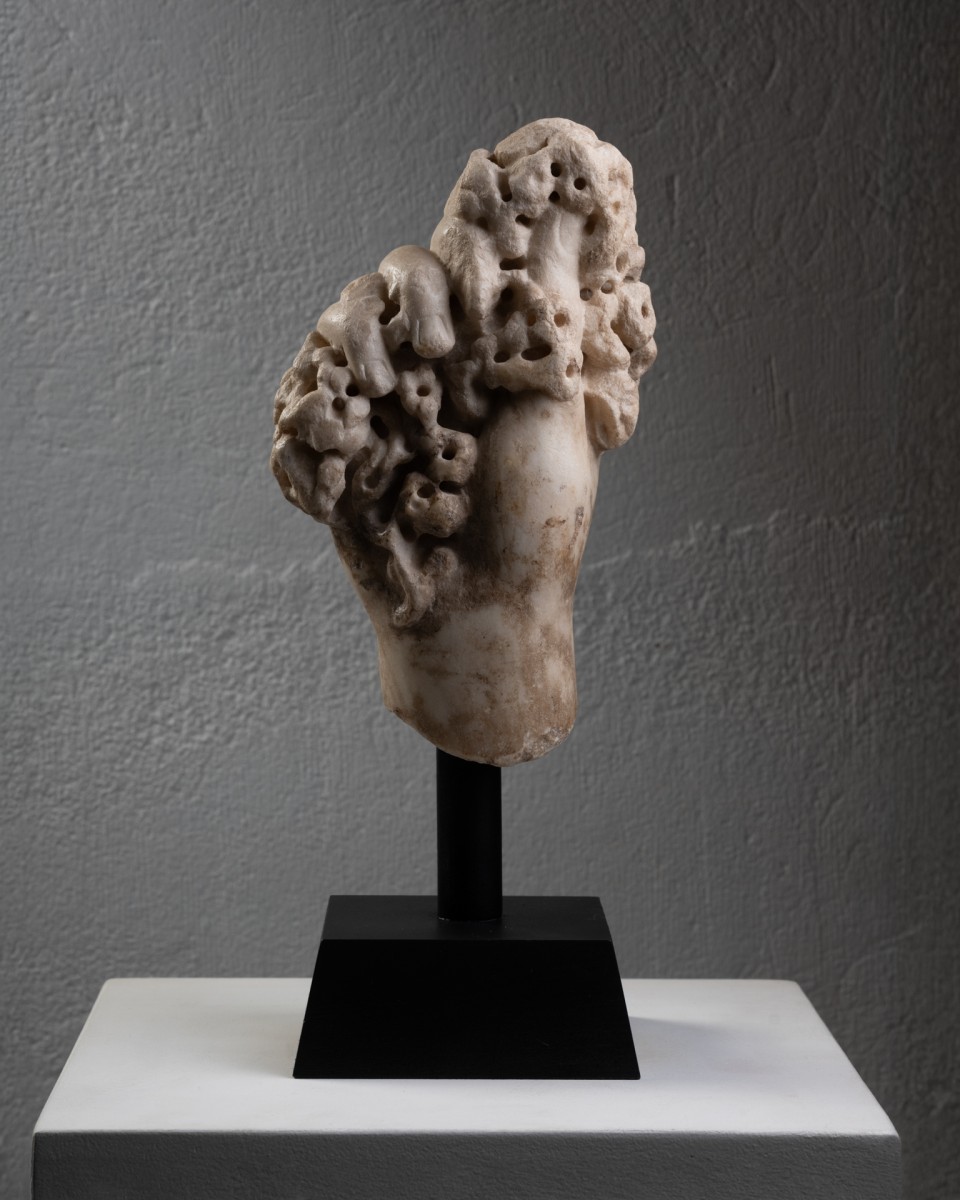
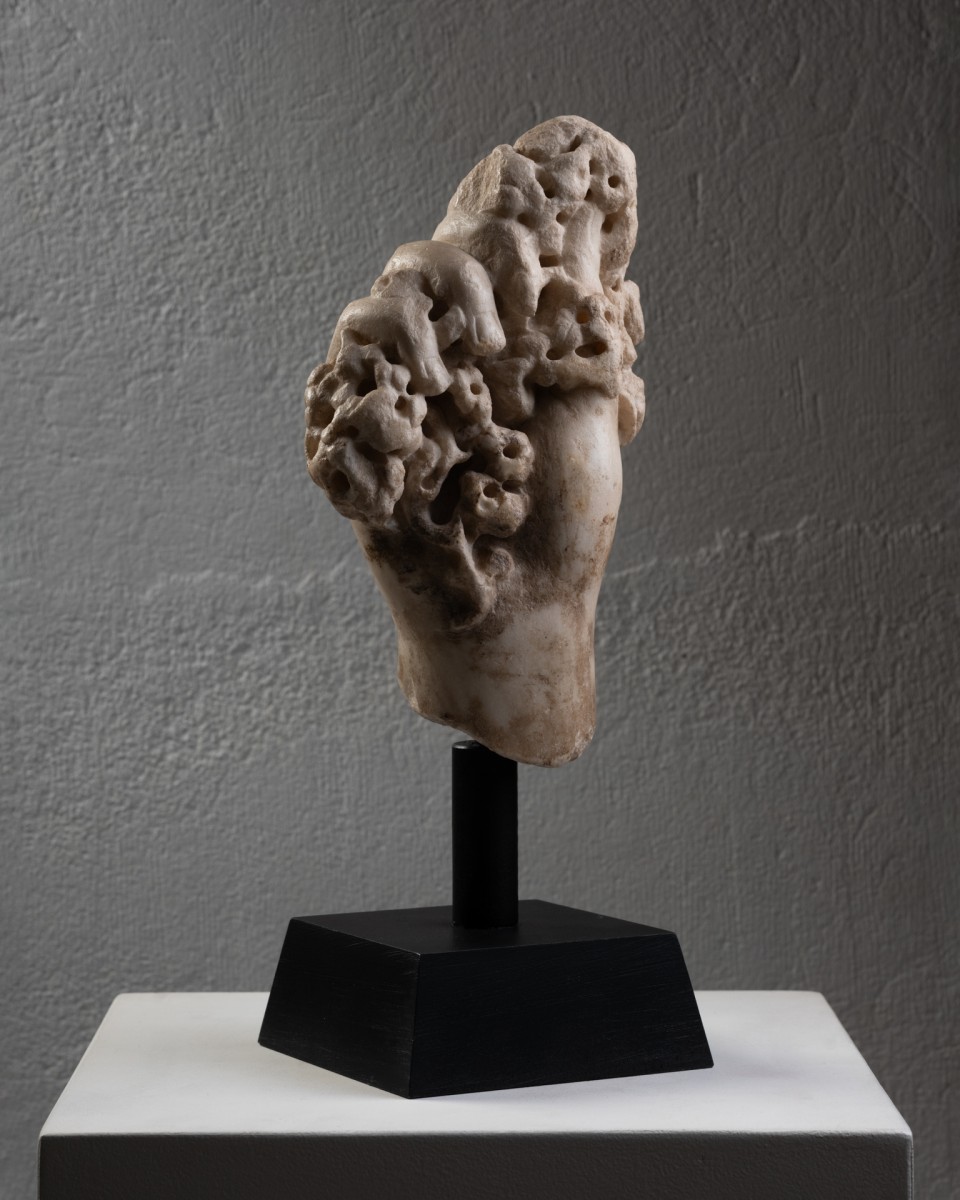
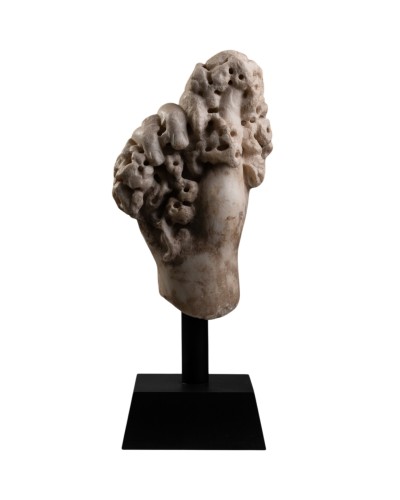
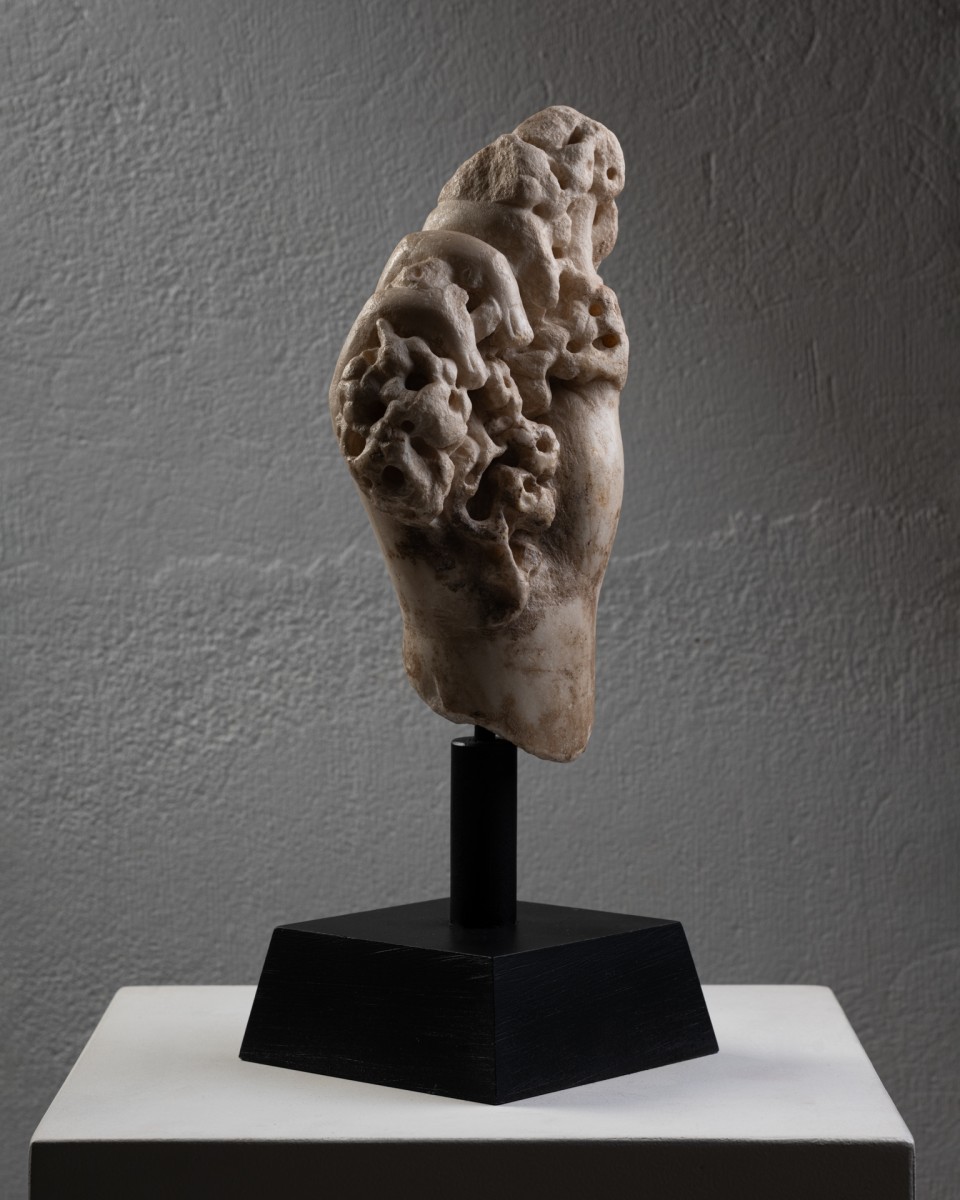
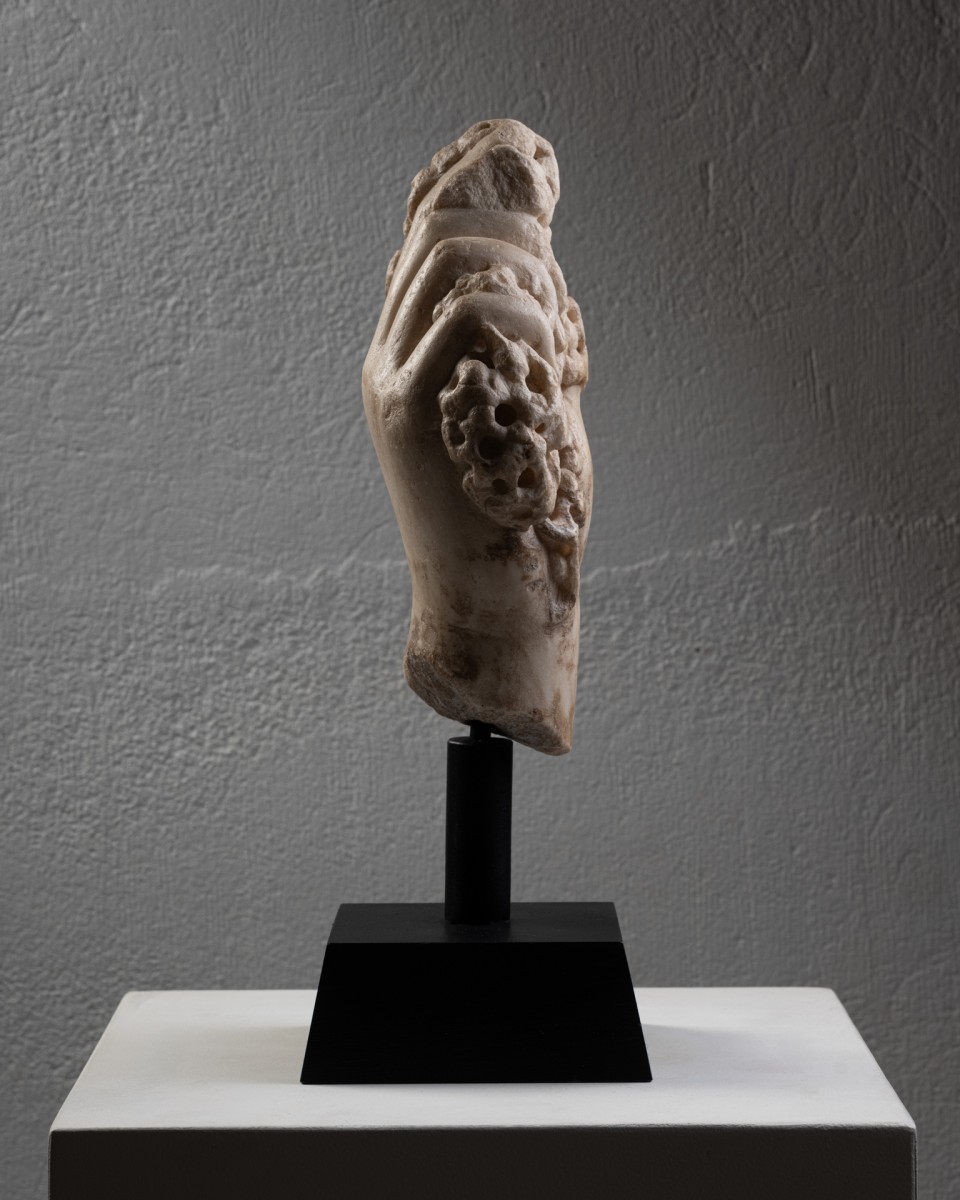
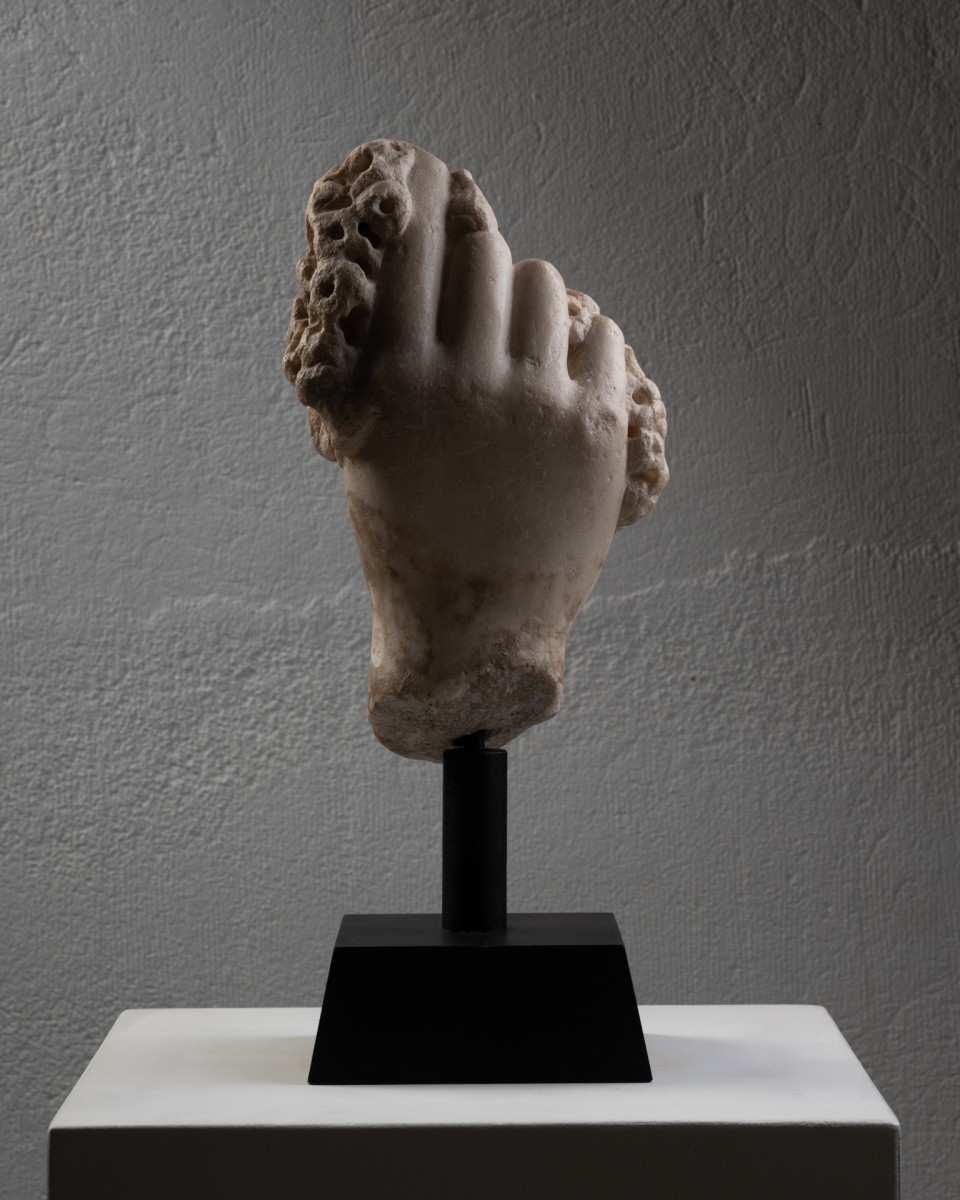
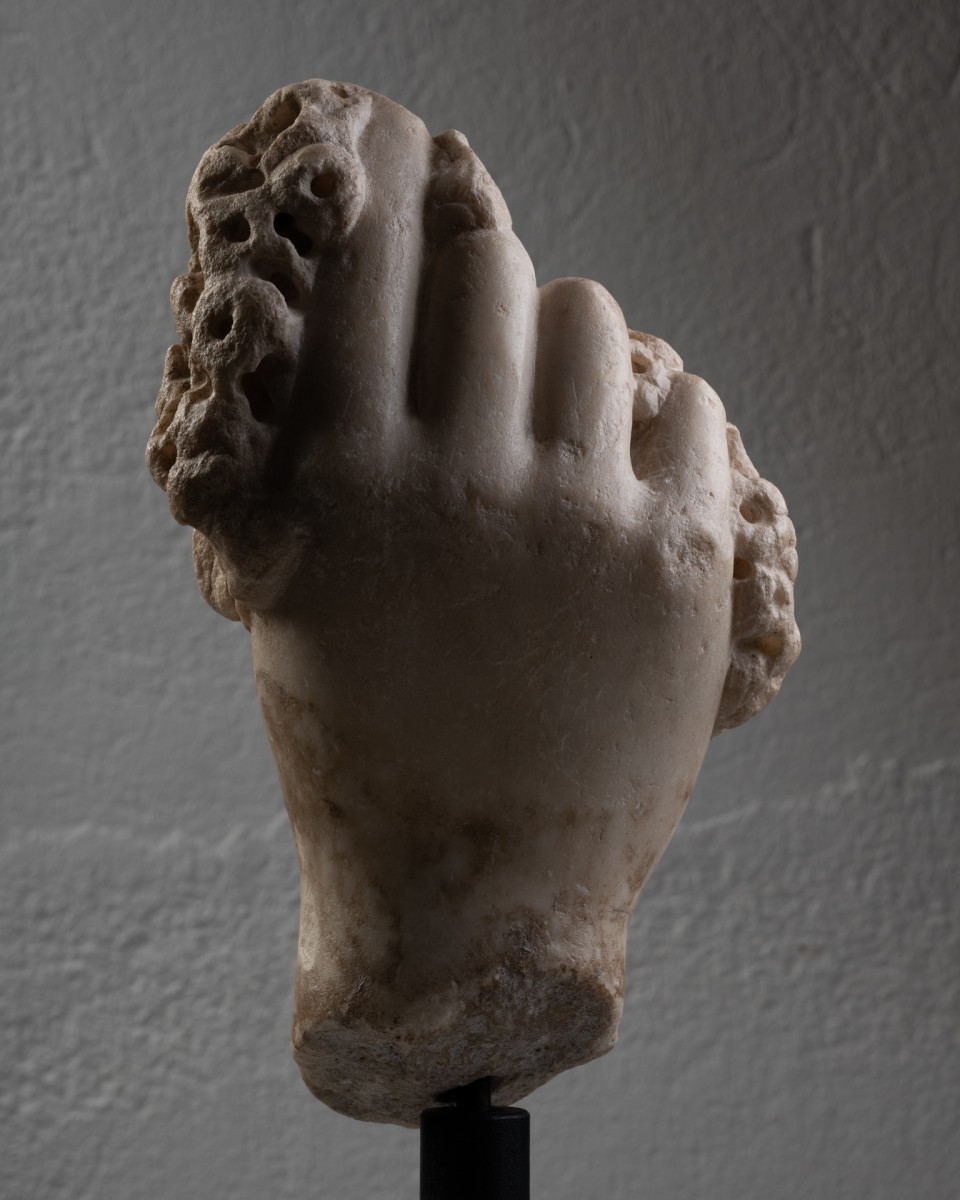
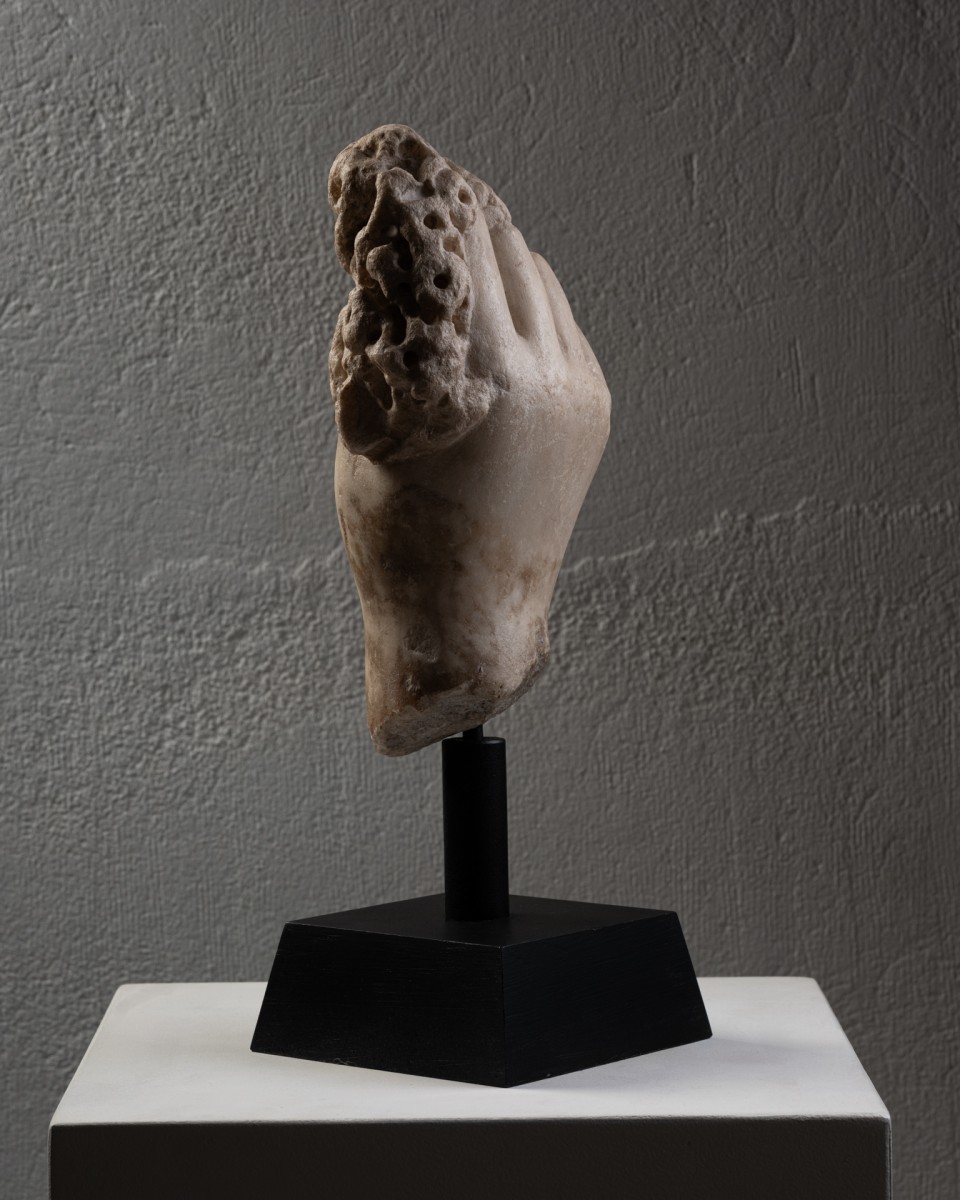
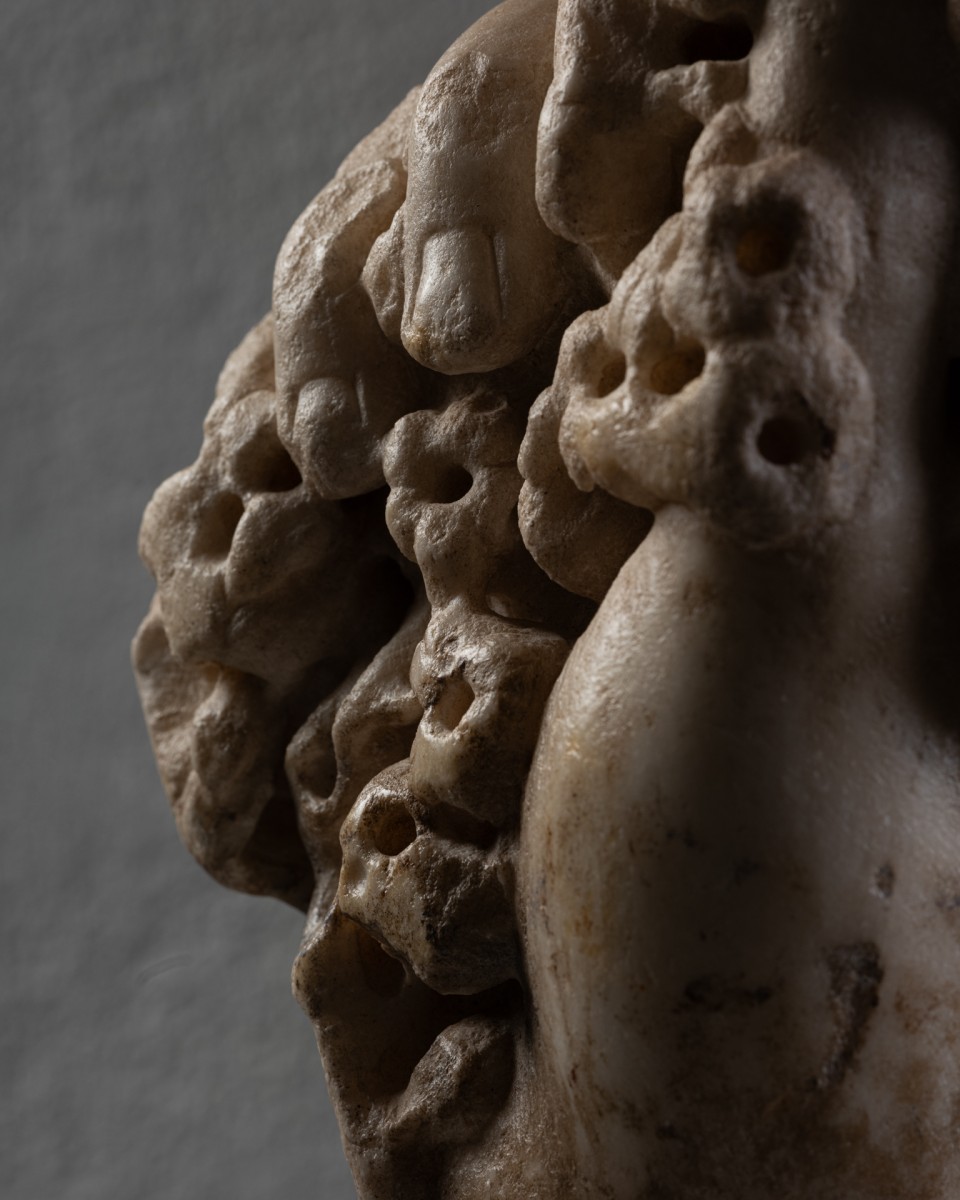
Dating from the 2nd century AD, this hand carved from marble is thought to depict Flora, an emblematic figure in Roman statuary inspired by the great models of Greek sculpture. She holds a compact bouquet with delicately rendered forms, the abundance of which contrasts with the simplicity of the anatomical forms. The supple bending of the fingers conveys the delicacy of the gesture, whilst the deep chisel marks and the vaguely defined plant forms bear witness to the meticulous craftsmanship devoted to this attribute. The ancient surface of the marble, marked by the passage of time, reveals a patina in shades of ivory, cream and golden beige, which emphasises the softness of the modelling and the physical presence of the fragment.
In Roman religion, Flora is the goddess of flowers, blossoming and plant fertility. Associated with spring and the blossoming of nature, she embodies the moment when life is reborn and the earth’s promises herald future abundance. The blossoming of fruit trees, vines and cultivated plants determined the harvests and, consequently, the prosperity of the community. Flora thus personifies the renewal of life, fertility and the hope of a bountiful natural world. Her cult was celebrated in Rome during the Floralia, spring festivals held in late April and early May, marked by public games and popular festivities.
Literary tradition also links Flora to the Greek nymph Chloris. In *Fasti*, Ovid recounts how Zephyr, the personification of the westerly wind associated with the return of spring, made Chloris the queen of flowers. This mythological connection illustrates the convergence of Greek and Roman traditions and reinforces Flora’s association with the gentleness of spring, the beauty of the plant world and the perpetual renewal of nature. The bouquet is therefore a particularly evocative attribute of the goddess: it symbolises blossoming, fertility and the hope for prosperity.
This iconographic interpretation is reflected, in particular, in two famous sculptures traditionally identified as Flora: the Farnese Flora, held at the National Archaeological Museum in Naples, and the Capitoline Flora, held in Rome. These works demonstrate the essential role played by floral attributes in shaping the image of the goddess. Their history also reveals how restorations have shaped the reception of ancient sculpture. On the Farnese Flora, the floral attribute has evolved over the course of various interventions: a garland restored during the Renaissance was replaced by a bouquet in the late 18th century. On the Capitoline Flora, the flowers held in her hand are also a modern addition, whilst the identification of the statue as Flora remains a matter of debate. In both cases, the floral attribute has played a decisive role in the interpretation of the figure.
A further comparison can be drawn with the Roman group of the Three Graces housed in the Louvre Museum. These mythological figures, known as the Charites in the Greek tradition, personify beauty, grace, generosity and harmony. Frequently depicted entwined, they form a group whose gestures and arm movements contribute to the balance of the composition. In the Louvre group, the two figures on either side hold bouquets in their outer hands, thus offering a direct iconographic parallel with the fragment on display. Whilst the floral motif naturally evokes Flora, it also finds its place within the world of the Graces, where it helps to convey the delicacy and elegance of the female figures.
It is worth noting here that the Farnese Flora, the Capitoline Flora and the Three Graces in the Louvre all share a history marked by major restorations. The Louvre group, in particular, was restored by Nicolas Cordier in 1609, involving the reconstruction of several parts of the figures, including the hands and wrists. These interventions serve as a reminder of just how much attributes, gestures and restored parts can influence the identification and interpretation of ancient sculptures. In this context, the hand presented here is of particular interest: the bouquet forms part of the preserved fragment itself and provides the starting point for a reflection on its iconographic identity.
Furthermore, although the group of the Three Graces in the Louvre offers a direct iconographic parallel, identification with Flora remains the preferred interpretation: the bouquet is, in fact, this goddess’s emblematic attribute, directly linked to her nature and role, whilst it plays a more secondary role in the iconography of the Graces. The presence of this attribute on the fragment thus primarily directs its interpretation towards the Roman goddess of flowering.
With its refined modelling, delicate execution and the expressive presence of its bouquet, this hand is a sculptural fragment of singular charm, whose iconography primarily evokes Flora, the Roman goddess of flowers and blossoming. Parallels with the famous Farnese Flora and Capitoline Flora enhance its historical and artistic significance, whilst the potential connection with the Three Graces highlights the richness of female representations in ancient sculpture. Combining the beauty of weathered marble with the evocative power of its floral attribute, this work captivates through its elegance, its history and the mystery of the figure from which it originates.
Delevery information :
Please note that packing and shipping costs are not included in the price of the objects which are quoted ex shop.
Final amount including packing and shipment to be discussed with Galerie Alexandre Piatti.