Offered by Galerie Tarantino
REQUEST INFORMATION
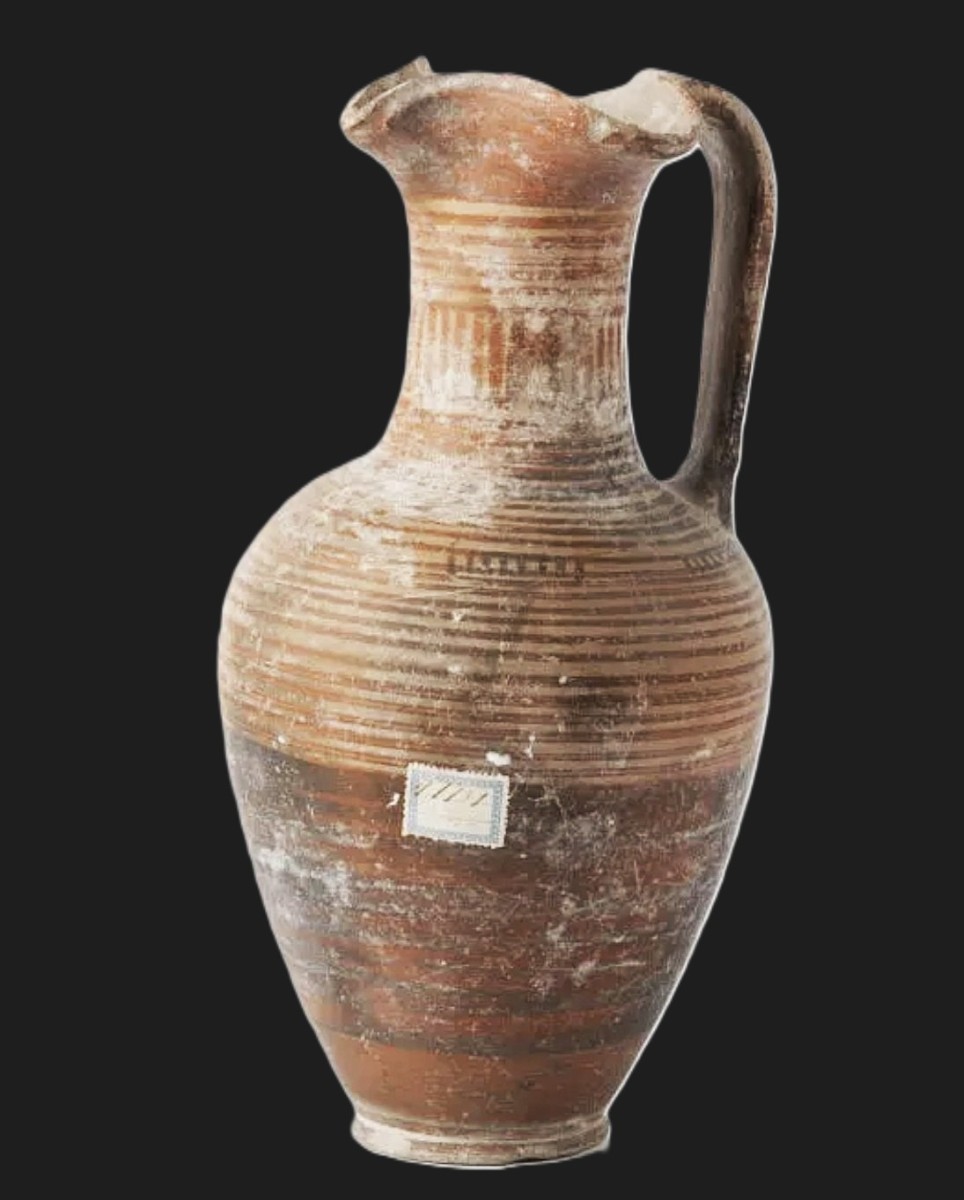

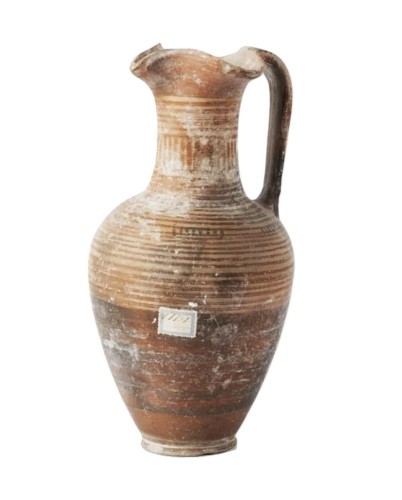
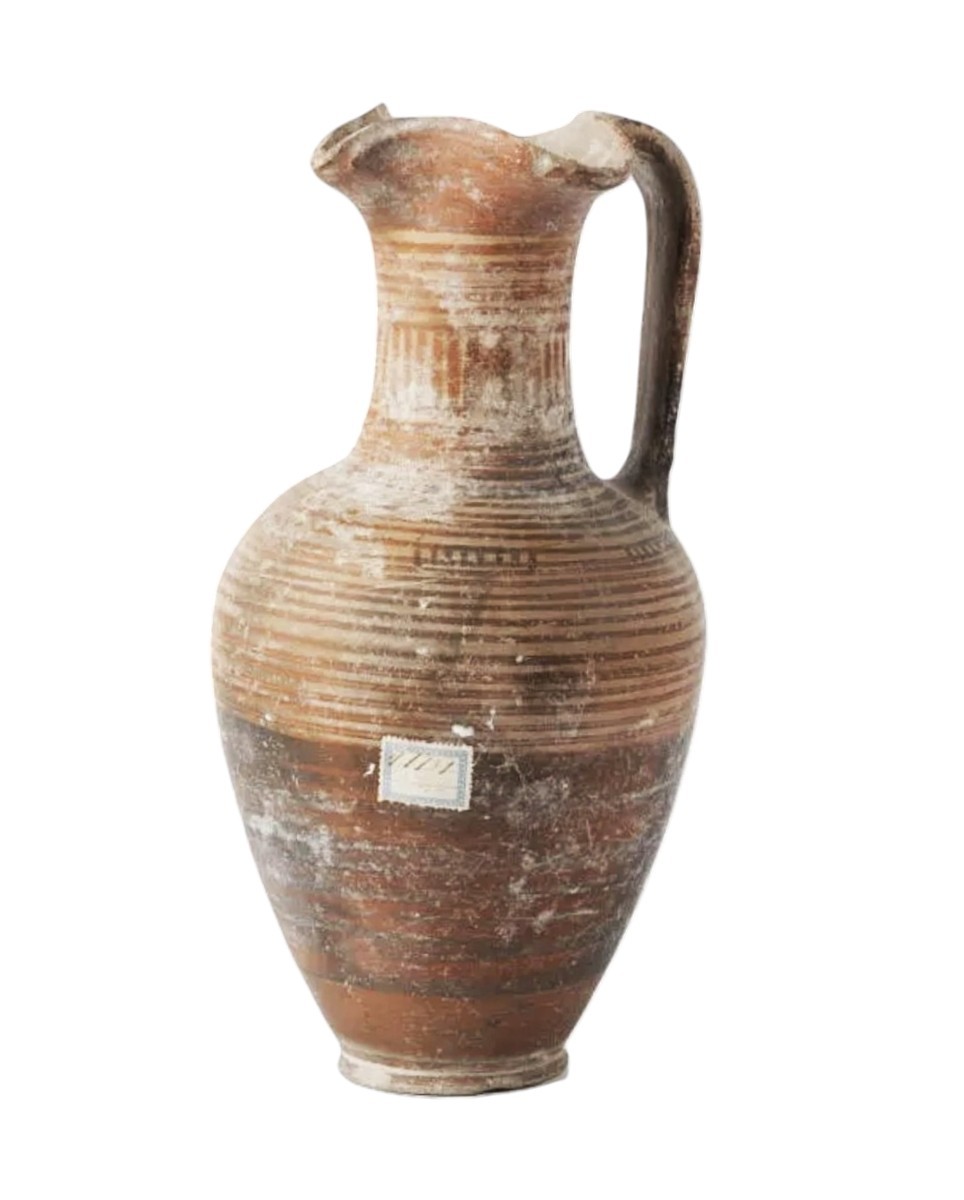
Geometric Oinochoe
Italo-Geometric Art, Caere, second quarter of the 7th century BC, 675–650 BC.
Beige-orange clay.
Minor chips along the rim of the mouth, otherwise in very fine condition.
Height: 23 cm.
Provenance: Former Julien Bessonneau Collection, 1880–1960 (Angers).
Jean-Pierre Léveilley Collection (Angers) (see Léveilley Donation to the Musée d'Angers).
Old label “1789”.
Bibliography: Unpublished. See Curiosité(s) – Un certain goût pour l’ailleurs, Musées d'Angers, 2015.
Comparative bibliography: Briquel, Dominique, Catalogue des inscriptions étrusques et italiques du Musée du Louvre, Paris, Louvre Éditions; Éditions Picard, 2016, pp. 151–153, cat. 64 – Les Étrusques et la Méditerranée, Lens (2013), exhibition catalogue, 2013, p. 132, nos. 118, 119.
Pallottino, Massimo, Testimonia linguae etruscae: selegit, recognovit, indice verborum, Florence, Nuova Italia, 1968, no. 63. Lejeune, Michel, “Note sur les vases de terre cuite avec inscriptions étrusques du musée du Louvre”, Studi Etruschi, 2.26.2.2, 1958, pp. 85–102, pp. 85–90, figs. 1, 3, 5, 7 – Pottier, Edmond, Vases antiques du Louvre. Salles A–E, les origines, les styles primitifs, écoles rhodienne et corinthienne, Musée du Louvre, Paris, Hachette, 1897.
This geometrically decorated oinochoe is very similar to an example preserved in the Louvre Museum, originating from the Campana Collection.
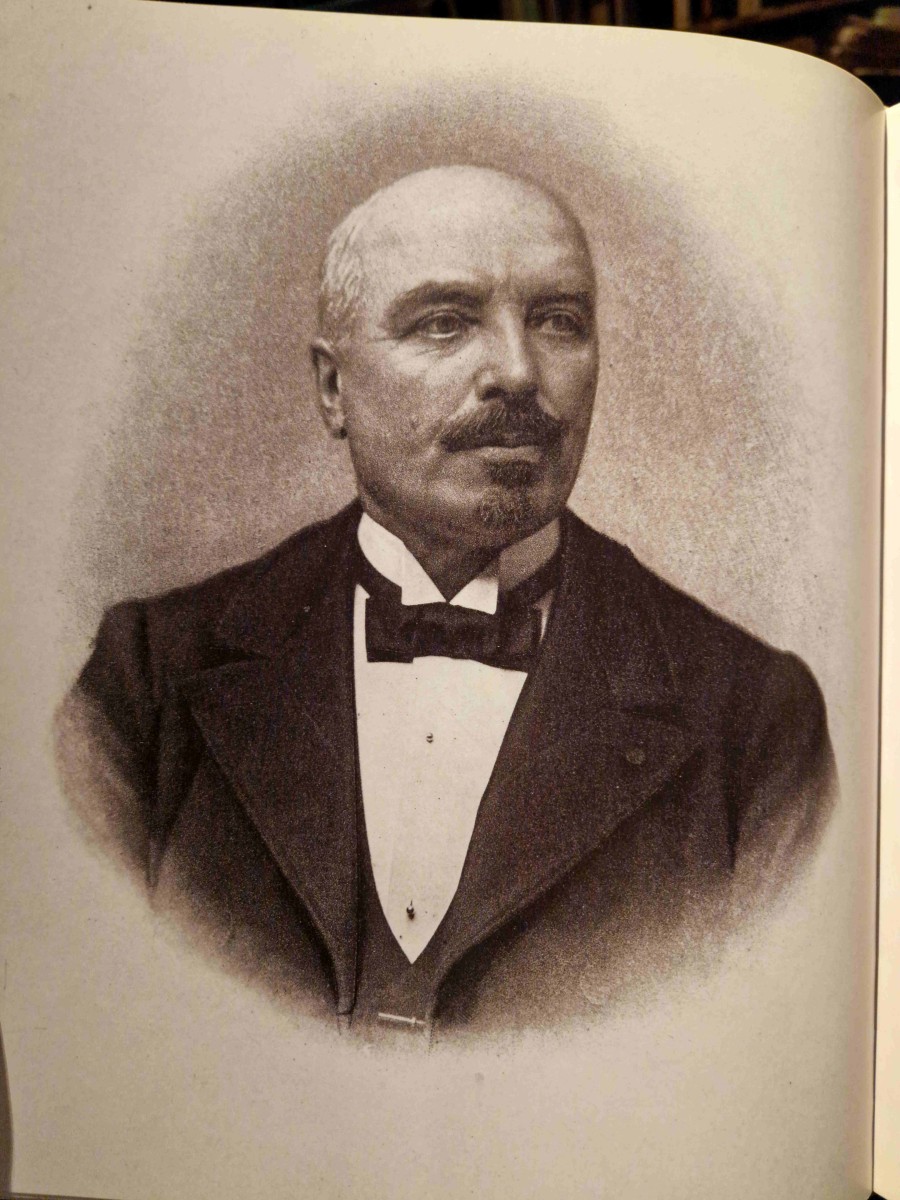
The provenance of this vase is also of particular interest. Indeed, it belonged to the industrialist from Angers, Julien Bessonneau (1842–1916), and subsequently to Jean-Pierre Léveilley, who has recently donated part of his important collection to the museums of Angers, along with other pieces originating from Bessonneau.