Offered by Galerie Tarantino
REQUEST INFORMATION
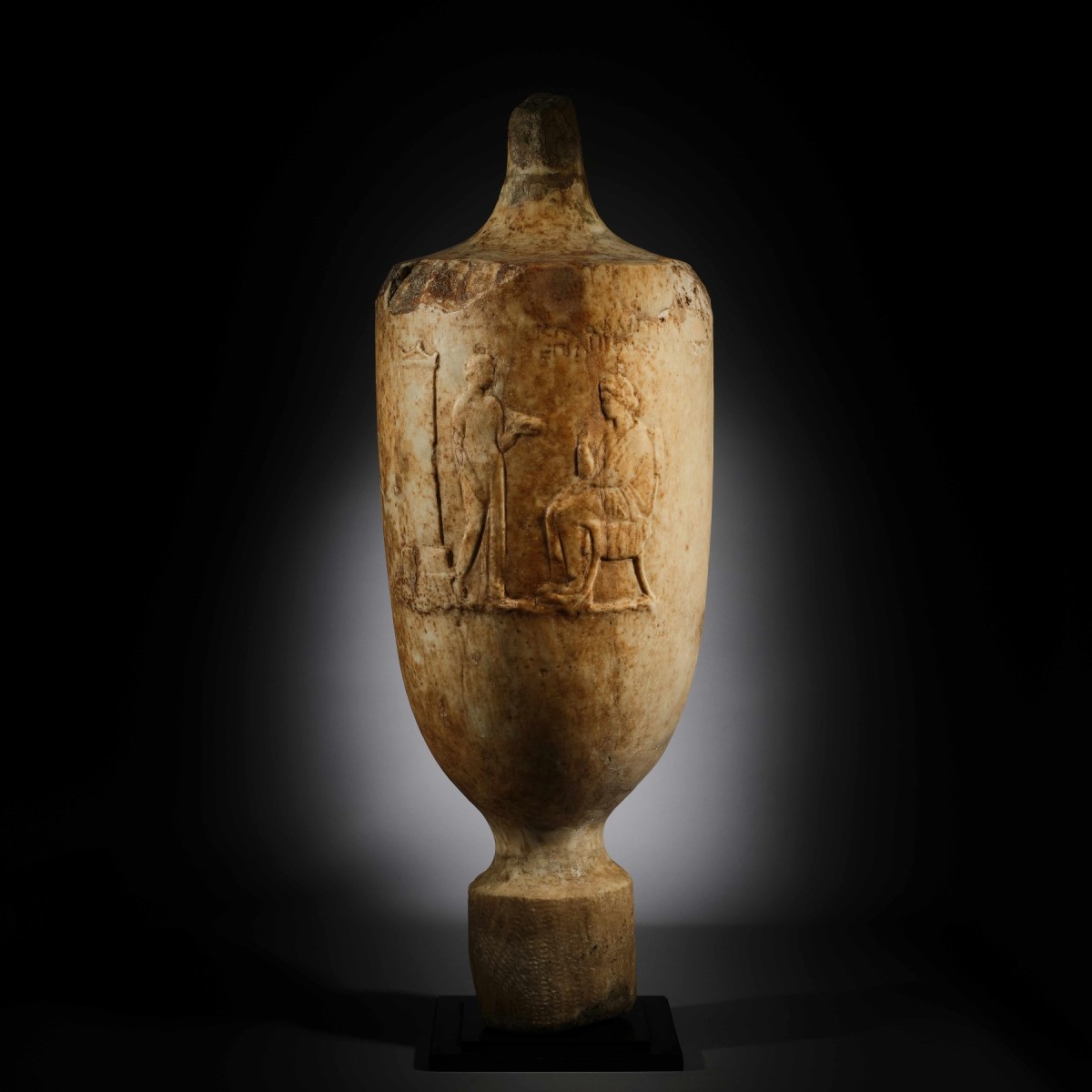

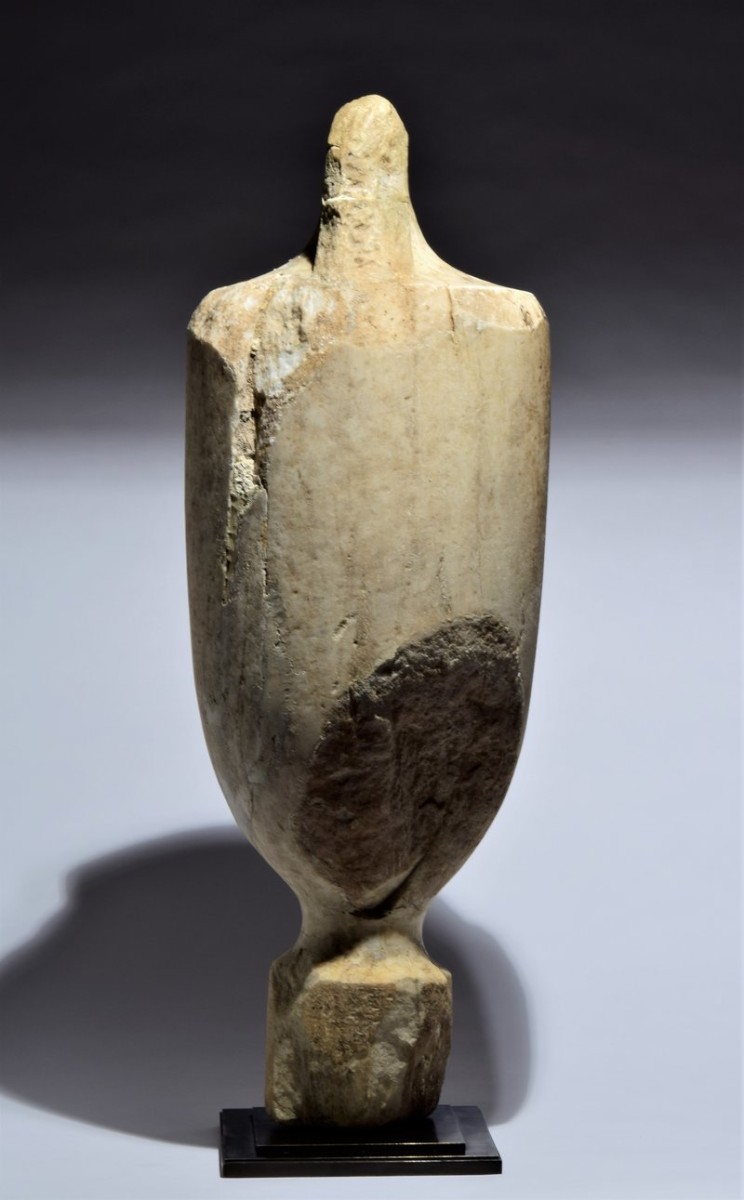
Greek Art, Attica, circa 360 BC.
Pentelic marble.
Visible breaks and losses, old restorations.
Preserved height: 0.75 m.
Provenance: M.M. Collection, Paris.\
A.T. Collection, Paris.\
Galerie Serres, Paris.\
Pradel Collection, Limoges.\
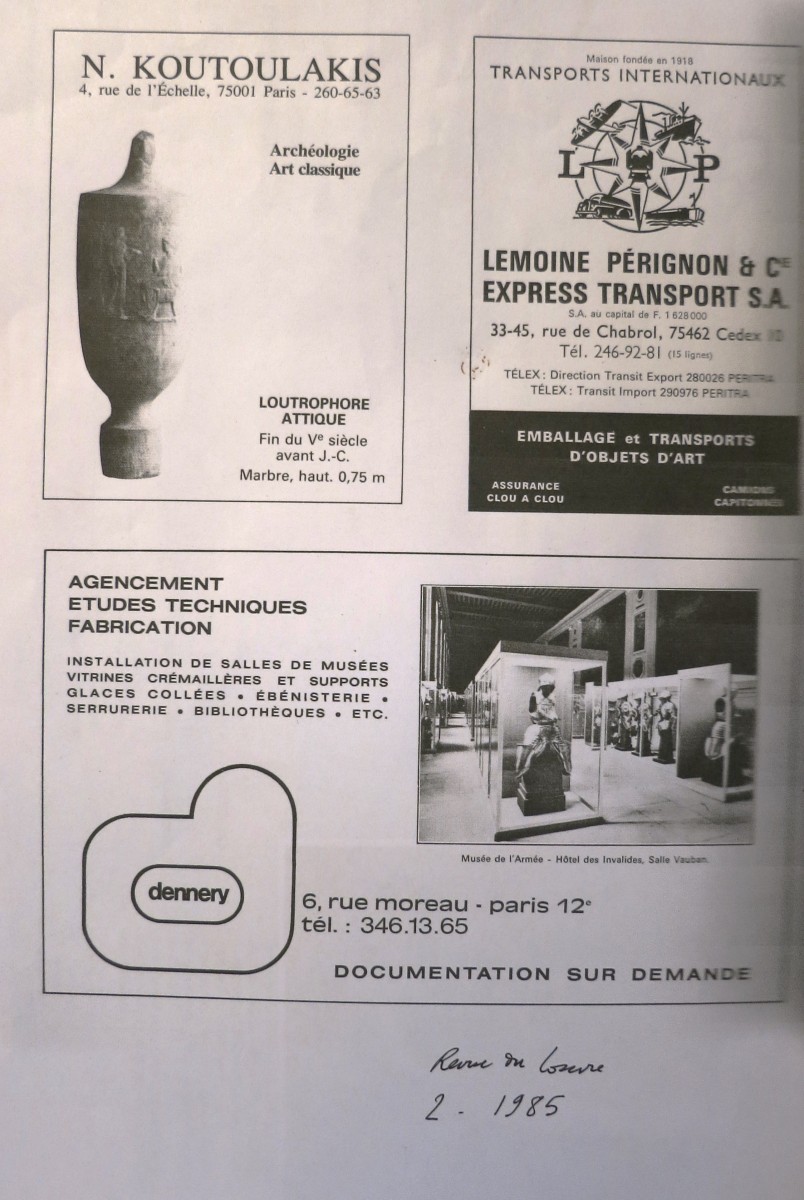
Galerie N. Koutoulakis, Paris, published in Revue du Louvre, 1985/2.\
Galerie Segredakis, Paris.
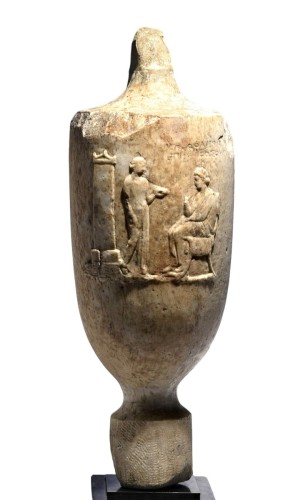
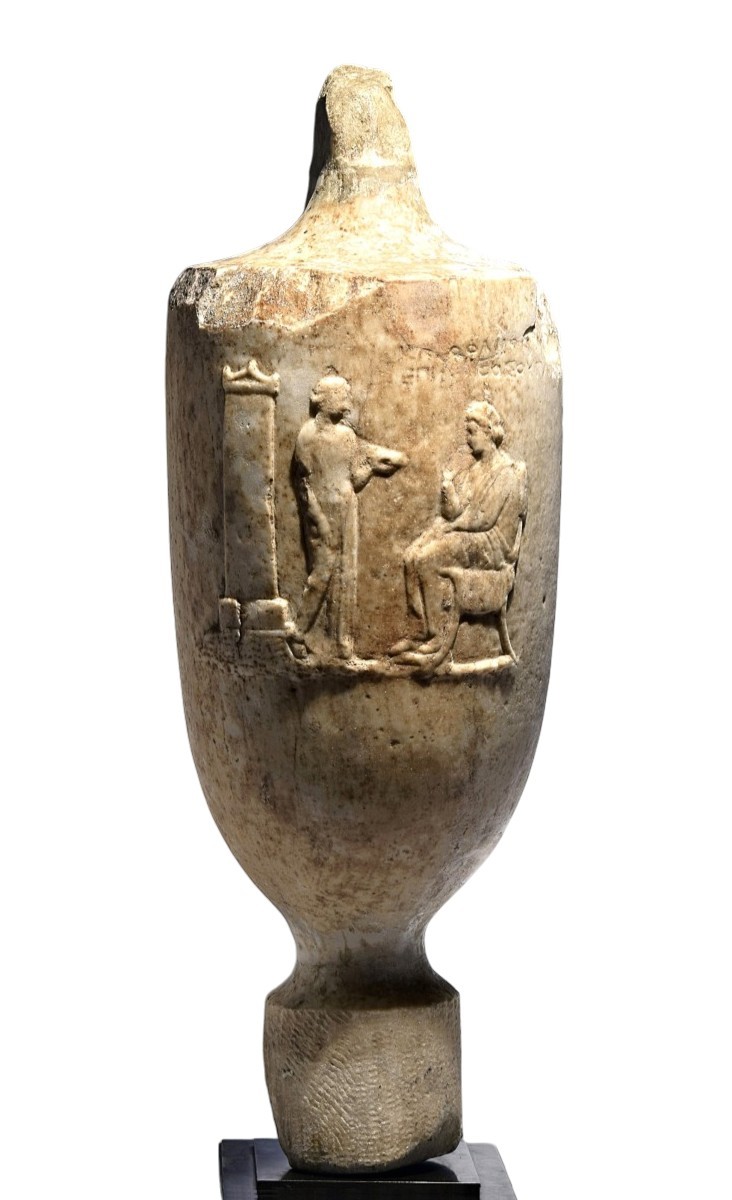
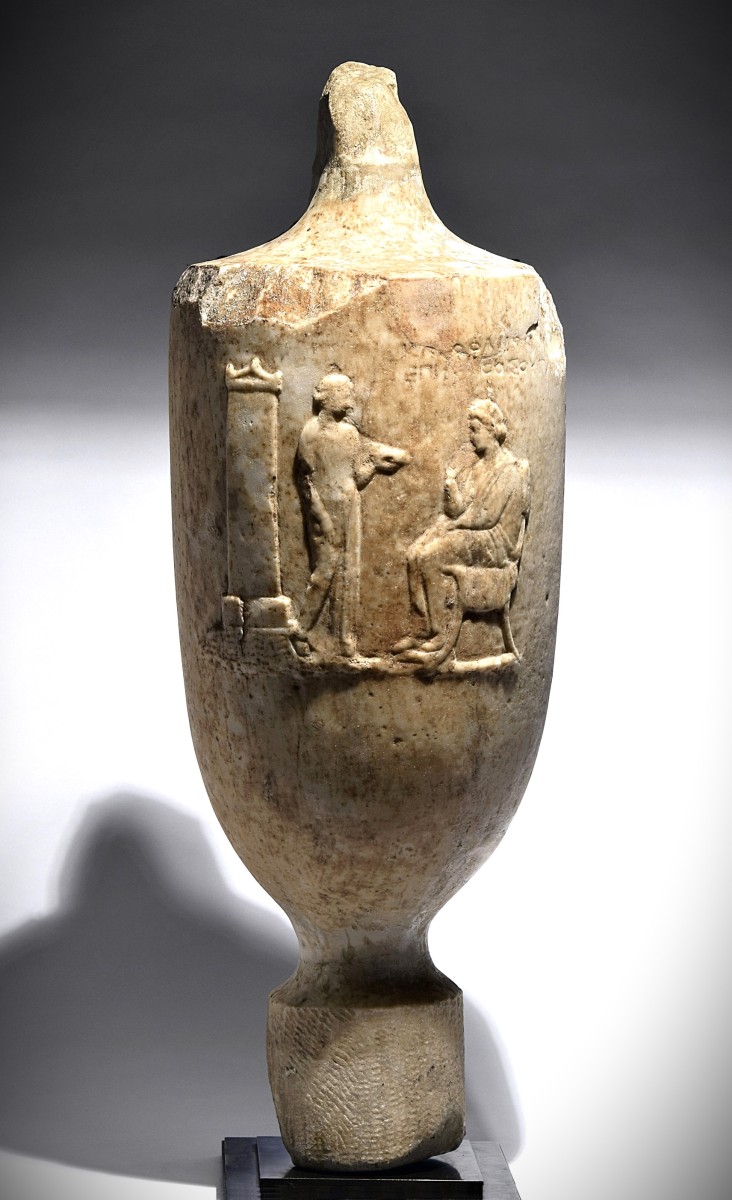
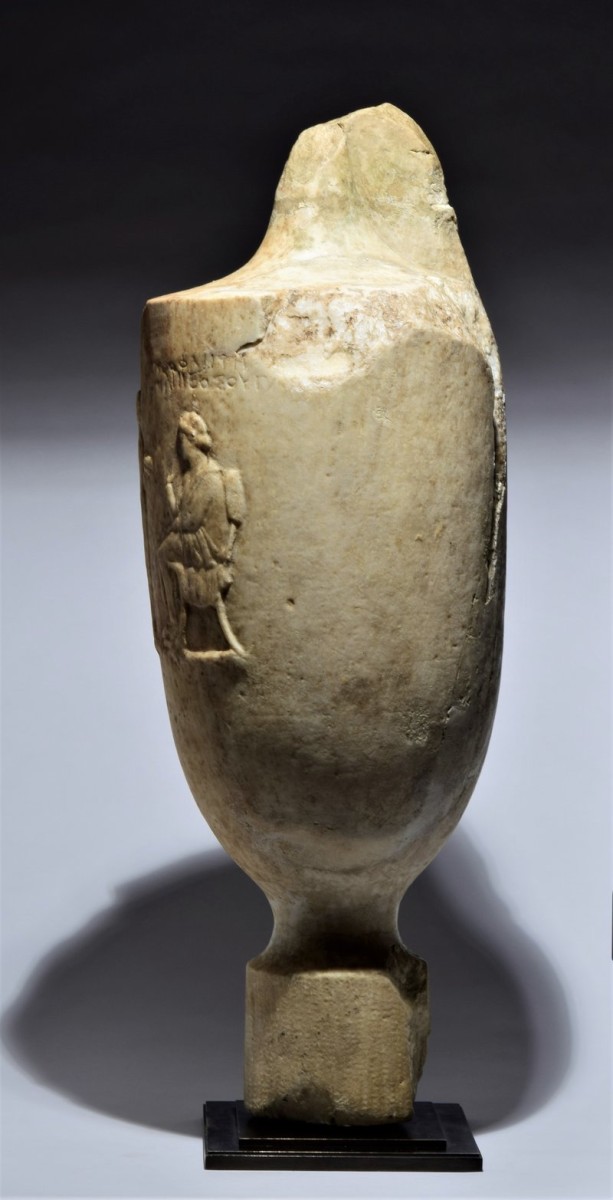
This monumental lekythos belongs to a series of imitation vases, consisting mainly of lekythoi and, more rarely, loutrophoroi, intended to mark the location of Athenian tombs around the 4th century BC. These monuments, reproducing forms similar to those of ceramic vessels, served the same function as funerary stelae.
In most cases, they feature funerary scenes in relief, depicting the deceased, whose name is engraved above the composition. The scene represented is very often the “Dexiosis,” or farewell scene, symbolized by a handshake.
More rarely, the scene may depict the deceased woman seated on a kline in the presence of a female relative standing before a stele, as seen on numerous white-ground lekythoi of the 5th century BC.
It bears an inscription engraved in Greek characters on two lines, crossed by fractures which nevertheless allow us to propose the following interpretation:
Kleophantes, daughter of Epipeithes.
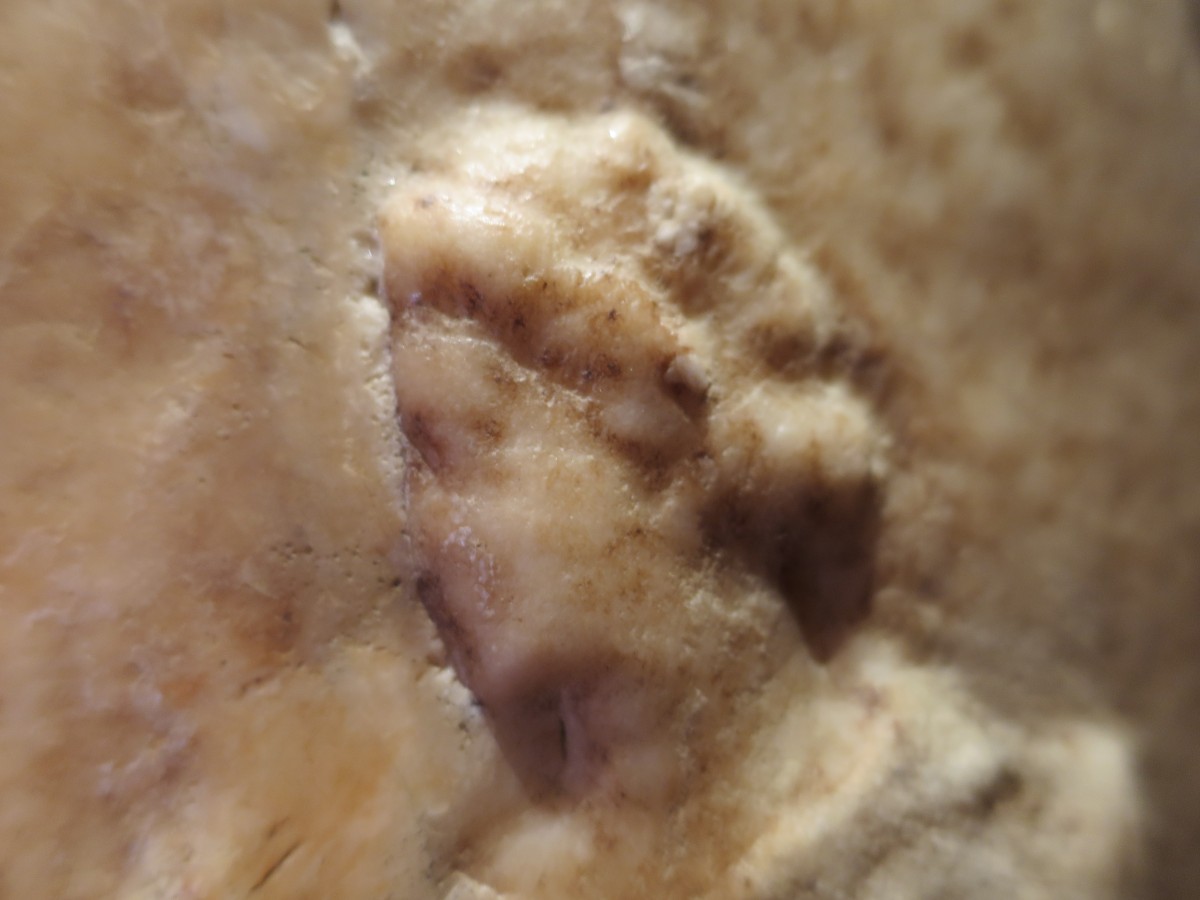
The outdoor function of these monuments readily explains their state of preservation. Indeed, they often survive in broken condition and worn by wind erosion. The tall necks that once surmounted them, like those of their clay counterparts, have unfortunately often disappeared.
Comparable lekythoi can be seen at the National Archaeological Museum of Athens, the Kerameikos Cemetery, the Louvre Museum, the Metropolitan Museum of Art in New York, and the principal museums of Greek archaeology.
Bibliography:
ARV2 554,79; The Museum Grows – 1931, Annette Finnigan Collection, Bulletin of Fine Arts, Houston 10,2, 1948; Hoffman (1970) 398–401, no. 181.
G.H. Edgell, MFA Annual Report, 1938, p. 25; L.D. Caskey, ibid., p. 32; BMFA 37 (1939), 17; H.N. Fowler, in Robinson Studies, I, pp. 588–589, pl. 54.
C. W. Clairmont, Classical Attic Tombstones, Vol. II, Kilchberg, 1993, no. 2.313.
Clairmont, Gravestone and Epigram, p. 78, note 23; A. Prukakis-Christodulopulos, AM 85 (1970), 65, note 59, 82, 92, note 143; Schumaltz, Lekythen, pp. 9, 23, 27, 39, 55, 57, 85–86, 119, no. A 13: dated 420 to 140 BC.