Offered by Galerie Tarantino
REQUEST INFORMATION
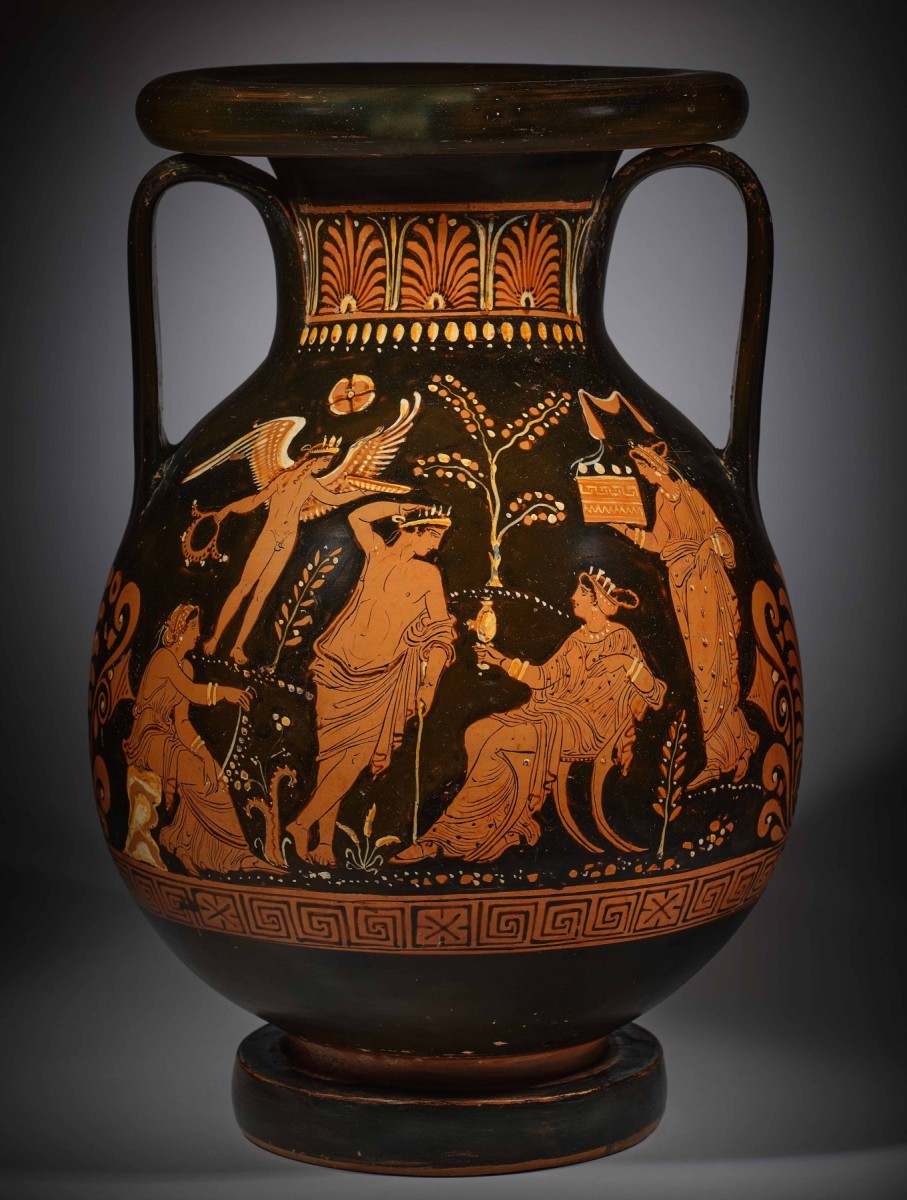

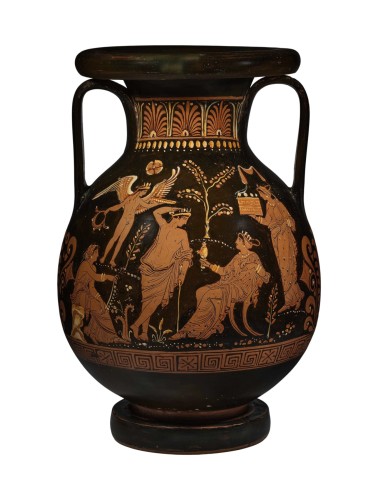
Greek Art, Apulia, circa 360 BC.
Beige-orange clay with black glaze and white and yellow painted highlights.
Restoration to the neck and foot, otherwise the body and painted decoration are intact.
Height: 41.5 cm.
Provenance: Private collection of Mr. A…, Champ de Mars, Paris, before 1984, then by descent.
Gros & Delettrez sale, Paris, December 6, 2023, lot 85.
Bibliography: Unpublished.
Comparative bibliography: A. D. Trendall and Alexander Cambitoglou, The Red-Figured Vases of Apulia, Oxford, 1978, pp. 186–210.
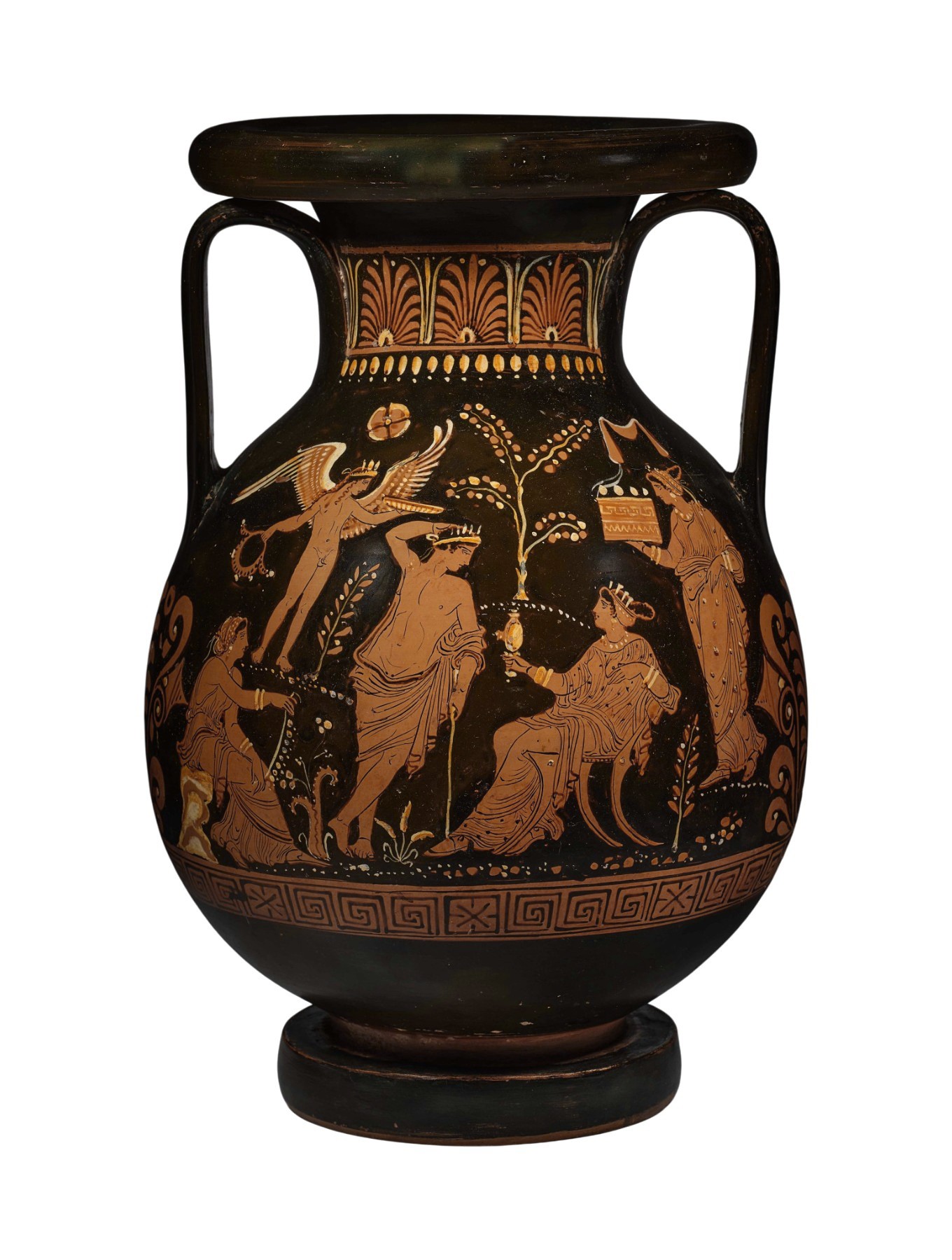
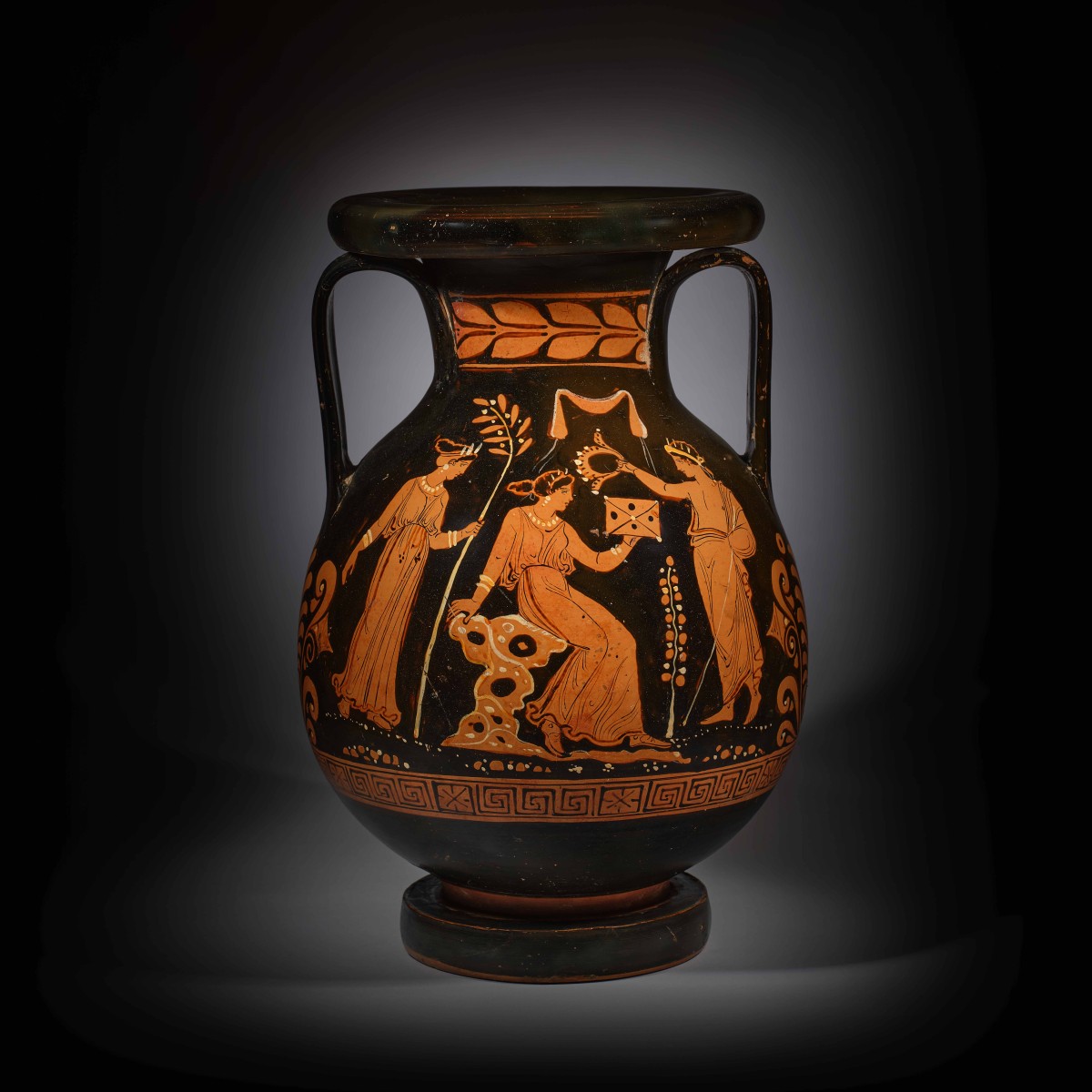
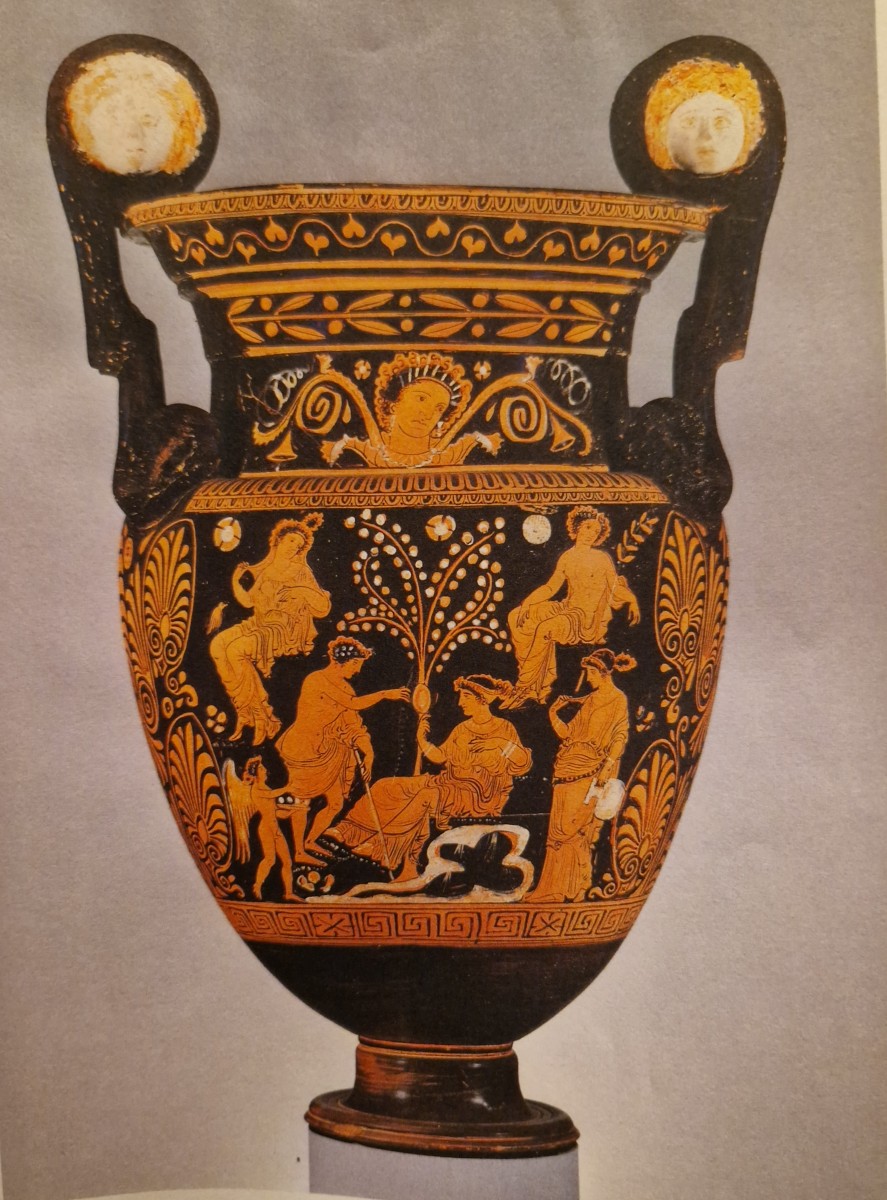
This pelike is a form of broad-bodied amphora intended to contain oil or wine. It is the work of a major red-figure vase painter from Apulia whose name remains unknown. Nevertheless, consistent individual stylistic characteristics suggest the existence of a distinct artistic personality whom A. D. Trendall named the Ilioupersis Painter, after a volute krater in the British Museum on which he depicted the Sack of Troy.
He contributed to the introduction of new elements into Apulian vase painting and to the establishment of the canon for monumental vases produced in the “Ornate Style.” He created large-scale mythological, dramatic, nuptial, and funerary scenes, with figures arranged on two or more levels and decorated with extensive added colors, particularly yellow and white.
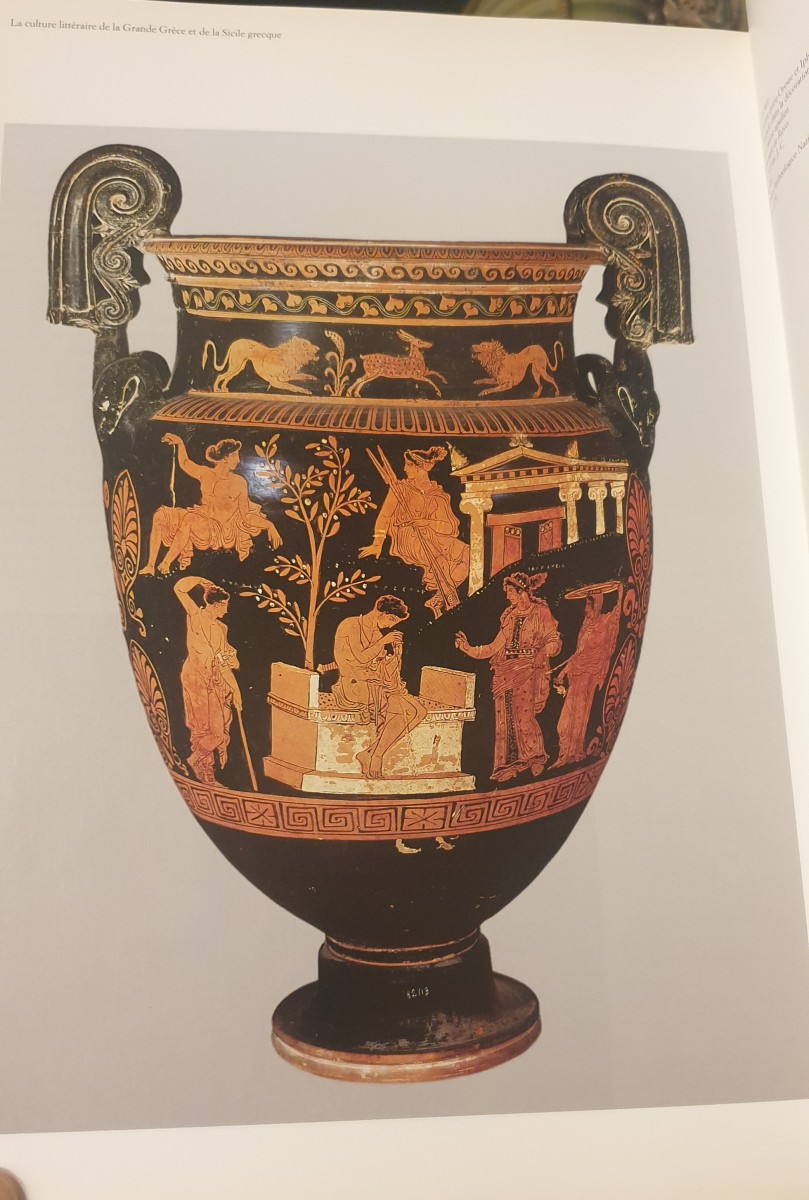
He introduced the elaborate type of funerary volute krater featuring a naiskos scene on the front and figures surrounding a stele on the reverse.
Martine Denoyelle, whom we thank for her assistance, noted that the standing young man with his raised arm also appears as Pylades on the volute krater depicting Iphigenia and Orestes in the Naples Museum.
On another volute krater, a mirror, as in the present example, appears beneath a tree.
A close comparison can be made with the pelike in Catania (RVAP 8/20 – LIMC Hesperides 4).
A number of vases of widely varying shapes can be attributed to his hand on stylistic grounds.
Our pelike is a magnificent example, rarely encountered on the market, created by one of the major figures of Apulian pottery during the first half of the 4th century BC.