Offered by Galerie Tarantino
REQUEST INFORMATION
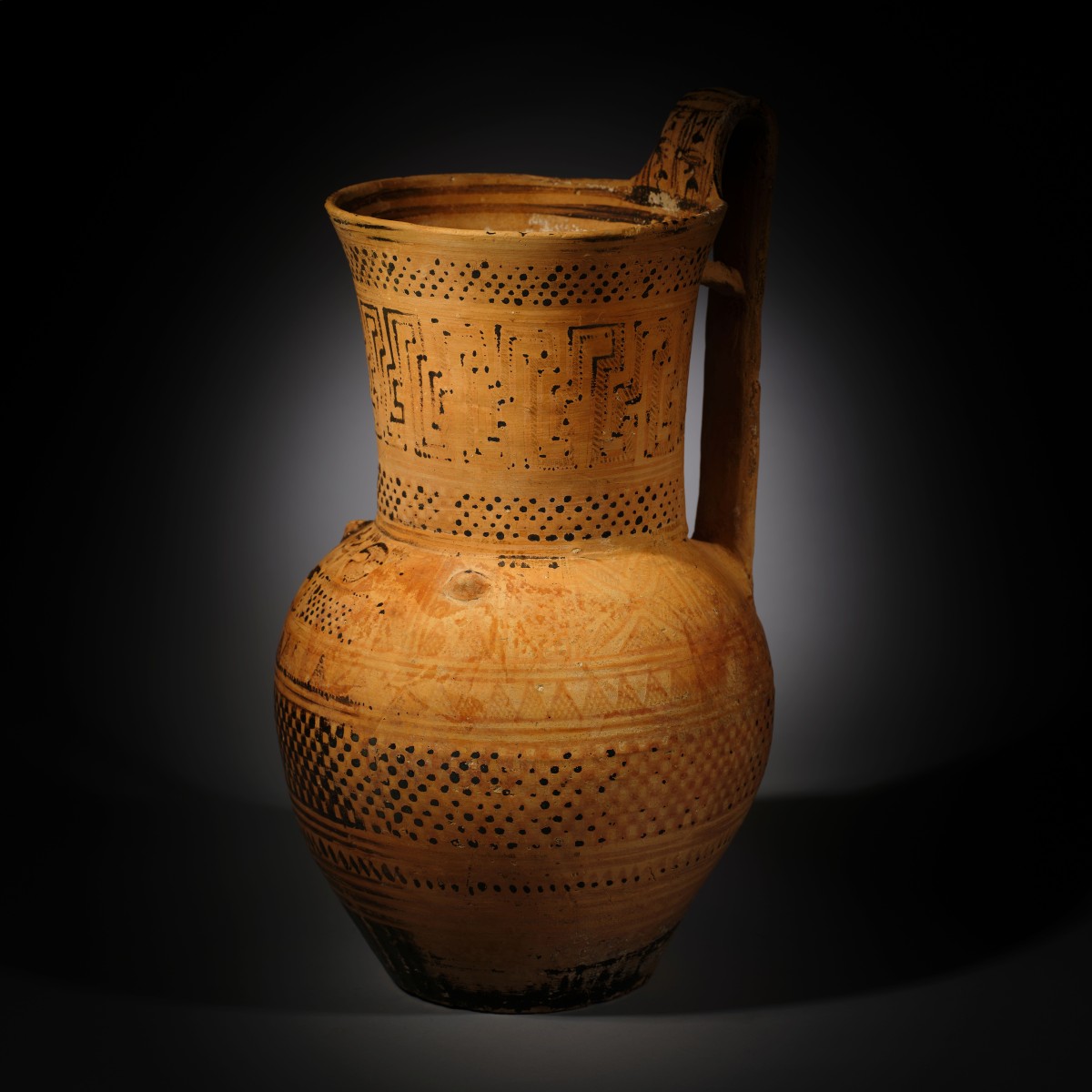
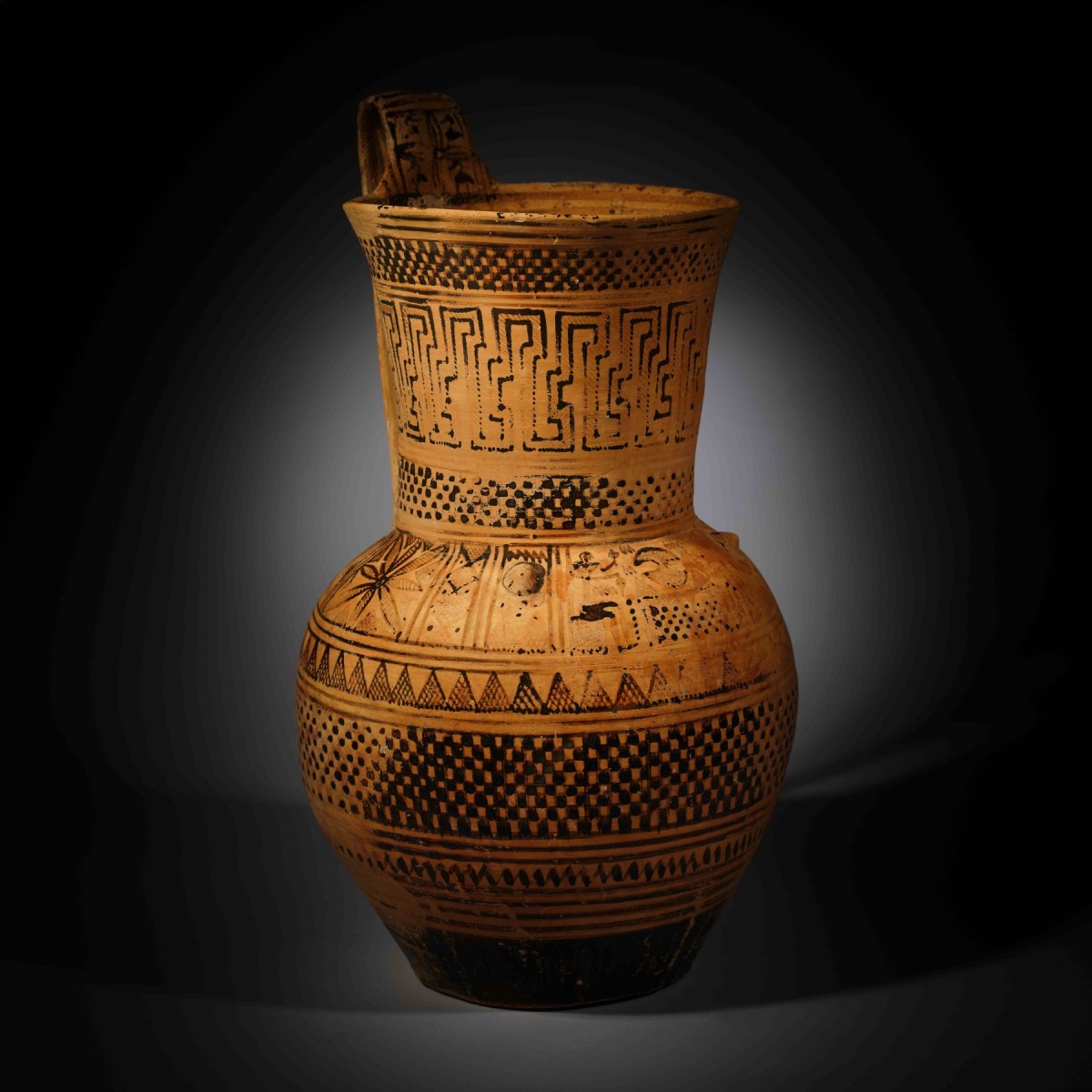

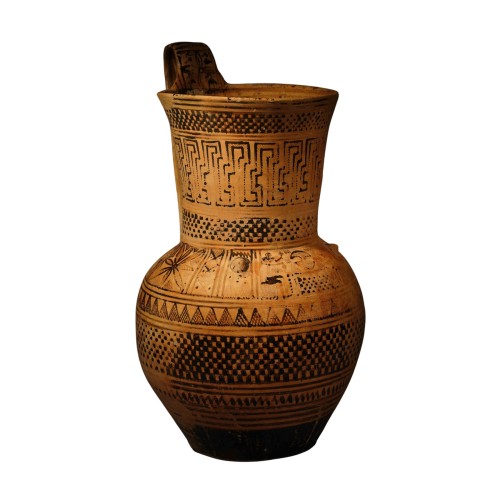
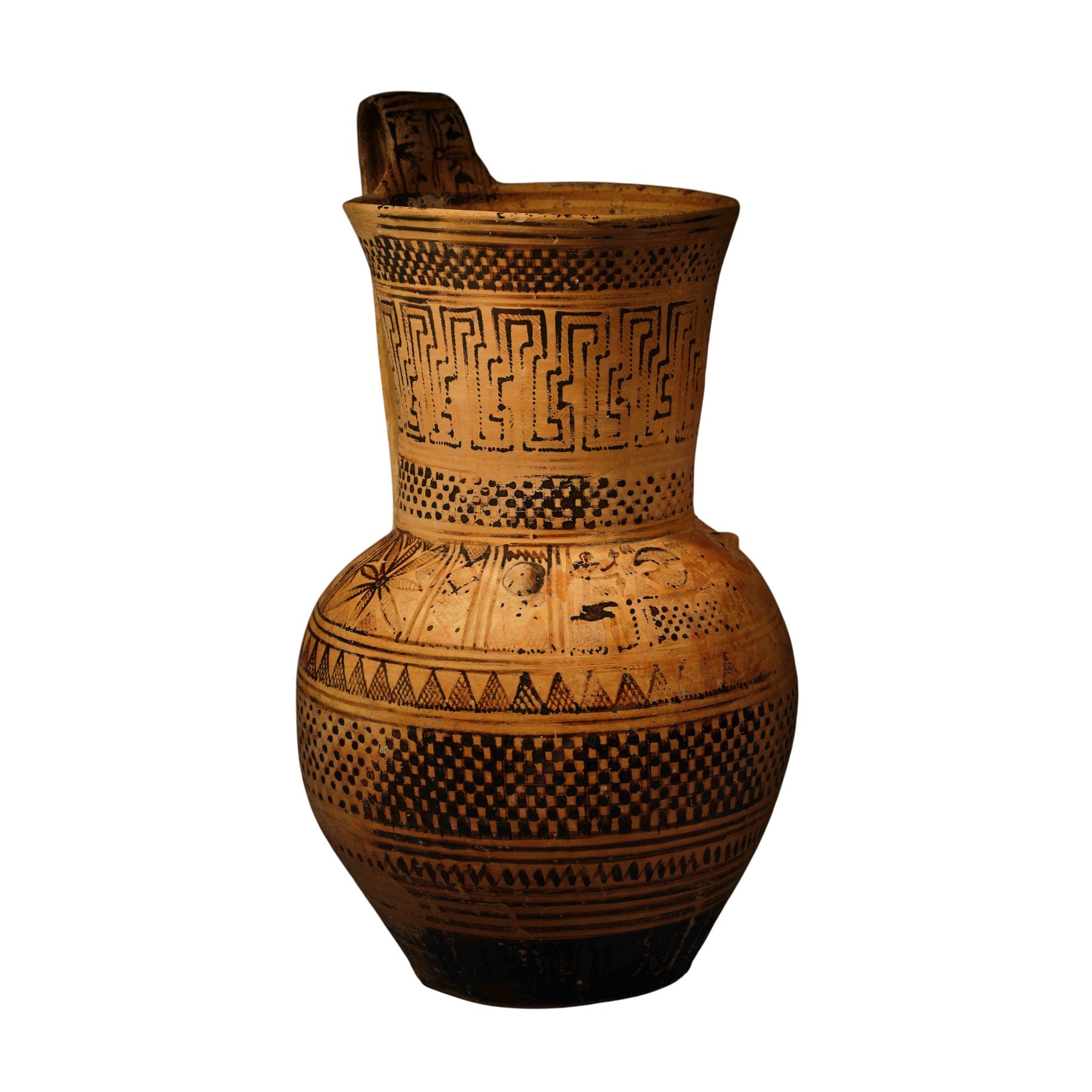
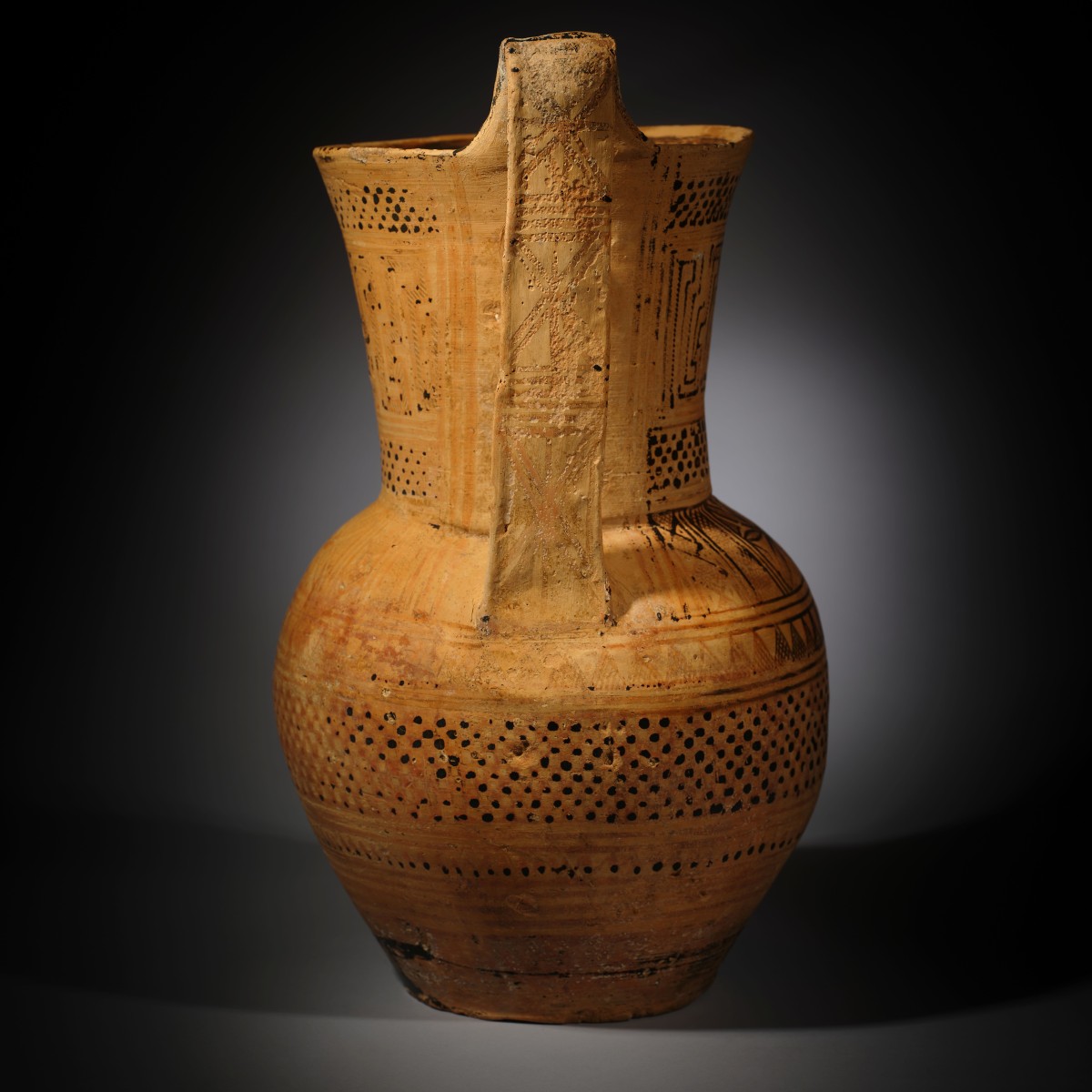
Greek Art, Attica, Late Geometric period, last quarter of the 8th century BC.
Beige-orange clay, metallic-looking slip in places.
Wear to the slip, one crack on the neck, minor chips along the rim, otherwise in very fine condition.
Height: 45 cm.
Provenance: Former collection of Colonel Joseph Isidore Louis Vernay (1876–1963), then by descent.
Aisne Enchères sale, Soissons, November 30, 2023, lot no. 278.
Bibliography: Unpublished.
Comparative bibliography:
N. J. Coldstream, Greek Geometric Pottery (1968).
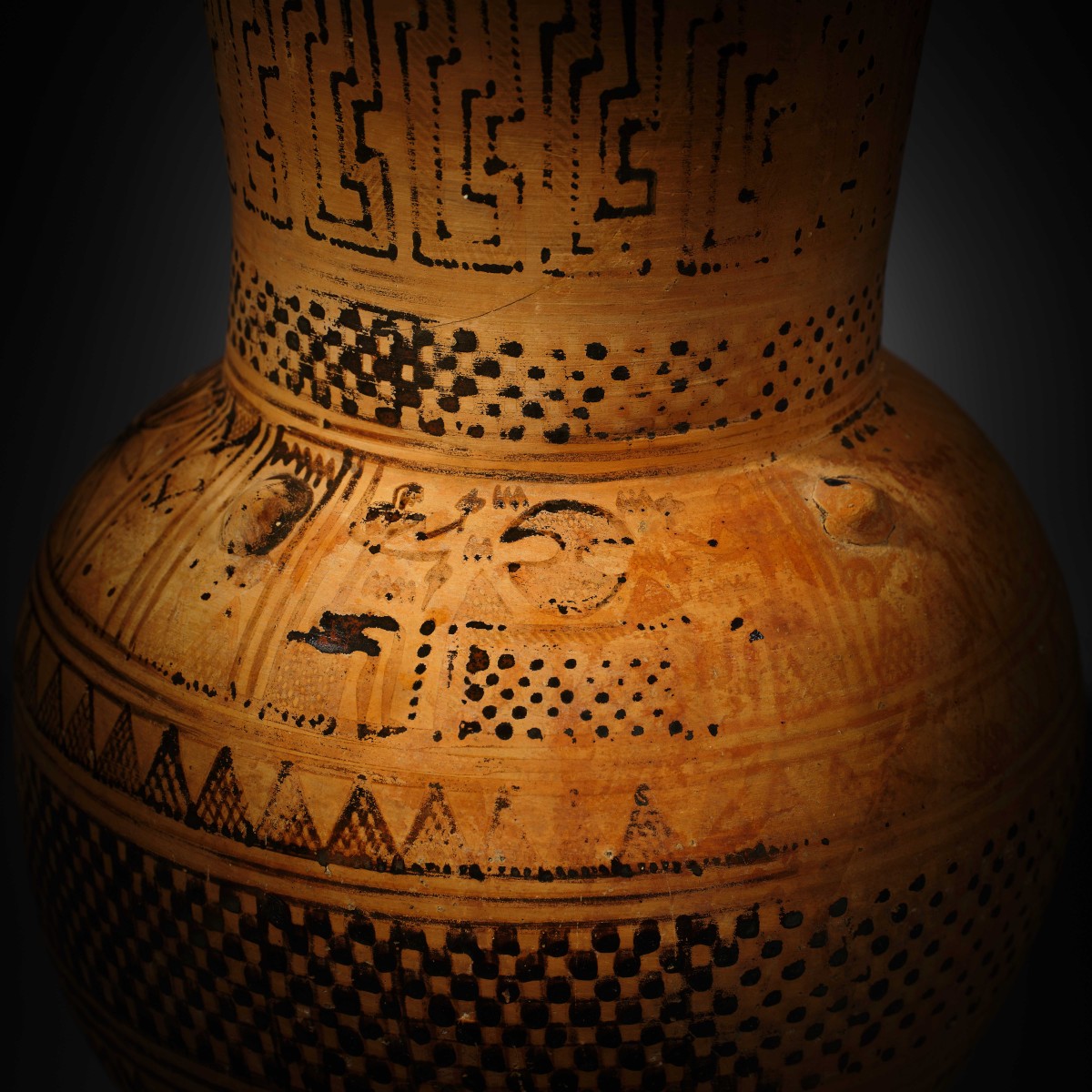
This large olpe features rich decoration typical of the Geometric period. The neck is decorated with two registers of checkerboard patterns and one register of complex meanders. The body is adorned with hatched triangles, a checkerboard band, and a chevron band.
The shoulder features a horizontal panel depicting two seated figures, each sitting on a chair and playing rattles, on either side of a notched shield placed on a central table.
The decoration covering the entire surface of the vase consists of checkerboard patterns, hatched rosettes, zigzags, triangles, lozenges, Greek key motifs, and hatched rosettes. Two raised cabochon-like protrusions are centered on the shoulder.
This large jug belongs to the “Rattle Group,” characterized by depictions of rattle players and representing some of the earliest known images of musicians in Attic art. A few extremely rare examples are preserved, notably at the Louvre Museum, the British Museum, and in Athens.
Having appeared on the art market in the Aisne region, this vase had remained in its original condition since the beginning of the 20th century. It belonged to Colonel Joseph Isidore Louis Vernay (1876–1963), a graduate of the École Polytechnique, class of 1895.
We know from his descendants that the collector had the opportunity to make several journeys around the Mediterranean, particularly to Athens during the 1930s. This seems to confirm the origin of the vase, which was very probably acquired on one of these occasions and remained in the family ever since, together with a lekythos from the Beldam Group and a Corinthian aryballos.