Offered by Galerie PhC
REQUEST INFORMATION

European paintings from the 17th, 18th and 19th centuries.
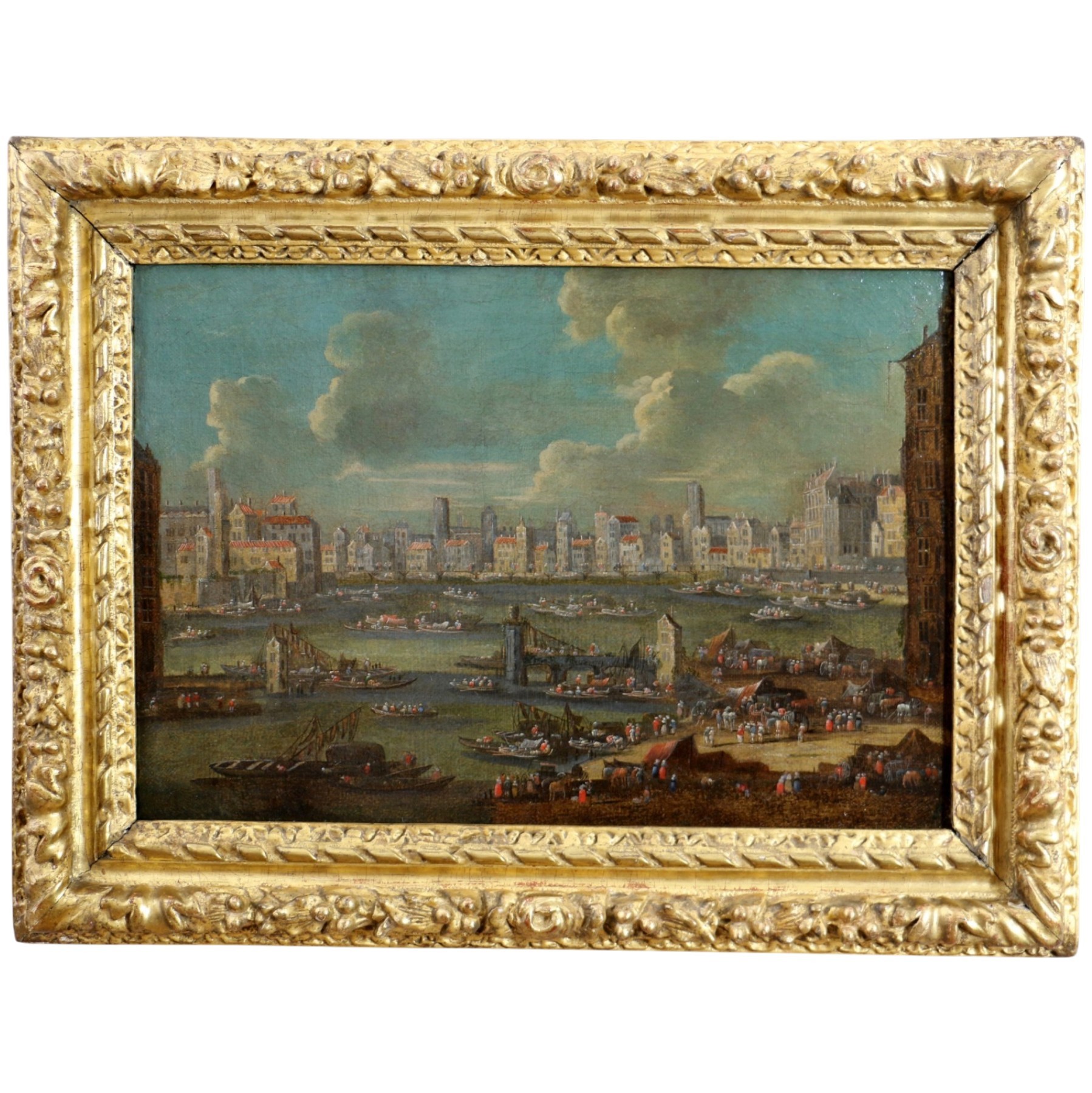
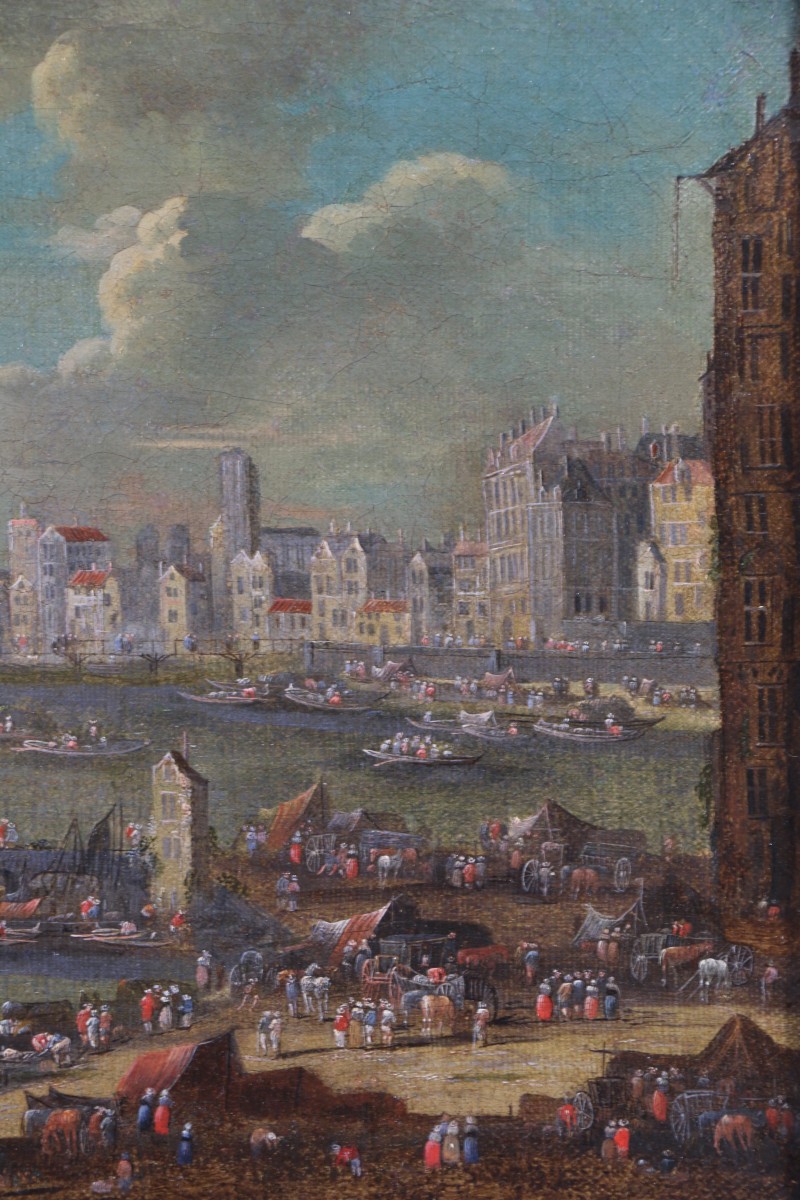
Peter II Casteel (1650–1701) and workshop. Lively harbor scene
Canvas, relined, 42.5 cm x 30 cm
Very fine antique carved frame, 54 cm x 41.5 cm
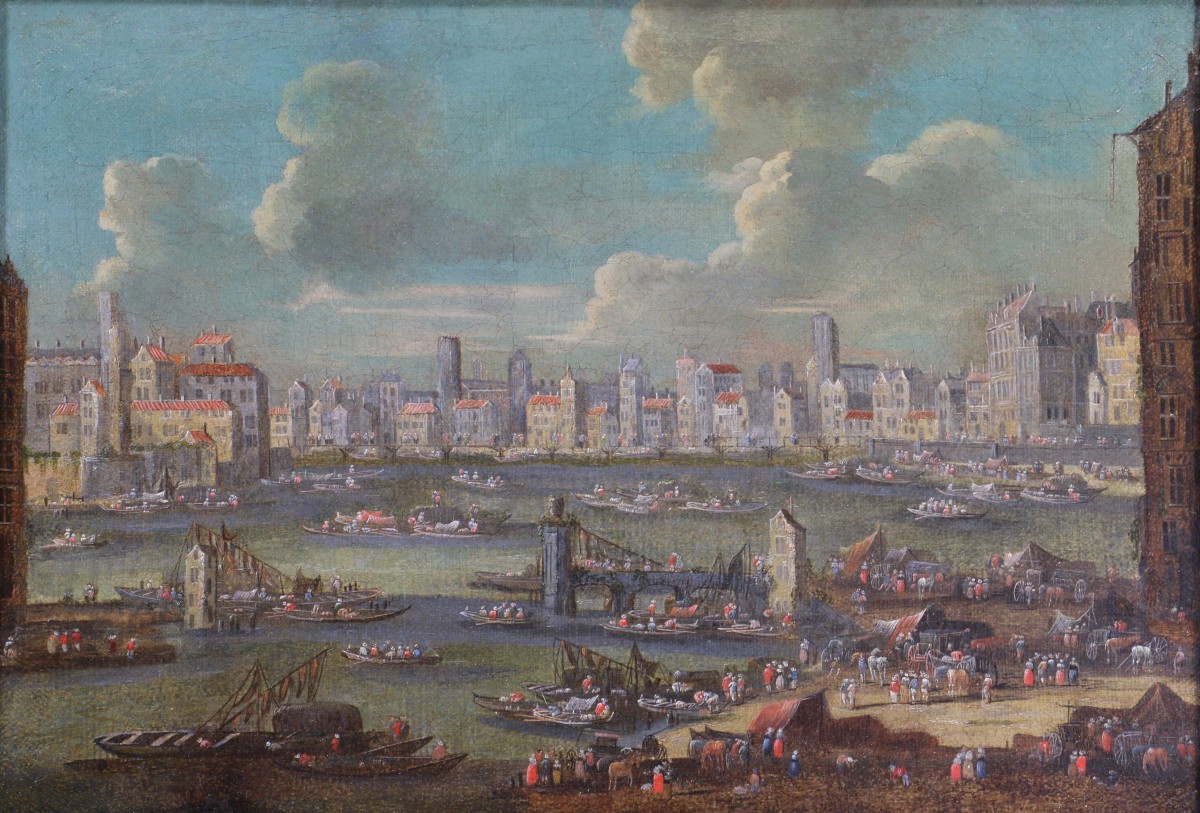
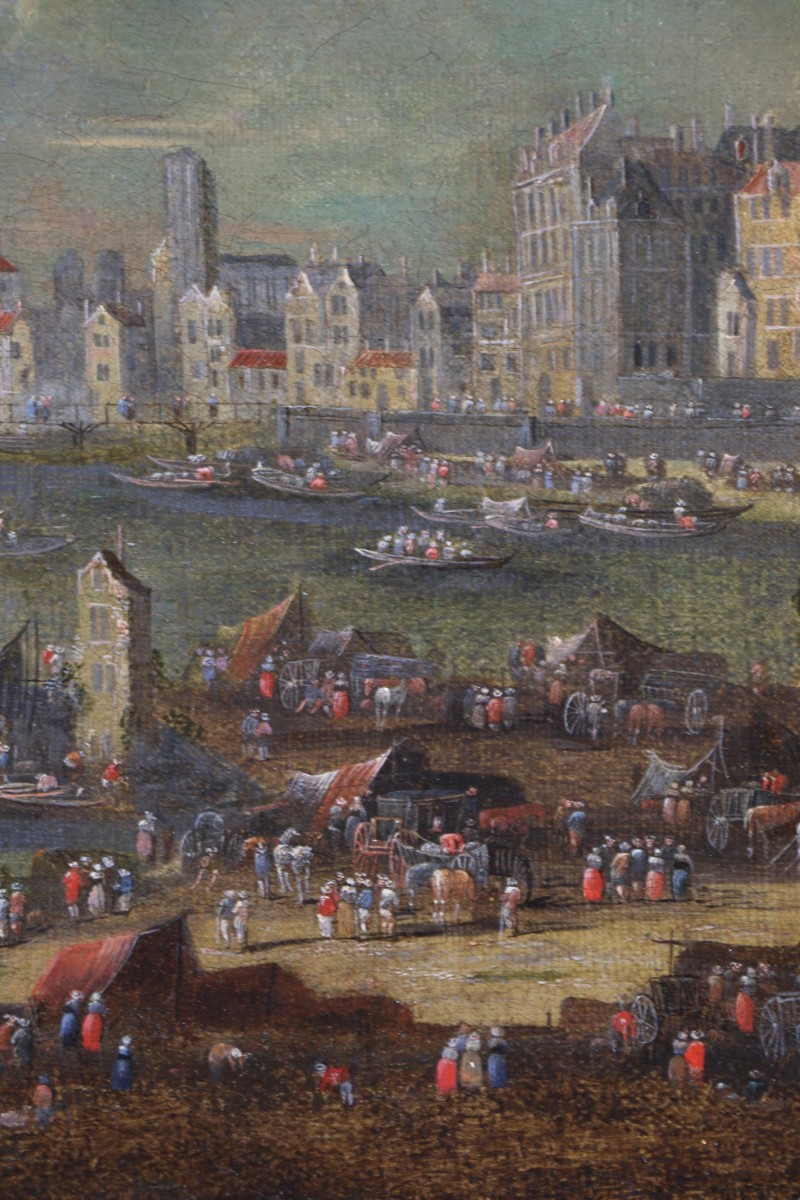
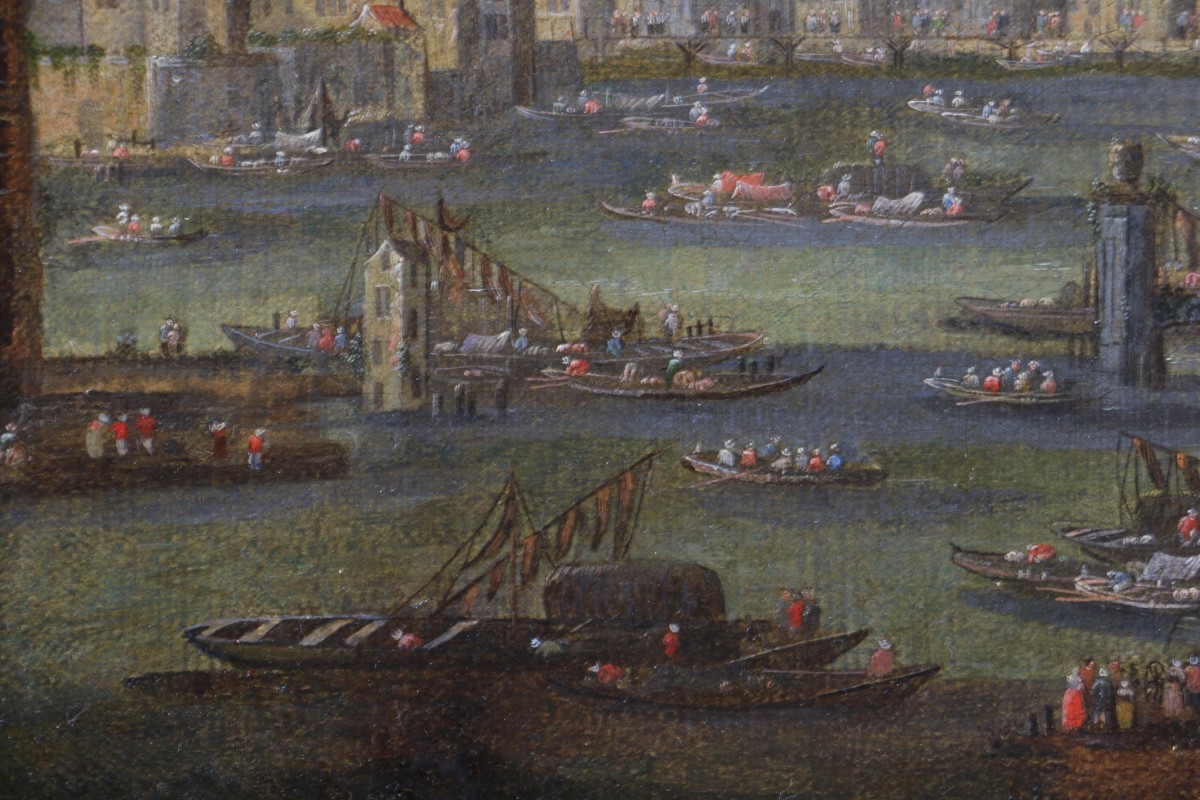
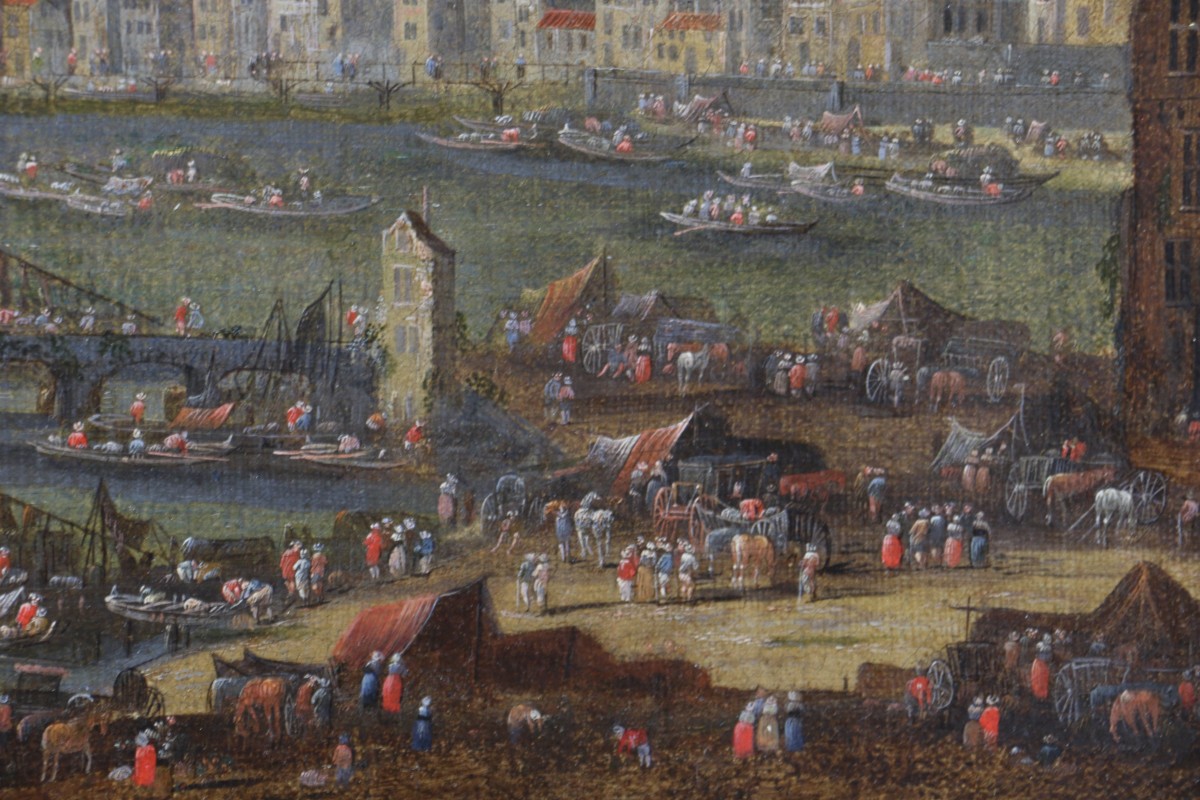
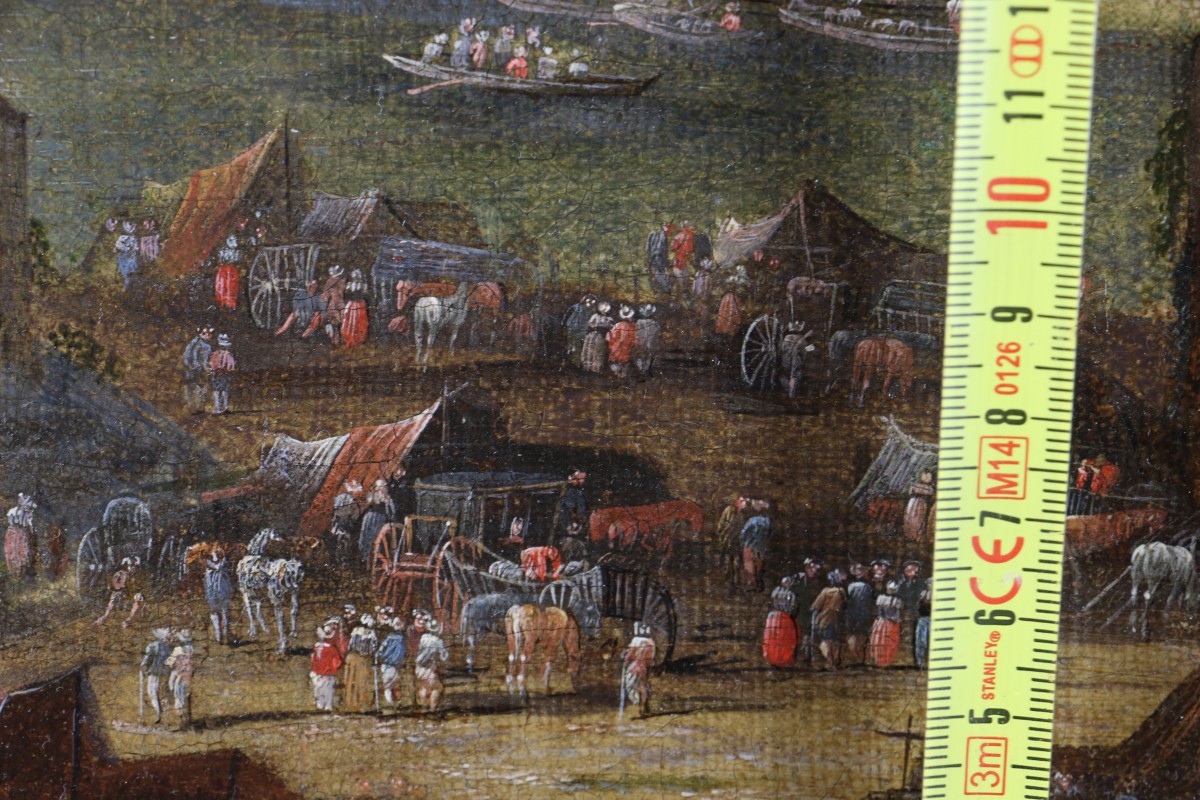
Our painting is a small gem of finesse. The artist presents us with a view of a port, certainly imaginary, with a large number of meticulously depicted figures.
We thank Professor Jan de Maere for confirming that this work is by Peter II Casteel and his workshop, after examining a photograph.
This composition represents a vast maritime capriccio, a genre particularly popular in Flemish painting of the late 17th century. The artist depicts an imaginary city opening onto a wide body of water, where port and commercial activity constitutes the true subject of the work. Numerous boats—barges, rowboats, and cargo ships—animate the river, while a crowd of figures bustle about on the quays, around a drawbridge and the port facilities.
The city taking shape in the background does not seem to correspond to any precise topography. Towers, steeples, gabled houses, and monumental buildings compose an idealized urban silhouette, inspired by the great trading cities of the former Low Countries. The tall buildings that frame the scene enhance the sense of depth and lead the eye toward the horizon, where the architecture blends into an atmospheric light dominated by a vast sky with monumental clouds.
The work displays all the characteristics of the style of Pieter Casteels II, an Antwerp painter specializing in landscapes, harbors, and cityscapes. His art is distinguished by the balance
of its compositions, the meticulous attention paid to the figures, the richness of its animation
and a harmonious palette of greens, browns, and bluish grays,
punctuated by touches of color in the characters' costumes.
Rather than a faithful representation of an identifiable city,
this painting is a capriccio, in which the artist freely combines different architectural and port elements to create an
idealized vision of a large river metropolis. This freedom of composition,
very fashionable among 17th-century European collectors, allowed him to prioritize
the picturesque effect, the depth of space, and the animation of the scene
over topographical accuracy.
Through the quality of its execution, the subtlety of its atmosphere, and the importance given to port life, this work fits perfectly within the production of Pieter Casteels II and testifies to his talent for large maritime and urban compositions, where imagination, a sense of perspective, and careful observation of the merchant world of his time are combined.
Peter Casteels II (1650–1701)
Pieter Casteels II, also known as Peter Casteels II or Pierre Casteels the Younger, was a Flemish painter born in Antwerp around 1650 and died in the same city in 1701. From a prominent family of artists, he was the son of the painter Pieter Casteels I and belonged to a dynasty that would leave a lasting mark on Flemish painting in the 17th and 18th centuries. Trained in his father's workshop, he was admitted as a master to the Guild of Saint Luke in Antwerp in 1673–1674, which allowed him to officially practice his profession as a painter.
His work is primarily devoted to landscapes, cityscapes, harbor scenes, and architectural and maritime capricci. In these compositions, he skillfully blends real and imagined elements to create monumental panoramas where the bustle of the quays, river traffic, and atmospheric effects play a dominant role. His style, inherited from the Flemish tradition, is characterized by a rigorous construction of space, subtle lighting, and a palette dominated by greens, browns, and bluish grays, enlivened by touches of color that enliven the numerous figures.
The works of Pieter Casteels II demonstrate a particular interest in major trading cities and river landscapes. Rather than seeking strict topographical accuracy, he often favored an idealized vision, freely recomposing architecture, ports, and monuments to produce spectacular scenes that appealed to the tastes of collectors of his time. This approach makes him one of the most interesting representatives of the Flemish capriccio of the late 17th century.
Married to Elisabeth Bosschaert, Pieter Casteels II was also the father of Pieter Casteels III (1684–1749), who became a renowned painter of flowers, birds, and still lifes, pursuing a brilliant career in England. This family continuity contributed to making the Casteels one of Antwerp's most remarkable artistic dynasties.
Although biographical information about him remains relatively limited, Pieter Casteels II is now recognized for the quality of his urban and seascapes, which combine precise drawing, a sense of perspective, and a remarkable mastery of light effects. His works are held in several public and private collections in Europe and bear witness to the flourishing of Flemish landscape painting at the turn of the 17th and 18th centuries.
Delevery information :
All our paintings benefit from careful and secure packaging. No geographic restrictions.