Offered by Antichità Castelbarco
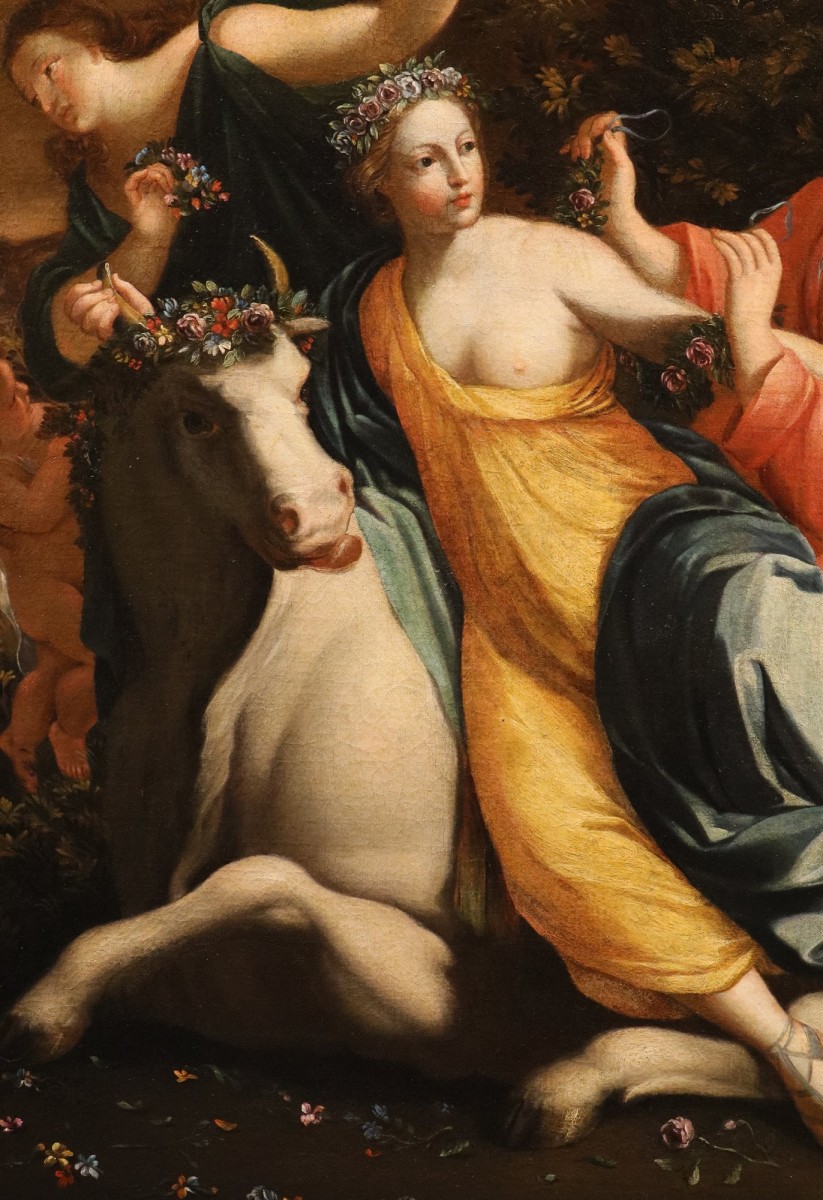

Simon Vouet (Paris, 1590 – 1649) workshop/follower of
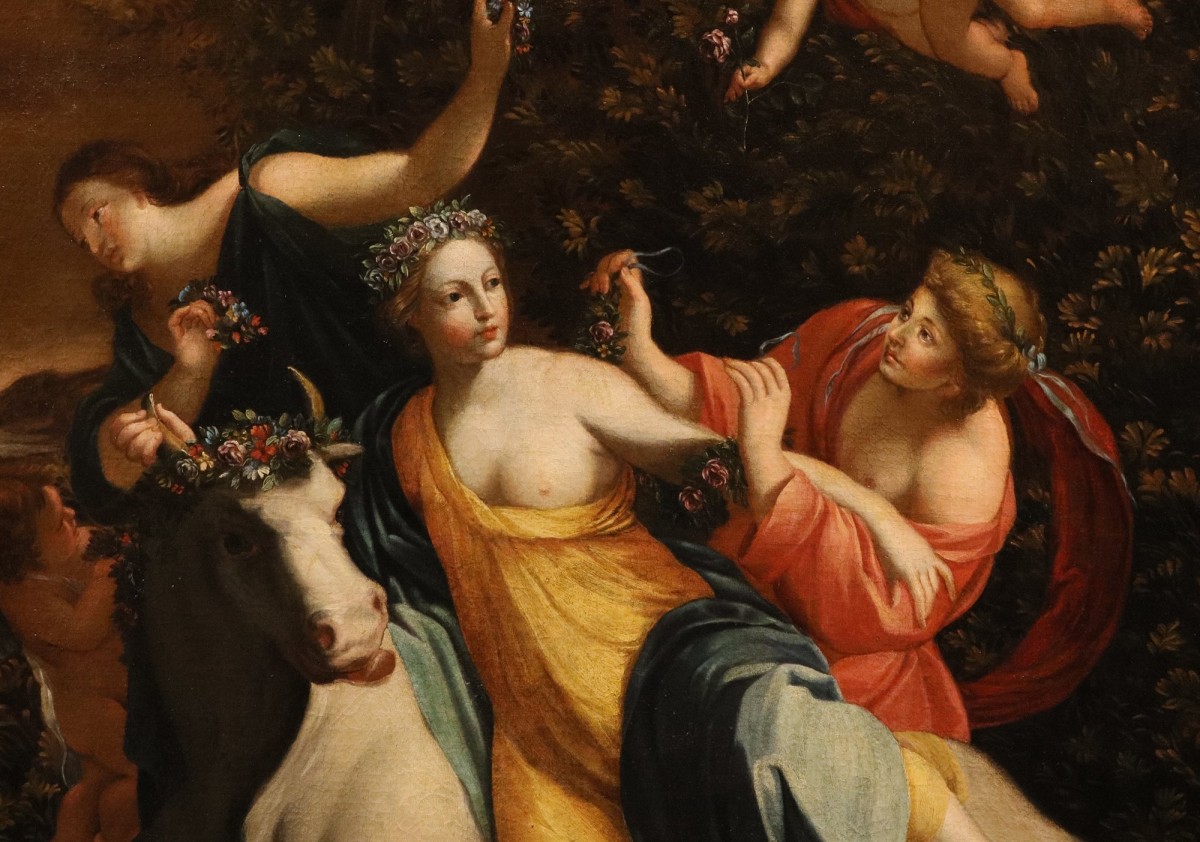
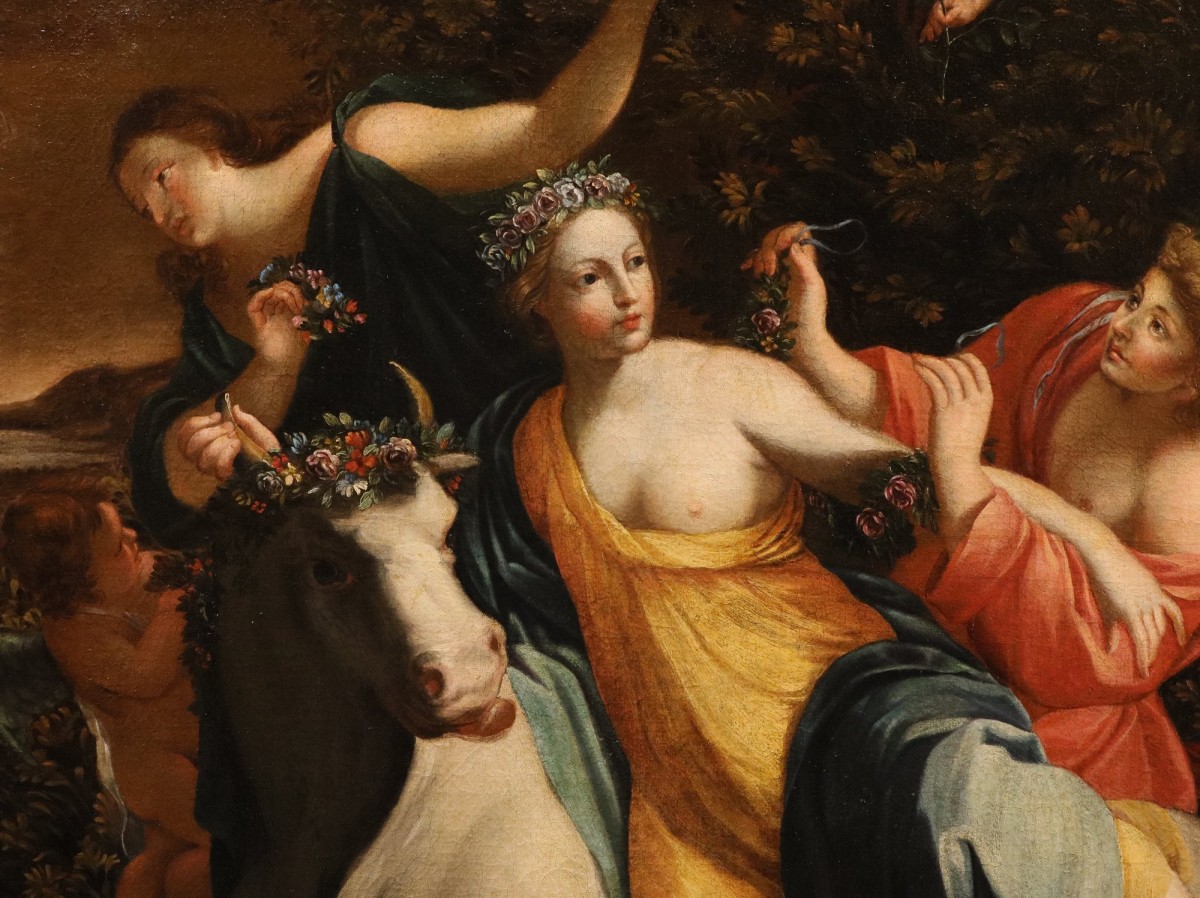
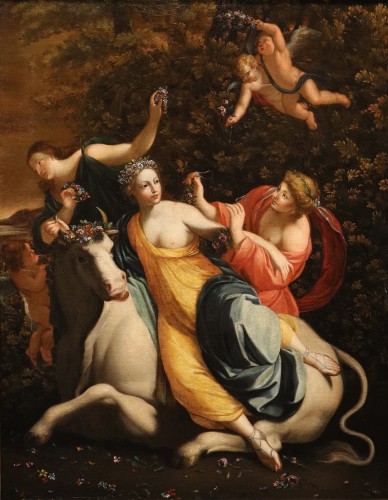
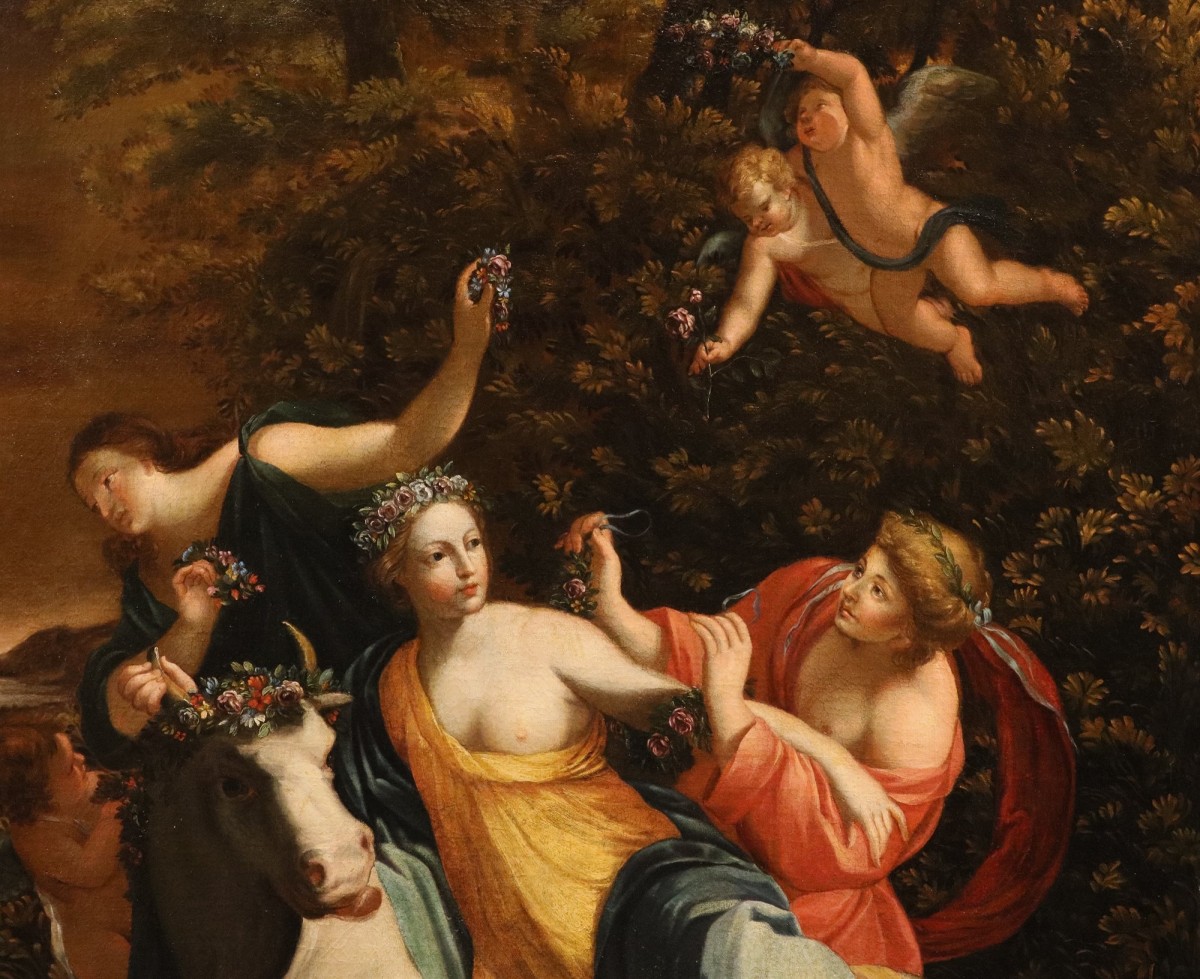
The Rape of Europa
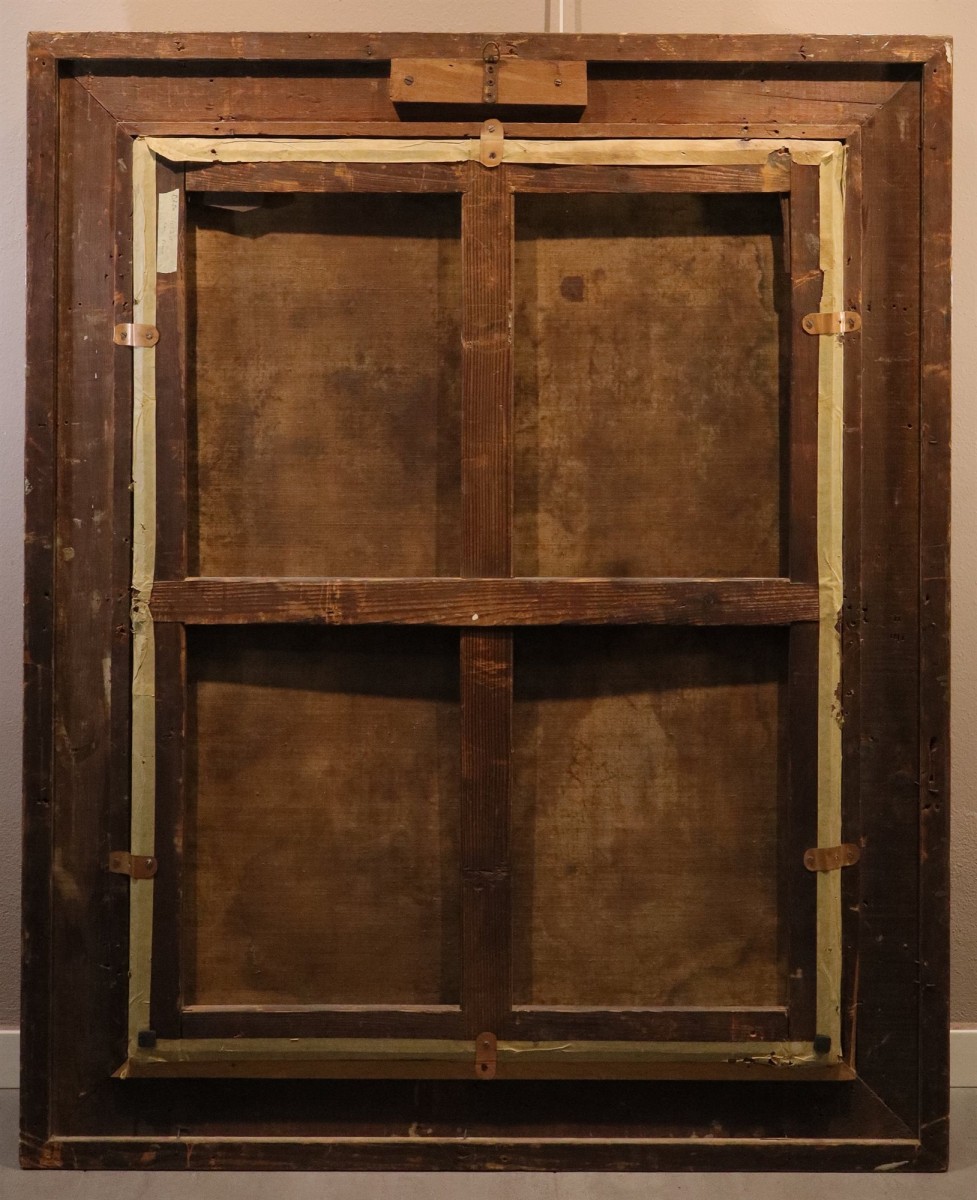
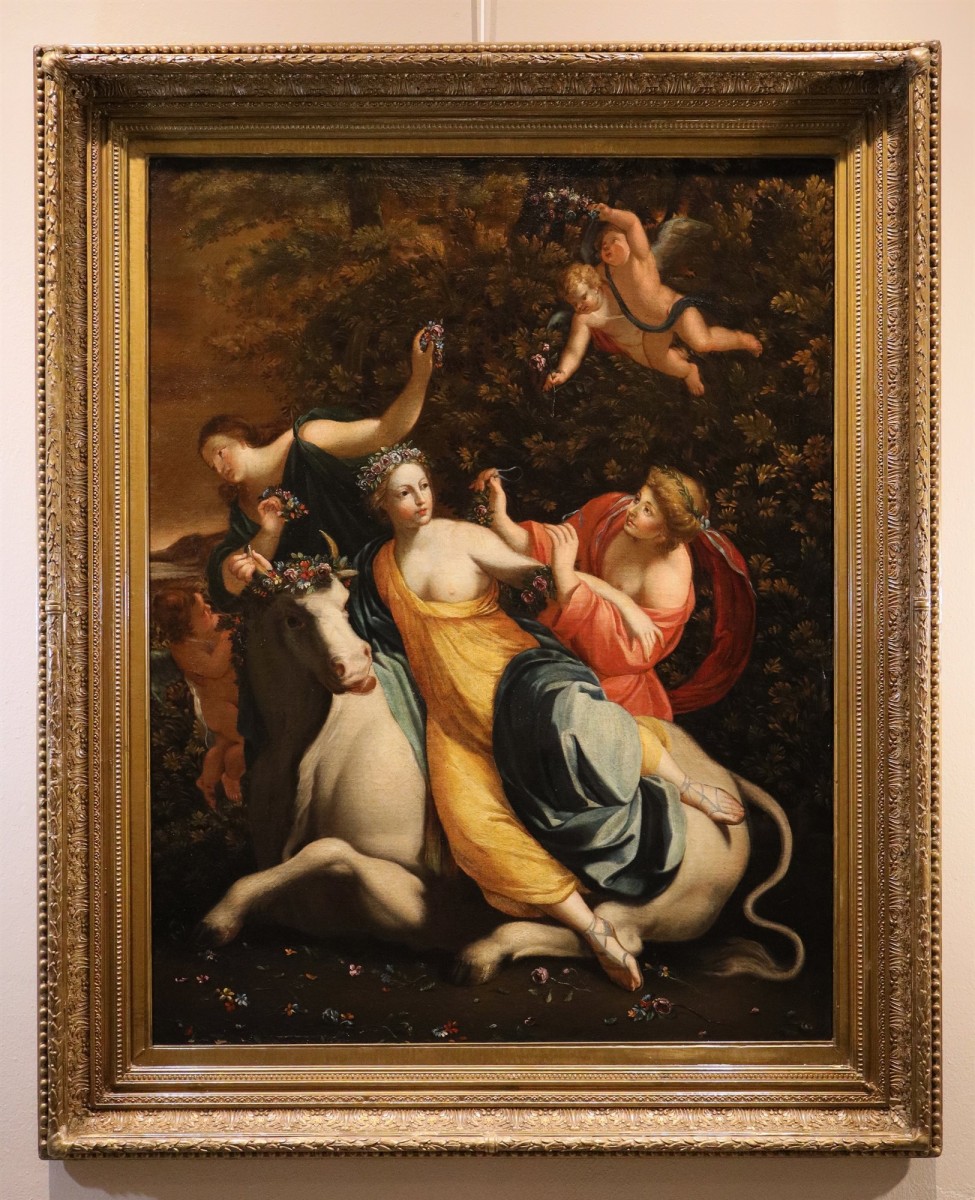
Oil on canvas (116 x 92 cm – Framed 145 x 118 cm)
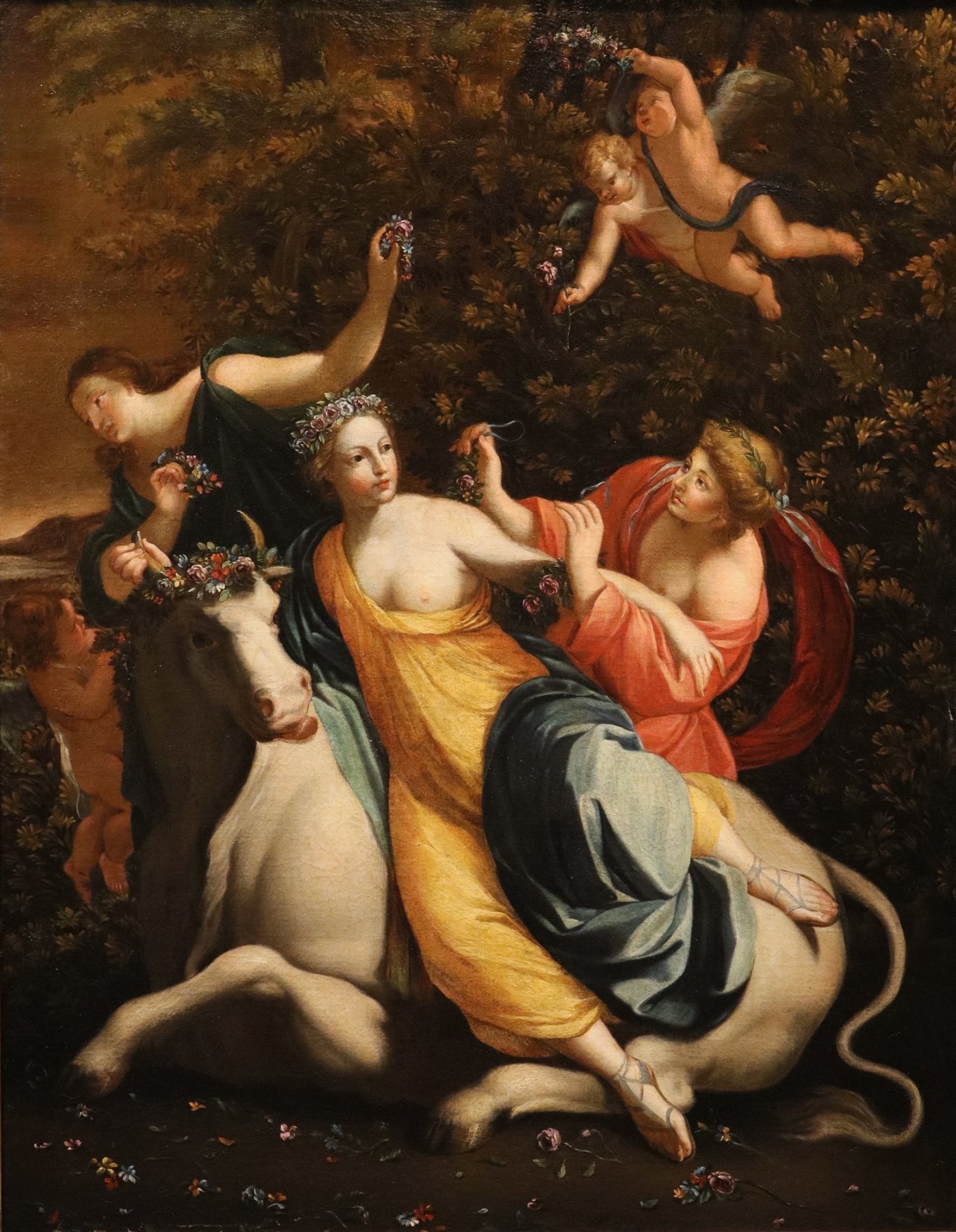
A deception skilfully orchestrated by Zeus, disguised as a springtime idyll: this is the beating heart of the fascinating Abduction of Europa, based on a painting by Simon Vouet (Paris, 1590–1649), painted around 1640 and now on display in Madrid at the renowned Thyssen-Bornemisza Museum (Fig. 1 - https://www.museothyssen.org/en/collection/artists/vouet-simon/rape-europa).
The scene, imbued with great sensuality and elegance, was conceived by Vouet during his stay in Paris, at the height of his successful career, and formed part of a cycle of works united by a graceful treatment of various secular themes, intended to decorate the state rooms of the most renowned royal and aristocratic residences in Paris.
The painting visually depicts a passage from Greek mythology (Ovid’s *Metamorphoses*, II.836–875), portraying the dramatic moment when Zeus, enamoured of the beautiful Phoenician princess Europa, transforms himself into a gentle white bull to approach her, win her trust and then abduct her.
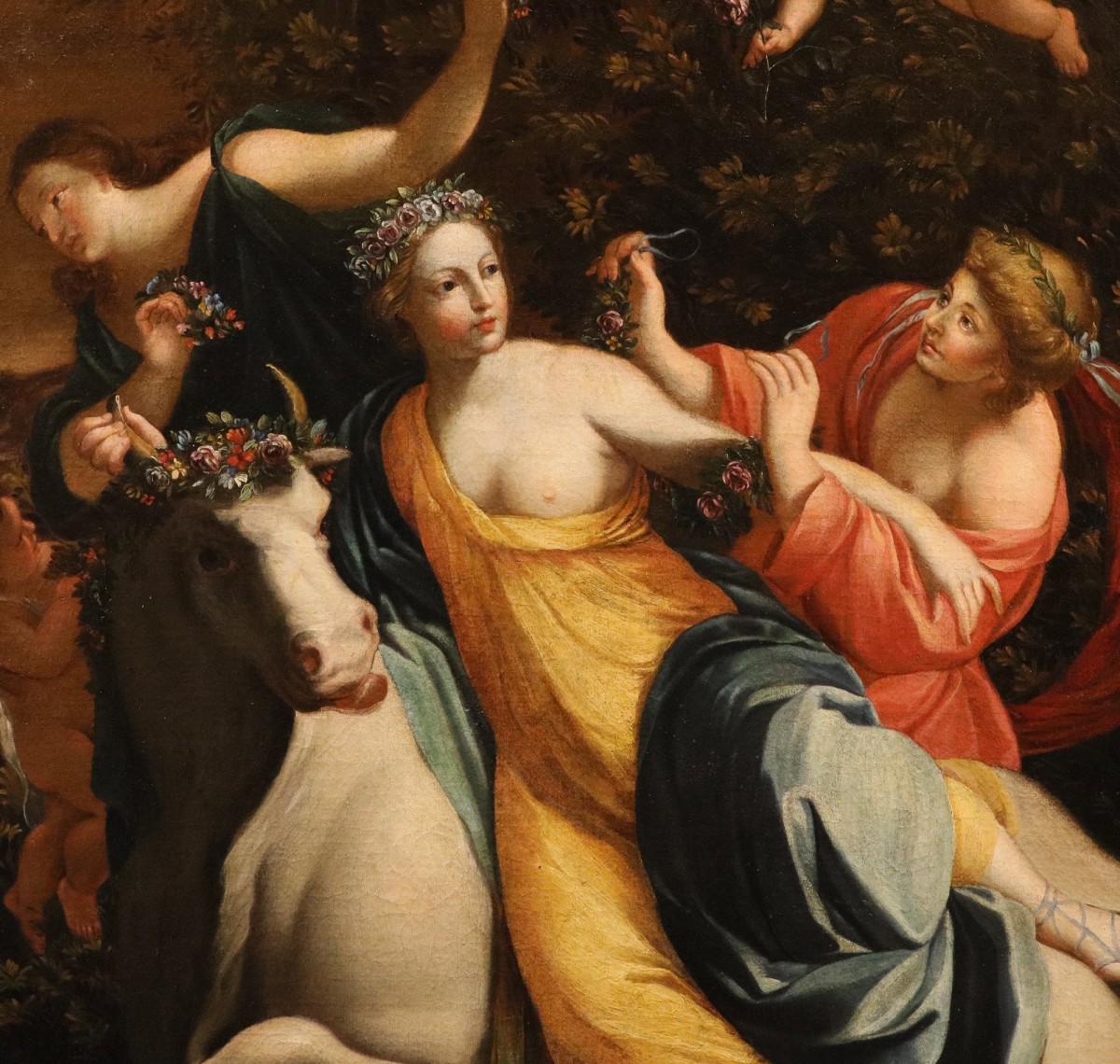
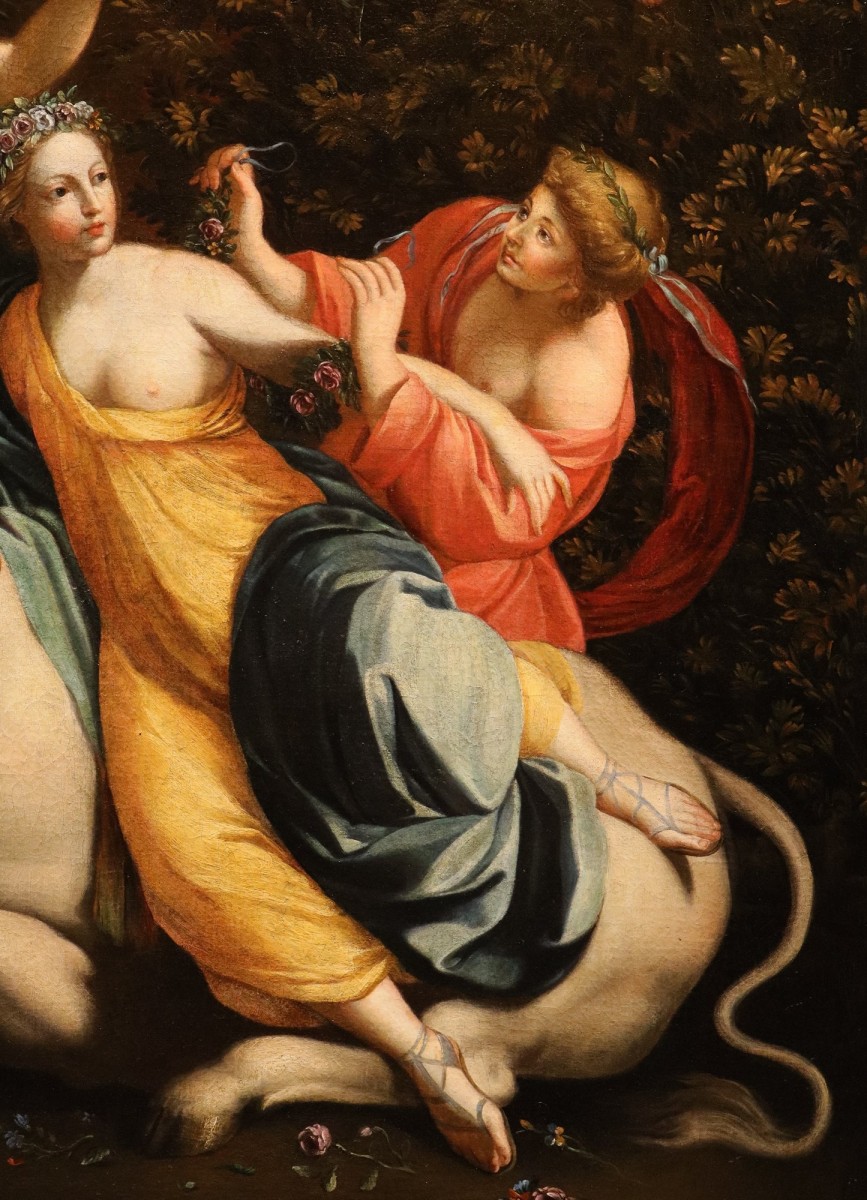
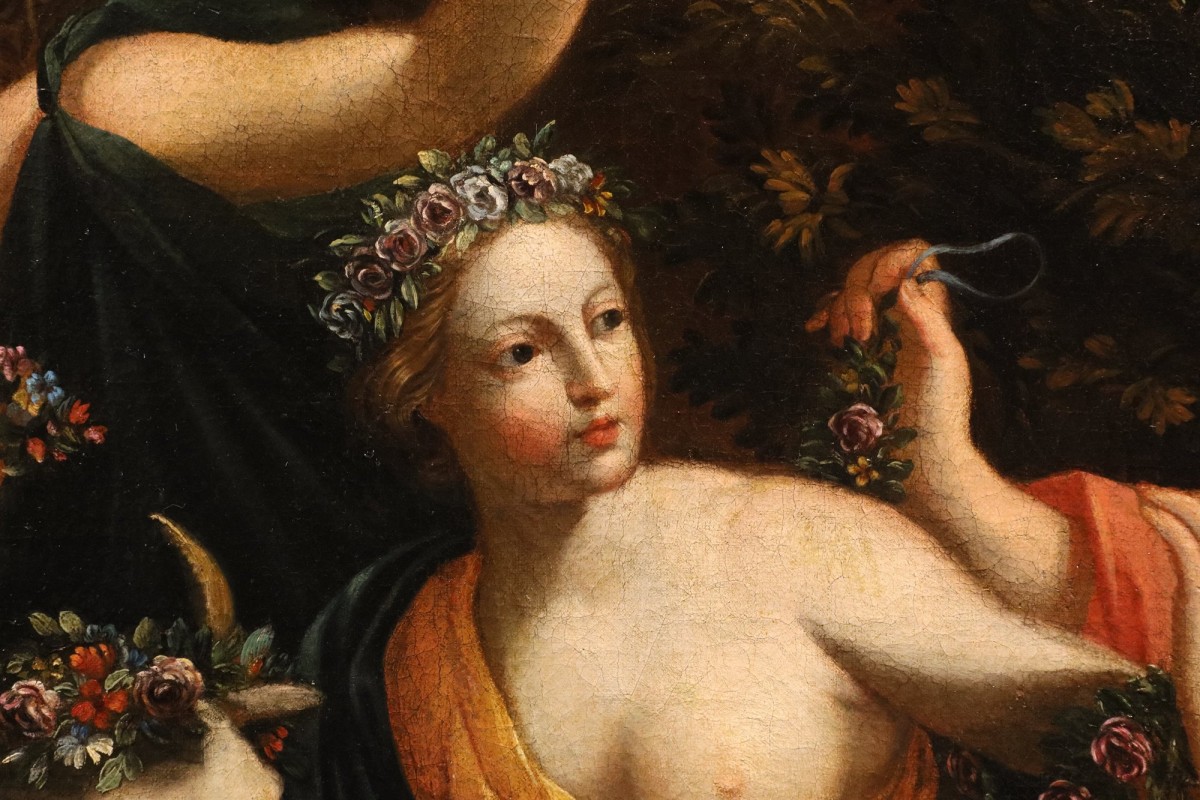
Unlike other versions, which are dramatic or violent, Vouet’s composition focuses on an idyllic atmosphere; the French painter does not depict a violent assault, but rather stages the moment just before the drama begins, employing a theatrical style typical of the French Baroque: the beautiful maiden is positioned on the back of the white bull and tries to keep her balance by holding onto the animal’s horn with her hand.
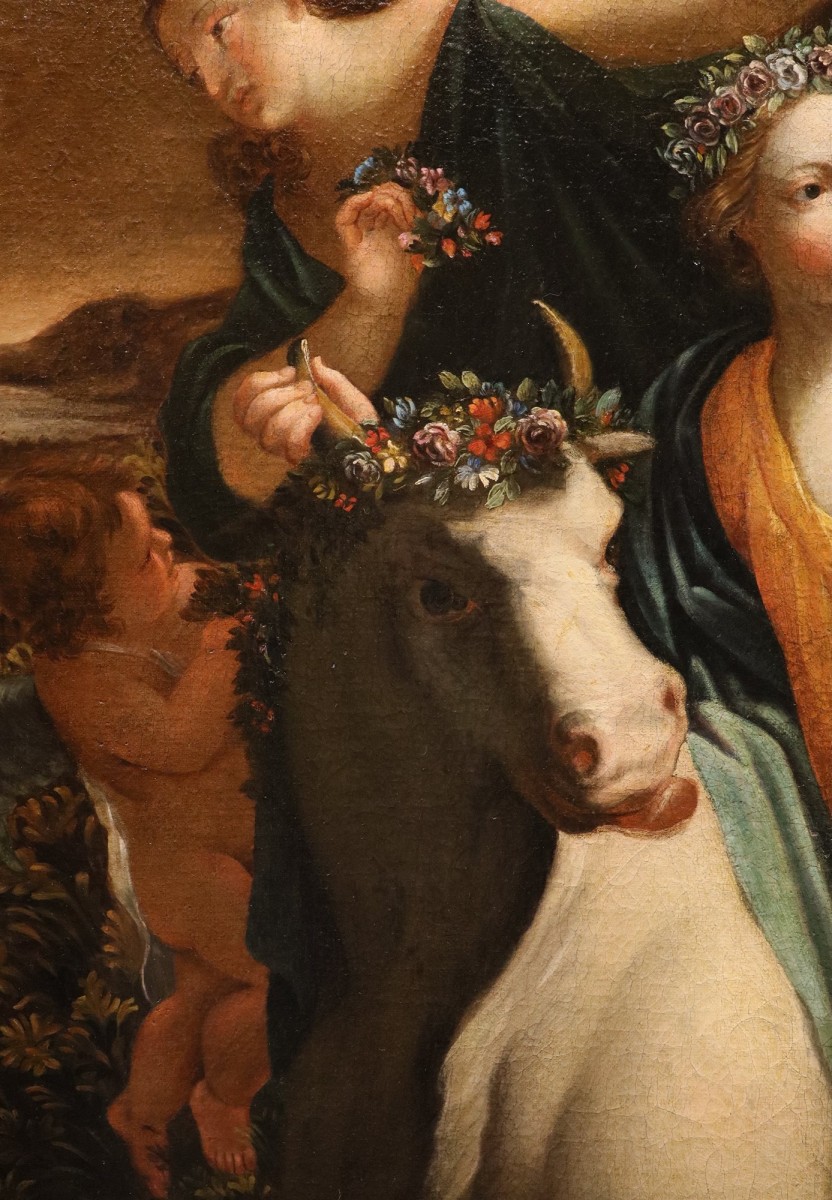
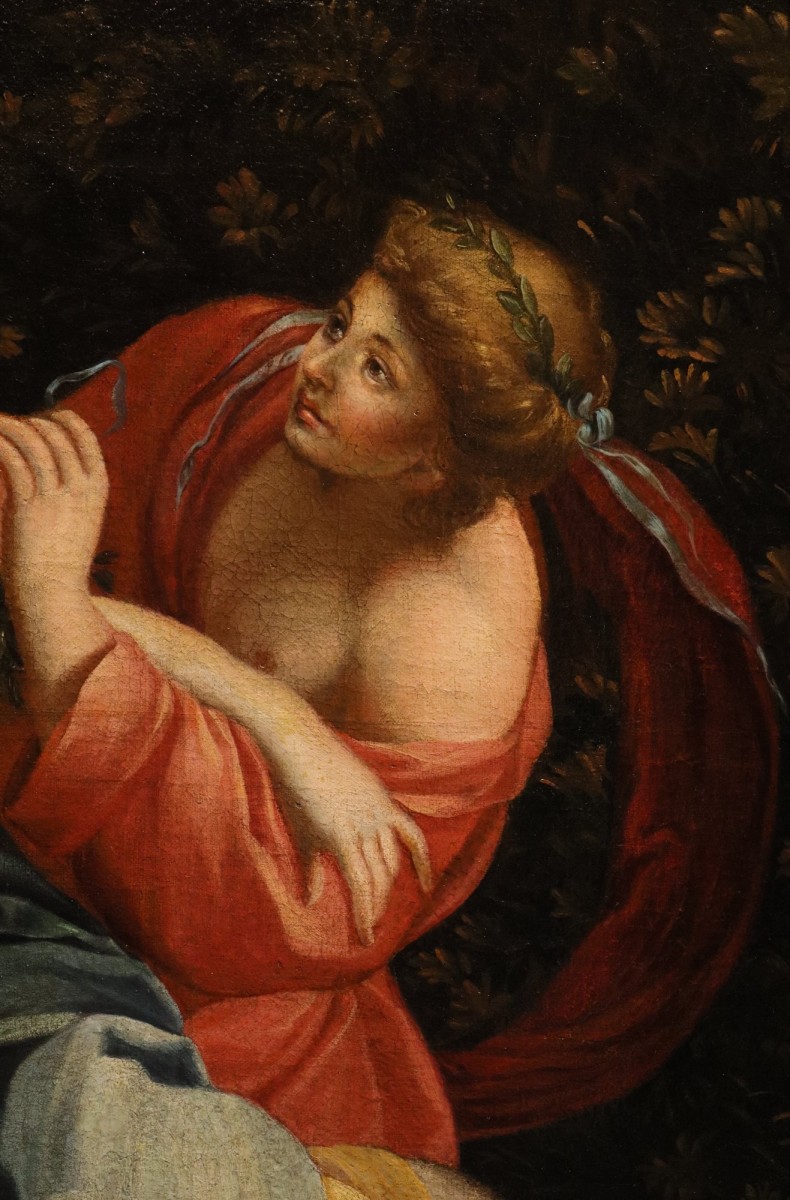
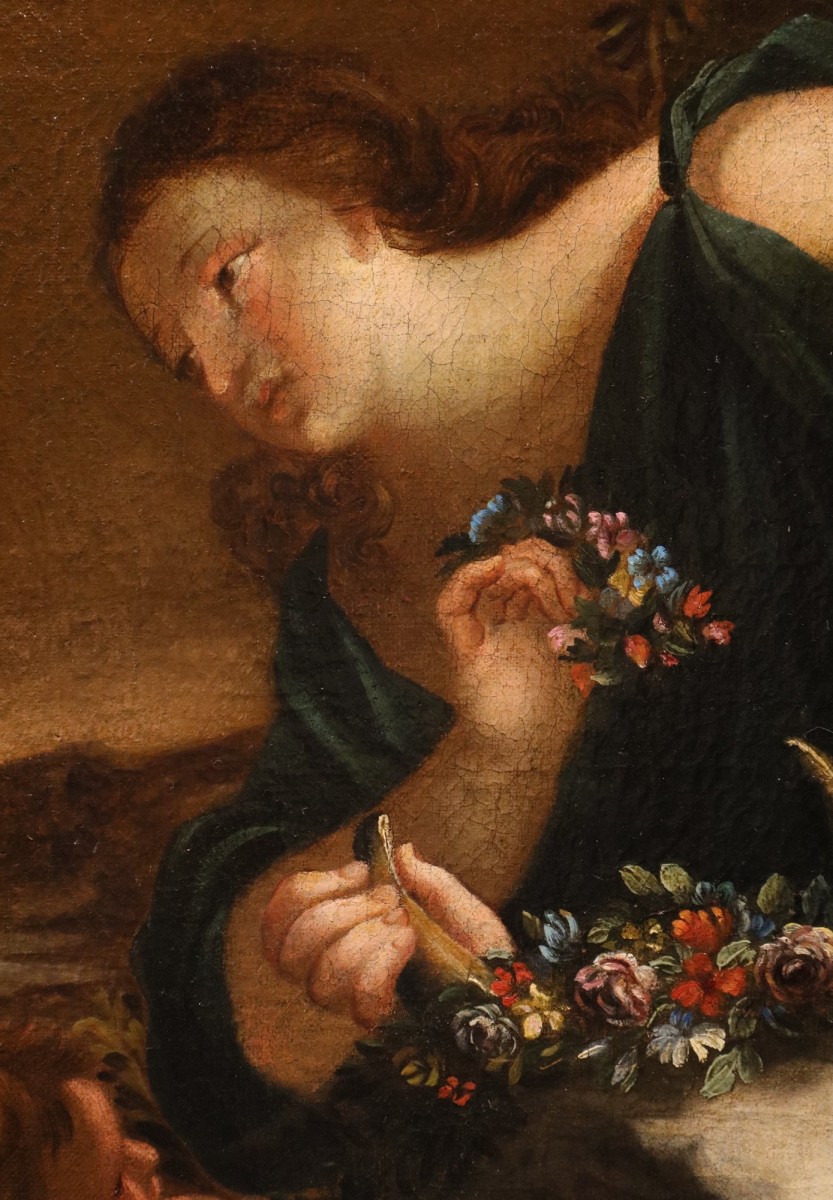
Two maids attend to the princess; one of them, dressed in an antique pink gown, adorns the bull’s head and Europa’s arms with garlands of fresh flowers, in a gesture that conveys a sense of serenity, almost evoking a wedding ceremony, oblivious to the impending abduction.
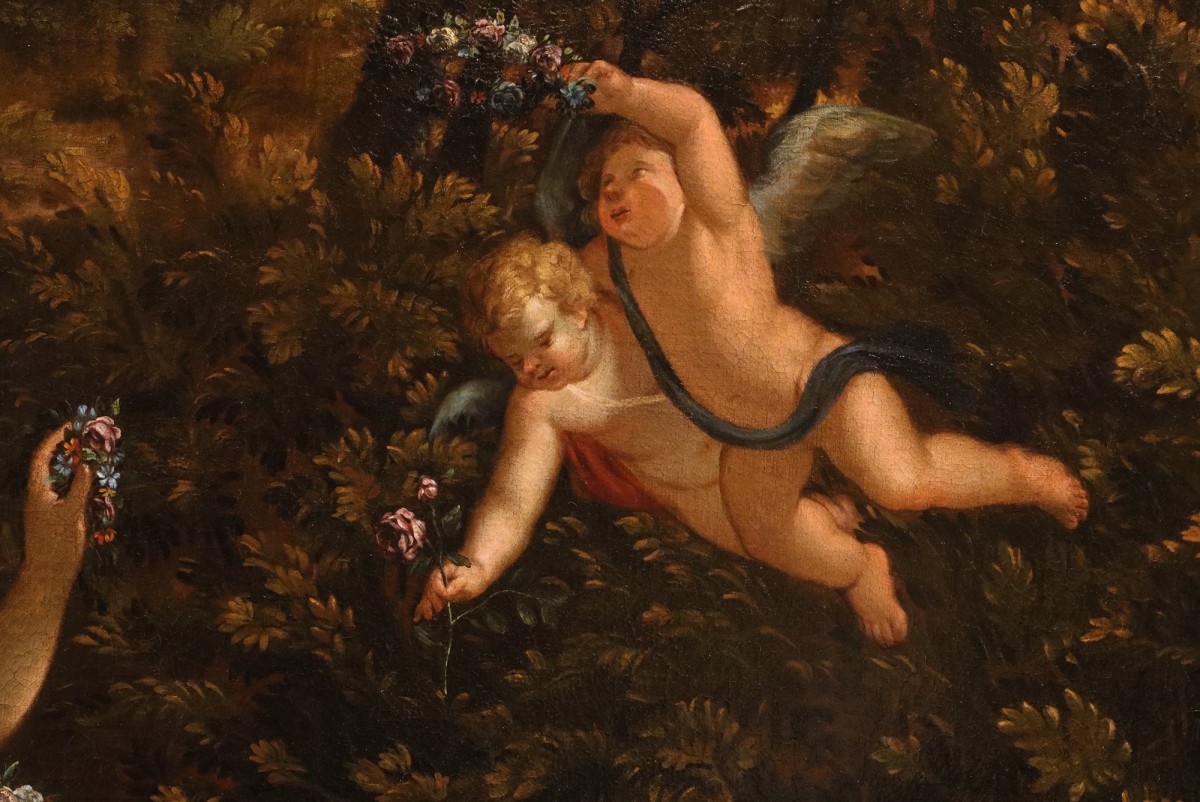
High in the sky, two small winged cherubs float, holding wreaths of flowers, introducing a classic decorative and allegorical element typical of the seventeenth-century figurative tradition, thereby accentuating the painting’s graceful and poetic tone.
The sensuality and sentimentality that characterise the work are inspired by the paintings of Veronese – in particular, a comparison with *The Rape of Europa* in the Doge’s Palace in Venice is readily apparent – and by the works of Bolognese artists active in Rome during the first half of the 17th century, such as Domenichino, Francesco Albani and, above all, Guido Reni, whom Vouet likely had the opportunity to see during his travels in Italy.
This composition became widely known even at the time, thanks to the print by Michel Dorigny—a talented engraver, pupil of Vouet and court painter—produced in 1642, who was tasked with reproducing and disseminating the master’s masterpieces; he thus played a fundamental role in art history, leading to the creation of several reproductions even at that time.
This plate enabled the design to spread throughout Europe, and examples of this etching (which depicts the scene in mirror image) are now held in prestigious Italian and international museums, such as the Capodimonte Museum in Naples (Fig. 2 - https://catalogo. beniculturali.it/detail/HistoricOrArtisticProperty/1500340406) and the Accademia Carrara in Bergamo.
The high demand on the art market for Vouet’s sensual mythological subjects prompted his own workshop, as well as various contemporary copyists, to produce painted replicas based precisely on the clear graphic outline provided by Dorigny.
Our fine version, which is undoubtedly derived from the engraving as it is presented in ‘counterpart’ (i.e. mirror image), is a work presumably created by one of his assistants or shortly after his death.
Simon Vouet ran an extremely well-organised studio in Paris to cope with the vast number of commissions from the court and the nobility, and in this instance, the drawing has been faithfully reproduced in a manner that is flawless in comparison with the original in the Thyssen-Bornemisza Museum.
Delevery information :
We take care of and organise the transport of the purchased works, both for Italy and abroad, through professional and insured carriers.
We take great care We personally take care of the packaging, to which we devote a great deal of care: each work is carefully packed, first with arti- cle material, then with a custom-made wooden box.
Should you have the desire to see this or other works in person, we would be happy to welcome you to our gallery in Riva del Garda, Viale Giuseppe Canella 18, we are always open by appointment only.