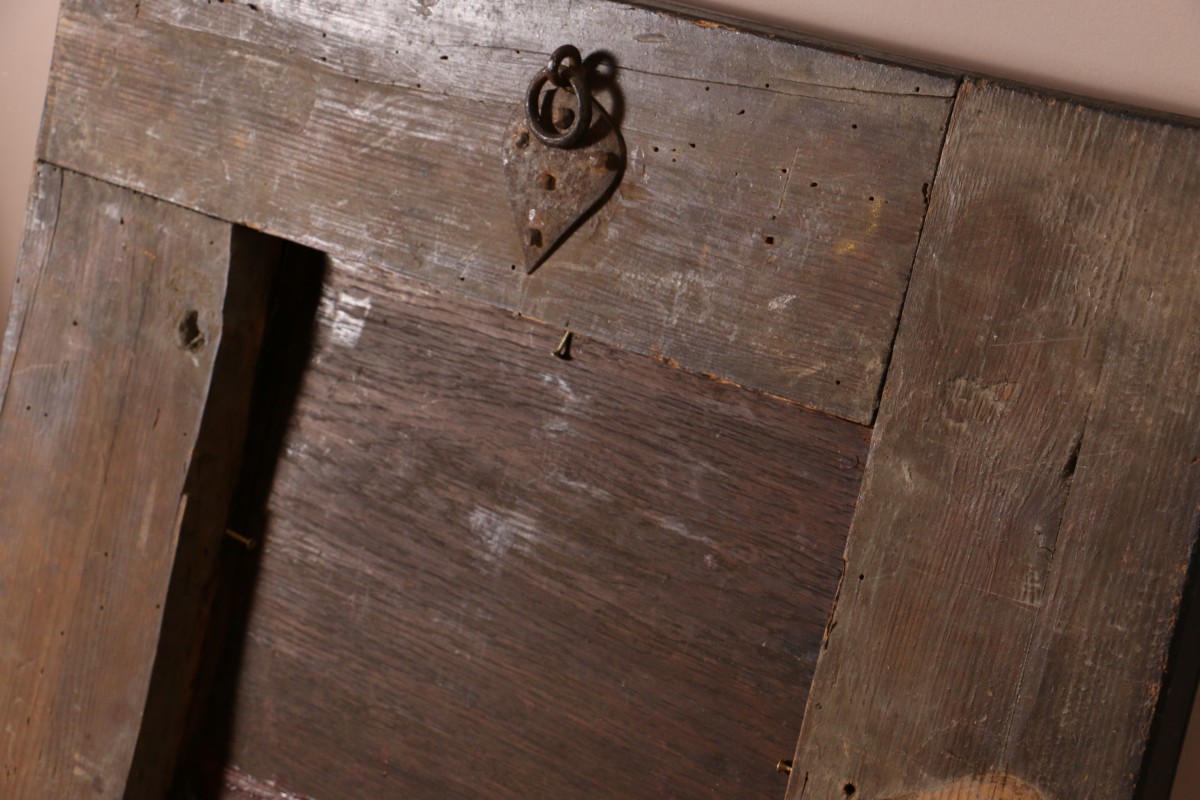
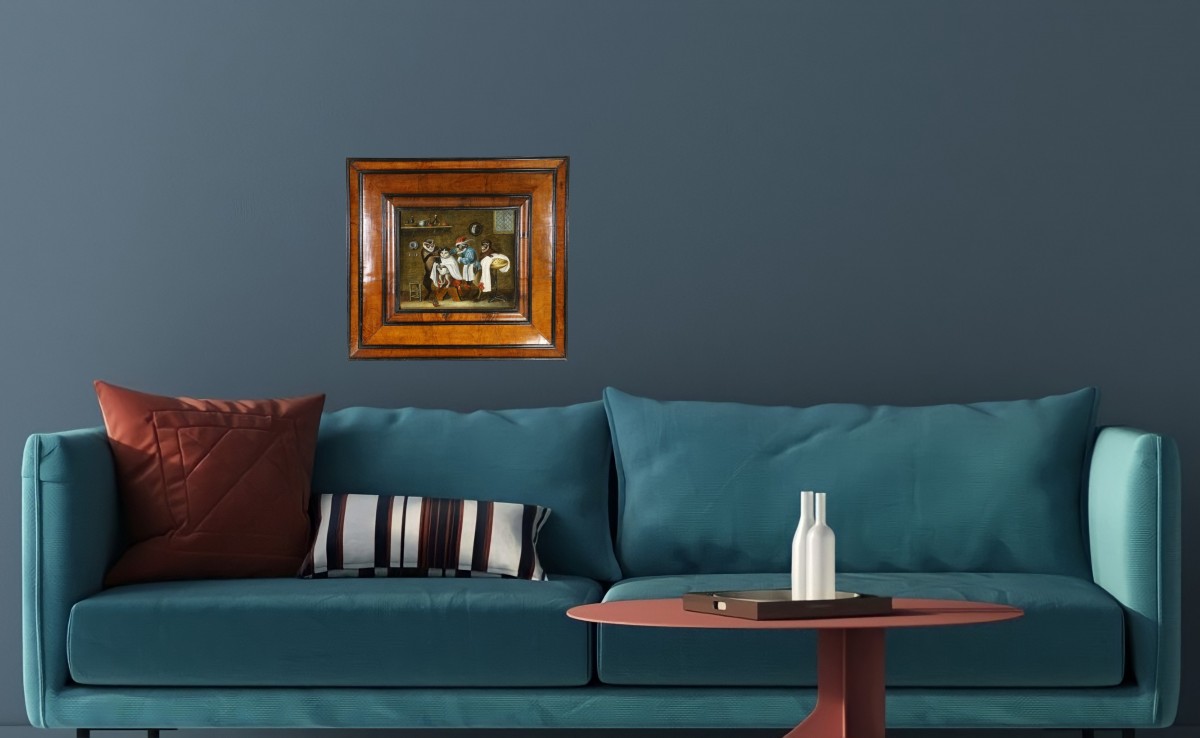
Offered by Galerie PhC

European paintings from the 17th, 18th and 19th centuries.
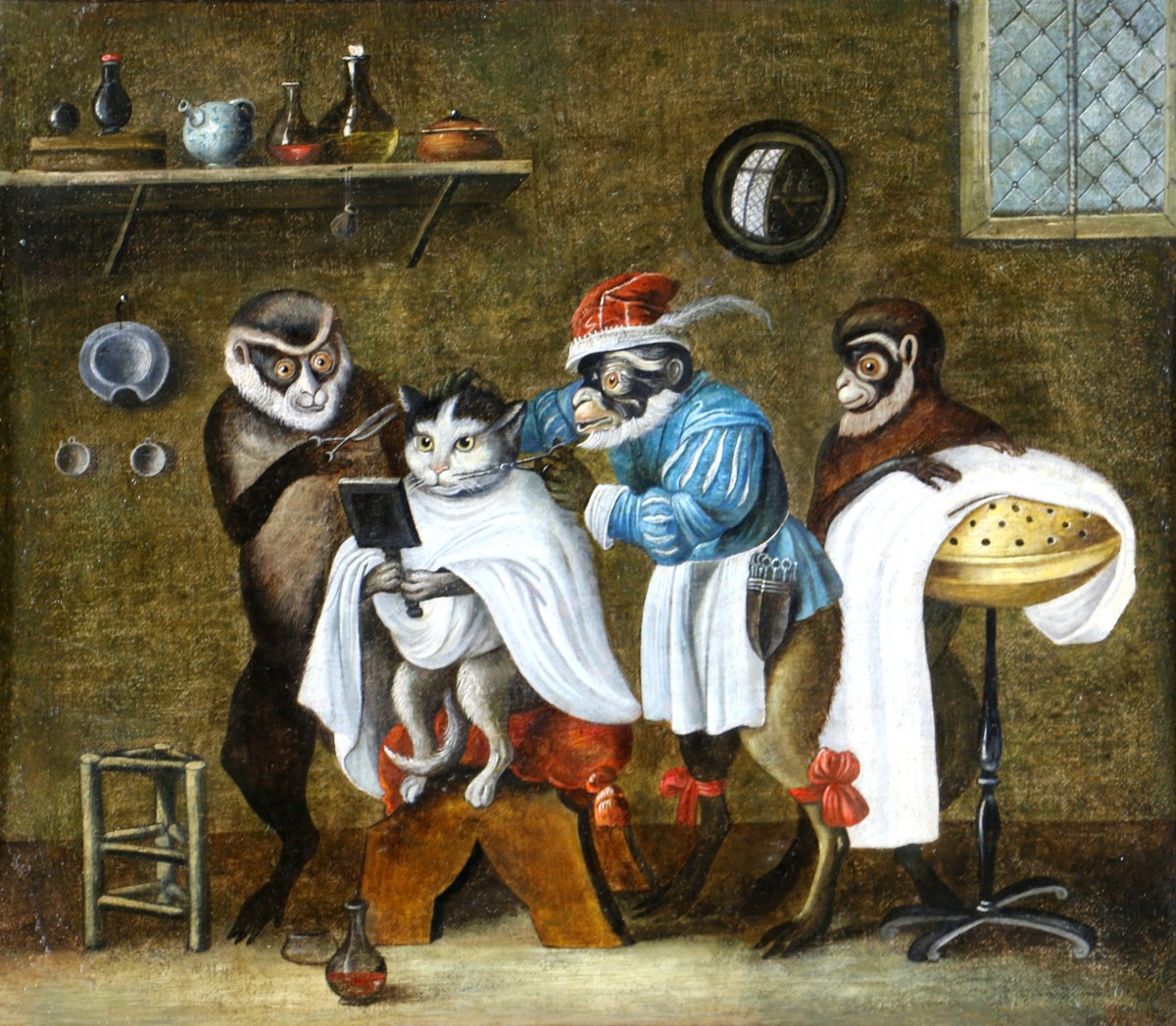
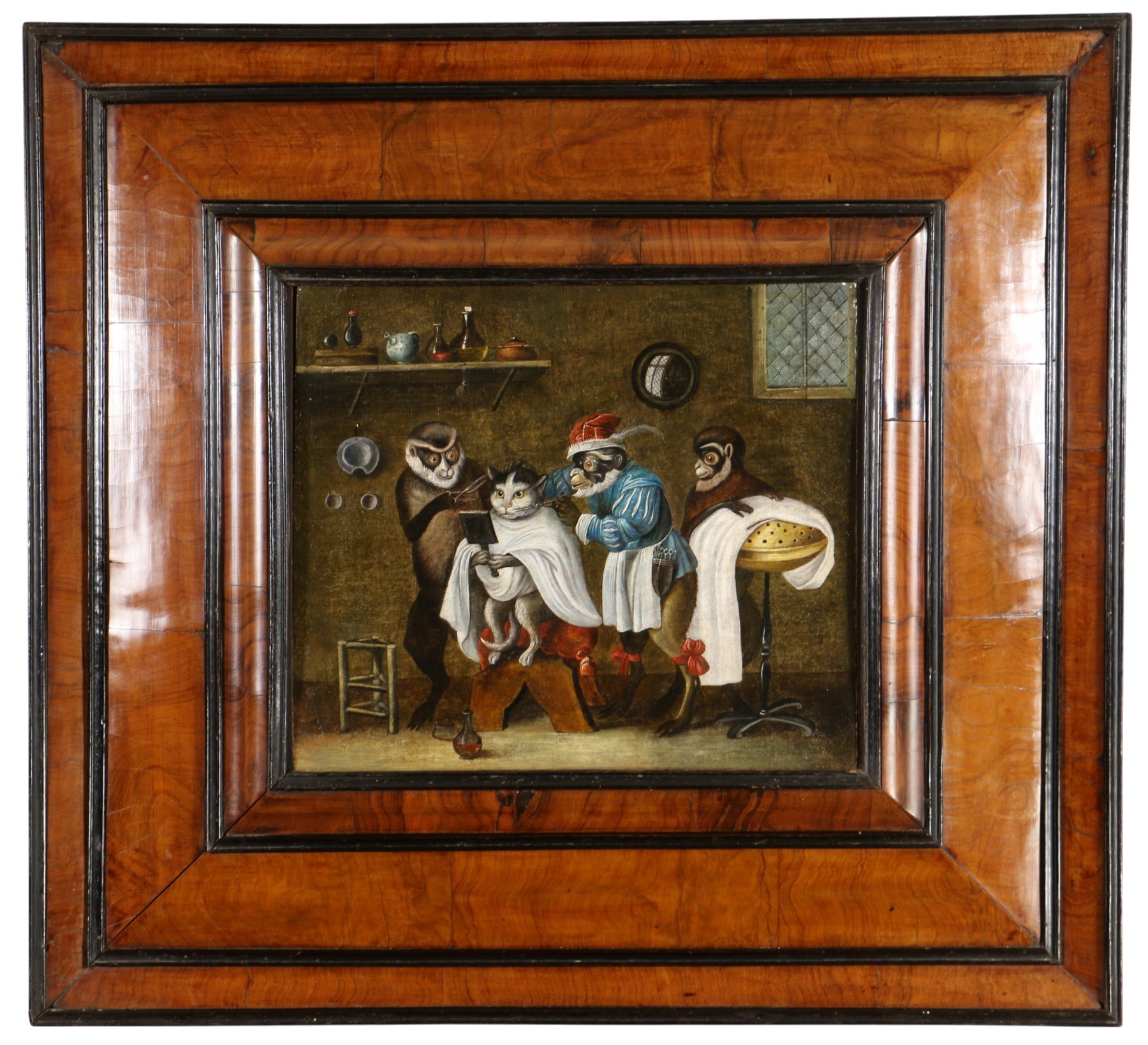
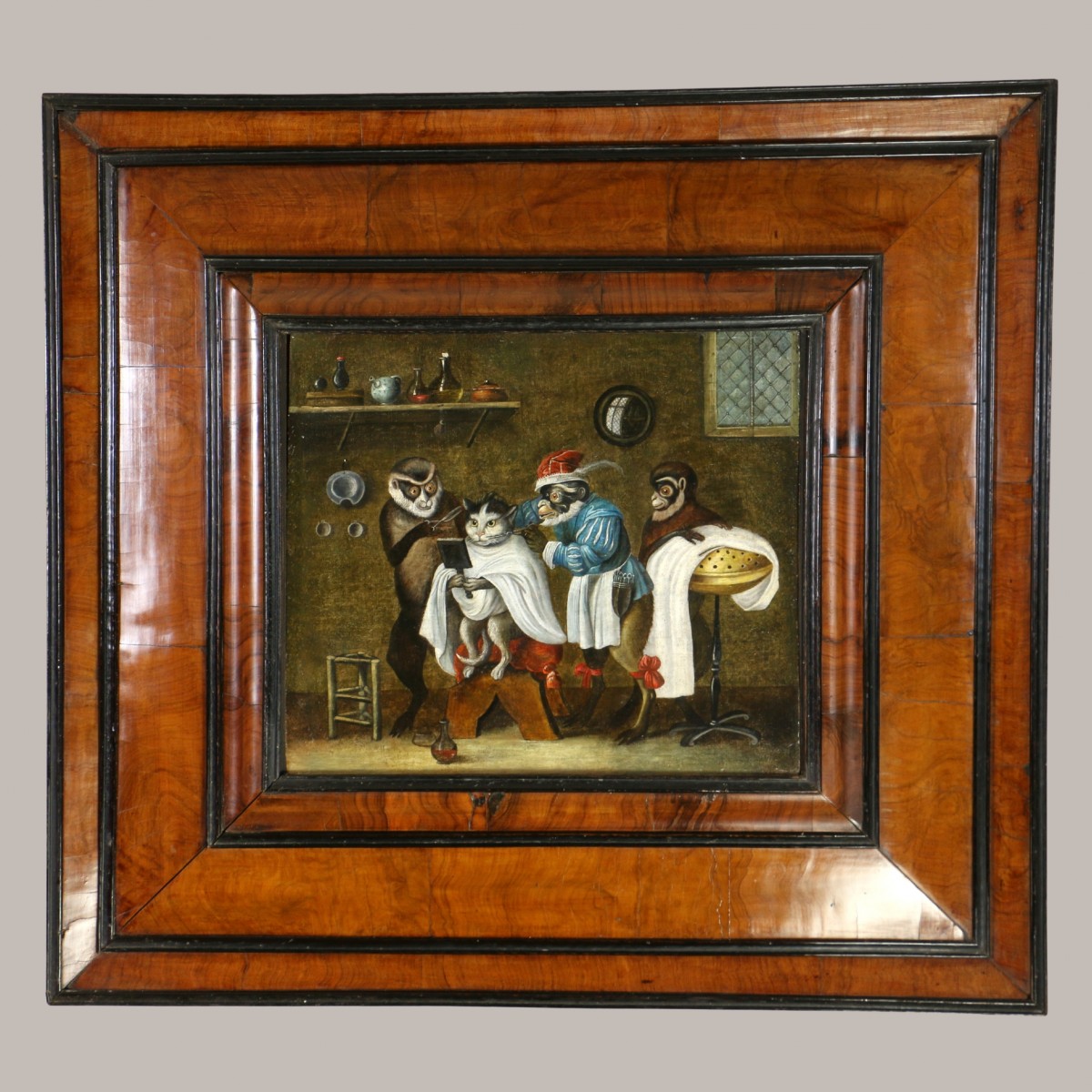
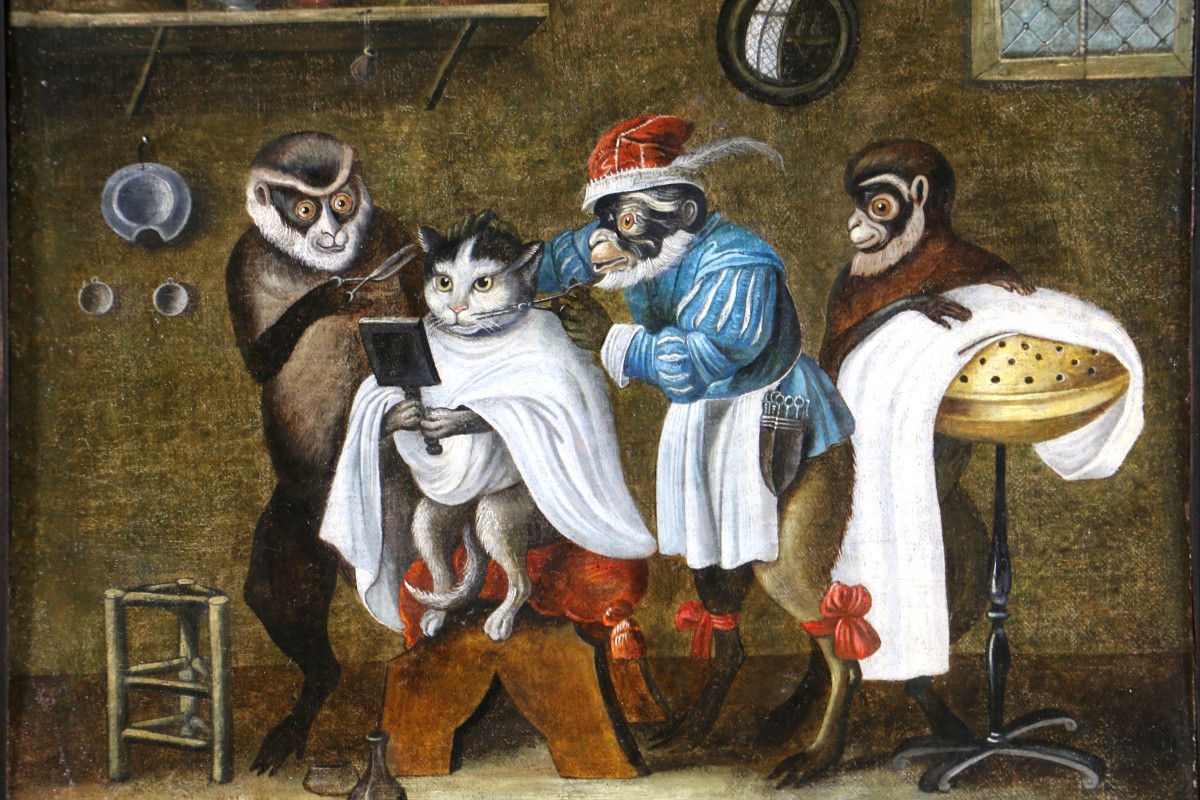
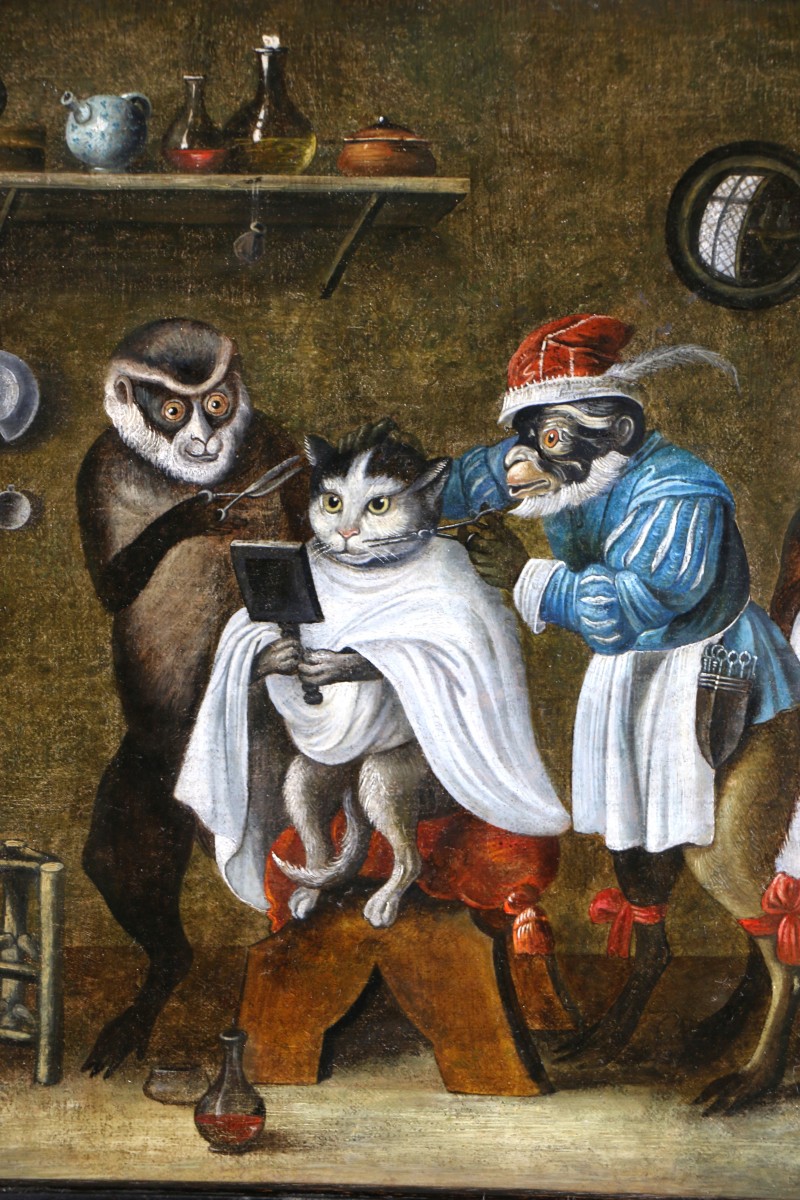
Attributed to Ferdinand van Kessel (Antwerp, 1648 – c. 1696). Monkey Business, The Cat at the Barber's.
Oil on canvas laid down on panel, 32 cm x 28 cm.
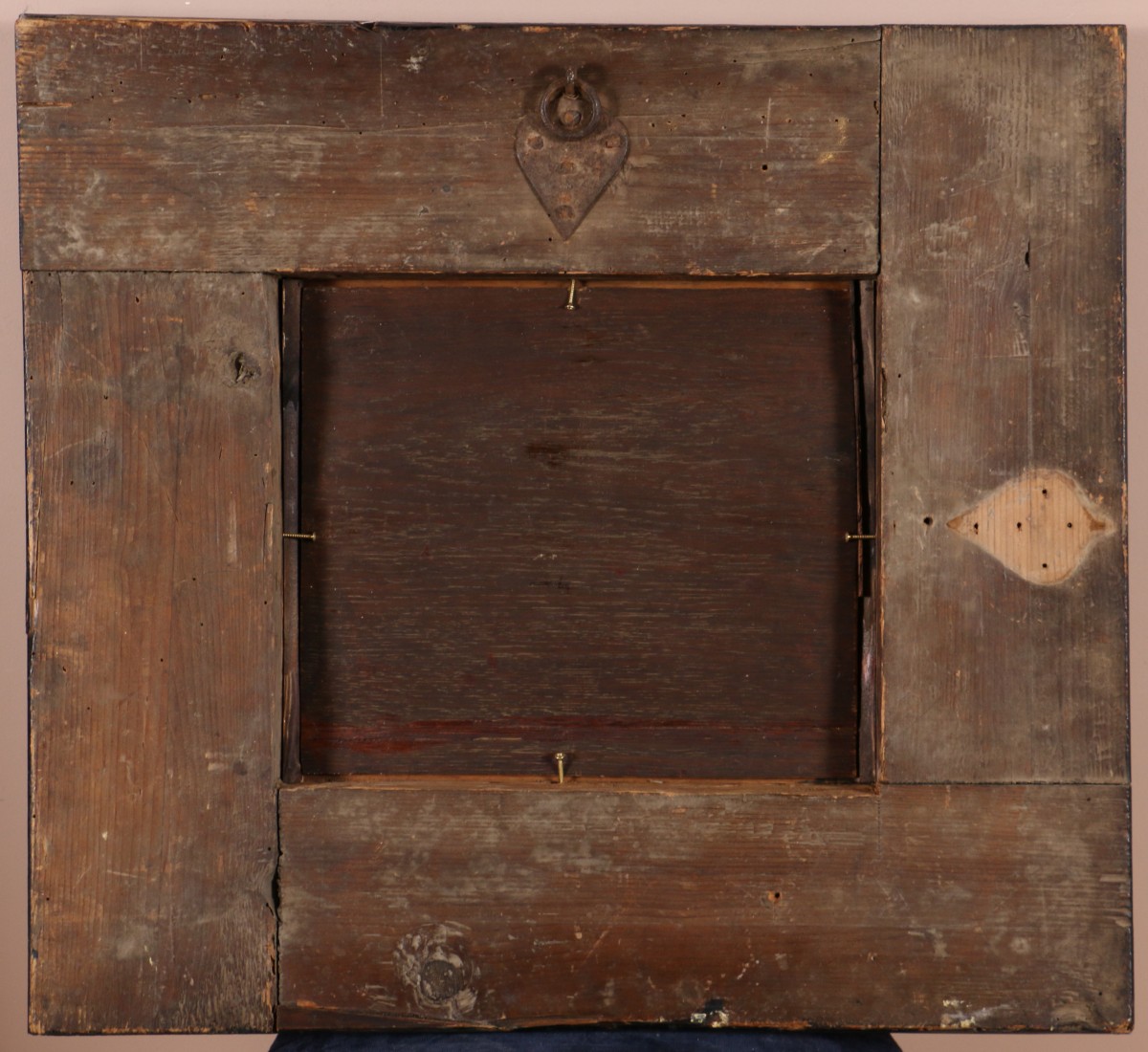
Superb 17th-century burl veneer frame, 64 cm x 59 cm.
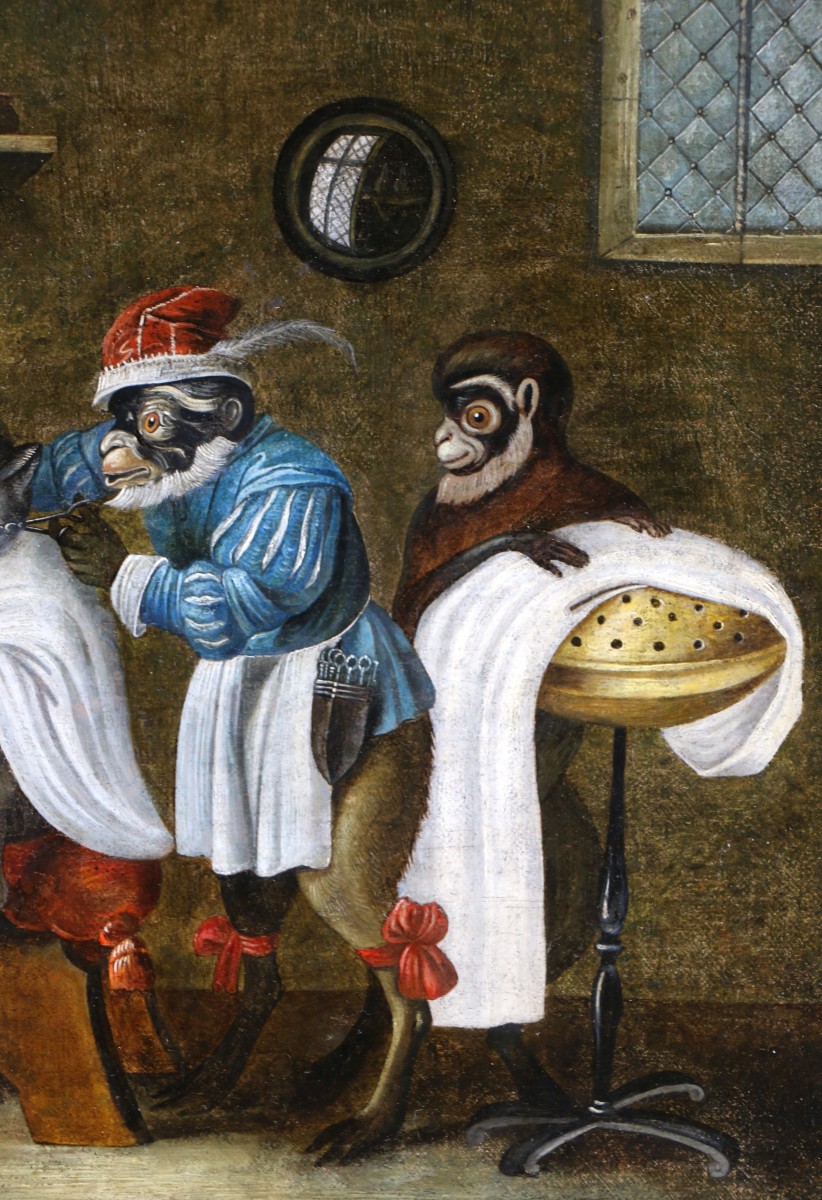
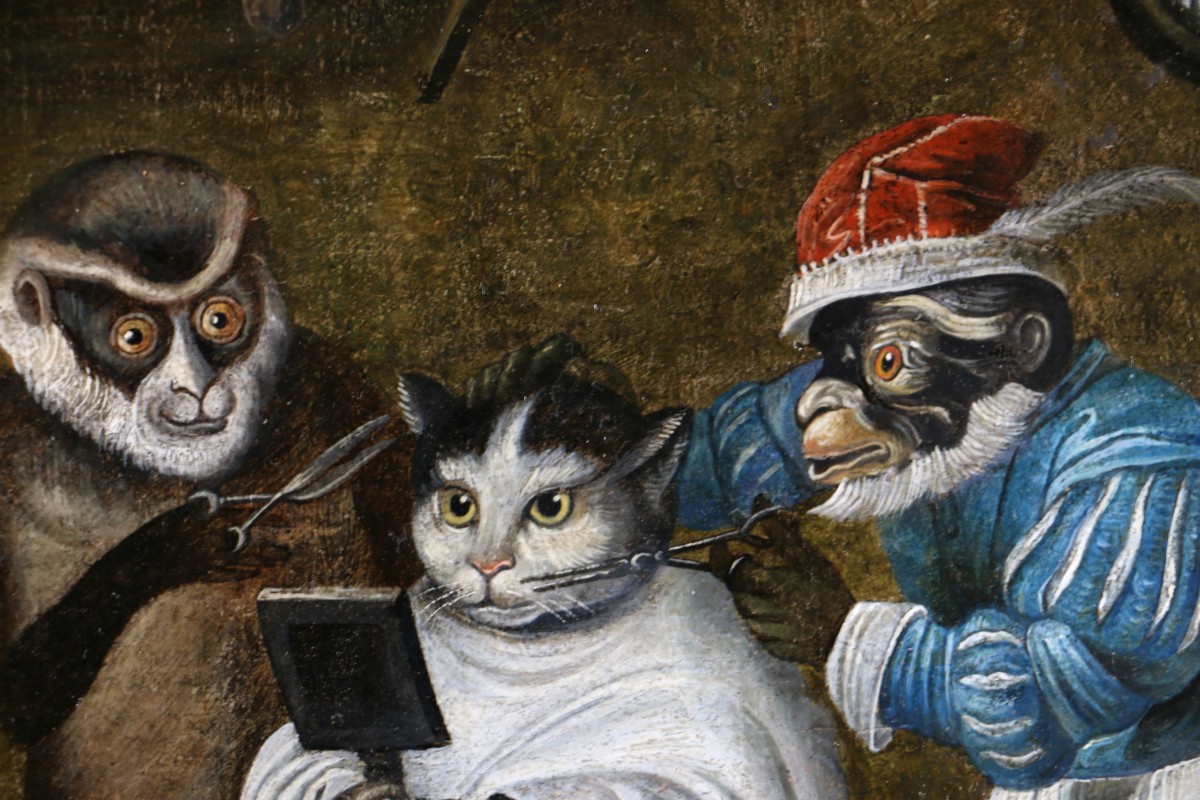
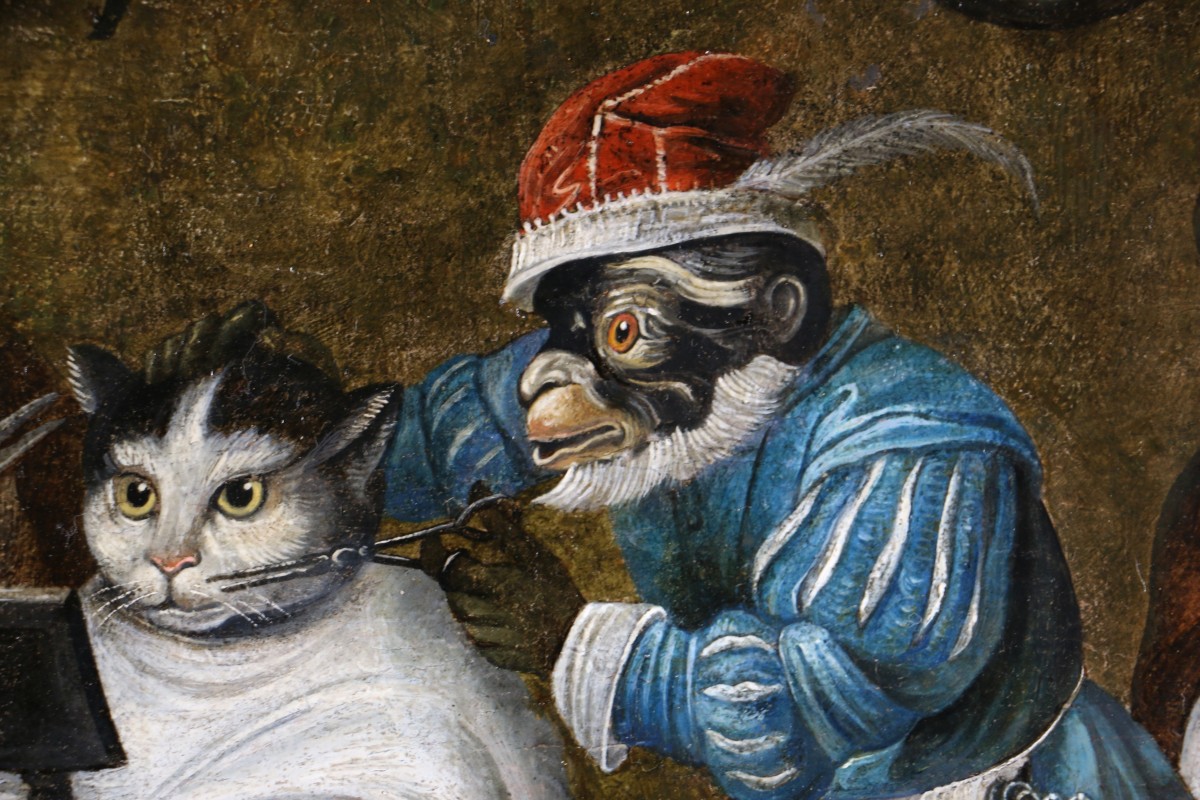
This charming monkey business depicts a barber's shop where three anthropomorphic monkeys bustle around a cat acting as a client. Draped in a white cloth and seated before a hand mirror, the feline submits with resigned calm to the care provided by its unusual attendants. One of the monkeys, wearing a red feathered cap and an elegant blue doublet, performs the haircut while a companion wields the scissors. A third figure stands back, carrying the linens for the client's grooming.
Oil on canvas laid down on panel, 32 cm x 28 cm.
Superb 17th-century frame, burl veneer, 64 cm x 59 cm. The scene unfolds in a simply furnished interior, where the accessories—a shelf lined with bottles, hanging utensils, a small-paned leaded window—are rendered with a meticulousness characteristic of the Flemish tradition. The composition blends fantasy, animal observation, and satire of human behavior, reflecting the taste for the "monkey paintings" that enjoyed great popularity in the Southern Netherlands during the 17th century.
Through its narrative spirit, delicate execution, and iconography, this work belongs to the circle of productions attributed to Ferdinand van Kessel, heir to the tradition of Brueghel and Van Kessel.
Related work: A very similar, smaller composition, also depicting the same cat and barber but in a different setting, attributed to Ferdinand van Kessel, was offered at auction at Tajan, Paris, on March 25, 1999, and sold for €25,000.
Ferdinand van Kessel (Antwerp, 1648 – c. 1696)
Ferdinand van Kessel was a Flemish painter of the second half of the 17th century, from one of Antwerp's most prestigious artistic dynasties. Born in 1648, he was the son of Jan van Kessel the Elder (1626–1679), a renowned painter of still lifes, animal scenes, and allegorical compositions, and the grandson of Jan Brueghel the Elder (1568–1625), thus inheriting the pictorial tradition developed by the Brueghel family.
Trained in his father's workshop, Ferdinand quickly absorbed the Flemish taste for meticulous compositions, rich in detail and executed with great technical finesse. Admitted as a master to the Guild of Saint Luke in Antwerp in 1675, he developed a diverse body of work including genre scenes, allegories, animal depictions, and especially "singerie," humorous compositions featuring monkeys imitating human behavior.
His works are distinguished by their narrative character, their often small format intended for collectors' cabinets, and a precise execution inherited from the Brueghel tradition. Animals occupy a central place in his work and are depicted with careful observation of nature, while also participating in moral or satirical scenes inspired by the society of his time. Ferdinand van Kessel worked primarily in Antwerp before settling in Breda, where his presence is documented in the later years of his career. His work testifies to the vitality of Flemish cabinet painting at the end of the 17th century and to the enduring artistic legacy of the Brueghel family. Today, his paintings are held in several European public and private collections and regularly appear on the art market, where his animal compositions and monkey scenes are particularly sought after.
Through his talent as a miniaturist and his keen sense of observation, Ferdinand van Kessel occupies a unique place among the Flemish painters of his time, ensuring the transmission of a family tradition that ranks among the most important in the history of art in the Southern Netherlands.
Delevery information :
All our paintings benefit from careful and secure packaging. No geographic restrictions.