Offered by Franck Baptiste Provence
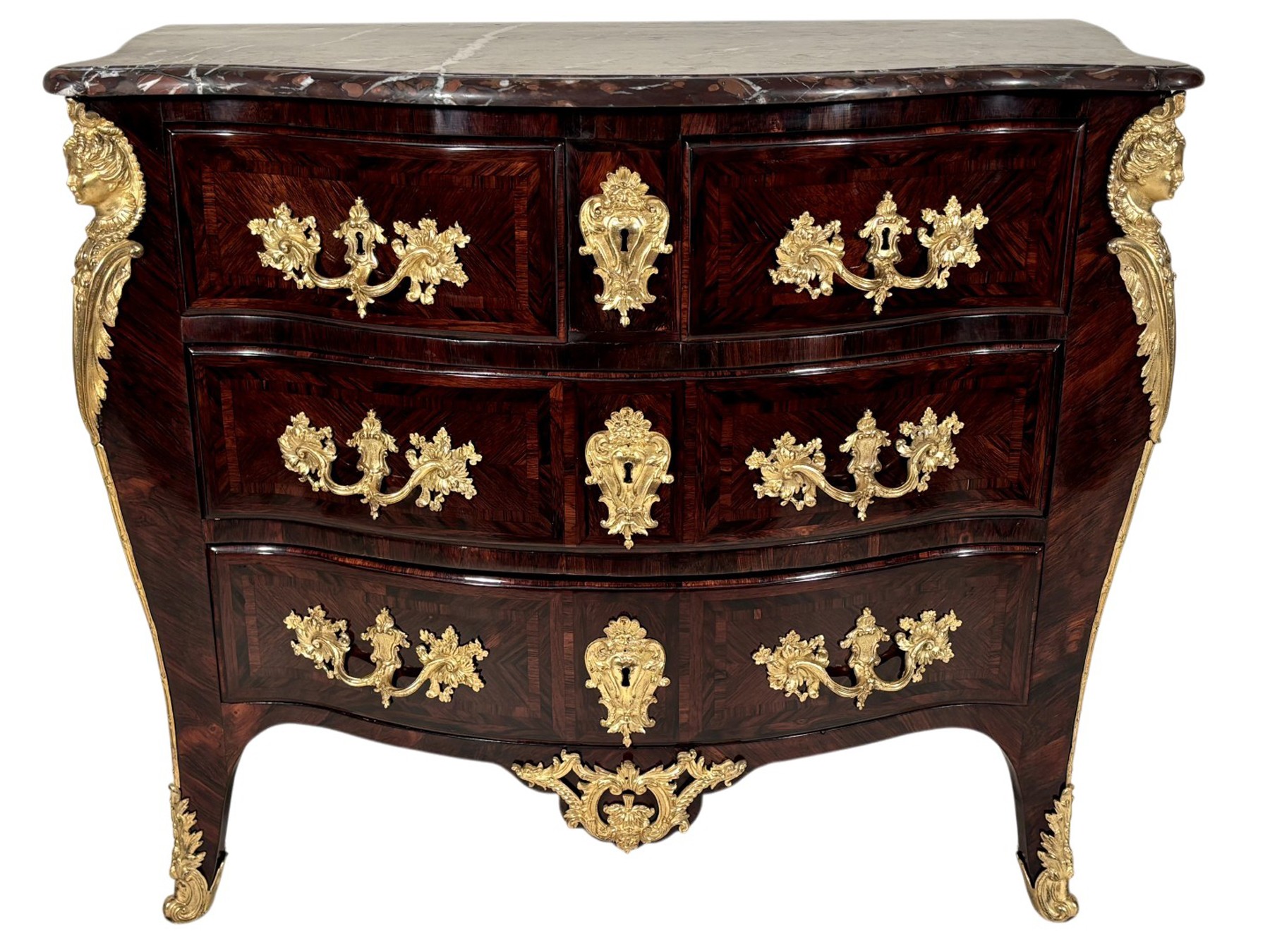
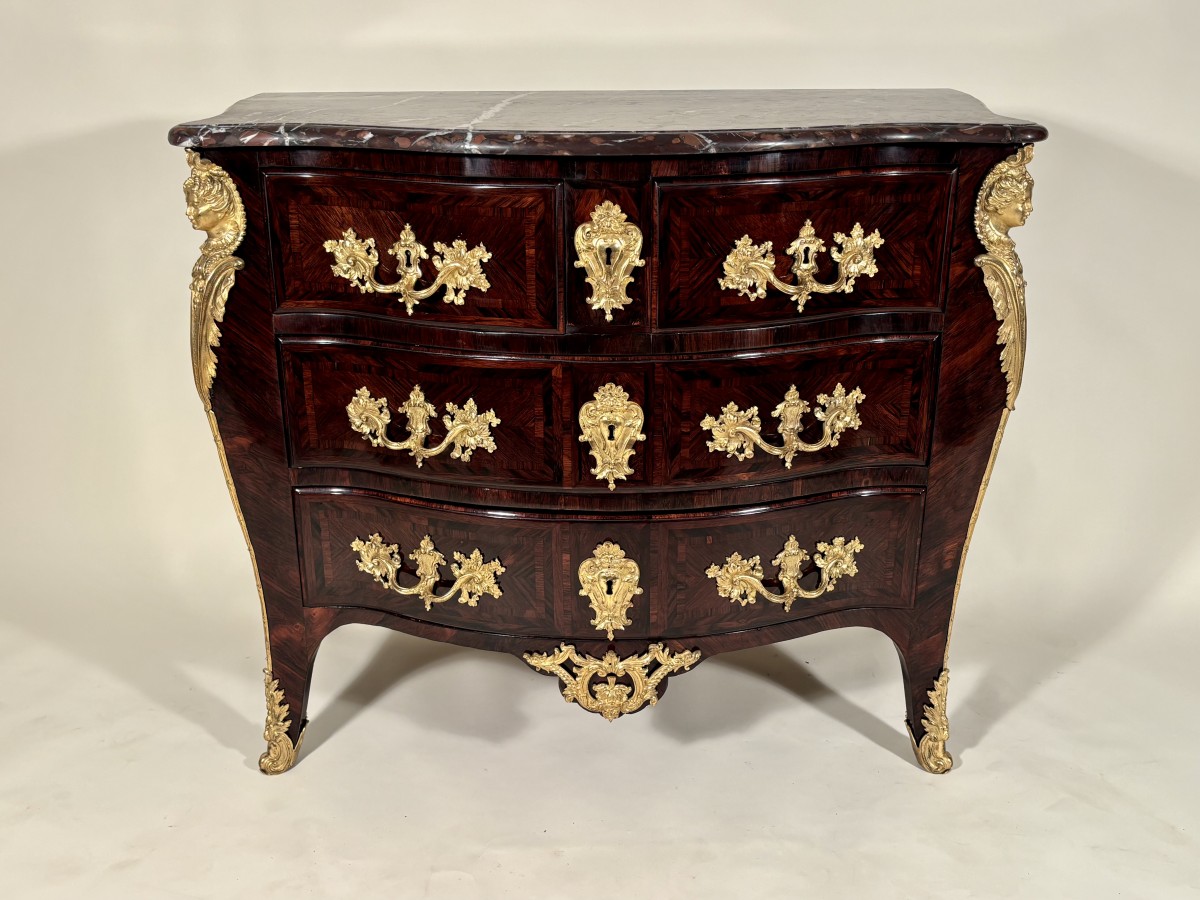
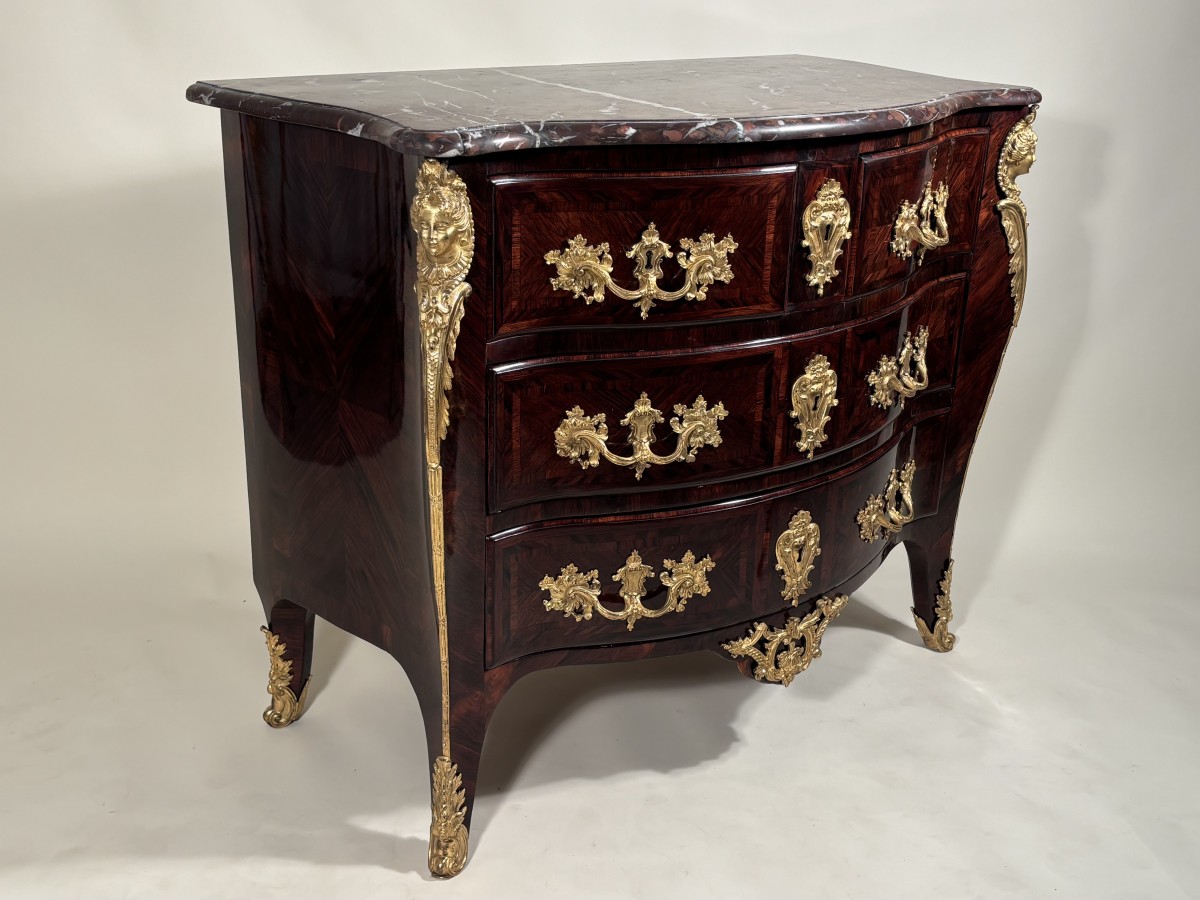
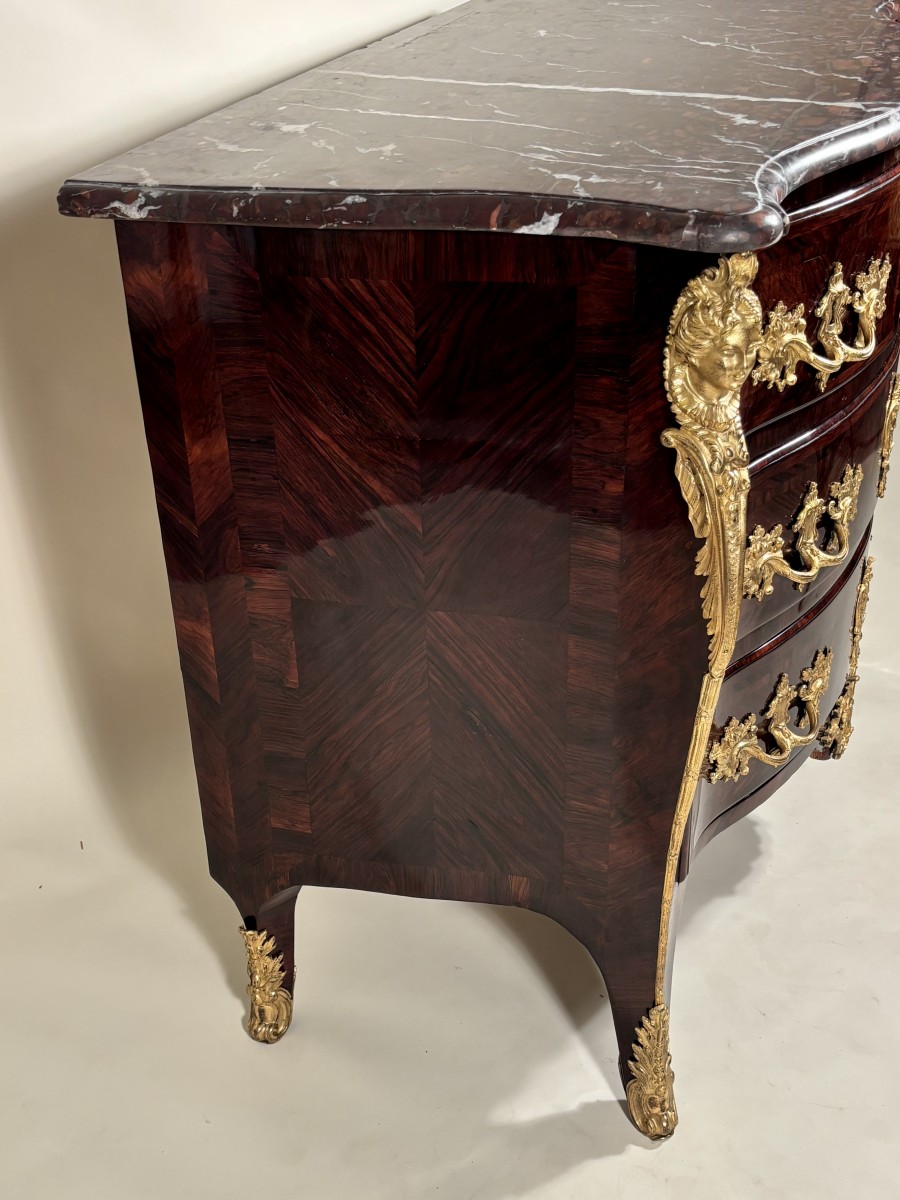

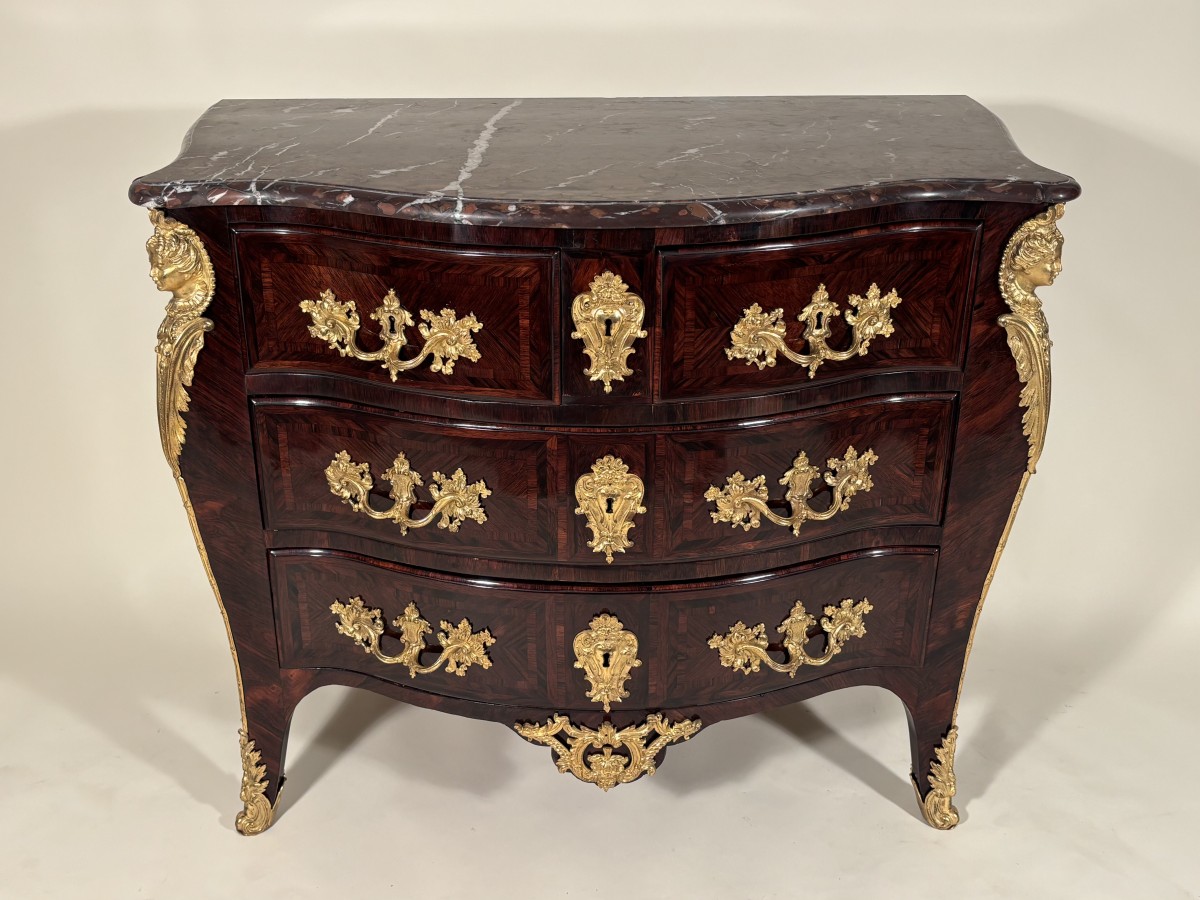
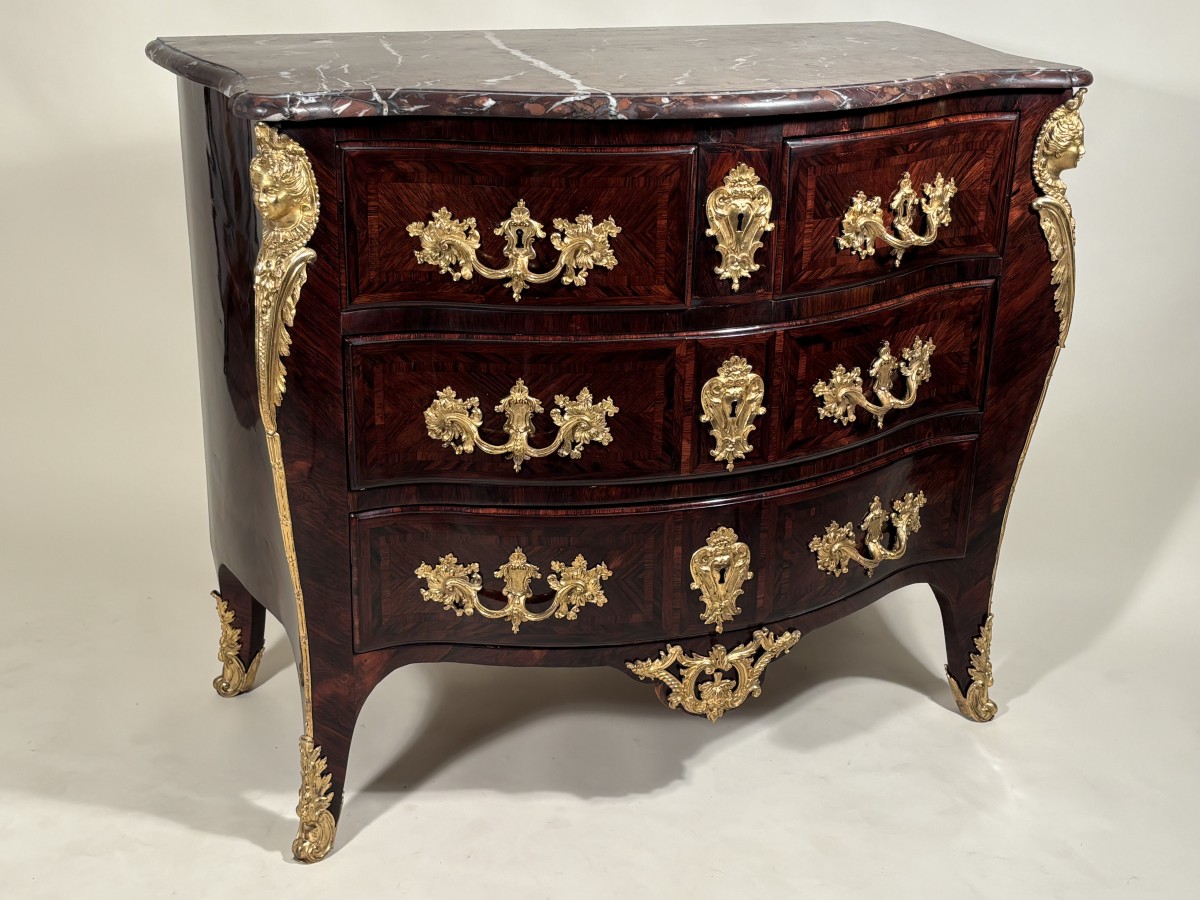
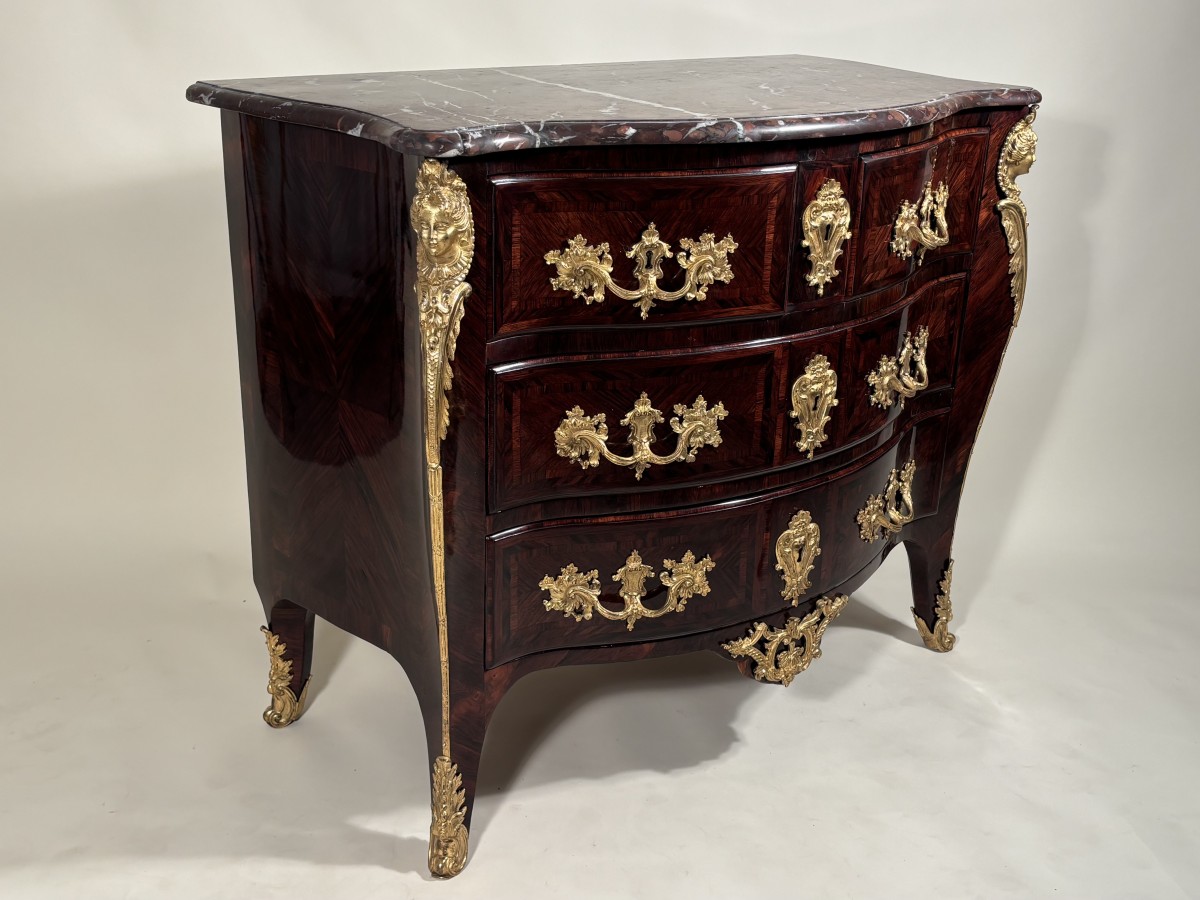
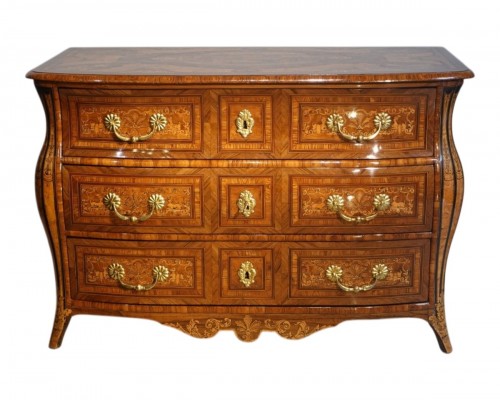
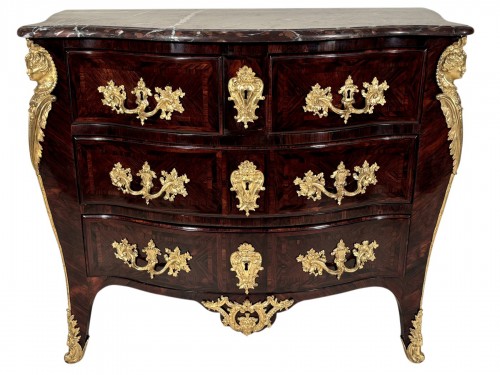
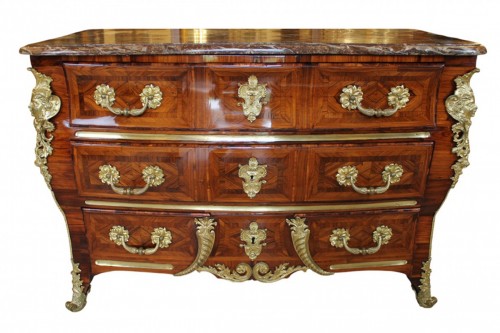
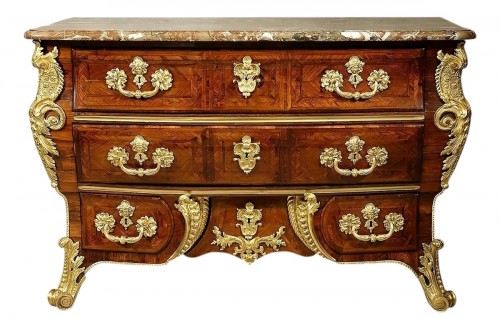
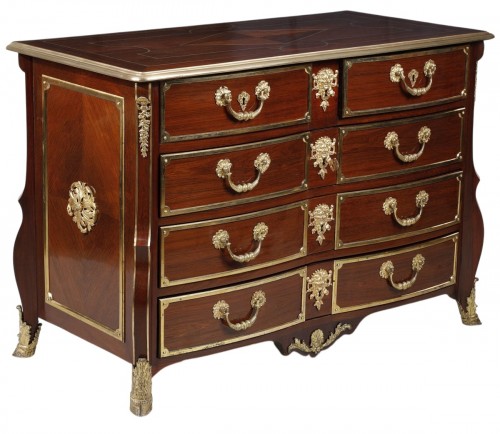
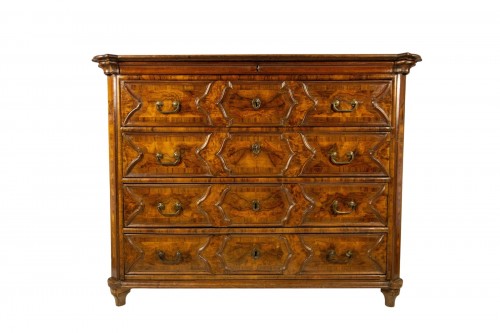
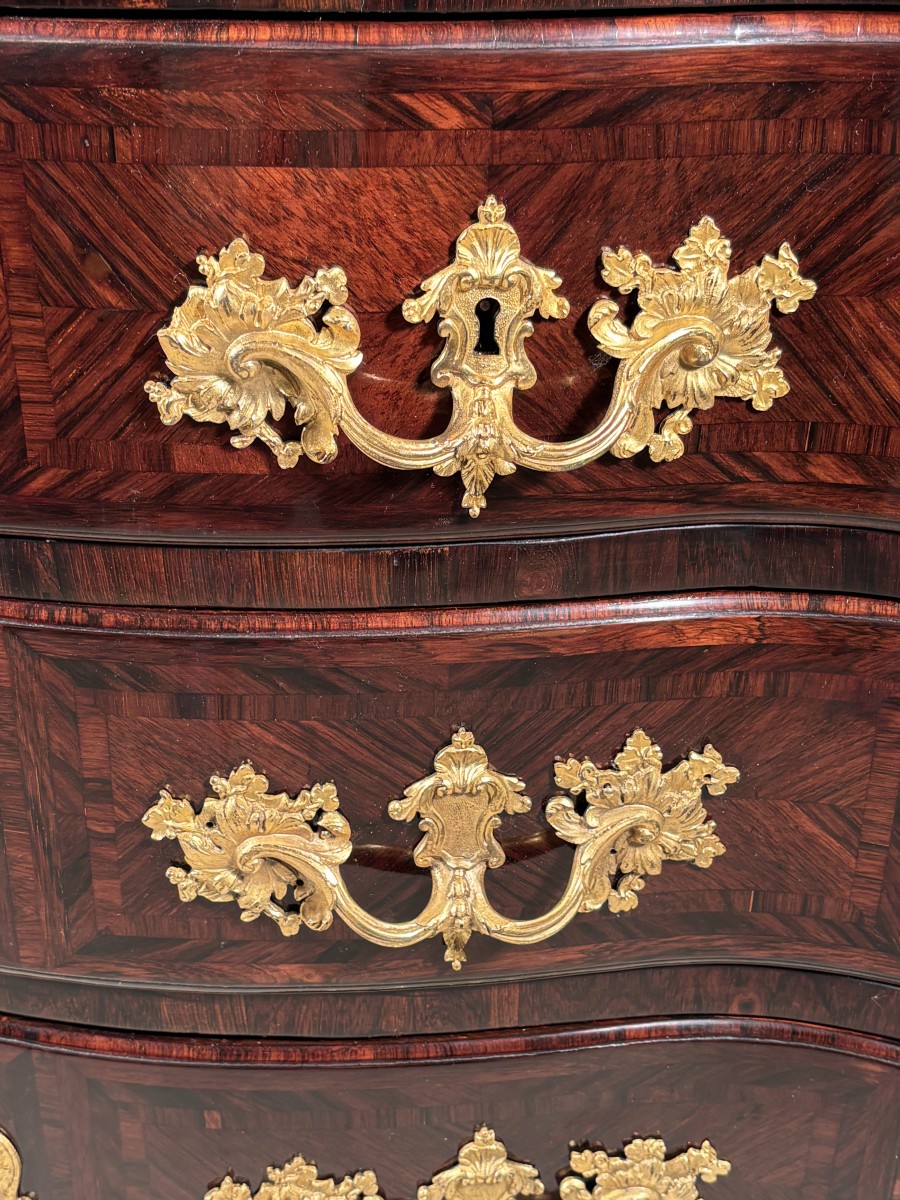
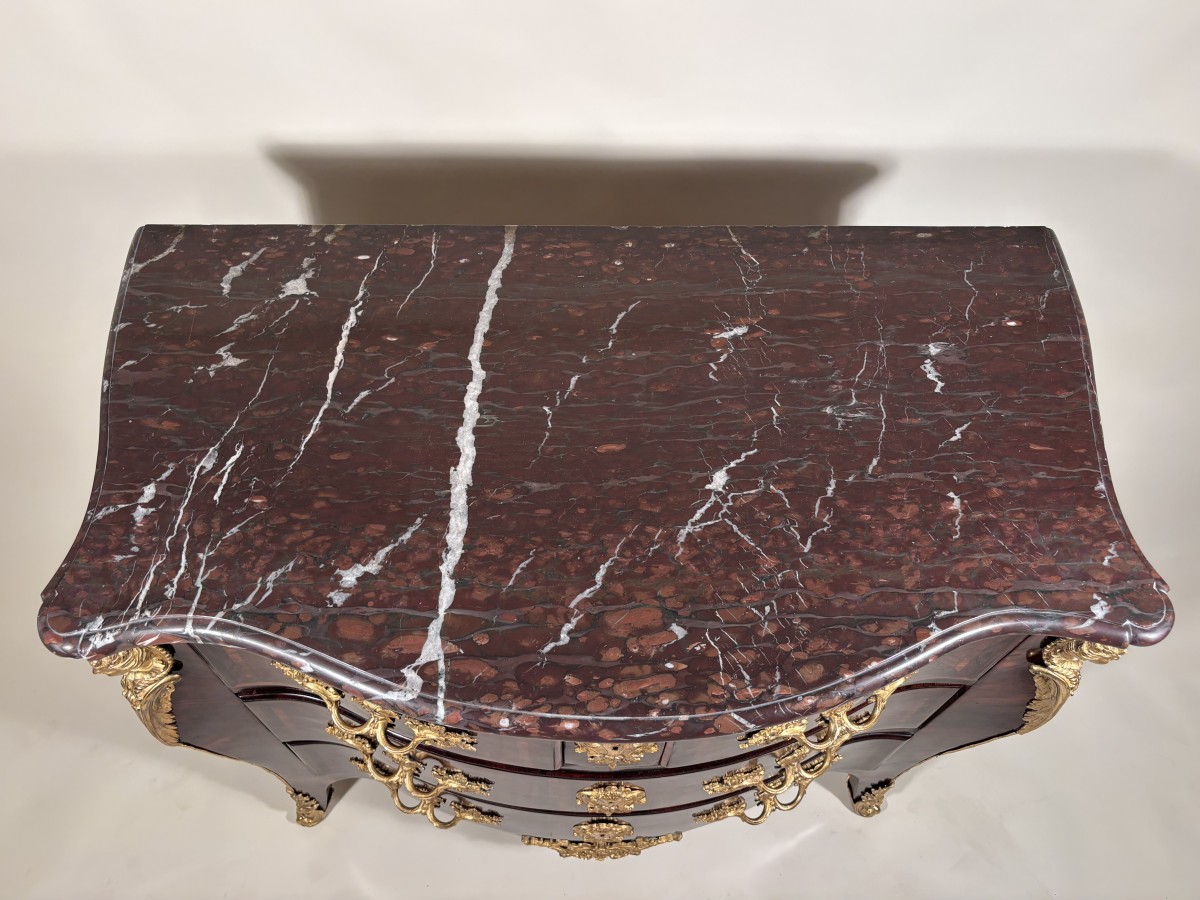
Beautiful small commode veneered in kingwood with a herringbone pattern.
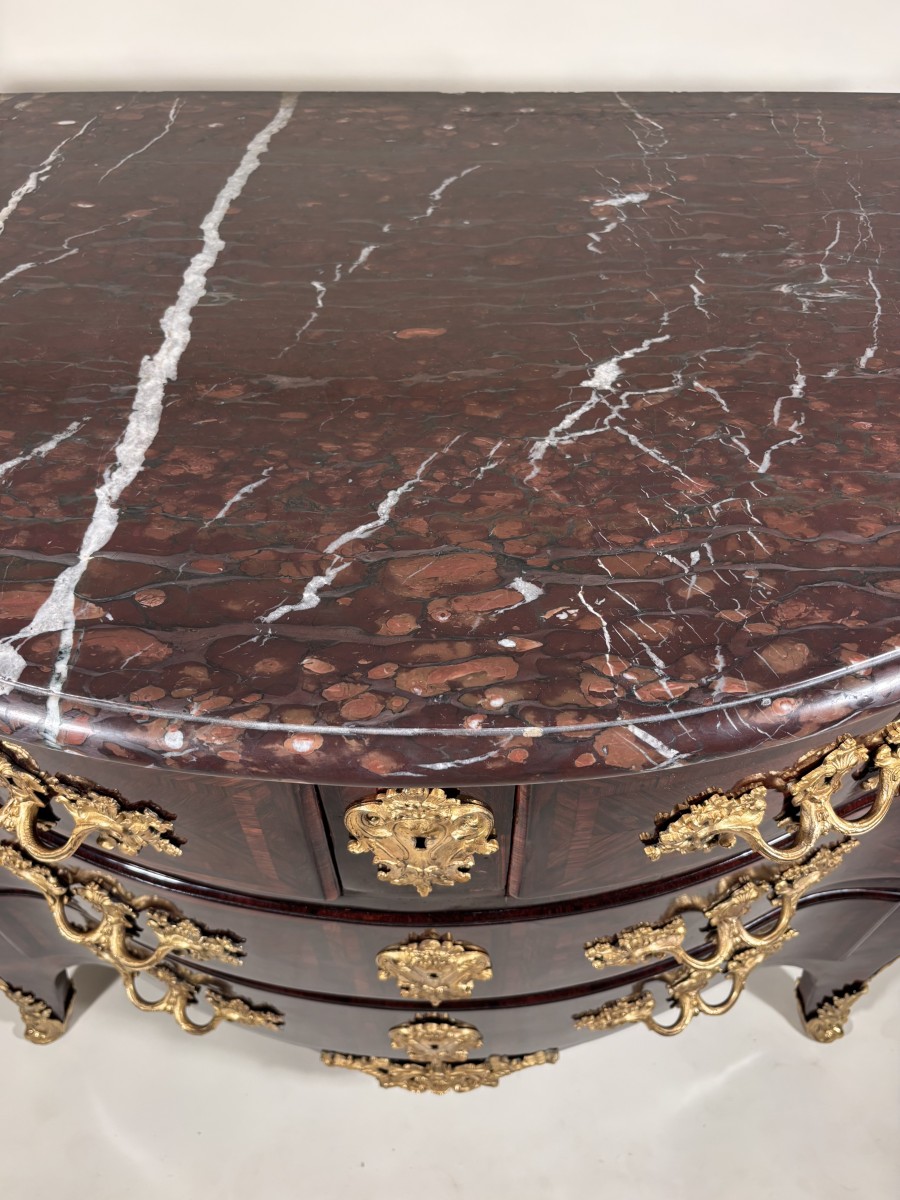
Curved on the front and sides, it features four drawers in three rows on the front.
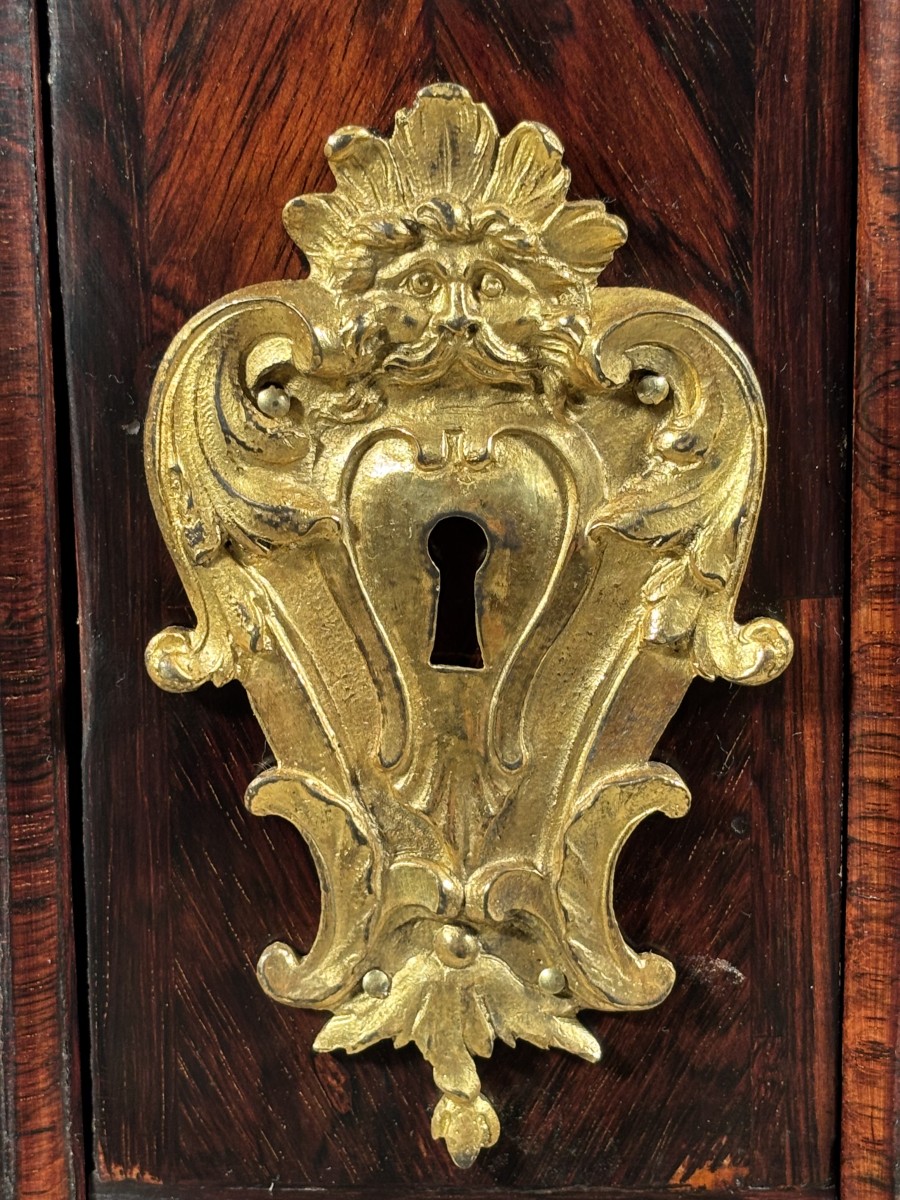
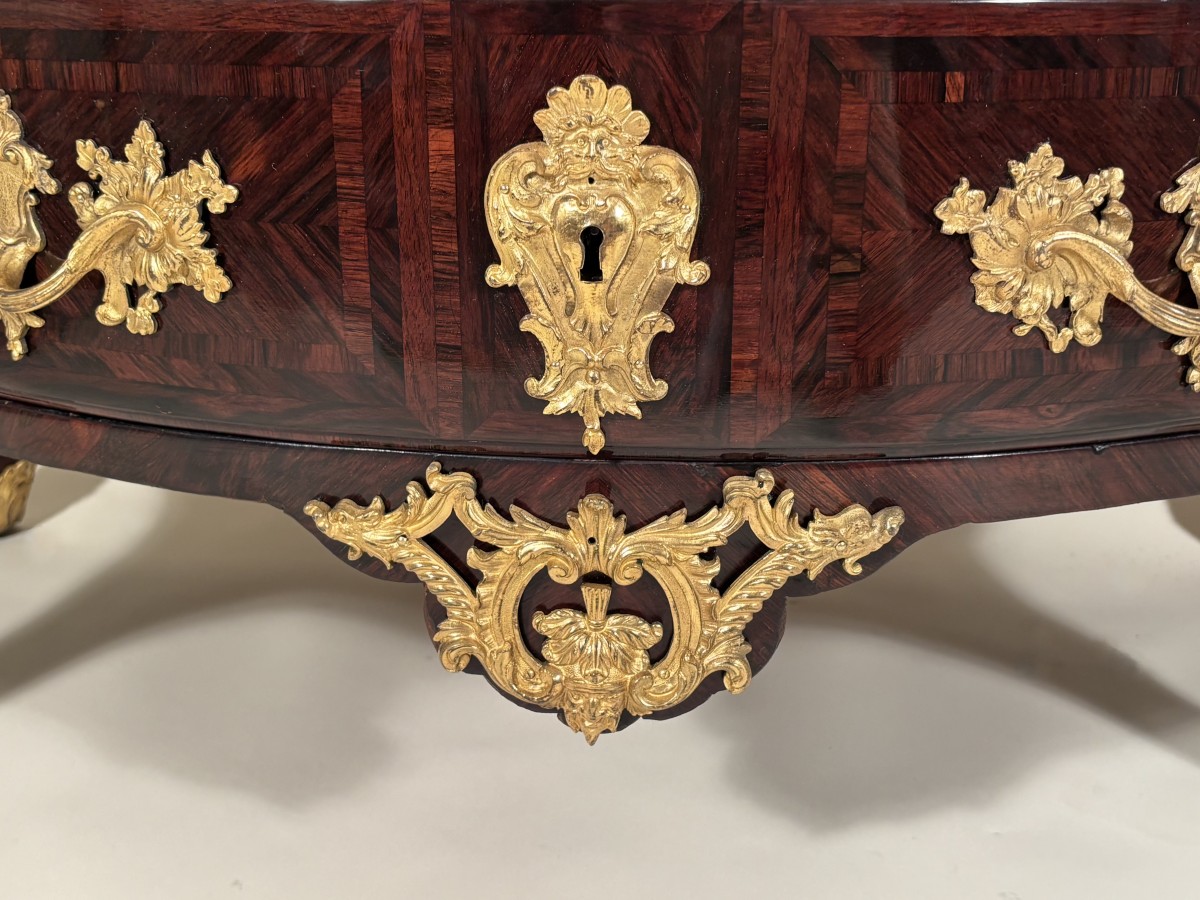
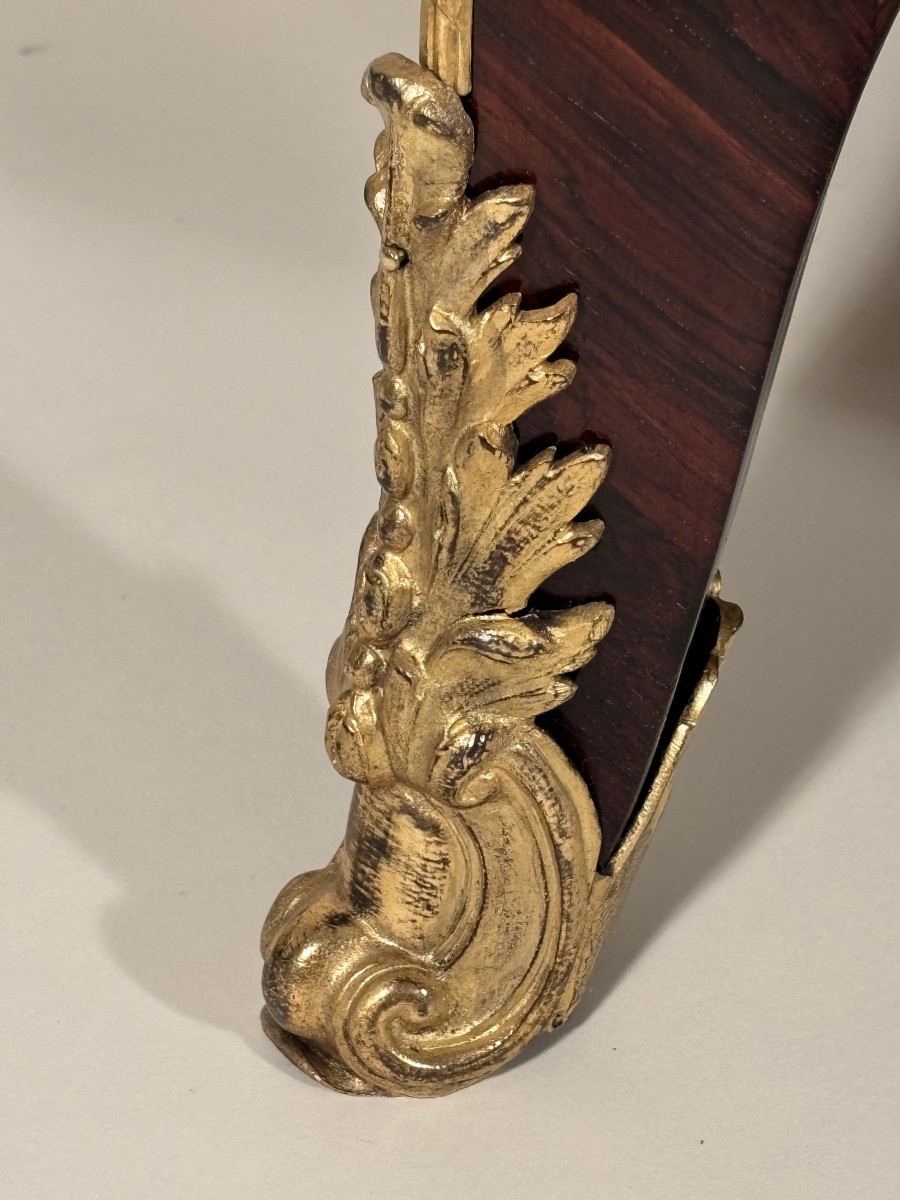
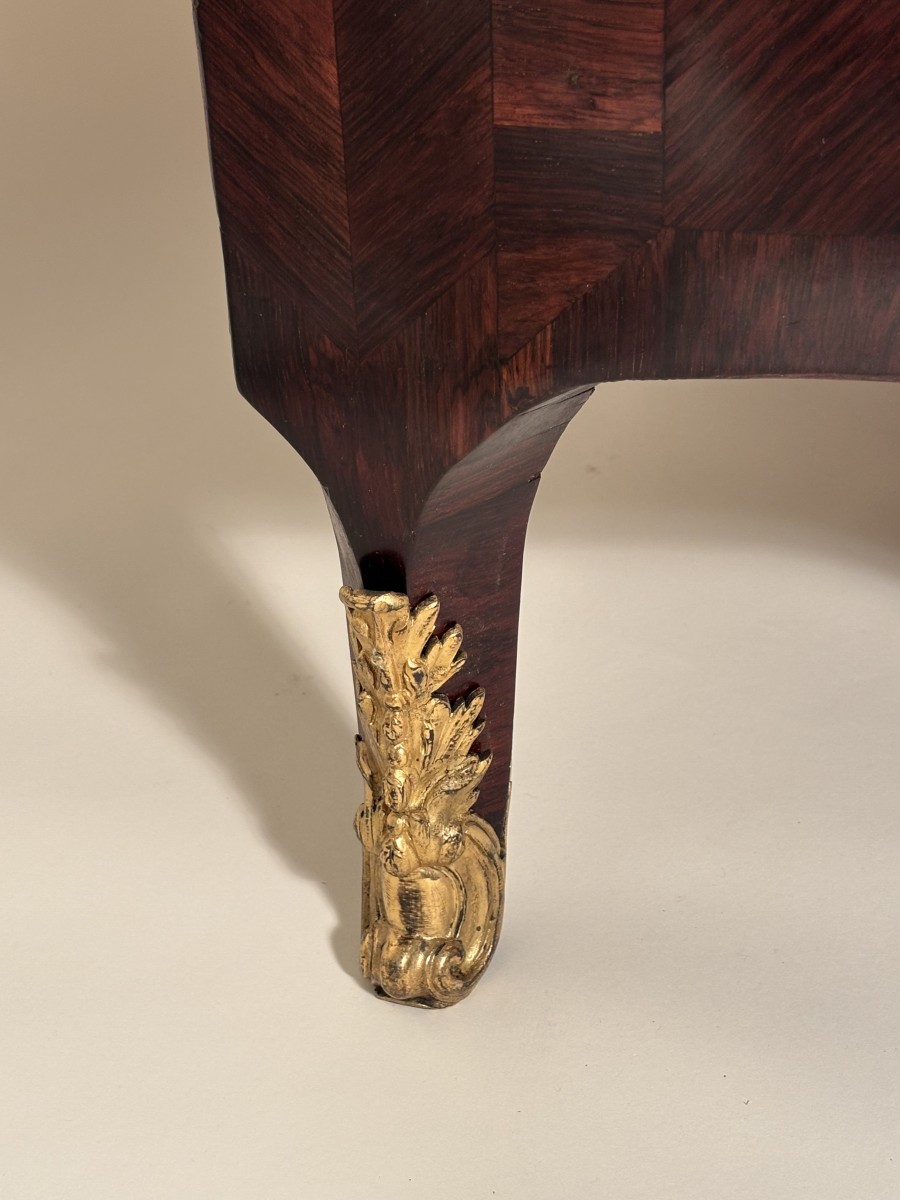
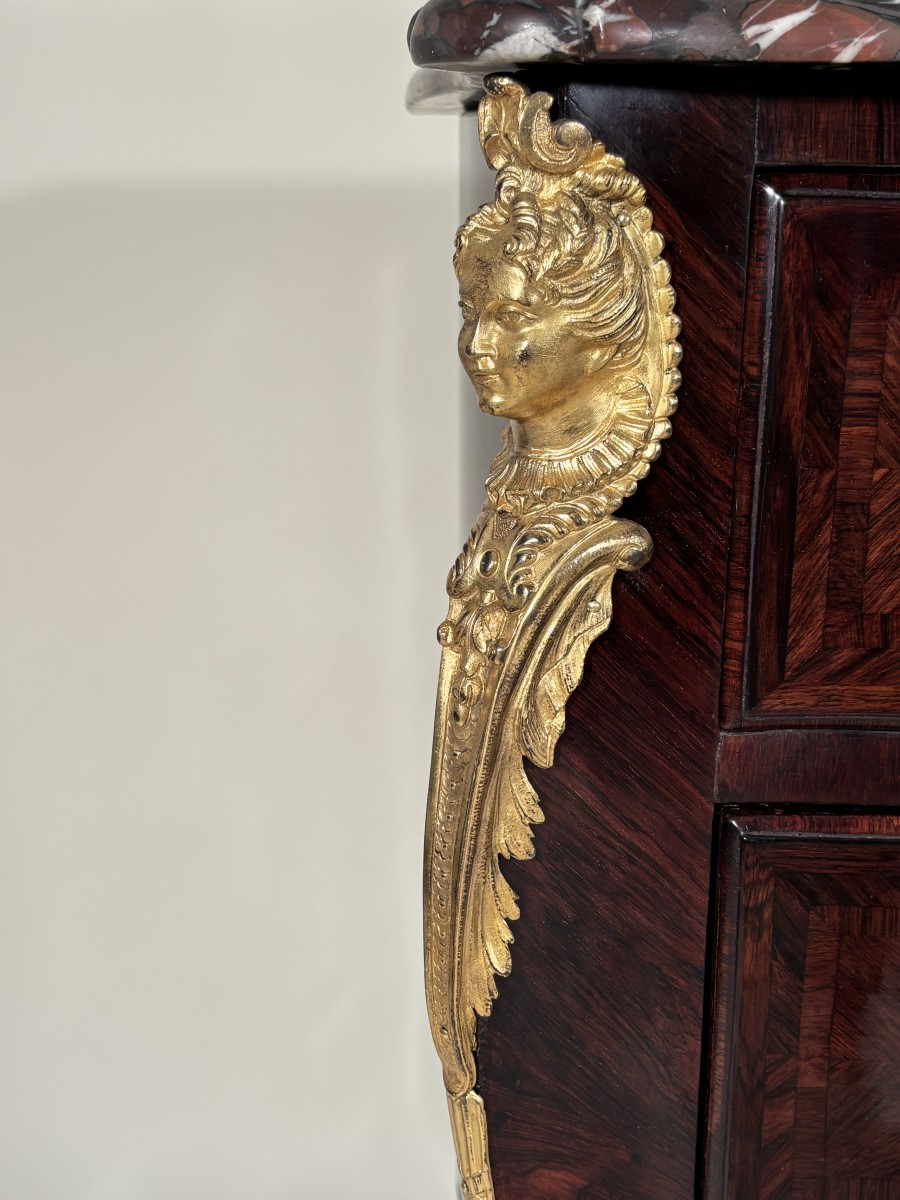
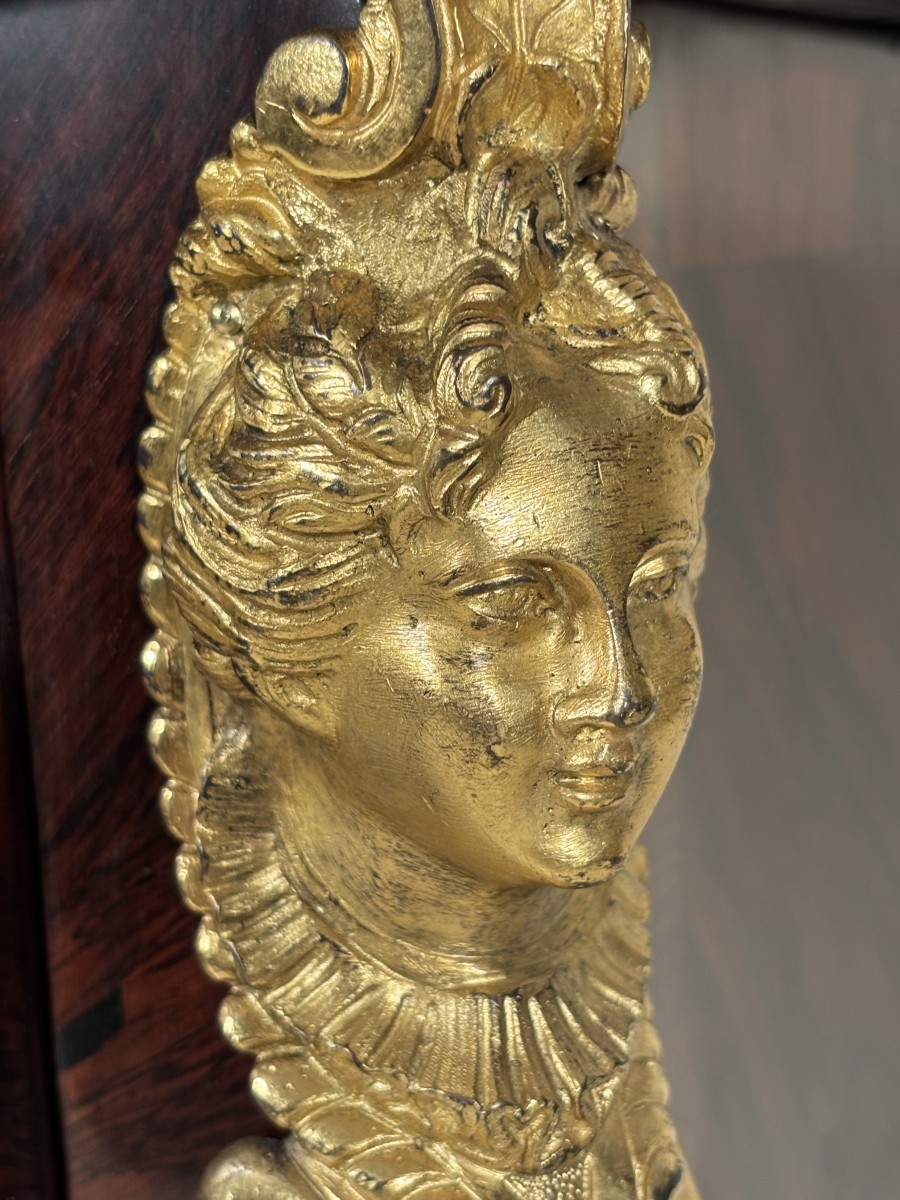
Beautiful original ornamentation in finely chased and mercury-gilded gilt bronze, including foliate handles, wide keyhole escutcheons, espagnolette mounts, foot finials, and a stylized acanthus leaf finial.
Constructed in softwood, with oak drawer interiors.
Very fine original top in Campan griotte marble.
Excellent condition; high-quality craftsmanship.
Attributed to Étienne Doirat, Paris, Regency period, circa 1720.
Dimensions:
Width: 98 cm; Depth: 56 cm; Height: 85 cm
Our opinion:
The commode we are presenting boasts clean lines and espagnolette-style drops, both characteristic of the work of one of the greatest cabinetmakers of the Regency period, Etienne Doirat. While it may appear quite understated at first glance, it is nonetheless a luxury piece, with precious wood veneer and impressive bronze mounts.
Its small size and perfect original condition make it a rather rare find on the market.
Born into a family of artisans—earthenware makers and carpenters—established in the Faubourg Saint-Antoine since the early 17th century, Etienne Doirat was the son of mason Joseph Doirat and Michelle Ferlu, sister of Pierre-Isaac Ferlu, a master merchant and cabinetmaker. His younger brother, Pierre-Michel, would also follow in his footsteps as a master cabinetmaker. Born in 1675 and died in 1732 in Paris, Étienne Doirat earned his master craftsman's certificate in the early 18th century. He worked throughout his life on the rue du Faubourg Saint-Antoine for a wealthy clientele, both French and foreign.
Often possessing a sublime character, his furniture is predominantly in the Regency style. Commodes constitute the bulk of his production. An inventory drawn up on July 14, 1732, lists a large number of them, described as "tomb-shaped" or "Regency-style," but also includes some large bookcases, wardrobes, secretaries, regulators, and various models of gaming or parlor tables.
These pieces are frequently made of amaranth or violet wood, veneered with leaves or inlaid with grid patterns. Doirat made extensive use of high-quality bronzes, crafted by collaborating founders and chasers. Traditional elements such as the mascarons from the time of Louis XIV are juxtaposed with Regency-style busts of women or espagnolettes, as well as various motifs in a typically Rococo style. He sometimes adorned the front of his commodes with drawers without crossbars with a large bronze cartouche, a motif widely adopted by his successors. In this area, Doirat proved to be one of the great innovators of decorative formulas and techniques, hallmarks of Parisian cabinetmaking during the reign of Louis XV.