Offered by Franck Baptiste Provence
REQUEST INFORMATION
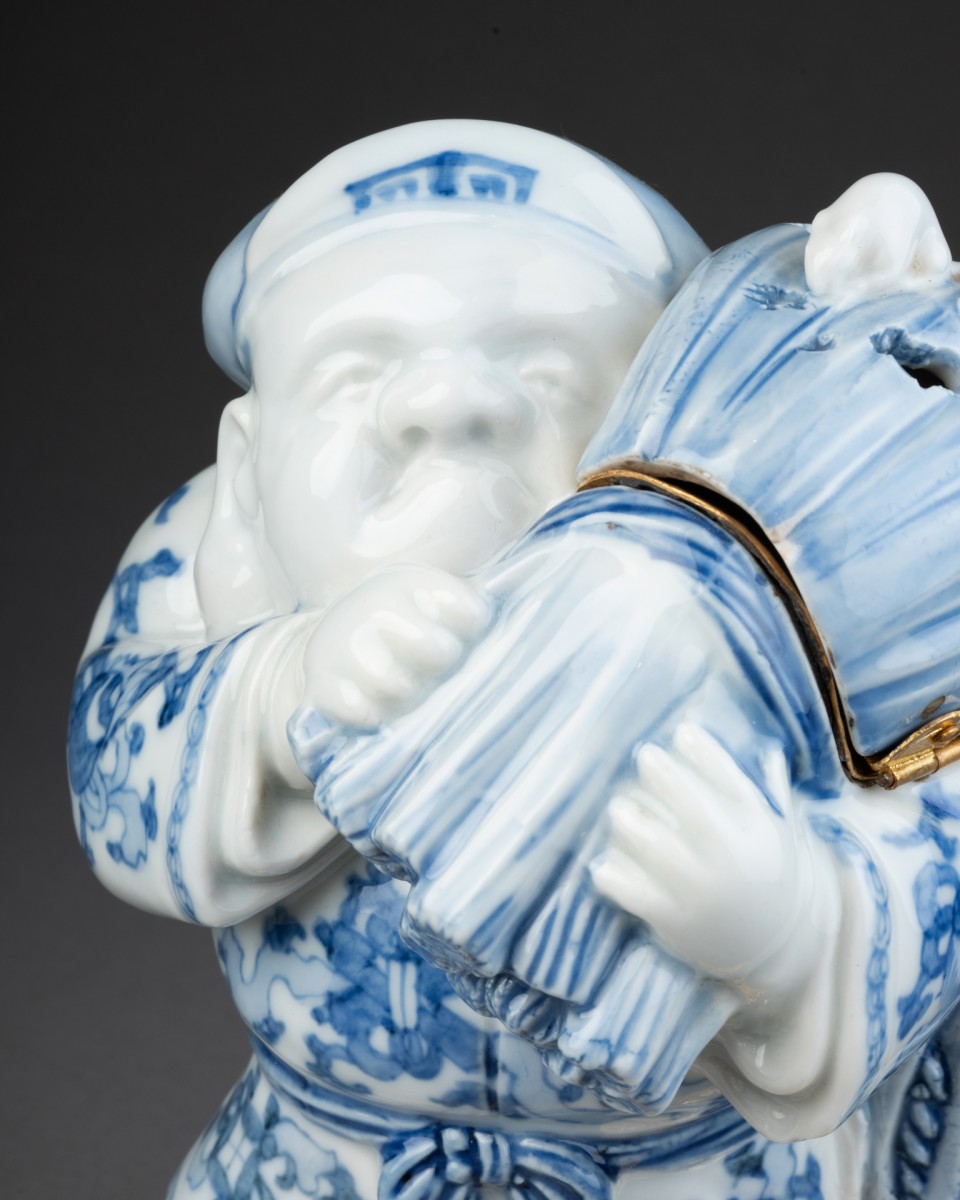
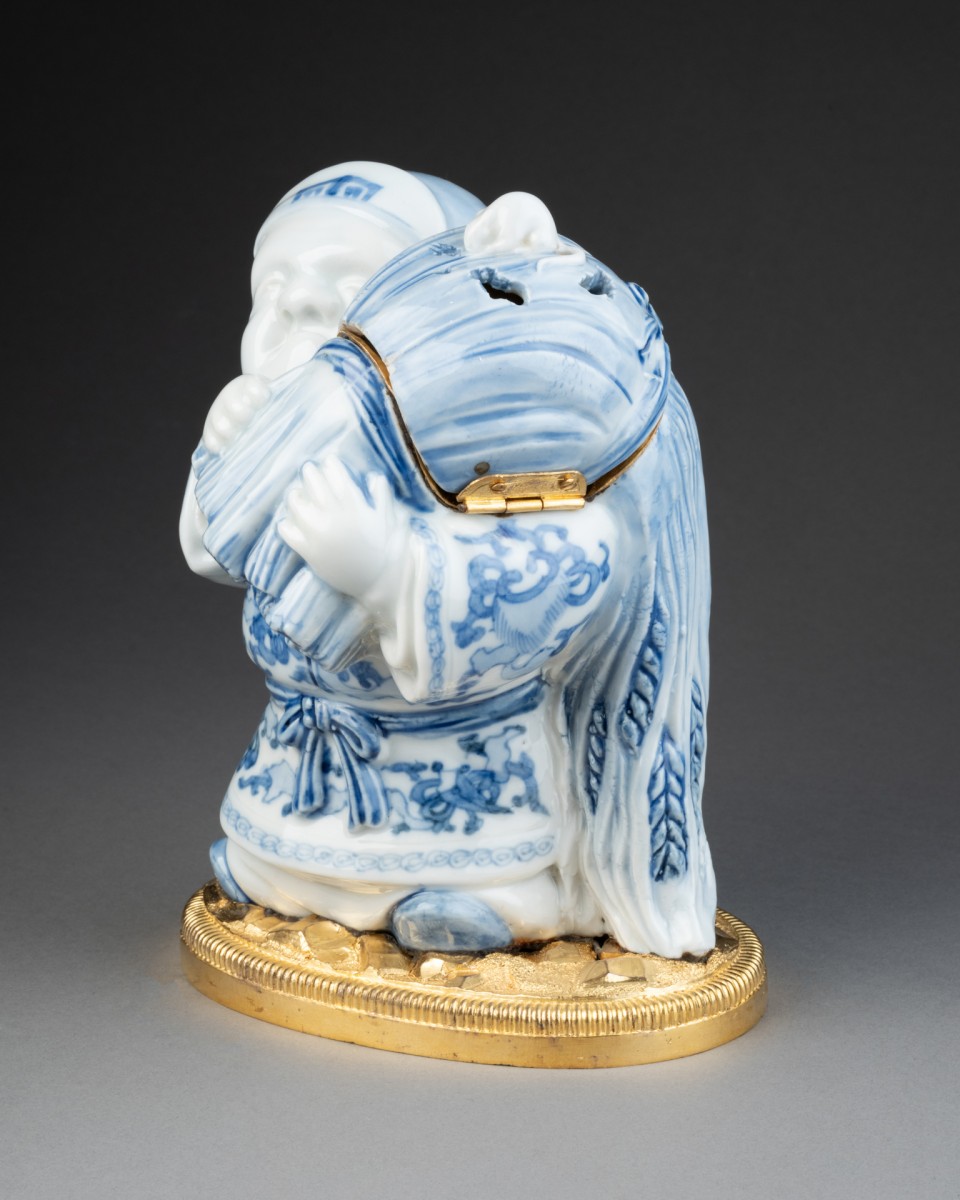
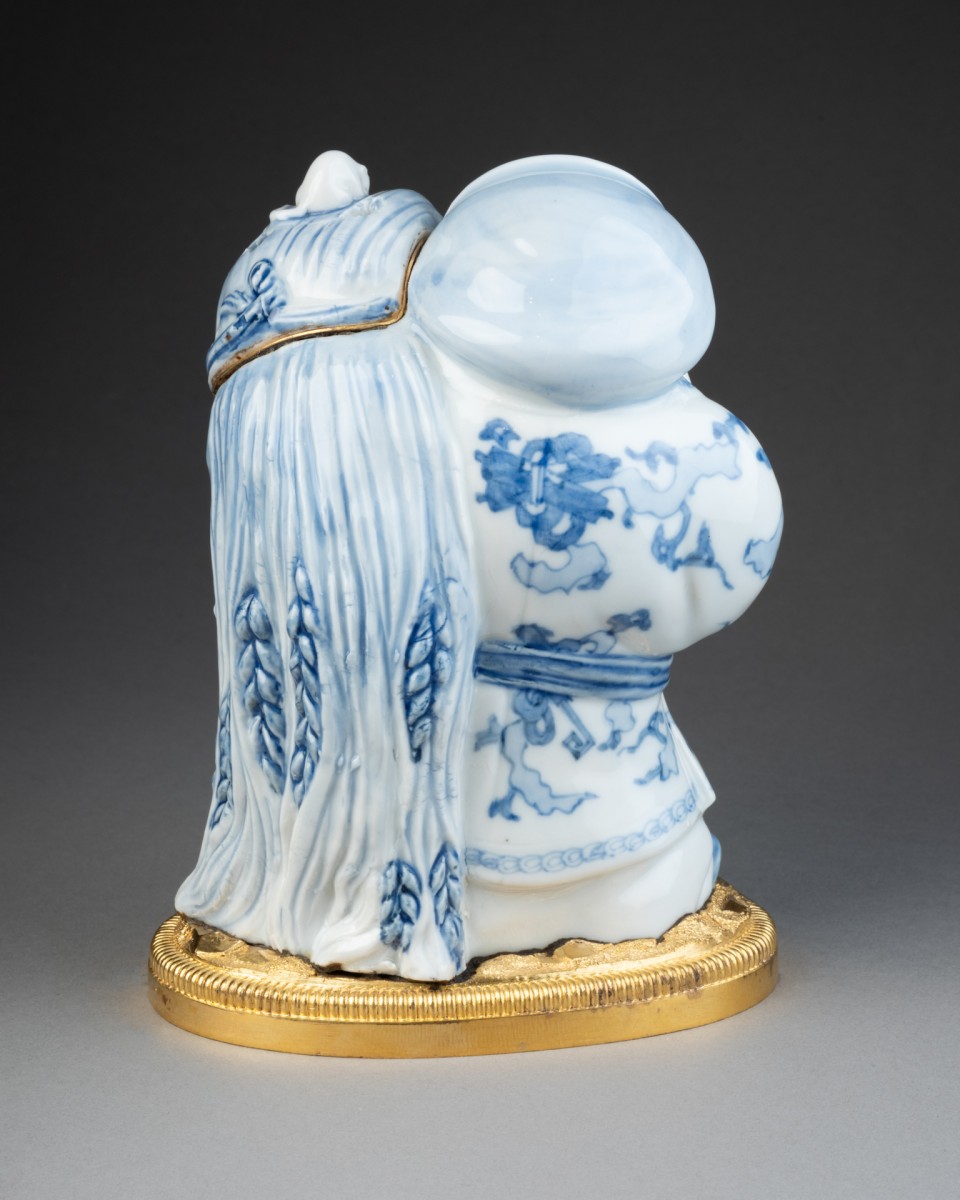

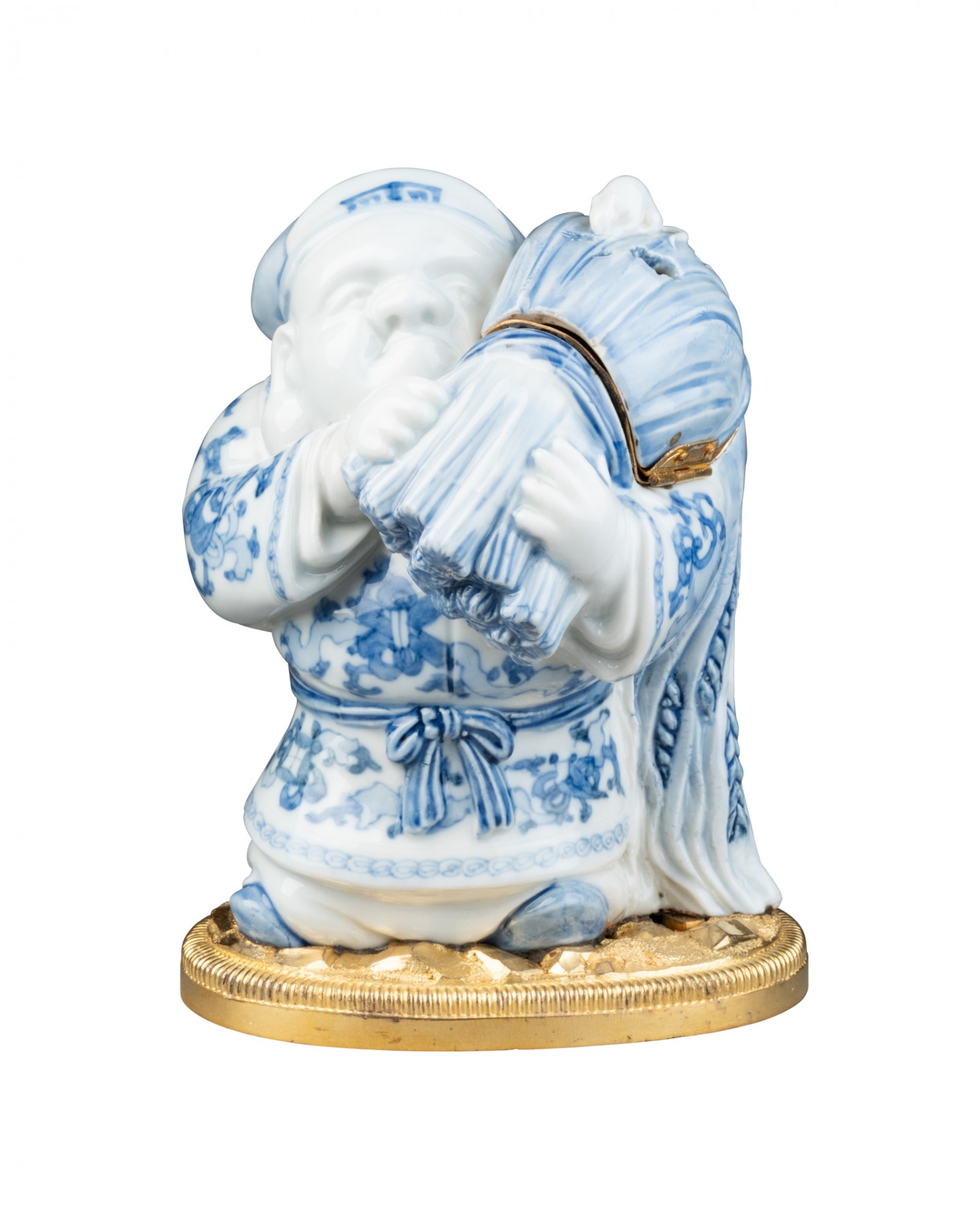
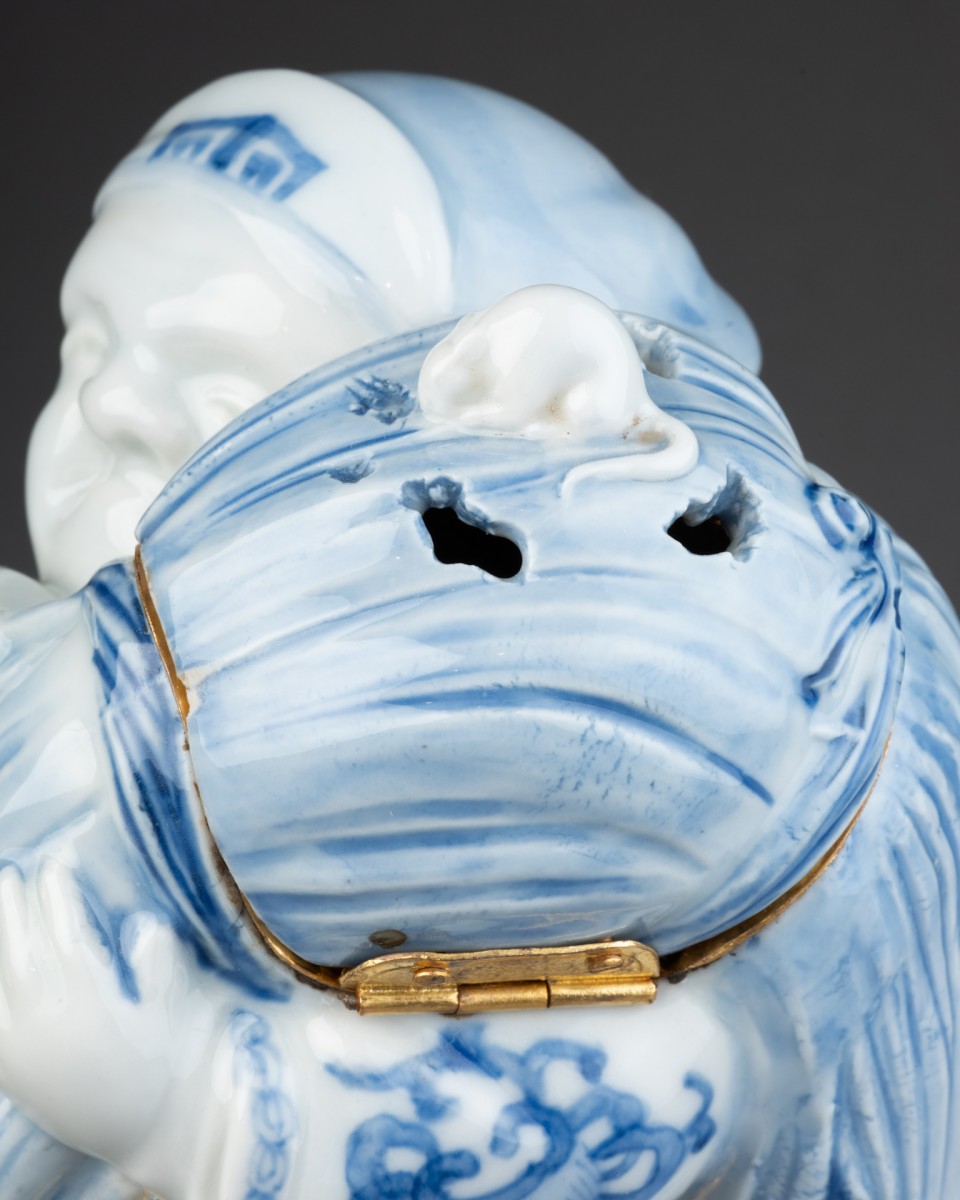
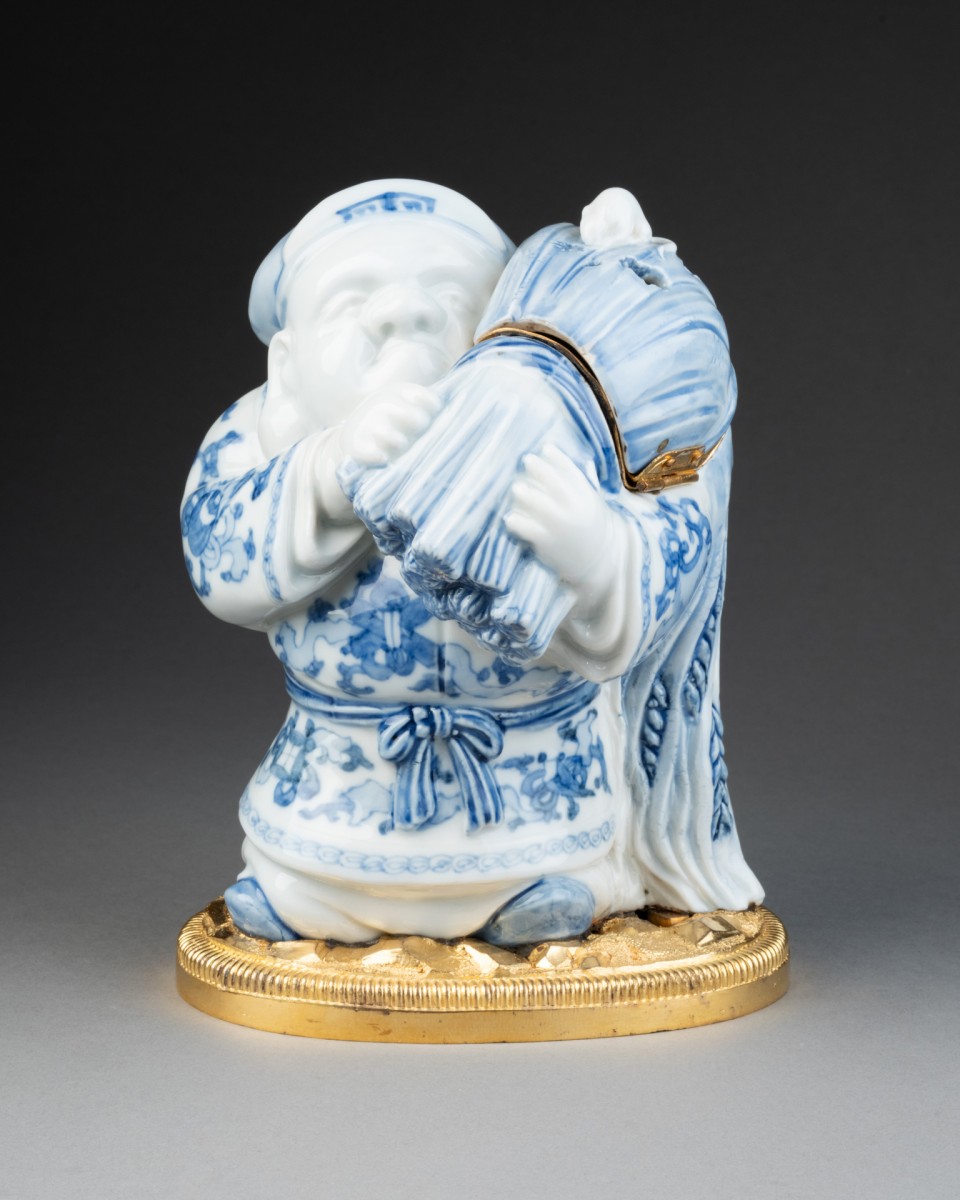
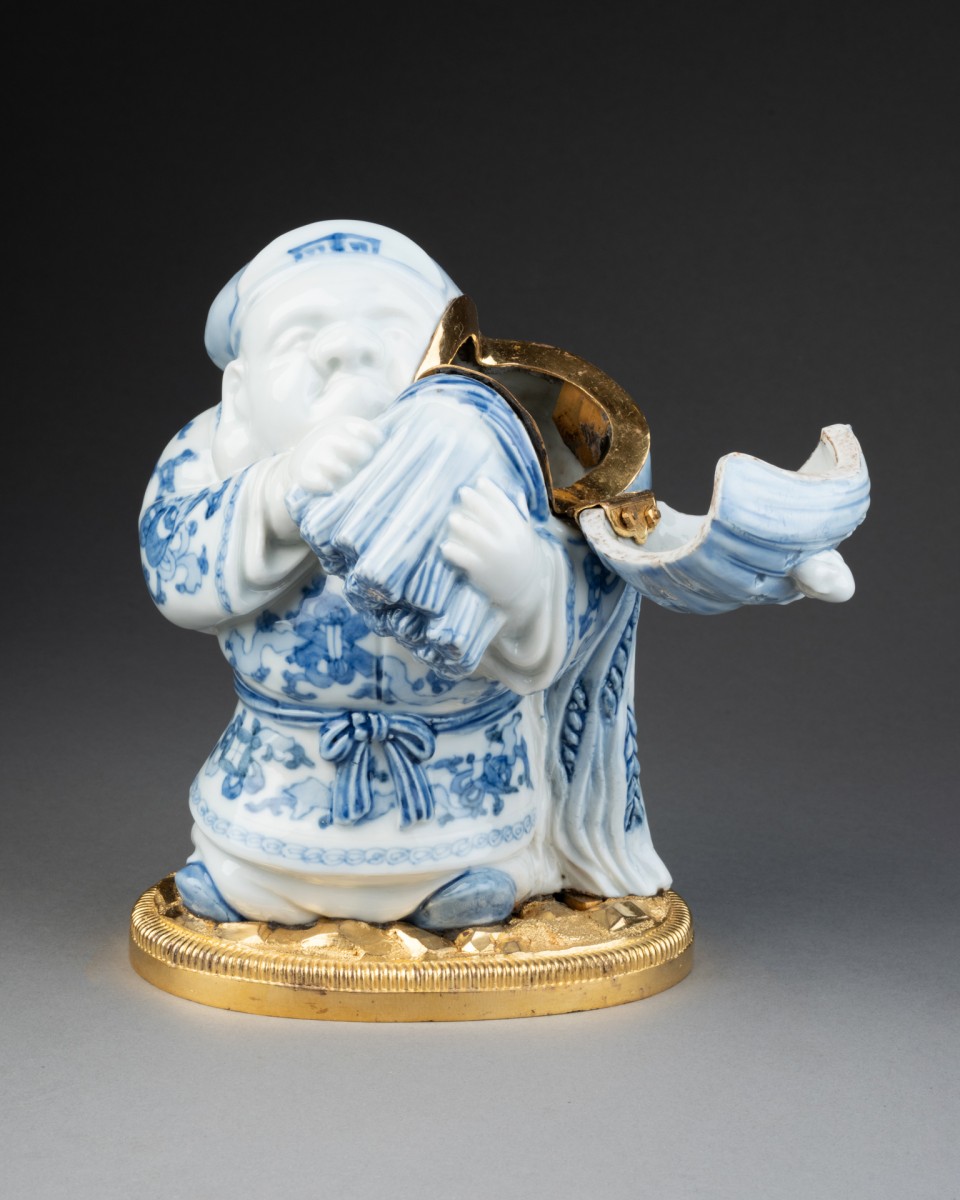
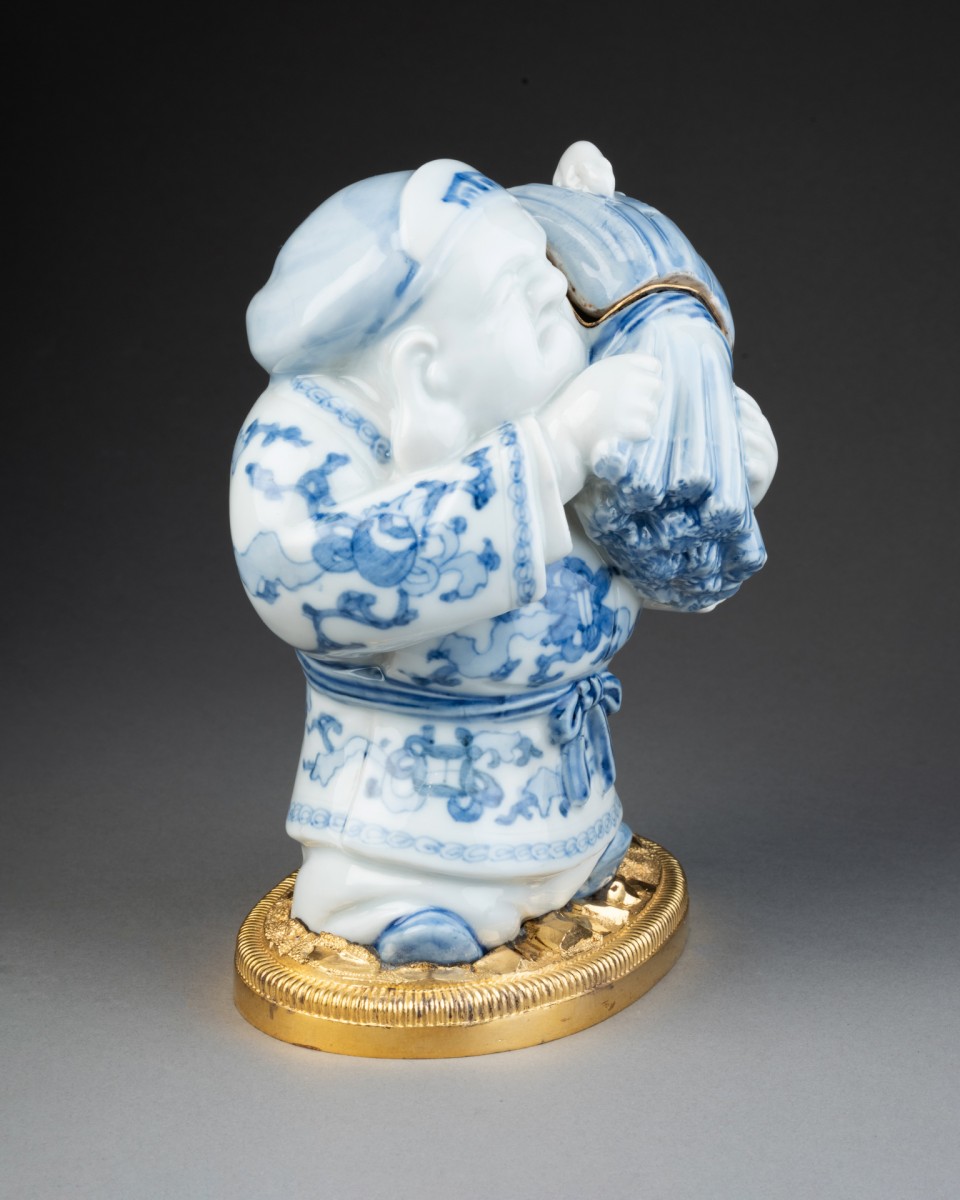
White porcelain figure depicting an elderly Eastern man with long, pendulous ears, clad in voluminous robes and carrying a large sheaf of wheat on his shoulder. Beside him, a mouse is shown climbing the stalks of grain.
The piece features delicate underglaze blue decoration highlighting specific details of the costume and composition. Originally designed as an incense burner, the object was converted into a potpourri vase through the addition of a gilt-bronze mount.
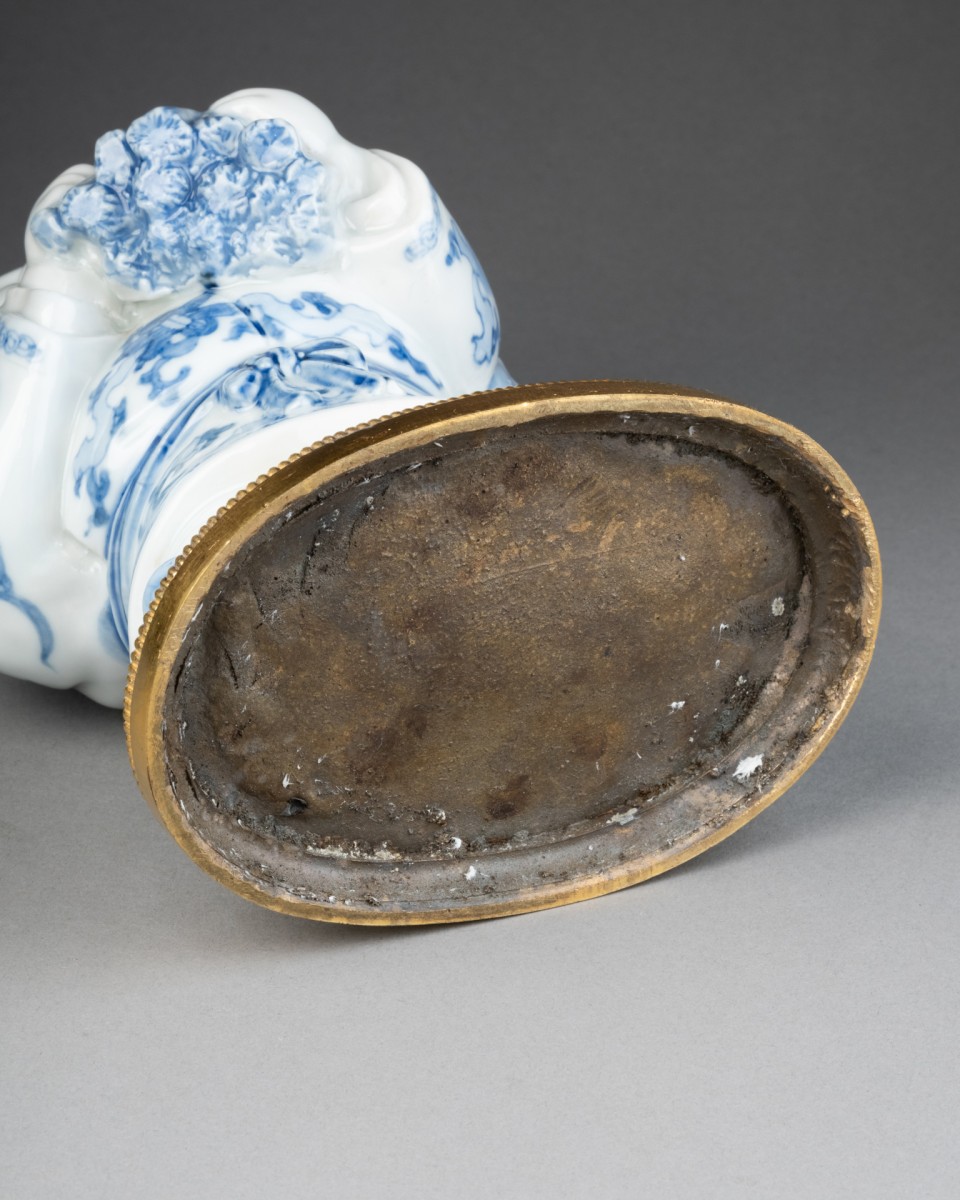
Fine mount of mercury-gilt, intricately chased bronze, custom-made to perfectly follow the contours of the porcelain, particularly the lid. The mound forming the base features exceptionally refined chasing that mimics natural rock formations and stony terrain, in the style of Eastern landscapes.
Porcelain: Japan, Nagasaki, Hirado kilns, Edo period (late 18th – early 19th century).
The underside of the lid bears three underglaze blue marks in the form of sinograms.
Bronze mount: Paris, circa 1840–1850.
Excellent condition; high-quality chasing and mercury gilding.
Dimensions: Height: 18 cm; Width: 12 cm.
Our assessment: This sculpture embodies all the qualities of the finest Hirado wares, featuring a body of remarkable, almost ivory-like whiteness and elegant, finely executed underglaze blue decoration. The subject is rich in auspicious symbolism: the long-eared elder evokes wisdom, prosperity, and longevity, while the sheaf of wheat on his shoulder and the mouse directly signify abundance and fertility. The inclusion of the mouse is particularly interesting, as it is traditionally associated with grain stores and, by extension, accumulated wealth. The quality of the Parisian mount—particularly the chasing of the rocky mound, which mimics natural formations—attests to the refinement of the great 19th-century bronze workshops. Such exquisite Japanese porcelain was highly sought after in Europe during the late 18th and 19th centuries and was frequently mounted in Paris by renowned firms such as L'Escalier de Cristal.