Offered by Richard Redding Antiques
REQUEST INFORMATION

Leading antique and fine art gallery, specialises in the finest French clocks.
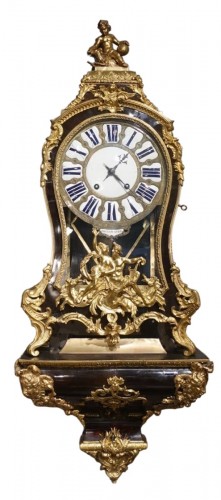
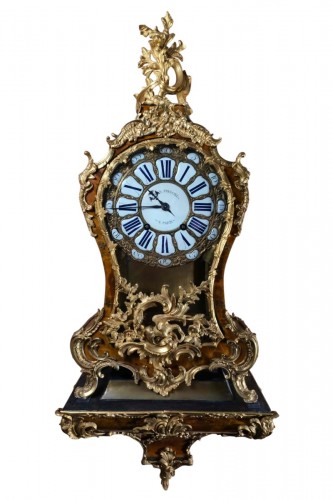
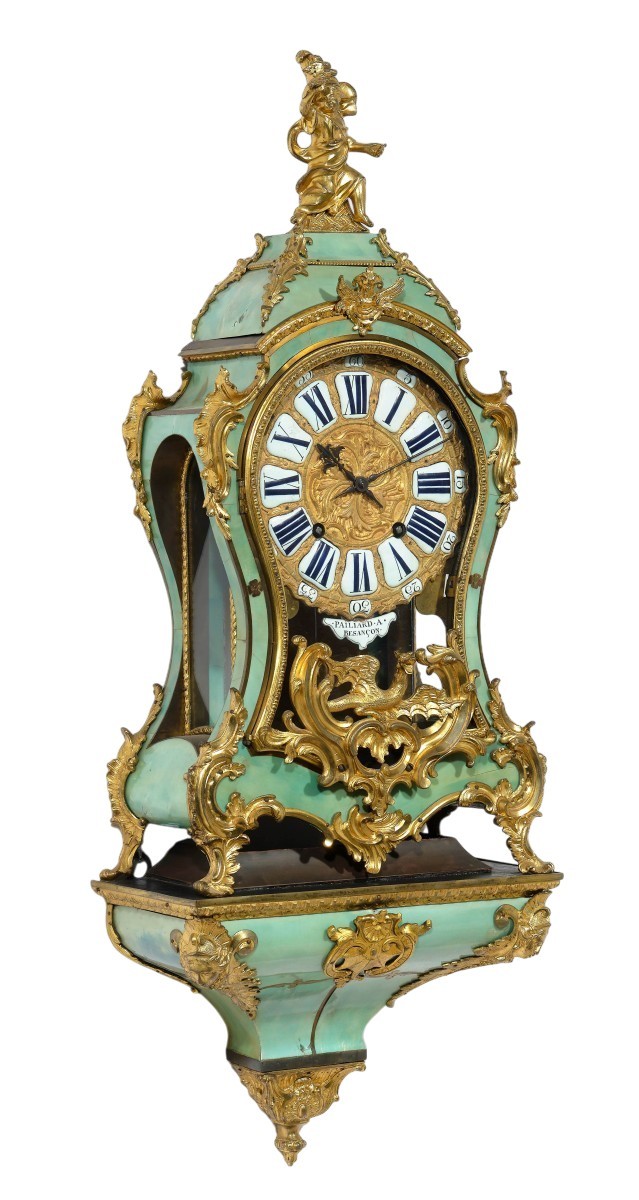
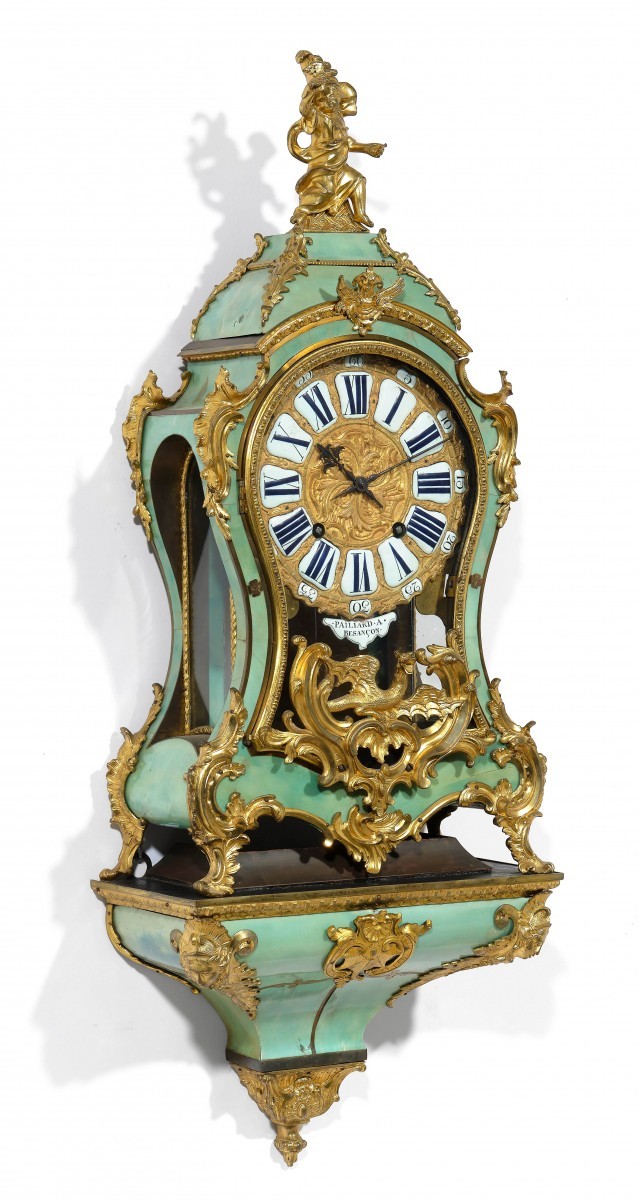
An exceptional example of French Rococo horological craftsmanship, this striking bracket clock and matching wall console was produced by the distinguished Besançon maker Paillard, working in the great French clockmaking centre of Besançon — the nation's premier horological city. The piece dates to the height of the Louis XV period, when the Rococo taste for exuberant naturalistic ornament and vivid colour reached its creative apex.
Date: circa 1740
The shaped bombé case is veneered in panels of green-dyed horn — a refined and relatively uncommon casing material of the period, prized for its translucent, jewel-like surface — richly adorned throughout with finely cast and chased gilt-bronze mounts. The scrolling acanthus foliage, asymmetric rocaille cartouches and foliate sprays are characteristic of the finest ormolu work of the mid-eighteenth century. The case is surmounted by an animated gilt-bronze finial modelling a seated allegorical figure — almost certainly a personification of Time — set above a beaded cornice and further acanthus scrollwork. The flanking mounts to the waist and base echo the vigorous naturalistic idiom of the period.
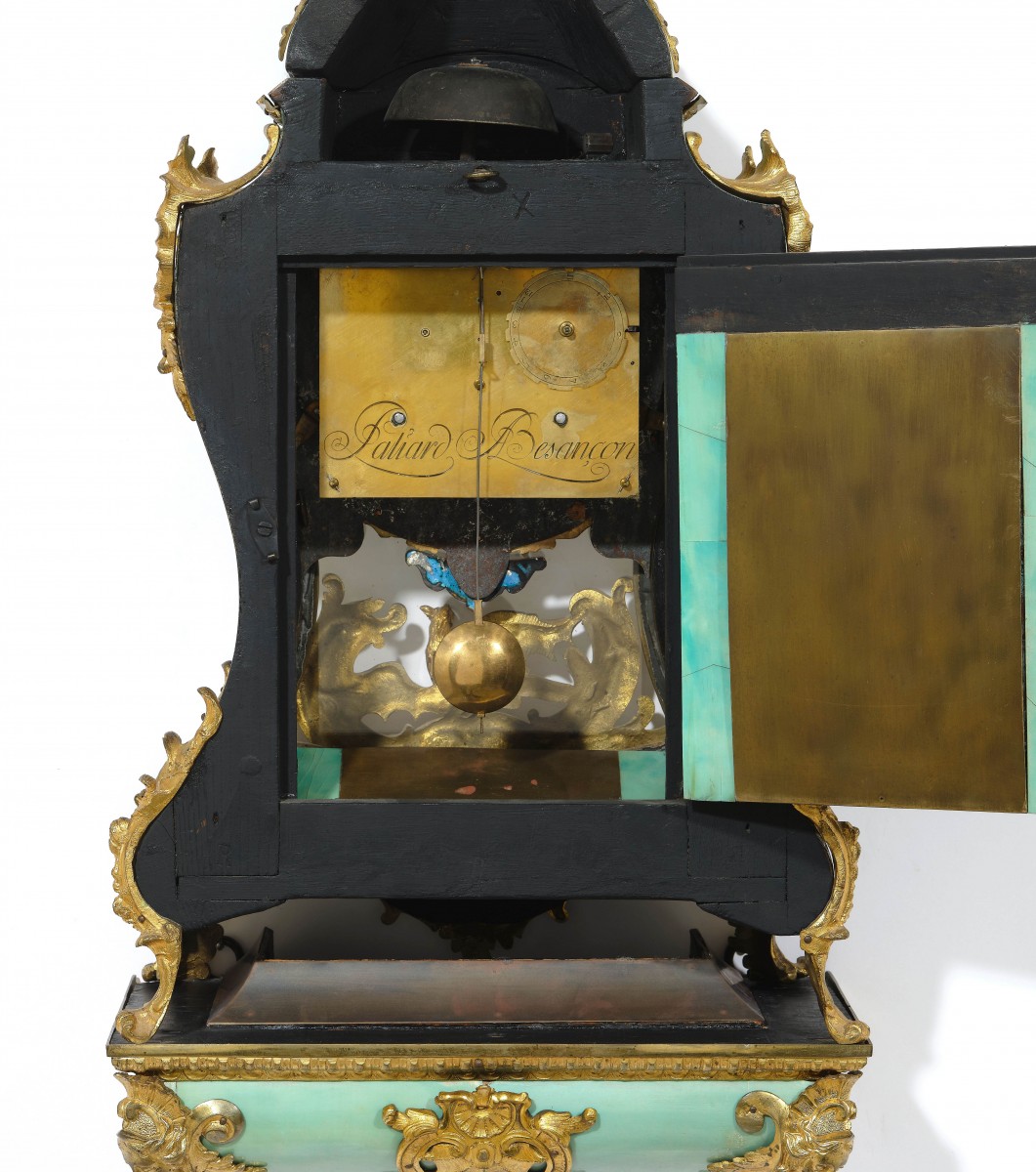
The arched dial features twelve white enamel cartouche-form plaques bearing Roman hour numerals in cobalt blue, arranged around a central chased and gilt dial plate of exceptional quality, richly engraved with foliate and figural ornament. Beneath the chapter ring, a white enamel reserve is signed Paillard A Besançon. The original blued-steel hands are present. The movement backplate, likewise engraved in a flowing italic script Paillard Besançon, is visible through the rear glazed door; it carries a gilt-brass pendulum bob of spherical form suspended from an ornate foliate pendulum cock. A bell strike mechanism is fitted, with the bell housed above the movement beneath the bonnet.
Literature
On the maker and Besançon clockmaking:
Tardy, Dictionnaire des horlogers français, 2 vols., Paris, 1971–72 — the standard biographical reference for French clockmakers, listing over 23,000 names and marks; the entry for Paillard (variant spelling: Paliard) of Besançon records the workshop among the pre-industrial master clockmakers active in the city prior to the Swiss influx of 1793.
Histoire de l'horlogerie bisontine, Musée du Temps, Besançon — the municipal museum dedicated to the history of Besançon timekeeping, whose collections document the city's early workshops including those of the Paillard/Paliard family.
Wikipedia, History of clockmaking in Besançon — records that pre-revolutionary Besançon clockmaking was carried out by small master workshops including Paliard, Lareche, Joffroy, Perrot and Perron, regarded as the finest craftsmen of their time.
On Rococo ormolu and gilt-bronze mounts:
Encyclopædia Britannica, Ormolu — notes that ormolu mountings reached their highest artistic development in France, with prominent fondeurs-ciseleurs such as Jacques Caffieri (1678–1755) producing work of near-jewellery refinement for clock cases and furniture.
Gude & Meis, The French Ormolu Mantel Clock: Production and Technique in the 18th and 19th Century, Amsterdam — a detailed technical study of guild structures, lost-wax casting, chasing and fire-gilding processes as applied to French clock cases of the period.
On green-dyed horn cases:
Comparable examples of Louis XV ormolu-mounted green stained horn clock cases are recorded in the market literature, including a closely related cartel clock signed Faucheur à Paris, circa 1750 (Cédric Dupont Antiques, New York), demonstrating that this distinctive casing material was employed by leading Parisian and provincial makers alike during the same decade.