Offered by Franck Baptiste Provence
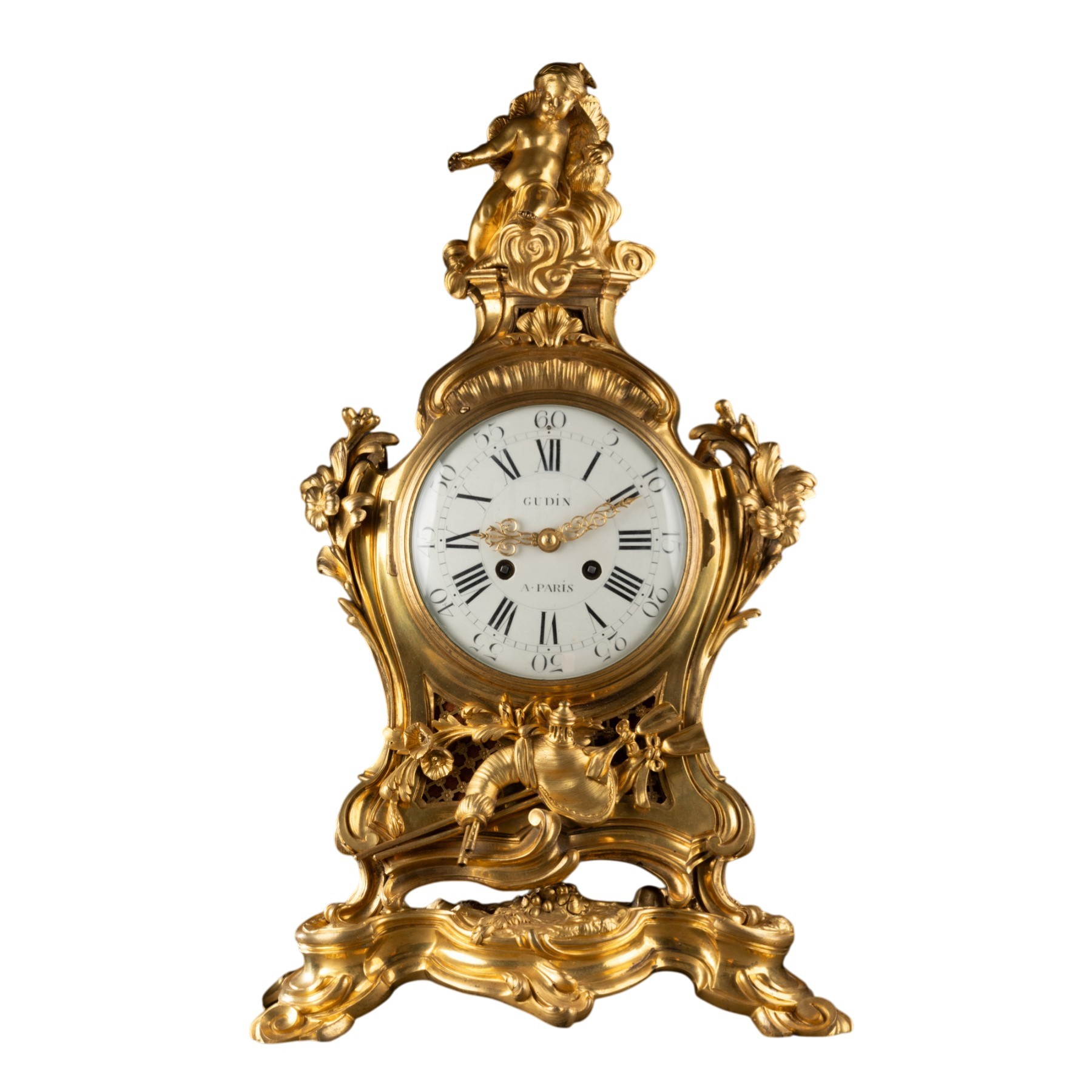
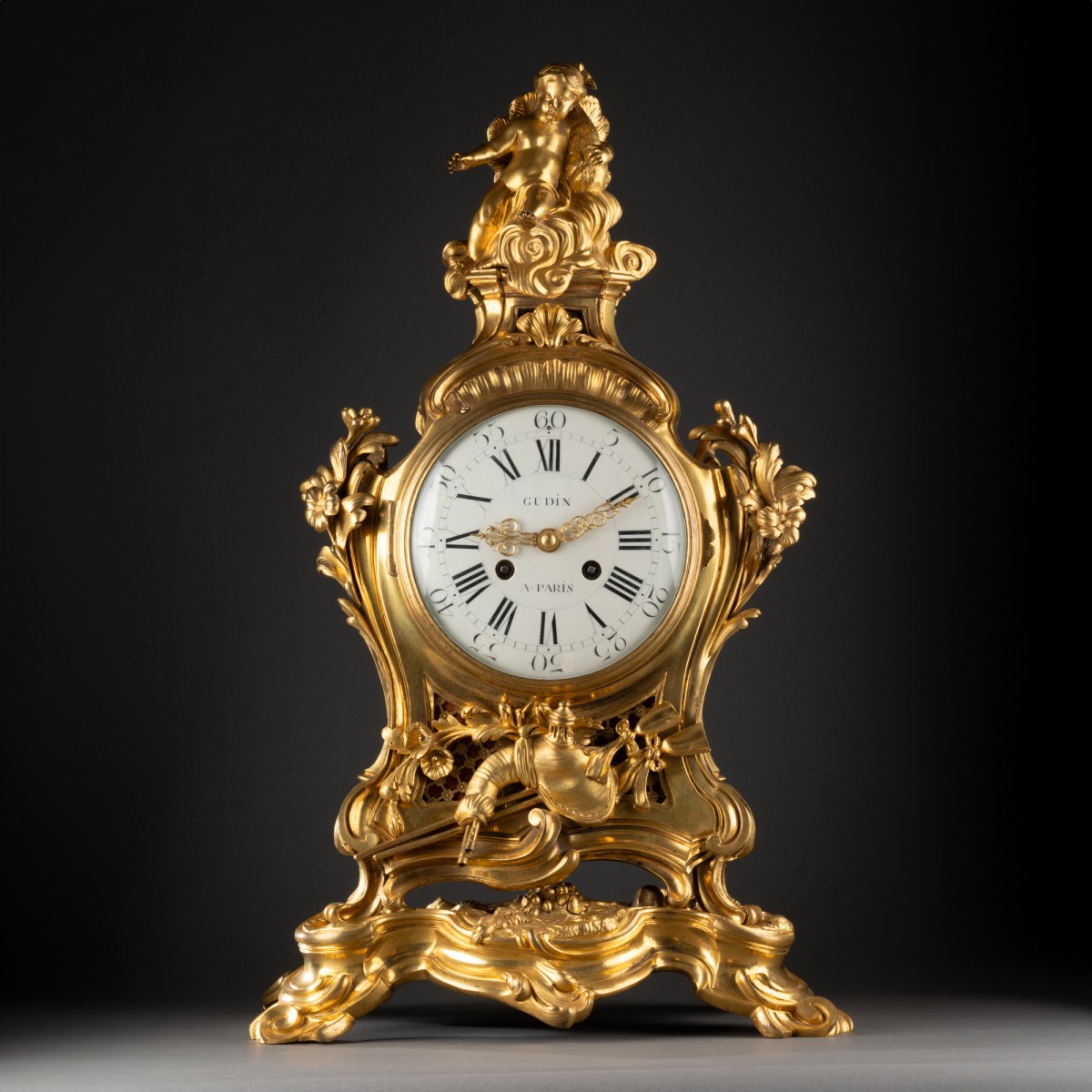

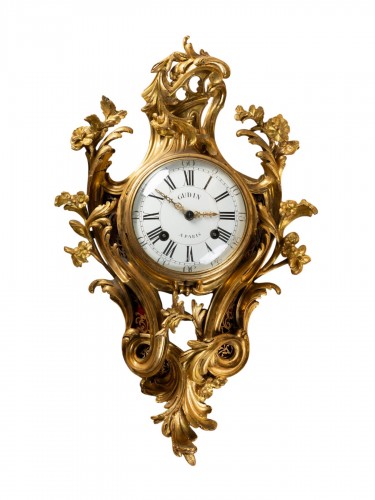
A rare mantel clock in finely chased and mercury-gilded bronze.
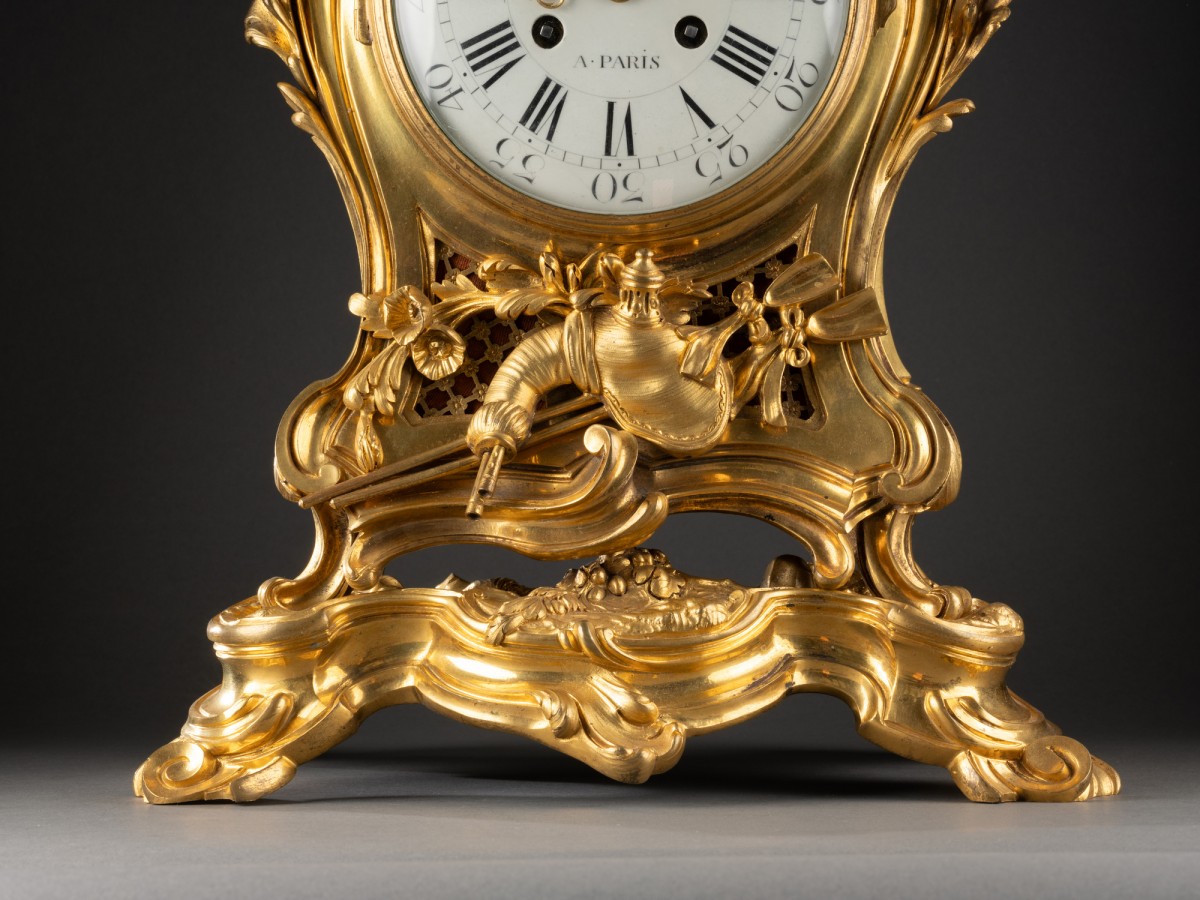
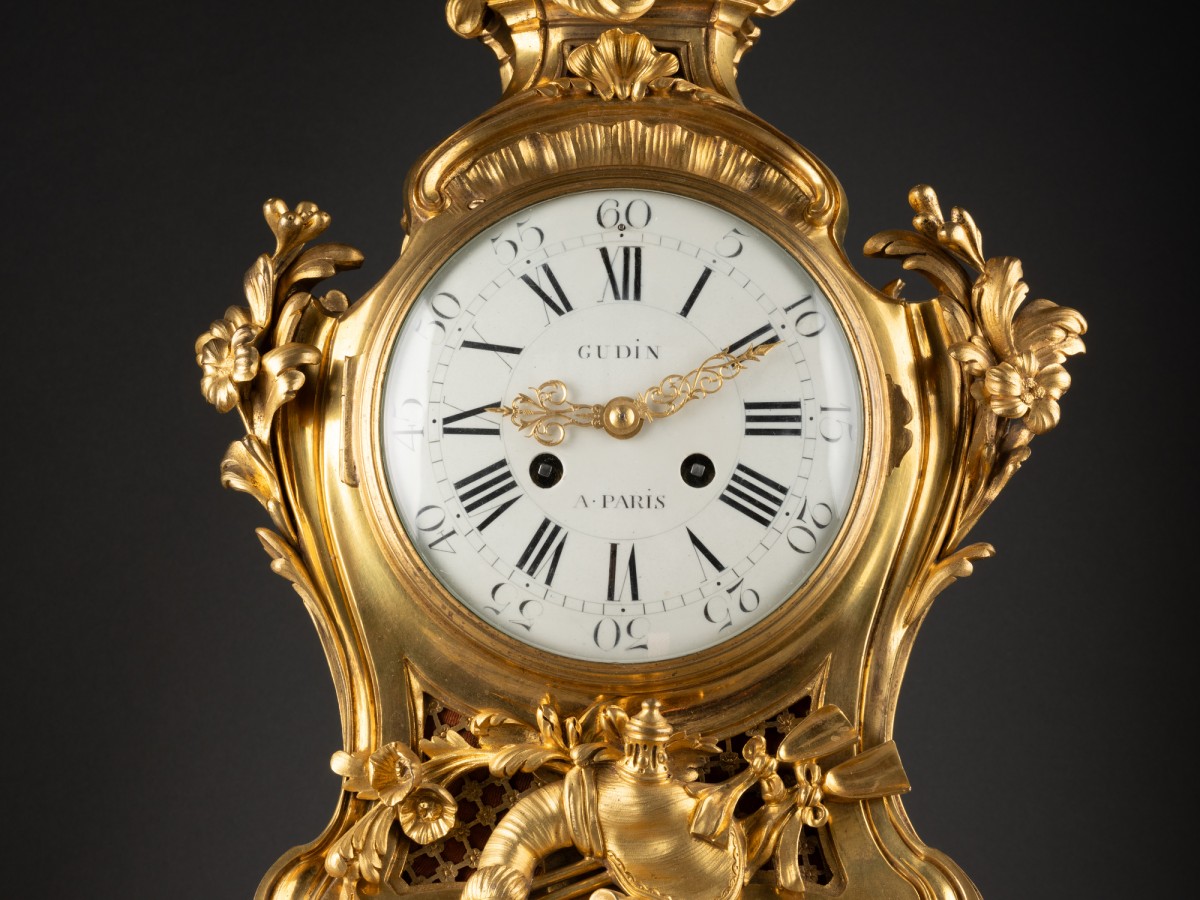
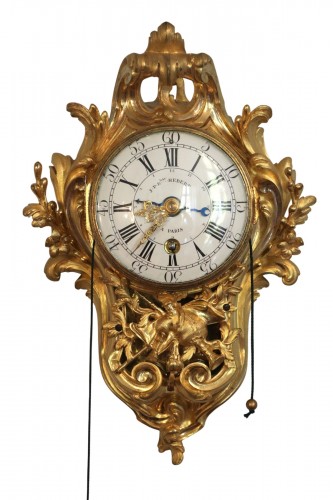
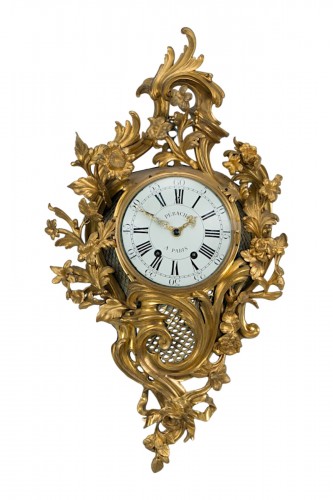
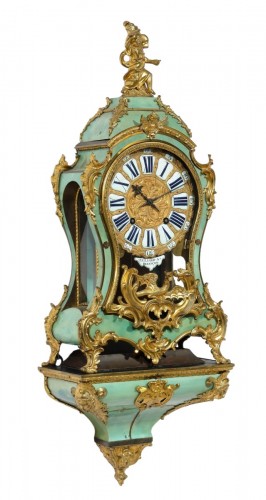
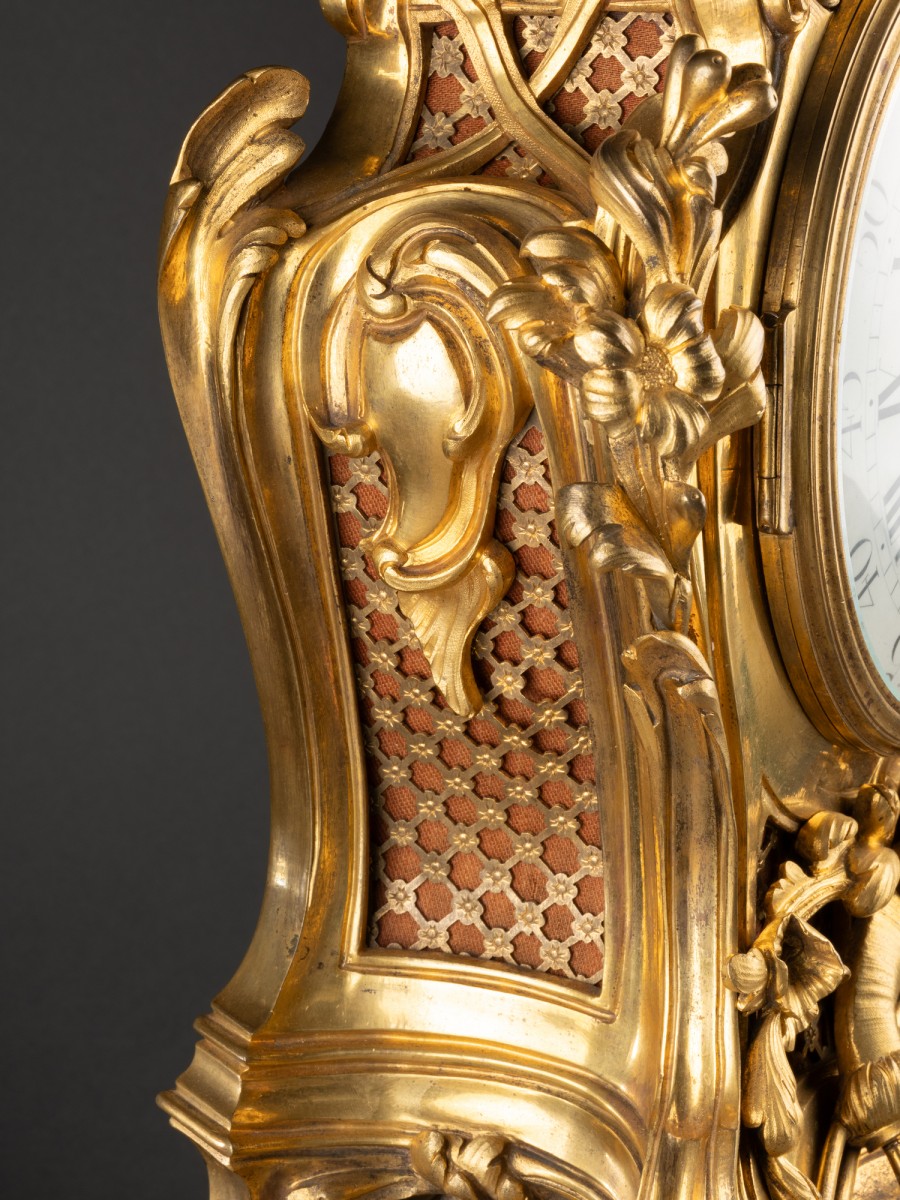
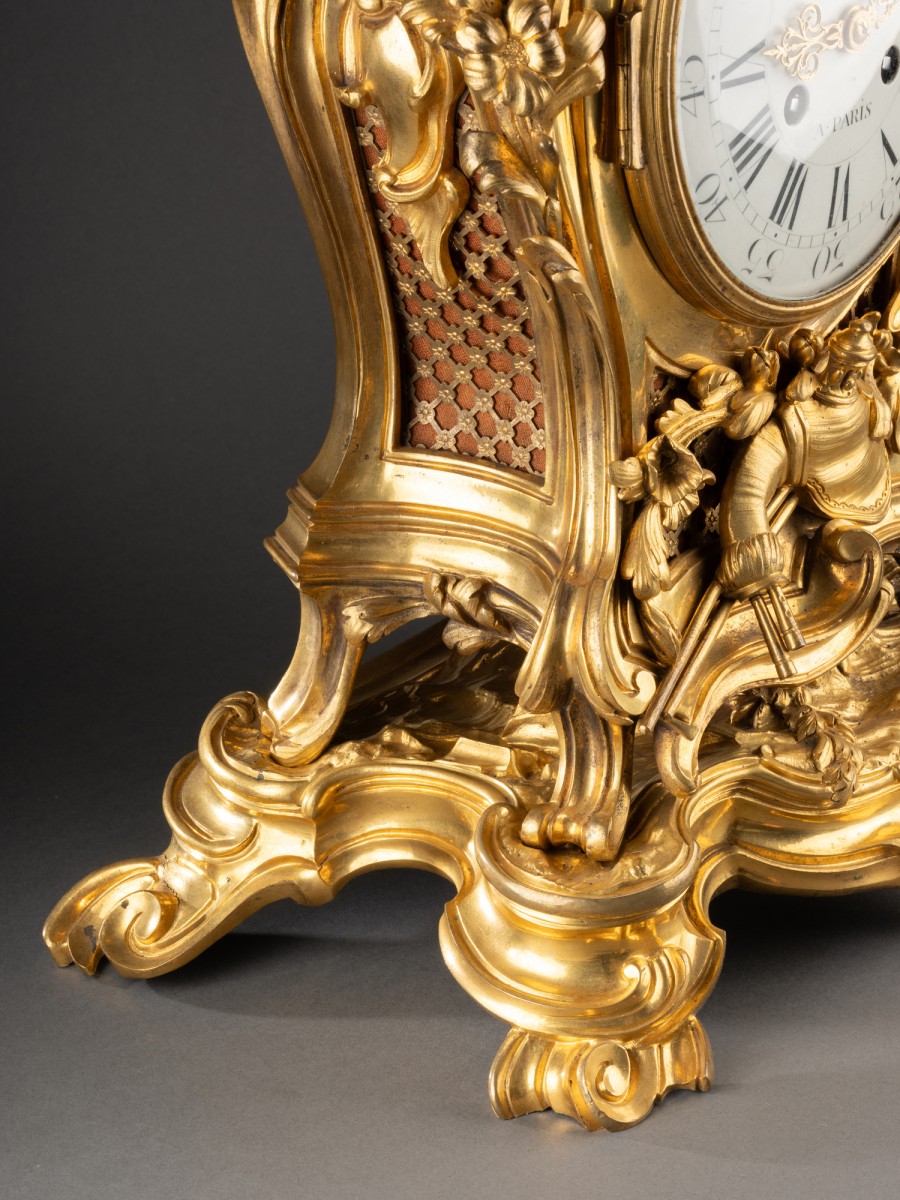
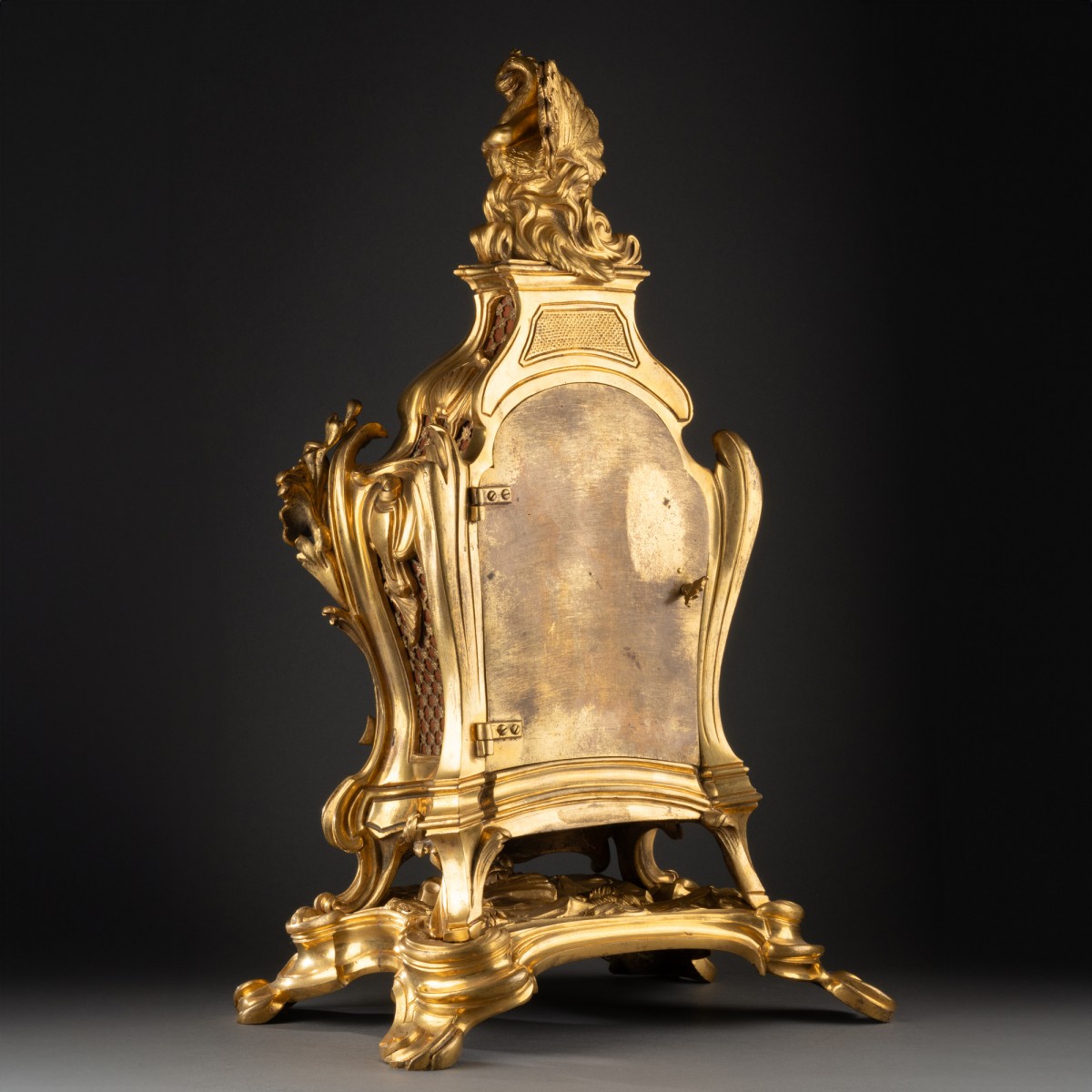
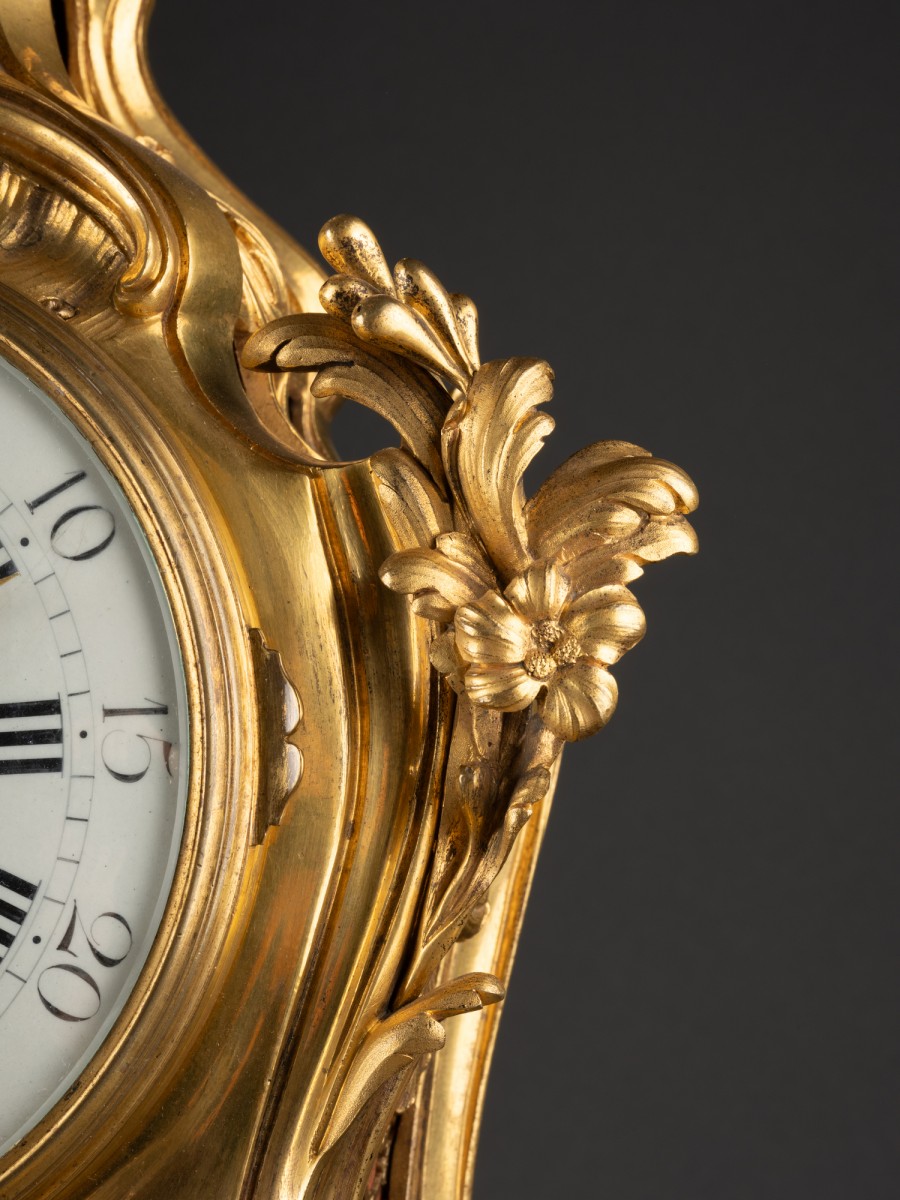
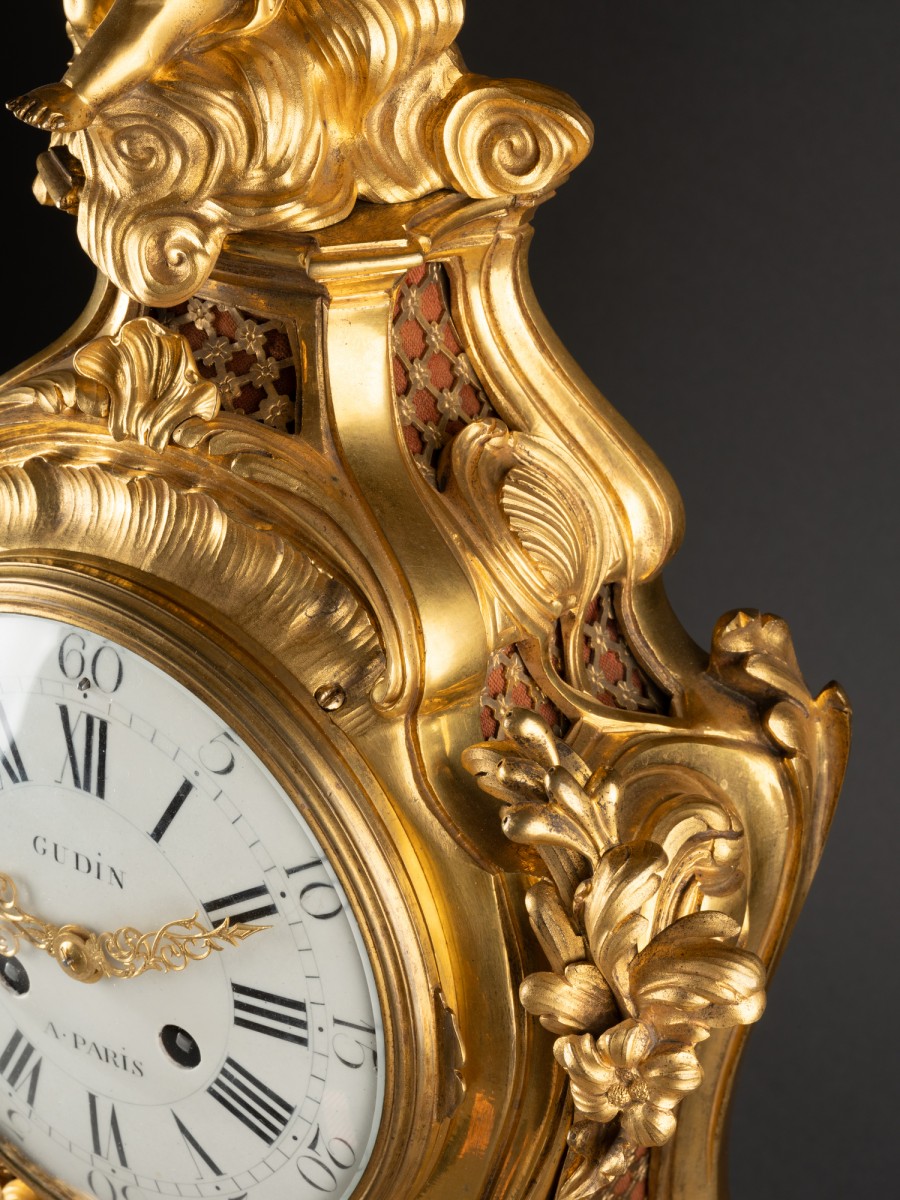
The violin-shaped case is decorated with floral and acanthus scrolls, and at the bottom with a musical trophy including a bagpipe and two shepherd's crooks.
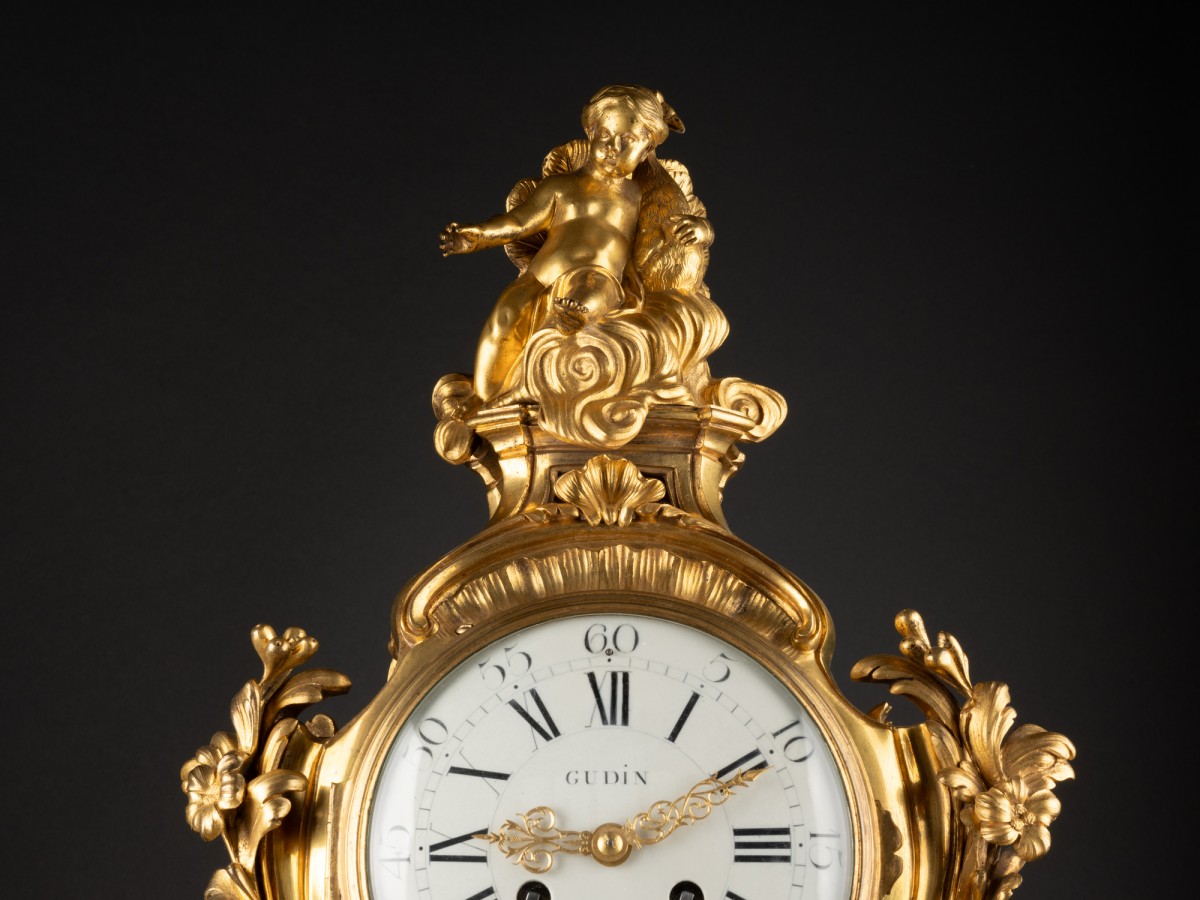
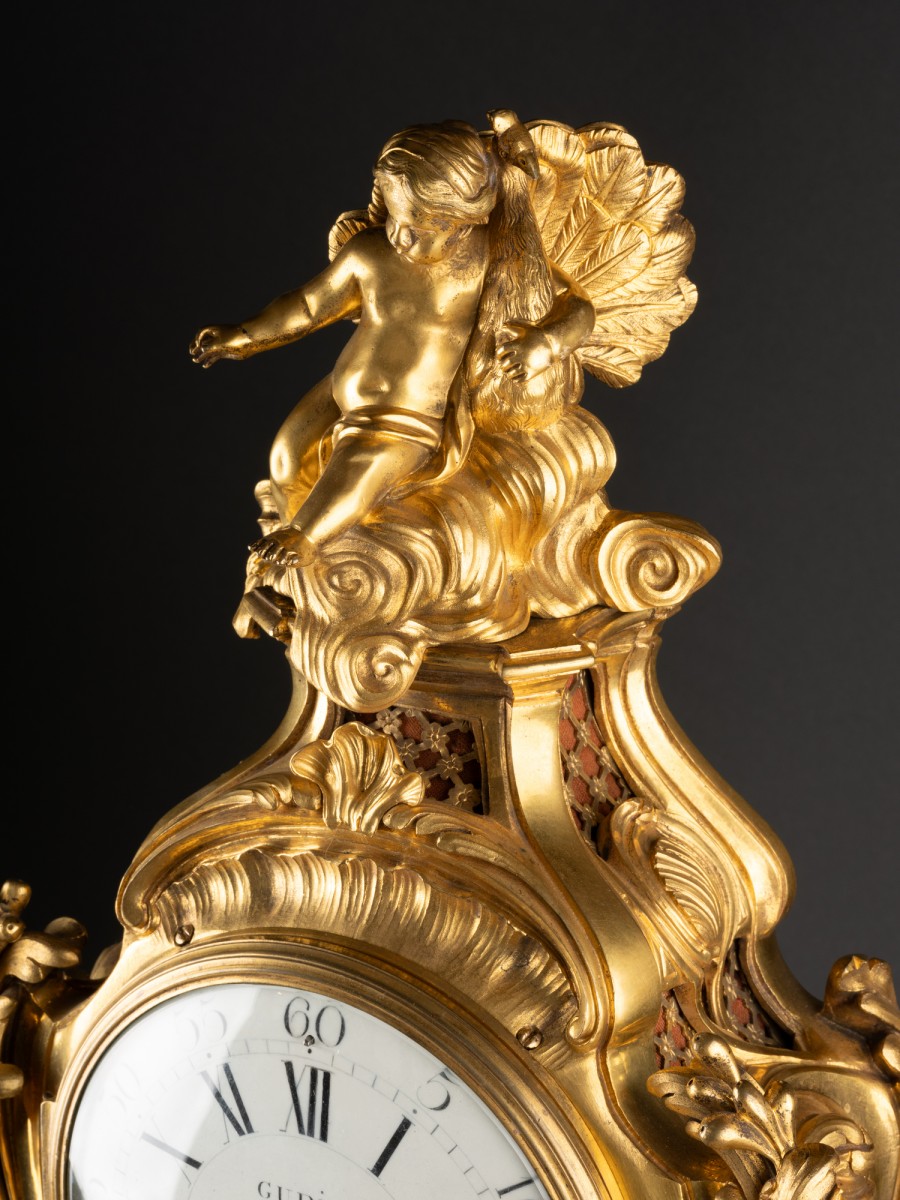
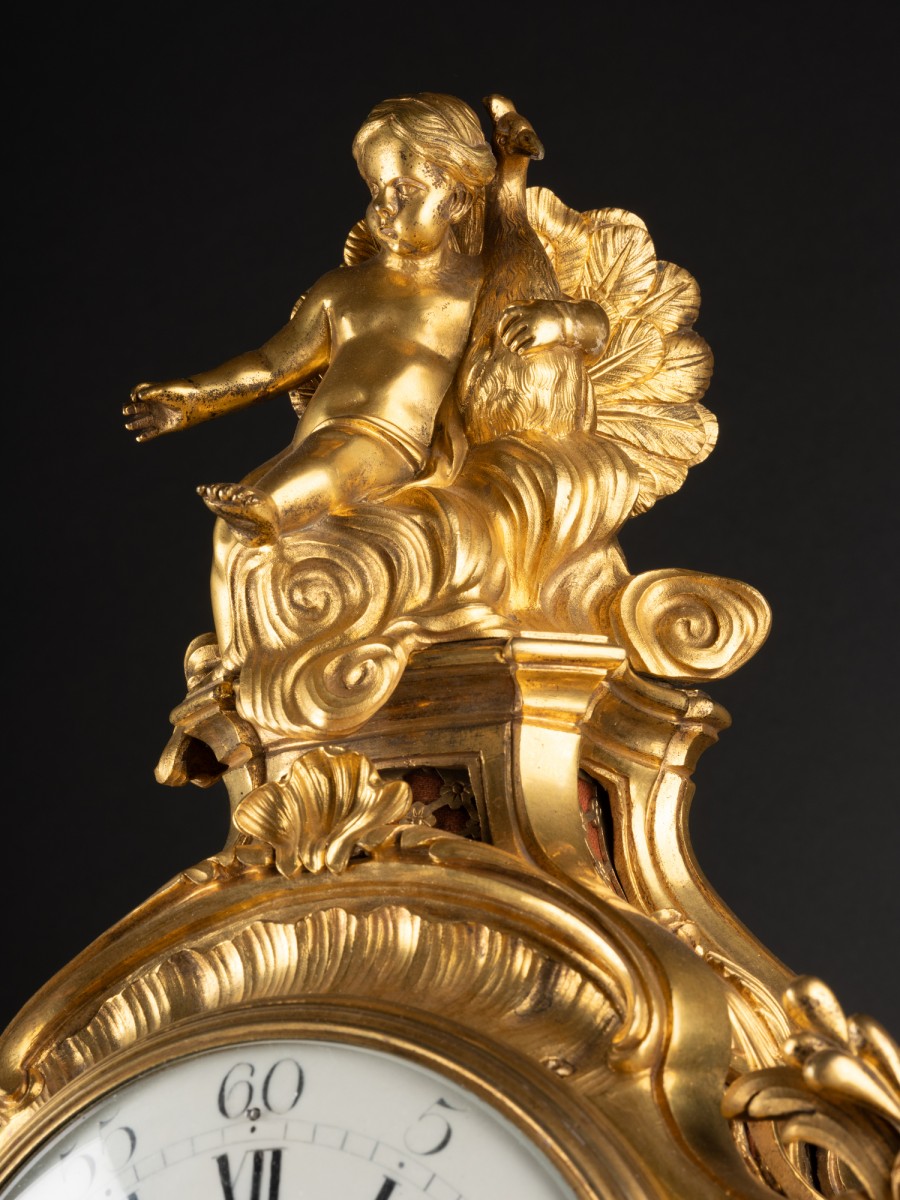
The top features a mound crowned by a figure of Juno as a child accompanied by her peacock.
The white enamel dial indicates the hours in Roman numerals and the minutes in Arabic numerals.
It is signed "Gudin à Paris."*
Original movement, suspension modified.
In perfect working order, movement serviced by our watchmaker.
High quality of chasing and mercury gilding.
Attributed to the bronze founder and chaser Jean-Joseph de Saint Germain, Paris, Louis XV period, circa 1760-1770.
Dimensions:
Height: 53 cm; Width: 32 cm; Depth: 21 cm
Provenance:
- Collection of the Bank of France
- Tajan Auction, June 17, 2015, lot 173
Similar models:
- An identical model signed "St Germain" (only the subject at the top differs) is illustrated in Pierre Kjellberg's book "L’Encyclopédie de la pendule française, du Moyen Âge au XXe siècle" (Paris, Éditions de l’Amateur, 1997), page 112 (Fig. A).
- A wall clock featuring the same bagpipe trophy is held at the Musée des Arts Décoratifs in Paris. (Inv. no. 4622)
Our opinion:
The attribution to the king's founder and engraver, Jean-Joseph de Saint Germain, is corroborated by several similar wall clocks, both freestanding and wall-mounted, bearing the master's mark.
Each model of this type is unique and includes a variation, such as this one with a child's petticoat replacing the pair of doves or the feathered young Native American seen on other examples.
The "St Germain" mark, stamped letter by letter, was used for a short period to protect the original bronzes from copies and overmolding.
This stamping requirement was promulgated around 1765 after St Germain's election as a juror of the Guild of Bronze Founders and Chasers. As the creator of original bronzes, he wished to protect his work, but he was followed by only a handful of colleagues, and this requirement was enforced for only a few years.
However, it has the merit of allowing us to attribute several models with certainty to the great master.
*Jacques-Jérôme Gudin was a Parisian watchmaker who became a master on May 12, 1762. He signed his work Gudin fils (Gudin the Younger), then simply Gudin.
The son of Jacques and Henriette Lenoir, he married Geneviève-Victoire Marteau.
He is listed in Paris, first on the Quai des Orfèvres (1762), then on the rue Saint-Honoré (1783) at J.B.A. Furet.
His signature can be found on crates by Jean Joseph de Saint Germain, the Osmond brothers, and François Vion.
His clientele included the Prince of Conti, the Princess of Monaco, and the Duke of Choiseul.
*Jean-Joseph de Saint Germain (1719-1791) was admitted as a master bronze caster in clay and sand by awarding a masterpiece on July 15, 1748.
He was one of the greatest bronze casters of the reign of Louis XV.
In 1765, he became a juror of the bronze founders' and chasers' guild. A staunch defender of copyright, he proposed and secured the passage of a law requiring bronze casters to sign their work.
Indeed, as he indicated on an advertising label for his workshop on Rue St. Nicolas, he sold "all kinds of boxes and fittings in ormolu" and "made the designs and models in wax." He created numerous successful designs, such as the cartel clock with two Chinese figures, the clock with rhinoceroses, an elephant, a bull, and so on, making him one of the most copied artists of his lifetime.
He filed numerous lawsuits, notably against his former apprentice, Jean Goyer, who, having become a cabinetmaker specializing in cartel clock boxes, counterfeited his bronze models and cast them himself! In addition to the numerous bronze casters plagiarizing his work, cabinetmakers, eager to save money, also cast their own bronzes, something strictly forbidden by 18th-century law.
Unfortunately for Saint-Germain, the requirement to mark works was rarely enforced, except by a few major founders, themselves creators of successful models and, like him, victims of copyright infringement. The Caffieri family and Robert Osmond, for example, made a point of marking their works. The majority of other members preferred to remain anonymous, either to be free to cast the successful models of others, or because they subcontracted to the merchants responsible for reselling them in their shops.