Offered by Antichità San Felice
REQUEST INFORMATION
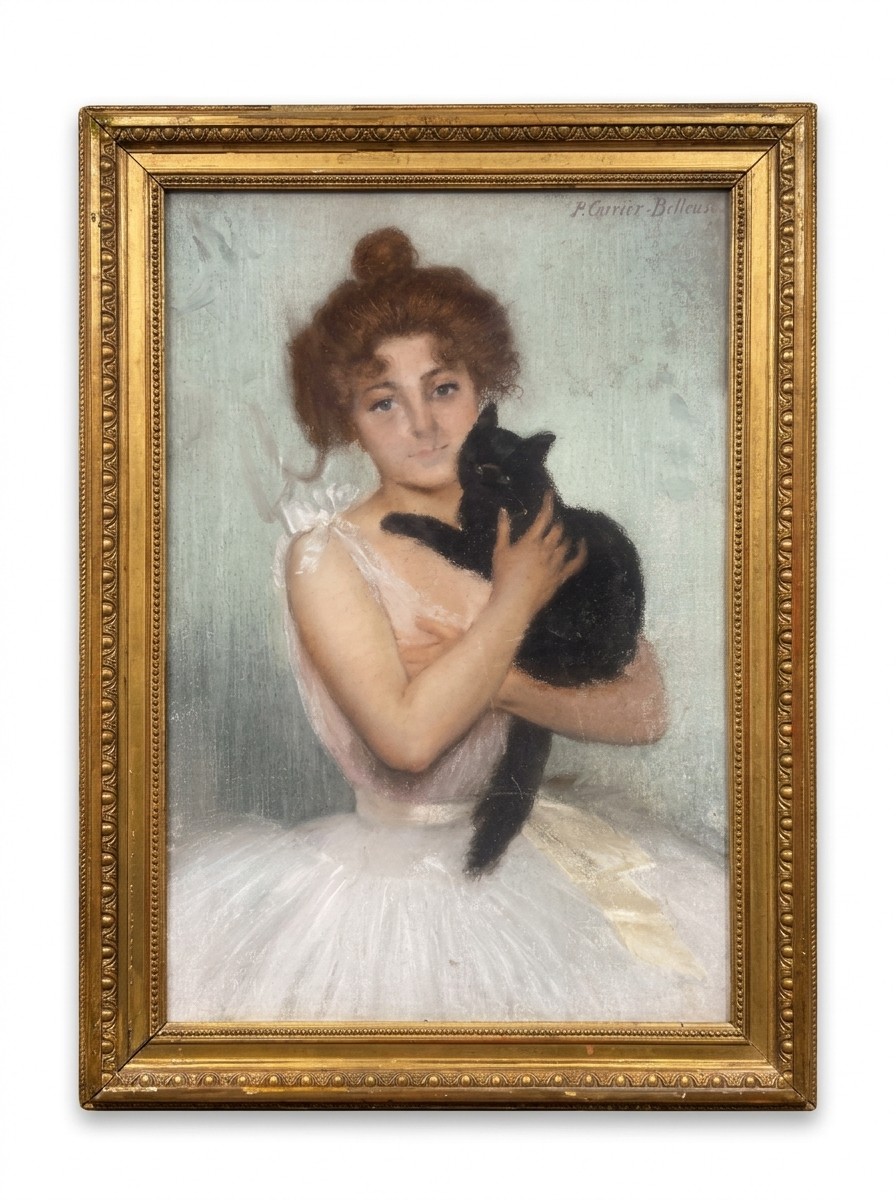
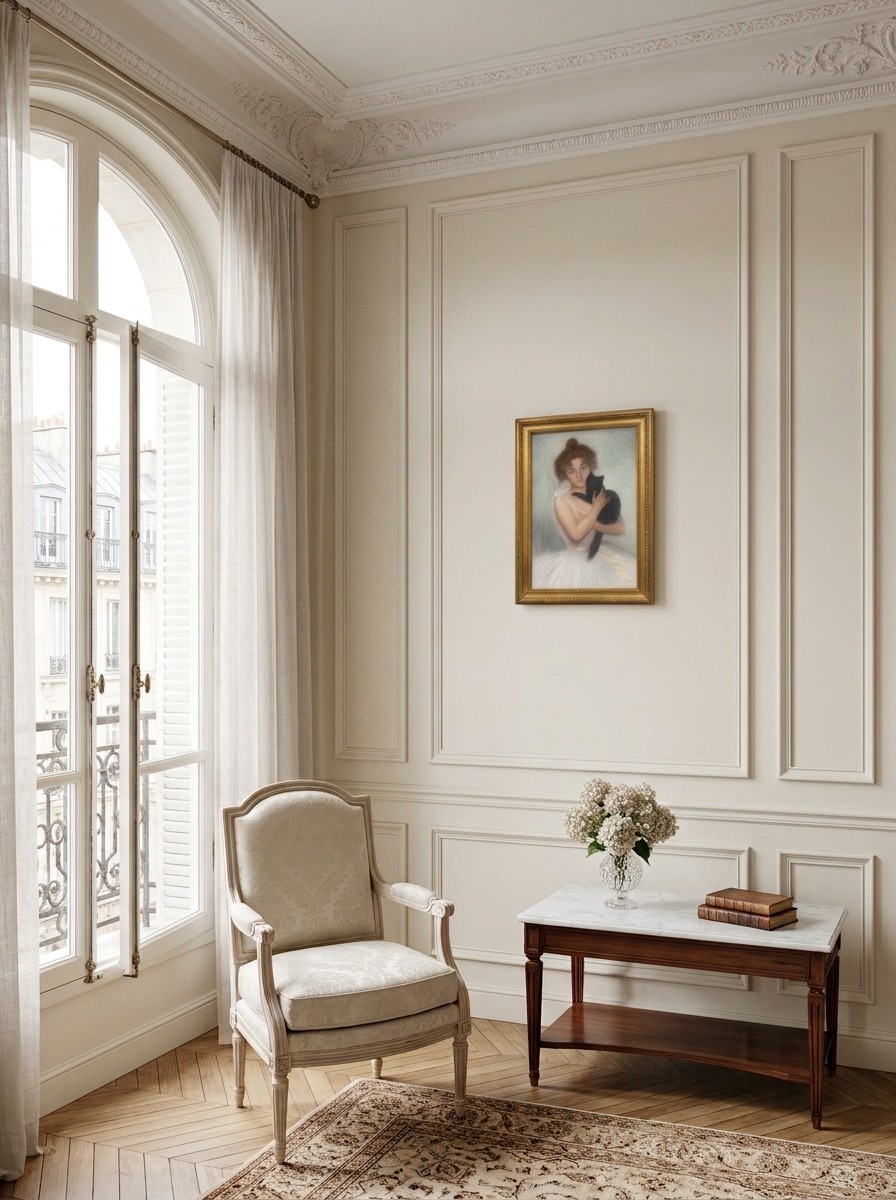

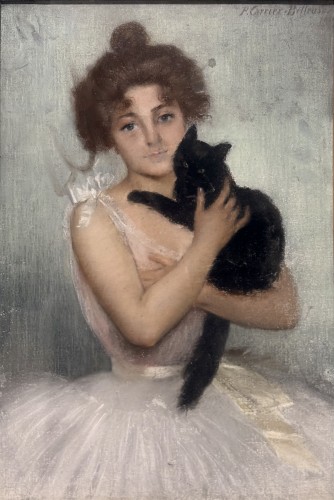
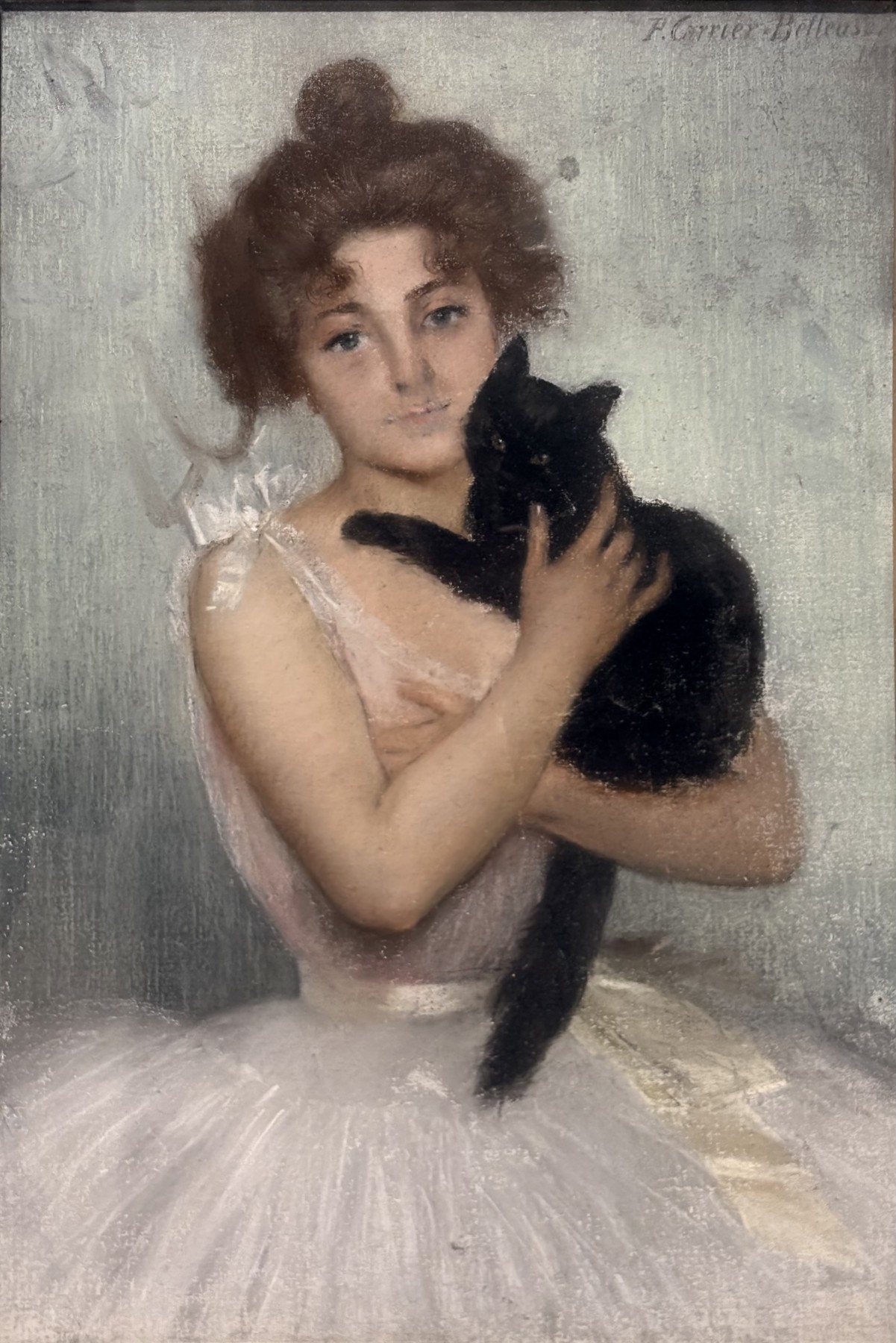
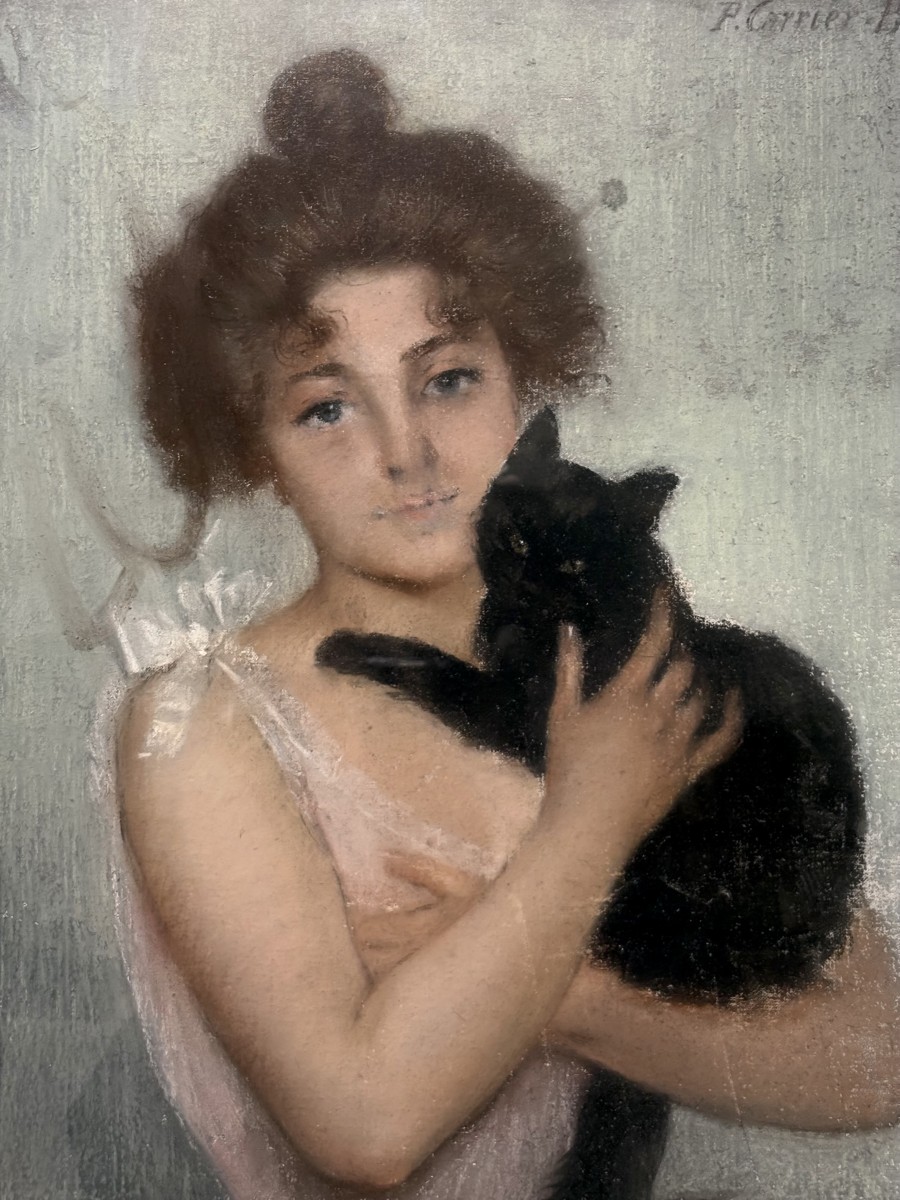
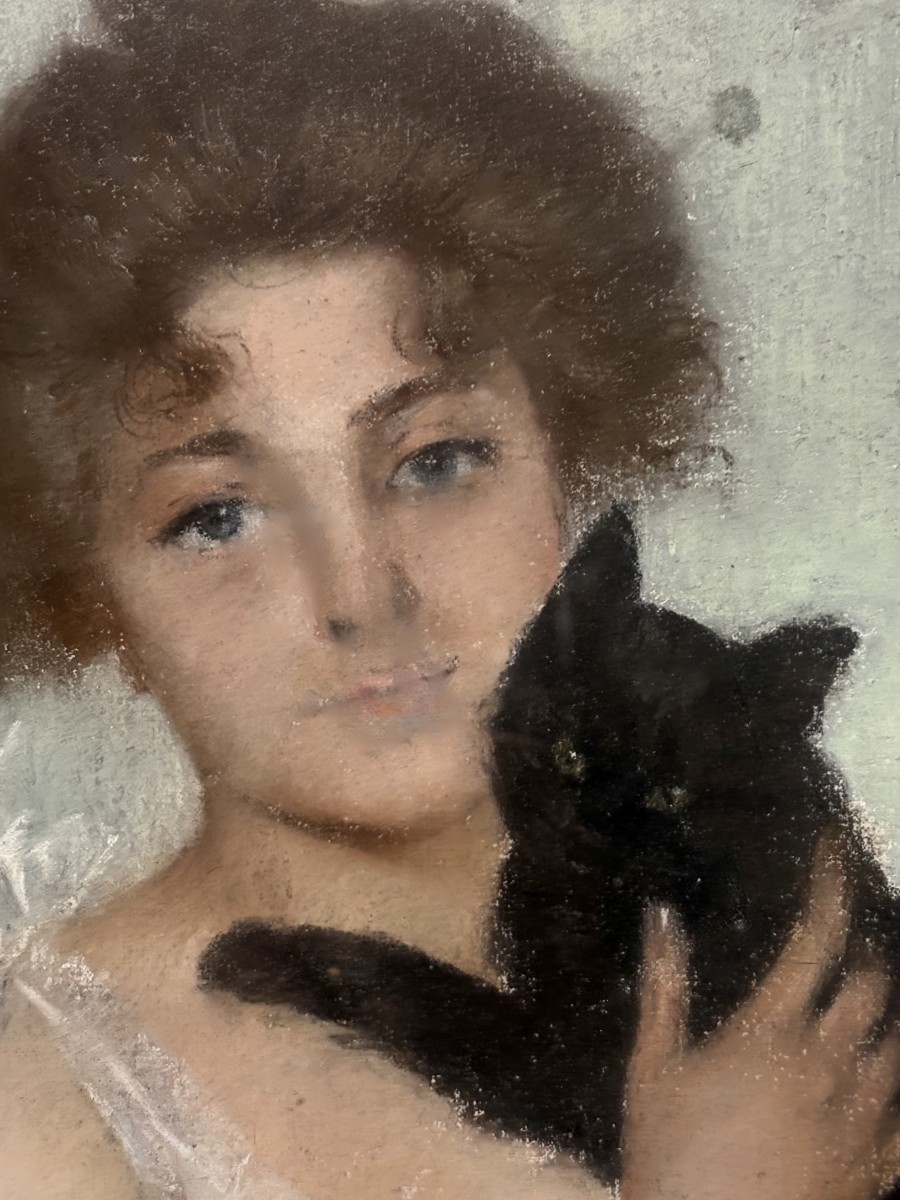
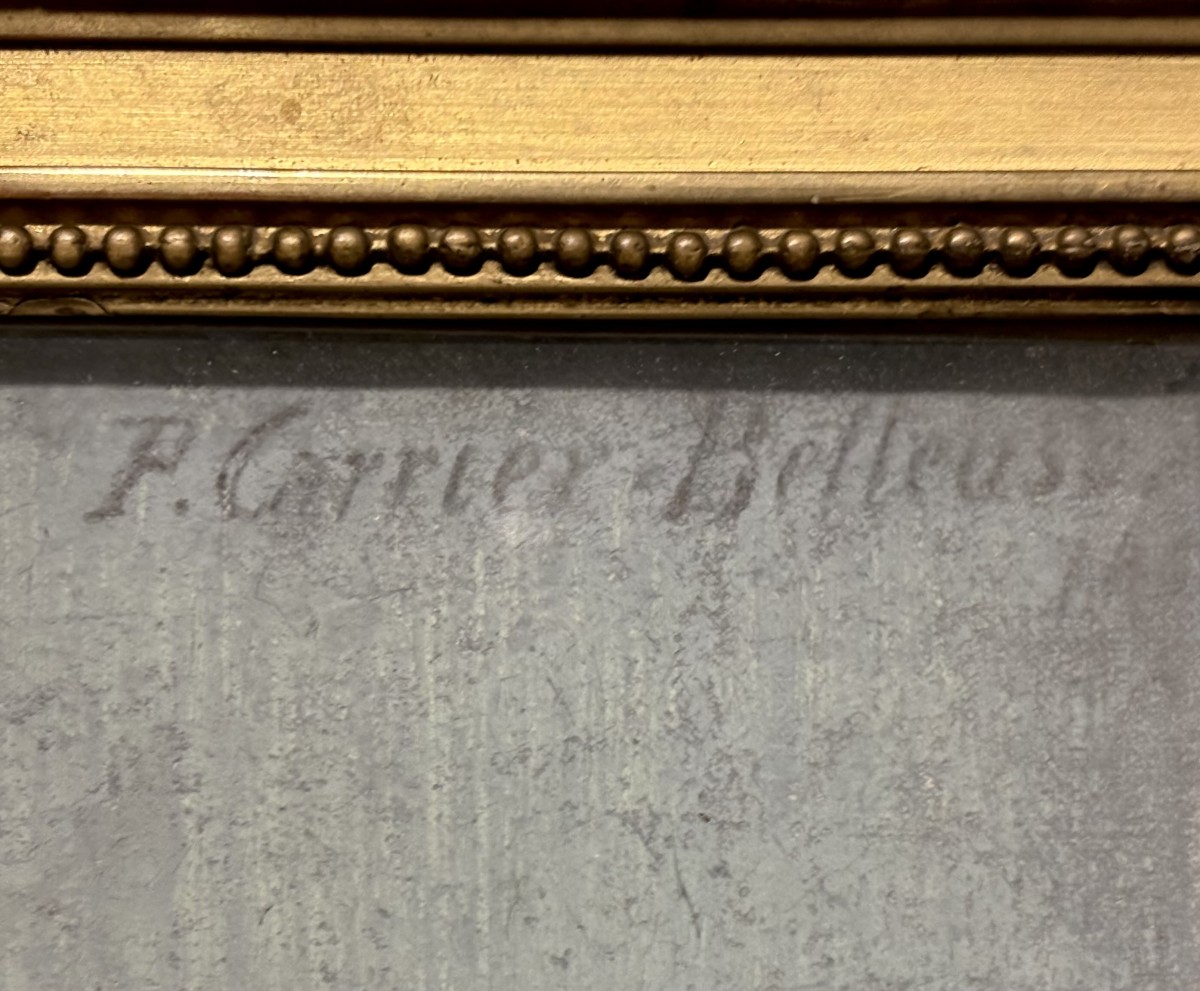
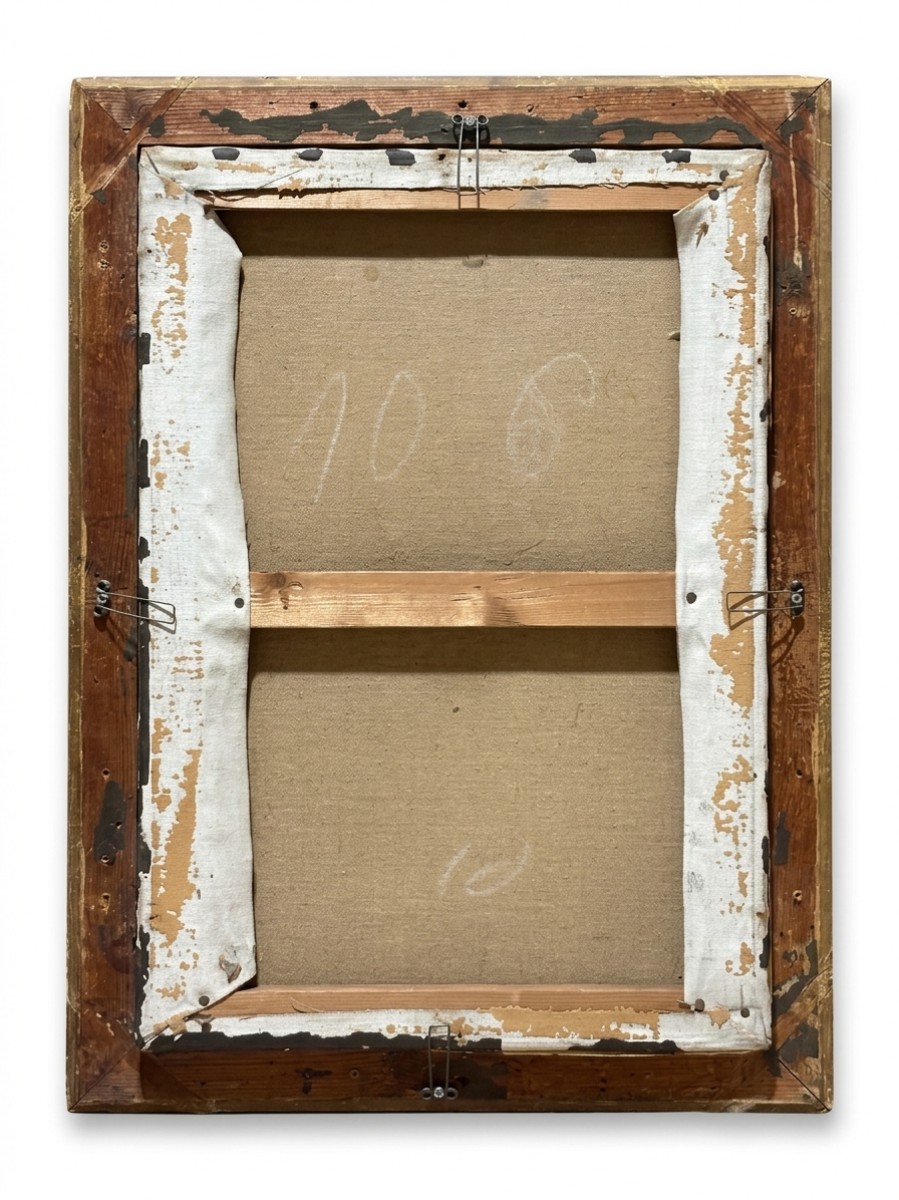
Pierre-Gérard Carrier-Belleuse (Paris, January 28, 1851 – Paris, January 29, 1932), “Portrait of a Dancer with a Black Cat,” pastel on canvas, signed in the upper right corner.
Pierre Gérard Carrier Belleuse, known as Pierre Carrier-Belleuse, son of the sculptor Albert-Ernest Carrier-Belleuse, was born on January 28, 1851, in the 8th arrondissement of Paris (at the time) and died in the 16th arrondissement of Paris on December 31, 1932.
A French painter and pastel artist, he created numerous portraits of dancers from the Opéra. He was a regular at the Paris Opéra; he loved the female form and found the world of dance to be an ideal subject for his pastels and portraits. Ballet embodied the charm of late-19th-century Paris and allowed him to depict both grace on stage and intimate moments—times of rest or fatigue—behind the scenes. He was appreciated by the ballerinas, for whom he created portraits and theatrical compositions (often linked to the Commedia dell’Arte as well). The tutus, the theater lights, and the dancers’ poses lent themselves perfectly to the luminosity and delicacy of pastel; for this reason, beginning in 1885, he devoted himself exclusively to this technique.
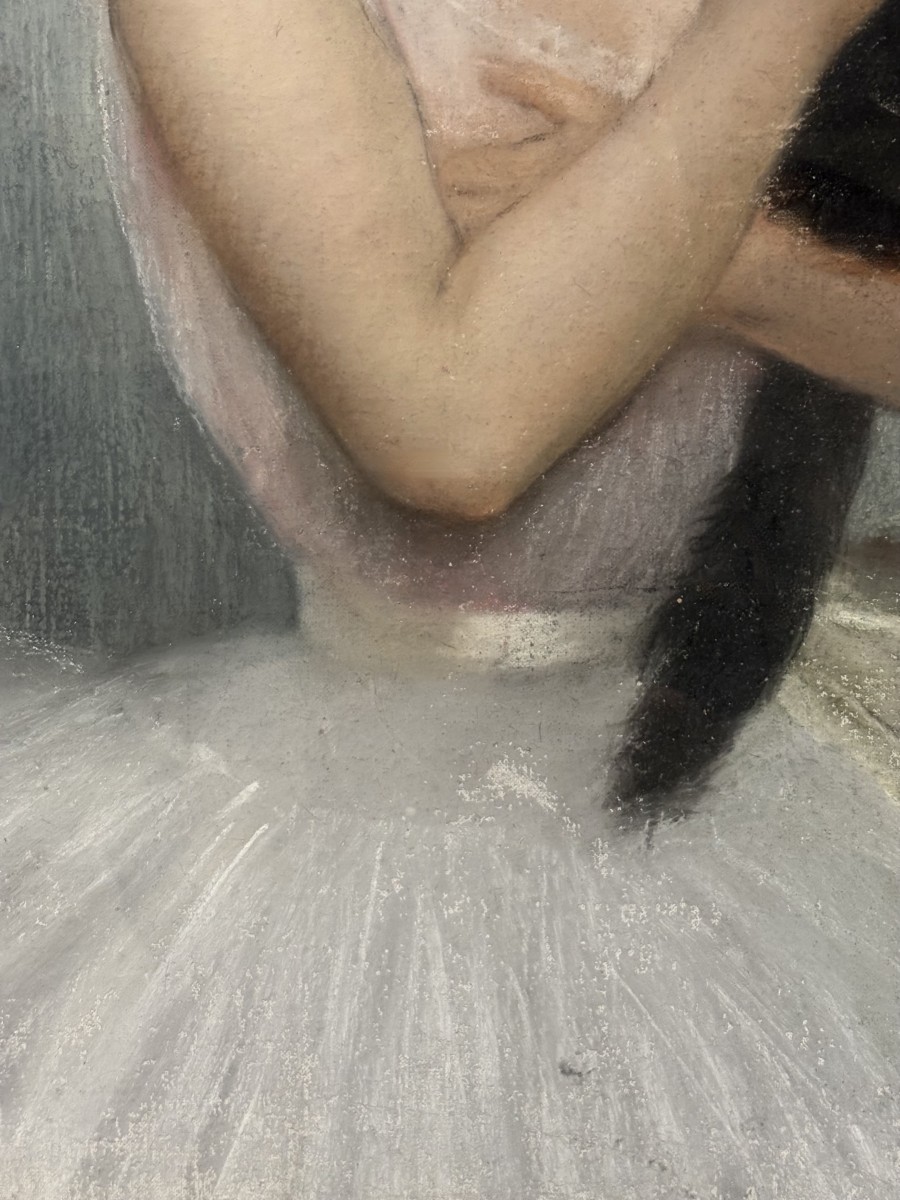
Carrier-Belleuse was one of the great masters of pastel at the turn of the 19th and 20th centuries. He was able to capture the transparency of the tutus, the softness of the skin, and the reflections of the theater lights with rare delicacy and luminosity. Unlike other painters, who perceived the ballerinas merely as moving forms, he captured their elegance, their inner lives, and moments of intimacy behind the scenes at the Paris Opera, thereby lending each work a narrative dimension and a surprising immediacy. His works offer a true window into the social and artistic life of late 19th-century Paris.
Our pastel is a typical example of Carrier-Belleuse’s work.
The ballerina depicted here also appears in the work “La Frileuse,” housed at the Museum of Fine Arts in Buenos Aires. It is set in its original gilded frame.
Dimensions
H 54 cm
W 34 cm
First a student of his father and later of Alexandre Cabanel at theÉcole des Beaux-Arts in Paris, he exhibited for the first time at the Salon in 1875 and received an honorable mention in 1887. Like his father, his work focused primarily on the female figure. His drawings of ballerinas were often reproduced in *Le Figaro illustré*. He participated in the 1889 World’s Fair, where he won a silver medal that led to his being declared *hors-concours* (out of competition). In 1890, he joined the Société Nationale des Beaux-Arts, becoming a full member in 1893; there he exhibited pastels every year, which earned him great success. In 1895, he was appointed president of the Société Internationale de Peinture et de Sculpture.
In the 1890s, he taught at the Académie Julian in Paris.
Pierre Carrier-Belleuse often painted along the Côte d’Opale; he owned a villa atop a cliff in Wissant, and the surrounding dunes provided the setting for many of his works. He was a member of the Wissant School, founded by his friends, the painters Adrien Demont and Virginie Demont-Breton.
On June 13, 1920, he was named “Rosati” in Fontenay-aux-Roses.
From 1885 to 1932, he lived at 31 Boulevard Berthier in Paris’s 17th arrondissement, where a commemorative plaque honors him. He is buried in the Carnot Cemetery in Suresnes.
Delevery information :
Antichità San Felice takes care of organizing the packaging, home delivery and all the administrative formalities related to the shipment.
Antichità San Felice works with several service providers selected for their professionalism, in order to ensure delivery of works of art in the best conditions.
For the packaging of the goods, we involve craftsmen who were responsible for the construction of custom-made wooden crates.
For transport, depending on the case, we involve the most suitable service provider.
All shipments from Antichità San Felice are covered by value insurance. It is important to note that the Customer must indicate on the dispatch note any reservations upon receipt of the object, in order to be able to bring the insurance into play.
Payments accepted:
bank transfer
online bank card
paypal (+3.4% Europe +5% rest of the world)