Offered by Antichità San Felice
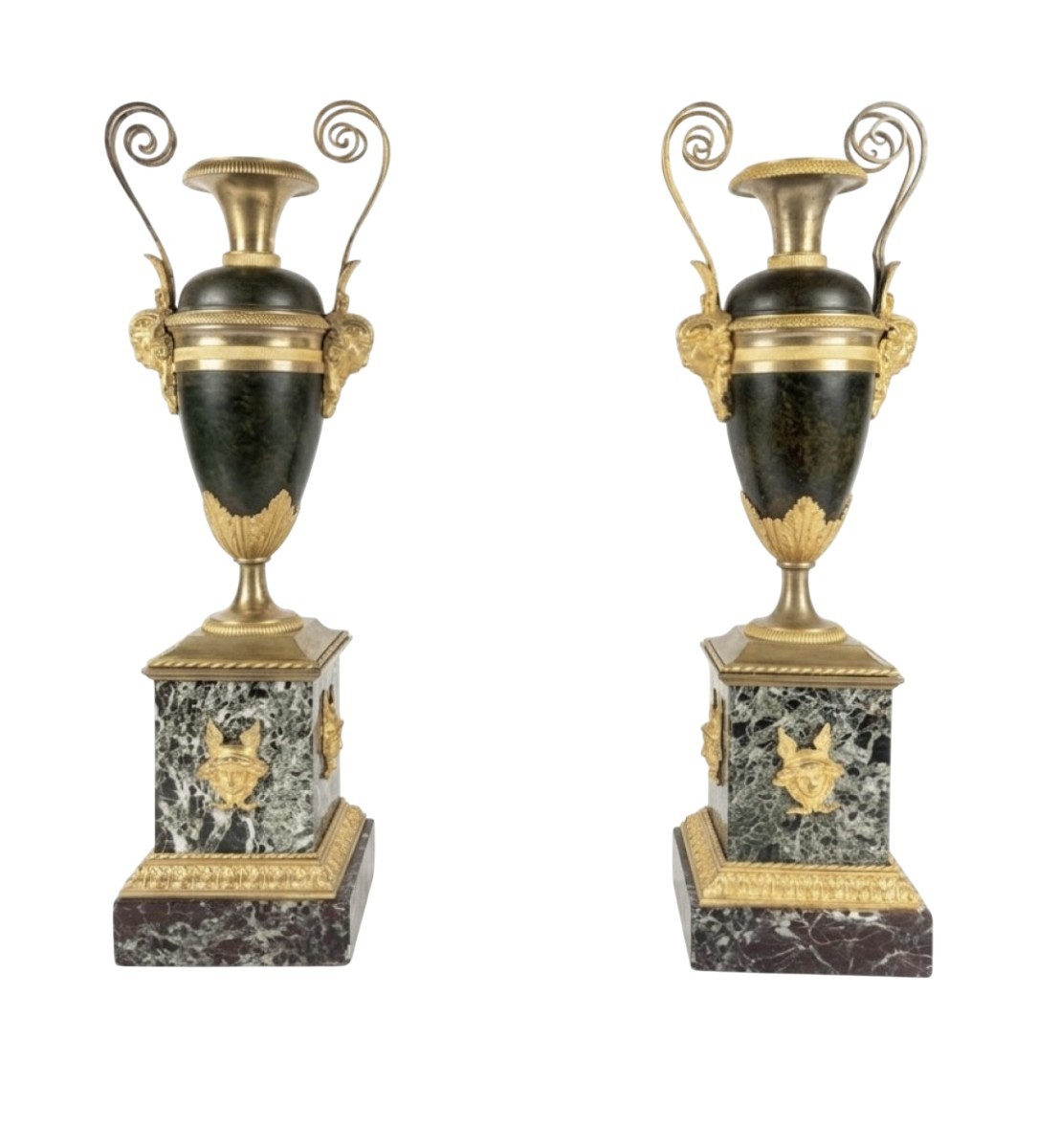
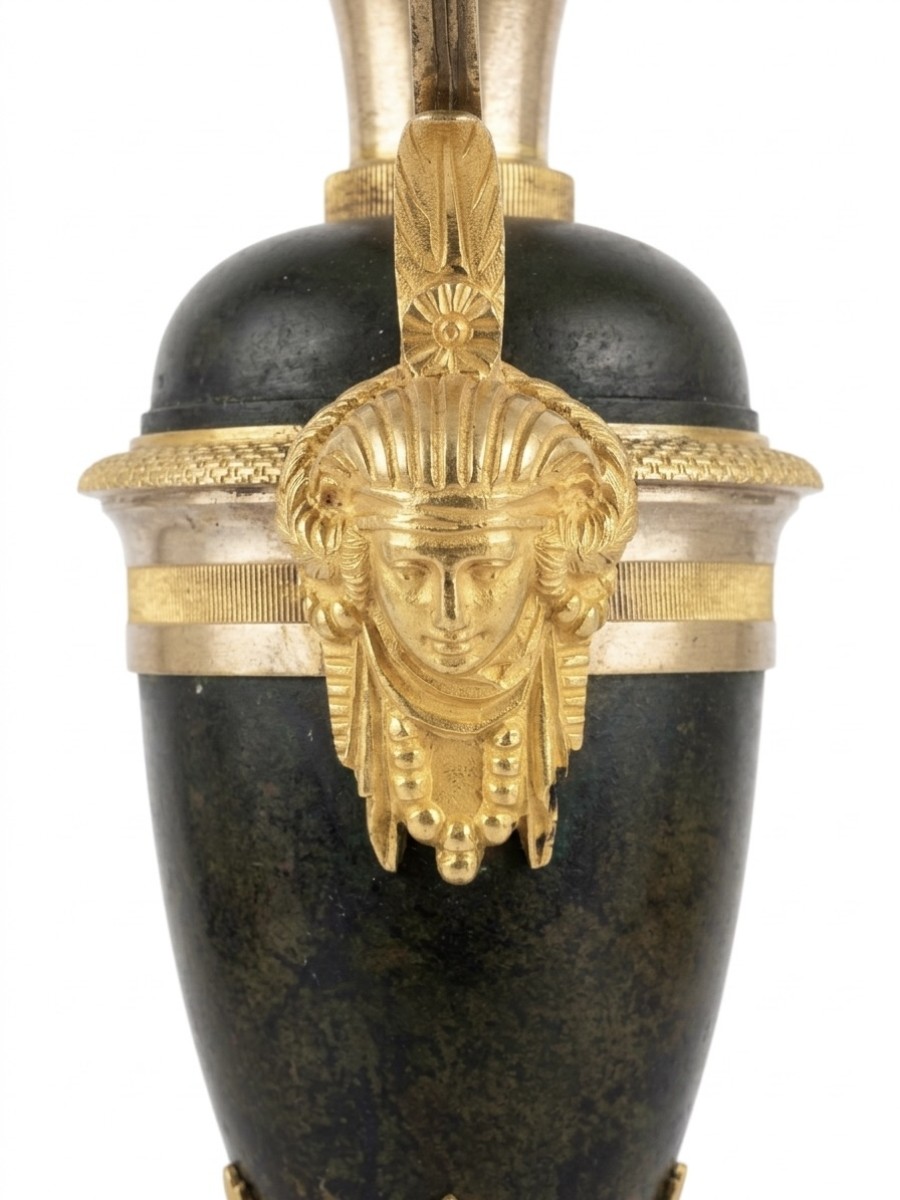
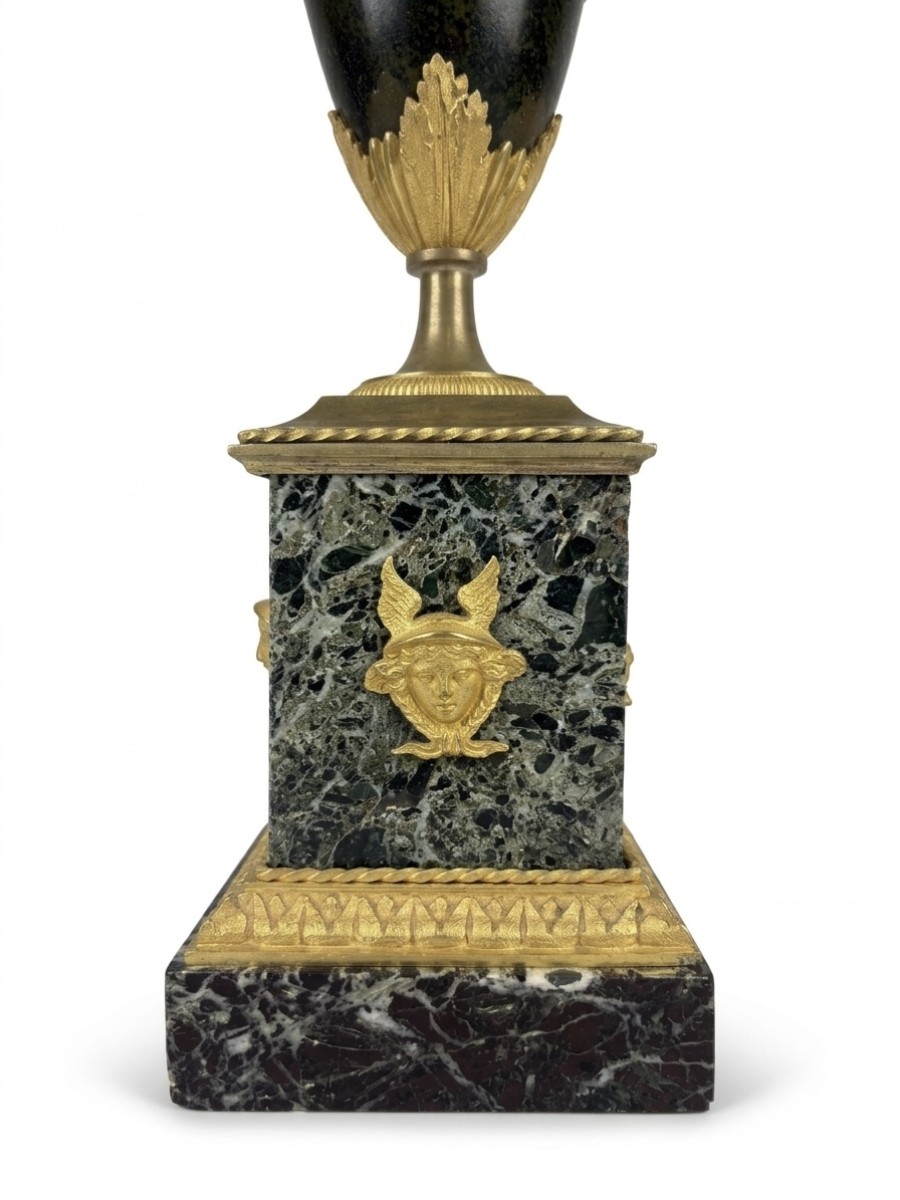
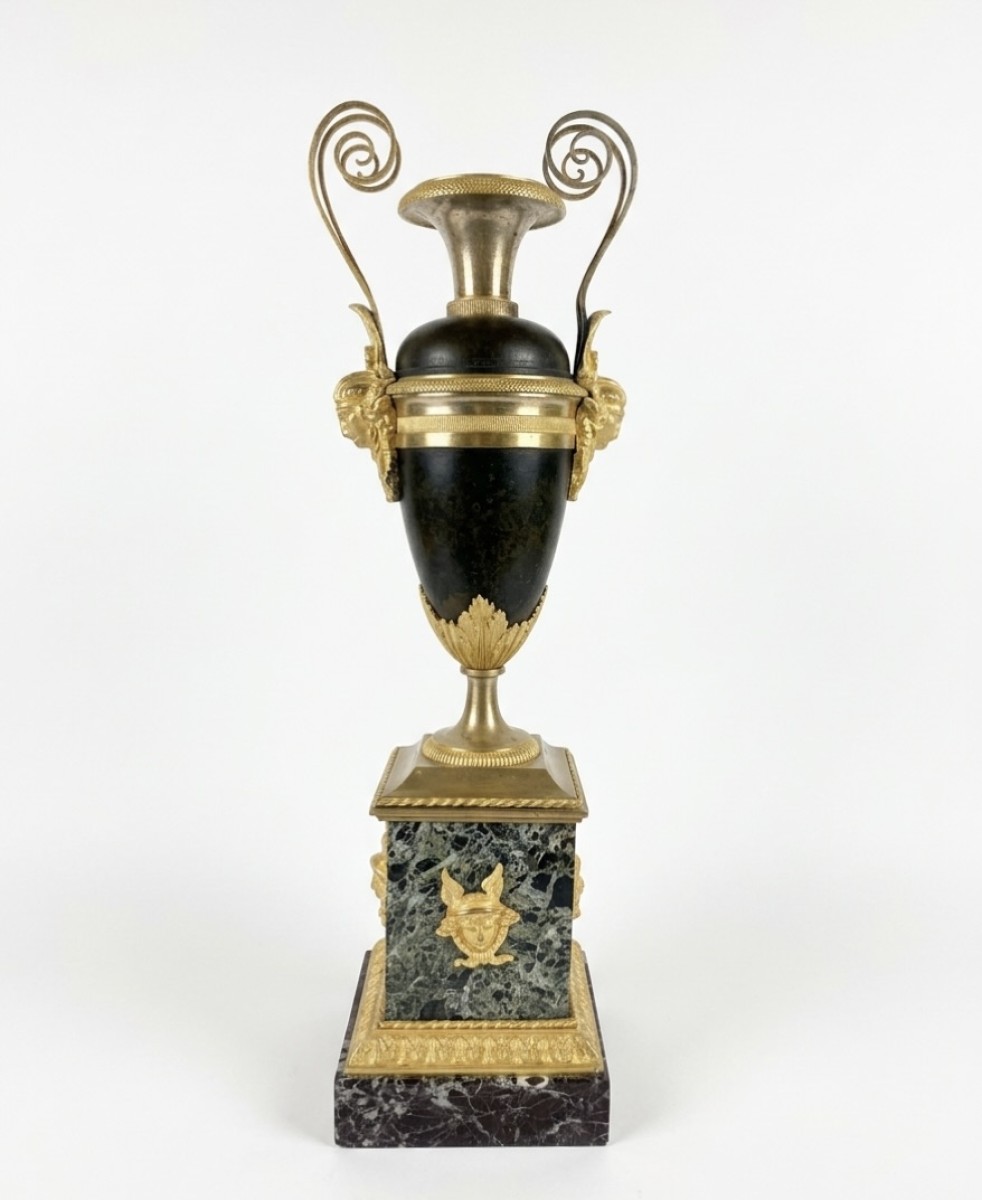
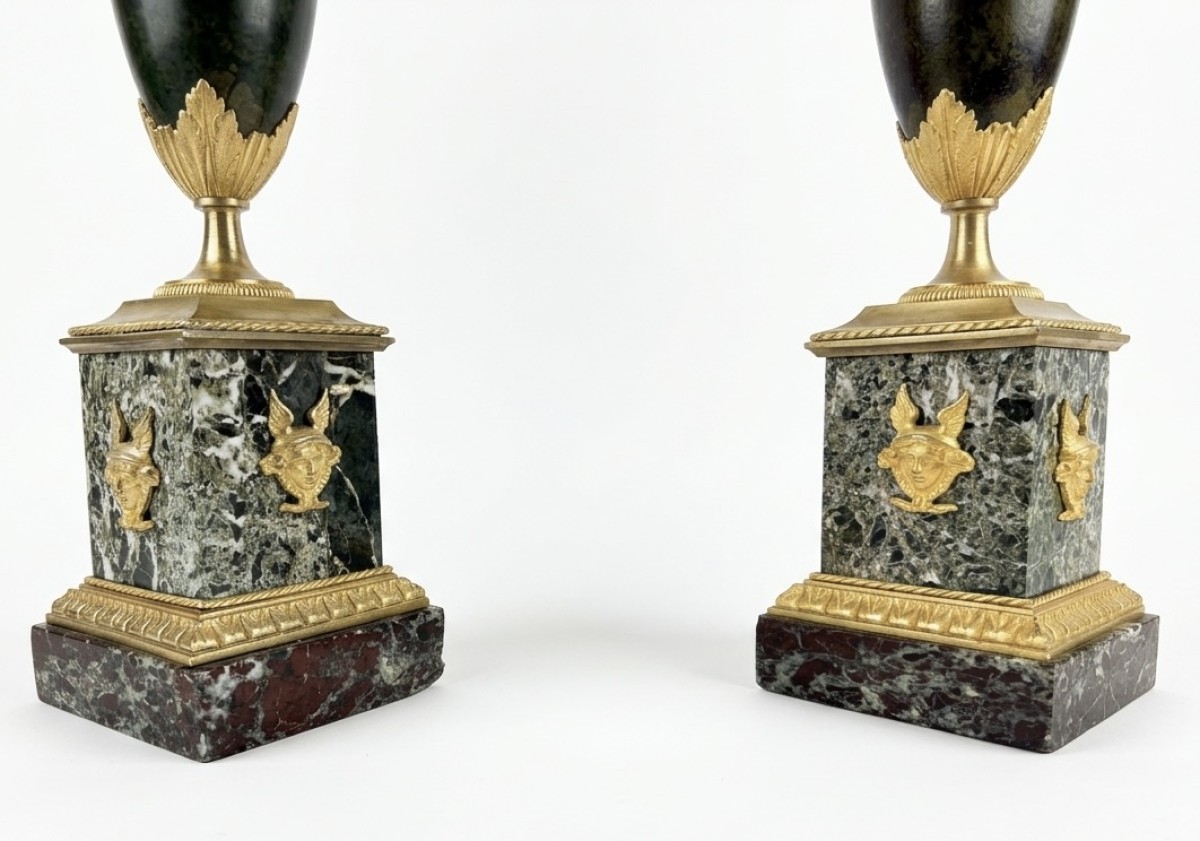

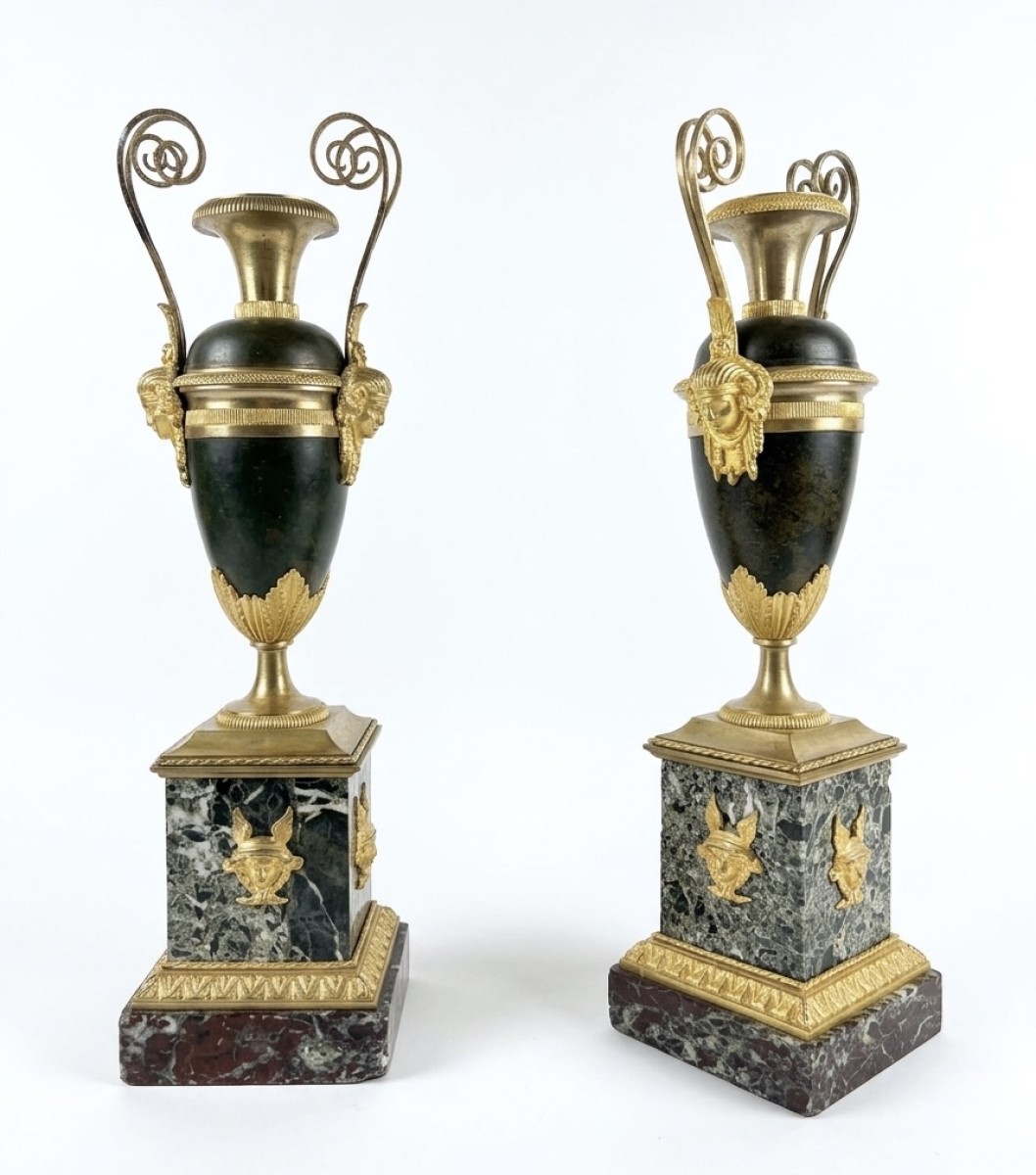
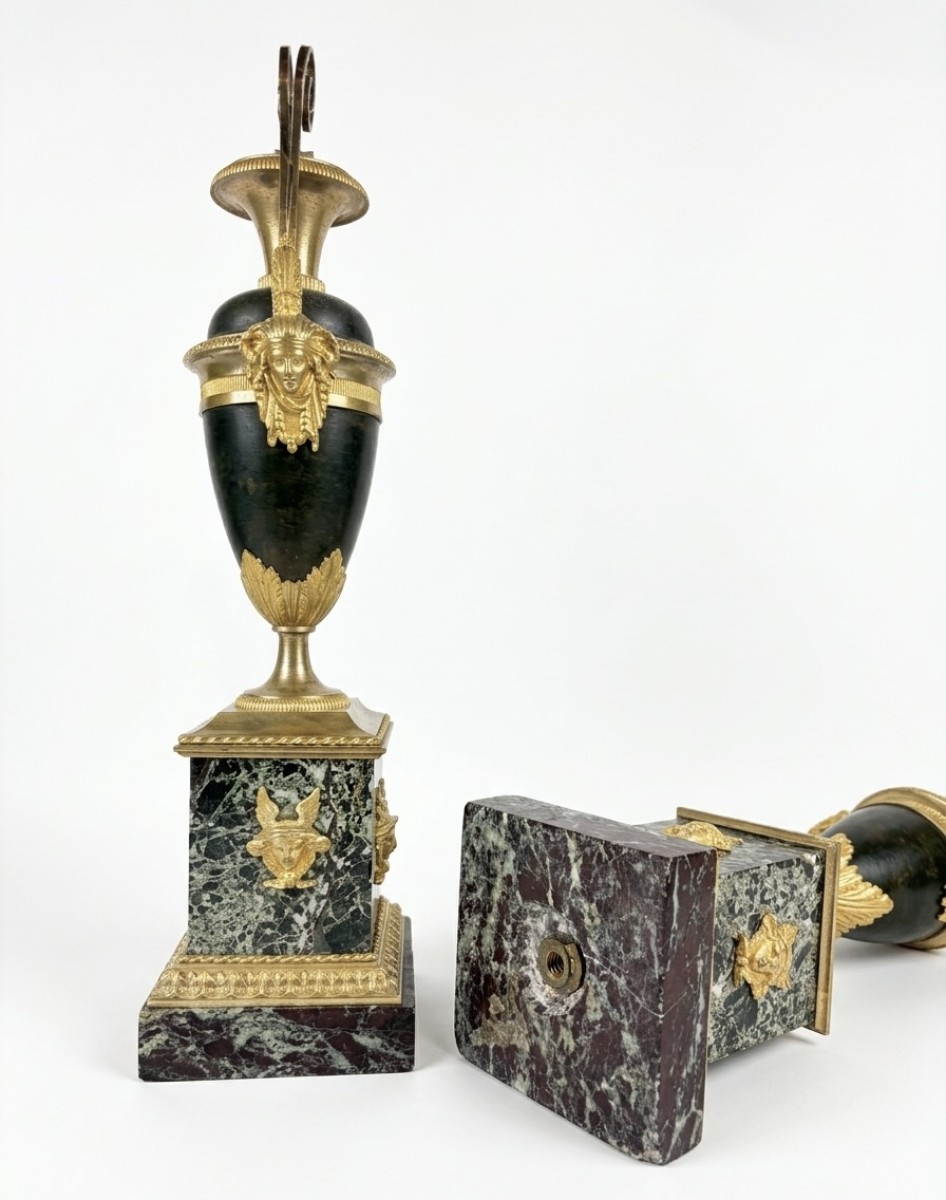
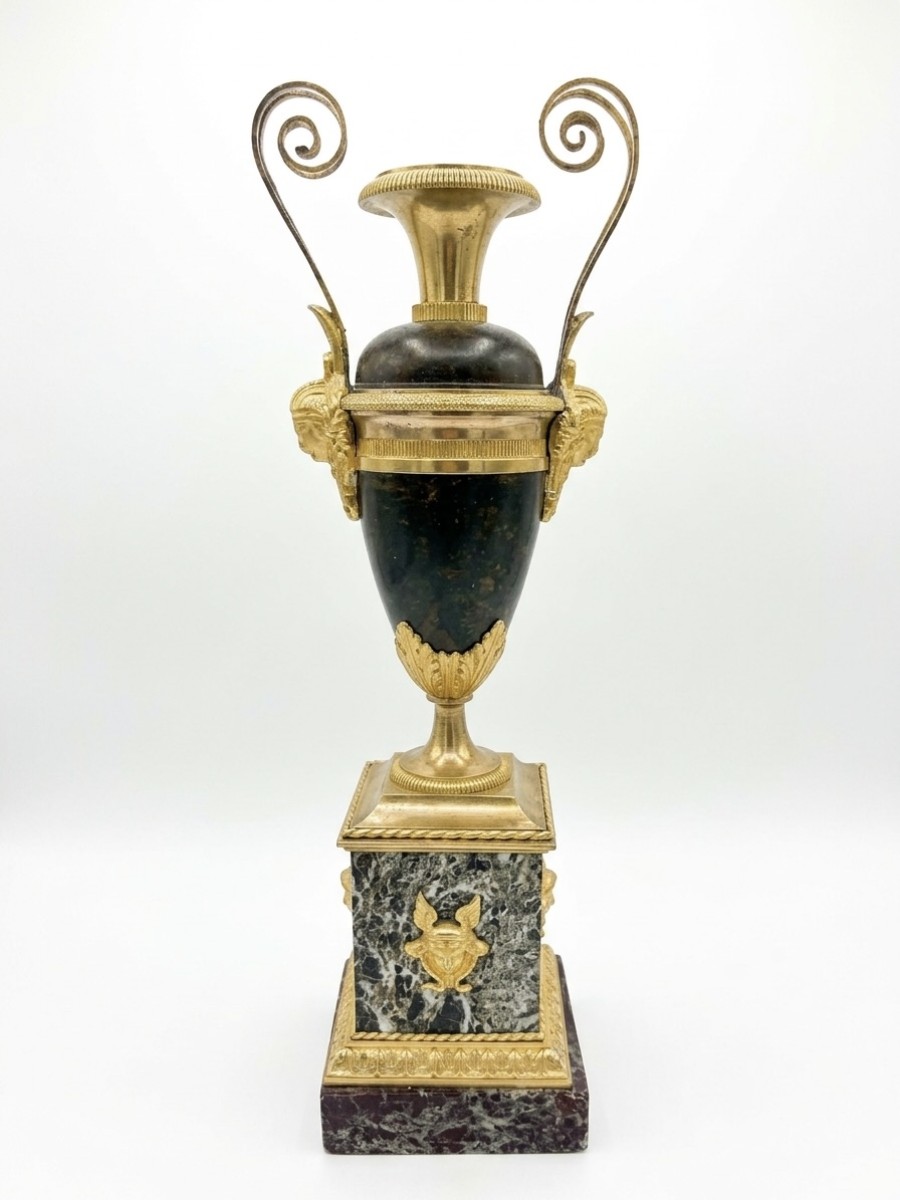
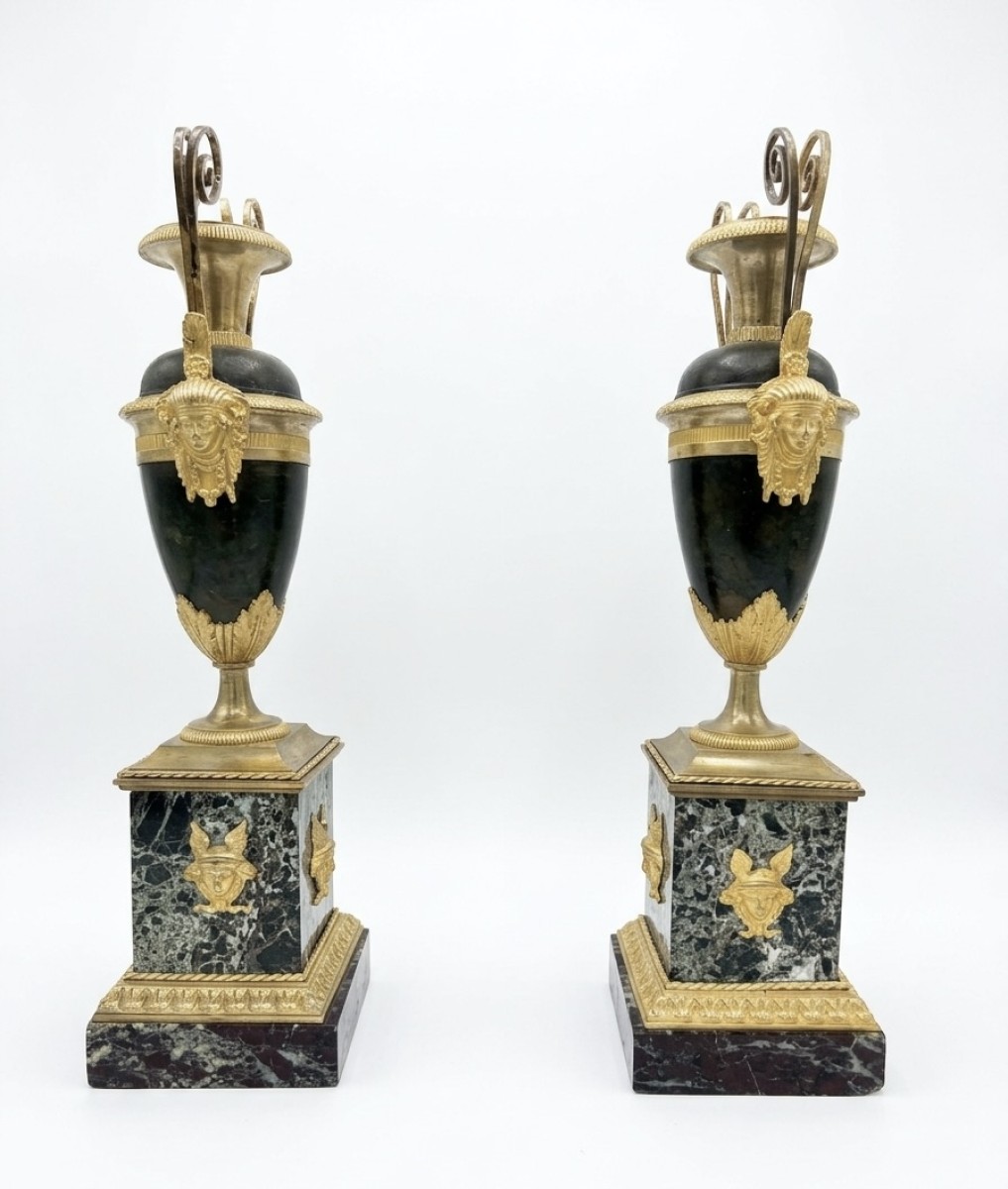
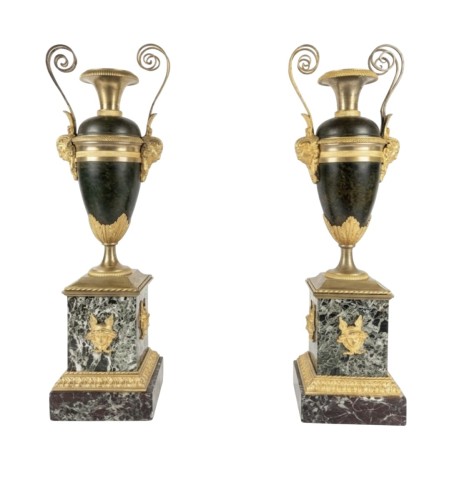
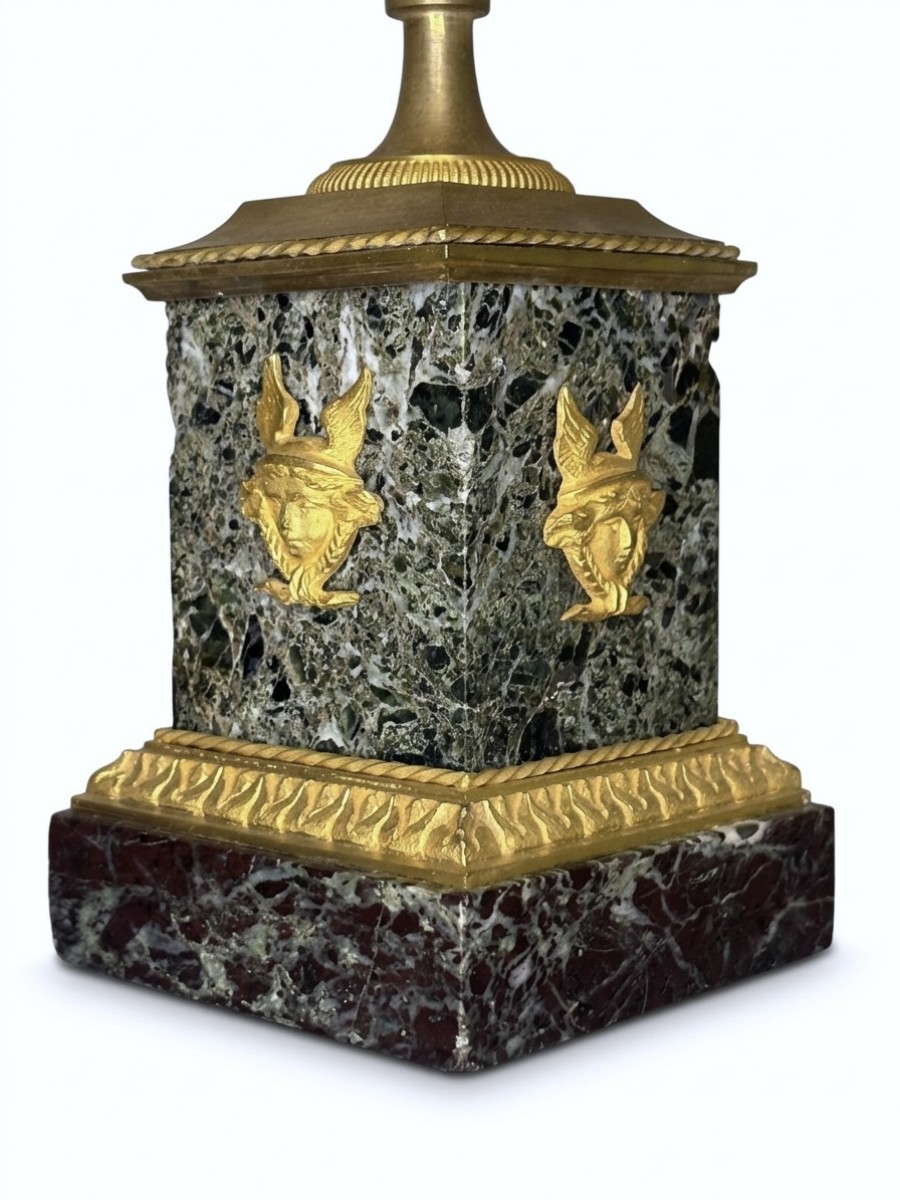
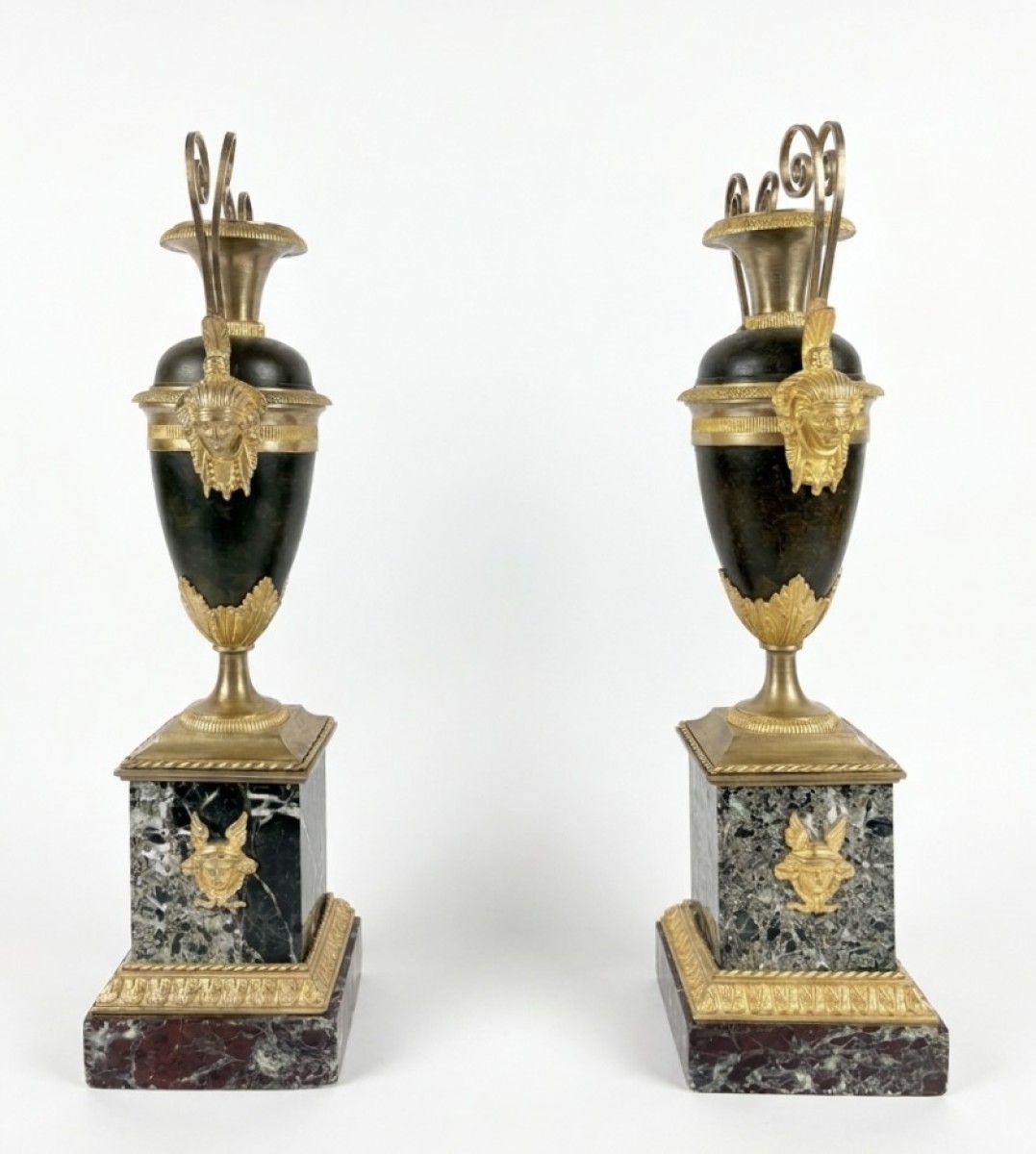
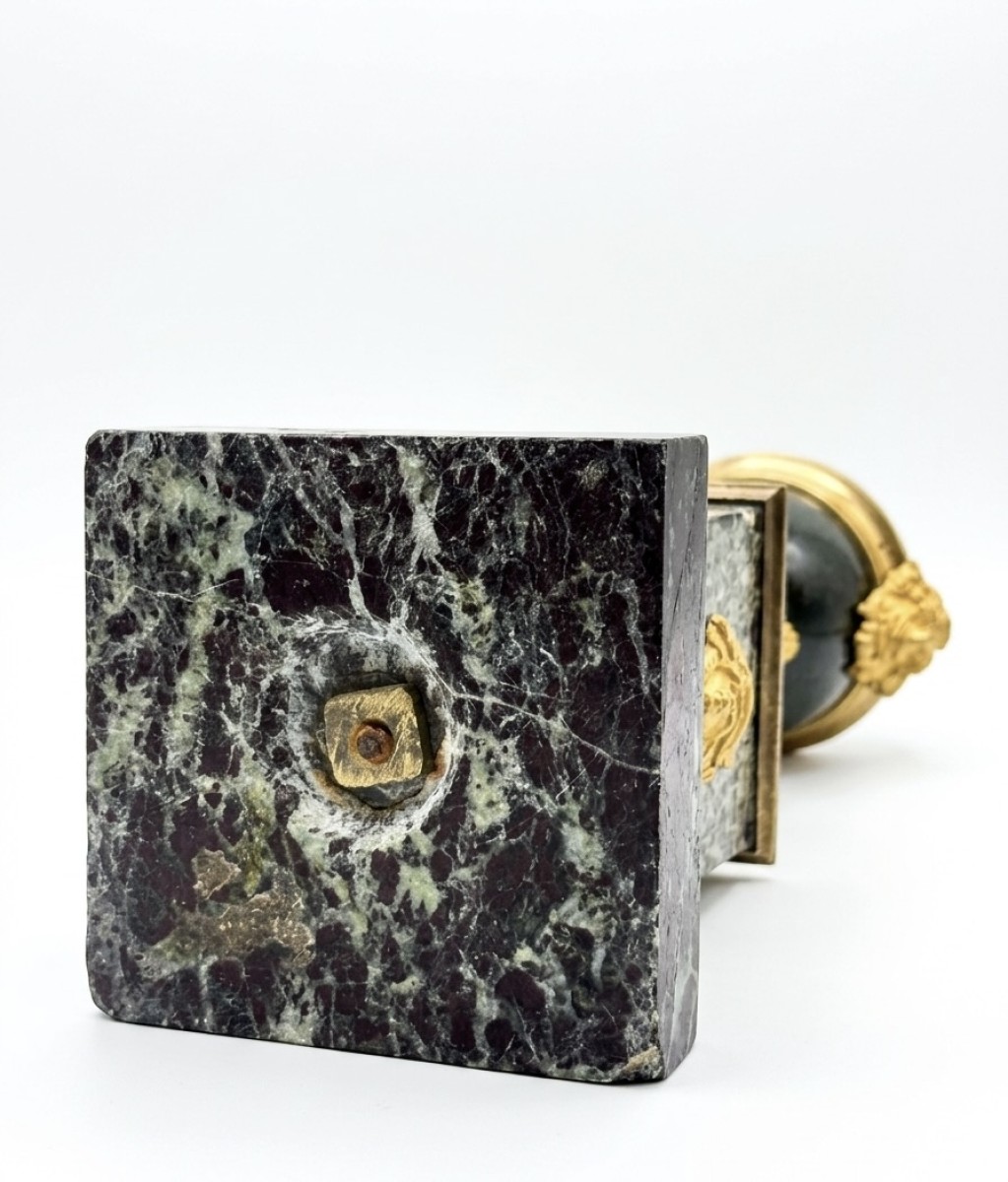
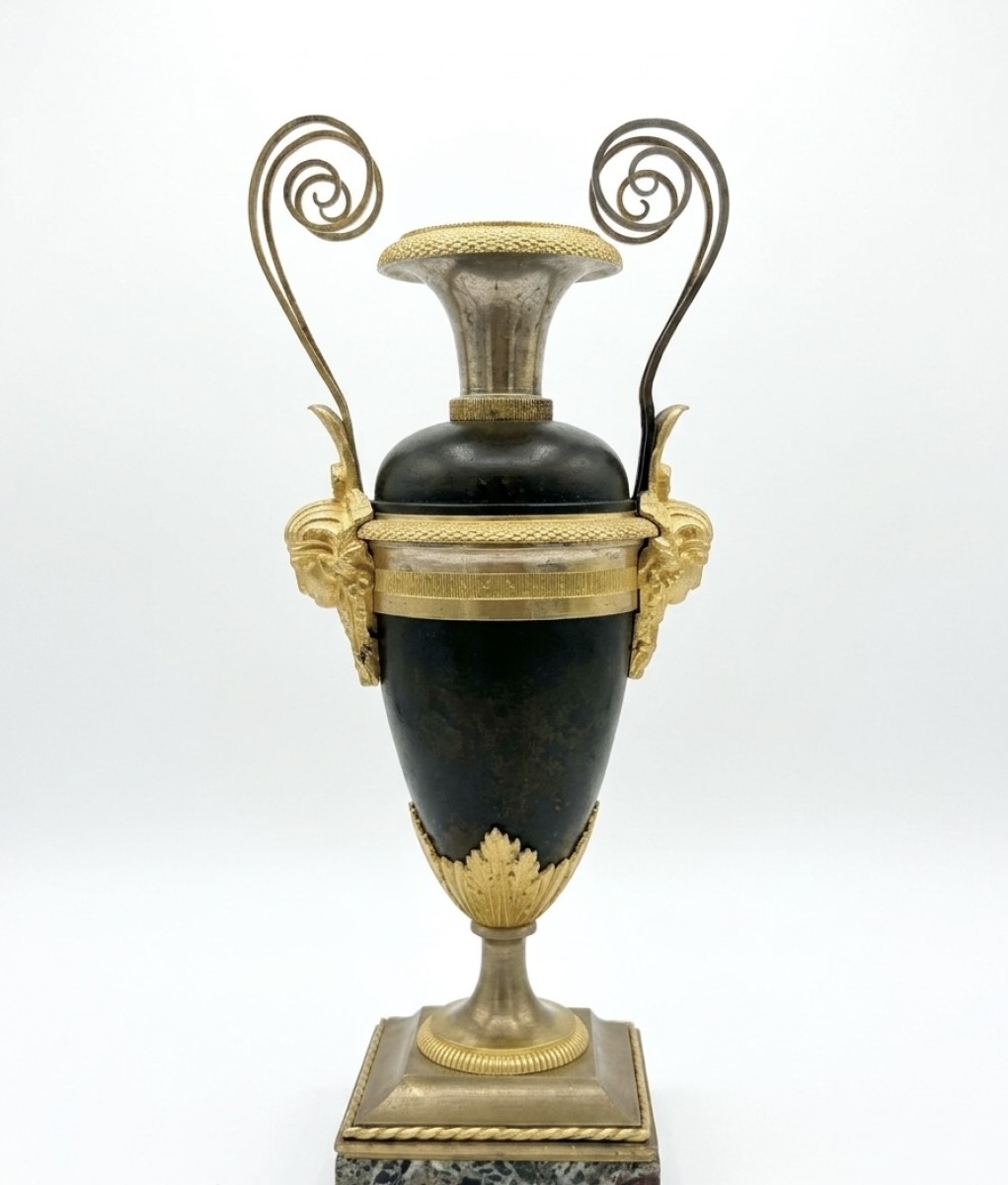
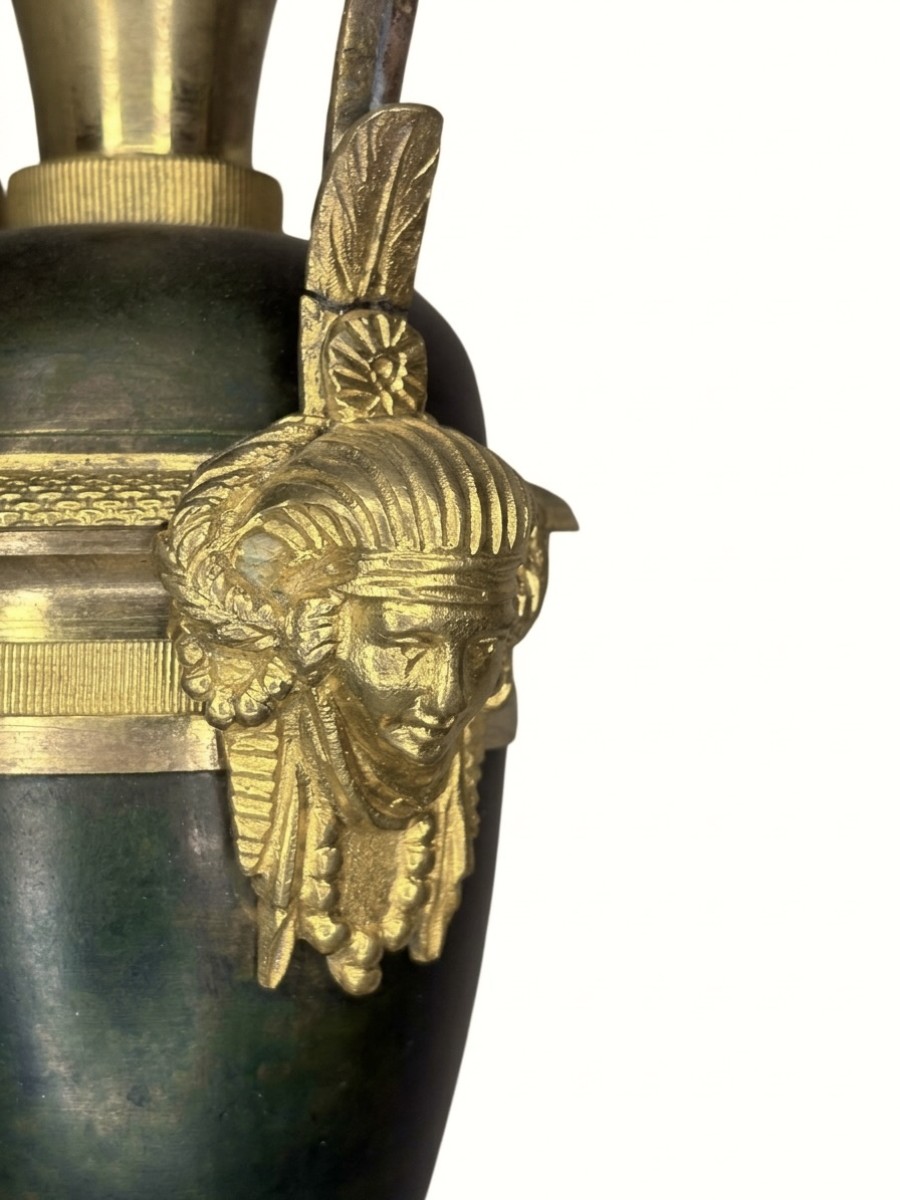
A refined pair of ornamental urn-shaped vases from the Directoire period (late 18th–early 19th century), attributed to the renowned French bronze artist Claude Galle (1759–1815), known for his creations commissioned by imperial residences and the European aristocracy. These splendid neoclassical pieces embody the perfect balance between architectural rigor and decorative richness, typical of the transition from the Louis XVI style to the Empire style. The ovoid urns are crafted from bronze with a dark green-brown patina that creates an elegant chromatic contrast with the rich, finely chiseled mercury-gilded bronze (ormolu) mounts. On either side rise two slender double-spiral handles emerging from refined sphinx heads. The base of the bowl is encircled by a motif of gilded acanthus leaves, while the flared neck is finished with a beaded band. Each vase rests on a square-sectioned architectural pedestal composed of veined sea-green marble and a lower plinth of antique red marble. The faces of the central cube are embellished with gilded bronze appliqués depicting winged heads of Hermes, framed at the base by a geometric border. Objects of the highest craftsmanship, a comparison of the quality of the materials, the chiseling, and the specific motifs (such as the spiral handles, the sphinx protomes, or the reliefs featuring the heads of Hermes) with documented examples confirms the attribution to Claude Galle. Excellent overall condition; never restored or retouched, with a beautiful original patina from the period, original gilding, and slight signs of wear consistent with the era; note an old solder repair on one of the spiral arms. Dimensions Height: 35 cm Base: 9 x 9 cm Biography: One of the most important bronze casters and engravers of the late Louis XVI and Empire periods, Claude Galle was born in Villepreux, near Versailles. He served an apprenticeship in Paris with the founder Pierre Foy and married Foy’s daughter in 1784. In 1786, he became a master founder. After his father-in-law’s death in 1788, Galle took over his workshop, quickly transforming it into one of the most prestigious, employing some 400 artisans. He moved to Quai de la Monnaie (later Quai de l’Unité), then in 1805 to 60 Rue Vivienne. The Garde-Meuble de la Couronne, under the direction of the sculptor Jean Hauré from 1786 to 1788, entrusted him with numerous commissions. Galle collaborated with many outstanding artisans, including Pierre-Philippe Thomire, and supplied most of the bronze works for the Palace of Fontainebleau during the Empire. He received numerous other imperial commissions, including chandeliers, figurative clock cases, and vases for the palaces of Saint-Cloud, Trianon, the Tuileries, Compiègne, and Rambouillet. He also furnished several Italian palaces, such as Monte Cavallo in Rome and Stupinigi near Turin. Today, his works are on display in the world’s greatest museums and collections, including those mentioned above, as well as the Musée national du Château de Malmaison, the Musée Marmottan in Paris, the Musée de l’Horlogerie in Jerez de la Frontera, the Residenz in Munich, and the Victoria and Albert Museum in London.
Delevery information :
Antichità San Felice takes care of organizing the packaging, home delivery and all the administrative formalities related to the shipment.
Antichità San Felice works with several service providers selected for their professionalism, in order to ensure delivery of works of art in the best conditions.
For the packaging of the goods, we involve craftsmen who were responsible for the construction of custom-made wooden crates.
For transport, depending on the case, we involve the most suitable service provider.
All shipments from Antichità San Felice are covered by value insurance. It is important to note that the Customer must indicate on the dispatch note any reservations upon receipt of the object, in order to be able to bring the insurance into play.
Payments accepted:
bank transfer
online bank card
paypal (+3.4% Europe +5% rest of the world)