Offered by Antichità San Felice
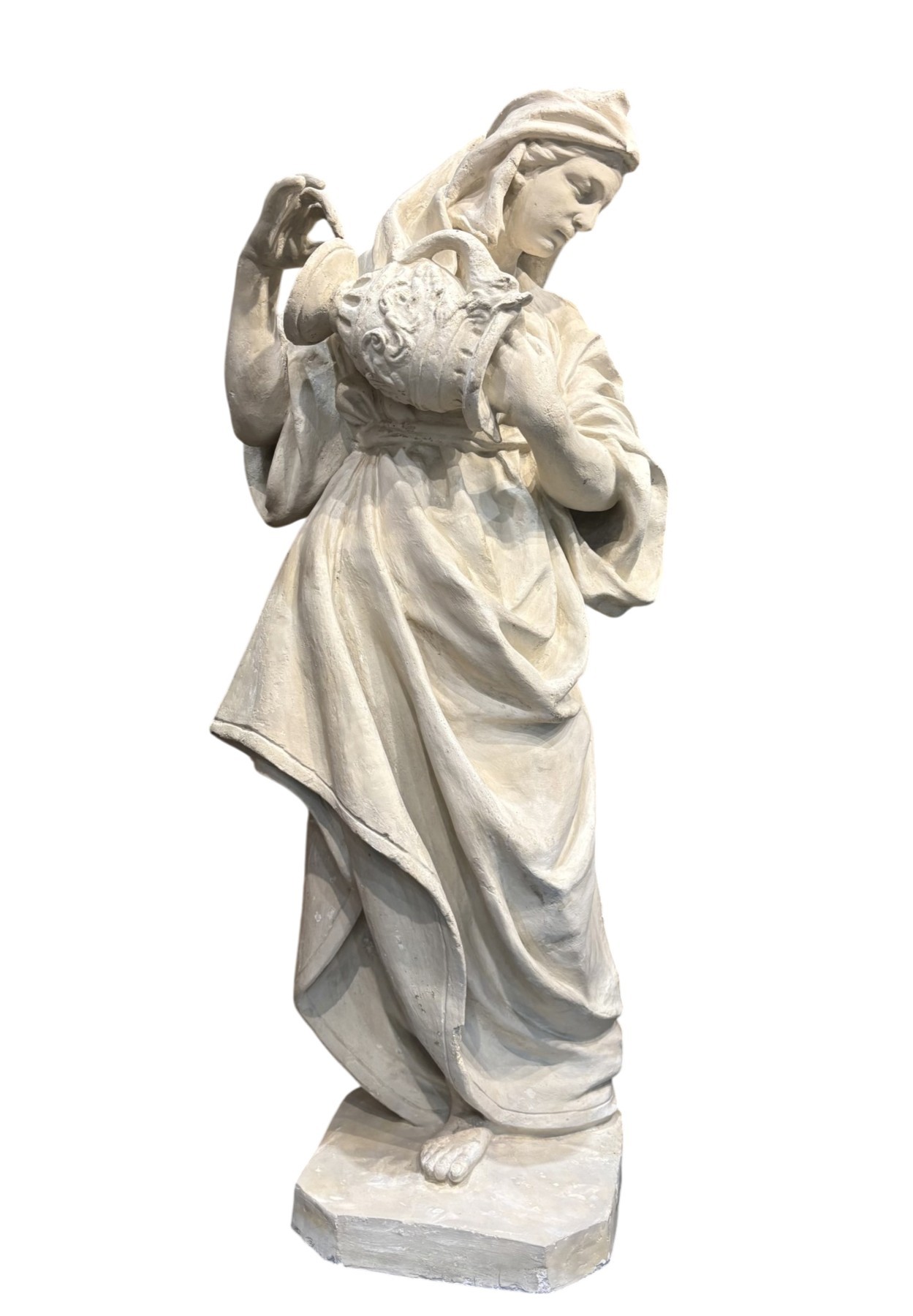
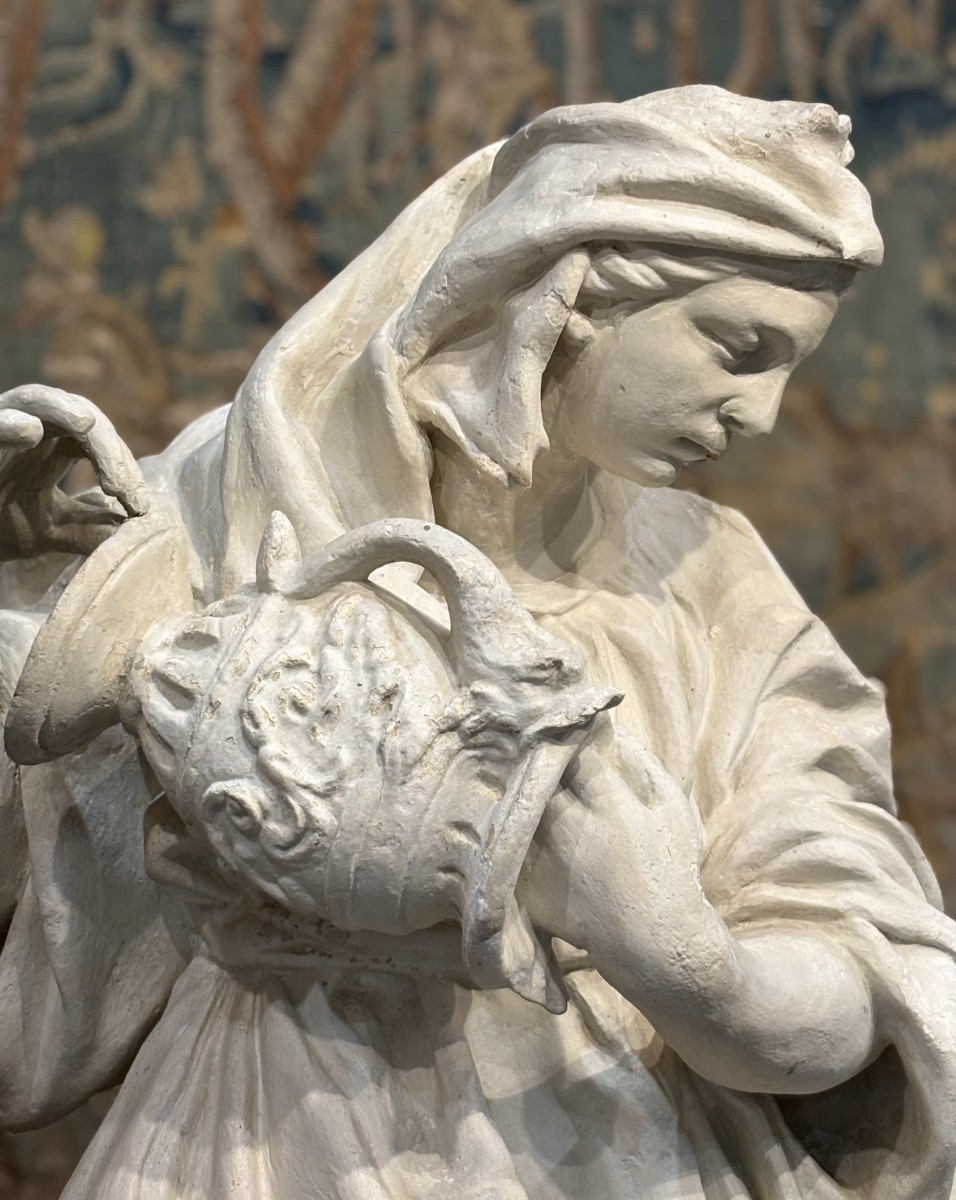
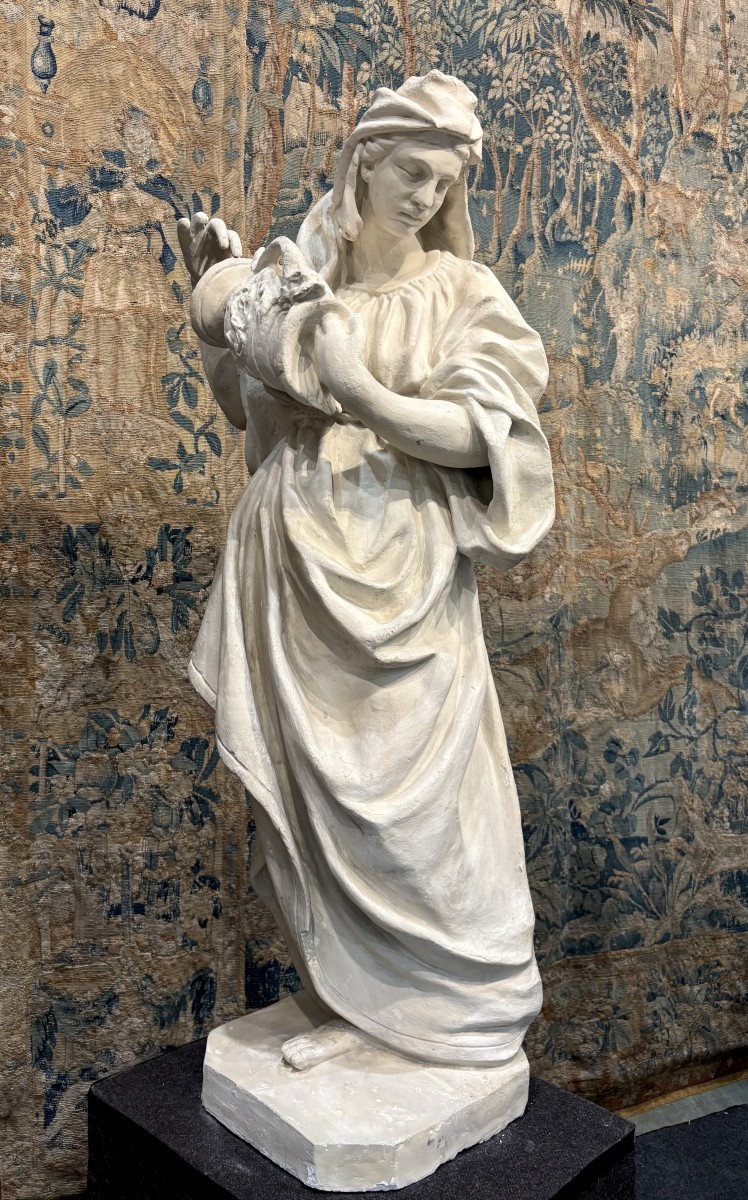
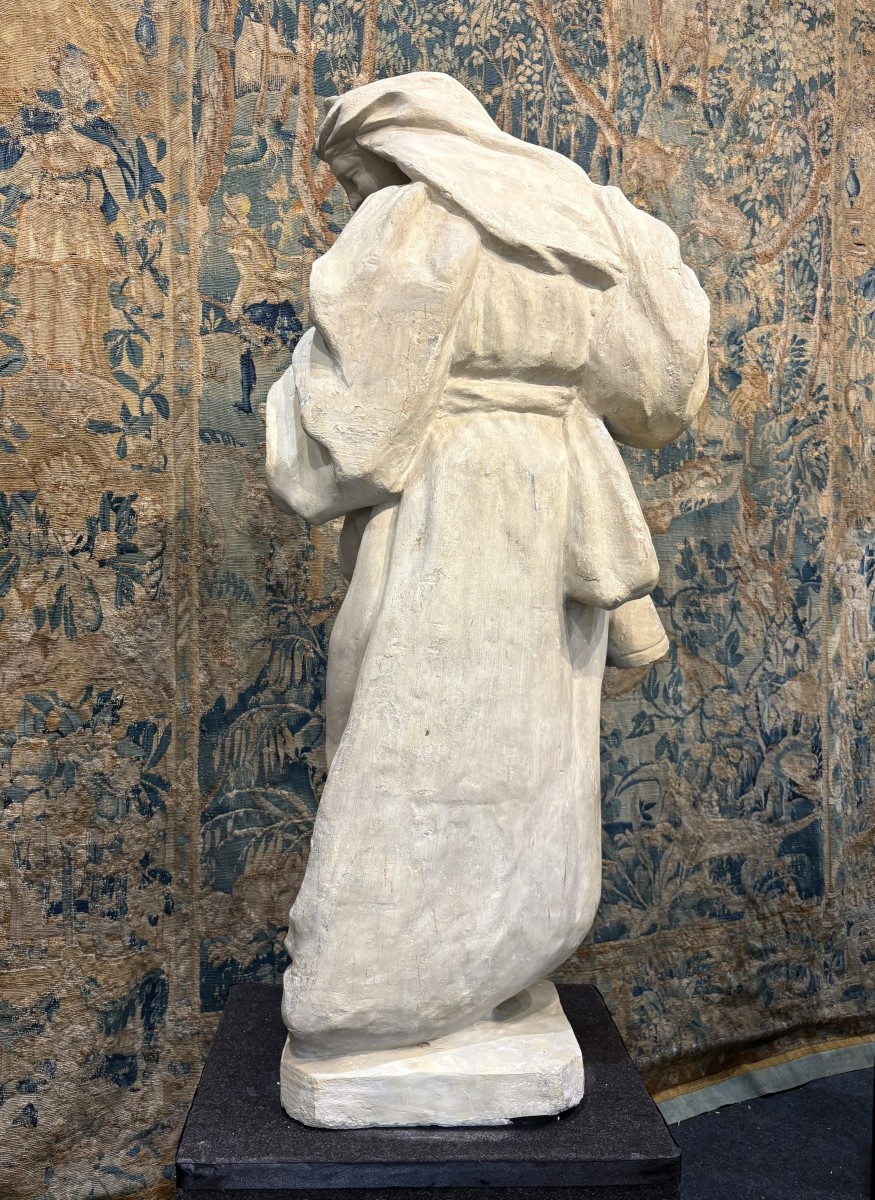
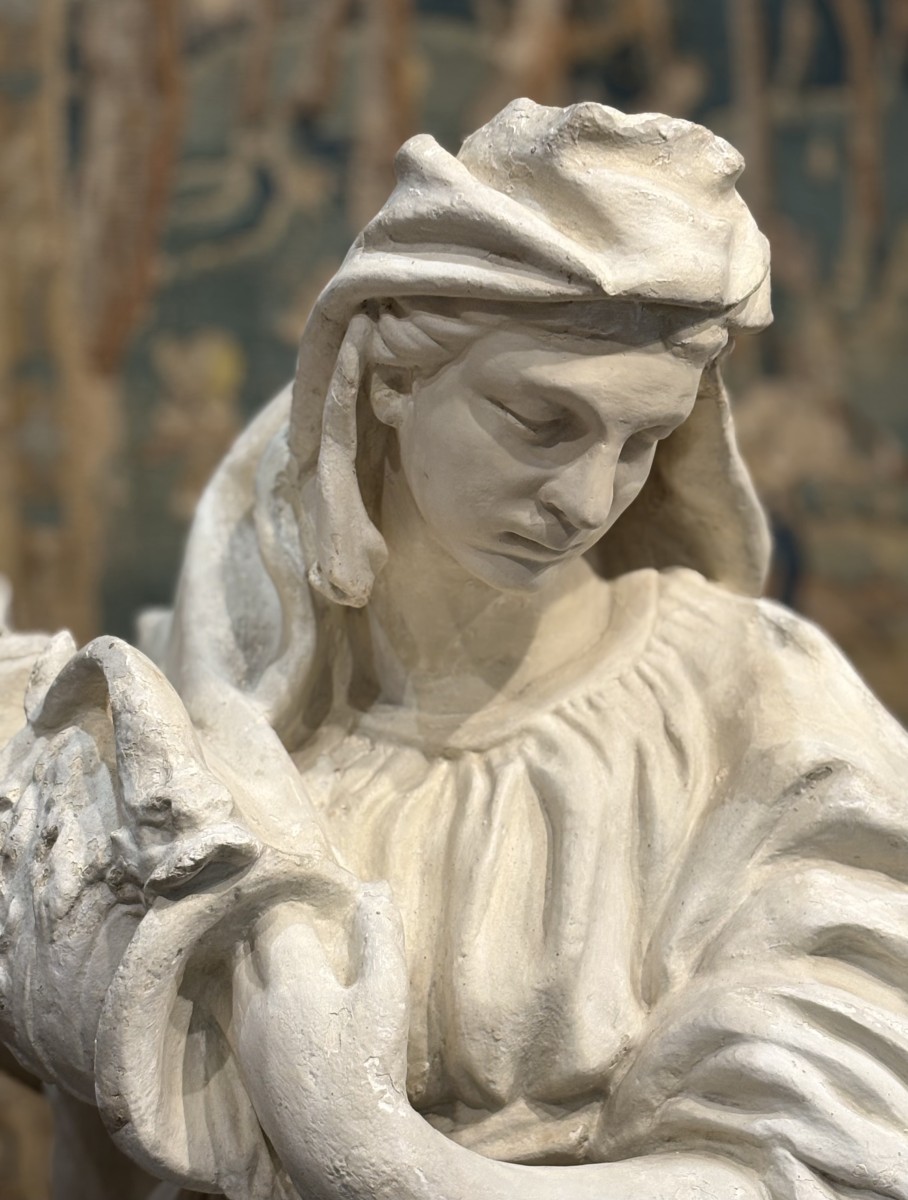

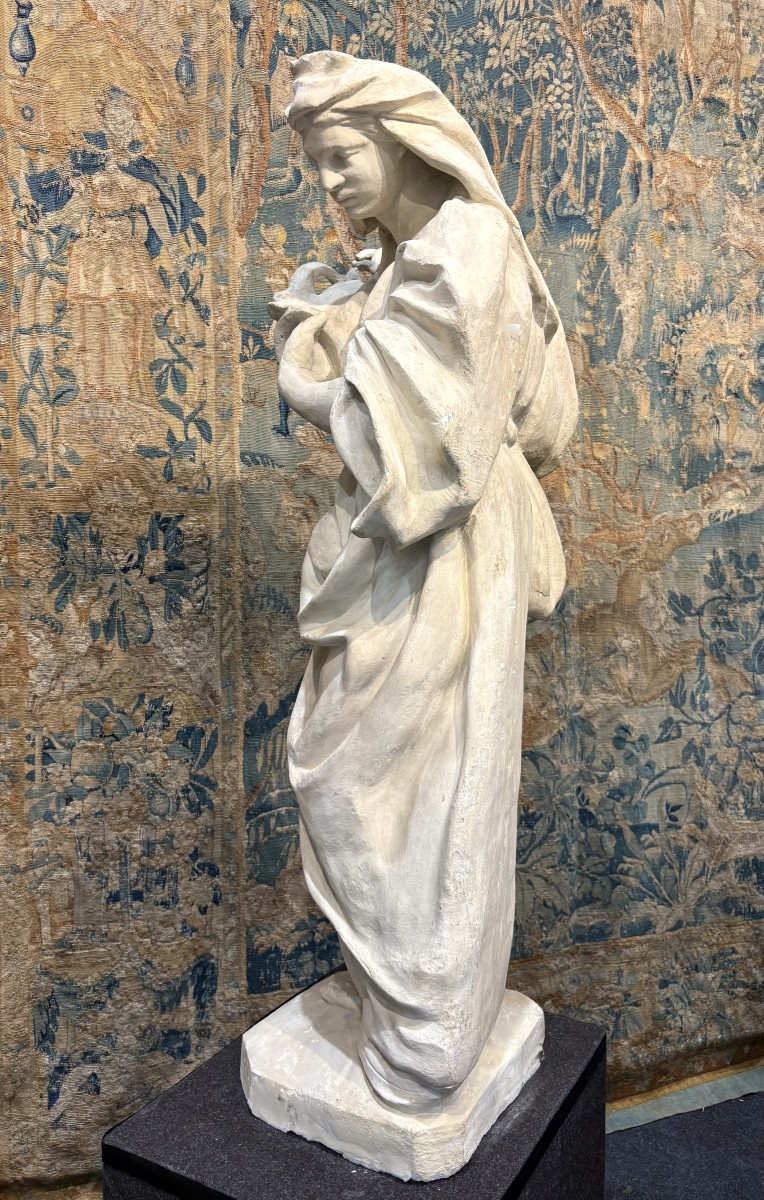
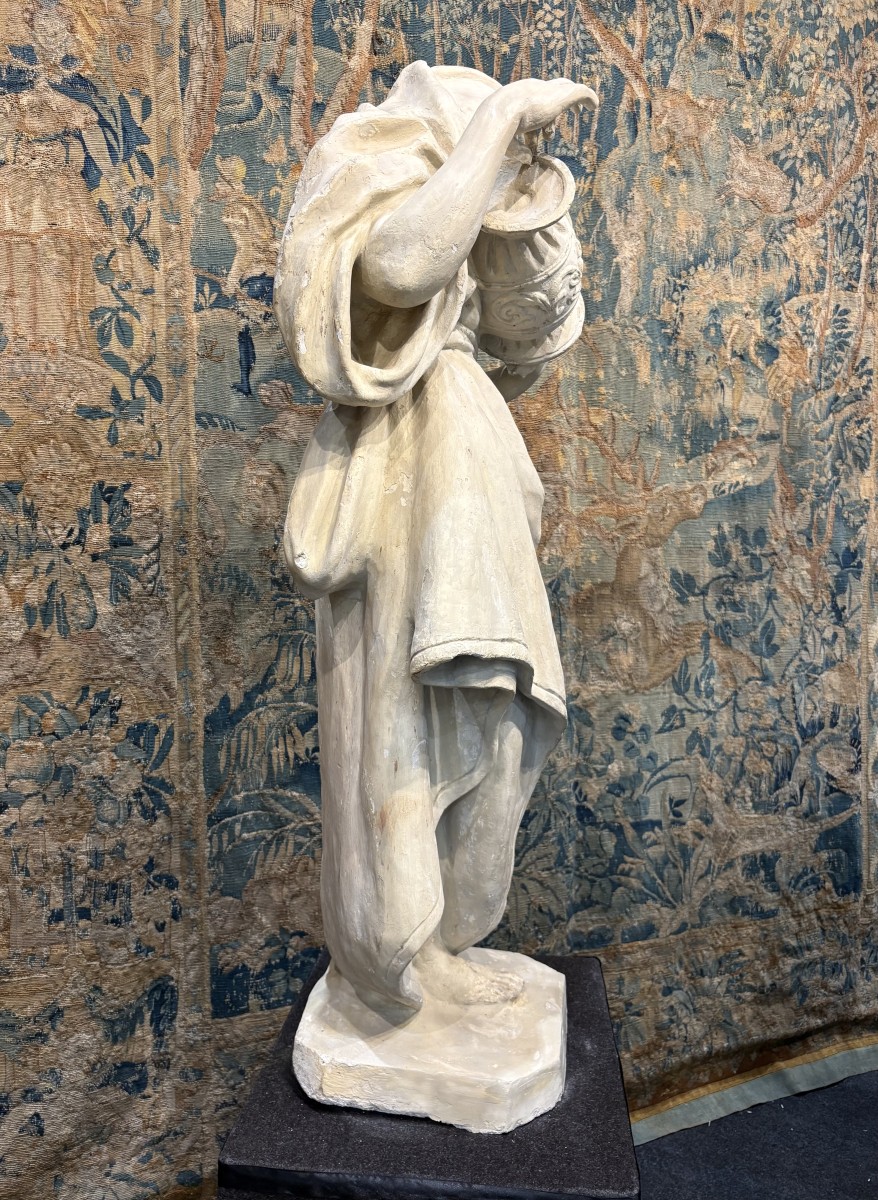
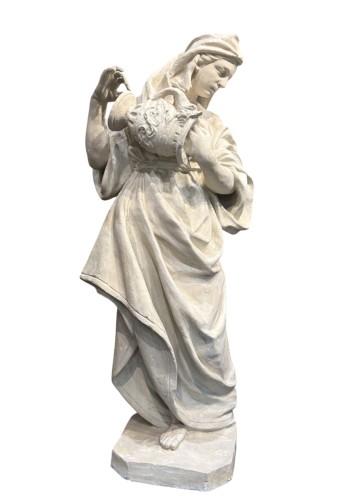
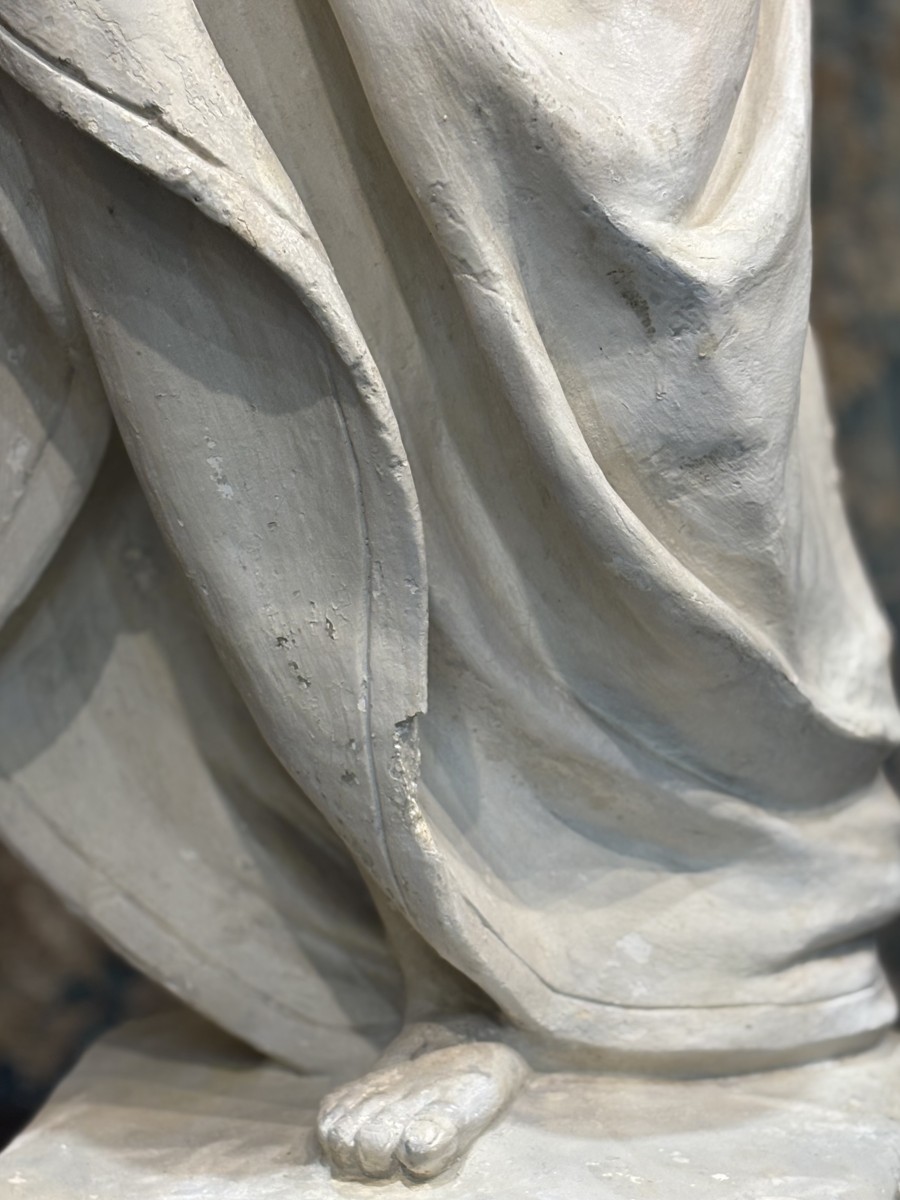
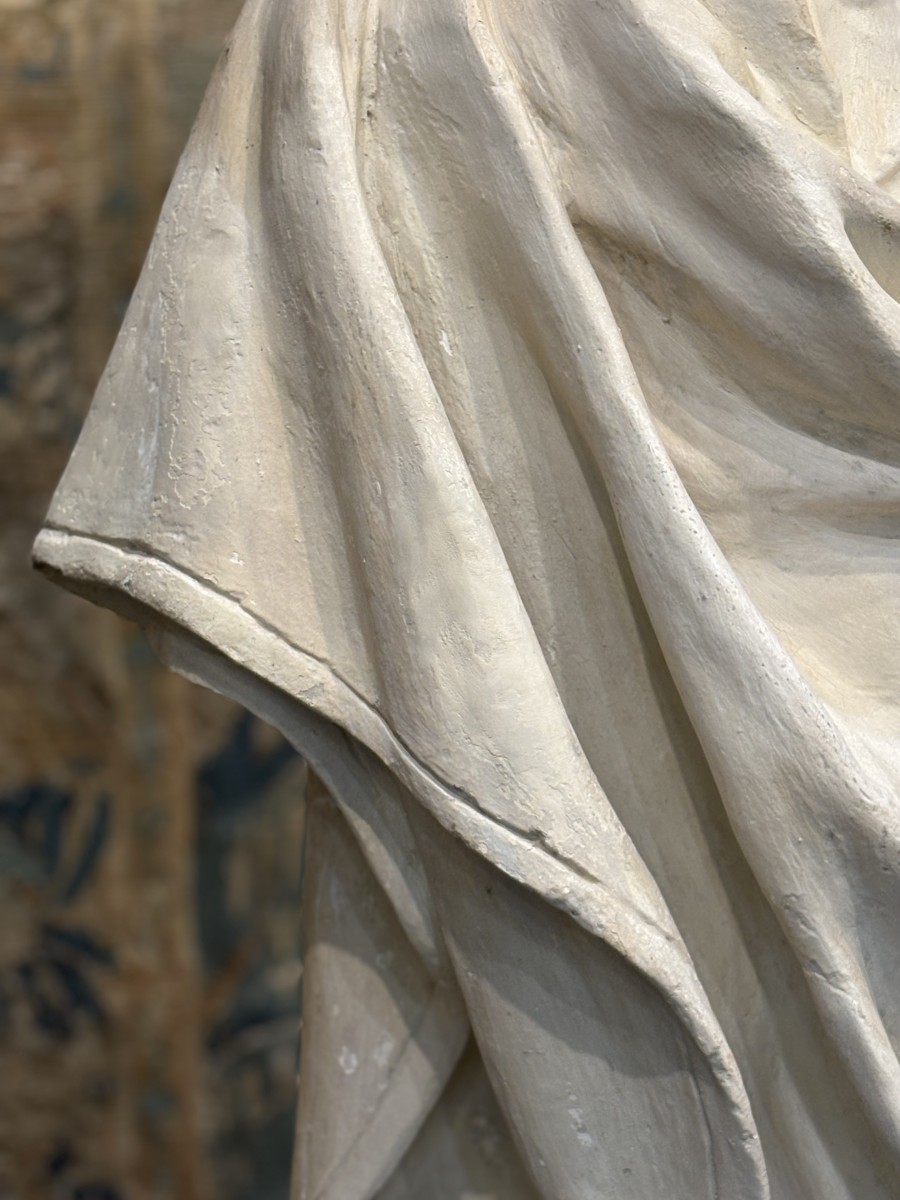
An important stucco sculpture depicting the allegory of Temperance, attributed to Giacomo De Maria (Bologna, 1762–1838); provenance: Villa San Martino, Bologna.
Giacomo De Maria was a prominent Neoclassical sculptor from Bologna. A contemporary, student, and friend of Antonio Canova, he played a leading role in the spread of Neoclassicism in his home city.
He received his training in Bologna at the Accademia Clementina, where his natural talent set him apart from his peers, earning him numerous awards for his diligence and the high quality of his execution. In 1787, De Maria moved to Rome for a brief period of study, which allowed him to examine firsthand the antiquities held in the city’s most significant private collections and to visit various archaeological sites. During this time, he met Antonio Canova, who was already emerging as one of the most gifted sculptors in Rome. In the Eternal City, De Maria immersed himself in the magnificent world of ancient sculpture and engaged in stimulating dialogue with the brilliant masters of the Renaissance and the Roman Baroque. He gained direct experience of the complex workings of marble workshops—all under the guidance of a master. It was here that his personal connection with Antonio Canova proved pivotal: beginning as an admiring visitor to Canova’s studio on Via delle Colonnette, he soon developed a genuine, lifelong friendship with the artist. This experience explains how, upon returning to Bologna—where he would go on to hold a prestigious chair at the Accademia di Belle Arti—De Maria was able to shift the style of sculpture away from the Baroque echoes of his predecessors toward the epic power of Neoclassicism, a movement whose essence and language he had truly mastered. In Bologna, he immediately secured prestigious commissions, welcomed triumphantly as a pupil of Canova. He produced numerous works, most notably the neoclassical decoration for Palazzo Hercolani.
While the art of sculpture has long been associated with marble, it should be understood that a wide variety of materials were actually employed, their use often dictated simply by their local availability. The lands of the Cispadane region—enriched by millennia of river-borne silt—were not without a tradition of stone and marble work in centuries past; yet, from the Renaissance onward, they gave rise to what might be termed an "epic poetry of clay." This medium was primarily directed toward religious imagery—fostering an immediate spiritual connection—and the dramatic, sacred "Lamentation" groups, which possess the power to stir the heart to its very depths, evoking a profound, shared sense of sorrow. Furthermore, thanks to the nearby gypsum quarries—which provided *scagliola* (imitation marble) and stucco, both prized for their versatility—this region became a prolific workshop for figurative and corporeal forms. These works appeared everywhere, adorning churches and palaces alike, serving both as ornamentation and as vehicles for deeper, symbolic meaning.
Our sculpture boasts a distinguished provenance, and its attribution can be confirmed with certainty. It was once part of a series of allegorical sculptures that adorned the great hall of Villa San Martino. The villa’s owners—the noble De' Bianchi family (who, through marriage, became the Sassoli De' Bianchi family in the late 19th century)—maintained significant ties and a professional patronage relationship with the sculptor Giacomo De Maria. He worked directly on the artistic decoration and enrichment of the De' Bianchi family’s properties. Furthermore, his presence in Monte San Pietro—near Bologna, where Villa San Martino is located—is documented in the cultural heritage archives in connection with the creation of an altarpiece for the church of Santa Maria Assunta. Additionally, he frequently employed stucco in his works, crafting exquisite drapery; one notable example is the decoration found on the grand staircase of Palazzo Hercolani.
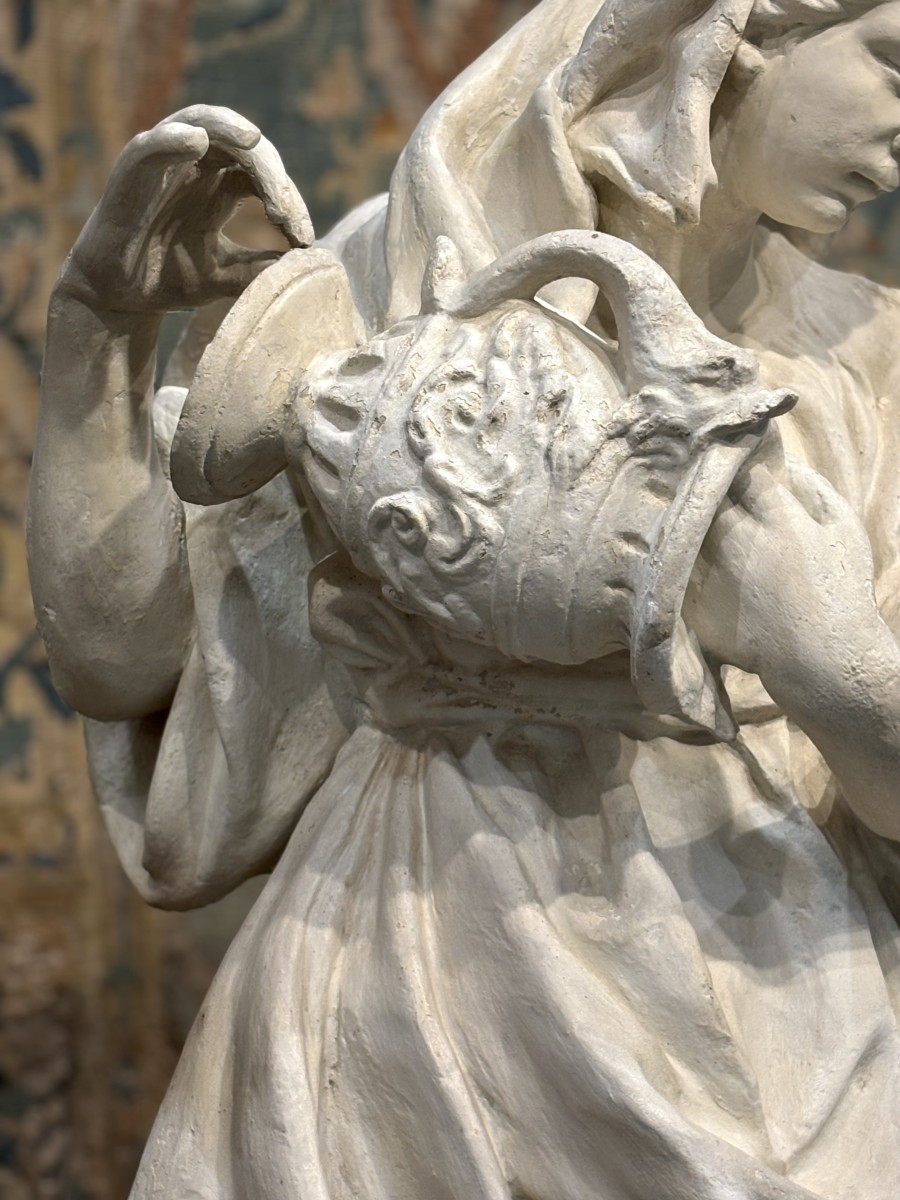
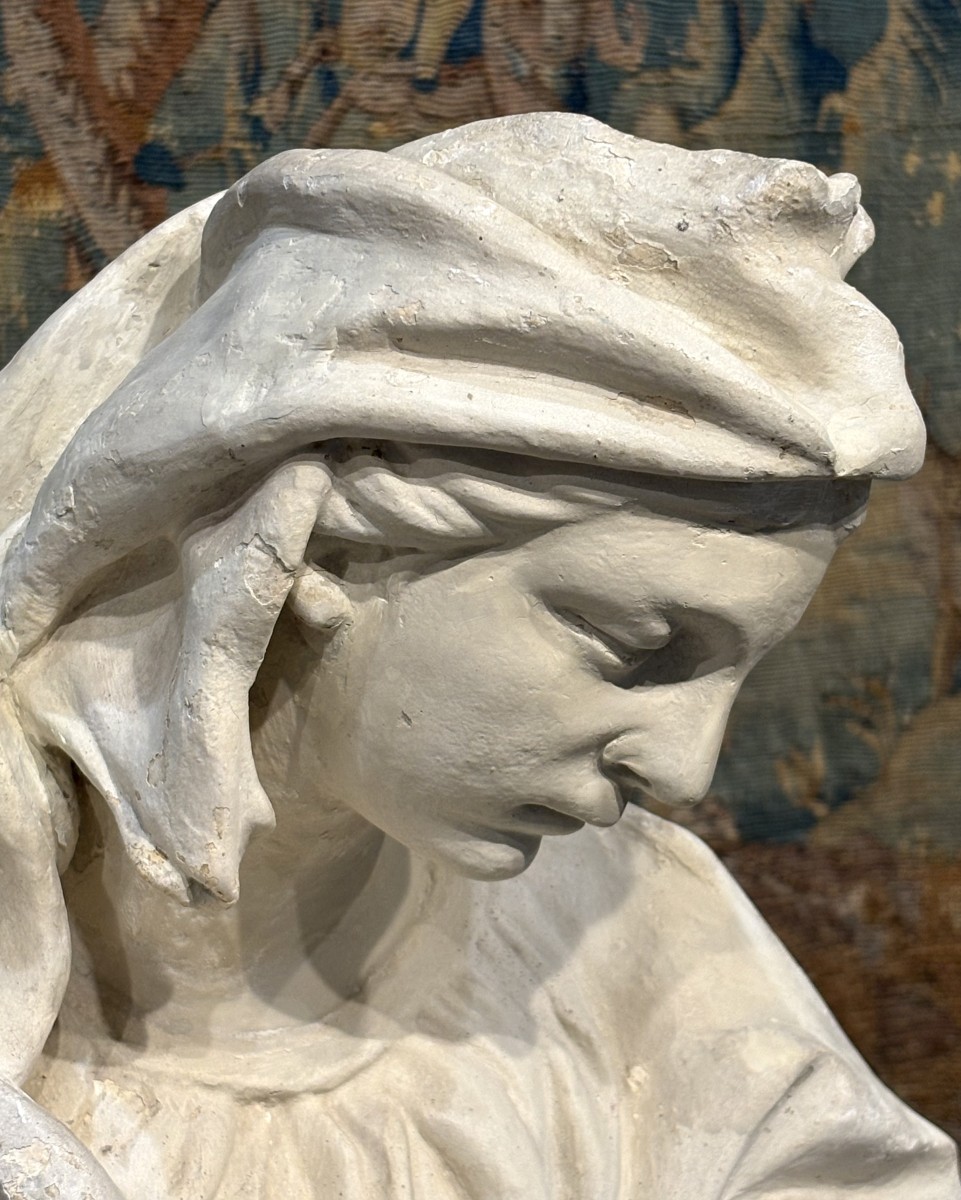
In classical iconography, Temperance is often depicted as a young woman mixing or pouring water to temper excesses and passions. She is captured in a dynamic, sinuous pose—utilizing *contrapposto*—while gracefully holding a vessel adorned with elaborate embossed (repoussé) ornamentation. A soft veil drapes over her head and falls across her shoulders, framing a face with serene, classical features. The folds of her garment are deep and sculptural, defined by strong *chiaroscuro*—hallmarks of the late Baroque or Neoclassical sculptural tradition.
Dimensions
Height: 115 cm
Maximum width: 45 cm
Base: 31 x 29 cm
Delevery information :
Antichità San Felice takes care of organizing the packaging, home delivery and all the administrative formalities related to the shipment.
Antichità San Felice works with several service providers selected for their professionalism, in order to ensure delivery of works of art in the best conditions.
For the packaging of the goods, we involve craftsmen who were responsible for the construction of custom-made wooden crates.
For transport, depending on the case, we involve the most suitable service provider.
All shipments from Antichità San Felice are covered by value insurance. It is important to note that the Customer must indicate on the dispatch note any reservations upon receipt of the object, in order to be able to bring the insurance into play.
Payments accepted:
bank transfer
online bank card
paypal (+3.4% Europe +5% rest of the world)