Offered by Antichità San Felice
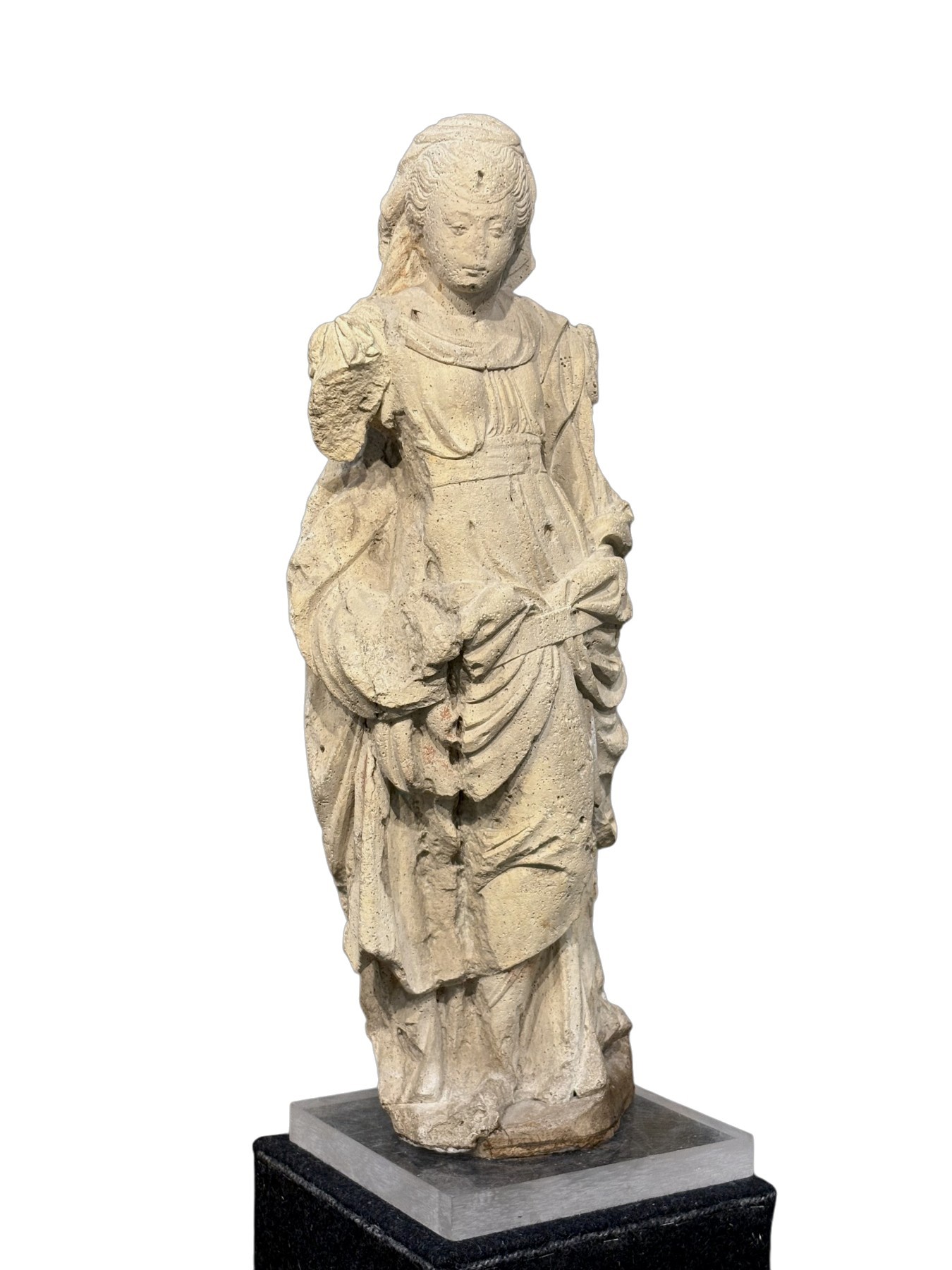
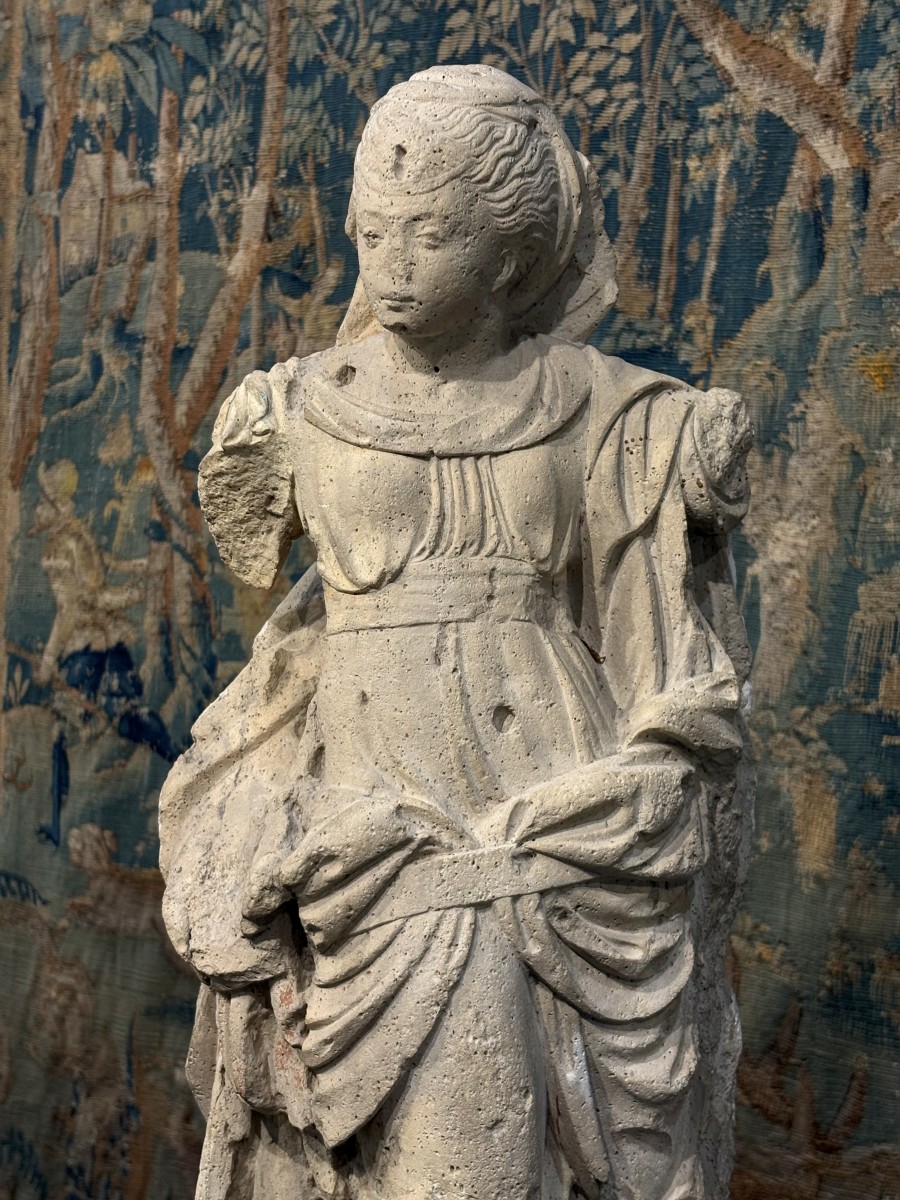
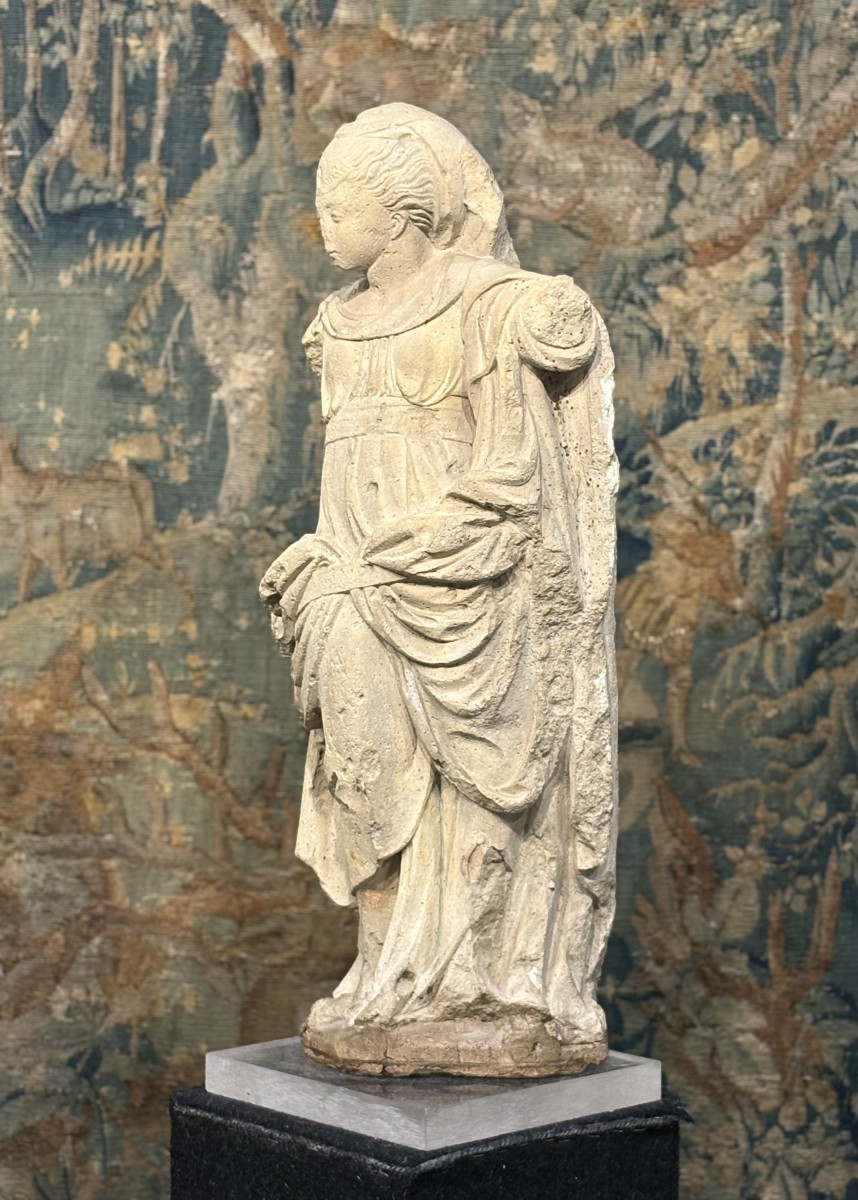
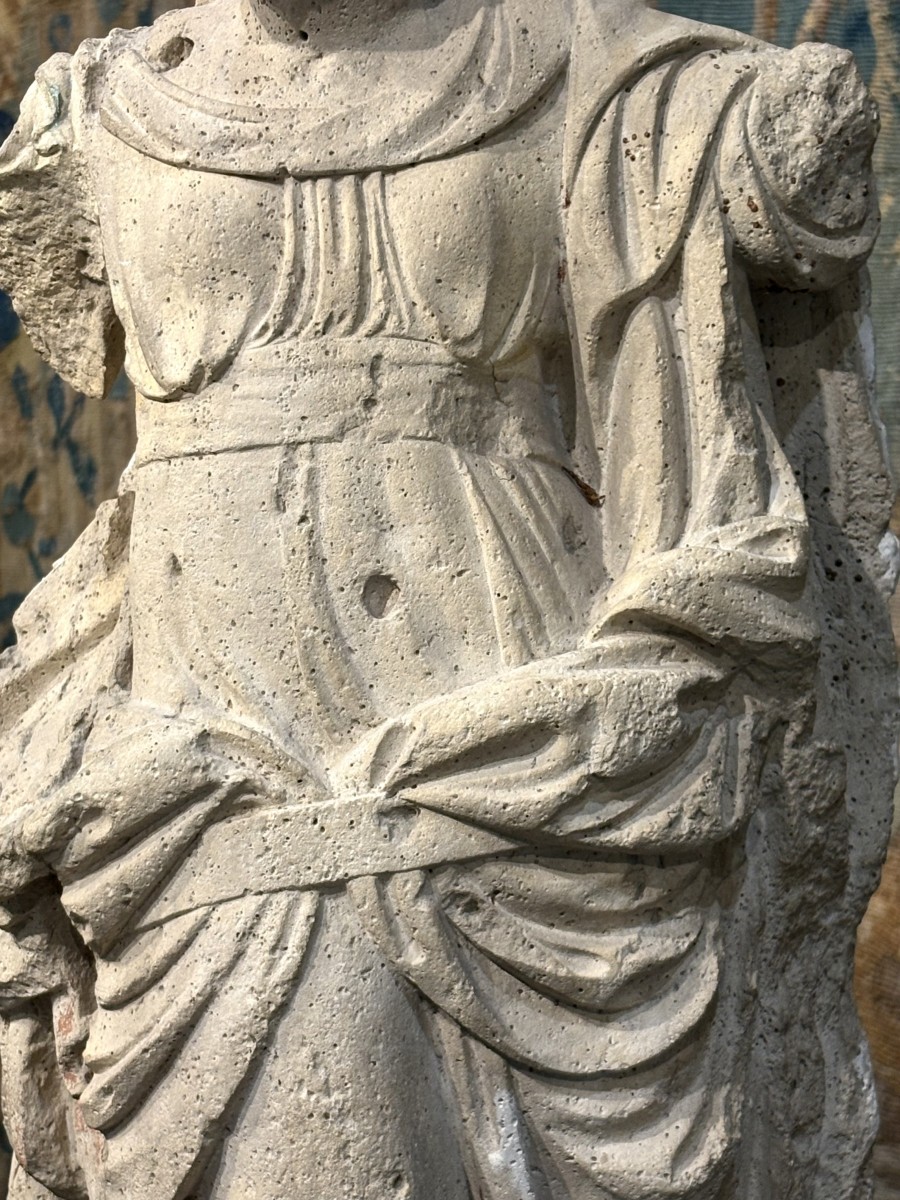
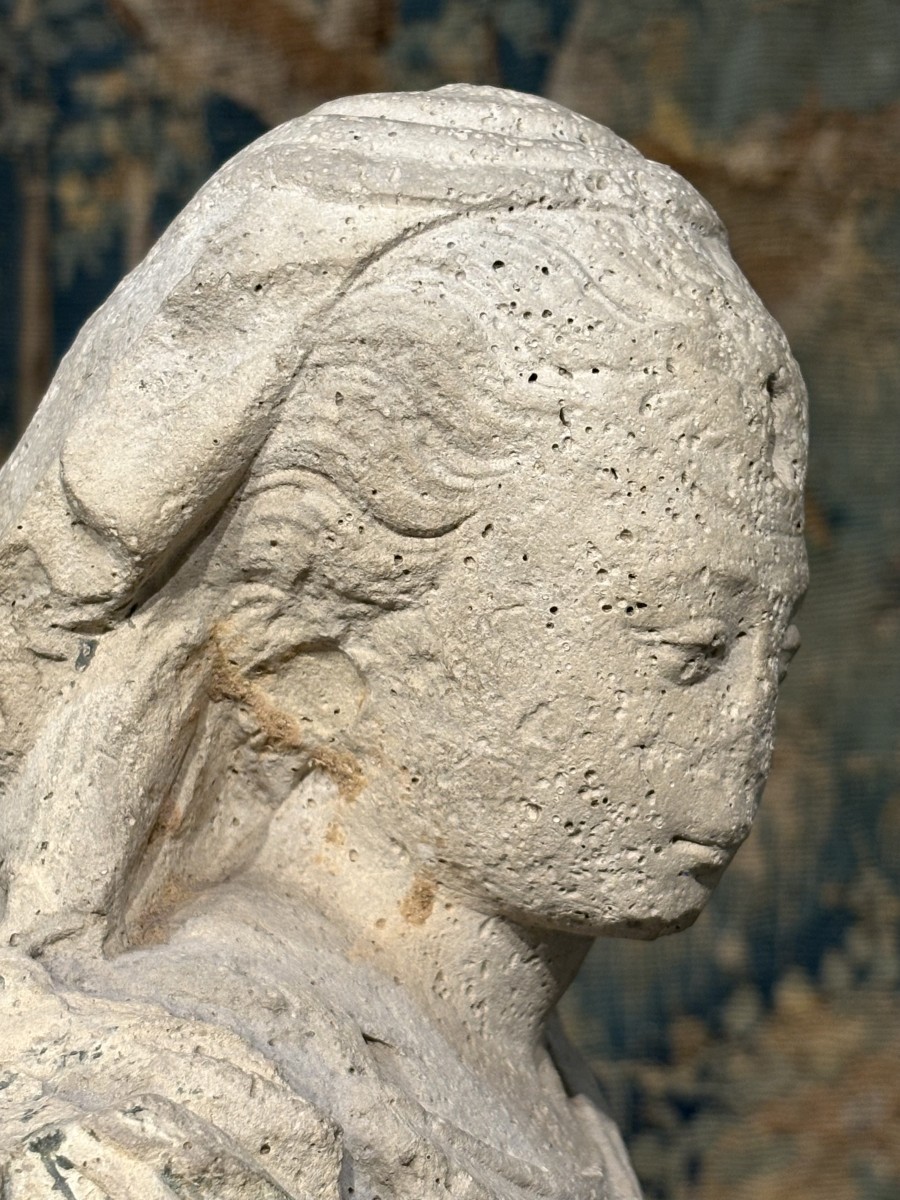

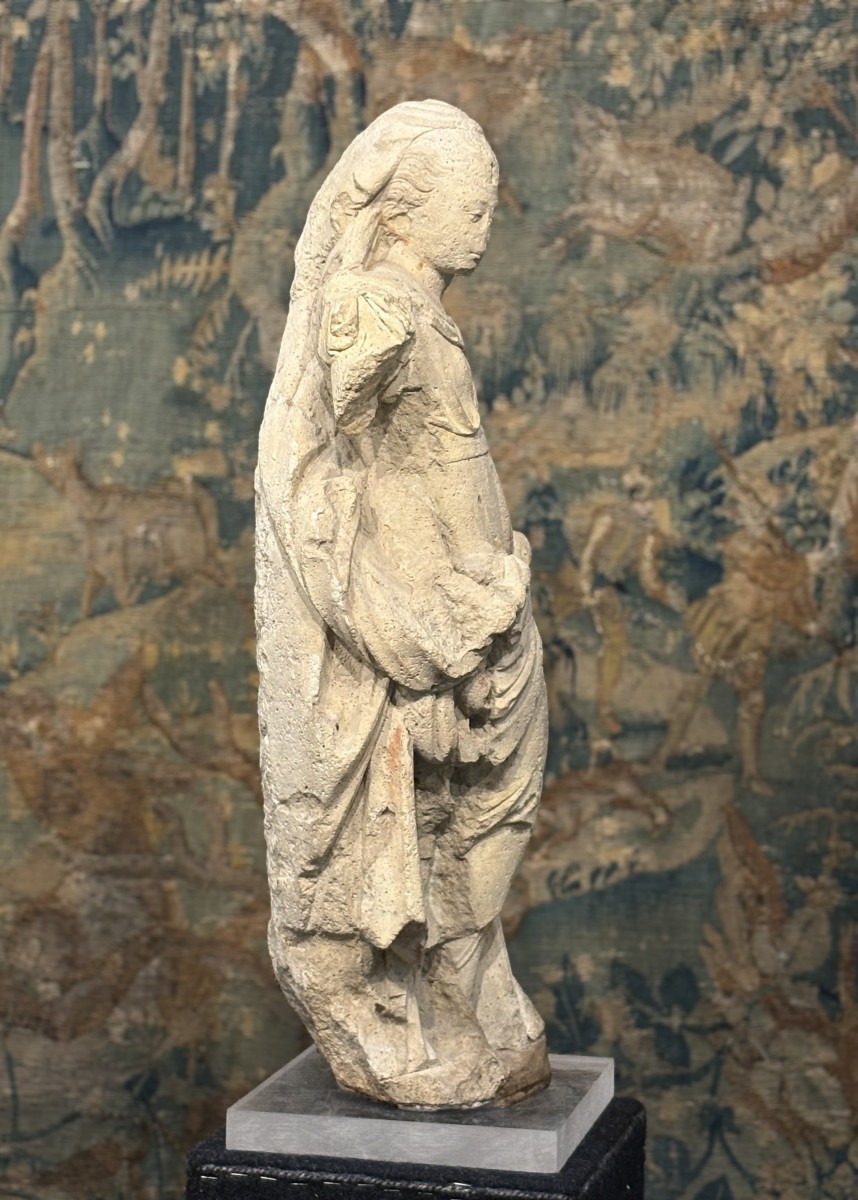
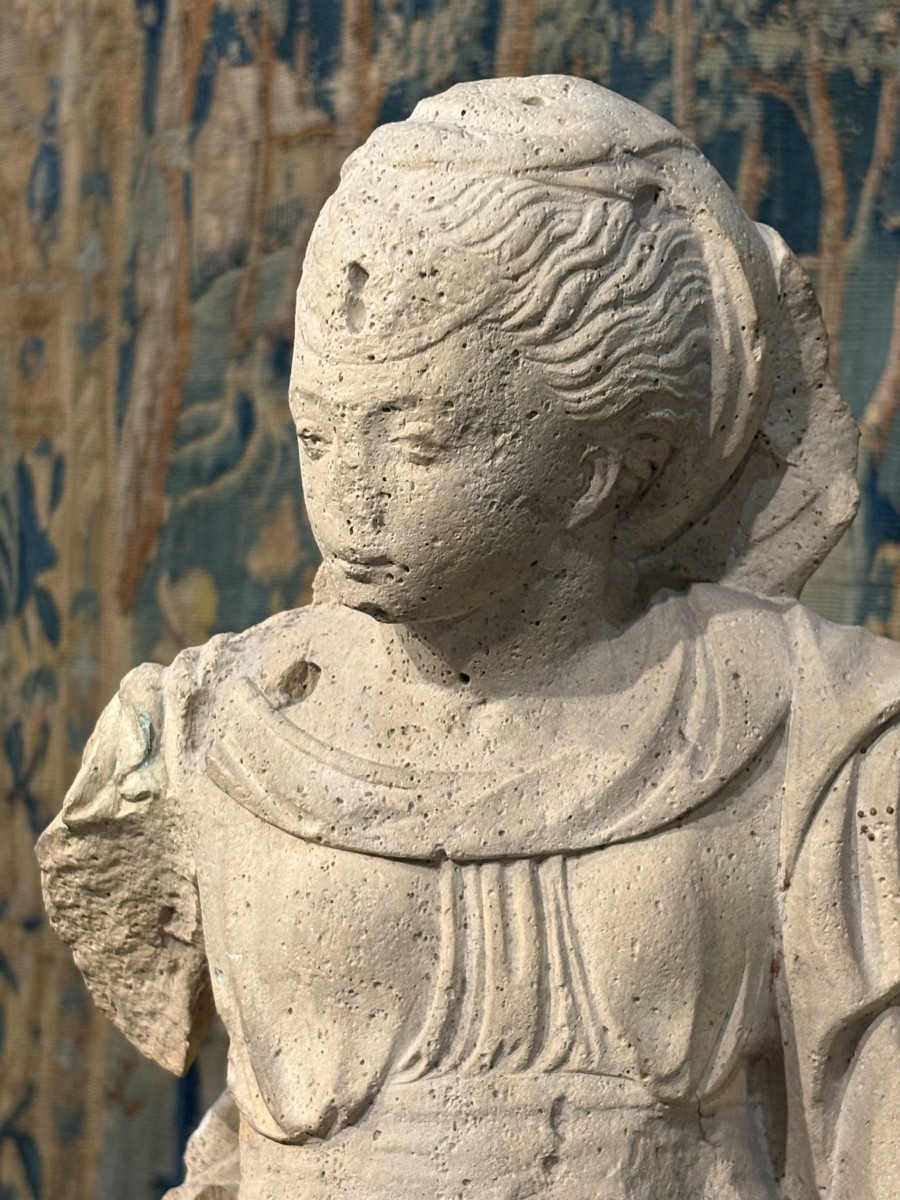
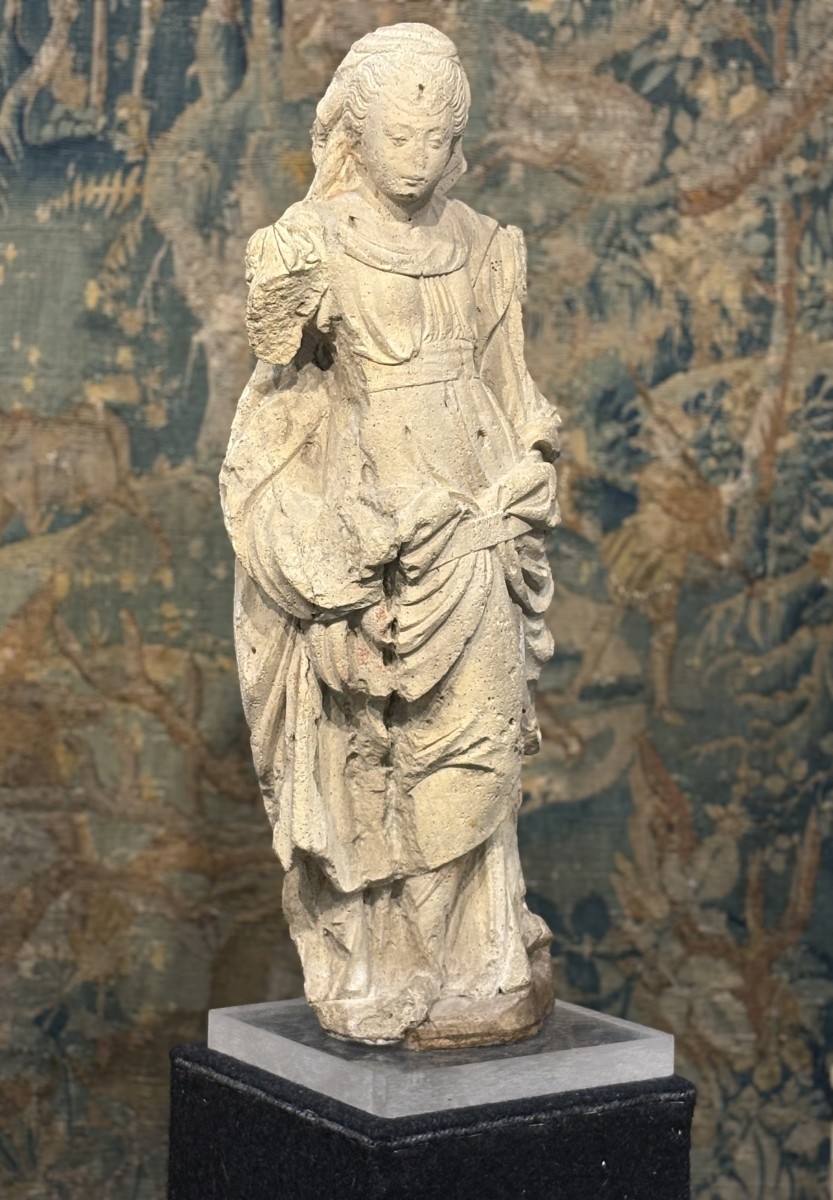
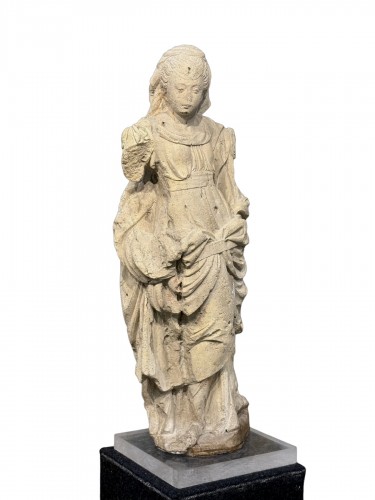
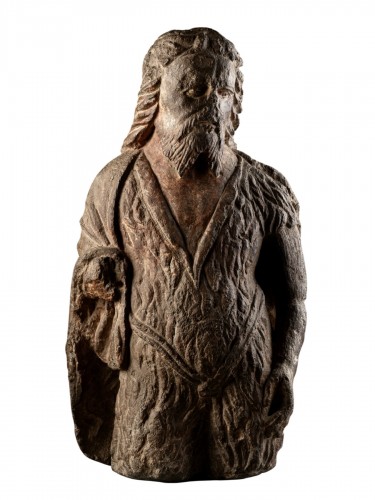
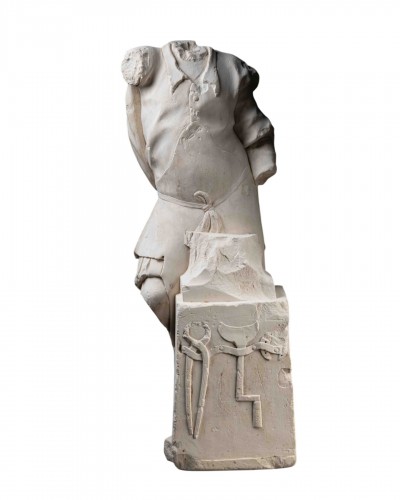
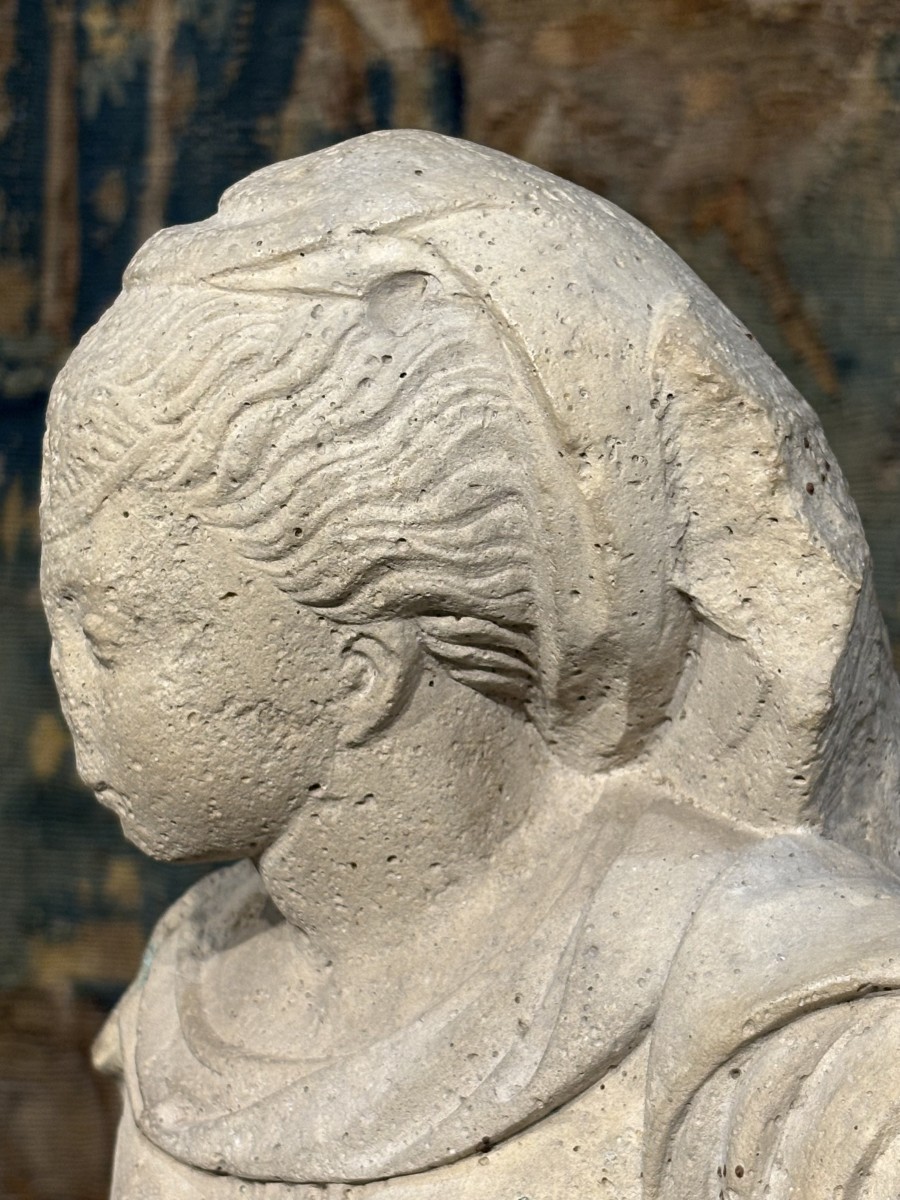
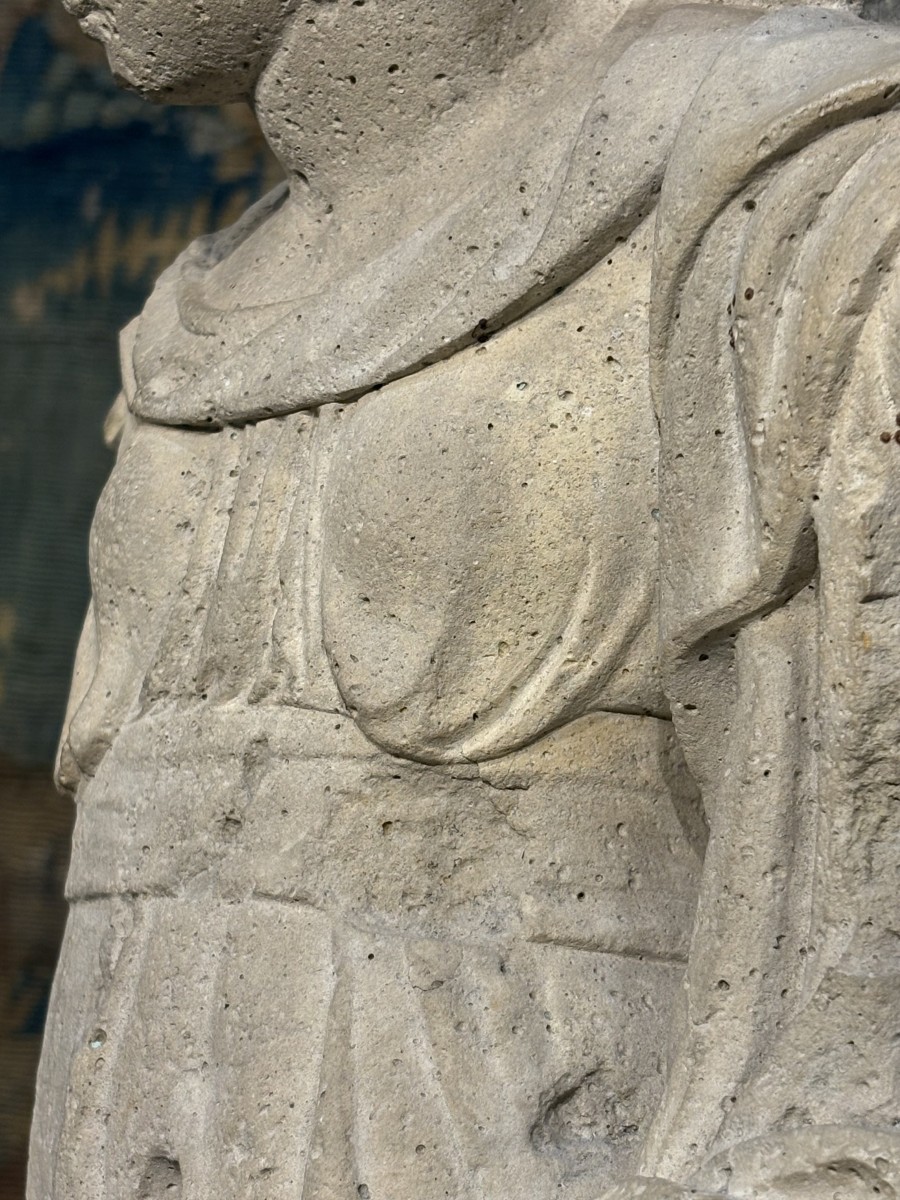
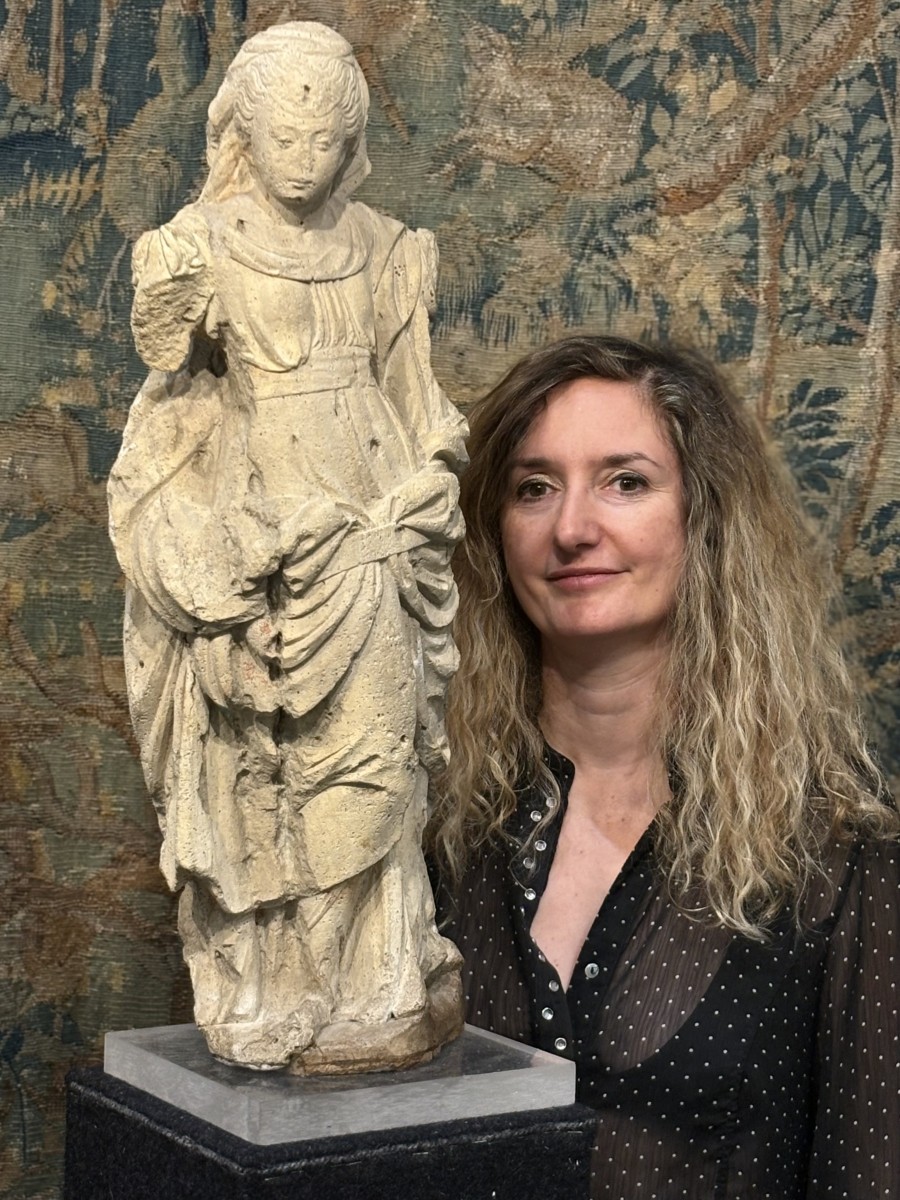
Mannerist sculpture in Lutetian limestone depicting a Virtue, Île-de-France, second half of the 16th century.
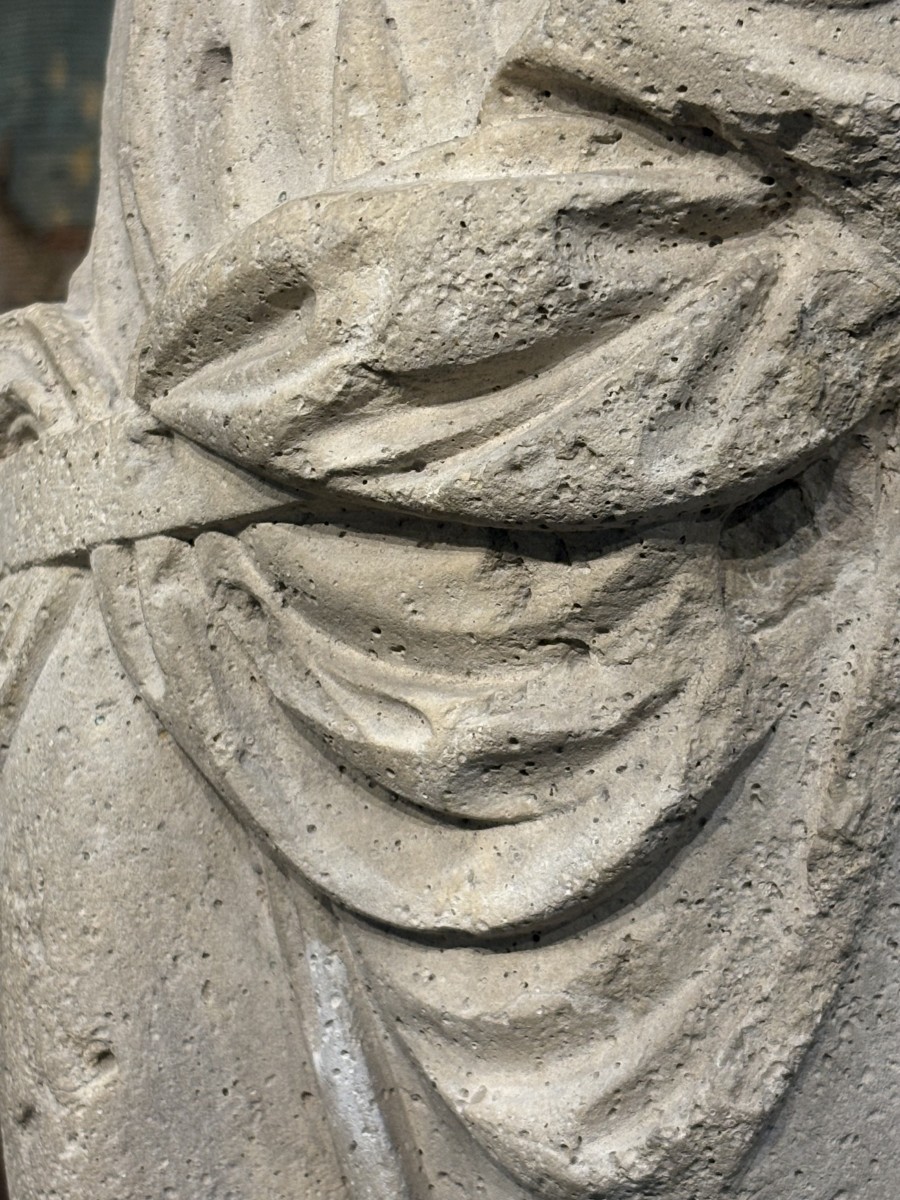
Sixteenth-century sculpture in the Île-de-France region underwent a gradual transition from the late Gothic (Flamboyant Gothic) to the assimilation of Italian Renaissance forms, combined with a typically French spirit of elegance and restraint. Under the patronage of Francis I and Henry II, Italian artists (such as Primaticcio and Benvenuto Cellini) worked in Fontainebleau and Paris, introducing Mannerism: elongated bodies, supple musculature, serpentine poses, and a taste for mythological allegory. Unlike the dramatic power of Michelangelo’s work in Italy, Parisian sculpture emphasizes grace, the fluidity of drapery, and a sort of aristocratic composure.
Our sculpture most likely depicts a Virtue: by analyzing the position of the arms—even though they are missing—we can infer that she held her right arm raised, which suggests Justice, who in iconography holds up a scale. In this era, the Virtues were indeed depicted as elegant and graceful young women with idealized physiques; their drapery echoes that of Roman or Greek statues.
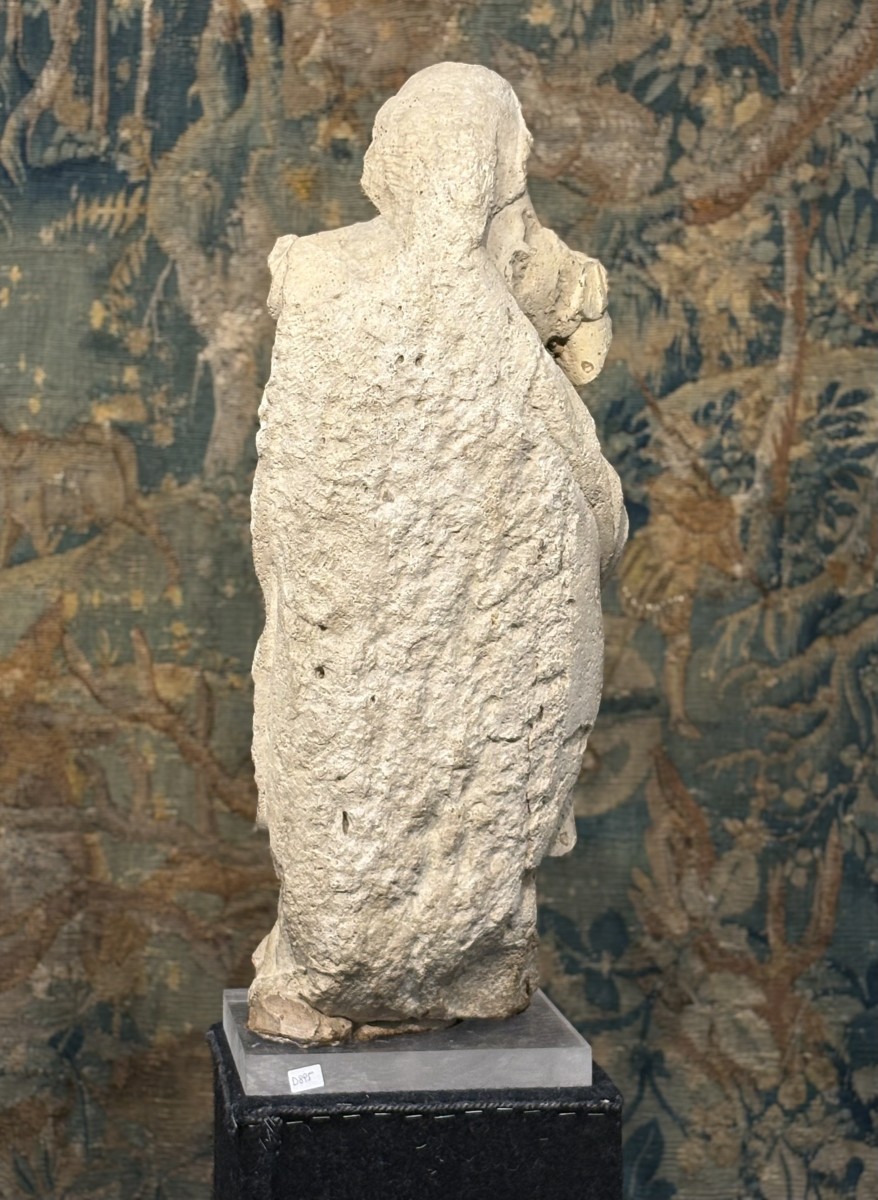
The statue is unfinished on the back, because in the 16th century many sculptures in France were integrated into monuments, such as the facades of city residences or fountains.
The stone from which it was carved—Lutetian limestone—gives it a unique charm: quarried from the Paris Basin, this sedimentary stone takes on a warm, golden hue over time and develops a distinctive porosity due to exposure to the elements.
Dimensions
H 64 cm
L max 21 cm
Delevery information :
Antichità San Felice takes care of organizing the packaging, home delivery and all the administrative formalities related to the shipment.
Antichità San Felice works with several service providers selected for their professionalism, in order to ensure delivery of works of art in the best conditions.
For the packaging of the goods, we involve craftsmen who were responsible for the construction of custom-made wooden crates.
For transport, depending on the case, we involve the most suitable service provider.
All shipments from Antichità San Felice are covered by value insurance. It is important to note that the Customer must indicate on the dispatch note any reservations upon receipt of the object, in order to be able to bring the insurance into play.
Payments accepted:
bank transfer
online bank card
paypal (+3.4% Europe +5% rest of the world)