Offered by Antichità San Felice
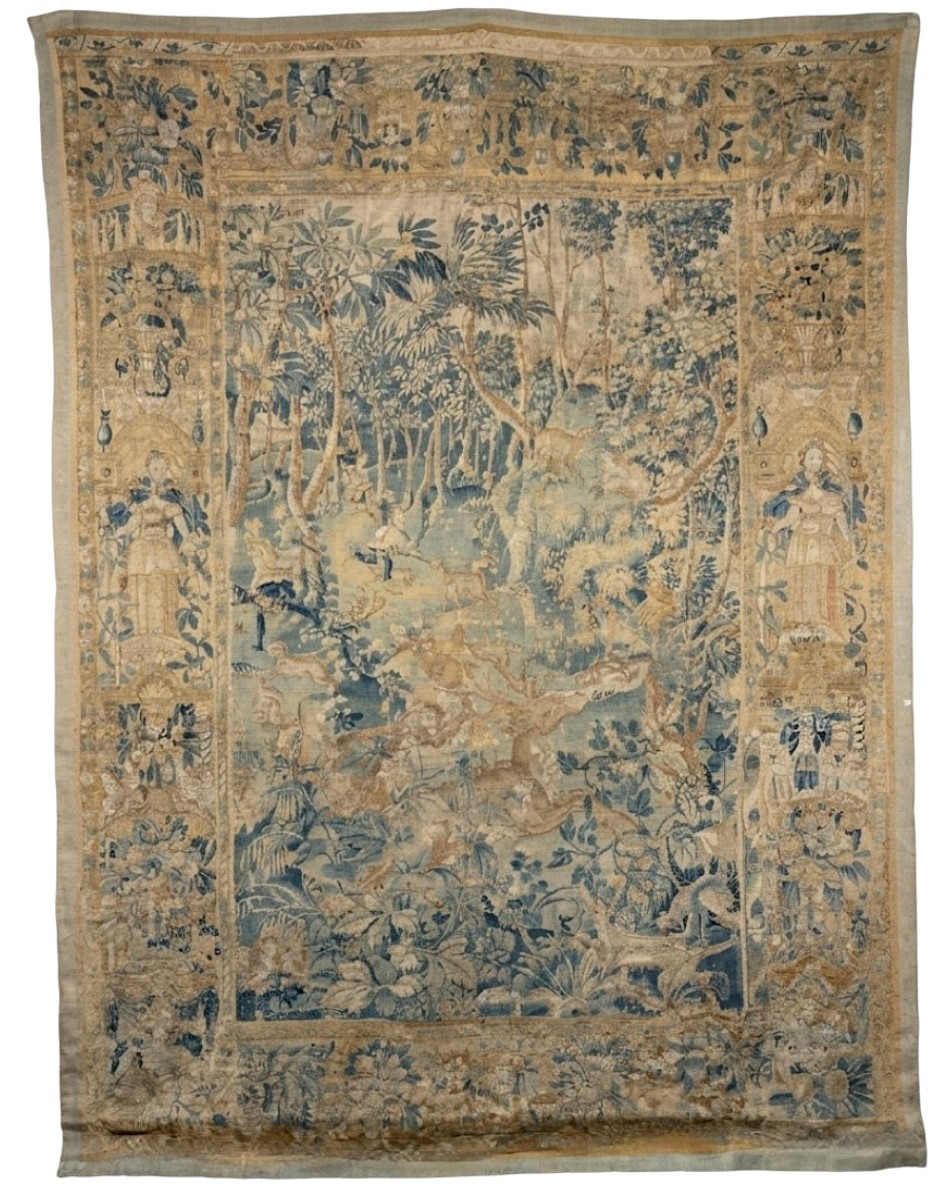
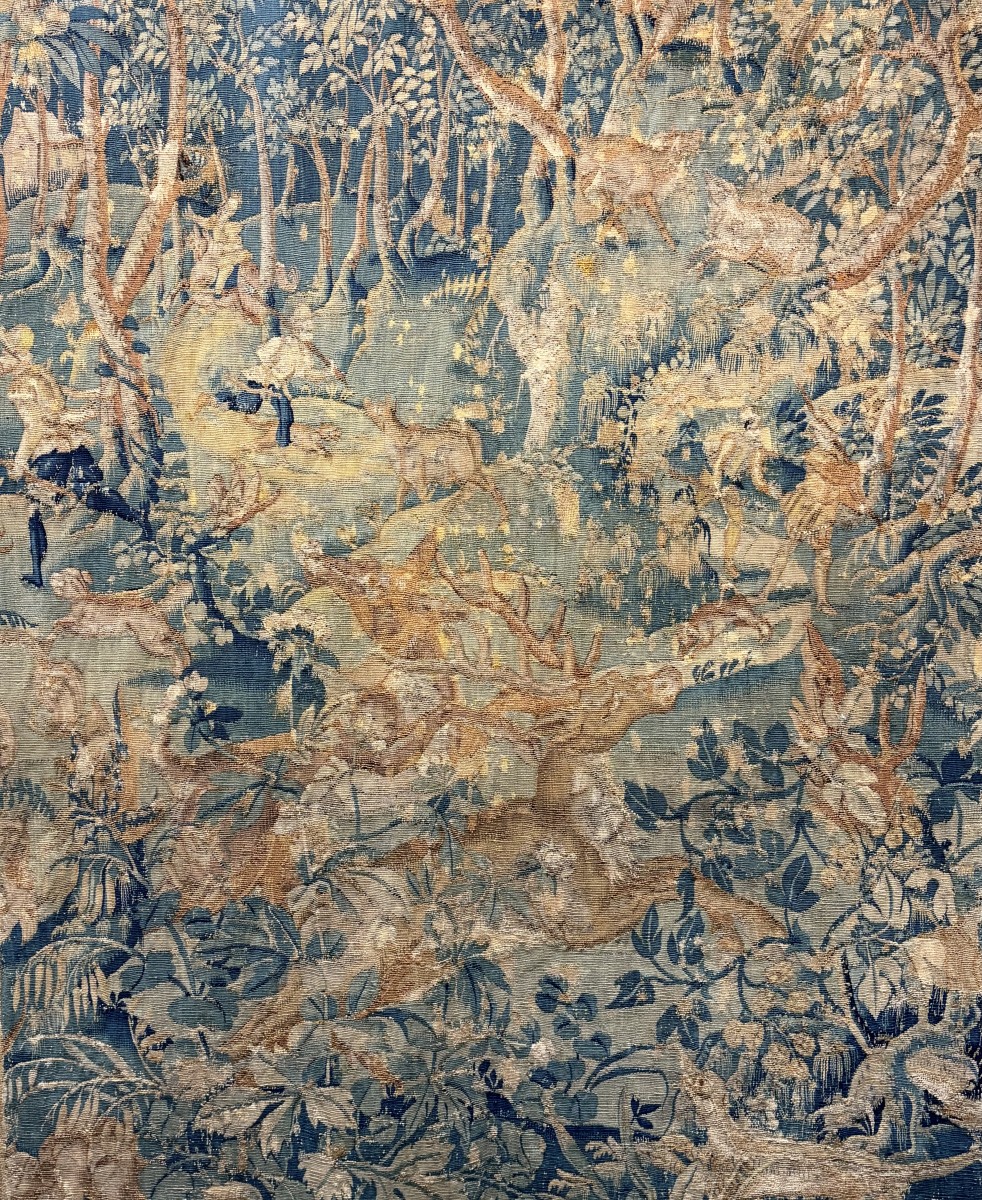

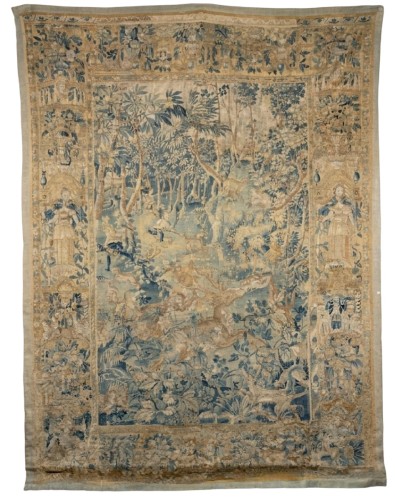
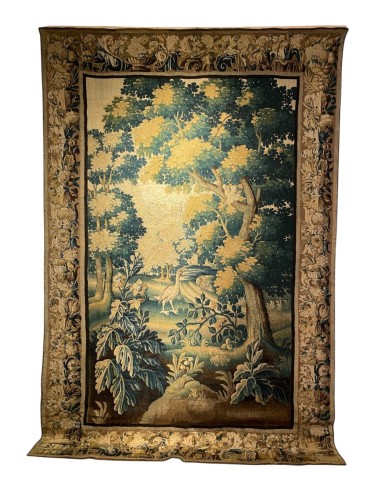
A monumental tapestry produced by the Oudenaarde manufactory, depicting a "hunting scene with *verdure*," dating to the second half of the 16th century.
Tapestries from Oudenaarde, in Flanders, that feature hunting scenes belong to the golden age of Flemish tapestry weaving—a period spanning from the 15th to the 18th century, with its zenith in the 16th century. At that time, Oudenaarde ranked among Europe’s primary centers for production and export, alongside Brussels, Antwerp, Ghent, and Bruges. The city was renowned for the fineness of its weaving and the high quality of its craftsmanship.
Oudenaarde gained particular fame for its so-called "*verdures*"—lush landscapes, forests, and dense vegetation—which provided an ideal natural setting for hunting scenes. Throughout the 16th and 17th centuries, these hunting landscapes acquired greater depth, perspective, and realism, often blending local and exotic fauna in compositions created for the aristocracy. Under the *Ancien Régime*, hunting embodied noble values, prestige, and a princely pastime; it was frequently perceived as a "war in miniature."
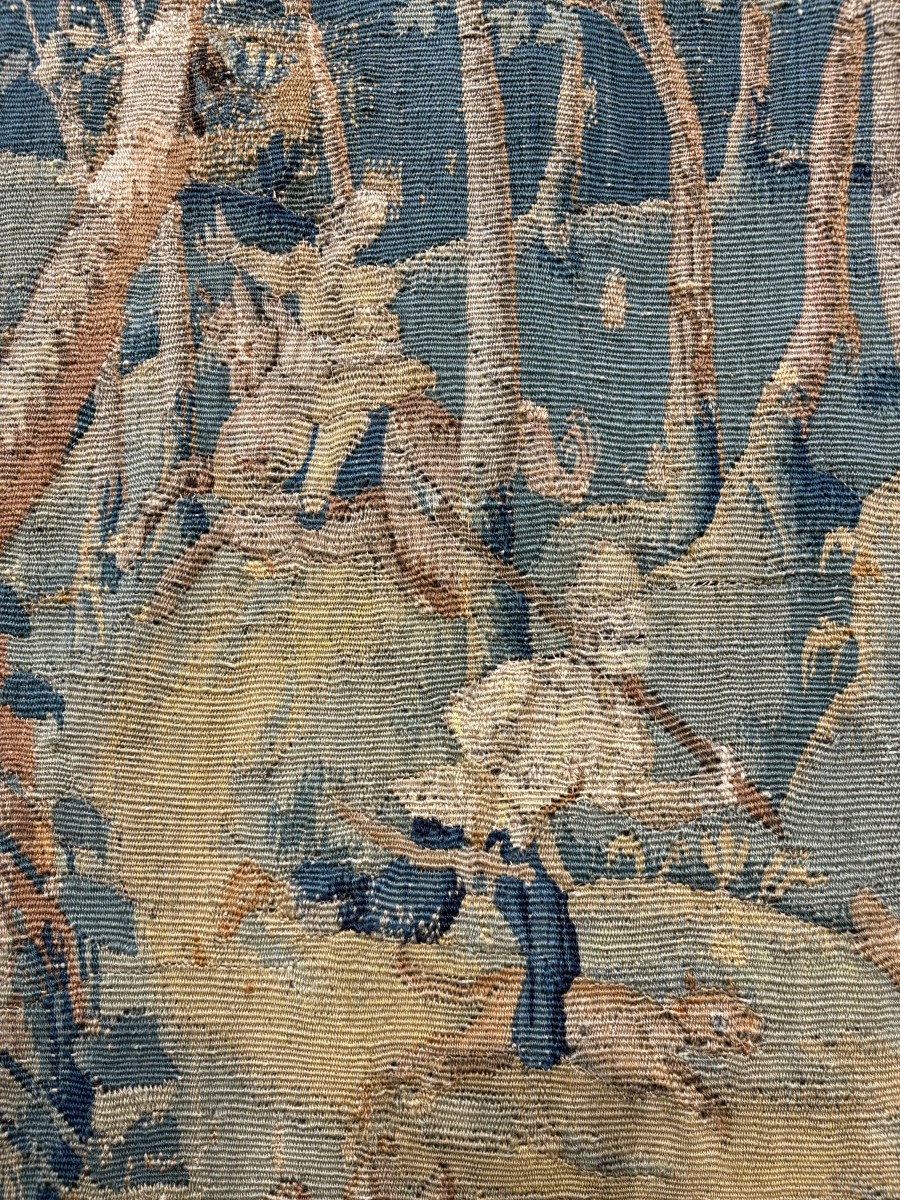
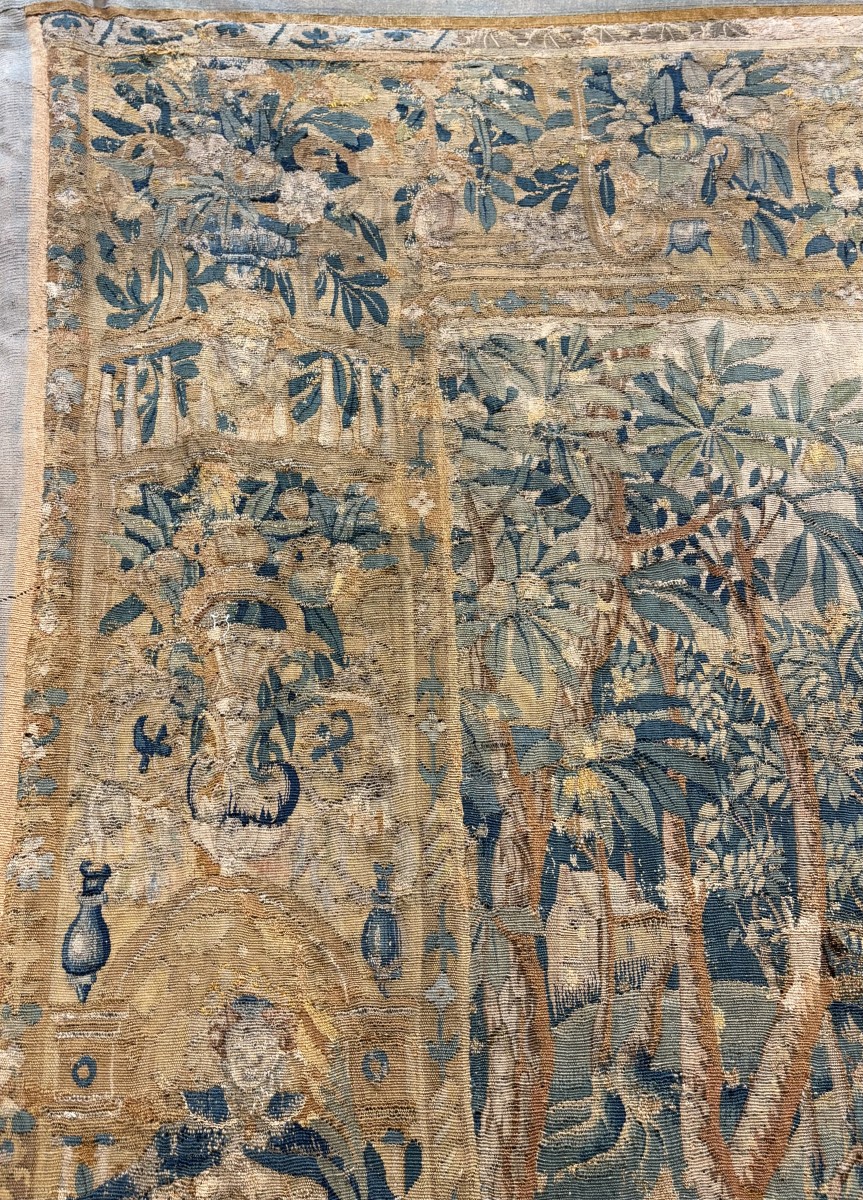
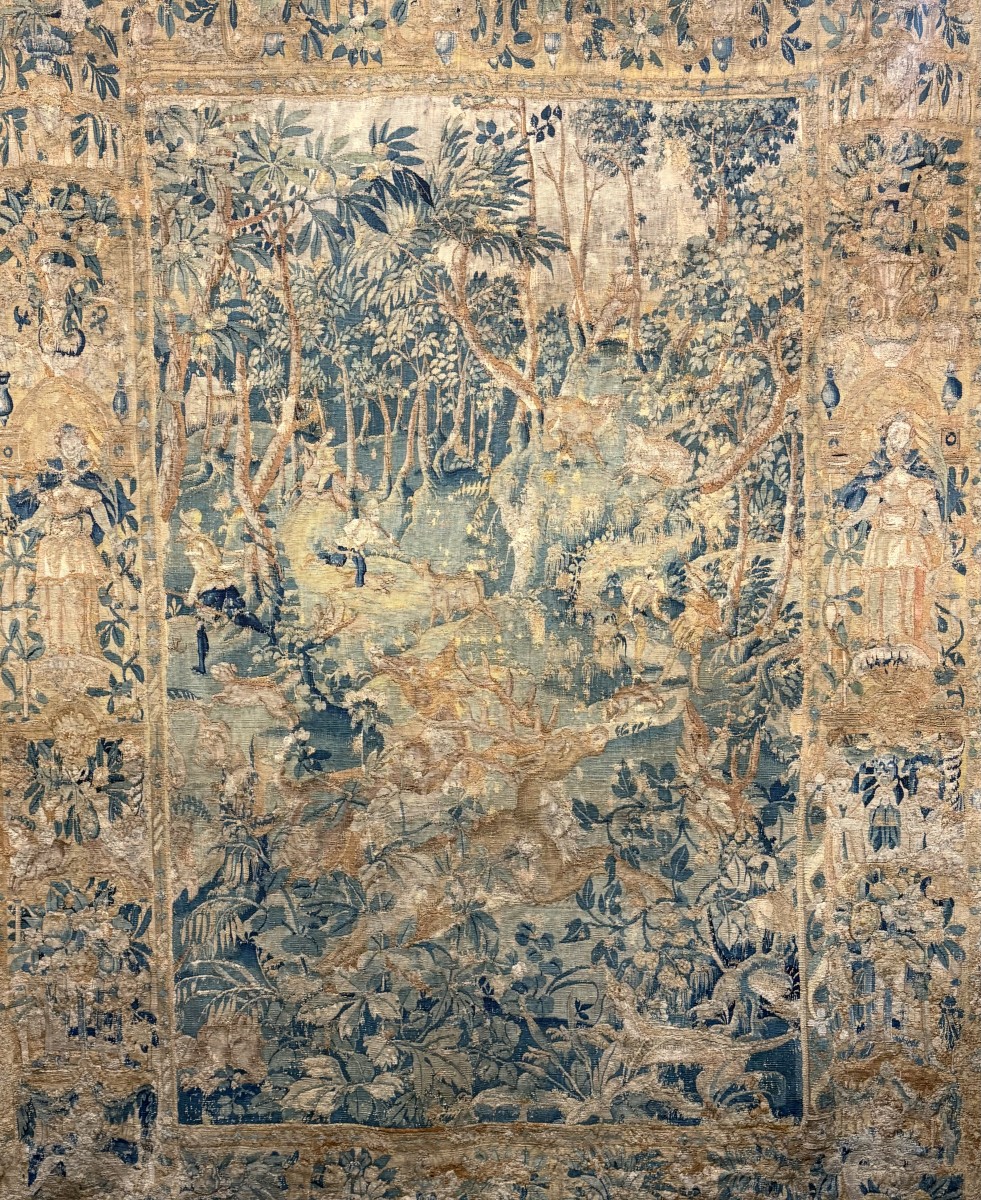
This tapestry follows a style popular between the late 16th and early 17th centuries: vegetation dominates the scene, filling the entire space and creating a sense of depth, while the hunting action unfolds across the various planes of the composition.
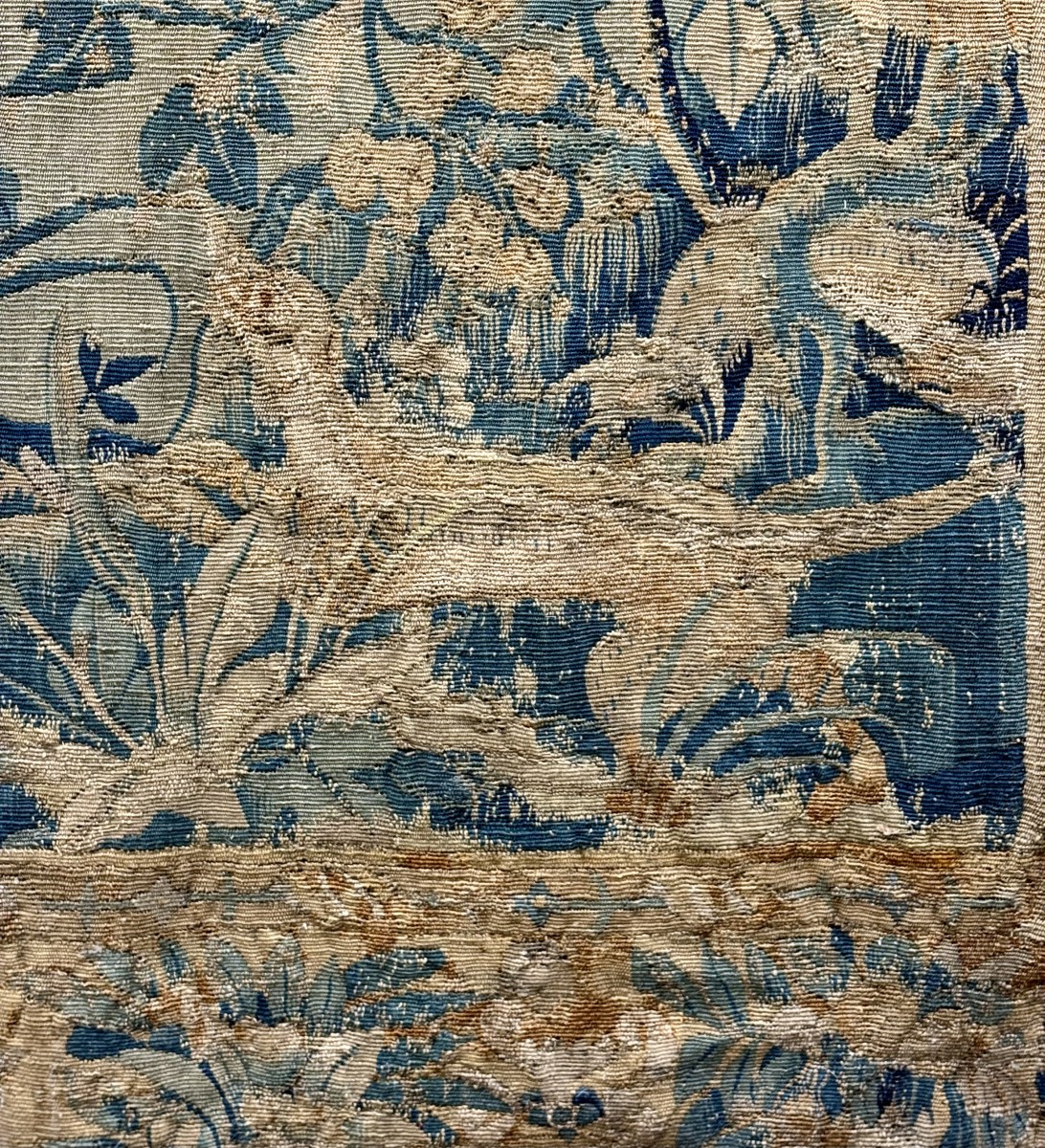
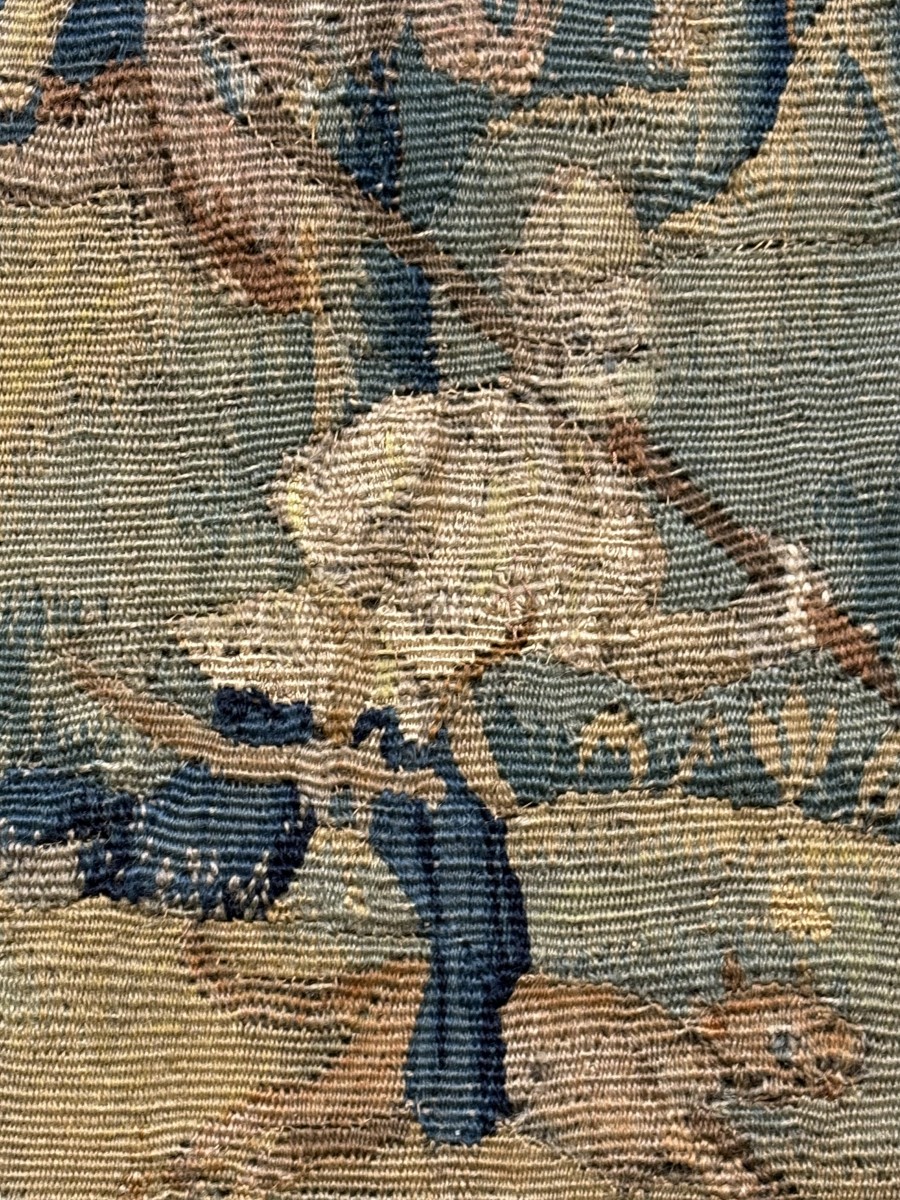
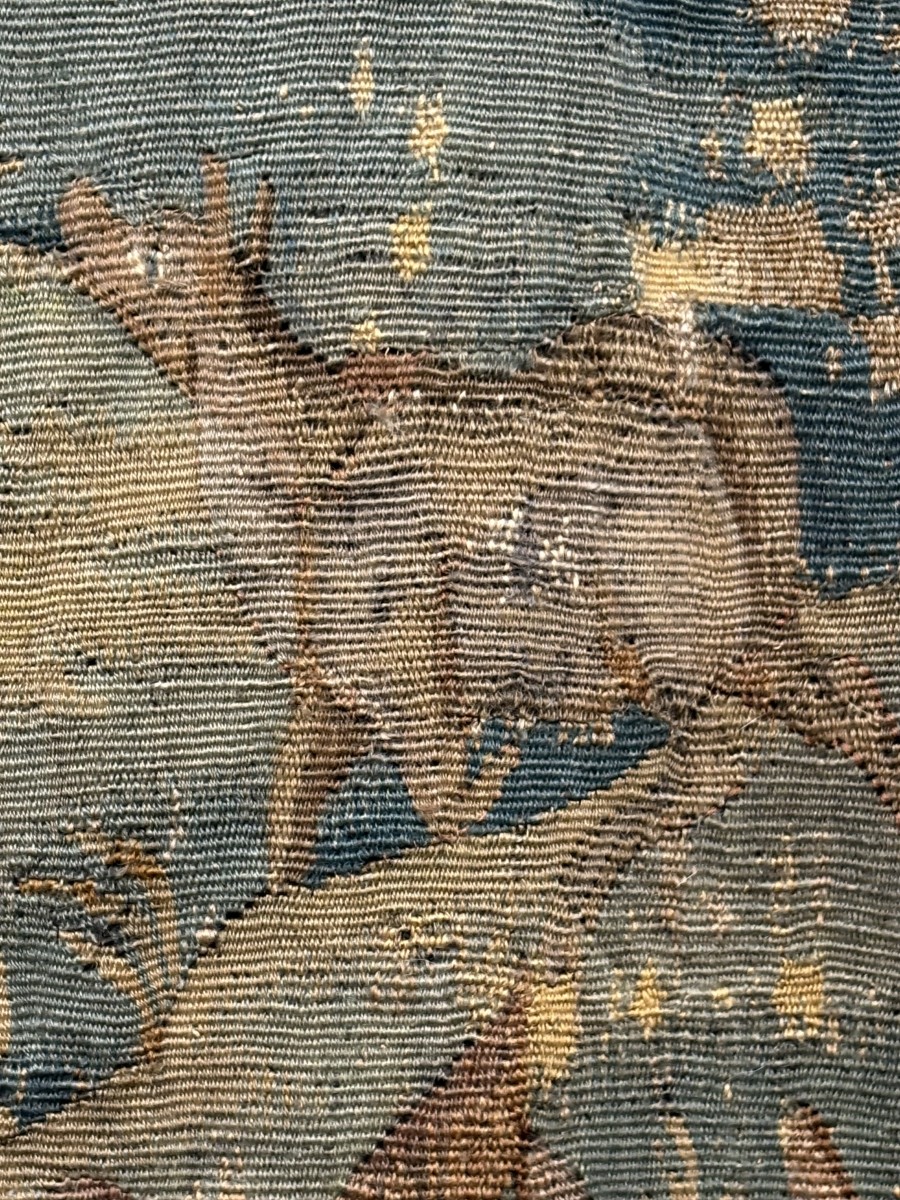
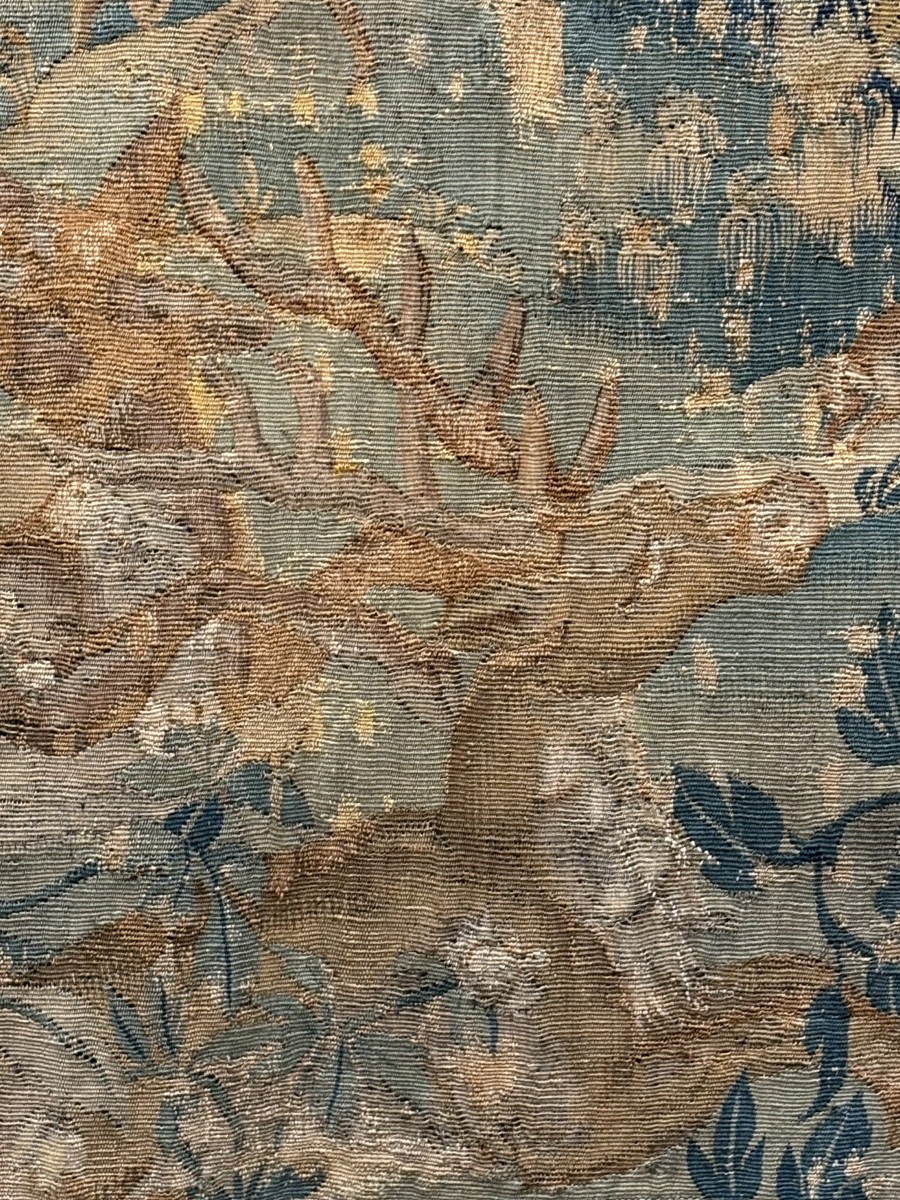
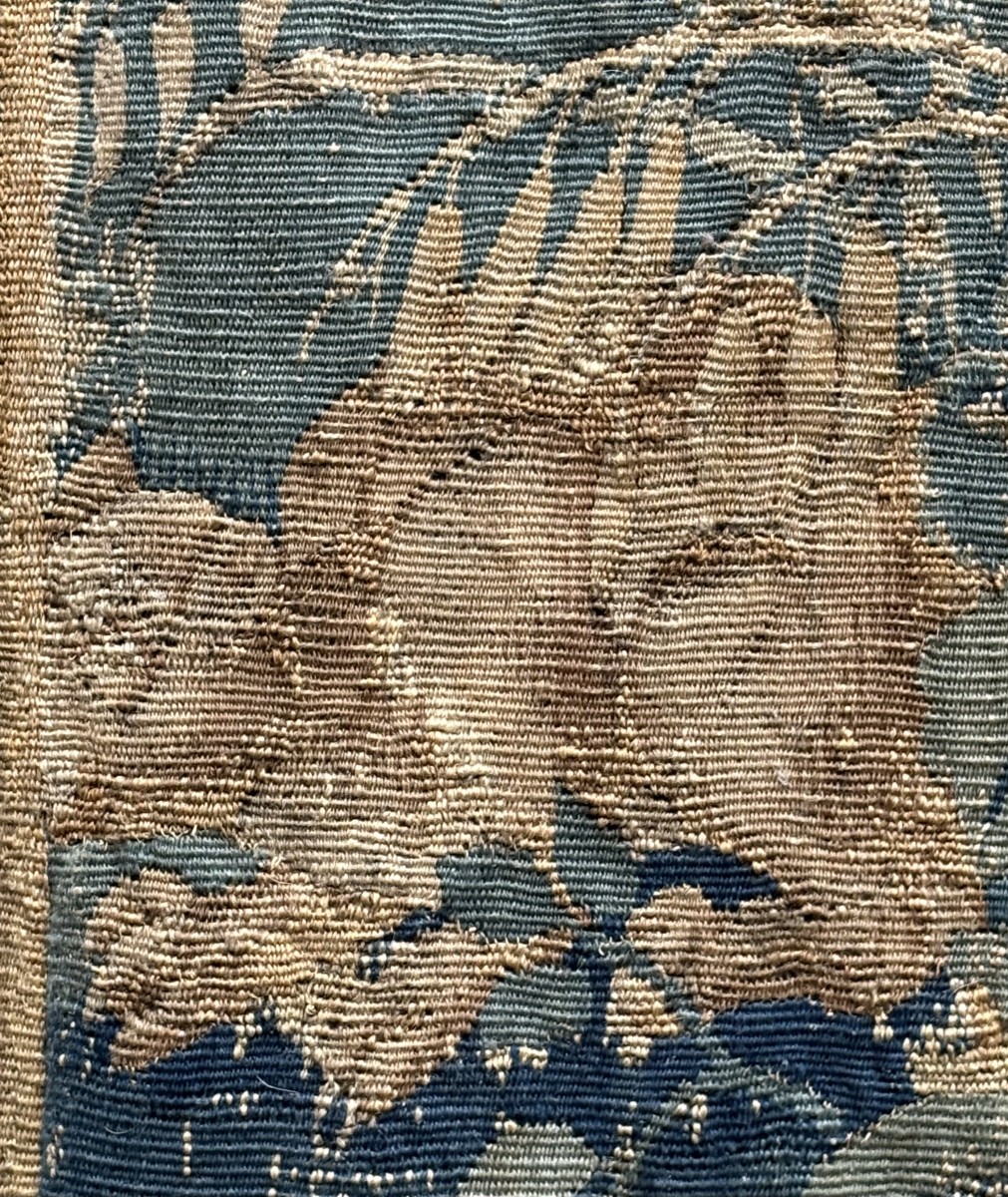
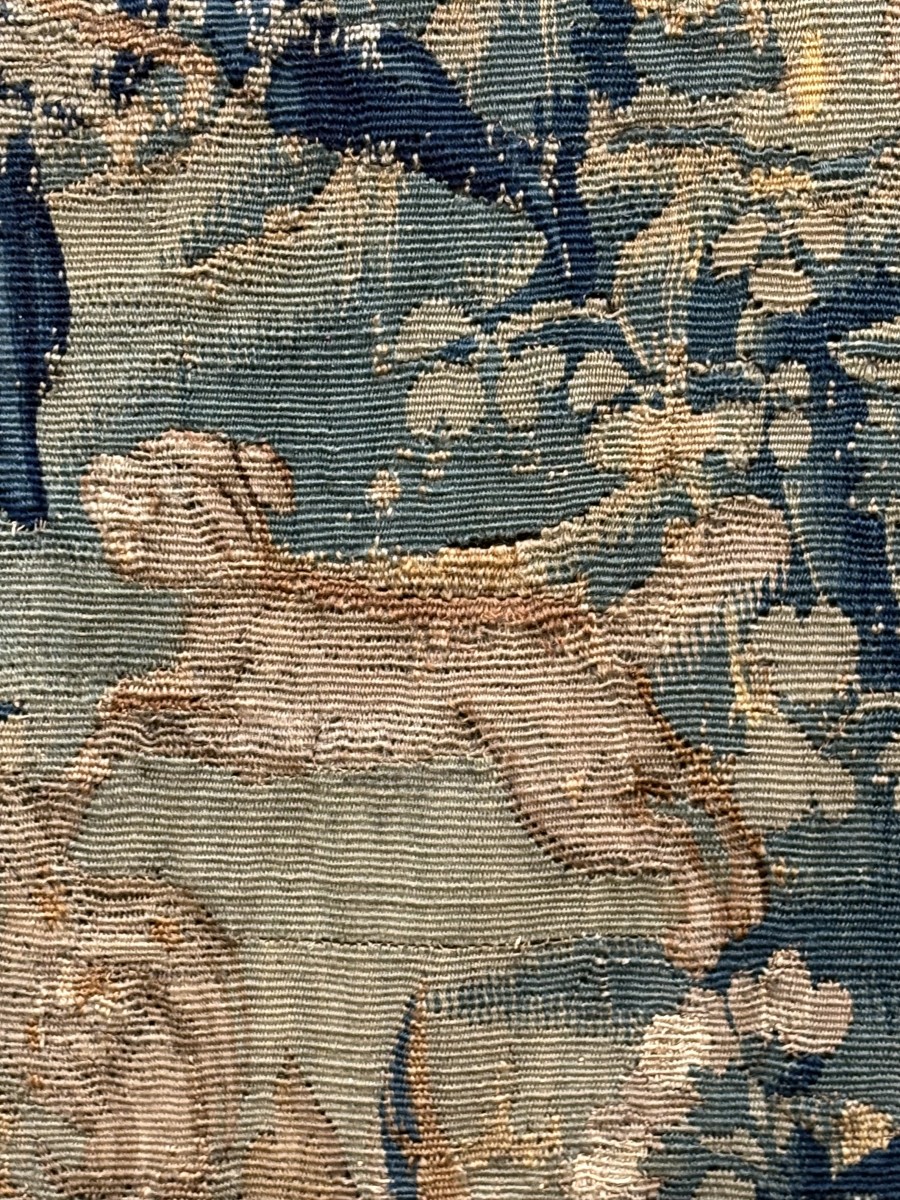
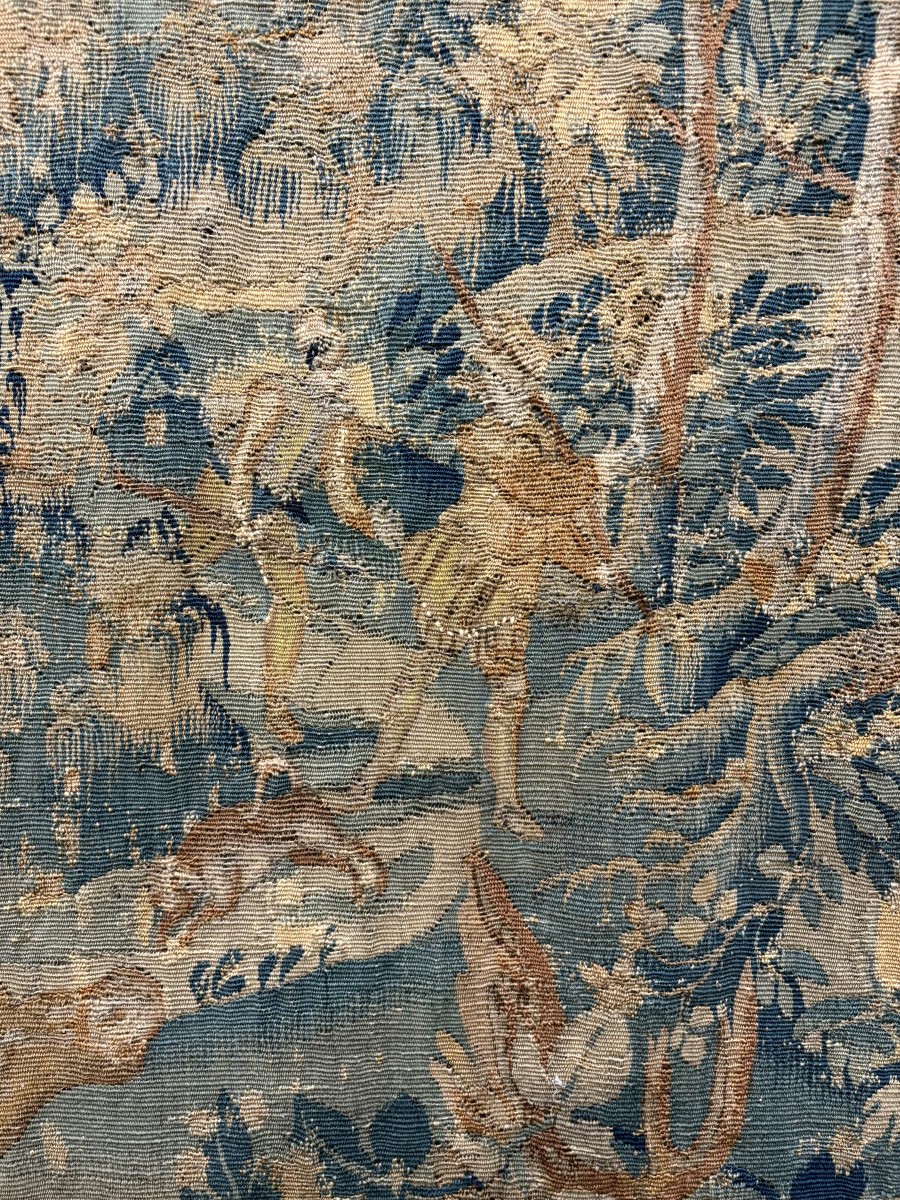
The landscape develops in depth, beginning with a foreground dense with broad-leaved plants—such as thistles, ferns, and *aristolochia*—and extending into a forest of tall, slender trees with sinuous trunks, which opens onto a clearing bathed in golden light. In the center, two large stags emerge from the vegetation, pursued by a pack of hunting dogs and several hunters; to the sides are young fawns. In the lower right, nestled among the large leaves of the forest floor in the foreground, the spiny back of a hedgehog can be seen. In the *verdures* (foliage-themed tapestries) from Oudenaarde and Brussels dating to the late 16th century, the hedgehog was a recurring motif in the wooded foreground; it served to add realism and liveliness to the undergrowth, while in Renaissance symbolism, it represented prudence and self-defense.
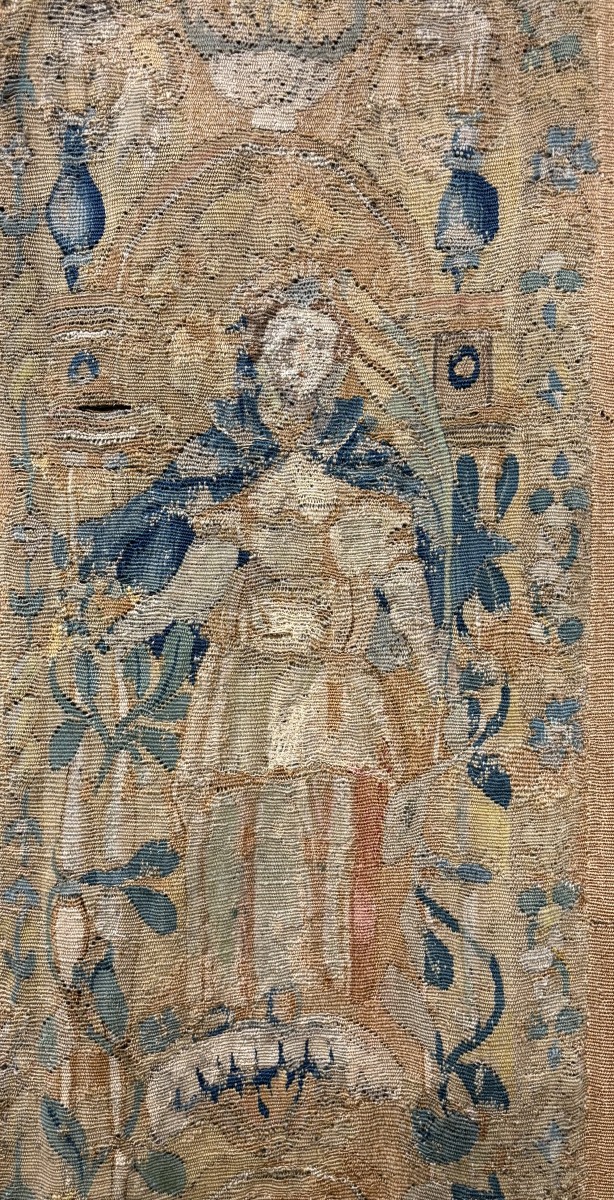
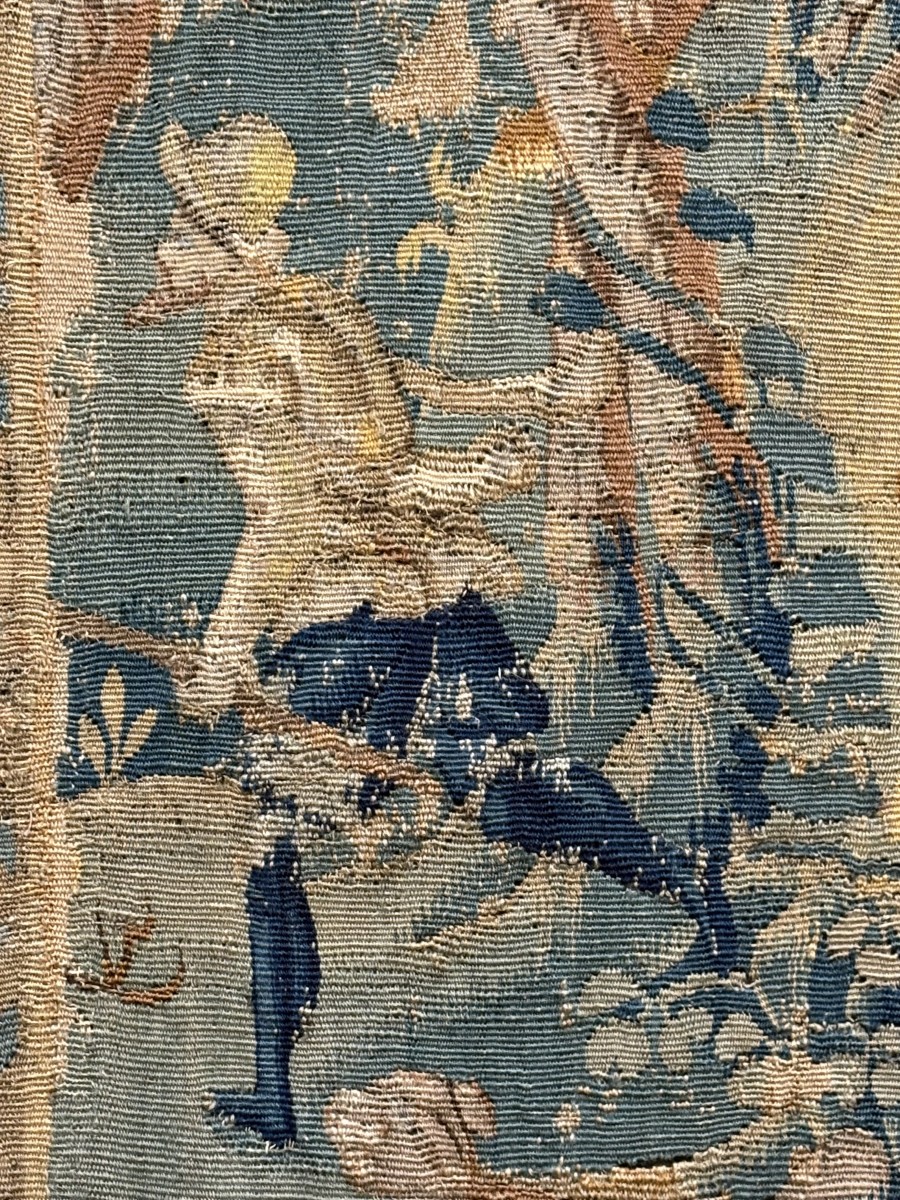
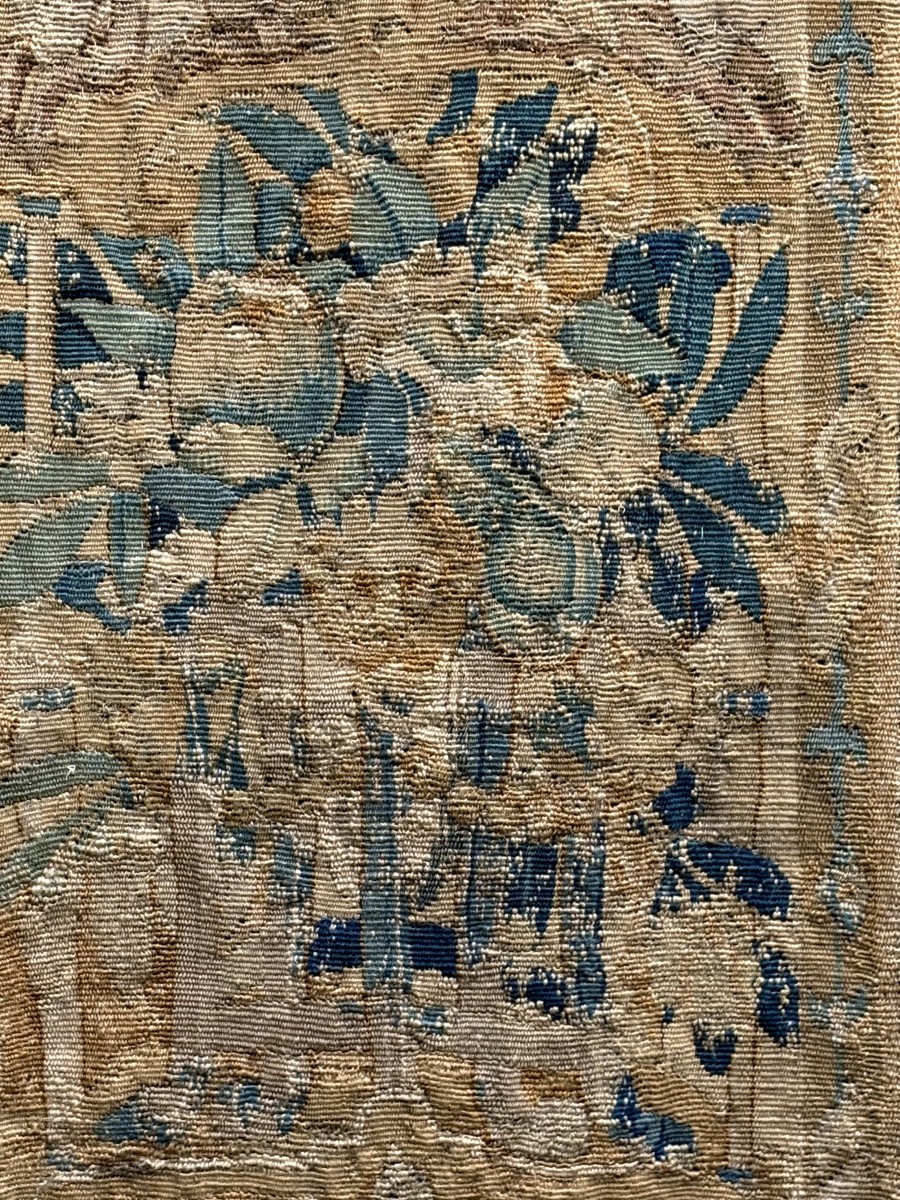
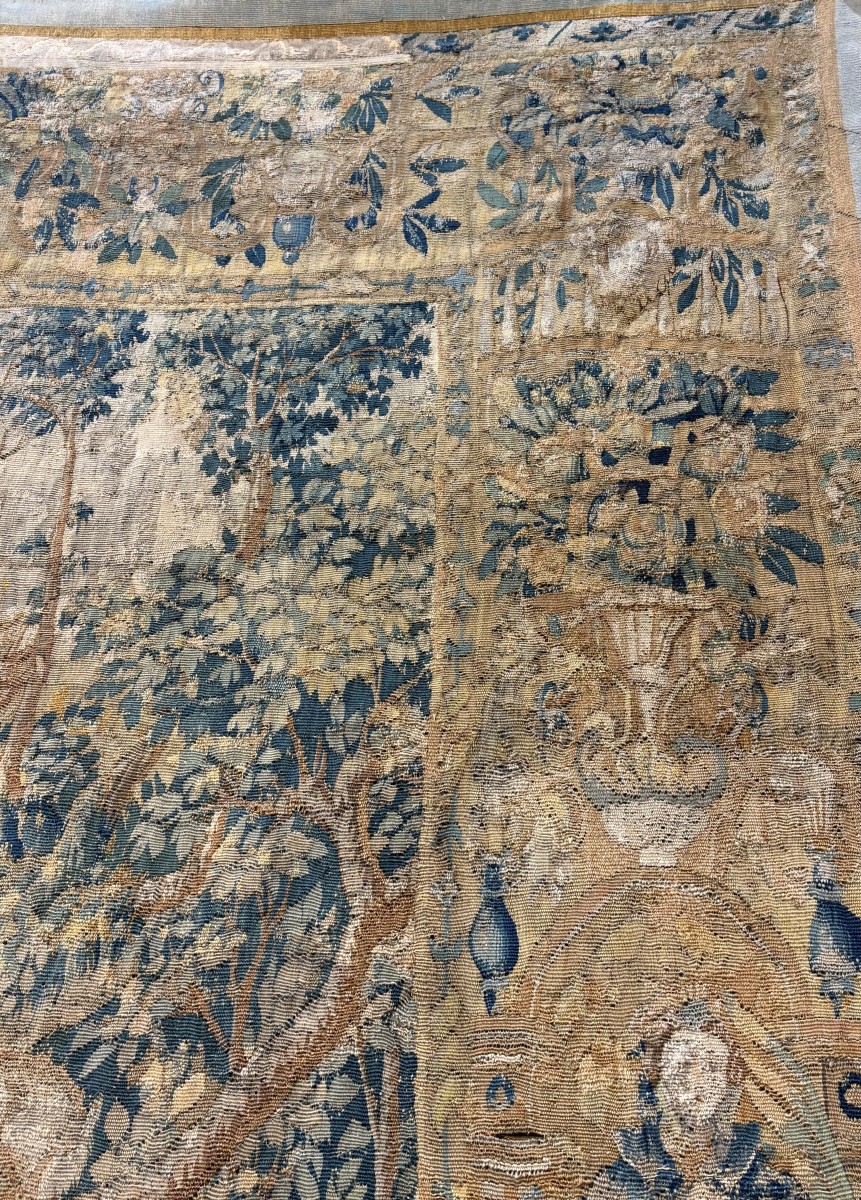
The tapestry retains its original border, which depicts female figures and vases of flowers. The female figures, arranged symmetrically along the side strips, wear hairstyles and ornaments typical of the late Renaissance and are surrounded by floral scrollwork. Above and below them are classical-style vases overflowing with flowers and foliage, connected by graceful, winding stems. This style of border confirms a date between the late 16th and early 17th centuries: in Flemish Renaissance tapestries, borders are typically very elaborate and divided into distinct compartments. They alternate between vases of flowers or baskets of fruit and female figures, often set within pergolas or niches. From the mid-17th century onward, these figures disappeared from the borders, replaced by denser floral garlands or frames designed to imitate carved wood. The tapestry weavers of Oudenaarde drew inspiration from the works of the great painters of their time—most notably the zoological engravings of Conrad Gessner and Jan van der Straet, as well as the wooded landscapes of Hans Bol, which feature small wild animals and hunting scenes.
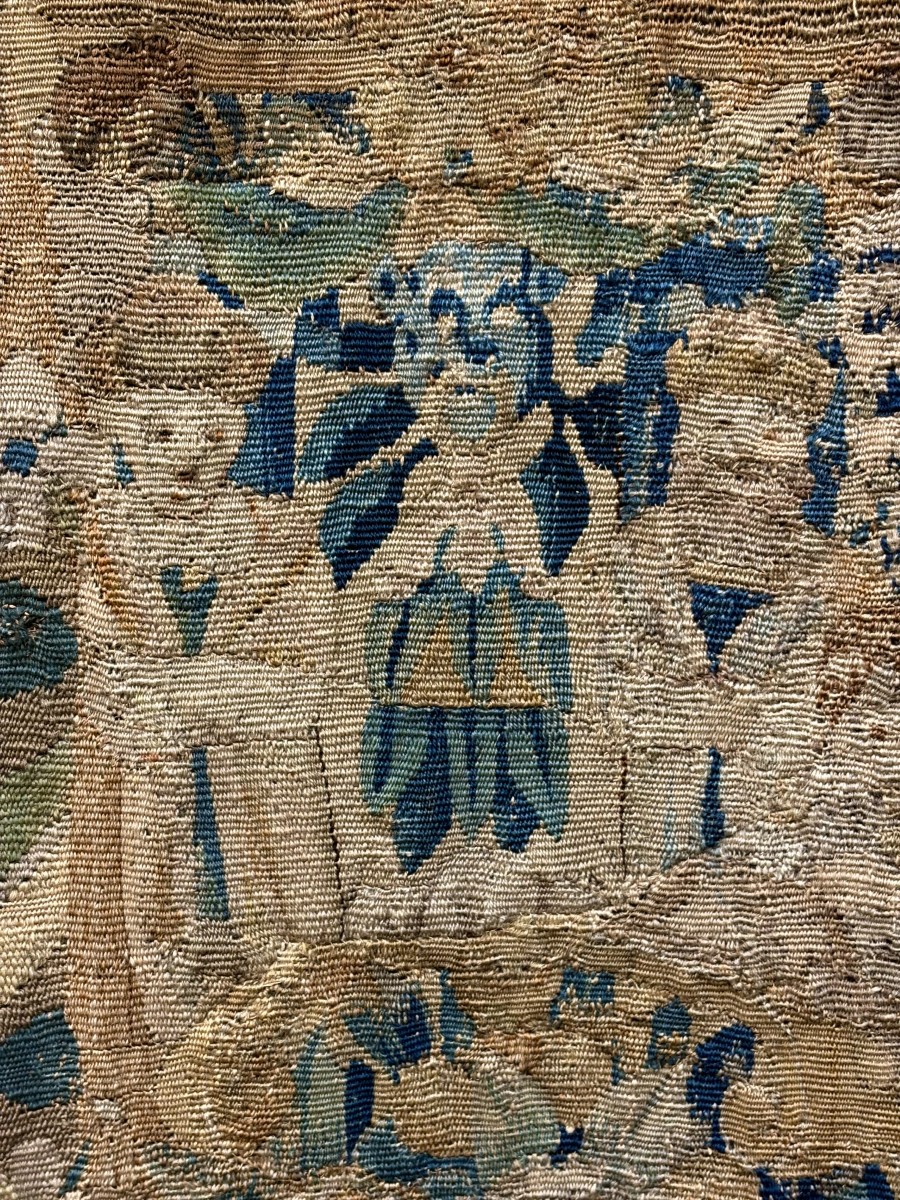
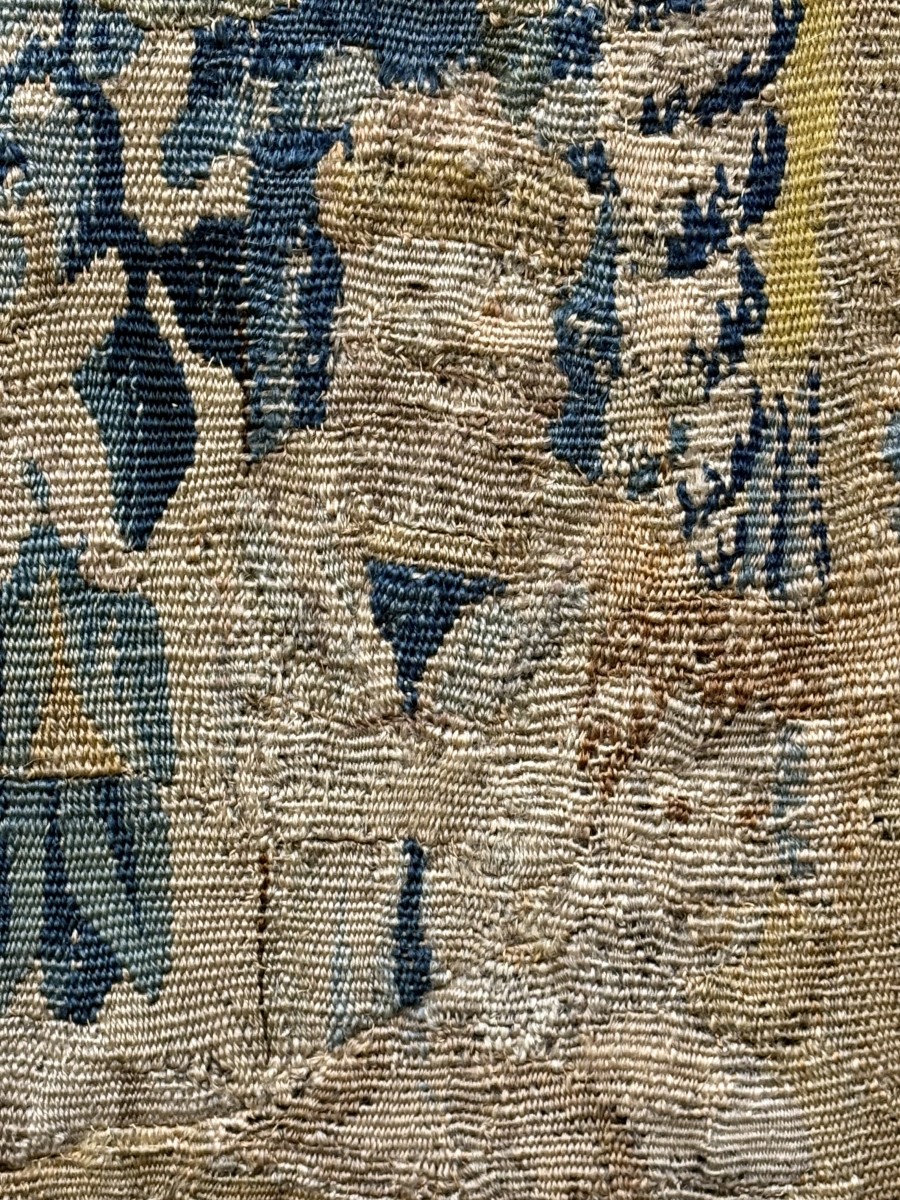
The tapestry is woven from wool and silk; the latter is used to create highlights—capturing the play of light on faces, flowers in vases, and the coats of animals. The dominant palette is characteristic of Oudenaarde: deep blues, greens, and golden ochres. The colors have shifted in tone—a natural consequence of the aging of the original plant-based dyes, which were exposed to light and air for centuries.
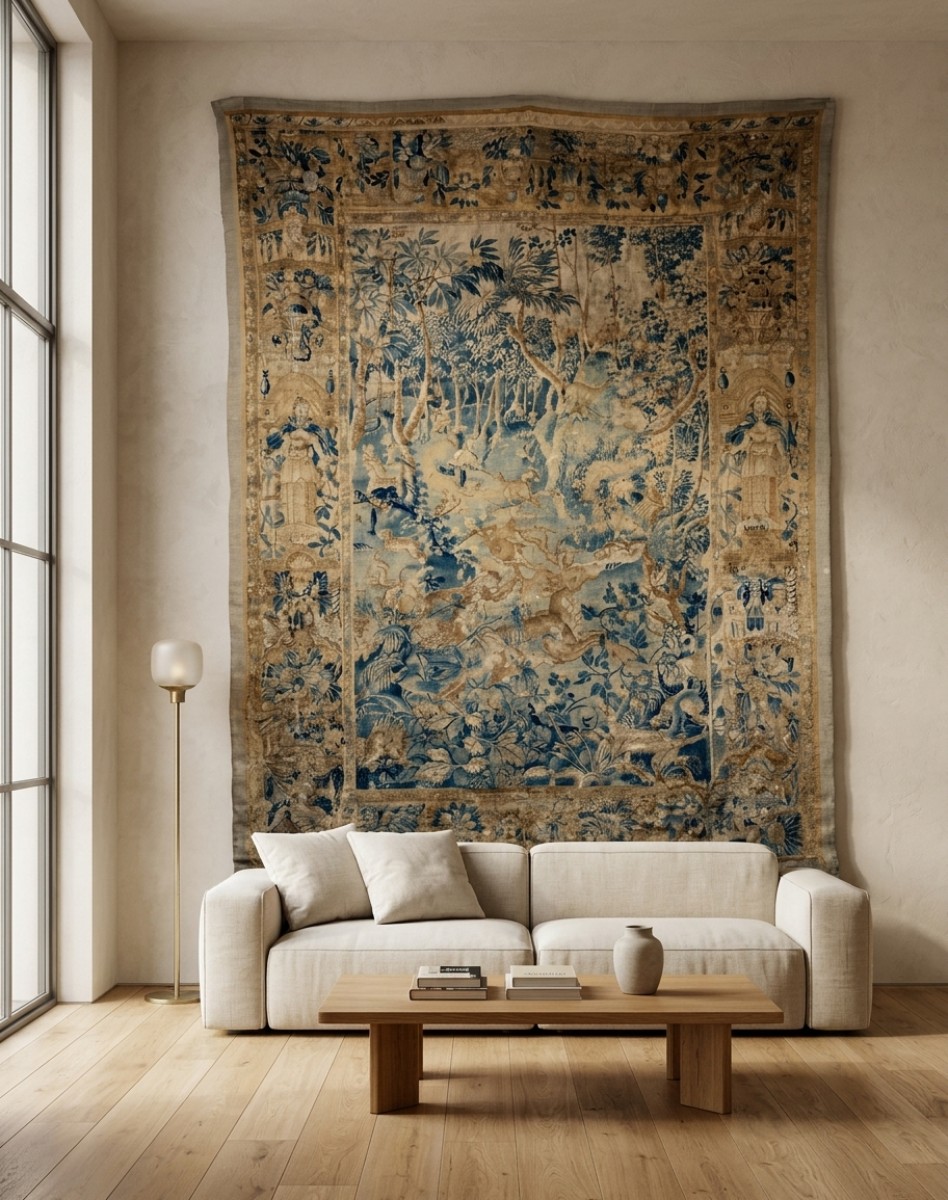
On a monumental scale—measuring 3.15 meters in height by 2.40 meters in width, for a total area of ??nearly 8 square meters—the piece belongs to the category of grand-scale, aristocratic decorative tapestries, often referred to as "salon" tapestries. Its proportions are harmonious and well-balanced.
The tapestry retains the full legibility of its overall composition and its rich, figurative border. It bears a natural, enchanting patina of age: the original colors have undergone a gradual, expected fading due to light exposure, shifting toward delicate shades of ivory, ochre, and beige—which now create an elegant contrast with the well-preserved blues and greens. There are minor, period-appropriate repairs, as well as slight structural undulations in the fabric—typical of large-scale textile works that have borne their own weight over the centuries.
Delevery information :
Antichità San Felice takes care of organizing the packaging, home delivery and all the administrative formalities related to the shipment.
Antichità San Felice works with several service providers selected for their professionalism, in order to ensure delivery of works of art in the best conditions.
For the packaging of the goods, we involve craftsmen who were responsible for the construction of custom-made wooden crates.
For transport, depending on the case, we involve the most suitable service provider.
All shipments from Antichità San Felice are covered by value insurance. It is important to note that the Customer must indicate on the dispatch note any reservations upon receipt of the object, in order to be able to bring the insurance into play.
Payments accepted:
bank transfer
online bank card
paypal (+3.4% Europe +5% rest of the world)