Offered by Poncelin de Raucourt Fine Arts
REQUEST INFORMATION

Paintings and drawings, from 16th to 19th century
Louis VALTAT (Dieppe, 1869 – 1952, Paris)
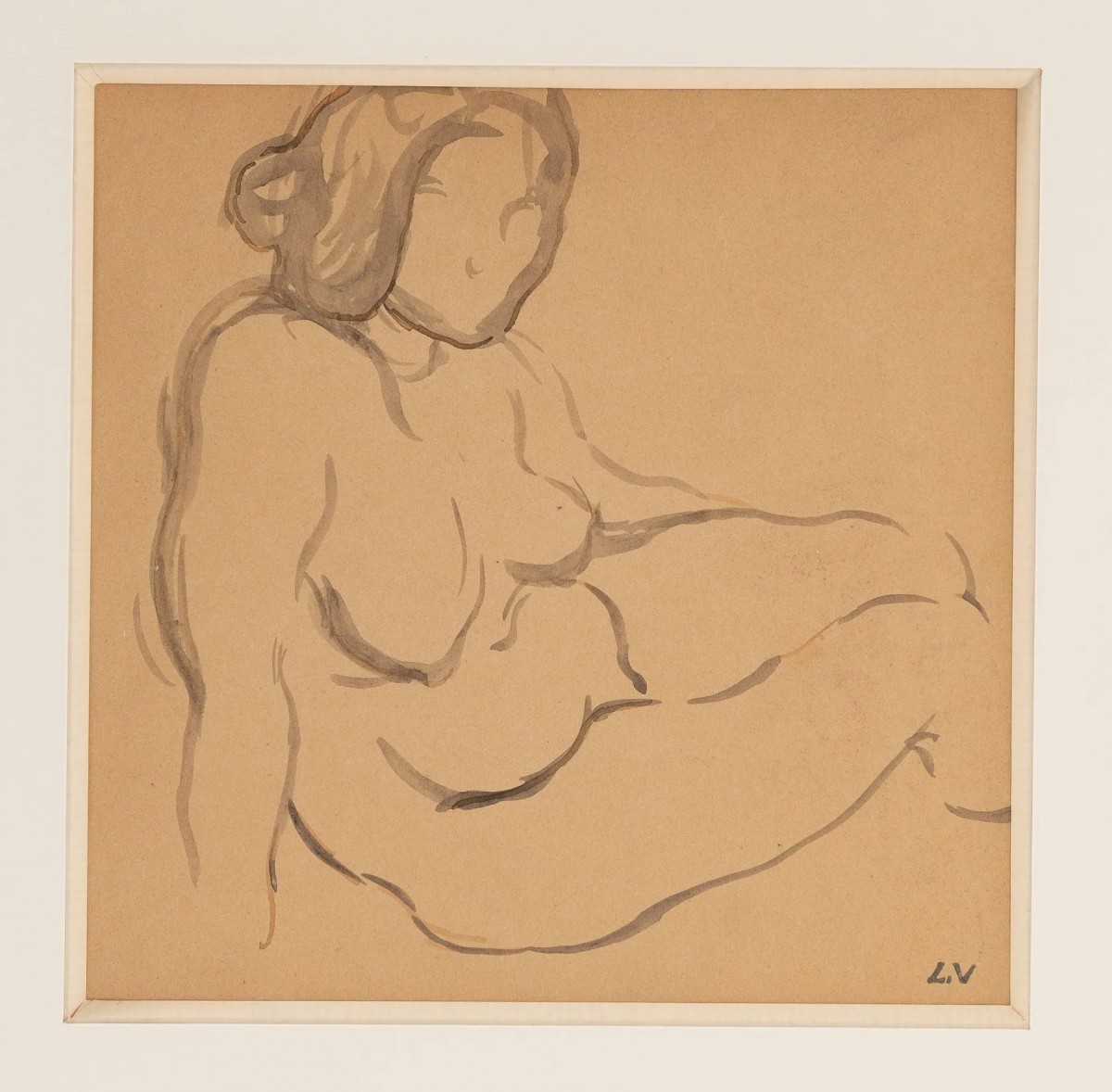
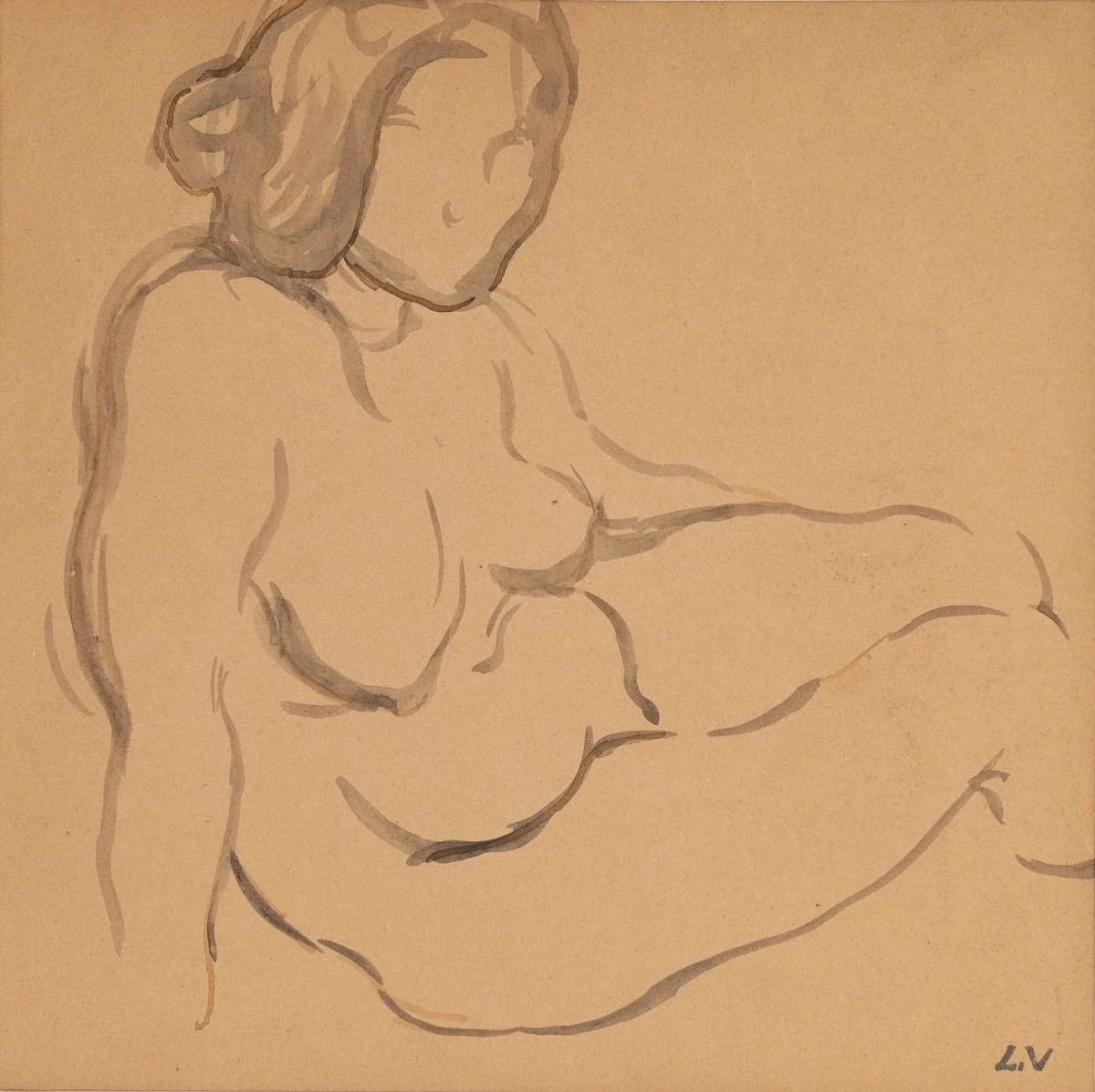
Seated Nude, c. 1905
Ink wash on paper
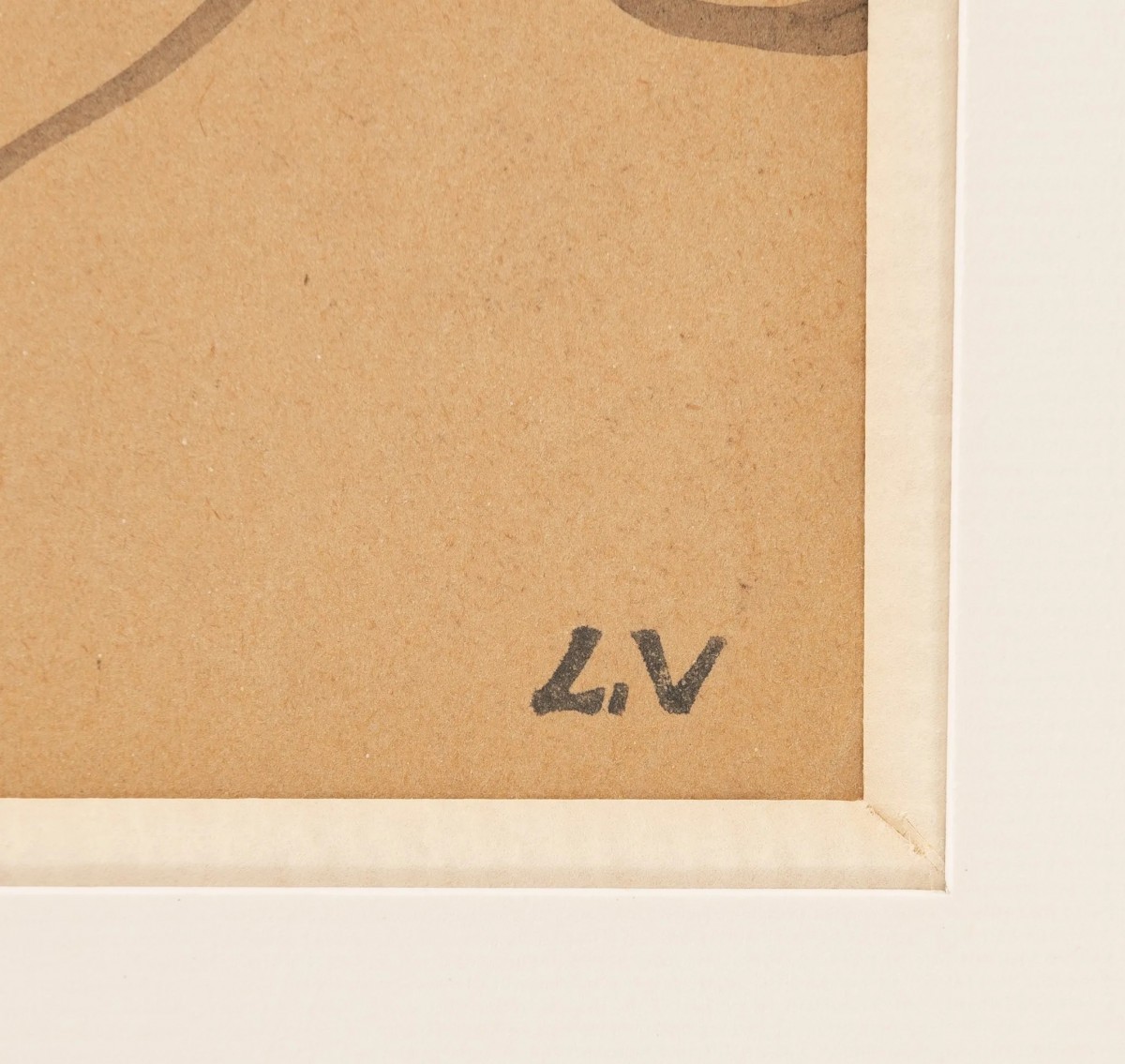
Bearing the artist’s monogram stamp “L.V.” lower right
Sight dimensions: 21.5 × 21.5 cm
Overall dimensions: 39 × 39 cm
A distinctive figure of French modernism, Louis Valtat occupies a singular place among the artists who, at the turn of the twentieth century, contributed to freeing painting from the strict imitation of nature. Trained in Paris, first at the École des Beaux-Arts and subsequently at the Académie Julian, he developed within an exceptionally fertile artistic milieu, where he encountered, among others, Pierre Bonnard, Édouard Vuillard and Albert André. From an early stage, his work absorbed the experiments of the Nabis, Neo-Impressionism and Gauguin, while at the same time developing a highly individual character. As early as the 1890s, Valtat was using strong, luminous colours that anticipated, several years before the celebrated Salon d’Automne of 1905, some of the audacities that would come to be associated with Fauvism.
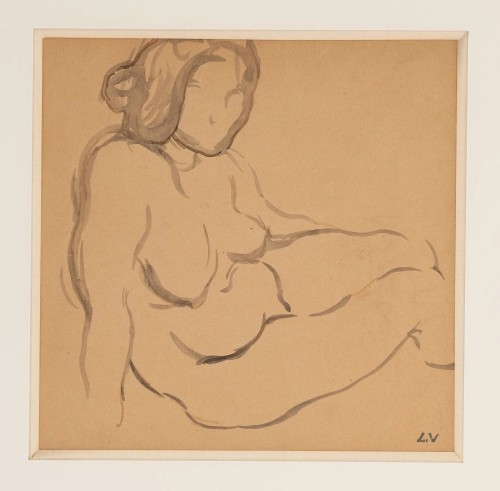
This small sheet offers a particularly appealing demonstration of another aspect of his art: Valtat the draughtsman. Deprived here of the colour with which his name is so naturally associated, the artist concentrates entirely on line, rhythm and the construction of form. The female model, seated and seen in three-quarter view, fills almost the entire sheet. Her body is inscribed with remarkable ease within the square format: the curve of her back answers that of her legs, while a succession of fluid lines guides the eye from the hair down through the figure.
The drawing appears to have been executed with considerable speed, yet this spontaneity is deceptive. Valtat works with a striking economy of means. Only a few strokes are required to define the face, where the eyes, nose and mouth are merely suggested. The same principle governs the figure as a whole: the breasts are constructed through a sequence of firm curves, the abdomen through a simple continuous movement of the brush, while the arms and legs gradually dissolve into a network of freer lines. The visible corrections and overlapping contours are not concealed. On the contrary, they preserve the memory of the artist’s gesture and lend the drawing a particularly lively sense of movement.
This deliberate simplification of the human form is characteristic of Valtat’s visual language. Among the defining features of his work are the simplification of drawing, strongly asserted contours and a taste for daring compositions, qualities that also reflect the influence of Japanese prints. Here, the model is not so much anatomically described as transformed into a succession of volumes and arabesques. The female body becomes almost a landscape of curves, organised around the broad sweep of the legs and the sculptural presence of the torso.
The wash adds a further dimension to this linear construction. More densely applied around the hair, neck and certain articulations of the body, it allows Valtat to model the volumes discreetly without sacrificing the overall lightness of the composition. The varying density of the ink gives the figure a physical presence while preserving the immediacy of a study made directly from the model. The warm tone of the paper further enhances this sense of intimacy.
The female nude appears throughout Valtat’s œuvre in a wide variety of forms. It is present in his painting from the 1890s onwards and also occupies an important place in his drawings and decorative experiments. The Petit Palais in Paris, for instance, preserves a Seated Nude, produced around 1908 in collaboration with the ceramicist André Metthey, in which the female figure is likewise reduced to a few essential lines. Other sheets in public collections testify to the continuity of Valtat’s interest in the study of the human figure. The Musée des Beaux-Arts in Bordeaux, for example, preserves a work by Valtat whose reverse bears a sketch of a nude marked with the monogram “L.V.”
In the present drawing, however, the nude belongs neither to the academic tradition nor to an idealised conception of the human body. The model retains something profoundly natural and uncontrived. Her pose appears to have been captured during a moment of rest, almost unselfconsciously. The slightly turned head, relaxed shoulders and body folded in upon itself create a feeling of calm and abandonment. This absence of theatricality brings the sheet close to the intimate world of Bonnard and Vuillard, artists whom Valtat had known since his formative years, while retaining a strength and directness of line that remain entirely his own.
The particularly modern character of the present study lies precisely in this combination of observation and synthesis. Valtat makes no attempt to describe everything. Much of the charm of the sheet derives from what is intentionally left unresolved. The hands almost disappear, certain joints are merely suggested, and no surrounding décor is provided to situate the model within a specific space. All anecdotal detail has been removed in favour of the physical presence of the body itself.
This conception of drawing reflects more broadly the transformations taking place in French art around the turn of the century. For Valtat, as later for Matisse, line is no longer merely the boundary enclosing a volume: it acquires an expressive autonomy of its own. It may break off, begin again or exaggerate a curve in order to convey more directly the sensation experienced before the model. It is precisely this freedom that gives the present Seated Nude, despite its modest dimensions, a surprising sense of monumentality.
Through its economy of means, intimate scale and confidence of execution, this sheet constitutes a particularly attractive example of Louis Valtat’s graphic work. It reveals, behind the great colourist associated with the earliest experiments of Fauvism, a draughtsman of considerable sensitivity, capable of transforming a simple study from the model into a perfectly balanced composition in which only a handful of brushstrokes are required to bring the human figure vividly to life.