Offered by Poncelin de Raucourt Fine Arts
REQUEST INFORMATION

Paintings and drawings, from 16th to 19th century
Giovanni Francesco BARBIERI, called GUERCINO (Cento, 1591 – Bologna, 1666)
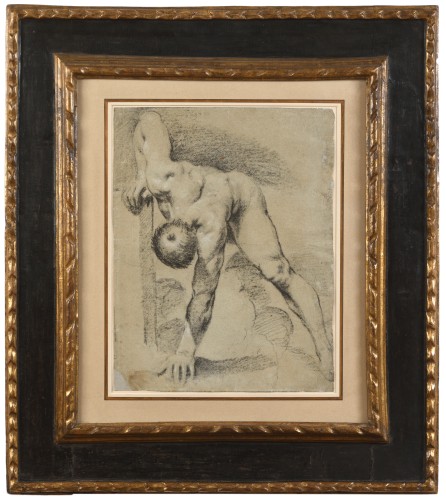
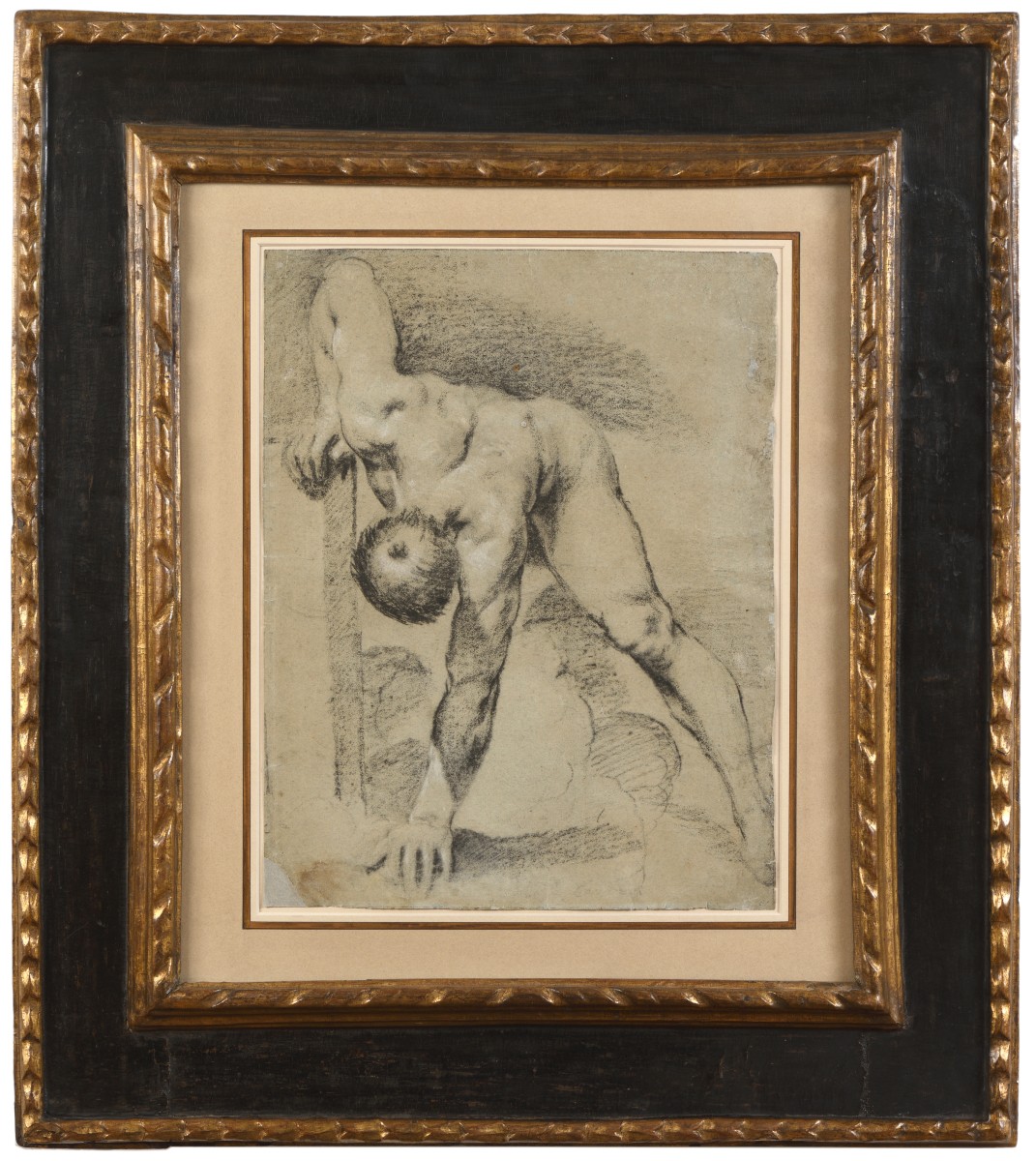
Male Nude Bending Forward (recto)
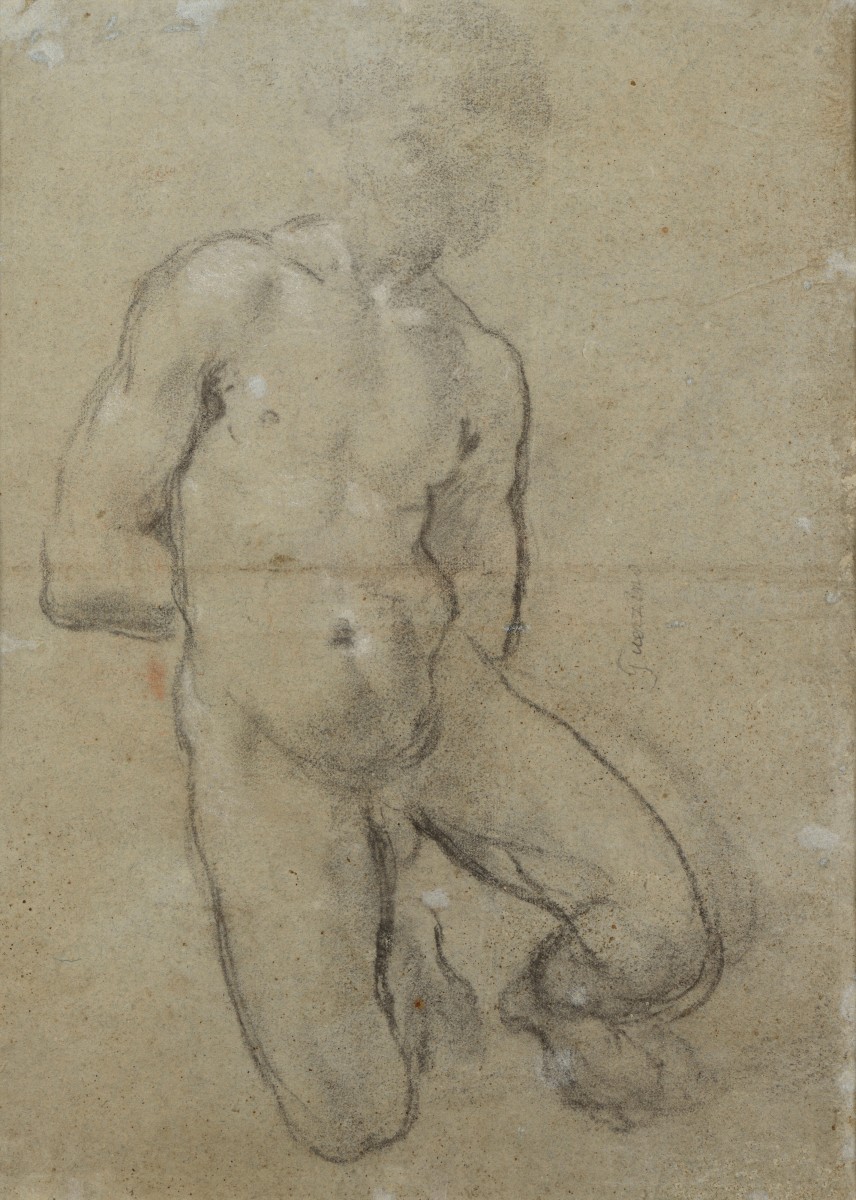
Kneeling Man, His Hands Bound Behind His Back (verso)
Circa 1620, according to the attribution to Guercino.
Black chalk heightened with white on light blue-grey paper.
46 × 35.5 cm.
An outstanding double-sided figure study, published and discussed by leading specialists in seventeenth-century Italian drawings.
This impressive large-scale sheet displays remarkable draughtsmanship and an extraordinary command of chiaroscuro. On the recto, a male nude bending forward is rendered with powerful modelling, daring foreshortening and dramatic contrasts of light and shadow, giving the figure an almost sculptural presence. The verso depicts a kneeling man with his hands bound behind his back, demonstrating the same expressive intensity and monumentality.
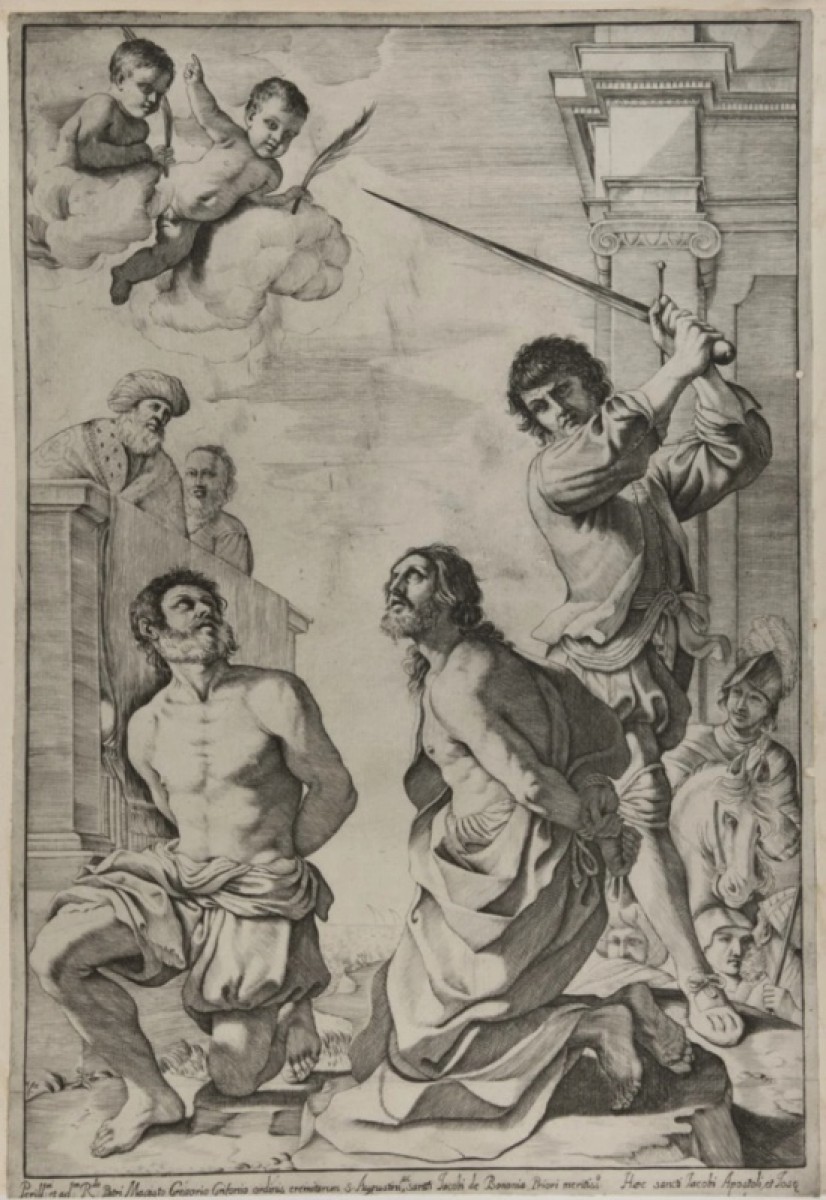
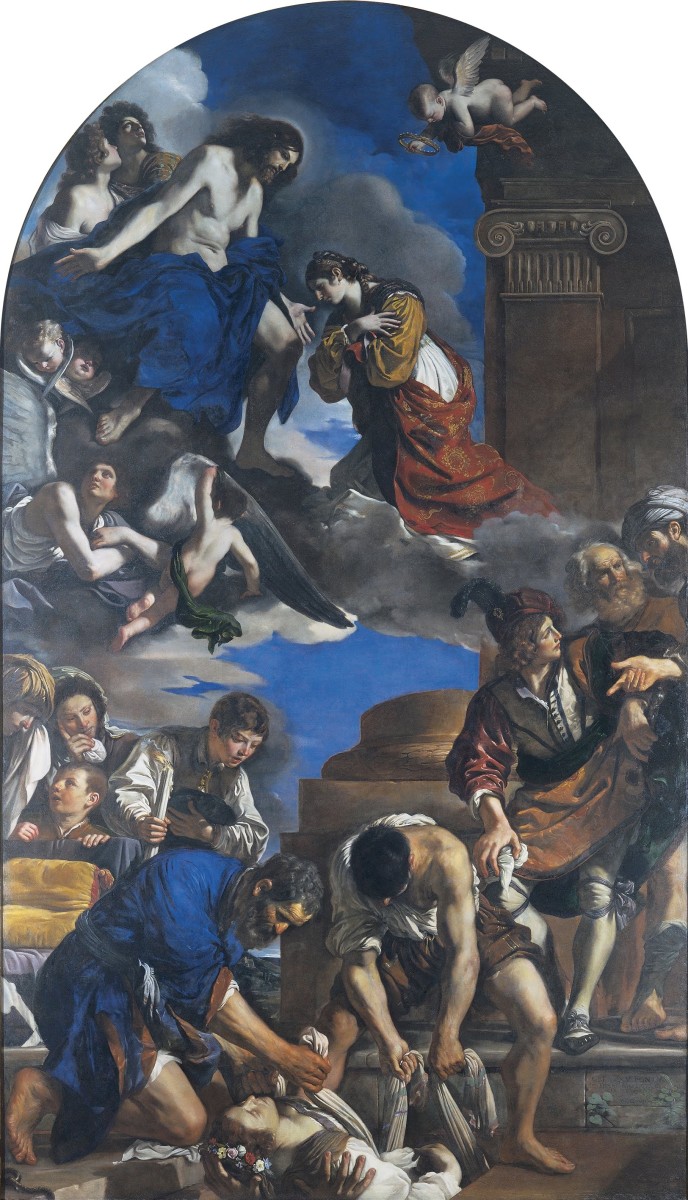
The drawing presents particularly compelling parallels with two major compositions by Guercino: *The Burial and Assumption of Saint Petronilla*, painted in 1623 for St Peter's Basilica in Rome, and *The Martyrdom of Saint James the Greater*, executed in 1627, now lost but known through an engraving by Giovanni Battista Pasqualini.
The sheet has a particularly distinguished and fascinating critical history. Offered at Christie's in London in 1999 as a work by Pietro Faccini, an attribution supported by Mario Di Giampaolo, it was subsequently recognised as an early drawing by Guercino by Nicholas Turner in a written expertise dated 23 July 2010. Turner then published the recto as Guercino in 2011, in *Guercino a Reggio Emilia. La genesi dell'invenzione*, co-authored with Angelo Mazza.
More recently, the 2026 monograph devoted to Pietro Faccini, based on Mario Di Giampaolo's research and edited by Donatella Cingottini and Nicolas Schwed, returned the drawing to Faccini's oeuvre. However, this publication does not mention Turner's written expertise of 2010 or his published attribution of 2011.
We favour Nicholas Turner's attribution to the young Guercino, while fully acknowledging the alternative attribution to Pietro Faccini. The profound stylistic affinities between the two artists, particularly during Guercino's formative years, make this question of connoisseurship especially fascinating.
Provenance:
- Christie's, London, 6 July 1999, lot 48 (as Pietro Faccini).
- Colnaghi Gallery, London, 2000s.
- Private collection, France.
Literature and expert opinions:
- Nicholas Turner, written expertise dated 23 July 2010 (as Guercino).
- Angelo Mazza and Nicholas Turner, *Guercino a Reggio Emilia. La genesi dell'invenzione*, Milan, 2011, p. 42, fig. 3 (as Guercino).
- Mario Di Giampaolo, *Pietro Faccini (Bologna, 1562–1602)*, edited by Donatella Cingottini and Nicolas Schwed, Rome, 2026 (as Pietro Faccini).
The drawing is presented in a sumptuous seventeenth-century black-and-gold frame, beautifully complementing its monumentality and remarkable presence.
A comprehensive expert report and detailed scholarly documentation are available upon request.