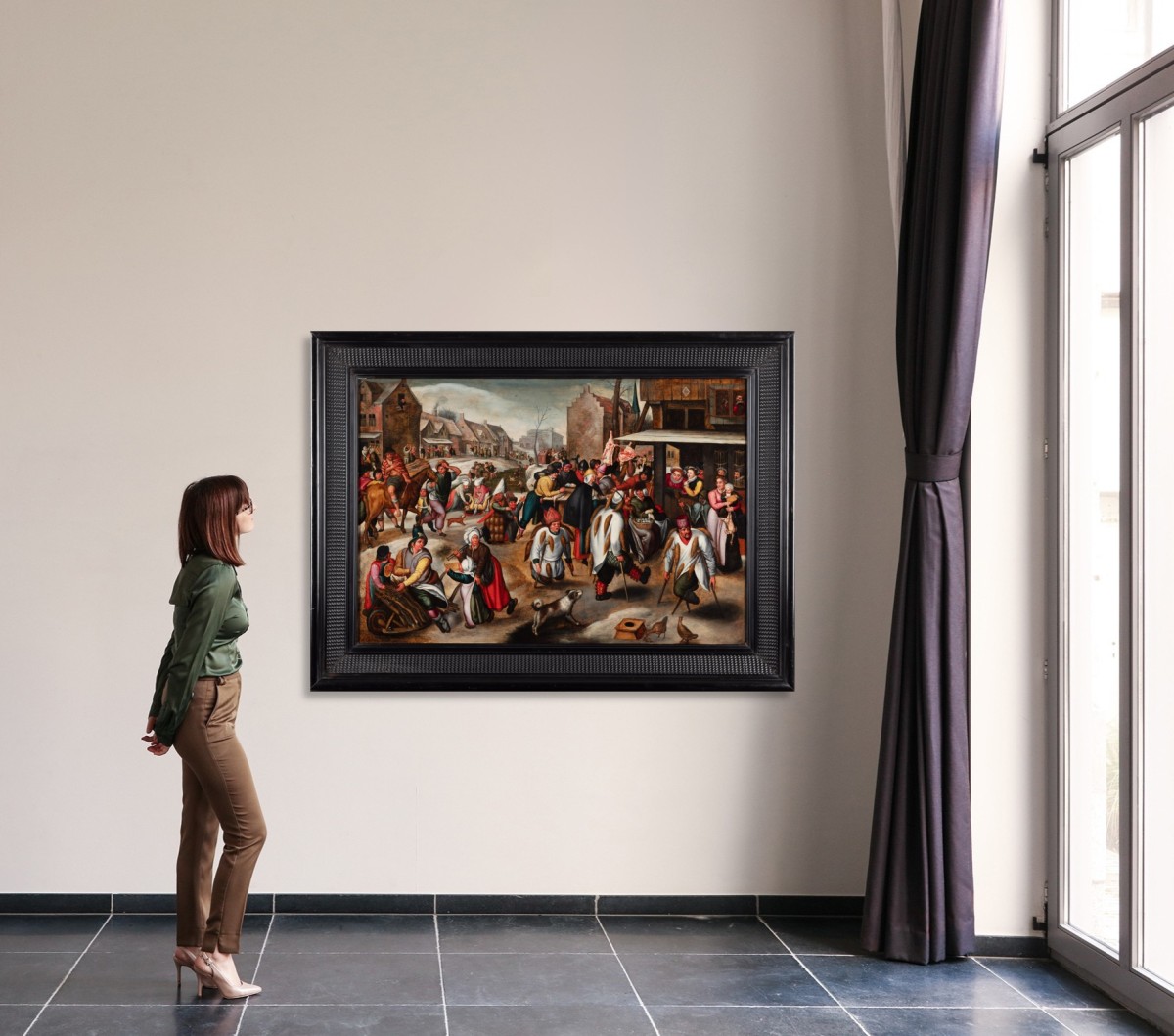
Offered by Jan Muller

Marten van Cleve (Antwerp, c. 1527 – before 24 November 1581) was a Southern Netherlandish painter and draughtsman. He came from a family of painters: his father Willem van Cleve the Elder was a master in the Antwerp Guild of Saint Luke, his older brother Hendrick III was a landscape painter and his younger brother Willem was also admitted to the guild. Marten became a master in 1551. According to Van Mander he trained with Frans Floris, but there is no concrete evidence for that.
For his motifs he often drew inspiration from the work of Joachim Beuckelaer and Pieter Bruegel the Elder. His work shows a well-considered construction and is fluidly painted. He was above all a genre painter of peasant scenes and landscapes. His scenes are descriptive rather than allegorical, and he painted them from a lower viewpoint than Bruegel. Only about five of his works are signed and properly documented, among them The Slaughtered Ox (1566) and a household scene in the Kunsthistorisches Museum in Vienna, and Carnival in a village with dancing beggars (1579) in the Hermitage. Hendrick III sometimes painted the landscapes in Marten’s compositions.
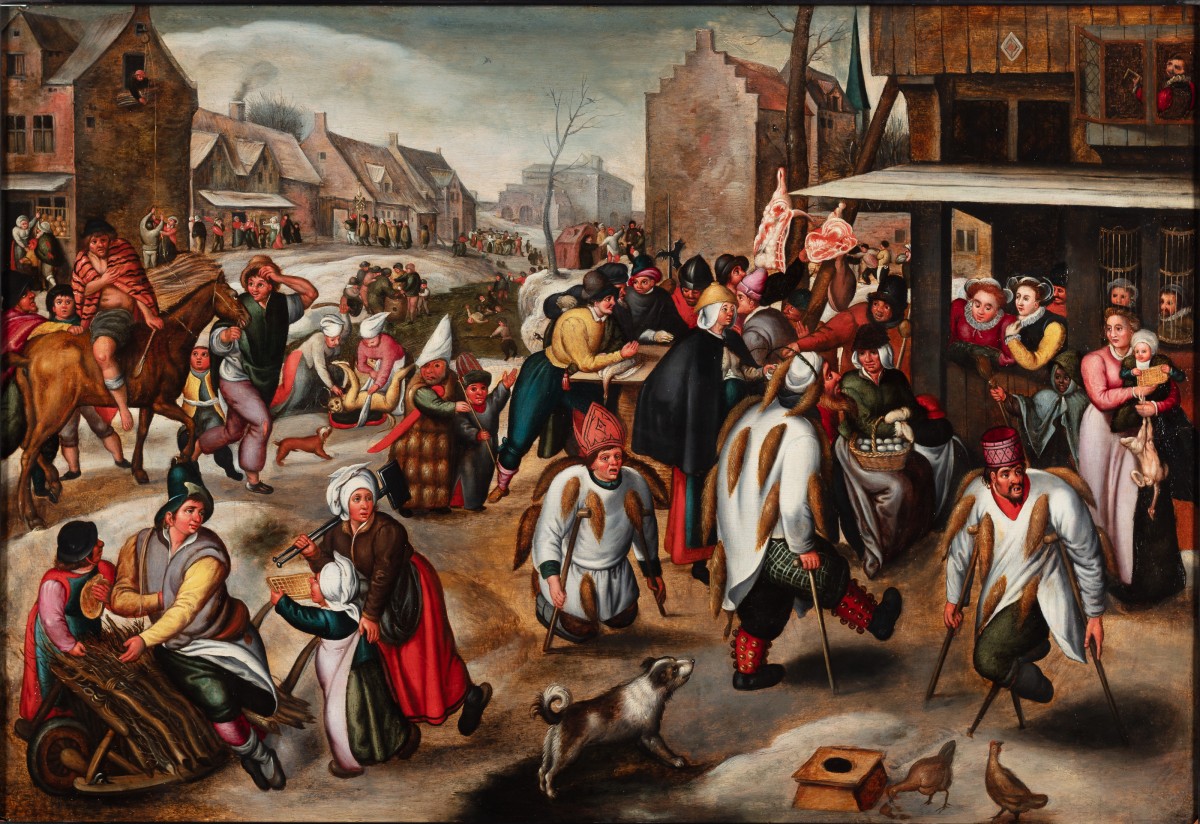
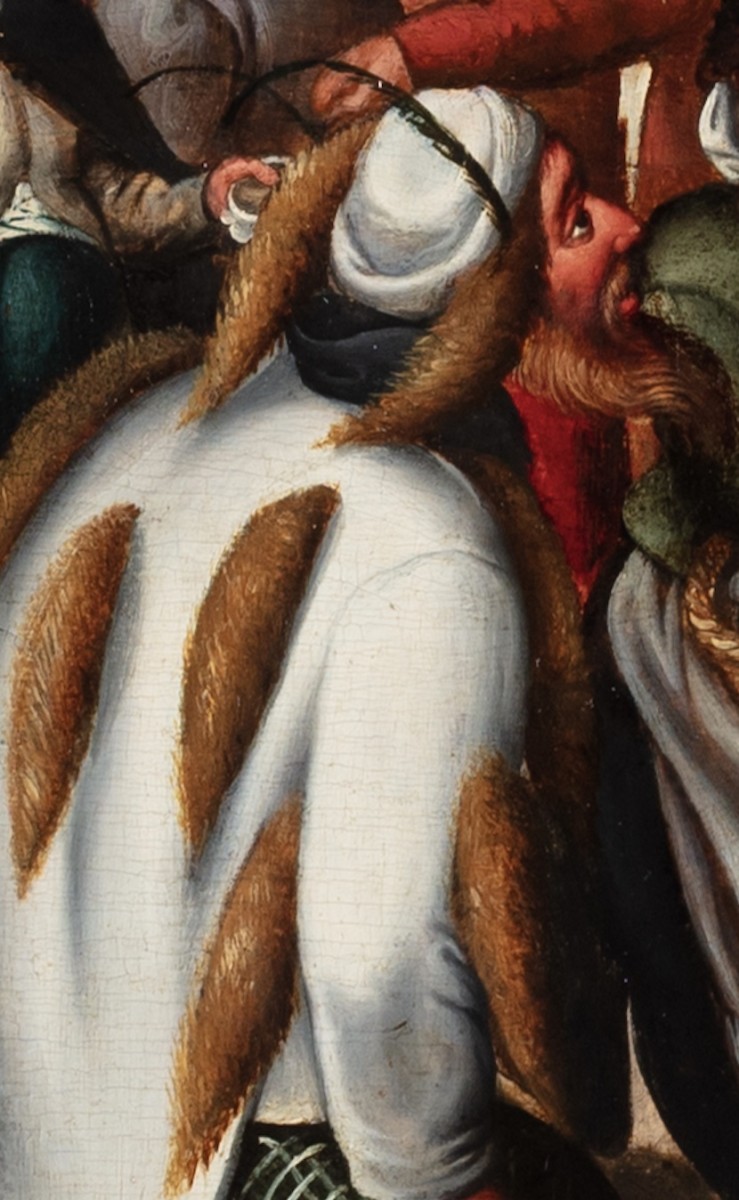
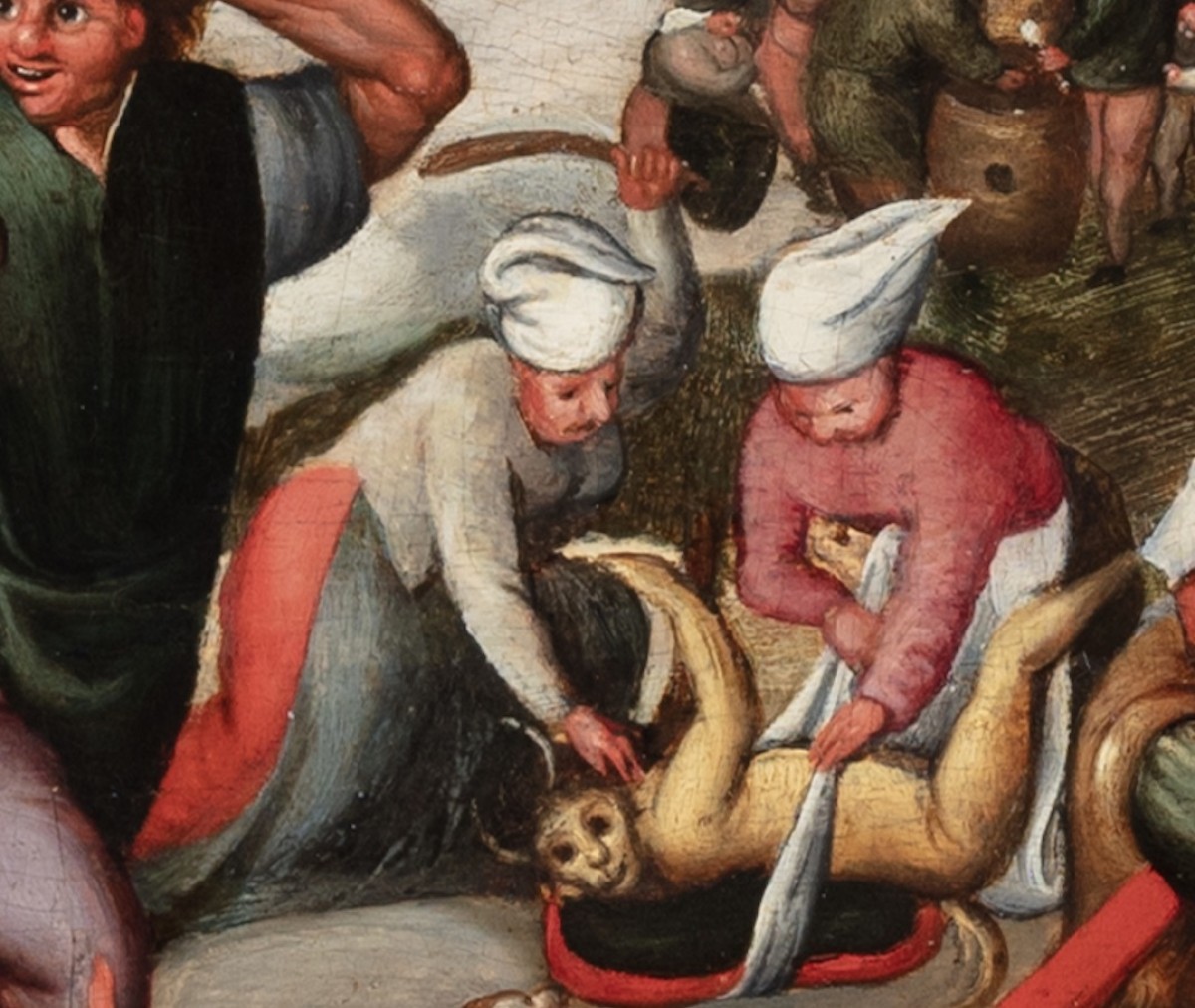
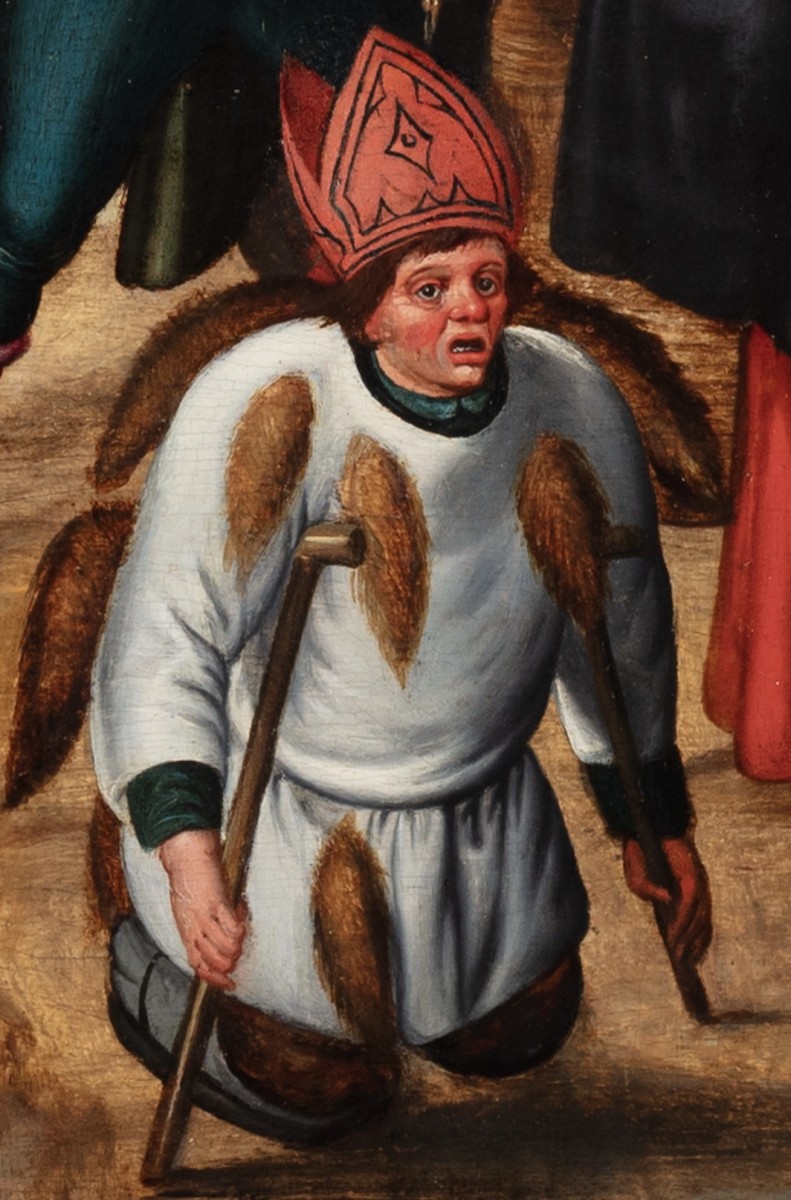
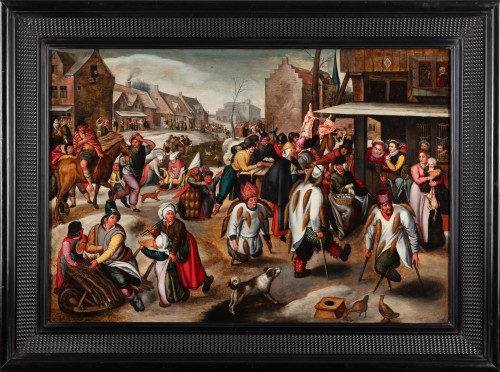
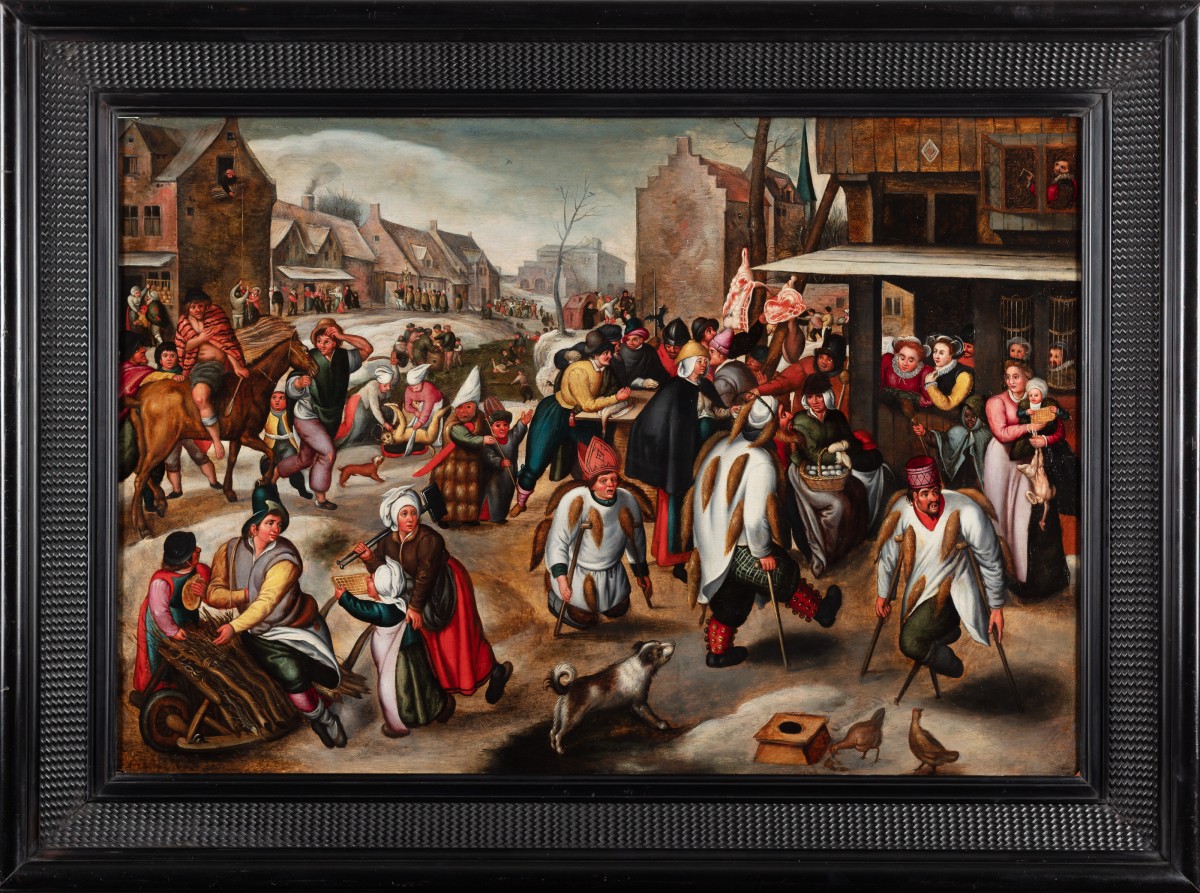
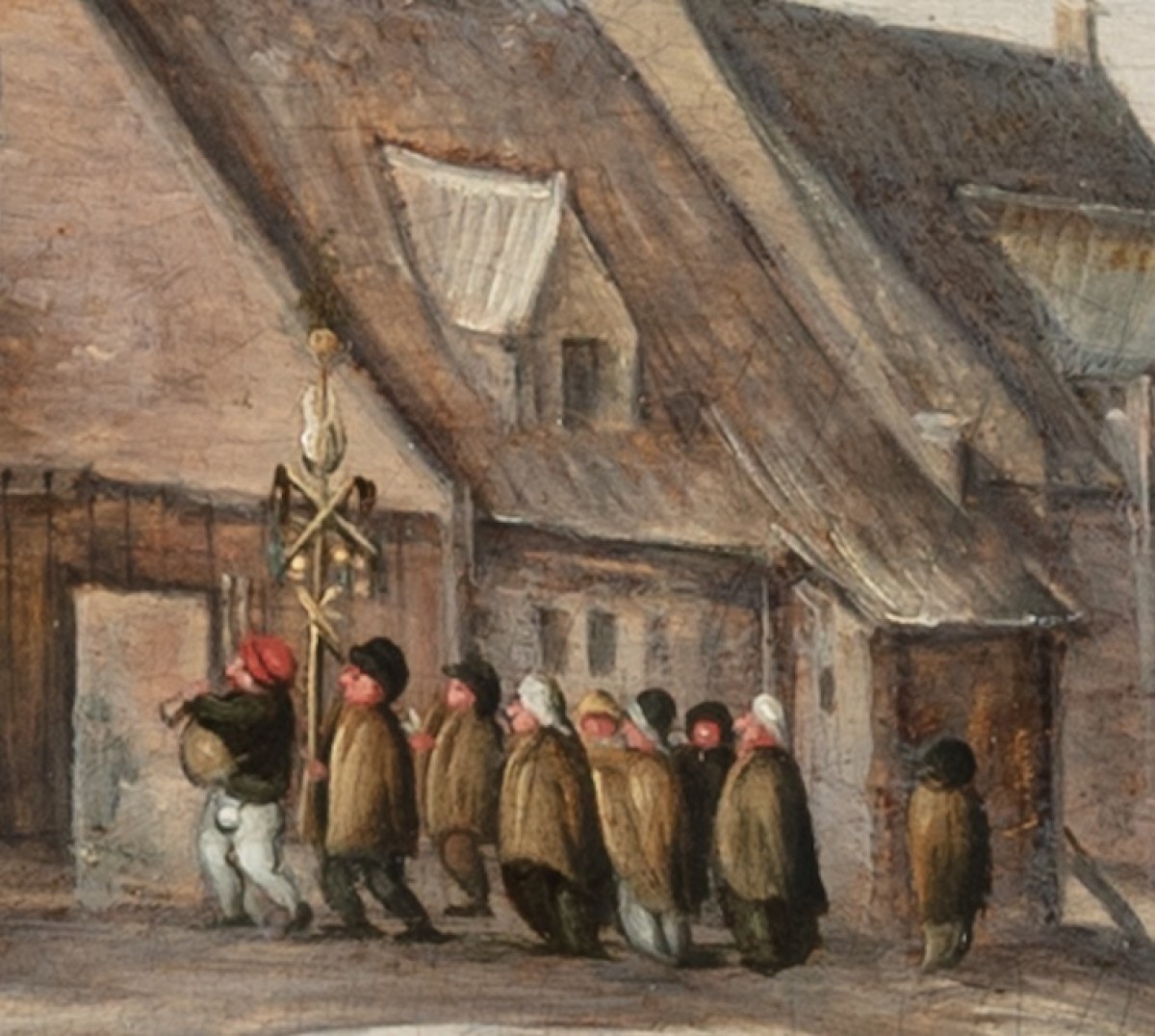
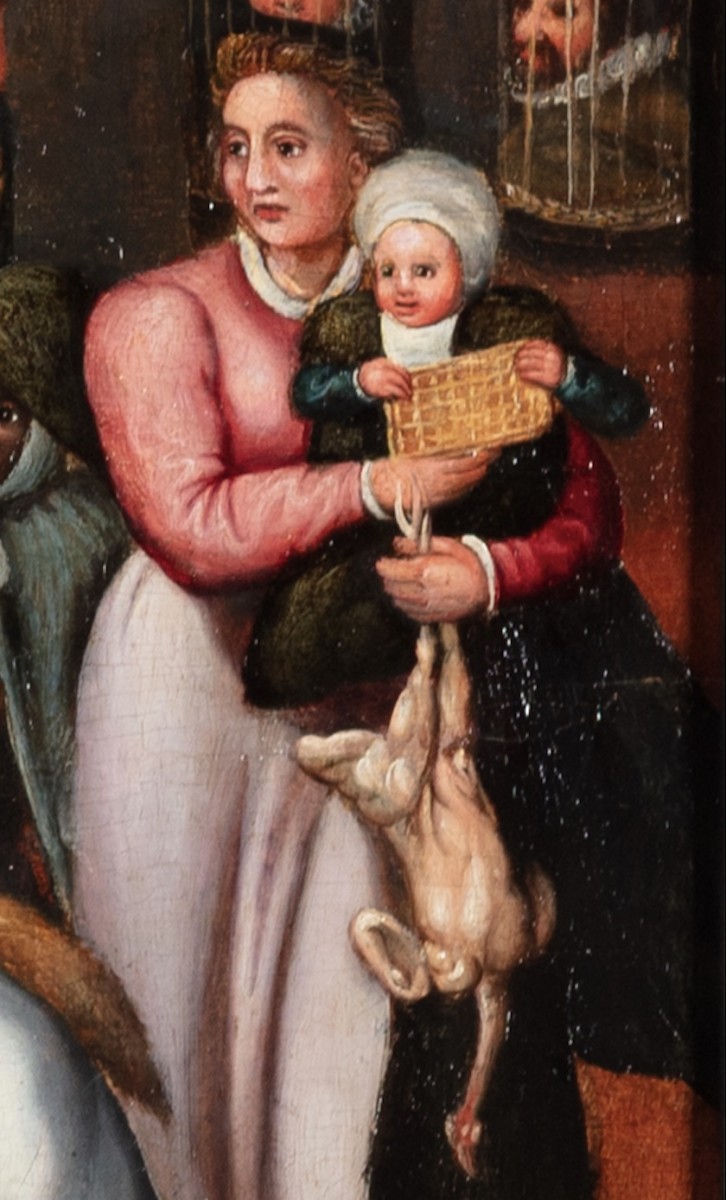
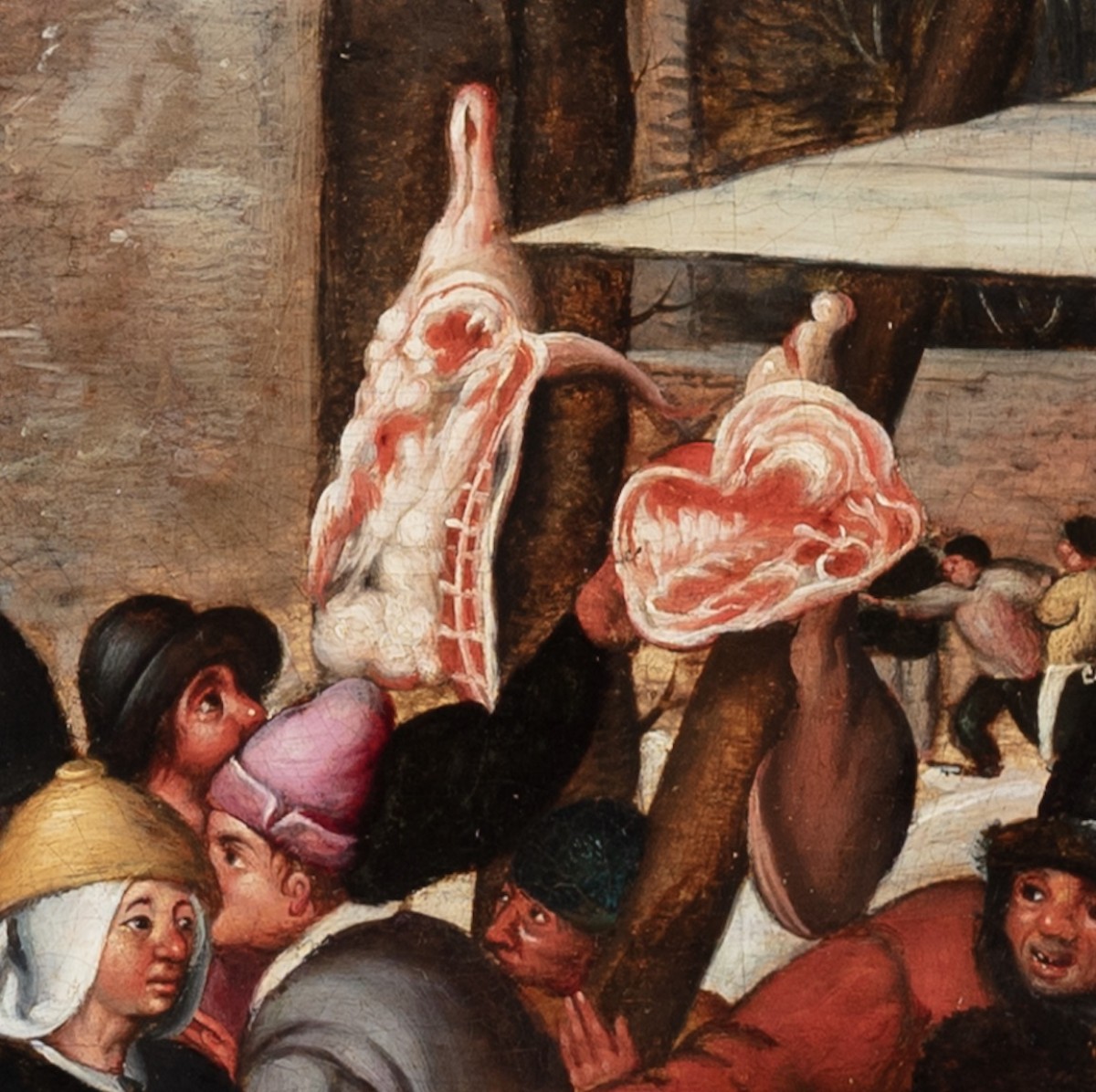
We see a wintry village on a day of feasting and abundance. In the right foreground three disabled beggars hobble on crutches, one of them kneeling on stumps. They wear white tunics with foxtails and headgear, among them a red mitre and a crown-like cap. Behind them stands a market stall with a butcher cutting up an animal, and a slaughtered pig hangs. In the window of the wooden building two elegantly dressed women with pleated collars lean out, and beneath them sits a woman with a basket of eggs. On the ground stand an offertory box and two chickens. In the left foreground a man with a bundle of firewood hands something to a child and a woman with a long stick walks past, while a girl carries a waffle. On the horse at left rides a man with a bare torso, in a striped blanket. At the back the village gives way to a snowy landscape with people on the ice and a church tower.
The beggars with foxtails refer to Bruegel’s The Beggars (1568, Louvre), whose figures wear the same clothing. Interpretations of its meaning differ: the foxtail is read as a symbol of deceit and folly, or as a reference to leprosy. In Bruegel’s The Fight Between Carnival and Lent (1559) lepers and disabled beggars also pass by. In his painting of 1579, Van Cleve used several motifs from Bruegel.
Carnival, or Shrovetide, is the farewell to meat and fat before the start of the forty days of Lent. The meat and the food in this scene evoke the abundance before Lent. Mid-Lent, the middle of Lent, was celebrated separately. The fourth Sunday of Lent, Laetare (“rejoice”), eased the strictness. In Brabant and Antwerp it was the feast of Saint Greef, the Count of Mid-Lent, a kind of second Saint Nicholas for children.
Oil on panel
Dimensions: 72 x 106 cm
Delevery information :
After reception of payment we can box and ship our items all over the world. Estimates of this service can be provided.