Offered by Jan Muller

Pseudo-Jan van Kessel the Younger is not a painter known by name but a notname: a name devised by art historians for an artist or workshop that produced more than two hundred, mainly small still lifes. The name refers to Jan van Kessel the Younger (1654-1708), to whom this body of work was previously attributed.
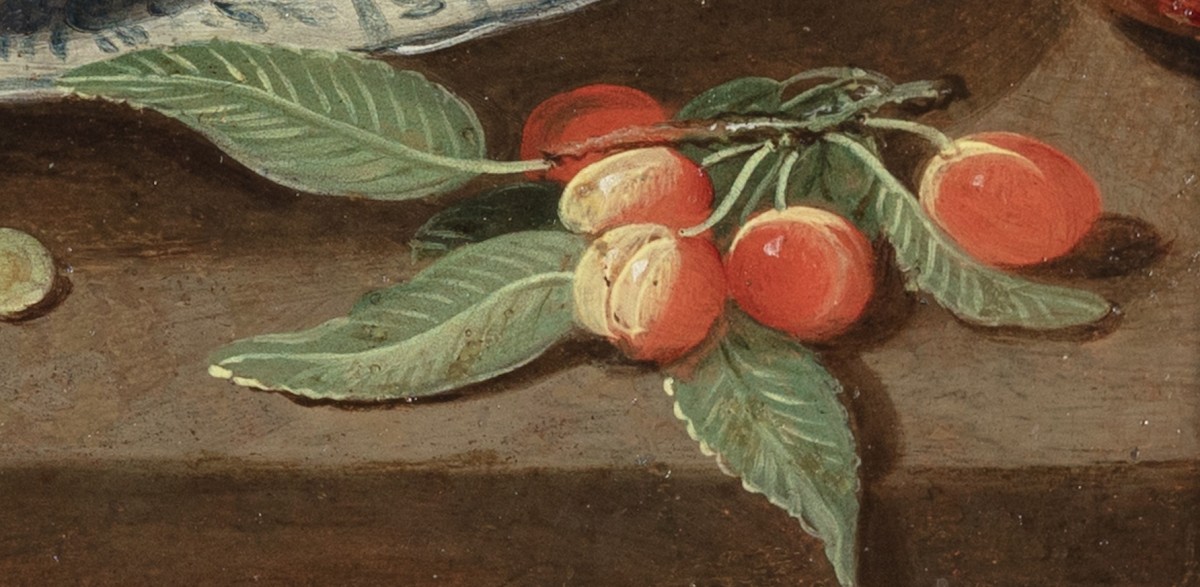
The oeuvre combines a limited number of motifs, each time in a different way, in compositions ranging from simple to deliberately considered. None of the works is signed. The oeuvre has largely been catalogued by Dr Klaus Ertz. The works often occur as pairs and often on copper. This smooth support lends itself well to rendering fine detail.
The works are Flemish in inspiration but sometimes show traces of Italian provenance. This supports the idea that the artist’s studio was based in Italy, although the artist may just as well have been of Flemish origin.
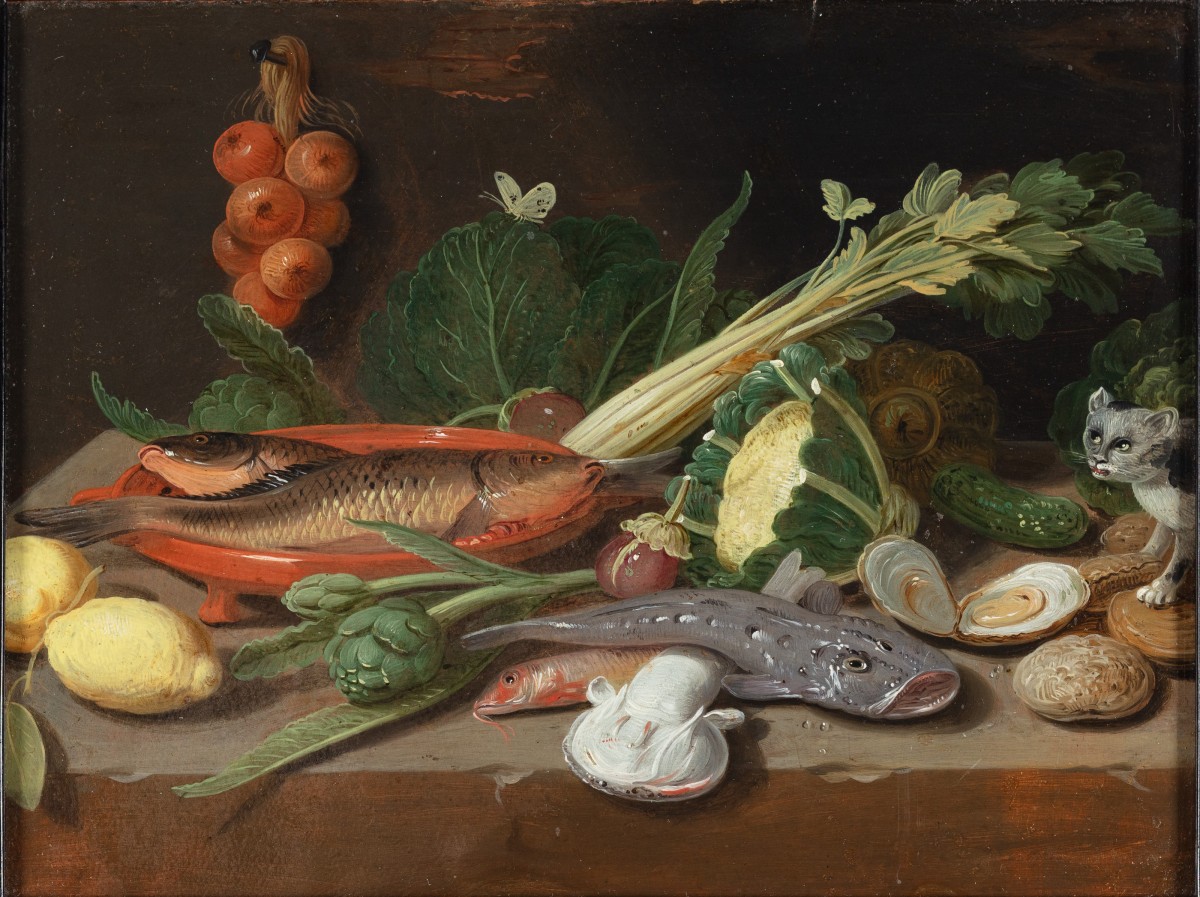
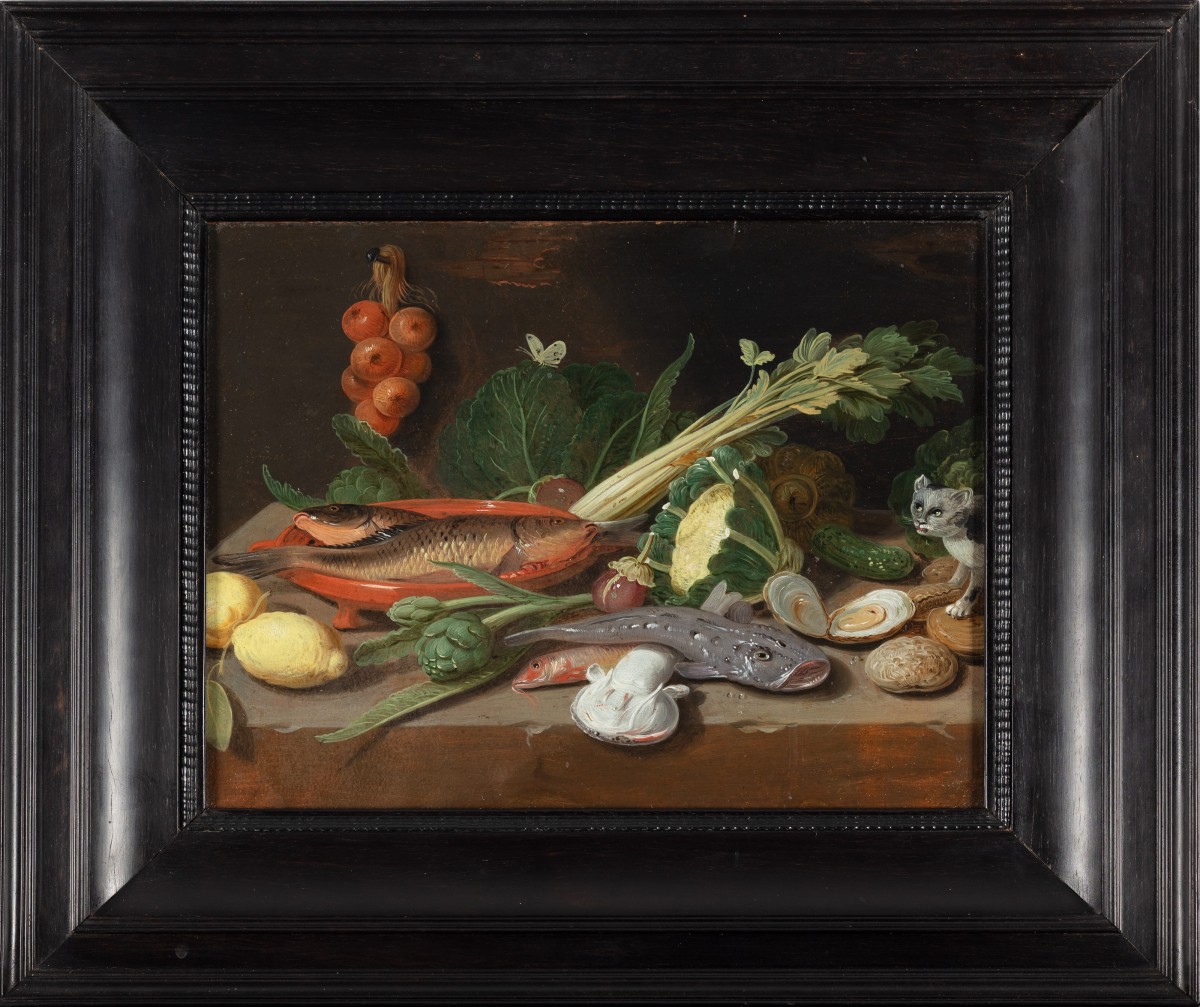
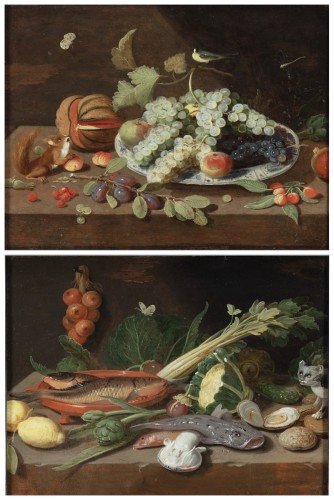
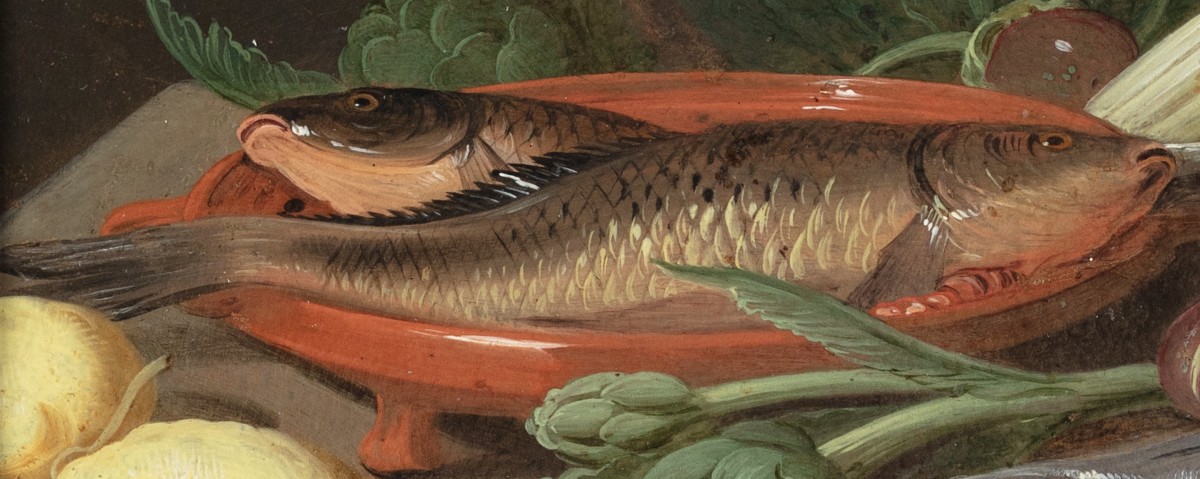
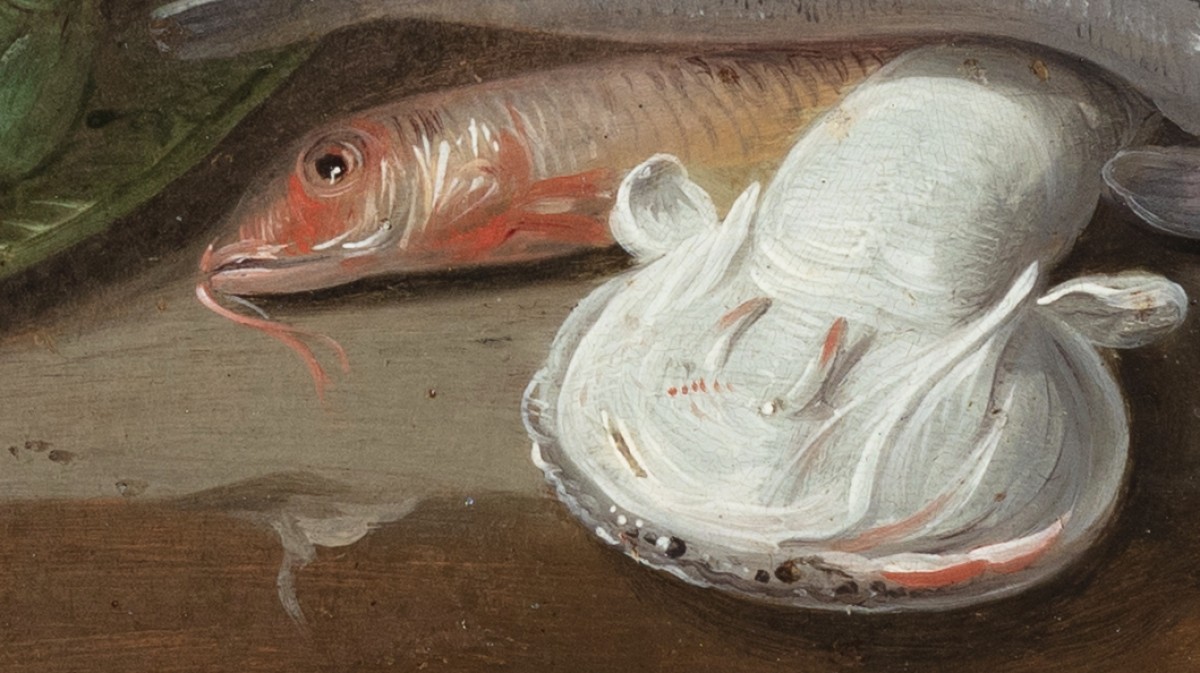
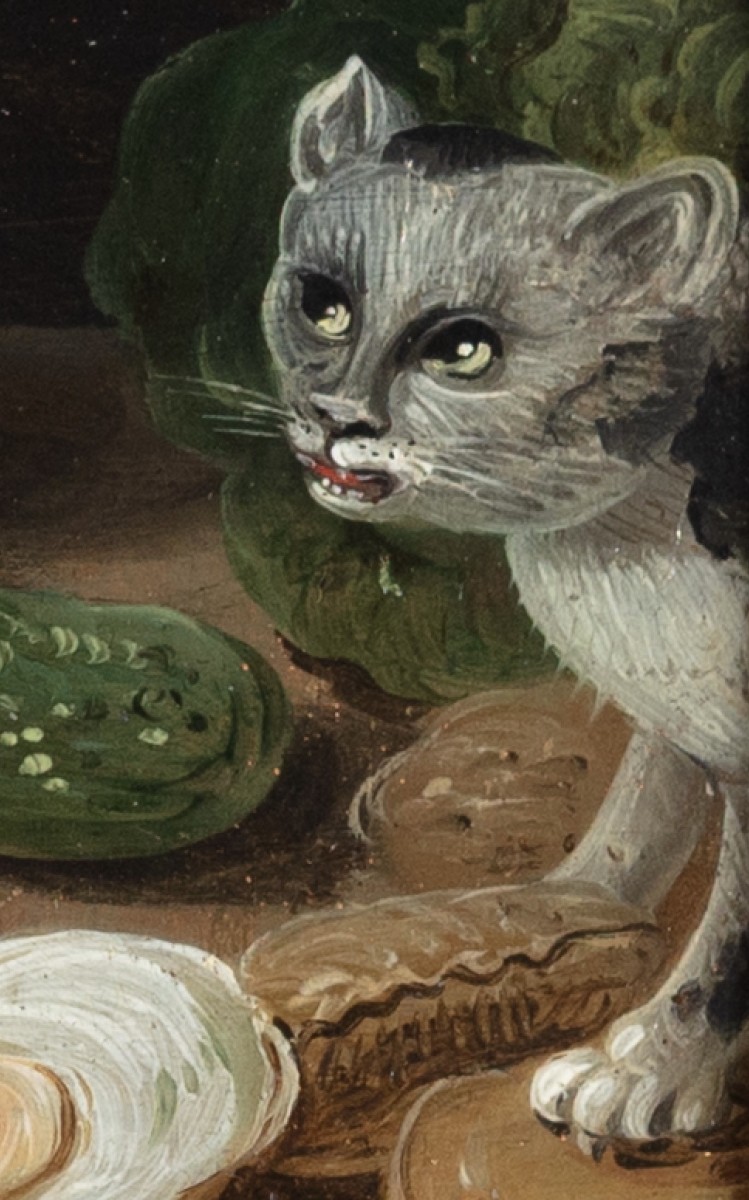
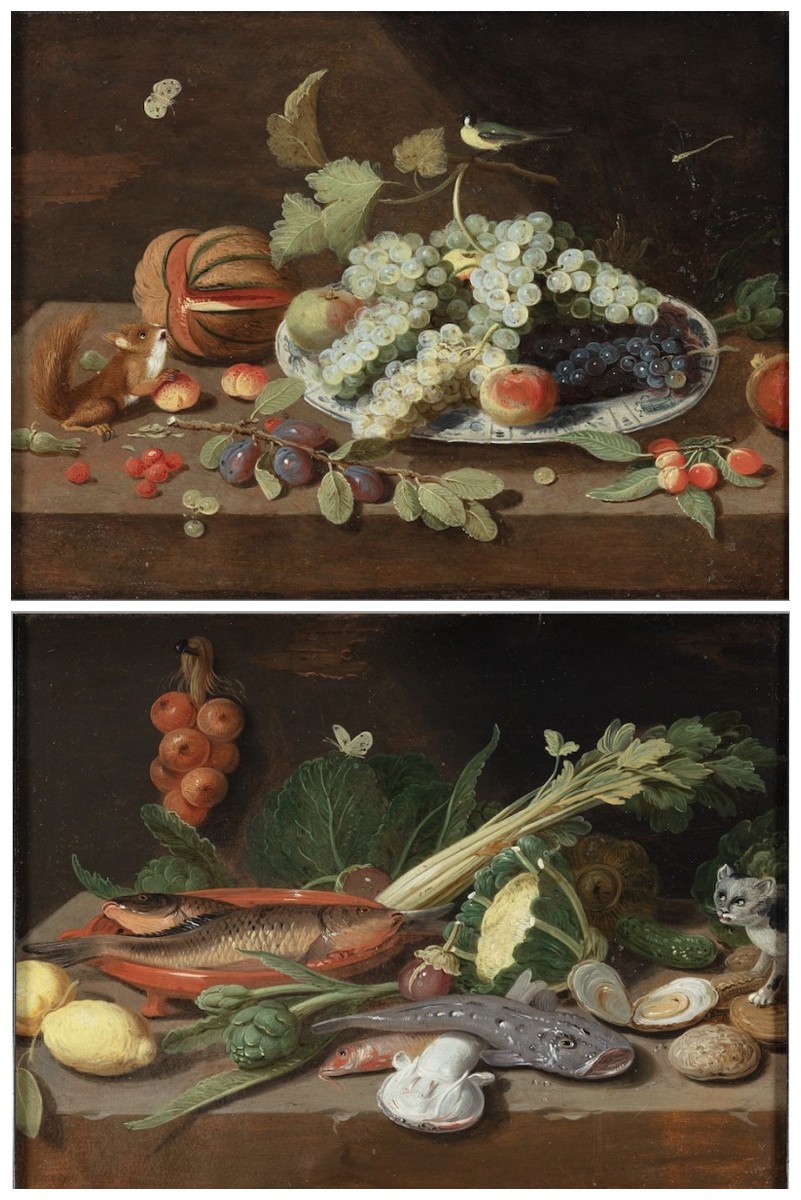
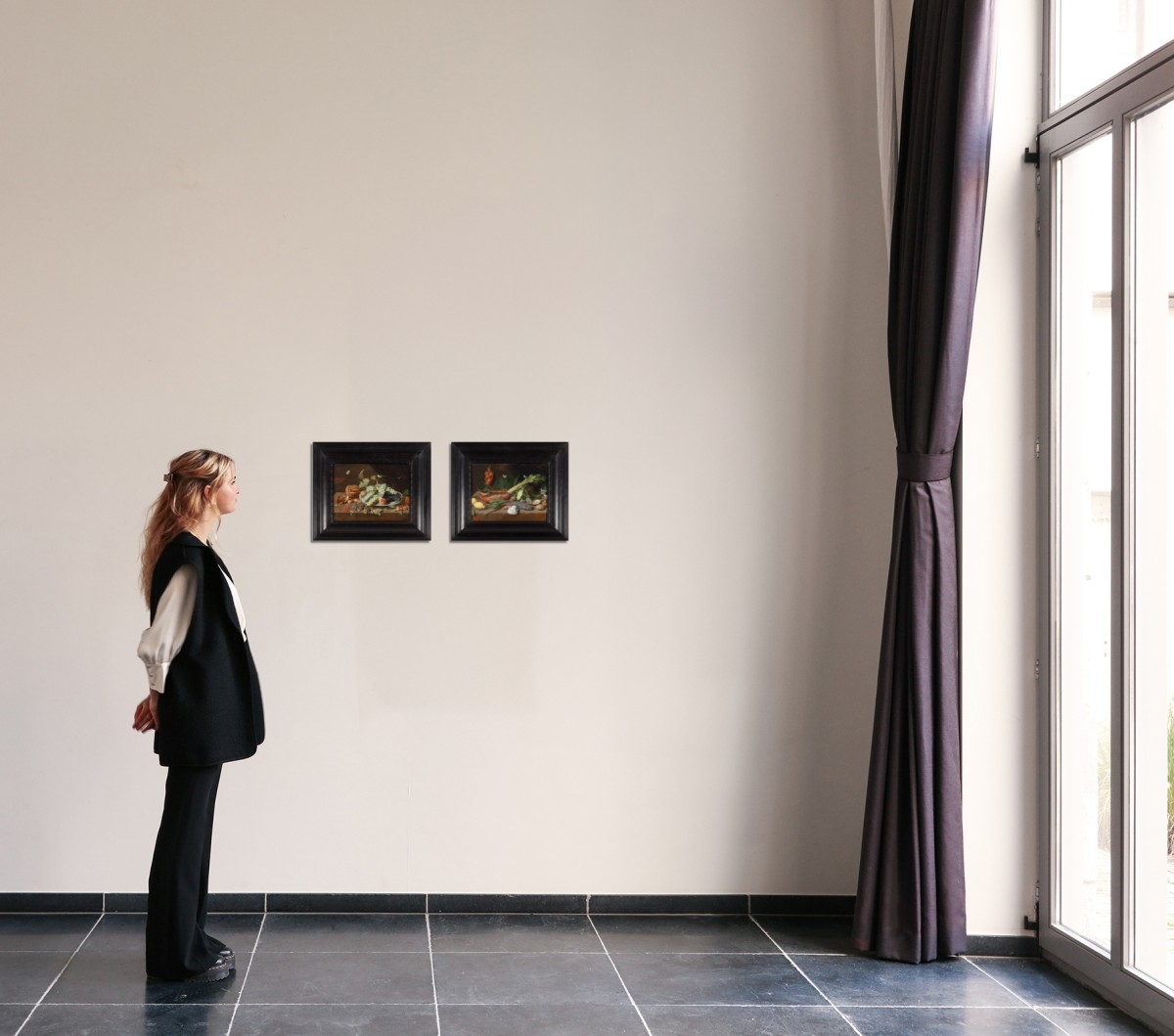
This pair of kitchen still lifes consists of two small scenes. In the first, a cat enters the scene from the right, perhaps lured by the smell of the fresh fish on the table. Alongside the fish lie lemons, onions, cauliflower, celery and oysters. A small butterfly flutters about, of the same kind as in the second scene.
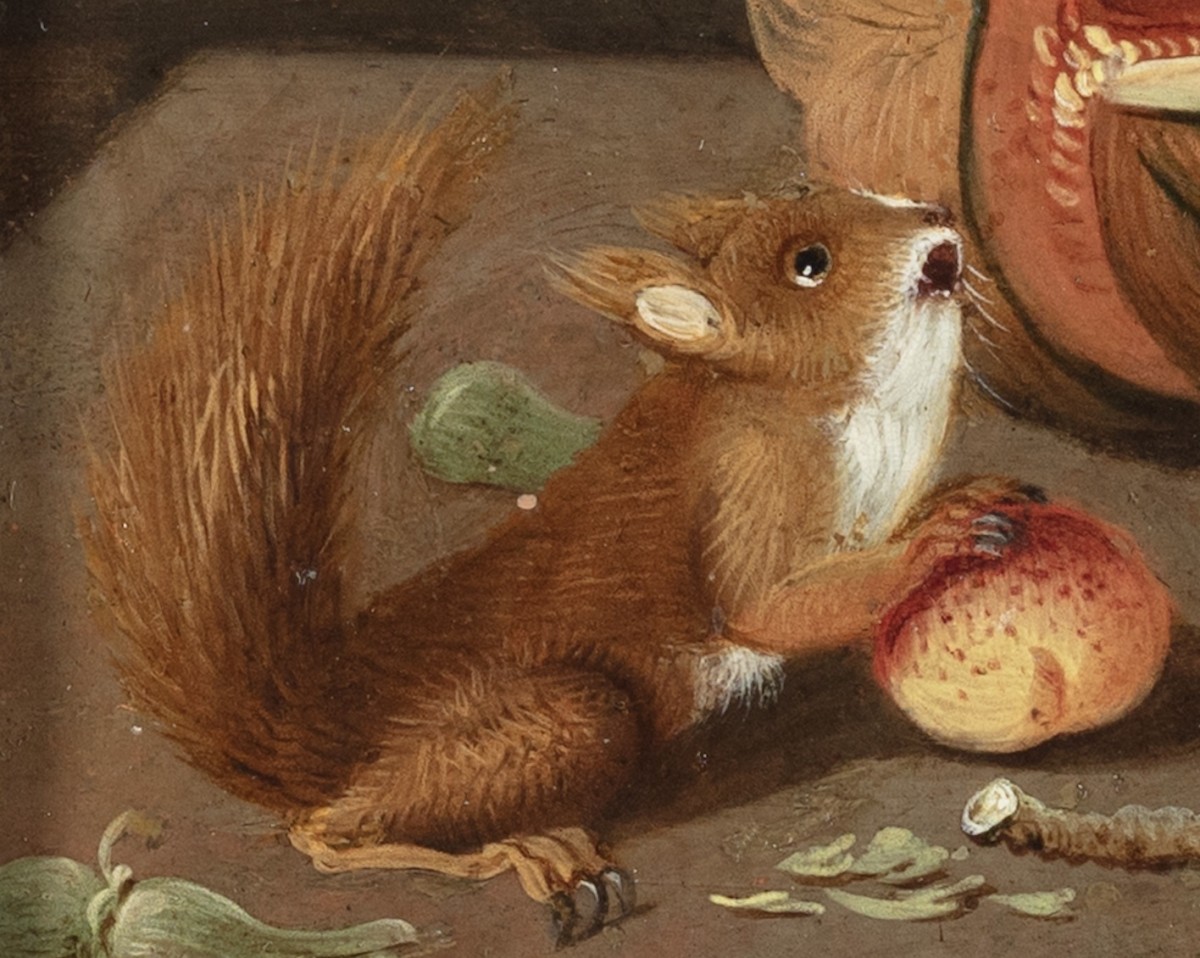
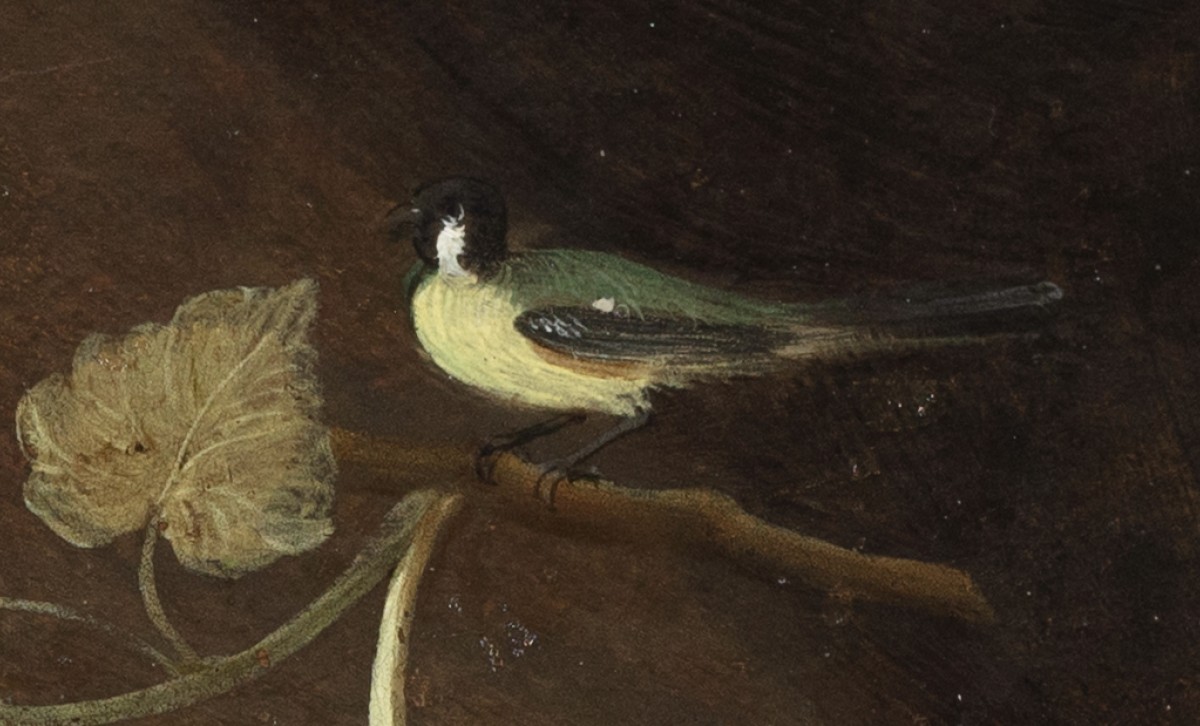
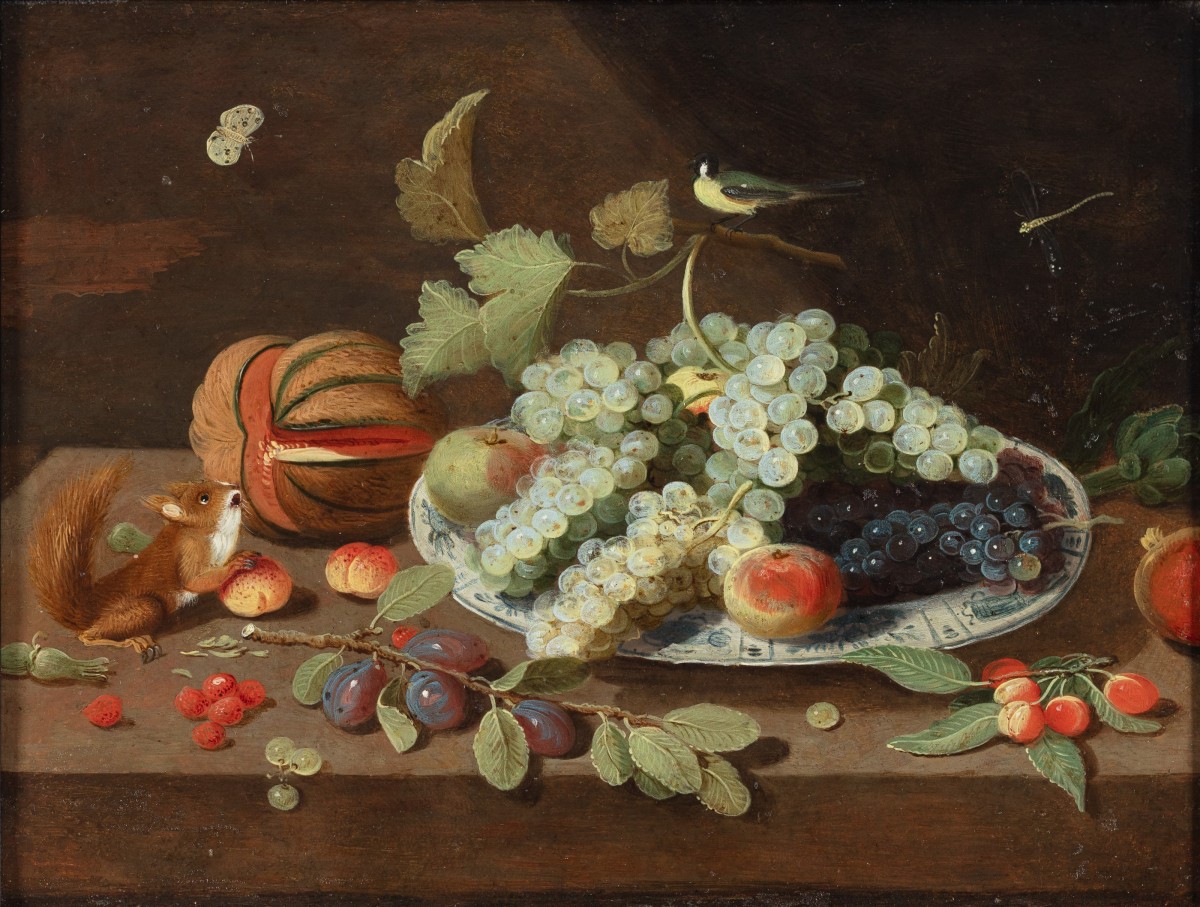
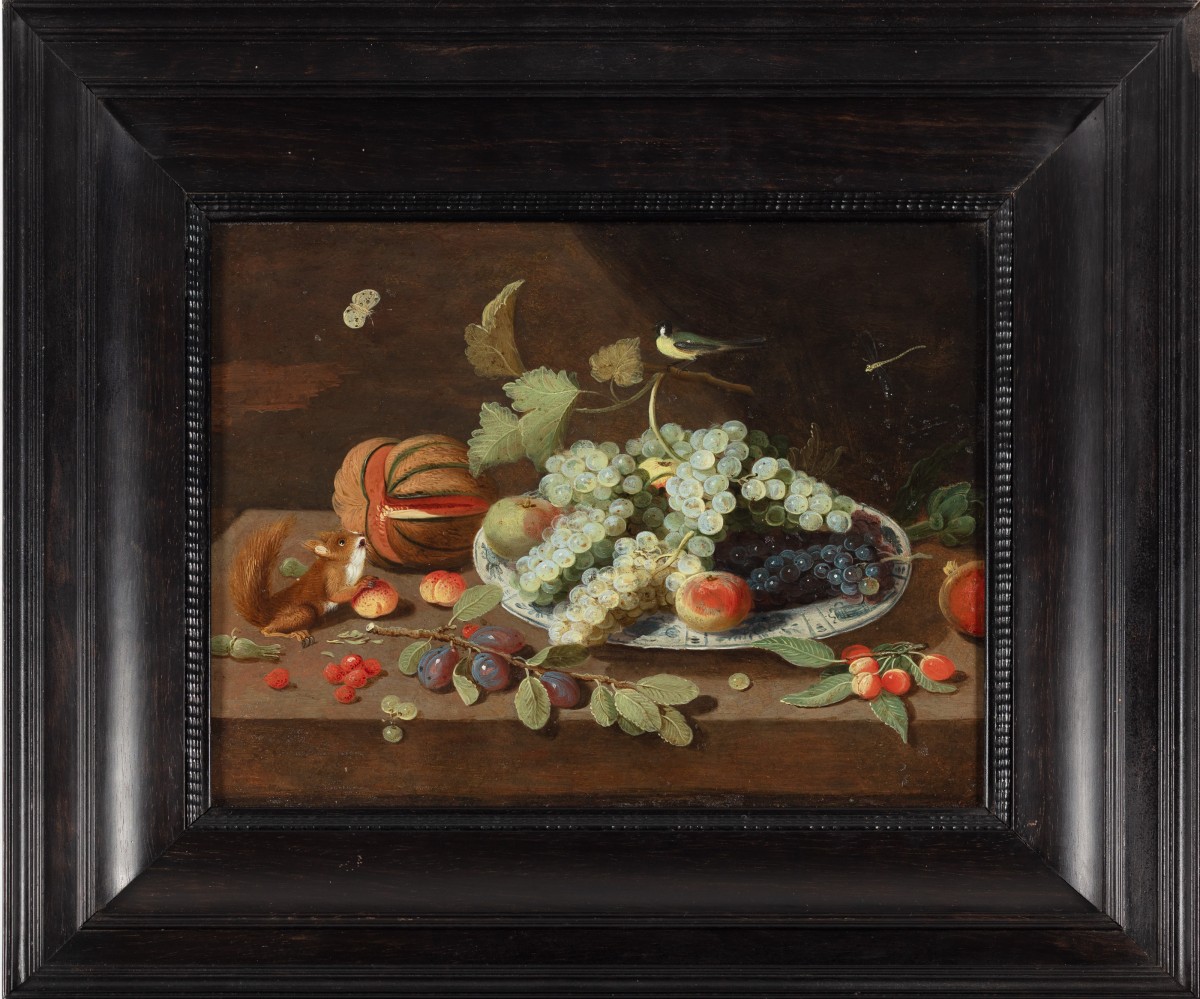
In the second scene, a squirrel looks on in wonder at a butterfly hovering above its head. It rests its front paws on a peach. On the dish beside it lie several bunches of grapes and apples, with a small bird, perhaps a tit, perched on top of one bunch. Behind the squirrel stands a halved melon, and a small dragonfly can also be spotted. The animals and insects give both scenes a playful, lively touch.
The still life only emerged as an independent genre in the seventeenth century. Flowers and fruit had played a role in painting earlier, for instance as part of Roman frescoes or medieval religious art. Later, painters began to specialise: some in fruit, others in flowers or vanitas still lifes. Still lifes were especially popular in the Netherlands and Flanders among well-to-do citizens, who liked to hang them in their homes. The objects depicted are often not merely everyday: they also include exotic goods such as spices, unusual animals or products from the other side of the world. In this way they also functioned as status symbols.
In smaller paintings of food, intended for more modest interiors, the abundant chaos of market and kitchen pieces is tempered (in the tradition of, among others, Beuckelaer and Snyders), making them presentable in a middle-class household. Even so, a certain artful disorder remains. Because a still life usually tells no direct story, it allows for several readings: religious, moralising, or simply as a reflection of daily life in the Low Countries.
Oil on copper
Dimensions: : 17 x 23 cm, 26 x 32 cm (framed)
Delevery information :
After reception of payment we can box and ship our items all over the world. Estimates of this service can be provided.